• Link to X
  • Link to Facebook
  • Link to Instagram
  • Link to TikTok
  • Link to Youtube
  • About
    • About Us
      • President
      • Board of Directors
      • Board of Advisors
      • Financials
      • Our Methodology
      • Success Tracker
      • Contact
  • Act Now
    • 30 Ways to Help
      • Email Congress
      • Call Congress
      • Volunteer
      • Courses & Certificates
      • Be a Donor
    • Internships
      • In-Office Internships
      • Remote Internships
    • Legislation
      • Politics 101
  • The Blog
  • The Podcast
  • Magazine
  • Donate
  • Click to open the search input field Click to open the search input field Search
  • Menu Menu

Tag Archive for: Refugees

Posts

Government, Refugees and Displaced Persons

5 Famous Refugees

famous refugees
June 20 marked the 65th World Refugee Day, described by the United Nations High Commissioner for Refugees as “a special day when the world takes time to recognize the resilience of forcibly displaced people throughout the world.”

The official definition of the term “refugee,” quoted from the 1951 Refugee Convention, states:

“A refugee is someone who owing to a well-founded fear of being persecuted for reasons of race, religion, nationality, membership of a particular social group or political opinion, is outside the country of his nationality and is unable to, or owing to such fear, is unwilling to avail himself of the protection of that country.”

While many associate this definition to the countless faces pictured in the midst of crisis, like the current situation in Syria, the term refugee can be applied to prominent figures that have made a significant change in our international history. Below are just five examples of famous refugees that have made a difference.

1. Albert Einstein
Profession: Scientist
Country of Origin: Germany
Country of Asylum: United States of America
Backstory: As a German Jew, Einstein was accused of treason and his books were thrown into Hitler’s bonfires. Finding it increasingly difficult to work in Nazi Germany, Einstein took a job at Princeton University in 1932 and gained United States citizenship. Despite having left Germany, Einstein and his wife continued to support the German Jews from abroad, making visa applications for refugees and later selling his 1905 research paper on special relativity, earning $6 million towards the war effort.
Quote: “I am privileged by fate to live here in Princeton,” Einstein wrote in a letter to the Belgian Queen. “In this small university town the chaotic voices of human strife barely penetrate. I am almost ashamed to be living in such peace while all the rest struggle and suffer.”

2. Frédéric Chopin
Profession: Composer
Country of Origin: Poland
Country of Asylum: France
Backstory: Chopin left his home country to advertise Poland’s fight, against the Russians, through music abroad. After leaving Warsaw for Vienna, the fighting broke out and Chopin was notified that he was longer welcome back in Poland.
Quote: “Oh, how hard it must be to die anywhere but in one’s birthplace.”

3. Madeline Albright
Profession: First Female U.S. Secretary of State
Country of Origin: Czech Republic
Country of Asylum: United States of America
Backstory: Albright is unique in the fact that her family was forced to leave her home country on two separate occasions. The family fled to England when Nazis invaded Czechoslovakia during World War II and later fled Prague during the Communist takeover of 1948.
Quote: “My father had been in the Czechoslovakian Diplomatic Service. I was a refugee during World War II in England as a little girl and lived through the Blitz. I then went back and had a fairly glorious life as a daughter of an ambassador. And then all of a sudden we were again refugees and came to the (U.S.) with nothing.”

4. Sigmund Freud
Profession: Neurologist
Country of Origin: Austria
Country of Asylum: England
Backstory: Upon the Nazi army’s attack on Austria, Freud fled to London and became a refugee at age 84, after living in Austria for 79 years.
Quote: “Civilized society is perpetually menaced with disintegration through this primary hostility of men towards one another.”

5. Henry Kissinger
Profession: 56th U.S. Secretary of State
Country of Origin: Germany
Country of Asylum: U.S.
Backstory: Kissinger did not publicly share much information about his experience as a refugee. However, it is known that Kissinger fled with this family to the U.S., escaping the Nazi regime in his homeland of Germany. Dr. Kissinger became a U.S. citizen in 1938 at age 15.
Quote: “When you see the mass exodus of people in war situations, or in genocidal situations, that magnifies my personal experience. But I think my personal experience creates an understanding and, I like to think, a sense of obligation to being sympathetic and supportive. So for all of these reasons I think helping refugees is something this country must do.”

– Blythe Riggan

Sources: United Nations High Commissioner for Refugees, History, Huffington Post, BrainyQuote, United Nations High Commissioner for Refugees, United Nations High Commissioner for Refugees, Nobel Prize, International Rescue Committee
Photo: Colombo Telegraph

July 7, 2014
https://borgenproject.org/wp-content/uploads/borgen-project-logo.svg 0 0 Borgen Project https://borgenproject.org/wp-content/uploads/borgen-project-logo.svg Borgen Project2014-07-07 04:00:142024-06-05 01:57:395 Famous Refugees
Global Poverty, Refugees and Displaced Persons

Spotlight: Refugees International

Fleeing political, racial and religious persecution, more than 15 million people worldwide have left their homes and sought safety across international borders. They are refugees; often as unwelcome in their host countries as they were in their own.

For many, it is out of the frying pan and into the fire.
International law forbids the deportation of peoples with refugee status. Still, deeply rooted ethnic and national divides can make neighboring countries reluctant to accept them.
It is estimated that half of refugees today settle in major cities. Hundreds of thousands of Somali citizens, for example, have gone not to internationally established camps, but to Nairobi, Kenya. These urban refugees, with neither shelter, funds nor connections, find themselves in situations nearly as desperate as the ones they left.
Hindered by language and social stigma, they are limited to the poorest paying jobs. Their ambiguous political standing, meanwhile, affords them none of the safeguards given to citizens of their new homes. The British organization, Hidden Lives, quotes one man, “I don’t have legal documentation. I don’t have a job. I don’t leave my house.”
Access to health care, though needed by many, is often restricted.
So why not just head for a refugee camp? Conditions there are no better. Camps are notoriously overcrowded and vulnerable to the spread of communicable disease. Violence and sexual assault goes largely unchecked. For basic needs such as food and water, refugees are reliant on international aid. Refugees also must rely on international aid for health care, education and development. Who do they rely on for security forces? International aid. International aid, unfortunately, must come in waves.
Consequently, any group that raises awareness or funds to sustain displaced peoples, in and out of country, becomes integral to their survival. None is more widely known, perhaps, than Refugees International (RI).
RI focuses on advocacy and policy reform. In addition to meeting with world leaders, it organizes 15 yearly field missions to determine the living conditions of refugees and internally displaced people across South America, Africa, the Middle East and Asia. These missions are essential to the organization: because of the information gathered, it is an influential authority. RI is consulted on not only the need for aid, but also the amount required and its distribution.
It was RI that alerted the United Nations to the lack of post-rape kits available in the Central African Republic earlier this year. It was RI that encouraged the United States to support the Nansen initiative, which protects displaced victims of climate-related disasters. The U.S. set aside more than $150 million for the deployment of peacekeepers to the CAR at the request of the organization. In response to their report of violence against women in Syria, the United Kingdom provided more than $14 million dollars in funding.
The U.N. Refugee Agency calls 10.8 million people ‘refugees of concern.’ Almost three times as many live as IDPs. While they wait for resettlement, or war and persecution to end, they have to entrust their lives to the international community at large. But the nations most capable of giving aid are often the furthest removed. It is left to Refugees International, and organizations like it, to bridge the gap.
– Olivia Kostreva

Sources: UNHCR, Health Poverty Action, Refugees International, Hidden Lives
Photo: The Global Herald

June 4, 2014
https://borgenproject.org/wp-content/uploads/borgen-project-logo.svg 0 0 Borgen Project https://borgenproject.org/wp-content/uploads/borgen-project-logo.svg Borgen Project2014-06-04 14:56:392024-06-05 01:57:28Spotlight: Refugees International
Children, Developing Countries, Global Poverty, Nonprofit Organizations and NGOs, Women & Children, Women and Female Empowerment

IKEA Improves Lives with Global Philanthropy

The IKEA Foundation’s 2013 annual report celebrates a year of exciting achievements and a growing commitment to global development.

Established in 2009, the IKEA Foundation is the philanthropic entity associated with IKEA, the popular Swedish home furnishings company. In the past year, the foundation has gained 12 new partners and donated 101 million euros to those partner organizations, contributing to the continued implementation of innovative children’s programs. With the support of a new Brazilian partner organization, the IKEA Foundation has also been able to reach children in South America for the first time. In addition, a number of partners have also started to develop emergency shelters for displaced refugees.

Compared to the total monetary donation in 2012 (82 million euros), the IKEA Foundation’s 2013 contribution saw a 21 percent overall increase in giving. IKEA’s Soft Toys for Education campaign raised 10.1 million euros and helped 11 million children. Moreover, the foundation’s projects throughout 2013 impacted children in 35 different countries.

The IKEA Foundation focuses on four areas of development: fighting child labor and promoting children’s rights, improving the lives of refugee children and families, empowering women and girls as well as disaster relief. The foundation also funds education projects for children and works to change current social attitudes towards child labor in developing communities. In 2013, the IKEA Foundation helped UNICEF and Save the Children fight child labor in India and Pakistan. By reaching out to farmers, families and other community leaders, the foundation hopes to raise awareness of the dangers that children face in the workplace – specifically, in the cotton, carpet and metalware industries. Additionally, the foundation’s new partnership with Care for Children is helping place orphans into supportive and loving families in Asia.

In conjunction with the United Nations Refugee Agency (UNHCR), the IKEA Foundation is working to develop safer and more durable emergency shelters for refugees. Innovative additions (such as solar lighting) are expected to increase the lifespan of current refugee camps. Last year, UNHCR began experimenting with the reworked shelters in Ethiopia, taking into account the feedback provided by refugee families living in the newly developed camps.

The IKEA Foundation continues to support KickStart, a partner organization that trains women in southern Africa to grow and sell crops, launch their own businesses and establish a reliable income. The foundation also expanded the number of scholarship opportunities for women and girls to get an education. Currently, the IKEA Foundation’s partnership with the Lila Poonawalla Foundation helps 1,900 poor Indian women pursue higher education in fields like engineering, agriculture and healthcare.

By giving cash grants to its partners, the IKEA Foundation strives to help families immediately after disasters and other conflicts. During the past year, partner organizations used IKEA’s grants to provide medical care to Syrian refugees. After Typhoon Haiyan hit the Philippines, many partners brought emergency supplies to devastated communities. The IKEA Foundation itself has donated IKEA toys and products to around 1.2 million affected children around the world.

The IKEA Foundation has clearly expanded its goals and reached several new milestones in 2013, but CEO Per Heggenes believes that the foundation has more to offer. “The journey continues,” he wrote, “and we still have lots to accomplish.”

– Kristy Liao

Sources: IKEA Foundation
Photo: INiTs

April 29, 2014
https://borgenproject.org/wp-content/uploads/borgen-project-logo.svg 0 0 Borgen Project https://borgenproject.org/wp-content/uploads/borgen-project-logo.svg Borgen Project2014-04-29 04:00:462024-06-04 01:08:04IKEA Improves Lives with Global Philanthropy
Aid Effectiveness & Reform, Economy, Global Poverty

Fortress Europe: Ceuta and Melilla

Ceuta_Melilla_Border
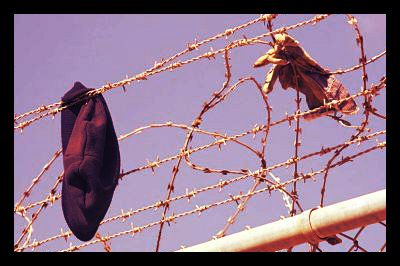
The term Fortress Europe refers to the European Union’s obstructive policies towards immigrants. It is a term that critics employ to highlight many member states’ reluctance and outright unwillingness to welcome migrants seeking a better life within the European Union.

Nowhere is this Euro-jargon more literal in than the Spanish enclaves of Ceuta and Melilla in North Africa. These two cities are where the E.U. borders the African; the cities are located only a few yards apart, they are also where modern day fortresses have been erected.

Heavily patrolled and surrounded with three rows of 20-foot-high barbed wire fences and infrared cameras, the borders of Ceuta and Melilla bare resemblances to the Berlin Wall. In 2005, 11,000 Africans forced their way across the borders in hope of entering the E.U. via Spain since these two cities are politically European despite not being on the continent.

Since then, the Spanish government has invested heavily in fortifying the EU’s southern most land frontiers (more than 30 million Euros, or approximately $41,238,000.)

In 2010, these two enclaves, both relying on resources from their immediate neighbor, Morocco, caused a political ruffling when the Moroccan government accused Spain of racism and boycotted produces going into the two Spanish territories.

What is the most direct effect of these European fortresses in Africa? Since the revamp of the fences, immigrants—many being refugees—have to cross into Europe via the Mediterranean, often in makeshift and unseaworthy boats.

The Arab Spring that sprung across North Africa and into the Levant unleashed waves of asylum seekers and refugees dire to get into the E.U. However, due to the difficulties of crossing into these two enclaves people have been going via the sea to reach another nearby EU territory—the Italian island of Lampedusa. These journeys frequently prove to be perilous.

A Syrian refugee and his family who had traveled through five countries with six forged passport across the Levant and North Africa hoping entering Europe via Melilla claims this European fortress is nothing less than an open-air prison.

Not only is the condition inside the refugee camp less than optimal, in February, Spain took the decision to close the border of Melilla after a group of around 200 to 300 Syrian refugees tried to enter.

After the Moroccan authorities warned the Spanish authorities of the presence of “uncontrolled people,” the gates of Europe quickly flung closed before these desperate people who found themselves stranded in Moroccan territory. Earlier in February, at least 12 people died outside of Ceuta’s fences; 23 others were handed to the Moroccan authorities to be returned to Syria, a human right violation and a contradiction of the terms laid out in the Convention for Refugees of 1951.

If the E.U. would like to live up to the terms set out in the Europe Convention on Human Rights of the Council of Europe and other treaties and conventions to which it and its member states are party, the unofficial Fortress Europe policies of its frontier member states must not continue. These policies are unjustifiable disregard of ongoing ordeals that many refugees are facing in their homeland as well as the value of their lives.

– Peewara Sapsuwan

Sources: CEA(R), 20 Minutos, Spiegel Online International, Reuters
Photo: 20 Minutos

February 24, 2014
https://borgenproject.org/wp-content/uploads/borgen-project-logo.svg 0 0 Borgen Project https://borgenproject.org/wp-content/uploads/borgen-project-logo.svg Borgen Project2014-02-24 12:47:132024-12-13 17:50:06Fortress Europe: Ceuta and Melilla
Global Poverty, War and Violence

Mass Killings in Bangui

Mass_Killings_Bangui_central_african_republic_car
In recent days the year-long struggle in the Central African Republic has been brought to the attention of the United Nations. On December 5, the UN Security Council voted unanimously for French and African forces to “take all necessary measures” in dealing with the conflict. On December 10, a UN spokesperson announced that “more than half a million” people had been “displaced within CAR since the crisis began in December 2012.”

Rebels in the Central African Republic began making assaults against the government in December 2012 before overthrowing former President Francois Bozize in March. Though there was hope that the new leader who was put in place could quell some of the violence in the area, in recent months the violence has escalated into near civil-war conditions.

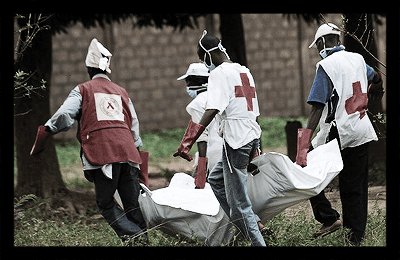
As it happens, the violence in this region is felt most acutely by those living in the capital city, Bangui. It has been estimated by the UN High Commissioner for Refugees that over 100,000 people living in Bangui have been displaced in the last year. These refugees have been living in dirty camps that leave the people residing in them vulnerable to infections and disease.

On November 25, UN Deputy Secretary-General Jan Eliasson explained that an estimated 1 out of every 3 people from the population of 4.6 million are in need of food, protection, health care, water sanitation and shelter. The UN had previously put forward a $195 million appeal to help in the nation, but it has not even been half-funded as of that date.

Moreover, some of the worst violence in the region has occurred near the northern border with Chad, prompting worries that fighting will spill over into that country. The recent bouts between Christian and Muslims have also raised concerns, with French Foreign Minister Laurent Fabius saying that the country “was on the verge of genocide.”

Mass killings in Bangui have, furthermore, sparked these concerns with the various reports coming out this month.  According to a United Nations report, 450 people were massacred within city in 3 days, while others fled for the refugee camps. Given the hatred that has been fostered in the country, it may be some time before the situation could be settled.

France hopes that it can have a positive impact on this nation it once colonized. French and African Union troops have entered the Central African Republic since the UN Security Council voted to take action within the nation. The troops are working to disarm the various militia groups, with the hope that a stable government could be established.

Though Africa, as a continent, looks to be on the upswing, there are still terrible conflicts happening in the Central African Republic. These conflicts need to be noticed, and with the work that the UN is doing, more people are learning about the situation. With luck, a new year could bring new hope for this beleaguered nation.

– Eric Gustafsson

Sources: United Nations, New York Times, PBS
Photo: AFP

January 29, 2014
https://borgenproject.org/wp-content/uploads/borgen-project-logo.svg 0 0 Borgen Project https://borgenproject.org/wp-content/uploads/borgen-project-logo.svg Borgen Project2014-01-29 04:00:492024-06-11 02:16:20Mass Killings in Bangui
Global Poverty, Human Rights, Politics and Political Attention

Humanitarian Aid in Syria

humanitarian_aid_syria
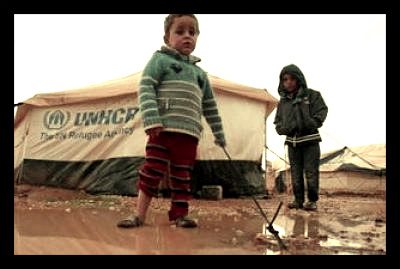
Syria has been engaged in a civil war ever since 2011.  As different rebel groups continue to clash against the authoritative and repressive regime of President Bashar al-Assad, over 130,000 people have died.  Furthermore, over 9.3 million people are in need of humanitarian assistance, 6.5 million Syrians have been internally displaced from their homes while an additional 2.3 million Syrians have fled to neighboring countries.

Relief reception areas and displacement camps are set up inside Turkey, Iraq and Jordan, though refugees are also fleeing to Lebanon and Egypt.  It is clear that the magnitude of this crisis is beyond the financial capacity of Syria’s neighbors.  So how is the rest of the international community contributing?

The United States government has been the single largest contributor of humanitarian aid, providing more than $1.3 billion to Syria and its neighbors.  The European Union has also pledged more than $800 million while the U.K., Germany and Kuwait comprise the remaining top five donors contributing $670 million, $415 million and $333 million respectively.

Aid is distributed through dozens of different implementing channels with the largest coordinator of aid being the United Nations through its Office for the Coordination of Humanitarian Affairs.  The UN has 15 different organizations on the ground in Syria including World Health Organization, World Food Program, UN Children’s Fund (UNICEF) and the UN Refugee Agency (UNHCR).  There are also 18 registered international NGO’s including Action Against Hunger, Danish Refugee Council, Oxfam and SOS international.

These organizations provide food to almost 3.4 million people in the form of rations and flour delivered to households and bakeries.  Drinking water, sanitation services and shelter materials are also being distributed to refugee camps throughout the region.  Relief programs are furthermore providing medical supplies and emergency and basic health care in attempt to counter the loss caused by damaged hospitals and medical facilities.  The health sector of the relief effort has provided about 5.9 million people with health care and medical supplies.

The UN Syrian Humanitarian Assistance Response Plan requested $1.4 billion in 2013.  As a result, nations were able to contribute approximately 74% of the requested amount.  Moreover, in December of 2013, the UN announced that aid agencies needed nearly $13 billion for humanitarian relief operations in 2014.  This includes $6.5 billion just for the Syrian conflict, $2.3 billion of which will go to aid people within Syria while the remaining $4.2 billion will be allocated for Syria’s five neighboring countries.

As the world powers continue to search for diplomatic solutions to end the civil war, the humanitarian crisis will undoubtedly extend well beyond the duration of the conflict.

– Sunny Bhatt

Sources: Huffington Post, USAID, UNOCHA, Reuters
Photo: BBC

January 26, 2014
https://borgenproject.org/wp-content/uploads/borgen-project-logo.svg 0 0 Borgen Project https://borgenproject.org/wp-content/uploads/borgen-project-logo.svg Borgen Project2014-01-26 04:00:452024-05-26 23:05:45Humanitarian Aid in Syria
Global Poverty, Refugees and Displaced Persons

Small Islands and Environmental Refugees

small_islands_environmental_refugees
For a long time, human civilization has seen refugees from all kinds of nations, due primarily to political or militaristic reasons. However, there is set to be an occurrence of some of the first mass cases of “environmental refugees,” who will be forced to leave their homes as a result of climate change.

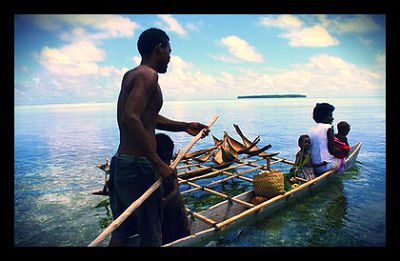
For example, small island nations with extensive low-lying coastal areas are placed in a difficult position because of rising seas. While for most developed countries the issue of climate change does not implicate intensive and readily apparent consequences, the same does not apply for many developing island nations—whose very existence is threatened by the projected rising seas of the near future.

The necessity for adaption is an especially prominent issue that these island nations face. This is particularly true since many of them are small and still developing, making it difficult for them to counter rising seas on their own. Moreover, public money that may be spent towards healthcare or education is often required to be reallocated towards protecting their shores. This ends up putting a drain on the economies of various island nations, making the situation for their people looks quite bleak.

The United Nations have identified 52 small island developing states that will face the brunt of climate change effects. All of them—very unique with their own lasting culture—may see their way of life come to an end, as communities will eventually become heavily displaced. However, the issue extends to a plethora of other people on a global scale as well. For instance, the majority of the global population is situated among coastal areas, while many others, over 600 million people worldwide to be exact, may also face the possibility of displacement since they are living within low-lying coastal areas less than 10 meters above sea level.

To address some of the issues presented, the United Nations General Assembly convened late in 2013. Speaking on behalf of small island developing states, the Prime Minister of Antigua and Barbuda—Winston Baldwin Spencer—spoke about the rising greenhouse gas concentrations stemming almost exclusively from a number of nations within the developed world. Pleading his case, Spencer stated that, “Developed countries should shoulder their moral, ethical and historical responsibilities for emitting the levels of anthropogenic greenhouse gases into the atmosphere. It is those actions which have now put the planet in jeopardy and compromised the well-being of present and future generations.”

Following the Kyoto Protocol, which unsuccessfully attempted to put a cap on the atmospheric carbon concentration, the United Nations has established the 2014 Climate Summit. World leaders from across the globe are expected to congregate in order to address climate issues and push for innovative solutions that span across areas including government, business, finance, industry and civil society.  The Summit is planned to take place in New York during September of 2014 and will attempt to accomplish a global climate agreement. This will be of monumental significance for small island developing states as they are already doing as much as they can to limit the number of environmental refugees, but find that they still need the help and cooperation of the entire international community.

– Jugal Patel

Sources: World Issues 360, Inter-Research, United Nations, United Nations
Photo: The Age

January 25, 2014
https://borgenproject.org/wp-content/uploads/borgen-project-logo.svg 0 0 Borgen Project https://borgenproject.org/wp-content/uploads/borgen-project-logo.svg Borgen Project2014-01-25 08:33:002024-06-11 02:19:44Small Islands and Environmental Refugees
Activism, Advocacy, Food & Hunger, Food Aid, Foreign Aid, Global Poverty, Migration, Nonprofit Organizations and NGOs, Philanthropy, Poverty Reduction, Refugees and Displaced Persons

Heavyweight Helps Syrian Refugees

evander
Evander Holyfield, former world heavyweight boxing champion, is taking on an even greater role in helping displaced communities of the Syrian refugee crisis.

On November 13, Holyfield announced that he would be working to aid the alleviation cause for an estimated of 6,500 refugees fleeing from the war-torn Syrian nation, those of whom have settled in Bulgaria. During the announcement, Holyfield noted, “Somebody helped me and that gives me the opportunity to help someone else.”

The refugee crisis that has taken shape out of the Syrian civil war has become staggering. It’s estimated that 9 million Syrians have been displaced out of a population of 23 million.  Syrians are settling in nearby countries such as Jordan and Turkey, most of where large camps have drawn the majority of foreign assistance — muting attention for the relatively small amount that has ended up in Bulgaria.

Holyfield and the Global Village Champions Foundation, the organization where he works as a Goodwill Ambassador, hope to raise awareness and deliver support for these refugees. To future add to the impact of celebrities bridging successful traction to raise awareness, the head of the Global Village Champions Foundation is musician, Yank Barry, from the 1960s band “The Kingsmen.”

The pairing might seem odd, but they are united in their hope to make the lives of the Syrian refugees at least somewhat easier.  In an interview with CNN, Holyfield stated, “at some point in time, when you leave this earth… they’ll say: What did you do for the least of them?”

Yank Barry may not be as well known in modern pop culture, but he has been actively philanthropic in recent years.  Barry founded the Global Village with Mohammed Ali in 1995, and they worked together until Holyfield took Ali’s place within the organization in 2012.  Since the founding of the organization, it has sent out 900 million meals to the needy around the globe and, according to Barry, including “5,000 tons of food to (Syrian) camps” since last year.
https://www.youtube.com/watch?v=VEInSPRIVDY

During the 1990s, Holyfield’s biggest worries were Mike Tyson’s left hook and how he would retake a heavyweight championship belt that he ended up winning five separate times.  Now, he has taken it upon himself to help the world community that he once entertained.  While recent reports have claimed that Holyfield has not retained the fortune he accumulated over the course of his boxing career, his reputable standing as a celebrity can still help causes for those that never had the opportunities he did.

While the help from private foundations like the Global Village is welcomed and inspiring for others to emulate, the global community still has plenty of work to do.  The UN says that the number of Syrian refugees registered in various EU countries ranks over 62,000 with more likely to come.  With so many of them looking for ways to get by, the hungry continue to appreciate the influencers like those in the U.S. for the help that such refugee communities could barely survive without.

– Eric Gustafsson

Sources: Fox News, CNN, Huffington Post
Photo: Vintage 3D

January 19, 2014
https://borgenproject.org/wp-content/uploads/borgen-project-logo.svg 0 0 Borgen Project https://borgenproject.org/wp-content/uploads/borgen-project-logo.svg Borgen Project2014-01-19 01:41:142024-05-26 23:01:29Heavyweight Helps Syrian Refugees
Global Poverty, Human Rights, Migration, Politics and Political Attention, Refugees and Displaced Persons

Lack of Media Coverage For Syrian Refugees

media_coverage_syrian_refugees
Syrians have recently become the highest population of refugees on the planet at nearly 2.4 million people strong. The UN has, in fact, labeled the Syrian refugee crisis as “the greatest humanitarian crisis in modern history.” However, media throughout the world is strangely quiet about their monumental struggle.

In nearly every host country that Syrian refugees have been forced to flee into, they have been met with indifference, hatred or open hostility. Many have even chosen to go back to their Syrian homeland despite the overwhelming violence, deciding it best, if die they must, to die in their homeland. The international community has also been negligent to their needs while the aid that is being given lags far behind what the dire situation calls for.

This is only part of their plight, so why is there such silence in the media considering the scale of the issue? A simple reason may be reflective of the refugees’ inability to articulate for themselves; according to Nancy Baron, a UN psychologist who provides mental health to Syrian refugees in Egypt, “the Syrians don’t have a voice.”

Rattled by warfare and hostility in a foreign land, Syrian refugees are doing their best simply to stay alive. Most find it hard to talk about what they have been through, and even if they did want to talk, few (if any) are willing to listen. The international community seems to still be trying to figure out exactly what is going on in Syria. Most are eager for the peace talks scheduled for January 22 to begin both as a respite from the civil warfare as well as for a chance to hear both sides of the story and garner a better picture of the situation.

Furthermore, a great deal of the problem with attaining media coverage involves the lack of proper reportage. This dearth is caused by several issues, not least of which is the difficulty of finding a ‘fixer,’ a person who can provide interviewees, translations and safe passages to areas of interest. Due to this scarcity, many media outlets are forced to use the same fixers, and therefore have less to report, leading to empty and sometimes sensationalized news stories.

Moreover, if international media continues to be reticent in interceding on behalf of the Syrians, media outlets within host countries may become anxious to condemn the new Syrian presence. In Egypt, for example, TV presenters affiliated with the Muslim Brotherhood have accused Syrians of undermining their country’s well-being and have threatened violence upon the refugees.

Compelling stories have helped the United States and other countries rally on behalf of refugees in the past. There are stories waiting to be told, stories that need to be told. Hopefully, for the sake of millions of innocent lives, they will be.

– Jordan Schunk

Sources: FIDH, The Interpreter, Reuters
Photo: Religious Action Center

January 17, 2014
https://borgenproject.org/wp-content/uploads/borgen-project-logo.svg 0 0 Borgen Project https://borgenproject.org/wp-content/uploads/borgen-project-logo.svg Borgen Project2014-01-17 19:19:022024-05-26 23:06:03Lack of Media Coverage For Syrian Refugees
Global Poverty, Refugees and Displaced Persons

Displaced People

war
There many conflicts, persecution, land grabs and disasters that take place across the worlds which cause people to relocate elsewhere. This is currently a worldwide problem with nearly every continent with displaced people of its own. The typhoon that hit the central Philippines is case and point where millions are homeless and displaced.

It means it is a problem that is beyond conflicts thus efforts to help as seen from the aid pouring into the Philippines is necessary. There is an estimated 35 million displaced people in the world. This is the entire population of Canada. In the last decade, while the number of refugees has been slowly declining, the number of displaced people has greatly increased. There are various reasons for this trend. This is due to lack of willingness to welcome refuges and costs of resettlements.

Displaced people are usually left with little means to sustain themselves. They are instead thrown into the unknown conundrum of poverty where survival is an ever present challenge. Internally Displaced Persons are persons or groups of persons who have been forced or obliged to flee or to leave their homes or places of habitual residence, in particular as a result of or in order to avoid the effects of armed conflict, situations of generalized violence, violations of human rights or natural or human-made disasters and who have not crossed an internationally recognized State border according to the United Nations High Commissioner for Refugees. Throughout Somalia, an estimated 350,000 of the country’s 7,000,000 inhabitants are internally displaced persons who, as a result of protracted conflict, droughts and insecurity.

The majority of people who are displaced fall into one of two categories: refugees or internally displaced people (also called “IDPs”). Refugees are people who, in order to escape conflict or persecution, have fled across an international border. Internally displaced people chose to stay within their country.

Africa is home to more displaced people than all other continents put together. People fleeing from long-standing conflicts in Uganda, Sudan, the eastern Democratic Republic of the Congo, and West Africa make for the majority of Africa’s displaced. The war in Colombia has forced out nearly three million people, and there are still tens of thousands of people displaced from the wars in the Balkans, even almost 10 years later. The United States has traditionally resettled more refugees each year than all other countries in the world combined. As a result of the program, American citizens themselves benefit enormously from the chance to learn from and work or go to school with people from all over the world, with vastly different life experiences – a key cornerstone of the American story.

— Alan Chanda

Sources: Internal Displacement Monitoring Center, Relief Web
Photo: Vintage 3D

January 15, 2014
https://borgenproject.org/wp-content/uploads/borgen-project-logo.svg 0 0 Borgen Project https://borgenproject.org/wp-content/uploads/borgen-project-logo.svg Borgen Project2014-01-15 17:16:292024-05-24 23:52:03Displaced People
Page 29 of 32«‹2728293031›»

Get Smarter

  • Global Poverty 101
  • Global Poverty… The Good News
  • Global Poverty & U.S. Jobs
  • Global Poverty and National Security
  • Innovative Solutions to Poverty
  • Global Poverty & Aid FAQ’s
Search Search

Take Action

  • Call Congress
  • Email Congress
  • Donate
  • 30 Ways to Help
  • Volunteer Ops
  • Internships
  • Courses & Certificates
  • The Podcast
Borgen Project

“The Borgen Project is an incredible nonprofit organization that is addressing poverty and hunger and working towards ending them.”

-The Huffington Post

Inside The Borgen Project

  • Contact
  • About
  • Financials
  • President
  • Board of Directors
  • Board of Advisors

International Links

  • UK Email Parliament
  • UK Donate
  • Canada Email Parliament

Get Smarter

  • Global Poverty 101
  • Global Poverty… The Good News
  • Global Poverty & U.S. Jobs
  • Global Poverty and National Security
  • Innovative Solutions to Poverty
  • Global Poverty & Aid FAQ’s

Ways to Help

  • Call Congress
  • Email Congress
  • Donate
  • 30 Ways to Help
  • Volunteer Ops
  • Internships
  • Courses & Certificates
  • The Podcast
Scroll to top Scroll to top Scroll to top