• Link to X
  • Link to Facebook
  • Link to Instagram
  • Link to TikTok
  • Link to Youtube
  • About
    • About Us
      • President
      • Board of Directors
      • Board of Advisors
      • Financials
      • Our Methodology
      • Success Tracker
      • Contact
  • Act Now
    • 30 Ways to Help
      • Email Congress
      • Call Congress
      • Volunteer
      • Courses & Certificates
      • Be a Donor
    • Internships
      • In-Office Internships
      • Remote Internships
    • Legislation
      • Politics 101
  • The Blog
  • The Podcast
  • Magazine
  • Donate
  • Click to open the search input field Click to open the search input field Search
  • Menu Menu

Tag Archive for: Refugees

Posts

Global Poverty, War and Violence

Fear of Genocide in Central African Republic

Genocide_in_Central_African_Republic
In the Central African Republic (CAR) broils a sectarian conflict that has left 210,000 fleeing its capital and over 500 dead. Violent clashes between Muslim and Christian militias in the nation’s capital of Bangui have world leaders scrambling to avoid a possible genocide in the strife-ridden country.

In fear of the mass killings, kidnappings and rapes ravaging the capital, hundreds of refugees have risked boat rides across a branch of the Congo River to escape the violence while 40,000 have decided to camp outside the French-controlled Bangui airport, a place of stability and safety for the displaced Africans.

Half a century’s worth of political chaos has left the land-locked country easy pickings for its current rebel terrorists.

After the CAR gained freedom from France in 1960, it remained under despotic rulers for three decades. In 1993, the country began its first civilian rule, which fell a decade later to a military coup led by then rebel Francois Bozize. He instated himself as president and ruled uninterrupted until the rebel coalition Seleka, meaning “alliance” in the Sango language, overran the capital in March and ousted him.

Since the most recent coup, the country has fallen even further into disorder, with the dissembled rebel and Christian militias fighting one another. The reappointed Prime Minister Nicolas Tiangaye, a former human rights lawyer, expressed dismay at the deterioration of his country.

“It’s anarchy, a nonstate,” said Tiangaye. “Looting, arson, rape, massacres of the civilian population—they are sowing terrorism.”

France sent 1,600 troops to support the African Union-led forces on the ground, with hopes that other United Nations forces will help to restore order to the area. A visit by Samantha Power, the American ambassador to the United Nations, to CAR has reinforced her opinion that further action is necessary.

“I come away from our time in CAR very concerned about the extent of the polarization, the tautness of the society and the temptation that families and communities that have been victimized have to take justice into their own hands,” said Power.

Power’s fears arise from concerns that the conditions in the CAR may engender genocide. With both Christians and Muslims facing casualties, a desire for revenge may drive civilians to join militias. The Security Council passed a resolution to send 6,000 African troops to help bolster the 1,600 French troops already stationed. Whether that will be enough to quell the rebels, CAR refugees can only wait and see.

– Emily Bajet

Sources: Al Jazeera, Al Jazeera, BBC, BBC, New York Times, New York Times, New York Times, New York Times
Photo: The Washington Post

January 14, 2014
https://borgenproject.org/wp-content/uploads/borgen-project-logo.svg 0 0 Borgen Project https://borgenproject.org/wp-content/uploads/borgen-project-logo.svg Borgen Project2014-01-14 21:48:342024-12-13 17:49:53Fear of Genocide in Central African Republic
Human Rights, Refugees and Displaced Persons

Iran Deporting and Mistreating Afghan Refugees

Human Rights Watch (HRW) published a report in late November accusing Iran of violating international law by deporting thousands of Afghan refugees. It is estimated that over two million Afghans currently live in Iran. Thousands more cross the border every year trying to escape their unstable home country.

Iran has been receiving Afghan refugees since conflict erupted in Afghanistan in the early 1980’s. Millions of Afghans fled the increasingly bloody civil war, and at the height of the violence, almost four million Afghanis were living in Iran. After the war, many Afghan citizens tried to return home, but were met with high unemployment and lingering instability. With no solution in sight to the problems remaining in Afghanistan, many citizens returned once again to their refugee countries.

In the HRW report, they claim that in the last few years the Iranian government has been taking steps to reduce opportunities for refugees to enter the country. Recently, Iran has been refusing to register both refugees already living in Afghanistan for some time and those that try to cross the border. HRW has also accused Iran of other violations such as physical abuse, forced labor, unsanitary conditions, and the separation of families. Joe Stork of HRW Middle East Division said, “Iran is deporting thousands of Afghans to a country where the danger is both real and serious.

Iran has an obligation to hear these people’s refugee claims rather than sweeping them up and tossing them over the border to Afghanistan. The report cites personal accounts given by refugees who were separated from their families and sent back across the border.

When they are not being deported, provinces within Iran are passing laws to refugee access to residence permits. Without access to the proper documents to show residence, this puts refugees at risk for deportation. If refugees are sent back, their options for what they can do next are severely limited and many are stuck in a country that is still experiencing violence and political instability.

– Colleen Eckvahl

Sources: BBC, Yahoo News
Photo: Payvand Iran News

December 30, 2013
https://borgenproject.org/wp-content/uploads/borgen-project-logo.svg 0 0 Borgen Project https://borgenproject.org/wp-content/uploads/borgen-project-logo.svg Borgen Project2013-12-30 04:00:542024-05-26 23:00:41Iran Deporting and Mistreating Afghan Refugees
Refugees and Displaced Persons

Red Cross Animal Vaccination Campaign

Animal vaccination camp
This week, the International Committee of the Red Cross (ICRC) helped initiate a campaign to immunize livestock in Burkina Faso.  The goal is to vaccinate 200,000 animals belonging to 30,000 people.  Burkina Faso’s Ministry of Animal Resources and Fisheries is teaming up with the Burkinabé Red Cross Society to remove parasites and cut down on diseases.  The campaign is focused in the northern province of Oudalan where an influx of refugees (and their animals) from Mali has bloated the livestock population.

Mali’s ongoing conflict between the military, the government, and the various rebel groups spilled beyond its borders.  Over 200,000 Malians have sought refuge in neighboring countries, at least 50,000 of which have ended up in Burkina Faso.  With the added weight of refugees comes the livelihoods they carry with them, and in many cases this has meant livestock.  Burkina Faso is hardly unfamiliar with the needs of animals.  About 57.7% of the country’s land is pastoral and there are over 45,000 poultry, pigs, sheep, goats and cattle owned by citizens.  Problems arise, however, when the animals are in tightened quarters and thus more likely to spread and succumb to disease and parasites.

Luckily, the trio of organizations and agencies behind the campaign are addressing the influx in livestock and potential disease.  Though it is too early to see what type of progress is made, the concept itself is essential.  Ticks, worms and illnesses are particularly problematic in young animals, but have the ability to be devastating to older ones as well.  The vast majority of Burkina Faso’s citizens reside in rural areas that rely heavily on agricultural or pastoral means of income.  Without proper vaccinations, many people’s livelihoods could fall on hard times via a parasite transferred by passing goats.  The trio backing the campaign aims to prevent further hardship on the refugees and citizens by maintaining the health of their livestock and incomes.

– Katey Baker-Smith

Sources: FAO, UNHCR, ICRC

December 28, 2013
https://borgenproject.org/wp-content/uploads/borgen-project-logo.svg 0 0 Borgen Project https://borgenproject.org/wp-content/uploads/borgen-project-logo.svg Borgen Project2013-12-28 08:08:162024-05-24 23:42:44Red Cross Animal Vaccination Campaign
Foreign Policy, Global Poverty, Migration, Refugees and Displaced Persons

Syrian Refugee Camps in Demand

Overfull and varying widely in accommodation, Syrian refugee camps have become an international crisis. The United Nations has made the largest humanitarian appeal for aid ever at $5 billion to relieve the situation but has received less than $2 billion to date. Some 2.2 million refugees are currently scattered across Lebanon, Jordan, Turkey, Iraq and Egypt while more Syrians are fleeing war at an alarming pace. Estimates say more than 3 million refugees will be in those areas by January.

Such numbers are startling given the Syrian population before the onset of war was only  22.5 million. Lebanon, for example, has no official camps despite having more than a million refugees in its borders and does not allow the building of permanent refugee structures. Those who can afford it rent apartments or rooms in the cities at an exorbitant rate while others share the homes of sympathetic civilians or even inhabit abandoned buildings in depressed areas. In the northeast region, an average of 17 people per household are packed together according to a study conducted by Doctors Without Borders last year.

Water, food and healthcare are rationed out slowly and insufficiently, with less to go around as numbers rise. Employment for refugees was around 20% last year in Lebanon, and the economies of Iraq, Turkey and Jordan are in little better position to provide opportunities for such a rapid influx of labor.

Dependency on humanitarian aid is heightened and the desperation of the situation has many refugees working for extremely low wages in poor conditions and engaging in child labor. Economic and physical insecurity in Jordan’s Zataari camp has led parents to arrange hurried marriages for their teenage daughters as young as 14. Matchmakers recruit young girls for Saudi husbands but often end up as prostitutes or victims of “pleasure marriages” where the suitor divorces them after consummation.

Though some of Syria’s displaced persons find bourgeois  housing in Cairo or end up in one of Turkey’s refugee camps that consist of metal trailers with access to satellite T.V. and air conditioning, most see basic necessities and sanitation as luxuries. The Domiz camp in Iraq is made up primarily of tents and has 45,000 residents despite being designed for just 30,000. In just two weeks between August and September, more than 1,500 people were treated for upper respiratory infections there by the World Health Organization (WHO).

Security is also an issue in these camps with reports of rape, theft, kidnapping and murder being common. In the Zataari camp, Jordan security forces restrict entry but lack the manpower to adequately police the camp’s 120,000 residents. Other camps in Iraqi Kurdistan and Turkey reportedly funnel arms and recruits back into Syria. In Lebanon, crime has increased by 30% and increased tensions between Hezbollah and Sunni refugees may be behind the recent bombing of the Iranian embassy in Beirut.

Syria’s bordering nations are gradually increasing restrictions for entering refugees. Lebanon and Turkey are both planning to relocate some people to camps they wish to build within Syria’s insecure borders. Only about 25% of Syria’s refugees are actually in camps now, the rest are trying to survive by their own means. There are also an additional 3.8 million who are internally displaced.

Despite their faults, the refugee camps provide essential support and the need for more camps is evident, but where they can be built and how they will be funded is not so clear.

– Tyson Watkins

Sources: Medecins Sans Frontieres, World Health Organization, United Nations High Commissioner for Refugees: Syrian Arab Republic,
United Nations High Commissioner for Refugees: Moving Refugees, The Guardian, Integrated Regional Information Networks, BBC, United Nations High Commissioner for Refugees: Syrian Regional Response Plan, Aljazeera, The Daily Star United Nations High Commissioner for Refugees: Stories from Syrian Refugees, The New York Review of Books
Photo: NPR

December 25, 2013
https://borgenproject.org/wp-content/uploads/borgen-project-logo.svg 0 0 Borgen Project https://borgenproject.org/wp-content/uploads/borgen-project-logo.svg Borgen Project2013-12-25 04:00:442024-05-25 00:32:28Syrian Refugee Camps in Demand
Foreign Aid, Migration, Refugees and Displaced Persons

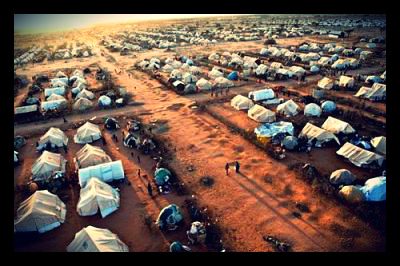
Kenya Plans To Close All Refugee Camps

kenyan_refugee_camps
Kenya in recent decades has become a place of refuge for people from all countries in Africa. Nonetheless, this past week, Asman Kamama, the Chairman of the Kenyan Administration and National Security Committee, stated that Kenya would attempt to close all its refugee camps within the next two years. This goal, however, depends upon the stability and improvements made within the countries where the refugees are coming from, particularly Somalia. Of Kenya’s 592, 219 refugees, 476,635 (80%) of these refugees are Somalis.

Groups from Ethiopia, Sudan, Congo, Rwanda, Eritrea, Burundi, South Sudan and Uganda also compromise the population of Kenyan refugee camps. As a result of the mass amount of refugees, the populations in refugee camps have swollen and strained the resources available. For example, Dadaab refugee camp, located in Kenya, is ranked the largest refugee camp in the world.

However, the United Nations has denied that an effort has been made to close the Somali refugee camps in Kenya. Kitty McKinsey, a spokeswoman for the U.N. Refugee Agency, stated that the United Nations does not believe “that there is any order for the refugee camps in Kenya to be closed.” McKinsey added, “The Kenyan government and the Kenyan people have been very generous to the refugees over the years, and we certainly have every reason to expect that will continue to be the case.”

The fate of refugees in Kenya is yet to be seen. If Kenya does close the refugee camps, Kamama explained that the return of these refugees will be peaceful and smooth.

– Lienna Feleke-Eshete

Sources: VOA News, All Africa

Photo: Womens News Network

December 23, 2013
https://borgenproject.org/wp-content/uploads/borgen-project-logo.svg 0 0 Borgen Project https://borgenproject.org/wp-content/uploads/borgen-project-logo.svg Borgen Project2013-12-23 04:00:362024-05-25 00:38:39Kenya Plans To Close All Refugee Camps
Refugees and Displaced Persons

Ivorian Refugees in Liberia

An election crisis, a civil war and numerous human rights violations have sent thousands of Ivorians fleeing into Liberia. Since 2010, thousands of refugees have left the embattled Ivory Coast for other countries to escape political violence and abuse. These refugees have found reception in Liberia since they were displaced by the political crisis and those still displaced are eager to return home and begin reconciliation and the rebuilding of lives.

The Ivorian crisis began at the end of 2010 following the contested presidential election which was supposed to occur in 2005, but had been postponed for nearly five years. The election caused months of instability, abuse and outbreaks of violence in the country. The chaos that emerged from the election meltdown left hundreds dead and thousands displaced from their homes.

By the end of July 2011, the numbers of refugees fleeing the Ivory Coast exceeded more than 400,000 people who remained displaced from their home. This figure accounts for those displaced either within the Ivory Coast or within neighboring countries. Most who fled went to Liberia where about 171,000 refugees were housed within hosting communities and in camps. As of November, the Republic of Liberia had 57,724 registered refugees coupled with a national statistic of 19,964 households for perspective.

As of July, more than 10,000 Ivorians have returned home from Liberia with help from the United Nations High Commissioner for Refugees (UNHCR); this figure is almost double the figure for the whole of 2012. The limited resources of the Liberian government and the needs of Liberian citizens only one reason is why remaining a refugee in Liberia is unsustainable. Those who are displaced deserve the right to return home and return to their lives.

The road home for many Ivorian refugees had begun with the assistance of the United Nations.

The U.N. refugee agency working in collaboration with the Liberia Refugee Repatriation and Resettlement Commission and other partners, has been organizing road convoys for those seeking to return home. More than two years after fleeing post-election violence in Côte d’Ivoire means much has changed and much has been lost. The progression out of war into peace begins with a redress of rights and the return of those displaced.

This year has seen success in repatriation of Ivorian refugees. “Last year, we facilitated the repatriation of more than 6,000 refugees. For this year, our planning figure is to facilitate the repatriation of 16,000 refugees,” said UNHCR Officer-in-Charge Andrew Mbogori while thanking donors for their support of the  repatriation efforts.

“With 10,000 refugees repatriated over the past seven months, notwithstanding border security concerns a few months ago, we are definitely on track to attain our target,” he added.

The repatriation process has been interrupted by violent attacks on villages on the Ivorian side of the border. Border security has been a high U.N. concern as physically crossing borders safely back home is the goal of repatriation. Improvements in security have encouraged more people to return home and more security is still needed.

Besides the physical barriers of dangerous border crossings, refugees are also at the whim of nature and seasonal rains. These challenges have brought together aid agencies to enact road rehabilitation services which can guarantee passage and be maintained by security forces.

Once they have successfully returned to Côte d’Ivoire, former refugees will receive a cash grant, food and essential non-food items.

There are still remaining refugees waiting to return. There is still much to be done, and further security required providing the necessary platform for successful peace building endeavors. Security can only truly be reached when all parties participate and when aid organizations are able to freely operate within the application of restorative justice.

– Nina Verfaillie
Feature Writer

Sources: Oxfam International, UNHCR, The UN Refugee Agency
Photo: National Geographic


December 5, 2013
https://borgenproject.org/wp-content/uploads/borgen-project-logo.svg 0 0 Borgen Project https://borgenproject.org/wp-content/uploads/borgen-project-logo.svg Borgen Project2013-12-05 09:35:492024-05-25 00:40:29Ivorian Refugees in Liberia
Refugees and Displaced Persons

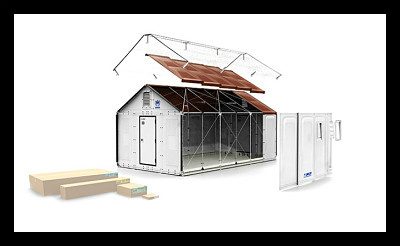
IKEA DIY Refugee Shelters

ikea_diy_shelter
The Swedish “do-it-yourself” furniture giant, IKEA, has teamed up with the UN High Commissioner for Refugees (UNHCR) to develop a flatpack shelter that can being used for refugee housing. Currently, there are over 45 million people displaced across the world because of conflict or natural disaster. IKEA is working to return dignity, security, and a life to these people.

IKEA’s flatpack shelters are chock full of innovative technology developed solely for these structures. The shelters are made from a lightweight polymer plastic, which is mounted on a steel skeleton. Refugee Housing Unit designed this polymer plastic to be strong enough to withstand the harsh climates of refugee camps, light enough to be transported cost-effectively, and to create privacy. Each shelter also has a metallic fabric shading cover that reflects the sun during the day and retains heat at night. Solar panels on top of the shade net generate electricity for a built-in light and a USB port inside the shelter.

The shelters require no additional tools for construction and can be built in around four hours. Each one can comfortably house five people for around three years. These features make IKEA’s flatpack shelters a vast improvement over the housing options that are currently available to refugees. Unlike this new innovation, traditional canvas ridge tents are usually not insulated, are half the size, and have a lifespan of around six months, which combined severely limit quality of life.

IKEA’s current flatpack model is two years in the making, but still in the prototype phase. Refugee camps in Iraq, Lebanon, and Ethiopia are testing around 50 of these prototypes. In the future, the design team hopes to increase the shelter’s solar electricity capacity, as well as its water harvesting and purification capabilities. Lockable doors and windows are also in the works.

Thus far, IKEA’s philanthropic branch, IKEA Foundation, has invested $4.8 million into developing the shelters. Each unit reportedly costs around $7,500 to create, but designers are hopeful that they can settle on a cost of $1,000 each, once in mass production. This price is double the cost of current tents, but with a vast amount of additional features most important to refugees.

Though IKEA’s do-it-yourself model can sometimes pose a construction challenge to its average customer, this model excels within the constraints of refugee housing. IKEA has used its fortune to bring innovative, improved shelter to those truly in need of it.

– Tara Young

Sources: NPR, Wired, The Guardian
Photo: Inhabitat

October 4, 2013
https://borgenproject.org/wp-content/uploads/borgen-project-logo.svg 0 0 Borgen Project https://borgenproject.org/wp-content/uploads/borgen-project-logo.svg Borgen Project2013-10-04 15:29:382024-12-13 17:49:42IKEA DIY Refugee Shelters
Foreign Aid, Refugees and Displaced Persons, United Nations

Refugees in Ethiopia Receive Monetary Relief

Somali_Refugees_Ethiopia
Somali refugees continue to arrive in Ethiopia in large droves due to poor growing conditions, food shortages, and continued conflict. While the situation is slowly improving, John Ging, Director of Operations in the Office for the Coordination of Humanitarian Affairs, urges continued attention to the crisis and says, “I call on the international community to invest now to build the resilience of Somalis and stop the cycle of crisis they have endured far too long.”

To that end, The United Nations World Food Program, UNHCR, European Commission Humanitarian Aid and Civil Protection, and the government of Ethiopia have partnered to launch an aid project that provides Somali refugees with monthly cash installments in addition to food aid. Currently, 12,000 refugees are receiving monetary relief and the project plans to extend cash aid to 13,000 more by October.

Monetary relief allows Somali refugees to round out their diet with fresh produce, proteins, and dairy from the local market, providing an important supplement to the basic grains and non-perishables received from aid agencies. It also gives the refugees an opportunity to inject money into the local economy. This economic boost is helpful to the communities supporting the large number of refugee settlements.

Currently the refugees who are part of the pilot cash program receive 100 Ethiopian Birr per month, or about $5.00. The organizations backing this program are optimistic that these cash transfers will greatly alleviate the most acute suffering and make the refugee situation less of a burden. Between Ethiopia, Kenya, and Yemen, there are over 1 million Somali refugees. The cash relief program gives refugees an opportunity to regain a little agency and make decisions about what groceries to purchase while also offering much needed hunger relief.

– Zoe Meroney

Sources: World Food Program, United Nations, All Africa
Photo: UNHCR

August 12, 2013
https://borgenproject.org/wp-content/uploads/borgen-project-logo.svg 0 0 Borgen Project https://borgenproject.org/wp-content/uploads/borgen-project-logo.svg Borgen Project2013-08-12 05:02:342024-06-11 01:49:27Refugees in Ethiopia Receive Monetary Relief
Refugees and Displaced Persons, United Nations

Refugees and World Refugee Day 101

refugees_war
Every year on June 20, refugees around the world are recognized for the bravery and strength of fleeing their homelands in search of a new peaceful life. Established in 2000 by the UN General Assembly, World Refugee Day not only celebrates the achievements of displaced peoples but also raises awareness on global issues pertaining to those who are driven out of their countries of origin due to war, threats of violence, and persecution.

Worldwide, there are 43.7 million displaced individuals, among whom nearly half are children. While they may choose to resettle in their motherland, many refugees choose to stay in the country from which they seek asylum. Even in countries such as the United States, however, refugees are vulnerable to a host of problems.

Due to the violence or trauma they may have experienced, refugees are prone to depression and post-traumatic stress disorder (PTSD), among a number of other psychiatric disorders. The highest occurrence rates recorded for PTSD and depression are 86 percent and 31 percent, respectively. Refugees may also experience culture shock in attempting to adjust to their new environment. Conversely, instances of discrimination from host nation members are not uncommon.

Despite their employment rights being clearly stated in international law, refugees may still face employer bias and discrimination in the workplace. Thus, they often have no choice but to turn to less than reputable means of earning an income whether that be prostitution, child labor, or criminal organizations.

What can be done to help? –Though a month has passed since World Refugee Day 2013, UNHCR works hard year-round to provide refugees with basic healthcare services, food, clean water, access to employment and education, and reunions among the families that have been divided by conflict. Beyond the UN, multiple civic organizations, including the International Rescue Committee and the US Committee for Refugees and Immigrants, aim to protect standards for refugees’ rights. Volunteer opportunities and donations are always welcome and have the potential to create an indelible impact on millions of lives.

– Melrose Huang
Sources: UNHCR, Yemen Times, US Department of Veterans Affairs, International Rescue Committee
Photo: David Mixner

August 6, 2013
https://borgenproject.org/wp-content/uploads/borgen-project-logo.svg 0 0 Borgen Project https://borgenproject.org/wp-content/uploads/borgen-project-logo.svg Borgen Project2013-08-06 05:05:242024-06-04 01:05:58Refugees and World Refugee Day 101
Refugees and Displaced Persons, Water

Problem of Safe Drinking Water for Refugees

Problem of Safe Drinking Water for Refugees

Drinking water is a major problem for many parts of Africa, particularly in refugee camps, where minimal living conditions make it difficult to secure safe drinking water. The recommended minimum amount of water a person needs in an emergency situation is 15 liters a day. In Ab Gadam, a refugee camp in southeast Chad, UNHCR struggles to provide refugees with 10 liters per person per day. Currently, in Ab Gadam the drinking water is filtered from a nearby lake, however, when the rain comes, this source of water will be cut off. UNHCR is trying to find new solutions to be able to meet this challenge.

“It is really serious…we need to increase the supply – and that is what we are working on,” said Dominique Porteaud, UNHCR’s senior water and sanitation officer. He made it clear that if a solution was not found people would turn to alternative, unsafe ways of obtaining water that could lead to disease.

Zenab, a refugee living in Ad Gadam with five children, knows all too well the effect unsanitary water can have. After having to flee their village in the troubled West Darfur region, she and her family spent weeks in the border area. While there they dug small holes in the ground to find drinking water. This drinking water was not filtered and caused Zenab’s two-year-old son Ali to get sick. After entering the Ad Gadam camp, Ali is still sick but is now receiving treatment.

As the rain season quickly approaches UNHCR has been looking at several different approaches to supply safe drinking water to the refugees of Ad Gadam. Some of these measures include increasing the number and size of water storage tanks and continuing the search for productive boreholes.

UNHCR has already developed a water treatment plant, which chemically sanitizes water brought in from the nearby lake. The plant can produce enough clean water to supply refugees with 10.5 liters per day, which is still short of the minimum recommended. Refugees have also begun to find their own source of clean drinking water. Zenab and her family collect rainwater that they use to clean clothes, pots and pans, and bathe.

To inform people about the dangers of unsafe drinking water, UNHCR has begun to run awareness programs that stress the importance of clean water, sanitation and hygiene. “It is important that everybody, including the children, know about the best use of water and the dangers of drinking dirty water,” says Barka Mahamat Barka, a UNHCR water and sanitation expert.

– Catherine Ulrich

Sources: UNHCR, UN
Photo: Contribute

July 23, 2013
https://borgenproject.org/wp-content/uploads/borgen-project-logo.svg 0 0 Borgen Project https://borgenproject.org/wp-content/uploads/borgen-project-logo.svg Borgen Project2013-07-23 06:02:102024-05-25 00:03:26Problem of Safe Drinking Water for Refugees
Page 30 of 32«‹2829303132›»

Get Smarter

  • Global Poverty 101
  • Global Poverty… The Good News
  • Global Poverty & U.S. Jobs
  • Global Poverty and National Security
  • Innovative Solutions to Poverty
  • Global Poverty & Aid FAQ’s
Search Search

Take Action

  • Call Congress
  • Email Congress
  • Donate
  • 30 Ways to Help
  • Volunteer Ops
  • Internships
  • Courses & Certificates
  • The Podcast
Borgen Project

“The Borgen Project is an incredible nonprofit organization that is addressing poverty and hunger and working towards ending them.”

-The Huffington Post

Inside The Borgen Project

  • Contact
  • About
  • Financials
  • President
  • Board of Directors
  • Board of Advisors

International Links

  • UK Email Parliament
  • UK Donate
  • Canada Email Parliament

Get Smarter

  • Global Poverty 101
  • Global Poverty… The Good News
  • Global Poverty & U.S. Jobs
  • Global Poverty and National Security
  • Innovative Solutions to Poverty
  • Global Poverty & Aid FAQ’s

Ways to Help

  • Call Congress
  • Email Congress
  • Donate
  • 30 Ways to Help
  • Volunteer Ops
  • Internships
  • Courses & Certificates
  • The Podcast
Scroll to top Scroll to top Scroll to top