• Link to X
  • Link to Facebook
  • Link to Instagram
  • Link to TikTok
  • Link to Youtube
  • About
    • About Us
      • President
      • Board of Directors
      • Board of Advisors
      • Financials
      • Our Methodology
      • Success Tracker
      • Contact
  • Act Now
    • 30 Ways to Help
      • Email Congress
      • Call Congress
      • Volunteer
      • Courses & Certificates
      • Be a Donor
    • Internships
      • In-Office Internships
      • Remote Internships
    • Legislation
      • Politics 101
  • The Blog
  • The Podcast
  • Magazine
  • Donate
  • Click to open the search input field Click to open the search input field Search
  • Menu Menu

Tag Archive for: Refugees

Posts

Human Rights, Refugees and Displaced Persons

Jesuit Refugee Service USA Gives Voice to Refugees

Jesuit Refugee Service USA Gives Voice to Refugees
Jesuit Refugee Service is a non-profit Catholic organization that works “to defend the rights of refugees and migrants throughout the world.” The U.S. division of JRS employs advocacy efforts to fight for “just and generous policies and programs” that will benefit refugees and ensure their protection during times of conflict.

JRS/USA partners with JRS branches across the world along with other aid organizations to make the voices of refugees heard and to propose actions that will properly address their situation.
Though JRS/USA focuses on select domestic issues such as U.S. detainees’ right to religious expression, the organization has pinpointed the following international advocacy issues to focus on during 2013:

  • International Detention: JRS/USA works to assist refugees and asylum seekers who risk being detained. The use of detention to limit asylum seekers has increased over the past ten years, and JRS/USA advocates against the unnecessary detainment of those seeking asylum.
  • Haiti and Dominican Republic: JRS/USA is currently fighting against the unfair treatment of refugees and immigrants that is occurring in the Dominican Republic. The government of the Dominican Republic recently enacted policies that have resulted in “the denial and/or revocation of the nationality of Dominican-born persons of Haitian ethnicity,” and mass deportations of people of Haitian descent are occurring. Dominican-born persons of Haitian descent face xenophobia, arbitrary detention, and denationalization.
  • Colombia: Colombia is home to five million internally displaced people, and 500,000 Colombians have fled to countries such as Panama, Ecuador and Venezuela. Most of these refugees lack access to basic services, and legal barriers prevent them from fully integrating into their countries of asylum. U.S. and global funding for the protection and assistance of Colombian refugees and internally displaced people remains insufficient, so resettlement efforts have not been successful. JRS/USA advocates for increased funding for Colombian refugees and internally displaced people and fights to increase the number of Colombian refugees resettled in the United States.
  • Migrants and Asylum Seekers: JRS/USA advocates for more generous international standards for the treatment of refugees and those who have been internally displaced. JRS/USA also fights for improvements in U.S. treatment of asylum-seekers, detained immigrants, and other displaced people.

Most U.S. citizens agree that certain standards of treatment towards refugees and internally displaced people should be upheld, but they disagree about the role the U.S. government should play in upholding these standards. JRS/USA seeks to highlight the difference U.S. policymakers can make in the lives of those threatened by their own government or country of origin.

– Katie Bandera

Source: Catholic Sentinel, JRS/USA
Photo: JRUSA

July 20, 2013
https://borgenproject.org/wp-content/uploads/borgen-project-logo.svg 0 0 Borgen Project https://borgenproject.org/wp-content/uploads/borgen-project-logo.svg Borgen Project2013-07-20 04:39:422024-05-25 00:03:05Jesuit Refugee Service USA Gives Voice to Refugees
Refugees and Displaced Persons, United Nations

What the UNHCR is doing for Refugees

refugee_opt
Abdel is a refugee in Choucha Refugee Camp, Tunisia. He arrived there in 2011 after years as an orphan in Libya. Originally from Cote D’Ivoire, Abdel’s parents had to flee that country for unspecified reasons, and his mother died before he turned five years old.

During the Libyan uprising against Muammar Gaddafi in February 2011, Abdel was held captive for ten months, during which time he and his father were forced to watch his sister’s rape and murder. After the ten months, he was freed and fled to Choucha in the city of Misrata, which at its peak held tens of thousands of Libyan refugees (most of which have been relocated to other countries).

Abdel soon decided that he could not tolerate sitting around in the camp all day, being bored and lonesome. That drive inspired him to apply for a pilot skills training program organized by the UN Refugee Agency (UNHCR) and the Danish Refugee Council, located about 87 miles from Choucha.

Abdel’s enrollment not only gave him something to do other than sit in Choucha, it also gave him a bit of hope for the future. In an interview, he admitted that for the first time in years he is sleeping well and that he’s looking at opportunities to continue his studies beyond Choucha.

In his class, Abdel is learning to make jewelry. The refugees eat and sleep in dormitories during the program, and the close quarters allow them to form friendships that help with feeling lonely or helpless. The program consists mostly of young males, but as the classes have begun to soar in popularity, young women have started to apply as well.

Abdel isn’t the only success story of the pilot programs. Danish Refugee Council project officer Gianmaria Pinto expressed in an interview that at the last session before the end of year break, all of the refugees were excited about that prospect of learning and did not want to return to Choucha.

Choucha is scheduled to close at the end of June 2013. Spokesperson for UNHCR Ursula Aboubacar insisted during a press conference in Tunis that the closing of Choucha will give the 900+ refugees still living there a better life. Though many of the refugees have nowhere to go and are still waiting to be relocated, the closing of Choucha will force them to make arrangements to support themselves.

Choucha housed many North African refugees in a time of violent tumult, and in the cases of young men and women like Abdel, has even given them skills and resources that they can use to generate some sort of revenue or self-worth. UNHCR and the Danish Refugee Council have put together a program that will help refugees and Tunisians alike get on their feet and build futures for themselves that, if all goes well, don’t reflect their pasts.

– Lindsey Rubinstein

Sources: Libya Herald, UNHCR
Photo: Demotix

July 20, 2013
https://borgenproject.org/wp-content/uploads/borgen-project-logo.svg 0 0 Borgen Project https://borgenproject.org/wp-content/uploads/borgen-project-logo.svg Borgen Project2013-07-20 04:33:022017-03-20 13:03:14What the UNHCR is doing for Refugees
Development

Ethiopian Community Development Council

Ethiopian_Community_development_council
Founded in 1983, the Ethiopian Community Development Council is a nonprofit organization based in Washington, D.C. whose mission is to empower Ethiopian refugees and immigrants in the United States. The main function of the ECDC is to resettle Ethiopian refugees displaced by drought, famine, and internal conflict in their home country. It should be noted that the organization is not limited to Ethiopian refugees, as it also serves immigrants from other African nations. The nonprofit receives support from US federal, state, and local governments along with the charitable contributions of private individuals, businesses, and foundations.

One of the most effective programs offered through ECDC is the Match Grant Program. This innovative program is funded by the Office of Refugee Resettlement and has allowed over 8,000 refugees from around the world to obtain employment quickly and easily. The program also provides a stipend for rent and transportation for the grant recipient.

Altogether, the Ethiopian Community Development Council is bettering the lives of refugees who have resettled in the United States from poverty-stricken African countries. In the ECDC, we see an organization that is successfully confronting a tangible need, the need for a fresh start in the life of a refugee, and delivering a set of solutions to meet that need. The ECDC is surely on the front lines of humanitarianism in America, and its influence can only spread. Currently, the ECDC is operating in Washington D.C., Denver, and Las Vegas.

– Josh Forget

Sources: The Ethiopian Development Council, USAID
Photo: The Ethiopian Development Council

July 18, 2013
https://borgenproject.org/wp-content/uploads/borgen-project-logo.svg 0 0 Borgen Project https://borgenproject.org/wp-content/uploads/borgen-project-logo.svg Borgen Project2013-07-18 05:58:232024-05-25 00:01:20Ethiopian Community Development Council
Food Aid, Human Rights, Refugees and Displaced Persons

The Life of a Refugee

Last week the U.N. office of the High Commissioner for Refugees (syrian-child_refugee_war_syria_global_poverty_development_undp_optUNHCR) said more than 1.5 million Syrian civilians had fled their country to escape the civil war that had been raging there for almost two years. Dan McNorton, a spokesman for the UNHCR, said the actual number of refugees is probably much higher due to concerns some Syrians have regarding registration. In addition, approximately 4 million people have been internally displaced since the beginning of the conflict. So what does this mean for the Syrian people who are now refugees? What can be expected in the life of a refugee?
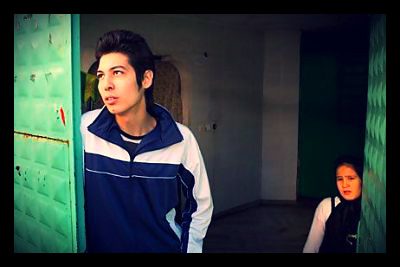
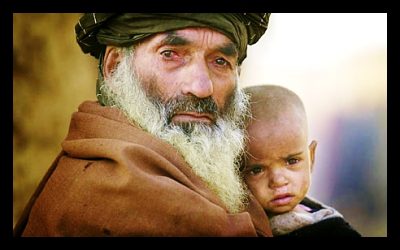
The UNHCR defines a refugee as a person who,

owing to a well-founded fear of being persecuted for reasons of race, religion, nationality, membership of a particular social group or political opinion, is outside the country of his nationality, and is unable to, or owing to such fear, is unwilling to avail himself of the protection of that country.

Like the Syrian refugees, many are often caught between a rock and a hard place. If they stay, they put themselves and their families in serious danger. If they flee, instability and uncertainty greet them at every turn. The UNHCR was created in 1950 to lead and coordinates international efforts to protect and assist people facing this difficult decision.  They protect the basic human rights of refugees and aim to ensure all refugees are given the opportunity to seek asylum in another country.

The starting point for many is often a UN refugee camp, intended to create a safe haven until they can begin their lives anew. Unfortunately, it is all too often the end of the road as well. Those who live in the camps are usually provided basic life sustaining necessities, but many will never leave. They become trapped in a state of dependence on these camps.

Currently, the largest and oldest camp (designed to house around 90,000 people) is home to almost half a million people, mostly from Somalia. It was intended to be a temporary solution for the influx of refugees from Somalia when the country descended into civil war more than 20 years ago, but the remoteness of its eastern Kenyan location and threats to security have prevented the UNHCR from further developing the camp for those who have permanently settled there. Education and sanitation is limited and the camp is extremely overcrowded.

The Syrian refugees have fled mostly to the neighboring countries of Jordan and Lebanon. Just last week Oxfam issued an urgent appeal for funds to assist those who are fleeing the conflict. Rick Bauer, the regional humanitarian coordinator for Oxfam said, “The sad reality is that the vast majority of Syrian refugees are not going home soon. He added that Oxfam is “starting to really worry about the health of Syrian refugees”.

“The aid effort must be properly funded and focused on providing refugees with affordable and decent places to stay, where they can live with dignity. That’s priority number one for refugees and host communities alike,” he said.

Priority number one indeed. But for the sake of Syrians who find themselves in a refugee camp, we hope they do not stay long.

– Erin N. Ponsonby

Source: CNN, UNHCR, Raw Story
Photo: MWB

June 9, 2013
https://borgenproject.org/wp-content/uploads/borgen-project-logo.svg 0 0 Borgen Project https://borgenproject.org/wp-content/uploads/borgen-project-logo.svg Borgen Project2013-06-09 04:00:362024-06-10 03:27:21The Life of a Refugee
Development, Foreign Policy, Global Poverty, Human Rights, Human Trafficking, Politics and Political Attention, Refugees and Displaced Persons, USAID, War and Violence

Afghan Child Refugees Flee to Europe

afghanistan-refugees
As citizens of the United States, we hear a lot about the war in Afghanistan. We hear about what the U.S. is doing, our withdrawal timeline, attacks and progress. What we don’t hear about is how the war has affected Afghan citizens, and what life has been like for them.

Right now in Afghanistan, there is a mass exodus of teenage boys who are fleeing Afghanistan. These Afghan child refugees are headed on a 10,000-mile journey towards Europe, where, if they are lucky enough to live and arrive in Europe, they may be able to seek asylum. Teens are forced to trust in smugglers who transport them in secret compartments in vans and truck, or take them on dangerous water crossings with low survival rates.  Many of the boys who take on this journey die in the process, with estimates as low as 35% of boys making it to Europe.

Additionally, Afghan boys are at risk for sex trafficking on their journey. Many of the boys are sexually abused, or turned into sex slaves by their smugglers. They are powerless to the smugglers, who control their livelihood and safety. Many children may also be diverted into menial jobs as they try to save money to pay smugglers for future legs of their jouney. Boys disappear often, and anonymously. They are incredibly vulnerable and very susceptible to kidnappers.

The deaths and disappearances of these boys are, in part, a result of their vulnerability and poverty. The poorer and less educated the boys, the bigger risk they may suffer. Additionally, some of the children may be experiencing post-traumatic stress from the war-related events that they may have witnessed in Afghanistan. The children are also subject to the constant threat of deportation, as most of them do not have legal status or documentation.

The lack of legal status can have many implications on the children. They could be exposed to organized crime, physical abuse, and child labor, as well as the previously mentioned sex trafficking. In several of the countries through which the boys travel, such as Greece, unaccompanied children are not guaranteed asylum or refugee status. Those children who are caught, deported, and sent back to Afghanistan may be at an even greater risk if returned. The plight of young Afghans is undoubtedly a serious human rights violation and one that should be more widely covered by mainstream media.

– Caitlin Zusy 

Sources: 60 Minutes, 60 Minutes, UNHRC
Photo: The National

June 5, 2013
https://borgenproject.org/wp-content/uploads/borgen-project-logo.svg 0 0 Borgen Project https://borgenproject.org/wp-content/uploads/borgen-project-logo.svg Borgen Project2013-06-05 04:11:062024-05-24 23:54:08Afghan Child Refugees Flee to Europe
Refugees and Displaced Persons

World’s Top 5 Largest Refugee Populations

refugee populations
An estimated 15.2 million people in the world are refugees, people forced to leave their home countries because of persecution, war, or other kinds of violence. That’s the equivalent of the populations of New York, Los Angeles, Chicago, and San Francisco combined.

Who are these people? Where do they come from? And where do they currently reside? Data from the United Nations High Commissioner for Refugees give us the following snapshot of these populations: of the 15.2 million refugees, 46% are under 18, and 48% are female. Most of these people have been forced to move to developing nations, which host an estimated 80% of the world’s refugee population.

The country with the largest refugee population in the world is Pakistan, which hosts an estimated 1.7 million refugees. Many of these refugees are from neighboring Afghanistan, the country that produces the greatest number of refugees, an estimated 2.7 million people. To place these numbers in a global context, below is a list of the world’s top 5 largest refugee populations by the nation of origin.

Largest Refugee Populations

1. Afghanistan –  2.7 million refugees worldwide

2. Iraq – 1.7 million

3. Somalia –  770,000

4. Democratic Republic of Congo – 477,000

5. Myanmar – 415,000


Refugees from these and other countries are forced to move across the globe, many of them ending up in Pakistan, Iran, Syria, Germany, and Jordan, the top 5 on the list of host countries. Jordan, Syria, Congo, Chad, and Montenegro are the countries with the highest proportion of refugees per 1,000 people. The United States currently hosts an estimated 265,000 refugees.

Although numbers like these are sometimes hard to grasp, compiling this kind of data is vital for refugee aid organizations like UNHCR, which rely on data to plan ways to help the people and countries involved. UNHCR publishes an annual Global Trends Report on refugee populations. The next such report is due in June 2013.

– Délice Williams

Sources: UNHCR, The Guardian, MSN Causes
Photo: Guardian

May 22, 2013
https://borgenproject.org/wp-content/uploads/borgen-project-logo.svg 0 0 Borgen Project https://borgenproject.org/wp-content/uploads/borgen-project-logo.svg Borgen Project2013-05-22 04:00:552024-06-10 03:22:52World’s Top 5 Largest Refugee Populations
Global Poverty

History of the UNHCR

History of the UNHCR
Over the 63-year history of the UNHCR, the staff, budget, legal framework, NGO network, geographic scope and expertise of the UN High Commissioner for Refugees has expanded. Despite the initially ambitious goal of solving all refugee problems in three years, the extended mandate of the UNHCR speaks to the consistent problem of refugees, internally displaced persons, asylum seekers, and stateless peoples.

WWII left around 400,000 people homeless refugees strewn across Europe. In 1950, the ambitious new global institution, the UN, created the UN High Commissioner for Refugees (UNHCR) under a three-year mandate to complete its work and then disband. With only 34 staff members and a $300,000 first-year budget, the UN quickly realized the magnitude of the problem far outweighed the resources of the body. A year after its inception, a legal foundation for assisting refugees was set up to establish a legal framework under which refugees can claim international rights. In recognition of the innovative humanitarianism the UNHCR performed, the new organization won the 1954 Nobel Peace Prize.

When the Soviets put down the Hungarian revolution in 1956, an outpouring of refugees into neighboring countries was a humanitarian emergency. The decolonization of Africa in the 1960s and pursuant demarcation of sovereign state boundaries “produced the first of that continent’s numerous refugee crises needing UNHCR intervention.” Through the 1970s and 1980s, the UNHCR advocated and assisted refugees in Asia and Latin America. In 1981 the UNHCR again won the Nobel Peace Prize for “assistance to refugees, with the citation noting the political obstacles facing the organization.”

When the Berlin Wall fell and proxy wars ended, governments previously ‘shored up’ by foreign assistance were weakened. This allowed the “proliferation of identity-based conflicts” causing new refugee problems. The 1990s brought the refugee emergencies full circle back to Africa and Europe with the wars in the Balkans. Throughout the 21st century, the UNHCR has been assisting refugees in the extremely sensitive crises of the Democratic Republic of the Congo and Somalia.

The UNHCR also expanded to assist internally displaced persons and stateless peoples—a politically divisive issue. Stateless peoples are frequently overlooked and denied basic human rights because they do not have citizenship. Fortunately, in some regions, regional agreements have strengthened the 1951 mandate.

As population movement becomes more complex so does the refugee situation. Approximately 150 million people live outside their country of birth. 10% of these people are refugees. This amounts to about 1 out of 400 people worldwide. Most often, refugees are created from violent conflict and recent research and practitioners’ experiences show humanitarian aid can no longer be considered independent of a conflict. Often, conflicting factions see the humanitarian body as supporting one side or the other making the aid workers and aid vulnerable to attack and manipulation.

Fortunately, the UNHCR has reflected the growing problem by growing size, scope, and depth of action. In 2012, the UNHCR had a budget of $3.59 billion and a staff of 7,685 based in the Geneva headquarters, 126 countries within which 135 main offices operate and 279 remote field offices function. Of the 43 million people uprooted worldwide, the UNHCR supports 33.9 million ‘people of concern.’ The two largest groups are internally displaced persons (14.7 million people) and refugees (10.5 million persons). The remaining group’s returnees (3.1 million), stateless people (3.5 million), asylum seekers (837,000) and ‘other’ (1.3 million).

– Katherine Zobre
Sources: UNHCR History , The State of the World’s Refugees 2000
Photo: UNHCR


May 15, 2013
https://borgenproject.org/wp-content/uploads/borgen-project-logo.svg 0 0 Borgen Project https://borgenproject.org/wp-content/uploads/borgen-project-logo.svg Borgen Project2013-05-15 04:28:122024-06-10 03:19:43History of the UNHCR
Refugees and Displaced Persons

Top 5 Neglected Refugee Crises of 2012

refugee-crises-camp-zaire
Most refugee crises continue long after public interest and media attention have dissipated. Many others never receive international attention in the first place. However, many displaced people remain in temporary camps for much longer than anticipated. Without international awareness or support, aid organizations and the UN’s Refugee Agency struggle to meet the basic needs of refugees, forced migrants, and internally displaced people (IDPs).

The United Nations identified some of the most neglected refugee crises around the world in 2012:

1. Sudanese refugees in Chad: Ongoing conflict in Sudan’s western Darfur region has displaced almost 2 million Sudanese. Over 250,000 of these refugees fled to Chad, one of the world’s poorest countries. Lack of infrastructure and resources in Chad have made it extremely difficult for residents to support themselves. Many rely exclusively on humanitarian aid for survival.

2. Eritrean refugees in eastern Sudan: The Eritrean refugee presence in eastern Sudan continues to grow each year. Due to political instability and military conscription, so far over 60,000 Eritreans have migrated to some of the poorest parts of Sudan. Human traffickers and smugglers target the refugees, who are unable to legally possess land or property in Sudan.

3. Sudanese refugees in South Sudan: The conflict between the Sudanese government and the Sudan People’s Liberation Movement has been receiving increased international attention. But in 2012, aid organizations were urgently requesting an additional $20 million to meet the needs of the 170,000 refugees flooding into South Sudan. Lack of infrastructure makes aid delivery difficult and expensive.

4. IDPs in Democratic Republic of Congo (DRC): Over 300,000 people were displaced from their homes in DRC in 2012 as a result of military violence. The majority remains within the Congo, while others have fled to Uganda and Rwanda. Insufficient funding and attacks on aid workers have hampered humanitarian efforts. Prior to the 2012 displacement, DRC was already home to 1.7 million internally displaced people.

5. Rohingya refugees in Bangladesh: Muslims from western Myanmar, mainly from the state of Rohingya, have faced systemic discrimination and widespread abuse for the last fifty years. Thousands have fled to Bangladesh, where the government has prohibited international agencies from providing aid to undocumented refugees: of an estimated 200,000 Rohingya refugees in Bangladesh, only 30,000 are documented.

Many more displacement and refugee crises across the globe continue to take place under the radar of mainstream media. The UN Office for the Coordination of Humanitarian Affairs has much more information and analysis on forced and unforced migration, displacement, and related human rights concerns.

– Kat Henrichs

Source: IRIN News
Photo: Wikipedia

April 6, 2013
https://borgenproject.org/wp-content/uploads/borgen-project-logo.svg 0 0 Borgen Project https://borgenproject.org/wp-content/uploads/borgen-project-logo.svg Borgen Project2013-04-06 10:03:422020-05-04 08:12:18Top 5 Neglected Refugee Crises of 2012
Refugees and Displaced Persons

The Most Important Thing: A Photo Project

The Most Important Thing: A Photo ProjectAs the violence in Syria and Sudan continues to escalate, photographer Brian Sokol gives us a brief look into the lives of displaced refugees. In his photo project titled “The Most Important Thing,” Sokol traveled to South Sudan and four other countries bordering Syria taking pictures of refugees holding the last object they grabbed before being forced to leave their homes. Sponsored by the UN Refugee Agency, the project profoundly reflects on what we would take if we had to leave everything behind.

Most of the refugees are carrying with them cooking or carpentry tools, clothing or baskets. Bottles, pans, axes, and other essentials are commonly being both easy to carry and vital to rebuilding their lives. Cell phones are treasured because they allow refugees to call loved ones in other camps and carry photos of them as well.

Abdul carries with him the keys to his home hoping that it will still be standing when he returns to Damascus. Twenty-year-old Tamara carries her diploma which she says will allow her to continue her education in Turkey. In eight-year-old May’s photo, she wears a set of bracelets saying that her most important thing was actually her doll Nancy which she had to leave behind in the rush to escape the violence. Omar carries with him a stringed instrument called a buzuq which he says “fills me with a sense of nostalgia and reminds me of my homeland.” Omar remembers that the night he left his home was the same night both his sons were killed.

The most important things for these refugees are items that either helps them survive and work towards a better future or reminisce better times. Twenty-four-year-old Alia of the Domiz refugee camp is confined to a wheelchair and blind in both eyes. She recalls when the fighting occurred right outside her house and being terrified and crying because she did not know what was happening. She says that the only important thing she brought “is my soul, nothing more – nothing material.”

– Rafael Panlilio
Source: Huffington Post

March 30, 2013
https://borgenproject.org/wp-content/uploads/borgen-project-logo.svg 0 0 Borgen Project https://borgenproject.org/wp-content/uploads/borgen-project-logo.svg Borgen Project2013-03-30 10:00:262020-06-01 00:55:07The Most Important Thing: A Photo Project
Advocacy, Malaria

Top 10 African Celebrities to Follow

patriciaamira_opt

Africa produces some of the most brilliant artists, athletes, and activists worldwide.  From the media industry to the political stage, these African celebrities are working to improve lives.  The Borgen Project presents the top 10 African celebrities to follow.

1. Patricia Amira, Nigerian, TV Personality

Patricia Amira is a self-proclaimed “optimistic realist” and “closet artist.”  She is the “Oprah” of Africa and hosts one of the continent’s most popular talk shows.  The Patricia Show transcends national boundaries and identities.  The show focuses on achievements across Africa and aims to create social and cultural transformation. The Pan-African talk show is broadcasted in over 45 African countries and averages over 10 million viewers.  She currently serves as the Director of the Festival of African Fashion and Arts.  The festival encourages collaboration among designers and emphasizes the importance of artists.  Amira is also a spokesperson against human trafficking.

2. Nneka, Nigerian, Musician

Nneka is a soul musician of Nigerian-German descent.  Investigative journalism and philosophy inform her music, and she often writes about poverty, war, and and social justice issues.  Nneka emphasizes the importance of understanding balance and harmony.  “It’s important that you recognize yourself as part of the system, too, and that the only way we can make things work is by realizing we are part of the same entity,” Nneka said.

3. Didier Drogba, Ivorian, Soccer Player

Didier Drogba was a leading striker for England’s Chelsea football club and head captain of the Cote D’Ivoire national team.  His performance on the field is impressive, but he made headlines at the 2006 FIFA World Cup for something much greater.  Drogba begged on live television for a cease-fire on the Ivory Coast.  The warring factions subsided within one week.  The Telegraph reporter Alex Hayes noted that Drogba is “the face of his country; the symbol of a new, post-civil war Ivory Coast.”  He also created the Didier Drogba Foundation, a foundation “to provide financial and material support in both health and education to the African people.”  The foundation recently partnered with United Against Malaria (UAM) to help fight malaria.

4. Wole Soyinka, Nigerian, Playwright

Wole Soyinka is a playwright, author, and political activist from Nigeria.  Soyinka entered the political stage after lobbying for a cease-fire during Nigeria’s civil war.  “The greatest threat to freedom is the absence of criticism,” Soyinka said.  This led to his imprisonment for 22 months.  He was released in 1969, and he began publishing again.  Soyinka became the first African to win the Nobel Prize in Literature in 1986.  His novel The Interpreters analyzes the experiences of six different African intellectuals.

5. Neill Blomkamp, South African, Movie Director

Neill Blomkamp is a movie director known for his documentary, handheld cinema style.  He blends natural and computer-generated elements effortlessly.  Blomkamp co-wrote and directed District 9.  The film focused on extraterrestrial refugees in a South African slum.  The title derived from real events during the apartheid era at District Six, Cape Town. The film received international fame, and box office sales totaled $200 million.  Time magazine named Blomkamp one of the “100 Most Influential People of 2009.” 

6. Binyavanga Wainaina, Kenyan, Author

Binyavanga Wainaina founded the first literary magazine in East Africa, entitled Kwani?.  The magazine is known as “the most renown literary journal in sub-Saharan Africa.”  Wainaina created the magazine after winning the 2002 Caine Prize for African Writing.  The Caine Prize is an annual literary award for the best original short story by an African writer.  He is known for authoring “How to Write About Africa.”  The short story is known as one of the most satirical pieces ever written about Africa.

 7. Genevieve Nnaji, Nigerian, Actress

Genevieve Nnaji skyrocketed from a middle class upbringing to Nollywood stardom.  She is one of the most popular African celebrities.  Nnaji grew up in Lagos, Nigeria as one of eight children.  Nnaji began her acting career at eight years old on Ripples, a Nigerian soap opera.  She is now one of Africa’s most popular actresses.  At only 32 years old, she has starred in over 80 feature films.  She is one of the best paid actresses in Nollywood—Nigeria’s feature film industry.   “I have always maintained that when they [Hollywood directors and actors] are ready for a young African woman to take part in a project that they will come looking for us,” Nnaji said.

8. Chimamanda Ngozi Adichie, Nigerian, Writer

Chimamanda Ngozi Adichie is one of Africa’s leading contemporary authors.  She is the author of the novels Purple Hibiscus and Half of a Yellow Sun.  Adichie delivered a popular TED Talk after publishing The Thing around Your Neck, a collection of short stories.  She warns against judging a person or country based on limited information.  “The single story creates stereotypes, and the problem with stereotypes is not that they are untrue, but that they are incomplete. They make one story become the only story,” Adichie said.  Nigerian history and tragedies inspire her literature.  She is one of the most notable authors of disaporan literature.

9. Rokia Traoré, Malian, Musician

Rokia Traoré became famous in 1997 with the release of her first album Mouneissa.  Malian singer Ali Farka Touré helped Traoré develop her sound, and she later earned “Best African Discovery” from the Radio France Internationale.  Traoré’s father was a Malian Diplomat, and she traveled extensively as a child.  Her travels in Algeria, Saudi Arabia, France, and Belgium influenced her music.  Traoré joined the 30 Songs/30 Days campaign in September 2012.  The campaign supported the Half the Sky movement, based on the book by the same name.  The movement focuses on sex trafficking, sexual violence, and female education.

10. Alek Wek, Sudanese, Supermodel

Alex Wek is a supermodel, fashion designer, and political activist.  Wek fled Sudan at the age of 14 to escape the civil war. She moved to London, England with her parents and eight siblings and was later discovered at an outdoor market.  Ford Models, one of the world’s top modeling agencies, signed her in 1996.  By 1997, she was the first African model to appear on the cover of Elle magazine.  Wek continues to model but is also a member of the U.S. Committee for Refugees’ Advisory Council.  Wek works with World Vision to combat AIDS.  She is also an ambassador for Doctors Without Borders in Sudan.  She belongs to the Dinka ethnic group

– Whitney M. Wyszynski

Source: Forbes

March 25, 2013
https://borgenproject.org/wp-content/uploads/borgen-project-logo.svg 0 0 Borgen Project https://borgenproject.org/wp-content/uploads/borgen-project-logo.svg Borgen Project2013-03-25 10:58:122024-05-24 23:45:32Top 10 African Celebrities to Follow
Page 31 of 32«‹29303132›

Get Smarter

  • Global Poverty 101
  • Global Poverty… The Good News
  • Global Poverty & U.S. Jobs
  • Global Poverty and National Security
  • Innovative Solutions to Poverty
  • Global Poverty & Aid FAQ’s
Search Search

Take Action

  • Call Congress
  • Email Congress
  • Donate
  • 30 Ways to Help
  • Volunteer Ops
  • Internships
  • Courses & Certificates
  • The Podcast
Borgen Project

“The Borgen Project is an incredible nonprofit organization that is addressing poverty and hunger and working towards ending them.”

-The Huffington Post

Inside The Borgen Project

  • Contact
  • About
  • Financials
  • President
  • Board of Directors
  • Board of Advisors

International Links

  • UK Email Parliament
  • UK Donate
  • Canada Email Parliament

Get Smarter

  • Global Poverty 101
  • Global Poverty… The Good News
  • Global Poverty & U.S. Jobs
  • Global Poverty and National Security
  • Innovative Solutions to Poverty
  • Global Poverty & Aid FAQ’s

Ways to Help

  • Call Congress
  • Email Congress
  • Donate
  • 30 Ways to Help
  • Volunteer Ops
  • Internships
  • Courses & Certificates
  • The Podcast
Scroll to top Scroll to top Scroll to top