• Link to X
  • Link to Facebook
  • Link to Instagram
  • Link to TikTok
  • Link to Youtube
  • About
    • About Us
      • President
      • Board of Directors
      • Board of Advisors
      • Financials
      • Our Methodology
      • Success Tracker
      • Contact
  • Act Now
    • 30 Ways to Help
      • Email Congress
      • Call Congress
      • Volunteer
      • Courses & Certificates
      • Be a Donor
    • Internships
      • In-Office Internships
      • Remote Internships
    • Legislation
      • Politics 101
  • The Blog
  • The Podcast
  • Magazine
  • Donate
  • Click to open the search input field Click to open the search input field Search
  • Menu Menu

Tag Archive for: Inequality

Posts

Global Poverty

Oil, Inequality, and Youth: Poverty in Gabon

Gabon Inequality
Gabon, the oil rich Central African country, continues to struggle with widespread poverty. Dependent largely on oil and natural resources including timber and manganese, Gabon’s economy struggles to attain sustainable methods of growth.

With 50% of the GDP reliant on oil sales, the necessity for economic diversity stems from the post-peak levels of oil drilling and the sharp depletion of oil production within the country.

Despite an above average GDP/capita of $17,300 and a status as an upper middle income economy, Gabon continues to face large income inequality. According to the African Development Bank (AFDB), one third of the population lives below the poverty line, with 13.2% living in severe poverty. This conflicts greatly with the label of upper middle income status.

To pinpoint poverty in Gabon, the Multidimensional Poverty Index (MPI) allows us to understand and compare a country’s poverty levels with 3 dimensions: education, health, and standard of living. Conducted by the Oxford Poverty and Human Development Initiative (OPHI), the MPI shows us that 35.4% of the population live in poverty with limited education, nutrition, and a low standard of living.

The universally understood poverty measurements of US $1.25/day, US $2/day, and the National Poverty Line provide a more in depth view of the varying levels of poverty. OPHI found that 4.8% live on less than $1.25/day, 19.6% live on less than $2/day, and 32.7% live below the National Poverty Line.

To further understand the large percent of impoverished Gabonese we must look into the wealth disparity and unemployment. The biggest drawback of an undiversified economy dependent on commodities is limited jobs within the sector. With such a high percent of GDP due to oil drilling, few Gabonese benefit from the sector. This lack of employment in an undiversified economy manifests itself in an unemployment rate of 21%.

Along with unemployment, two other issues factor into Gabon’s development: the large proportion of youth in the country and high urbanization. The AFDB found that 35.6% of the population is under 15, with 60% of that demographic unemployed. They also learned that nearly 86% of the population resides in urban areas, meaning that more than one third of the population lives in the capital city of Libreville.

In spite of these shortcomings, President Bongo Ondimba has begun work on increasing transparency and Gabon’s attractiveness to investors. In April 2010, the country began its attempts to improve the diversity of the economy. To accomplish this the government started to develop the “energy, mining, forest, tourism and agro-industrial potential.” Not forgetting the financial plight of its poorest citizens, the government has also raised the minimum monthly wage and created “solidarity allowance” to benefit very low-income workers.

– Michael Carney

Sources: African Development Bank, CIA World Factbook
Photo: Africa Review

July 14, 2013
https://borgenproject.org/wp-content/uploads/borgen-project-logo.svg 0 0 Borgen Project https://borgenproject.org/wp-content/uploads/borgen-project-logo.svg Borgen Project2013-07-14 04:12:452024-12-13 17:49:28Oil, Inequality, and Youth: Poverty in Gabon
Global Poverty

The Widening Gap of Global Inequality

poverty-reductionThe gap between rich and poor is widening. It takes money to make money, and so inequality is becoming exacerbated as the rich get richer.
Rising inequality has impeded efforts to eliminate global poverty. With a greater share of wealth being captured by those in the highest income bracket, the amount reaching the lowest is continually decreasing. Two nations with equivalent GDP growth rates could have drastically different levels of poverty depending on income equality. For example, in India, the net worth of 46 billionaires is $176 billion. This number represents 12% of the GDP of India, as opposed to 1% fifteen years ago. Half of that amount would be enough to eliminate absolute poverty in India.

The irony of this unchecked growth of the upper classes is that eventually it can result in a restriction of growth. Extreme inequality slows the development of markets and limits investment opportunities for the poor. Inequality also diminishes the political power of the poor. This skewing of power can reduce government efficiency and allow for tax evasion by the wealthy, limiting the government’s ability to invest in necessary infrastructure to sustain growth.

If we’re to see success in the fight against global poverty, then rising equality must be allowed to play its part.

– David Wilson

Source: The Guardian
Photo: Global Post

July 2, 2013
https://borgenproject.org/wp-content/uploads/borgen-project-logo.svg 0 0 Borgen Project https://borgenproject.org/wp-content/uploads/borgen-project-logo.svg Borgen Project2013-07-02 05:00:452024-05-24 23:56:35The Widening Gap of Global Inequality
Global Poverty

What The Hunger Games Tells Us About Global Poverty

The Hunger Games Global Poverty
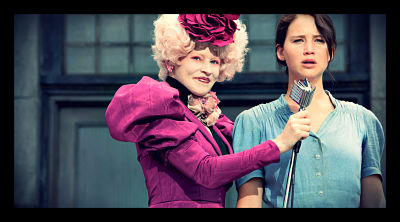
For a young adult series, Suzanne Collins’s The Hunger Games offers a surprisingly biting criticism of the status quo in the West. Her story is one of a privileged district in society that is altogether indifferent to the suffering going on outside its boundaries.  Although Collin disguises it with different names, she has not ventured far from our present reality of global poverty.

The Hunger Games is set in a dystopic future world, where citizens live in an area divided by districts. District One & Two are the wealthiest, and control the majority of the resources. As they spread further and further out, the regions become more impoverished. The heroine of the novel, Katniss Everdeen, is from the last, District 13, and relies on her wits, her will and a crude bow and arrow to support her family. Through its fantastical descriptions, outlandish characters and futuristic technology, Collins’ world manages to appear quite distinct from our own. Yet, in a thinly veiled criticism Collins has painted an unsettling portrait of ourselves and the world we live in.


The Hunger Games: A Lesson on Global Poverty


The parallel escapes many of the fans of the books, but those who live in District One are akin to the top percent in the world: they have enough to eat, access to clean water, safe homes and opportunities for betterment. For this percentage of the world, daily life is not a struggle: it is a thing to be enjoyed, to find happiness and meaning, to indulge in fads and fancies and fashion. Much like the District One in the books, the humans in District One seem bizarre and alien in comparison to those struggling on the fringes. They have none of the same concerns and seem largely unaware of the brutal reality that exists just beyond their borders.

The Hunger Games offers an uncomfortable mirror to our own world. In our daily lives, we often obsess about trivialities: we track celebrities, dedicate time to watching who wore what dress, aim to buy smartphones and cars while the vast majority of the world struggles to scrape a living out of the most dire circumstances.

As audiences, we automatically condemn District One; without even meeting them, we judge everyone in it and see the plot’s revolution as inevitable and cheer for Katniss. In reality, however, we are not quite as benevolent. We are quick to make excuses to preserve self-interest. Poverty and the state of the world do not often rank among our daily concerns, as much as what to wear and what people think of us. On the national scale, US foreign aid consists of less than 1% of the budget; this covers everything from healthcare to military aid to food assistance.

The Hunger Games has captivated a number of readers in the United States; and yet, for some, Collins has posed a very uncomfortable and very important question – what makes us so different from District One?

– Farahnaz Mohammed

Photo: Film.com

June 24, 2013
https://borgenproject.org/wp-content/uploads/borgen-project-logo.svg 0 0 Borgen Project https://borgenproject.org/wp-content/uploads/borgen-project-logo.svg Borgen Project2013-06-24 13:00:002021-06-25 11:41:51What The Hunger Games Tells Us About Global Poverty
Global Poverty

5 Lessons Game of Thrones Teaches About Poverty

emilia_clarke_in_hbo_game_of_thrones_opt

HBO’s Game of Thrones is escapist fantasy at its finest. The sprawling world of Westeros has a rich and complicated history, scores of characters, and enough intertwining storylines to make Greek mythology look simple. The show has been lauded for its ability to transport an audience away from their current lives and immerse them into Martin’s fantasy world.

At the same time, behind the direwolves and dragons, much of the success of Martin’s series lies in the fact that it resonates so strongly with our own world. From love to loneliness to injustice, the personal feelings of the characters, which so strongly push forward the plot, hit close to home. It reflects the failings we see around us, in our own lives, in politics, and perhaps most disturbingly in our social system.

Game of Thrones, for the sharp viewer, has important messages to be sent about what it is to wield power and how to do it, lessons that could be applied to the most powerful nation in the world.


[dropcap3]1[/dropcap3]The importance of the poor for security. In Game of Thrones, the greatest threat to the throne is not the various potential usurpers who are vying for it. Rather, it is far more insidious; it is the threat of the people the King tramples and abuses through neglect. The main motivation for one of the potential rivals, often repeated, is that she has the support of the people. The raw power of the populace is seen in the scene where the royal family ventures out of the castle, and is set upon by a starving, angry mob. The only thing that saves the Lannister family from their misrule is the arrival of the charitable Tyrells, who floods the city with food, resources, and much-needed PR for the royal family. Though intangible, a good reputation image can be as powerful as military muscle. This is why top military leaders like former Secretary of Defense Robert Gates stress the importance of international humanitarian assistance by USAID.


[dropcap3]2[/dropcap3]Past injustices become present day tragedies. Old grievances have a way of resurfacing. Throughout the series, we are told more and more of the backstory, because so much of it is relevant to the present events. Theon’s capture and subsequent service to the Starks came full-circle in Theon’s betrayal, despite how well he had lived as a steward. There are lessons to be learned from this; bad deeds live longer in memory than good ones. George W Bush’s legacy, for example, will not be his HIV program, but instead, plunging the nation into Iraq.


[dropcap3]3[/dropcap3]The rags-to-riches story is largely a myth. It is a tenet of the American belief system to place a lot of power in an individual’s determination to change her or his own circumstance. It is easy (and comfortable) to blame lower classes for their own misfortune; either through laziness, carelessness, or a simple lack of worth. It is a natural – though erroneous – human reaction to assume that those who have, deserve and those who do not, have not earned it. There are a number of social climbers in Martin’s series who are smart, savvy, brave, determined – and are crushed. Roz, the plucky girl from Winterfell, endures indignity, torture, and abuse only to meet an untimely end. Mance Rayder, the brave and charismatic leader of the Wildlings, has been exiled to lead a bare and miserable existence. The elite in Martin’s world are often the most despicable, with the bravest and best – Osha, Tyrion, Arya, Bran and Jojen Reed, for example – being the crippled, the overlooked, the downtrodden, and the poor.  For the 2.6 billion people across the globe living on less than 2 dollars a day, the only way to significantly improve their well-being is with a helping hand from people and governments in more privileged positions.


[dropcap3]4[/dropcap3]Equality is not a simple matter. While followers of the show who have not read the books will not yet be aware, Daenerys Targaryen’s noble campaign to end slavery does not go as smoothly as planned. Though well-intentioned, her somewhat blind rush to right all the wrongs she saw in front of her bears little fruit, and she quickly loses her way in politics, poverty, and a lack of foresight. Aid is not simply a matter of giving, and it cannot be left unplanned or unsupervised. The story bears similarities to the current restructuring of Afghanistan and Iraq; after a bloody decade in the countries, US citizens are demanding withdrawal of troops, with US Generals stating the grave dangers of leaving such a large job unfinished. Sieges and wars are dramatic and make good stories, but the most important work lies in the far less flashy and far more tedious affair of slow and steady empowerment.


[dropcap3]5[/dropcap3]Poverty begets violence. Poverty does not stay a problem of the poor. It seeps into all parts of a society in the form of crime, violence, and corruption. In an increasingly globalized world, the importance of stability cannot be understated. The seeds of terrorism are in poverty; its strength lies in the desperation of the most downtrodden. The most powerful governments, France, Russia, and most recently the Arab Spring – have all fallen in the face of the power of those they previously deemed unworthy of consideration.

– Farahnaz Mohammed

Sources: Global Issues The Borgen Project
Photo: HDW

May 31, 2013
https://borgenproject.org/wp-content/uploads/borgen-project-logo.svg 0 0 Borgen Project https://borgenproject.org/wp-content/uploads/borgen-project-logo.svg Borgen Project2013-05-31 04:00:042020-06-26 14:23:275 Lessons Game of Thrones Teaches About Poverty
Children

Pediatric HIV Treatment Must Be Reassessed

hiv children treatment where you live botswana study efavirenz nevirapine medicine
There are over 3 million children that are HIV-positive, with more than 90% of them living in Sub-Saharan Africa. The World Health Organization (WHO) recommends both efavirenz and nevirapine for first-line pediatric use in resource-limited settings such as sub-Saharan Africa. A recent study compared the first-line treatments for HIV-positive children and was conducted by the Children’s Hospital of Philadelphia and the Perelman School of Medicine at the University of Pennsylvania, along with colleagues at the Botswana-Baylor Children’s Clinical Centre of Excellence. The study found that initial treatment with efavirenz was more effective than nevirapine in suppressing the virus in children ages 3 to 16, and that nevirapine is less effective than efavirenz. Nevirapine, the less effective drug, is used much more often in countries with a high prevalence of HIV.

The study notes that nevirapine costs less than efavirenz and is more widely available in pediatric formulations, which may explain this disturbing fact. Studies that focused on adult treatment also found efavirenz to be more effective than nevirapine. Conclusively, the study states, “Given this evidence, it is very reasonable to adjust pediatric HIV treatment guidelines…more work should be done to make efavirenz a more financially viable option for children on anti-retroviral therapy in these resource-limited settings.”

– Essee Oruma

Source: allAfrica
Photo: Science Daily

May 9, 2013
https://borgenproject.org/wp-content/uploads/borgen-project-logo.svg 0 0 Borgen Project https://borgenproject.org/wp-content/uploads/borgen-project-logo.svg Borgen Project2013-05-09 10:06:122020-05-26 09:02:07Pediatric HIV Treatment Must Be Reassessed
Advocacy, Education, Philanthropy

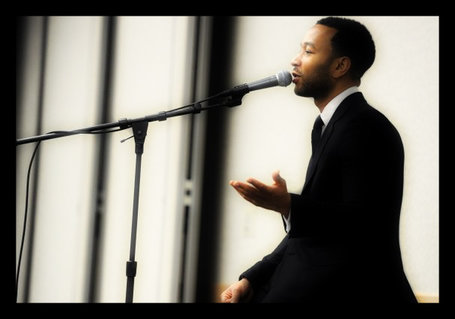
John Legend: Singer, Songwriter, Humanitarian

johnlegend
As a nine-time Grammy award winner, John Legend is well known as a singer, songwriter, and humanitarian. His vocals have earned him a multitude of worldwide fans and a string of Top 10 platinum-selling albums. His most recent release, Wake Up! (2010) is a compilation of music from the 1960s and ’70s including songs with underlying themes of awareness, engagement, and social consciousness. Legend, while a talented musician, seeks to be an agent of change in society. He is a member of several boards including Teach for America, Stand for Children, and the Harlem Village Academies.

As he spoke to a crowd of interested attendees in Southern Indiana, Legend focused on education equality and social awareness. Legend was inspiring, motivating, and very real in his comments. Early in his career, Legend had the opportunity to travel to Africa and it forever changed his life. He realized that his position in life granted him a platform to spread awareness and raise the standard for education and community involvement. Legend tirelessly works to promote education equality, which he believes is key to raising people out of poverty. By providing access to quality education for all individuals, we can ensure that being poor is not a life sentence but that there are opportunities to escape poverty and improve one’s life.

Legend gave the audience several tips on how to get involved in fighting for education equality from right where they sit.
His ideas included:

1. Join local boards and organizations working to improve education

2. Tutor students in local schools.

3. Encourage others to invest in schools.

4. Choose political leaders who take meaningful action within education.

The evening ended with the challenge from Legend to go and do something. The time for sitting still has passed and now the call to the work for education equality and diminished global poverty has arrived.

– Amanda Kloeppel

Source: Evansville Courier and Press

April 29, 2013
https://borgenproject.org/wp-content/uploads/borgen-project-logo.svg 0 0 Borgen Project https://borgenproject.org/wp-content/uploads/borgen-project-logo.svg Borgen Project2013-04-29 11:05:302020-05-26 07:42:41John Legend: Singer, Songwriter, Humanitarian
Global Poverty

The Unequal Reality

The Unequal RealityThe next global development agenda has been set. The President of Indonesia, Susilo Bambang Yudhoyono, hosted the meeting to determine such an agenda; he also served as the co-chairman to the UN High-Level Panel for the post-2015 plan with an emphasis on eradicating extreme poverty. Despite the general success of the UN Millennium Development Goals which includes pulling people out of poverty since the 1990s, an increasing number of children are attending schools, and much fewer children are dying due to curable causes: “political will and commitment can bring about real change.”

The issue is that the majority of these successes are happening on the surface, on the “aggregate” levels as opposed to on the extremely low levels. A report done by Save the Children evinces the hidden inequality behind improvements arguing that only wealthier parts have been directly affected by these successes. For example, rich women in Indonesia now have a skilled attendant; however, between 2007 and 2010, children in poorer households continued to experience severe malnutrition despite overall nutrition improvements.

“Aggregate targets” are dictating such unequal distribution of improvement vs. worsening because governments are naturally choosing to aid and invest in what is easier to help; “this means that those close to the poverty line experience improvements while the very poorest are left behind.” Children are the most vulnerable group affected by such inequality because they are dependent on others for development and growth. Therefore, price increases affect their meal intakes, health budget cuts could cause deaths, and low-quality schools have the potential of keeping these children in poverty. In order to fight off inequality, there is a need for quality services such as availability and equal access to schools and health facilities to all kinds of people.

– Leen Abdallah

Source: South China Morning Post

April 2, 2013
https://borgenproject.org/wp-content/uploads/borgen-project-logo.svg 0 0 Borgen Project https://borgenproject.org/wp-content/uploads/borgen-project-logo.svg Borgen Project2013-04-02 12:00:042020-06-01 06:00:15The Unequal Reality
Global Poverty

Wealth Gap Growing in the United States

wealth
Amidst the joy over the DOW reaching an all-time high, as well as the numerous other positive signals that the American economy is in recovery mode, it can be easy to miss the nuanceshidden in the statistics. While Americans on the whole are getting rich again, these gains are not being seen by everyone. When the data is parsed carefully, it is evident that the poorest in our society have failed to see many benefits from the so-called economic recovery. As a result, the wealth gap in the United States continues to grow.

Impoverished people rarely, if ever, have any forms of investment. So when huge gains are seen in financial markets, these benefits do not actually bring any kind of respite from the day-to-day hardships of poverty. The recent gains in American wealth have been largely concentrated among the richest members of society, raising “the bar for success while leaving fewer haves and more have-nots.”

The economy as a whole has managed to get back to its pre-recession figures without bringing back the same levels of employment, home ownership, home value, or income inequality. Companies have been unwilling to hire for a variety of reasons, not the least of which is uncertainty about which way Washington’s budget struggles will play out. Without knowing what tax rates will be, it can be hard for a business to make any kind of large expenditure determinations. At a time when calls have been renewed to raise the minimum wage to be in line with inflation, these new figures from the Federal Reserve should work to galvanize support for policies which work to reduce poverty using the powerful engine of capitalism—an approach which is as American as baseball and apple pie.

–  Jake Simon

Source: US News

March 25, 2013
https://borgenproject.org/wp-content/uploads/borgen-project-logo.svg 0 0 Borgen Project https://borgenproject.org/wp-content/uploads/borgen-project-logo.svg Borgen Project2013-03-25 10:05:532020-04-27 06:12:56Wealth Gap Growing in the United States
Global Poverty

World’s 100 Richest People Could End Global Poverty

Billionaires_end_poverty_Warren_buffett
According to Oxfam, an international NGO committed to fighting poverty, the money made by the world’s top 100 billionaires in the last year alone could end global poverty four times over.

Oxfam asserts that the wealth amassed by the world’s richest is encouraging inequality and deepening a divide between those in abject poverty and the rest of the world – making it even more difficult to end poverty once and for all. They assert that the world’s rich are getting richer at the expense of those in extreme poverty, and that the $240 billion that was collected in 2012 by the wealthiest 100 billionaires could end global poverty four times over.

Although a few American billionaires have already pledged to donate much of their wealth back into the public sphere, including Bill Gates and Warren Buffet, the exact figure has not been disclosed, and foreign billionaires have not made any such pledge to match those given by Gates and Buffet.

The Chief Executive for Oxfam GB Barbara Stocking cites a report that will be unveiled at the upcoming World Economic Forum. The report, titled “The Cost of Inequality: How Wealth and Income Extremes Hurt Us All”, found that within the last 20 years, the wealthiest 1% have increased their wealth by 60%. Stocking points out that this trend has led to extreme poverty as low-income earners have taken home an even smaller share of the total income as the rich get richer, which has also stifled growth and investment.

The report states that this trend has affected even Westernized countries, citing levels of high income inequality in the UK and South Africa. The report points out that top earners in China own over 60% of the overall income, similar to the situation in South Africa, where income inequality has risen even past levels seen at the end of apartheid.

Income inequality also persists across the United States, where the portion of total national income going to the top 1% has doubled within the last 30 years – the top 1% now take home 20% of the national income.

Oxfam is urging global leaders to committ to lowering income inequality levels to those seen in the 1990s, and Stocking asserts that doing away with tax havens, which reportedly would create $189 billion in additional tax revenues, would help alleviate the problem.

The World Bank and International Monetary Fund have taken a similar stance, saying that income inequality hinders development and growth, and say that they aim to fund projects that limit the perpetual cycle of inequality.

– Christina Mattos Kindlon

Source: The Guardian

February 11, 2013
https://borgenproject.org/wp-content/uploads/borgen-project-logo.svg 0 0 Borgen Project https://borgenproject.org/wp-content/uploads/borgen-project-logo.svg Borgen Project2013-02-11 12:11:352020-04-08 19:02:48World’s 100 Richest People Could End Global Poverty
Page 8 of 8«‹678

Get Smarter

  • Global Poverty 101
  • Global Poverty… The Good News
  • Global Poverty & U.S. Jobs
  • Global Poverty and National Security
  • Innovative Solutions to Poverty
  • Global Poverty & Aid FAQ’s
Search Search

Take Action

  • Call Congress
  • Email Congress
  • Donate
  • 30 Ways to Help
  • Volunteer Ops
  • Internships
  • Courses & Certificates
  • The Podcast
Borgen Project

“The Borgen Project is an incredible nonprofit organization that is addressing poverty and hunger and working towards ending them.”

-The Huffington Post

Inside The Borgen Project

  • Contact
  • About
  • Financials
  • President
  • Board of Directors
  • Board of Advisors

International Links

  • UK Email Parliament
  • UK Donate
  • Canada Email Parliament

Get Smarter

  • Global Poverty 101
  • Global Poverty… The Good News
  • Global Poverty & U.S. Jobs
  • Global Poverty and National Security
  • Innovative Solutions to Poverty
  • Global Poverty & Aid FAQ’s

Ways to Help

  • Call Congress
  • Email Congress
  • Donate
  • 30 Ways to Help
  • Volunteer Ops
  • Internships
  • Courses & Certificates
  • The Podcast
Scroll to top Scroll to top Scroll to top