• Link to X
  • Link to Facebook
  • Link to Instagram
  • Link to TikTok
  • Link to Youtube
  • About
    • About Us
      • President
      • Board of Directors
      • Board of Advisors
      • Financials
      • Our Methodology
      • Success Tracker
      • Contact
  • Act Now
    • 30 Ways to Help
      • Email Congress
      • Call Congress
      • Volunteer
      • Courses & Certificates
      • Be a Donor
    • Internships
      • In-Office Internships
      • Remote Internships
    • Legislation
      • Politics 101
  • The Blog
  • The Podcast
  • Magazine
  • Donate
  • Click to open the search input field Click to open the search input field Search
  • Menu Menu

Tag Archive for: Inequality

Posts

Global Poverty, Women and Female Empowerment, Women's Empowerment

Women’s Empowerment in the Marshall Islands Needs Improvement

The Marshall Islands are located in the northwest of the Pacific Ocean, with a land area of just 181 square kilometers and a population of just over 74,000. While some organizations have promoted women’s empowerment in the Marshall Islands since its independence in 1986, the progress of legal rights for girls and women has not been significant.

For the past 30 years, the Marshall Islands has had few female senators. In the country’s 2015 elections, three women won seats, taking up 9 percent of the total 33 members in parliament. In January 2016, Hilda Heine won the presidential election to become the first female president of the Marshall Islands.

Though the nation did ratify the U.N.’s Convention on the Elimination of All Forms of Discrimination Against Women in 2006, the Marshall Islands has no current legislation on any issues related to domestic violence, human trafficking, sexual harassment or sex tourism. Furthermore, there is no minimum sentence for sexual violence.

Due to the insufficiency of the law, violence against women in this nation is not unusual. A report by Women United Together Marshall Islands has shown that 51 percent of women experience domestic violence, while more than half of the population generally agrees that it is normal to commit violence against women in marital relationships, according to U.N. Women.

On the other hand, as a crucial metric on women’s empowerment in the Marshall Islands, gender parity and equality in education has some good news. Literacy rates among male and female youth are above 98 percent at present. A 2015 national review on education in the Marshall Islands reported that girls perform better than boys on all tests except for science in grade three.

However, the gender pay gap and inequality in employment still call for more attention to women’s empowerment in the Marshall Islands. Statistics have shown that the male and female unemployment rates are, respectively, 28 percent and 37 percent. Annual wages of women are $3000 less than those of men in the same occupations. Potential discrimination in job markets frequently restrict women from earning credits or managing businesses, which affects their economic independence.

Another concern is related to women’s health and environmental issues. Due to a shortage of fruits and vegetables, more than half of women in the Marshall Islands have obesity or risk factors for related diseases. Teenage marriage, adolescent pregnancy and mortality for children under five in this nation still remain high compared to the global average, despite significant decreases in the past few decades.

Founded in 1987, a nonprofit organization named Women Union Together Marshall Islands serves as the leading voice for eradicating violence against women in the nation. Several other U.N. organizations have also dedicated efforts to promoting gender equality in the Marshall Islands.

Significant progress on women’s empowerment in Marshall Island has been achieved. Political leaders play a strong role in promoting gender equality and ending violence against women. However, further efforts to improve the status of women are still challenging and necessary.

– Xin Gao

Photo: Flickr

January 13, 2018
https://borgenproject.org/wp-content/uploads/borgen-project-logo.svg 0 0 Borgen Project https://borgenproject.org/wp-content/uploads/borgen-project-logo.svg Borgen Project2018-01-13 01:30:442024-05-29 22:30:08Women’s Empowerment in the Marshall Islands Needs Improvement
Global Poverty

Finally Free: Poverty and Inequality in Bolivia

Poverty and Inequality in BoliviaIn 2009, poverty and inequality in Bolivia were some of the highest in South America. Extreme poverty rates were roughly 40 percent and the poorest 10 percent received only 0.5 percent of the total national income.

There was a sharp turnaround between 2004 and 2014, according to the World Bank. Economic growth averaged 4.9 percent annually, moderate poverty rates dropped from 59 to 39 percent, and inequality plummeted. Poverty and inequality in Bolivia began to wane.


Fighting Poverty and Inequality in Bolivia


It was not until 2006, a year after the election of Evo Morales, the country’s first indigenous president, that government commitment to economic growth and poverty reduction began to drastically improve. Morales increased spending on health, education, and poverty reduction programs by 45 percent between 2005 and 2006.

On July 22nd, 2017, President Evo Morales declared Bolivia completely independent from the World Bank and International Monetary Fund. Spurring this independence are the improvements achieved by Morales’s government. Since his election, inflation has run below four percent each year, basic consumption goods have been at a surplus, extreme poverty has fallen to 17 percent and the richest 10 percent of the country, which used to earn 128 times more than the poorest, now only earns about 38 times as much.

What’s more, as Francisco Toro writes, “Bolivia was running budget surpluses every year between 2006 and 2014. This allowed it to draw down the public sector’s debt, which fell from 83 percent of GDP in 2003 to just 26 percent in 2014, even as Bolivia built up its international reserves dramatically, from $1.7 billion in 2005 to $15.1 billion at the end of the boom in 2014.”

Much of this had to do with the burgeoning natural resources in the country. Export revenue, in the decade following the appointment of Morales, grew by six percent contributing to the impressive reduction of poverty an inequality in Bolivia.

Independence from the World Bank and IMF marks a new era for Bolivia. Its unprecedented economic improvements and reduction of poverty and inequality are a victory for the fight against poverty. The question is, will the world follow suit?

– Joseph Dover

Photo: Pixabay

September 13, 2017
https://borgenproject.org/wp-content/uploads/borgen-project-logo.svg 0 0 Borgen Project https://borgenproject.org/wp-content/uploads/borgen-project-logo.svg Borgen Project2017-09-13 01:30:572024-05-28 00:03:05Finally Free: Poverty and Inequality in Bolivia
Advocacy, Global Poverty

What are the Causes of Poverty?

what causes global poverty
As governments, aid workers and activists search for solutions to the urgent problem of widespread poverty and seek to combat its many negative effects, there is a need to identify the causes of poverty in order to create sustainable change. Understanding what causes global poverty is a crucial part of the process of devising and implementing effective solutions.

Most analysts would agree that there is no single root cause of all poverty everywhere throughout human history. However, even taking into account the individual histories and circumstances of particular countries and regions, there are significant trends in the causes of poverty.


Top 5 Causes of Poverty


  1. History
    Many of the poorest nations in the world were former colonies from which slaves and resources had been systematically extracted for the benefit of colonizing countries. Although there are notable exceptions (Australia, Canada and the U.S. being perhaps the most prominent), for most of these former colonies, colonialism and its legacies have helped create the conditions that prevent many people from accessing land, capital, education and other resources that allow people to support themselves adequately. In these nations, poverty is one legacy of a troubled history involving conquest.
  2. War & political instability
    Whatever the causes of war and political upheaval, it is clear that safety, stability and security are essential for subsistence and, beyond that, economic prosperity and growth. Without these basics, natural resources cannot be harnessed individually or collectively, and no amount of education, talent or technological know-how will allow people to work and reap the benefits of their labor. Laws are needed to protect rights, property and investments, and without legal protections, farmers, would-be entrepreneurs and business owners cannot safely invest in a country’s economy. It is a telling sign that the poorest countries in the world have all experienced civil war and serious political upheaval at some point in the 20th century, and many of them have weak governments that cannot or do not protect people against violence.
  3. National Debt
    Many poor countries carry significant debt due to loans from wealthier nations and international financial institutions. Poorer nations owe an average of $2.30 in debt for every $1 received in grant aid. In addition, structural adjustment policies by organizations like the World Bank and the International Monetary Fund often require poorer nations to open their markets to outside business and investors, thereby increasing competition with local businesses and, many argue, undermining the potential development of local economies. In recent years, calls for debt reduction and forgiveness have been increasing, as activists see this as a key means of reducing poverty. The United Nations has also made it a priority to examine how economic structural adjustment policies can be designed to place less pressure on vulnerable populations.
  4. Discrimination and social inequality
    Poverty and inequality are two different things, but inequality can feed widespread poverty by barring groups with lower social status from accessing the tools and resources to support themselves. According to the United Nations Social Policy and Development Division, “inequalities in income distribution and access to productive resources, basic social services, opportunities, markets, and information have been on the rise worldwide, often causing and exacerbating poverty.” The U.N. and many aid groups also point out that gender discrimination has been a significant factor in holding many women and children around the world in poverty.
  5. Vulnerability to natural disasters
    In regions of the world that are already less wealthy, recurrent or occasional catastrophic natural disasters can pose a significant obstacle to eradicating poverty. The effects of flooding in Bangladesh, drought in the Horn of Africa and the 2005 earthquake in Haiti are examples of the ways in which vulnerability to natural disasters can be devastating to affected countries. In each of these cases, already impoverished people became refugees within their own countries, losing whatever little they had, being forced out of their living spaces and becoming almost completely dependent on others for survival. According to the World Bank, two years after Cyclone Nargis hit Myanmar in 2008, the debt burden of local fishermen had doubled. The Solomon Islands experienced an earthquake and tsunami in 2007 and the losses from that disaster equaled 95 percent of the national budget. Without foreign aid, governments in these countries would have been unable to meet the needs of their people.

These are only five causes of poverty. They are both external and internal causes; both man-made and natural. Just as there is no single cause of poverty, there is no single solution. Nevertheless, understanding the ways in which complex forces like these interact to create and sustain the conditions of widespread global poverty is a vital step toward combating poverty around the world.

– Délice Williams

Source: Global Issues, USCCB, World Bank


June 25, 2016
https://borgenproject.org/wp-content/uploads/borgen-project-logo.svg 0 0 Borgen Project https://borgenproject.org/wp-content/uploads/borgen-project-logo.svg Borgen Project2016-06-25 04:34:542020-06-18 18:45:28What are the Causes of Poverty?
Activism, Development, Global Poverty

The Ford Foundation Fights Against Inequality

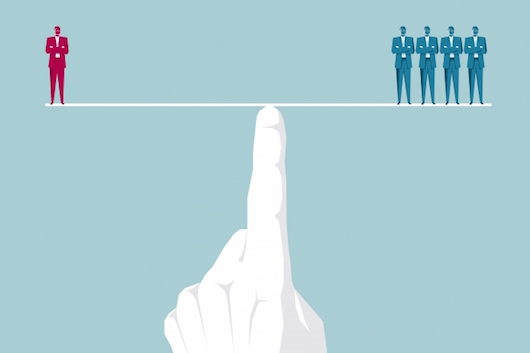
Ford FoundationThe Ford Foundation focuses its philanthropy on ending all forms of inequality. At the beginning of 2016, the Ford Foundation continues the fight against inequality with a revamped agenda and a partnership with the Cannes Film Festival.
Two years ago, the Ford Foundation sponsored 35 different initiatives. To better focus on inequality, this has been reduced to 15 in the following seven categories:

  • Civic Engagement and Government
  • Free Expression and Creativity
  • Equitable Development
  • Gender, Racial and Ethnic Justice
  • Inclusive Economies
  • Internet Freedom
  • Youth Opportunity and Learning

Under Inclusive Economies are initiatives such as impact investing and economic security, while engaging government and equitable resources are listed under Civic Engagement and Government. The other five categories cover drives such as social justice storytelling, natural resources and climate change, rights of women and girls, digital rights and access and pathways to youth success.

Institution building is another key goal of the foundation. From 2016 to 2020, the Ford Foundation plans to invest $1 billion around the world to create a network of organizations against inequality. This initiative – called BUILD – is designed to magnify each institution’s impact by aligning their goals and bringing them together.

To bring the issue to the forefront and get the attention of the world’s creative leaders, on Feb. 2, 2016, the Ford Foundation announced a two-year partnership with the Cannes Film Festival through its JustFilms grants. Like BUILD, JustFilms creates a network against inequality, in this case, a network of documentarists, storytellers and independent filmmakers.

The 2016 Cannes Film Festival takes place from May 11 to May 22 and is the one of the world’s most prominent independent film festivals. In its partnership with JustFilms, Cannes Film Market will bring some of the most talented documentary makers from the global south to the event.

By bringing in filmmakers from a largely neglected region of the world, JustFilms hopes that they can connect these storytellers with the larger industry. Once connected, their stories and perspectives can spread around the globe and reach people in developed nations.

Cannes Film Market’s head of industry programming, Julie Bergeson, was grateful for the foundation’s contribution to fighting inequality. She said, “Ford has created an incredible legacy in tackling social injustice and inequality. Their efforts have lead to revealing insights and sometimes startling exposures from filmmakers around the world.”

In changing the focus of its grants, the Ford Foundation has highlighted inequality as one of the most pressing issues of the 21st century. In partnering with Cannes, they have taken a step to raise awareness by bringing forth perspectives from the developing world.

There is much more to be done but there is reason to hope. The fight to end inequality will be long but the Ford Foundation is fully committed.

– Dennis Sawyers

Sources: Ford Foundation, Nonprofit Quarterly, The Chronicle of Philanthropy 1, The Chronicle of Philanthropy 2, Variety
Photo: The Chronicle of Philanthropy

February 28, 2016
https://borgenproject.org/wp-content/uploads/borgen-project-logo.svg 0 0 Borgen Project https://borgenproject.org/wp-content/uploads/borgen-project-logo.svg Borgen Project2016-02-28 01:30:562024-12-13 18:05:45The Ford Foundation Fights Against Inequality
Economy, Global Poverty, Inequality

Income Disparity Continues to Plague South Africa

Income Disparity in South Africa
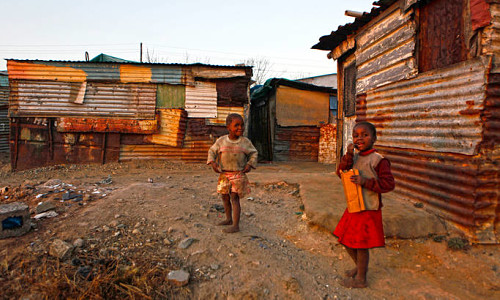
The country of South Africa is divided among those with nothing and those with seemingly everything, making for extremely high rates of poverty for the country overall. The income disparity in South Africa has had an impact not only on the domestic economy and security, but also on the global economy.

Reports show that approximately four percent of households in the country of South Africa make up 32 percent of the country’s household incomes. At the same time, about 10 percent of the citizens live in what are considered extreme poverty conditions, meaning families are living on under $1.25 a day. This disparity has not only drawn attention to the state of the economy, but it has also put a significant strain on the social aspects of the country as a whole.

Though South Africa stands as the second largest economy in Africa, economic disparity amidst the population has created more social tensions and controversy than the numbers would anticipate. Research shows that rates of disparity between members of the 90th percentile and 50th percentile citizens, in terms of income and economic security, have been continuing to grow in recent years. This means that the likelihood of social mobility, say from working class to middle class, or any further for that means, are rather difficult, and nearly impossible.

Despite becoming a democracy, South Africa continues to suffer with inequality between its citizens. This has proven to be an issue regarding security, as the growing size of the lower class and number of impoverished people compares to that of the other four percent. Lack of education can be a great contributing factor to this, as the number of unskilled and uneducated workers heavily outweighs the number of skilled workers in the country. Lack of skill and education leads to less opportunity for the average South African worker. Thus, educating and teaching more skill sets to the people of South Africa may, in part, begin to decrease the growing gap that continues to drive the people of the country apart.

– Alexandrea Jacinto

Sources: CNBC Africa, World Policy
Photo: Daily Maverick

August 22, 2015
https://borgenproject.org/wp-content/uploads/borgen-project-logo.svg 0 0 Borgen Project https://borgenproject.org/wp-content/uploads/borgen-project-logo.svg Borgen Project2015-08-22 01:30:222024-12-13 18:04:51Income Disparity Continues to Plague South Africa
Education, Global Poverty, Inequality

Equal Education in Senegal

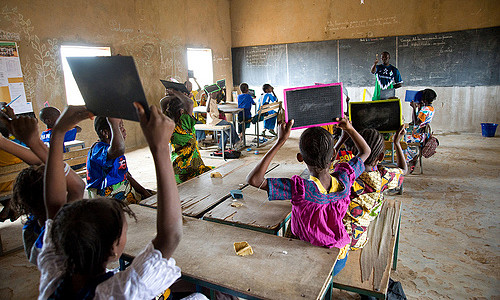
Equal Education in SenegalOnce known around the world as the finish line of the famous Paris-Dakar Rally, the small West African country of Senegal stands out in from its neighbors. Unlike many of other West African countries like Cote d’Ivoire, Nigeria and Sierra Leone, Senegal has never experienced any notable conflicts or civil war in the last century.

This distinction has helped to garner the country a deserved reputation for high political stability in an often war-torn continent. However, Senegal also lacks the natural resources of many of its African peers and consequentially ranks as one of the poorest nations on earth. According to UNICEF, 22 percent of its population lives on less than a dollar per day.

For the youth of Senegal and for girls in particular, this has hindered the effectiveness of Senegal’s education system. However, the country has experienced a significant improvement in recent years. In 2009, 92.5 percent of Senegalese children attended primary school. This represents a dramatic improvement from 82 percent in 2005 and only 54 percent in 1994.

Yet, this overall progress belies a residual and significant flaw in education in Senegal; in the long run, girls are far more likely than boys to drop out and to receive less education. At a casual glance, however, it might not seem this way. In 2012, primary school enrollment was actually higher for girls than it was for boys at 74 percent and 72 percent respectively.

While the data for primary school enrollment suggests gender parity, this is not actually the case. As the children progress through their schooling, girls experience noticeably lower rates of attendance. This first becomes apparent upon the transition to secondary school. In contrast to 62 percent of their male peers, 57 percent of girls begin secondary school.

The disparity only widens as their education continues. Secondary school enrollment for boys was 34 percent for boys and 27 percent for girls. Ultimately, one can see the results of gender inequality in Senegal’s adult literacy rate; 62 percent of males and only 39 percent of females were literate. For every 10 literate men in Senegal, only 6 women have attained literacy.

These severe and disparate dropout rates reflect the economic challenges that affect poorer families in Senegal. Children frequently must quit their schooling in order to provide more money for their families by working.

This burden falls harder on girls. Often families will marry off daughters at a young age to lessen their economic burden or they will employ them around the house conducting domestic duties. Many will expect to do domestic work for the rest of their lives. This career choice puts girls and women at greater risk of sexual abuse and financial exploitation.

For families of higher economic standing, education in Senegal is less of an issue and more of an expectation. Girls from wealthier households have twice the attendance rate in primary school.

In the city of Dakar, one of the economic pillars of the Senegalese economy, private schools are becoming even more common. In fact, most schools in Dakar are private rather than public. This has created an even greater educational disparity for those without the money to pay for education.
The wealth and gender inequality in secondary education also carries over to higher education.

UNESCO reported that an increasing amount of private institutions has hindered accessibility for many college students. Additionally, more men were enrolled than women as college students. According to the World Bank, for every 10 male college students, there were only 6 female students.
With the help of foreign aid from USAID and The World Bank, Senegal is attempting to develop and expand its education system. Already, funds from USAID have greatly improved education in the nation.

In total, it has allowed for 500,000 children to enroll in school of which 300,000 were girls. USAID has also helped to expand the educational infrastructure of Senegal through the construction of over 100 middle schools. It has donated more than 3 million textbooks and provided 20,000 schoolchildren with internet access.

The World Bank initiated an ongoing project called “Tertiary Education Governance and Financing for Results Project for Senegal” which is aimed at “[enhancing] the efficiency and quality of the higher education system” in Senegal. While the project is not expected to end until 2016, it has already posted impressive results. It found that 88 percent of academic programs fit quality standards in June 2015 with the target set at 90 percent in September 2016.

To lessen gender inequality, UNESCO and the Senegalese government have teamed up to initiate the “Girls and Women’s Literacy in Senegal” program. It aims to provide 40,000 women and girls with high-quality education and more professional opportunities.

More still needs to be done, and with only 750,000 dollars of funding, this initiative cannot single-handedly solve the issue of inequality in Senegal’s education system. With the help of more foreign aid, Senegal can expect further progress.

– Andrew Logan

Sources: The Guardian, Institut de Recherche pour le Développement, UNESCO 1, UNICEF, UNESCO 2, USAID, The World Bank

Photo: Open Equal Free

July 28, 2015
https://borgenproject.org/wp-content/uploads/borgen-project-logo.svg 0 0 Borgen Project https://borgenproject.org/wp-content/uploads/borgen-project-logo.svg Borgen Project2015-07-28 14:59:512024-06-04 03:53:08Equal Education in Senegal
Activism, Global Poverty, Inequality

One Direction Launches Anti-Poverty Campaign

One-Direction-Anti-Poverty-CampaignOne Direction is coming to Seattle. The world-renowned teen heartthrob band One Direction has recently made an important addition to their laundry list of achievements. The band members have collectively launched an impressive anti-poverty campaign that also seeks to tackle inequality and slow down climate change.

They have named the initiative the Action/1D manifesto, and have asked their millions and millions of fans across the globe to contribute. Fans are encouraged to share powerful, creative pieces that will help raise awareness of our world’s most pressing issues.

The band’s initiative is part of the wider action/2015 campaign. This larger campaign is a global citizens movement founded on the idea that 2015 can be the pivotal year when the world finally sets out to tackle persisting global issues like poverty.

The boys stress that their initiative—and the campaign as a whole—will not see success unless World Leaders are successfully swayed. Change can only happen if the harnessed power of everyday people compels leaders to make long-term commitments.

Although they are speaking out to a primarily younger fan base, they still wholeheartedly believe in the power of everyday citizens. The band released a statement explaining, “Young people really do have the power to help end poverty, tackle inequality and to stop the dangerous climate change.”

In fact, the band believes that now is the time for members of the younger generation to take action, and create a united voice that is loud enough to reach the ears of leaders worldwide.

The band has released a collaborative video asking fans to get involved by posting videos and pictures depicting how they would “celebrate” the campaign’s victory. Another option for fans is to answer the question, “What would your ideal future look like?”

The plan is for fan-sourced content to be delivered in a single video depicting one strong, unified, socially driven message. Each band member will also release his own individual video in the months to come. Louis will reportedly be the first to do this, with plans to release his personalized video on July 13.

One Direction is the most recent high-profile group to join many other famous personalities in supporting the 2015 campaign. Emeritus Archbishop Desmond Tutu, Malala Yousafzai, Sir Richard Branson, Shakira, Ben Affleck, Bill and Melinda Gates, and Bono have already issued their campaign support.

When people in the global limelight choose to utilize their power to harness support for important issues like poverty, significant changes can be made. According to Declan Fahy, an associate professor at American University’s School of Communication, celebrities have the ability to “personify ideas and social issues.”

By showing the world how important issues like poverty, inequality, and climate change are to them, One Direction is encouraging their fans to adopt similar perspectives. By putting a face on these complex issues, famous people can make their audience feel more connected to the problem, and even mobilize them to take action.

As one of the biggest bands in the world, One Direction has the power to bring the most important global issues to the forefront. Especially by encouraging a younger generation to care about these issues, the band could help make huge strides in the worldwide fight against poverty.

– Sarah Bernard

Sources: Daily Star (UK), Think Progress
Photo: Cambio

July 13, 2015
https://borgenproject.org/wp-content/uploads/borgen-project-logo.svg 0 0 Borgen Project https://borgenproject.org/wp-content/uploads/borgen-project-logo.svg Borgen Project2015-07-13 14:03:312024-12-13 17:51:55One Direction Launches Anti-Poverty Campaign
Global Poverty, Inequality

Poverty in Afghanistan: 5 Facts You Might Not Know

Poverty in Afghanistan
When we talk about Afghanistan or hear about it in the news, it can be very easy to forget that the insurgents are people and that a huge portion of them are suffering through extreme poverty. For the average Afghan, life can be very difficult and stricken with economic struggle, food insecurity, and a lack of resources to improve their lives. Discussed below are facts that may come as a surprise about those living in poverty in Afghanistan.


Top 5 Facts about Poverty in Afghanistan


  1. Only 28.1% of the entire population over the age of 15 is literate, meaning that 71.9% of adults are incapable of even basic reading and writing skills. On average, those who are capable of going to school only complete about 8 years, with females generally completing 4 years less than their male counterparts.
  2. A 2008 estimate of the percentage of children aged 5-14 suggests that at least 25% were involved in child labor. UNICEF made an estimate in 2011 that the number had risen to at least 30%. In either case, around ¼ or more of all young kids in the country were being forced to work, therefore missing out on childhood and, most importantly, a proper education.
  3.  36% of the population, or about 9 million people, lives in absolute, extreme poverty and another 37% lives just above the determined poverty line even though around $35 billion was put into the country from 2002-2009. In fact, the number one killer in Afghanistan is not armed conflict, it is poverty.
  4. Half of the population still lives without access to improved water sources, this accounts for both men and women living in rural and urban areas.
  5. For every 100,000 births, 460 mothers die and for every 1,000 births, 119 infants die. This leaves Afghanistan with the second highest maternal mortality rate in the world and the third highest infant mortality rate. Many of these deaths would be preventable with trained doctors and expedient, affordable care. But, with less than 1 doctor per every 1000 people, 0.21 of a doctor to be precise, proper care is difficult to come by.

Aid programs are doing what they can to help to citizens of Afghanistan rise about the poverty line, but the country has been torn apart by decades of fighting and inequality. The process will be a long and arduous one, but every person should be able to take care of themselves and provide even just the basic tools for survival for their families.

– Chelsea Evans

Sources: CIA World Factbook, Center for Strategic and International Studies

February 16, 2015
https://borgenproject.org/wp-content/uploads/borgen-project-logo.svg 0 0 Borgen Project https://borgenproject.org/wp-content/uploads/borgen-project-logo.svg Borgen Project2015-02-16 17:31:272024-05-25 00:20:34Poverty in Afghanistan: 5 Facts You Might Not Know
Developing Countries, Economy, Education, Global Poverty, Health, Inequality

Economic Growth: Will a Rising Tide Lift All Boats?

Developing countries around the world face the tremendous challenge of promoting sustainable growth while also reducing poverty and increasing the living standards of their populations.

Around the world, conventional wisdom holds that by focusing development policy on economic growth, inequality will be reduced and incomes of every segment of society will increase–a rising tide lifts all boats.

While poverty has been reduced dramatically all around the world (700 million fewer people live in conditions of extreme poverty in 2010 than in 1990), big challenges still exist to further reducing this number. One of these challenges is rising inequality within and between nations.

Listed below are three reasons why income inequality must be addressed in both the developed and developing world in order to ensure long-term economic growth benefits for everyone and not just a select few.

1. Economic growth is not always equal

China, one of the countries where poverty reduction has been dramatic, is astoundingly tolerant of large gaps in inequality in exchange for growth. Deng Xiaoping, a top Communist Party leader from 1978 to 1992 who initiated economic reforms, is thought to have acknowledged, “It is good for some people to get rich first.”

While this may be true in some cases or at the beginning of market reforms, recent studies undertaken in Indonesia, South Africa, India and China reveal an increase in the gap between the rich and poor. This gap in income inequality can not only prevent further reduction in poverty, but it also has long term implications in the ability of large parts of the population of each country to be able to contribute to the country’s economy and growth.

2. Education, health, and job creation policies must be pursued simultaneously with growth policies

In order for a country’s population to contribute to and participate in the country’s economy, individuals must have the skills. Pursuing policies only focused on increasing GDP may improve growth outlook in the short run. However, in the long run, without education initiatives to match, a large segment of the population will remain poor.

In the 1990s, Brazil pursued a pro-equity growth policy in which it provided grants to help boost education. Average years of school for the poor shot up and when growth hit; they too were able to take advantage of the better jobs.

Just as an overall boost in education and health is important, so is robust job creation. People must have the opportunity to input the skills they have learned back into the economy.

For this reason, inequality cannot be solved without government involvement. The market left as is does not ensure that growth is shared equally. A combination of strong government programs and a strong private sector ensures better opportunities for more people.

3. Positive GDP growth can hide underlying inequality

The main measure of inequality within a given country is through the gini coefficient. The gini coefficient is a variable that measures how equal a country’s income is with zero representing an instance where everyone’s income is exactly equal, and one representing an instance in which one person has all of the income and the rest have none.

In South Africa, while the government is vocally committed to fighting poverty and inequality, between 2003 and 2008 overall income inequality increased. During this period, South Africa’s gini coefficient rose from an already high .66 to .70 – one of the highest in the world. So despite an average GDP growth rate of 3.2 percent (1994-2012), steps still need to be taken to ensure that the bottom segment of society is able to contribute and benefit from that growth.

Today, nearly 80 percent of humanity lives on less than $10 per day and over 3 billion live on less than $2.50. High levels of inequality exacerbate problems of poverty and reduce opportunities for the poor to move beyond their circumstances. Fewer opportunities for children to rise up economically means that inequality becomes more exaggerated over time and can affect the social structure of a country – leading to unrest, crime and violence.

Developed and developing countries alike all face the challenge of reducing their gini coefficient while also promoting growth. While each country faces unique challenges, this is one problem that can benefit from collaboration at the international level. From the information above, it becomes clear that poverty cannot be fully eliminated without measures in place that simultaneously address income inequality.

– Andrea Blinkhorn

Sources: Science Mag, Global Issues, Global Issues 2, Politics of Poverty, United Nations, South Africa, Hvistendahl, M. (2014). While emerging economies boom, equality goes bust. Science,344(6186), 832-835.
Photo: PBS

August 18, 2014
https://borgenproject.org/wp-content/uploads/borgen-project-logo.svg 0 0 Borgen Project https://borgenproject.org/wp-content/uploads/borgen-project-logo.svg Borgen Project2014-08-18 09:15:122024-06-05 01:58:00Economic Growth: Will a Rising Tide Lift All Boats?
Economy, Education, Global Poverty

Three Influences of Poverty

Poverty has many causes. While some factors exacerbate poverty, there are five predominant causes of poverty: social inequality, conflict and political instabilities, education, debt and environmental conditions. Here is a closer examination of three of these causes.

Social Inequality

The United Nations Social Policy and Development Division reports that “inequalities in income distribution and access to productive resources, basic social services, opportunities, markets, and information have been on the rise worldwide, often causing and exacerbating poverty.” Countries where inequality is rampant display poor social indicators for human development, insecurity and anxiety. Inequality keeps the poor from moving out of their socioeconomic status.

Inequality limits access to opportunities that can provide the means to escape poverty. In a speech by Dominique Strauss-Kahn, Managing Director of the International Monetary Fund, Kahn explains that Adam Smith, often considered the founder of modern economics, “recognized clearly that a poor distribution of wealth could undermine the free market system.” An example of this is the former apartheid government in South Africa.

Apartheid laws assign rights and space to individuals on the basis of race. In South Africa this meant that while one group was persecuted and forced into poverty, the other group was given access to opportunities that allowed them to advance economically. This increased the gap between economic classes and the amount of people in poverty.

Environmental Conditions

Environmental degradation is the decline in the quality of the natural environment through its atmosphere, land, oceans and lakes. Indigenous groups are among the worsetaffected by such degradation. These groups often depend on the environment to survive and easily fall into poverty when that environment is harmed. A major cause of environmental degradation is climate change.

One of the outcomes of climate change is hunger. The changing climate is responsible for the destruction of harvests and other resources critical to survival. Michael Oppenheimer, professor of geosciences and international affairs at Princeton University explains, “crop yields have detectably changed. As time goes on the poor countries that are in the warmer and drier parts of the planet will feel the crop yield decreases early.” In Oxfam’s report Suffering The Science: Climate Change, People, and Poverty, the organization warns that “Without immediate action 50 years of development gains in poor countries will be permanently lost.”

Recent U.N. reports on climate change noted that “for the first time” that climate change is a threat to human security. The UN notes that the increased migration and the decrease in food are conditions that lead to conflict. The reports warn also that unless the issue is addressed, “nobody would be immune to climate change.” The report reads, “Climate change can indirectly increase risks of violent conflicts in the form of civil war and inter-group violence.” Environmental degradation can not only result in poverty, but can also lead to war.

Lack of Education

Education has lifted people out of poverty and empowered communities to grow economically. A lack of education could maintain or create poverty. Senior Fellow of the Center on Budget and Policy Priorities Jared Bernstein explains, “economists may disagree a lot on policy, but we all agree on the ‘education premium’—the earnings boost associated with more education.”

According to the Network for international policies and cooperation in education and training, a main priority for poverty reduction is primary education. In developed countries almost all children have access to primary education, while in regions such as sub-Saharan Africa approximately 40 percent of children do not attend primary school due to poverty and a lack of access to education. Many people living in poverty in undeveloped countries must give up an education in order to make “a minimal living.” Furthermore, many families cannot afford school fees to send their children to school. This limits skill development and opportunities to escape poverty and create generational poverty.

There are many situations that lead to poverty. As we understand the causes of poverty, we can eradicate it more strategically. These are only three of many causes that must be understood to successfully meet the goal of eradicating extreme poverty by 2030. We created poverty, so we can eliminate it as well.

– Christopher Kolezynski

Sources: Poverty at Large, The Borgen Project, Oxfam, The American Prospect, The Guardian, NORRAG
Photo: The Daily Star

July 30, 2014
https://borgenproject.org/wp-content/uploads/borgen-project-logo.svg 0 0 Borgen Project https://borgenproject.org/wp-content/uploads/borgen-project-logo.svg Borgen Project2014-07-30 15:43:402024-06-05 01:57:57Three Influences of Poverty
Page 6 of 8«‹45678›»

Get Smarter

  • Global Poverty 101
  • Global Poverty… The Good News
  • Global Poverty & U.S. Jobs
  • Global Poverty and National Security
  • Innovative Solutions to Poverty
  • Global Poverty & Aid FAQ’s
Search Search

Take Action

  • Call Congress
  • Email Congress
  • Donate
  • 30 Ways to Help
  • Volunteer Ops
  • Internships
  • Courses & Certificates
  • The Podcast
Borgen Project

“The Borgen Project is an incredible nonprofit organization that is addressing poverty and hunger and working towards ending them.”

-The Huffington Post

Inside The Borgen Project

  • Contact
  • About
  • Financials
  • President
  • Board of Directors
  • Board of Advisors

International Links

  • UK Email Parliament
  • UK Donate
  • Canada Email Parliament

Get Smarter

  • Global Poverty 101
  • Global Poverty… The Good News
  • Global Poverty & U.S. Jobs
  • Global Poverty and National Security
  • Innovative Solutions to Poverty
  • Global Poverty & Aid FAQ’s

Ways to Help

  • Call Congress
  • Email Congress
  • Donate
  • 30 Ways to Help
  • Volunteer Ops
  • Internships
  • Courses & Certificates
  • The Podcast
Scroll to top Scroll to top Scroll to top