• Link to X
  • Link to Facebook
  • Link to Instagram
  • Link to TikTok
  • Link to Youtube
  • About
    • About Us
      • President
      • Board of Directors
      • Board of Advisors
      • Financials
      • Our Methodology
      • Success Tracker
      • Contact
  • Act Now
    • 30 Ways to Help
      • Email Congress
      • Call Congress
      • Volunteer
      • Courses & Certificates
      • Be a Donor
    • Internships
      • In-Office Internships
      • Remote Internships
    • Legislation
      • Politics 101
  • The Blog
  • The Podcast
  • Magazine
  • Donate
  • Click to open the search input field Click to open the search input field Search
  • Menu Menu

Tag Archive for: Inequality

Posts

Global Poverty, Inequality

Poverty in Afghanistan: 5 Facts You Might Not Know

Poverty in Afghanistan
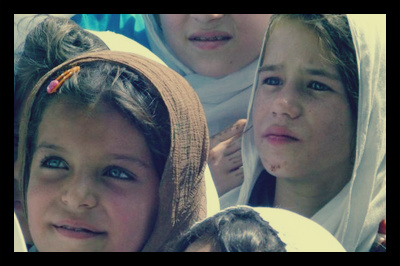
When we talk about Afghanistan or hear about it in the news, it can be very easy to forget that the insurgents are people and that a huge portion of them are suffering through extreme poverty. For the average Afghan, life can be very difficult and stricken with economic struggle, food insecurity, and a lack of resources to improve their lives. Discussed below are facts that may come as a surprise about those living in poverty in Afghanistan.


Top 5 Facts about Poverty in Afghanistan


  1. Only 28.1% of the entire population over the age of 15 is literate, meaning that 71.9% of adults are incapable of even basic reading and writing skills. On average, those who are capable of going to school only complete about 8 years, with females generally completing 4 years less than their male counterparts.
  2. A 2008 estimate of the percentage of children aged 5-14 suggests that at least 25% were involved in child labor. UNICEF made an estimate in 2011 that the number had risen to at least 30%. In either case, around ¼ or more of all young kids in the country were being forced to work, therefore missing out on childhood and, most importantly, a proper education.
  3.  36% of the population, or about 9 million people, lives in absolute, extreme poverty and another 37% lives just above the determined poverty line even though around $35 billion was put into the country from 2002-2009. In fact, the number one killer in Afghanistan is not armed conflict, it is poverty.
  4. Half of the population still lives without access to improved water sources, this accounts for both men and women living in rural and urban areas.
  5. For every 100,000 births, 460 mothers die and for every 1,000 births, 119 infants die. This leaves Afghanistan with the second highest maternal mortality rate in the world and the third highest infant mortality rate. Many of these deaths would be preventable with trained doctors and expedient, affordable care. But, with less than 1 doctor per every 1000 people, 0.21 of a doctor to be precise, proper care is difficult to come by.

Aid programs are doing what they can to help to citizens of Afghanistan rise about the poverty line, but the country has been torn apart by decades of fighting and inequality. The process will be a long and arduous one, but every person should be able to take care of themselves and provide even just the basic tools for survival for their families.

– Chelsea Evans

Sources: CIA World Factbook, Center for Strategic and International Studies

February 16, 2015
https://borgenproject.org/wp-content/uploads/borgen-project-logo.svg 0 0 Borgen Project https://borgenproject.org/wp-content/uploads/borgen-project-logo.svg Borgen Project2015-02-16 17:31:272024-05-25 00:20:34Poverty in Afghanistan: 5 Facts You Might Not Know
Developing Countries, Economy, Education, Global Poverty, Health, Inequality

Economic Growth: Will a Rising Tide Lift All Boats?

Developing countries around the world face the tremendous challenge of promoting sustainable growth while also reducing poverty and increasing the living standards of their populations.

Around the world, conventional wisdom holds that by focusing development policy on economic growth, inequality will be reduced and incomes of every segment of society will increase–a rising tide lifts all boats.

While poverty has been reduced dramatically all around the world (700 million fewer people live in conditions of extreme poverty in 2010 than in 1990), big challenges still exist to further reducing this number. One of these challenges is rising inequality within and between nations.

Listed below are three reasons why income inequality must be addressed in both the developed and developing world in order to ensure long-term economic growth benefits for everyone and not just a select few.

1. Economic growth is not always equal

China, one of the countries where poverty reduction has been dramatic, is astoundingly tolerant of large gaps in inequality in exchange for growth. Deng Xiaoping, a top Communist Party leader from 1978 to 1992 who initiated economic reforms, is thought to have acknowledged, “It is good for some people to get rich first.”

While this may be true in some cases or at the beginning of market reforms, recent studies undertaken in Indonesia, South Africa, India and China reveal an increase in the gap between the rich and poor. This gap in income inequality can not only prevent further reduction in poverty, but it also has long term implications in the ability of large parts of the population of each country to be able to contribute to the country’s economy and growth.

2. Education, health, and job creation policies must be pursued simultaneously with growth policies

In order for a country’s population to contribute to and participate in the country’s economy, individuals must have the skills. Pursuing policies only focused on increasing GDP may improve growth outlook in the short run. However, in the long run, without education initiatives to match, a large segment of the population will remain poor.

In the 1990s, Brazil pursued a pro-equity growth policy in which it provided grants to help boost education. Average years of school for the poor shot up and when growth hit; they too were able to take advantage of the better jobs.

Just as an overall boost in education and health is important, so is robust job creation. People must have the opportunity to input the skills they have learned back into the economy.

For this reason, inequality cannot be solved without government involvement. The market left as is does not ensure that growth is shared equally. A combination of strong government programs and a strong private sector ensures better opportunities for more people.

3. Positive GDP growth can hide underlying inequality

The main measure of inequality within a given country is through the gini coefficient. The gini coefficient is a variable that measures how equal a country’s income is with zero representing an instance where everyone’s income is exactly equal, and one representing an instance in which one person has all of the income and the rest have none.

In South Africa, while the government is vocally committed to fighting poverty and inequality, between 2003 and 2008 overall income inequality increased. During this period, South Africa’s gini coefficient rose from an already high .66 to .70 – one of the highest in the world. So despite an average GDP growth rate of 3.2 percent (1994-2012), steps still need to be taken to ensure that the bottom segment of society is able to contribute and benefit from that growth.

Today, nearly 80 percent of humanity lives on less than $10 per day and over 3 billion live on less than $2.50. High levels of inequality exacerbate problems of poverty and reduce opportunities for the poor to move beyond their circumstances. Fewer opportunities for children to rise up economically means that inequality becomes more exaggerated over time and can affect the social structure of a country – leading to unrest, crime and violence.

Developed and developing countries alike all face the challenge of reducing their gini coefficient while also promoting growth. While each country faces unique challenges, this is one problem that can benefit from collaboration at the international level. From the information above, it becomes clear that poverty cannot be fully eliminated without measures in place that simultaneously address income inequality.

– Andrea Blinkhorn

Sources: Science Mag, Global Issues, Global Issues 2, Politics of Poverty, United Nations, South Africa, Hvistendahl, M. (2014). While emerging economies boom, equality goes bust. Science,344(6186), 832-835.
Photo: PBS

August 18, 2014
https://borgenproject.org/wp-content/uploads/borgen-project-logo.svg 0 0 Borgen Project https://borgenproject.org/wp-content/uploads/borgen-project-logo.svg Borgen Project2014-08-18 09:15:122024-06-05 01:58:00Economic Growth: Will a Rising Tide Lift All Boats?
Economy, Education, Global Poverty

Three Influences of Poverty

Poverty has many causes. While some factors exacerbate poverty, there are five predominant causes of poverty: social inequality, conflict and political instabilities, education, debt and environmental conditions. Here is a closer examination of three of these causes.

Social Inequality

The United Nations Social Policy and Development Division reports that “inequalities in income distribution and access to productive resources, basic social services, opportunities, markets, and information have been on the rise worldwide, often causing and exacerbating poverty.” Countries where inequality is rampant display poor social indicators for human development, insecurity and anxiety. Inequality keeps the poor from moving out of their socioeconomic status.

Inequality limits access to opportunities that can provide the means to escape poverty. In a speech by Dominique Strauss-Kahn, Managing Director of the International Monetary Fund, Kahn explains that Adam Smith, often considered the founder of modern economics, “recognized clearly that a poor distribution of wealth could undermine the free market system.” An example of this is the former apartheid government in South Africa.

Apartheid laws assign rights and space to individuals on the basis of race. In South Africa this meant that while one group was persecuted and forced into poverty, the other group was given access to opportunities that allowed them to advance economically. This increased the gap between economic classes and the amount of people in poverty.

Environmental Conditions

Environmental degradation is the decline in the quality of the natural environment through its atmosphere, land, oceans and lakes. Indigenous groups are among the worsetaffected by such degradation. These groups often depend on the environment to survive and easily fall into poverty when that environment is harmed. A major cause of environmental degradation is climate change.

One of the outcomes of climate change is hunger. The changing climate is responsible for the destruction of harvests and other resources critical to survival. Michael Oppenheimer, professor of geosciences and international affairs at Princeton University explains, “crop yields have detectably changed. As time goes on the poor countries that are in the warmer and drier parts of the planet will feel the crop yield decreases early.” In Oxfam’s report Suffering The Science: Climate Change, People, and Poverty, the organization warns that “Without immediate action 50 years of development gains in poor countries will be permanently lost.”

Recent U.N. reports on climate change noted that “for the first time” that climate change is a threat to human security. The UN notes that the increased migration and the decrease in food are conditions that lead to conflict. The reports warn also that unless the issue is addressed, “nobody would be immune to climate change.” The report reads, “Climate change can indirectly increase risks of violent conflicts in the form of civil war and inter-group violence.” Environmental degradation can not only result in poverty, but can also lead to war.

Lack of Education

Education has lifted people out of poverty and empowered communities to grow economically. A lack of education could maintain or create poverty. Senior Fellow of the Center on Budget and Policy Priorities Jared Bernstein explains, “economists may disagree a lot on policy, but we all agree on the ‘education premium’—the earnings boost associated with more education.”

According to the Network for international policies and cooperation in education and training, a main priority for poverty reduction is primary education. In developed countries almost all children have access to primary education, while in regions such as sub-Saharan Africa approximately 40 percent of children do not attend primary school due to poverty and a lack of access to education. Many people living in poverty in undeveloped countries must give up an education in order to make “a minimal living.” Furthermore, many families cannot afford school fees to send their children to school. This limits skill development and opportunities to escape poverty and create generational poverty.

There are many situations that lead to poverty. As we understand the causes of poverty, we can eradicate it more strategically. These are only three of many causes that must be understood to successfully meet the goal of eradicating extreme poverty by 2030. We created poverty, so we can eliminate it as well.

– Christopher Kolezynski

Sources: Poverty at Large, The Borgen Project, Oxfam, The American Prospect, The Guardian, NORRAG
Photo: The Daily Star

July 30, 2014
https://borgenproject.org/wp-content/uploads/borgen-project-logo.svg 0 0 Borgen Project https://borgenproject.org/wp-content/uploads/borgen-project-logo.svg Borgen Project2014-07-30 15:43:402024-06-05 01:57:57Three Influences of Poverty
Children, Inequality

High Childcare Costs in Ireland Cripple Economy

One-third of Irish children are at risk of living in poverty, and many are claiming that high childcare costs in Ireland is one of the reasons.

Childcare costs in Ireland are an outlier compared to the European Union’s average, taking up around 40 percent of the average wage, as opposed to 12 percent in Europe. High childcare costs are very detrimental to the more than 750,000 people living in poverty.

According to a report by the European Commission, which was designed to guild the Irish Government’s budget for 2015, the limited availability of childcare benefits means that parents bear almost the entire cost directly, unlike most other EU countries where childcare benefits are significant.

The report went on to state that the lack of childcare made it difficult for women and single parents to gain employment, thus leaving them without a way to improve their economic situation.

“Child poverty is a specific concern in Ireland and Britain,” said Employment Commissioner Laszlo Andor, “along with inequality, poverty and social inclusion.”

The report recommended changes to the social welfare system, including cutting off payments for a period of nine weeks if a recipient refuses to take a job offer or take part in a training course.

A report from the Central Statistics Office (CSO) shows that in 2012, 756,591 people were living in poverty. Included in those numbers were 68,740 people over the age of 65 and 220,411 people under the age of 18, only highlighting the effects of a five-year recession on the population.

“The CSO employment data shows that the much talked about 1,00o extra jobs a week has slowed to little more than 1,000 jobs a quarter,” said Fianna Fail finance spokesman Michael McGrath. “We have lost 5,000 jobs in the retail sector in the last three months and the domestic economy remains on the floor.”

Between 2007 and 2012, the number of people in Ireland living in poverty almost doubled, growing from 4.2 percent of the population to 7.7 percent. The number of people who were unable to afford new clothing increased from 5.2 percent in 2007 to 10.4 percent in 2012, the number of people unable to replace old furniture increased from 13.8 percent to 24.5 percent and the number of people who went without heating at some point in the past year went from 6 percent to 12.9 percent.

“The report highlights the critical importance of the social welfare safety net,” said Social Protection Minister Joan Burton, “namely jobseeker allowance, child benefit and state pension payments in protecting people against poverty.”

A new study from the Central Statistics Office shows that, while Ireland’s poverty line is shrinking, the number of people living in poverty has continued to grow. The study also showed that the annual income per household dropped by 5 percent and that there was an increase in income inequality. Those who live in the highest income bracket made five and a half times the amount made by those in the lowest income bracket.

“The report reflects that many of the actions in Ireland’s austerity program are ongoing,” said Economics Commissioner Olli Rehn, “but [they] need to be ended.”

– Monica Newell

Sources: Irish Examiner
Photo: The Guardian

June 13, 2014
https://borgenproject.org/wp-content/uploads/borgen-project-logo.svg 0 0 Borgen Project https://borgenproject.org/wp-content/uploads/borgen-project-logo.svg Borgen Project2014-06-13 13:23:312024-05-26 23:42:13High Childcare Costs in Ireland Cripple Economy
Global Poverty, Inequality

Michelle Bachelet Gives Inaugural Address

Michelle_Bachelet_Gives_Inaugural_Address
Chilean President-elect Michelle Bachelet was inaugurated on March 11 at the presidential palace in Santiago, Chile. This will be the second time Bachelet is sworn in as president after holding the office from 2006 to 2010. Bachelet, a moderate socialist, will be taking the reins from the current president, billionaire businessman Sebastian Piñera.

In a very symbolic ceremony, the head of the Chilean Senate, Isabel Allende, swore in Bachelet. The two female politicians share a past linked to the 1973 coup of the democratically elected Salvador Allende that carried dictator Augusto Pinochet to power. Bachelet is the daughter of an air force officer who was tortured by the Pinochet regime before dying in custody while Allende is the daughter of former Chilean President Salvador Allende, who committed suicide on the day of the coup.

During her inaugural address, Bachelet made inequality the focus of her speech. She said that although the policies of the Piñera administration had generated economic growth and jobs, Chile could and should be a fairer society.

Other solutions to fight inequality include changing the country’s education system by making it entirely state-funded within the next six years, a response to the student protests of 2011 to 2013 that occurred throughout Chile. Currently, the state funds a paltry percentage, leaving poor households to attend underfunded state universities. Bachelet plans to provide full state funding by increasing the corporate tax rate.

Despite promises to reduce inequality, Bachelet will face difficulty in implementing these proposals. Chile’s economy is slowing down from 5.6 percent growth per year in 2012 to just over 4 percent this past year. Moreover, prices of Chile’s primary product, copper, have fallen, which would dip the country’s economic growth even further.

Piñera leaves with a 50 percent approval rating, while at the end of her first term, Bachelet enjoyed an 84 percent approval rating.

Bachelet will not have any issue pushing her policies through the chambers of Congress, as her New Majority coalition enjoys a healthy majority in both the Senate and Chamber of Deputies. Chileans will also be able to monitor her promises closely since the publishing of a list of 50 proposals she intends to complete within her first 100 days in office spread out across 14 different policy areas.

The widely popular Bachelet has promised to create a more egalitarian society through the promise of free education. Though she has come under fire from critics who say the Chilean economy is losing steam, she remains hopeful that her country can construct a more inclusive environment for its people.

– Jeff Meyer

Sources: ABC News, Miami Herald, Slate, Economist
Photo: Khaleej Times

April 3, 2014
https://borgenproject.org/wp-content/uploads/borgen-project-logo.svg 0 0 Borgen Project https://borgenproject.org/wp-content/uploads/borgen-project-logo.svg Borgen Project2014-04-03 04:00:172024-06-04 03:01:16Michelle Bachelet Gives Inaugural Address
Global Poverty

Racism in Israel

Since the mass migration of Ethiopian Jews, or Beta Israel, to the nation of Israel in the 1980s, racism in Israel has been a pervasive part of life for many of these refugees. Israel was founded upon the old racist practices of European nations against the Jewish peoples. Spain expelled the Jews in the 15th century, Russia issued Pogroms that killed countless Jewish citizens, and Nazi Germany exterminated over six million Jews throughout Europe. The founding of the nation in the 1950s finally gave the Jewish people a homeland where they could escape the persecution that dotted their troubled history.

Ethiopian Jews have not received the same experience as their European Jewish counterparts. The idea is not alien to the Israeli people. The Jerusalem Post released a report where over 95 % of the populace believe at least one population group in Israel is subject to some form of racism. The Ethiopian populace has been the most drastically affected, with over 79% of those surveyed replying “that Ethiopians suffered from racist attitudes.” What exactly is happening to Ethiopian-Israelis?

Jobs discrimination has become a pervasive problem. Unemployment amongst “Ethiopian men in Israel ranges from 27% to 66%.” Jobs are typically not given to Ethiopians, as many employers refuse to give them jobs. This has created a dire situation for the community as whole, with over 72% of the 100,000 Ethiopian residents living “under the poverty line.” The communities where Ethiopians live are also noted for their poor schooling, with illiteracy remaining high amongst the populace.

The Brookdale Institute of the Joint Distribution Committee released damning information about the education system that has failed many Ethiopian youths, detailing that the “school dropout rate among Ethiopian immigrants is double what it is among the general Israeli population.” This lack of educational opportunity has allowed inequalities between Ethiopians and their European Israeli counterparts to continue, and has created an economic gap that may not be easily combated. This is a sad reality, as many of these Ethiopians came to Israel to escape the hardships that plagued Ethiopia in the late 1980s, particularly poverty, famine and a politically unstable society.

Racism in itself has grown out of general unsupported fears about Africans. The Health Ministry in Israel has directives that prevent them from receiving Ethiopian blood donations out of “fear of spreading HIV.” The directive does not just prevent the common Ethiopian populace from donating blood; Knesset, or the Israeli Parliament, Member Pnina Tamano-Shata was barred from donating blood as well. The reason she was given was that she has the “special kind of Jewish-Ethiopian blood.” It was a stark reminder that Israel does not readily accept Ethiopians, and many of their beliefs about Ethiopians are based on racist ideologies about Africans.

– Joseph Abay

Sources: Jerusalem Post, YNET News
Photo: SodaHead

April 2, 2014
https://borgenproject.org/wp-content/uploads/borgen-project-logo.svg 0 0 Borgen Project https://borgenproject.org/wp-content/uploads/borgen-project-logo.svg Borgen Project2014-04-02 08:44:542024-05-26 23:22:57Racism in Israel
Activism, Global Poverty, Violence Against Women, Women and Female Empowerment

Afghani Asylum

Former member of Afghani Parliament Noorzia Atmar was banned under strict refugee laws from applying for asylum from within Afghanistan’s borders forcing her to flee.

According to The Guardian, the United States embassy did respond to her cry for help, but it was not able to assist her with asylum or a visa unless she applied from another country. Atmar mentions, “I love my country and even though I was under threat in some way I tried to get work, not to be lazy or rely on anyone else.”

More importantly, she stated, “The situation pushed me to leave.  No one respects women in our country. It is really difficult to find a space just to live.”

Previously an affluent and powerful politician, Atmar now lives in a single run down room in extreme poverty outside of her original borders. Her current location is not being released for fear of herself and her family she now does not in contact.

Despite her horrendous situation she is still passionate about women’s rights and hopes to begin working again.  Like Atmar, the Revolutionary Association of the Women of Afghanistan (RAWA) is working for women as the oldest political/social organization of Afghan women struggling for peace, freedom, democracy and women’s rights in fundamentalism-blighted Afghanistan since 1977, according to its website.

Even though she was lucky enough to escape her situation, Atmar knows there are many other women still suffering.  One main issue is the fact that a refugee cannot apply for asylum while in their home country. In a male-dominated Afghanistan, it is extremely difficult for a woman to be able to have the job, money or status to pass rigorous western visa requirements.

RAWA’s work inside of Afghanistan mainly consists of support for female victims of war and other aggressive groups much like Atmar’s situation. The government they are after is one of democratic values that ensure freedom of thought, religion and political expression while protecting women’s rights.

Policy and research manager at Asylum Aid said, “Our overall sense is that the asylum system here is that it’s not sensitive to the needs of women fleeing countries like Afghanistan and doesn’t respond as it should to their cases.” This is part of the motivating cause behind RAWA and the work it is doing to fight for women.

– Lindsey Lerner

Sources: The Guardian, RAWA
Photo: Kompas

February 1, 2014
https://borgenproject.org/wp-content/uploads/borgen-project-logo.svg 0 0 Borgen Project https://borgenproject.org/wp-content/uploads/borgen-project-logo.svg Borgen Project2014-02-01 04:00:392024-05-26 23:06:47Afghani Asylum
Global Poverty, Hunger, Inequality, United Nations

With, Without: How Greed Perpetuates Hunger

meat_greed
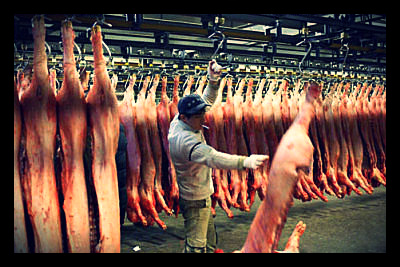
There is enough food in the world to feed everyone, but due to a variety of factors, global hunger persists. In fact, according to the United Nations’ Food and Agriculture Organization (FAO,) the world produces enough food for everyone to intake 2,700 calories a day, much more than the recommended 2,000.

Nevertheless, nearly a billion people go to bed hungry. The reason behind this is multifaceted. Astounding amounts of food are wasted due to poor transportation and storage infrastructure. Even more goes in the trash uneaten. A great deal of grain crops are used for bio-fuels and animal feedlots rather than starving people. Ultimately, it comes down to the fact hunger is caused by inequality.

How are people to combat this inequality? Countries such as Brazil and Ghana have shown success through raising their minimum wage, giving cash to poor people, and investing in small-scale farms. World hunger comes down to the fact that many people simply cannot afford food, with over a billion people living on $1 a day.

The history of poverty begins with globalization and colonialism. When land is privatized and controlled by the few, the majority of people are forced into selling their work for food. Land ownership in the hands of the few is the main cause that spurred income gaps throughout the world.

Colonies exploited the resources and land of their colonies and kept them saddled in debt by claiming ownership in order to maintain this advantage for the long run. Today, less than 25 percent of people use more than 80 percent of the world’s resources. This is a direct result of the economic repression that so many populations are under and have been under for hundreds of years.

Greed led to colonial powers gaining monopolies and establishing claims on resources that were not theirs. Greed led them to effectively enslaving their colonies under shackles of labor and heavy debt for land and resources that originally belonged to the colonies. Although there are many great NGOs and advocacy agencies that have brilliant ideas for solutions to global hunger, few acknowledge colonialism as the original foe, and lack of land ownership as the original problem.

Perhaps people can examine this complex issue more clearly if they perceive it as a parable. In a sun-drenched country, men live peaceful lives on their own farms. One day, a greedy man takes over, burning all their farms and forcing them to work for him. This man builds one massive farm, and exploits their labor and pushes growth, seeking to eat up the rest of the smaller farms in the land. In the end, he is the one who gets all the profits, while the rest barely survive.

This is not a story anyone wants to hear, but it is one that has been in action for centuries. Let us acknowledge this past and seek ways to start a new story.

– Jordan Schunk

Sources: Alternet, The Economist, The Guardian, Huffington Post

January 13, 2014
https://borgenproject.org/wp-content/uploads/borgen-project-logo.svg 0 0 Borgen Project https://borgenproject.org/wp-content/uploads/borgen-project-logo.svg Borgen Project2014-01-13 22:13:062024-05-26 23:02:40With, Without: How Greed Perpetuates Hunger
Children, Global Poverty, Inequality

Where Children Sleep Photography Project

It’s hard to say exactly how much of an impact a photo can have. At the risk of cliché, I won’t say that a picture is worth 1,000 words. Imagine seeing hundreds of photographs that detail not only a child’s appearance and age, but also the place they call their own – where they sleep.

James Mollison decided to take on that mission himself. A 40-year-old native of Kenya who grew up in England, Mollison had always been interested in art and design. He graduated from Oxford Brooks University and, later, Newport School of Art and Design with degrees in art, design, film, and photography. After attaining his degree, Mollison moved to Italy in order to work at Fabrica, Benetton’s communications research center and creative lab. This was where the idea for the Where Children Sleep Photography Project came about.

Among his other achievements and publications lies this creation, published in November 2010 – “stories of diverse children around the world, told through portraits and pictures of their bedroom.”

The aforementioned juxtaposition is exactly what Mollison longed to create, in order to point out the inequalities that exist all over the world. The two extremes he found most interesting were in a top-floor apartment in New York and a mud hut in Lesotho, Africa: the bedrooms of Jaime and Lehlohonolo.

Jamie went to a prestigious school in the area. He also had quite a hectic schedule filled with extracurricular activities such as judo, swimming, cello, and kickball. He would often study his finances on the Citibank website.

Lehlohonolo, in contrast, lived a highly different life. Along with his three brothers, who were AIDS orphans, he lived in a mud hut. The floor of this hut was where the boys would sleep, “cuddling up to each other for warmth during the freezing cold nights. Two of Lehlohonolo’s brothers walked to a school eight kilometers away where they are also given monthly rations of food -– cereal, pulses and oil. They couldn’t remember the last time they ate meat. Sadly, they will probably live in poverty for the rest of their lives because crops are difficult to grow on the infertile land and there are no prospects of employment. The vulnerability of these kids was very upsetting.”

When asked what he hoped people would take away from this collection of photos, Mollison said, “We tend to inhabit a small world of friends, family, work, school etc. I hope the book gives a glimpse into the lives some children are living in very diverse situations around the world; a chance to reflect on the inequality that exists, and realize just how lucky most of us in the developed world are.”

– Samantha Davis

Sources: New York Times Blog, Where Children Sleep, Huffington Post
Photo: Visual News

October 23, 2013
https://borgenproject.org/wp-content/uploads/borgen-project-logo.svg 0 0 Borgen Project https://borgenproject.org/wp-content/uploads/borgen-project-logo.svg Borgen Project2013-10-23 04:12:472024-05-25 00:27:36Where Children Sleep Photography Project
Global Poverty, Poverty Reduction

What Is the Poverty Trap?

Poverty_Trap_Vicious_Cycle_Poor_Unable
In biology, there are two feedback loops – positive and negative. A negative feedback loop works by Effects which disrupt the Cause; for example, cold temperatures prompt the thermostat to activate heating, which raises the temperature and therefore requires the heat to be shut back off. A positive feedback loop works in exactly the opposite way – more Effect produces more Cause which produces more Effect, ad infinitum; this regulates the production of Oxytocin in a woman’s body during pregnancy, and is only ended by the expulsion of the fetus from the mother’s body. The mechanism commonly called the poverty trap is a social positive feedback loop. And this is why it is so difficult to eradicate.

Unlike pregnancy, there is no terminal event which can tell social institutions and infrastructure, “Enough!” Poverty can endure forever; it is a stable state. Many conditions of deprivation can be tolerated once a person is familiar with the new sensation, and poverty is one of these. Furthermore, the system of poverty is complemented by a system of affluence, which also operates by a positive feedback loop. The richer an individual becomes, the more opportunities there are to increase that affluence. This is not to suggest that rich cannot become poor and vice-versa; merely that in capitalist systems, wealth has a tendency to accumulate, like gravity pulling particles in a vacuum slowly toward one another.

If no forethought is given to this positive feedback loop, as has been the case in America over the last decades, it can become nearly impossible for those at the bottom of the socioeconomic pyramid to reach the top. School is the exemplary case of needing money to make money – without a college education, and increasingly, graduate-level education, many job opportunities are simply out of reach. Loans exist, but conditions are becoming less favorable, and the standard repayment plan on a Stafford Unsubsidized Loan adds nearly 50 percent of the principal in interest over the course of repayment.

A favorite ideology of Americans is that popularized in the 1980s: pull yourself up by your bootstraps. Indeed, this is a critical piece of the solution; a capacity and willingness to commit oneself to improvement is a prerequisite to improvement. However, it also turns a blind eye to the fact that institutions are, by design, resilient to the whims of individuals. An institution which is dysfunctional for one individual is often functional for another. Those for whom institutions function well are understandably reluctant to see them evolve into something less favorable.

That said, in theory, an institution does not answer to those in the ruling party, but operates under mechanisms which dictate it serve the greatest number of people in the best possible way. The  legislation pushed by Franklin Delano Roosevelt during the Great Depression (the New Deal) and by Harry Truman after World War II (the Marshall Plan, the attempt to temporarily nationalize steel and coal businesses in Europe) was responsible for putting millions to work.

Simply put, the poverty trap is human in operation and institutional in design. Both must evolve if the trap is to be disarmed.

– Alex Pusateri

Sources: A Better World, Prospect
Photo: Zionadventures

October 10, 2013
https://borgenproject.org/wp-content/uploads/borgen-project-logo.svg 0 0 Borgen Project https://borgenproject.org/wp-content/uploads/borgen-project-logo.svg Borgen Project2013-10-10 19:33:242024-06-04 01:17:32What Is the Poverty Trap?
Page 7 of 9«‹56789›»

Get Smarter

  • Global Poverty 101
  • Global Poverty… The Good News
  • Global Poverty & U.S. Jobs
  • Global Poverty and National Security
  • Innovative Solutions to Poverty
  • Global Poverty & Aid FAQ’s
Search Search

Take Action

  • Call Congress
  • Email Congress
  • Donate
  • 30 Ways to Help
  • Volunteer Ops
  • Internships
  • Courses & Certificates
  • The Podcast
Borgen Project

“The Borgen Project is an incredible nonprofit organization that is addressing poverty and hunger and working towards ending them.”

-The Huffington Post

Inside The Borgen Project

  • Contact
  • About
  • Financials
  • President
  • Board of Directors
  • Board of Advisors

International Links

  • UK Email Parliament
  • UK Donate
  • Canada Email Parliament

Get Smarter

  • Global Poverty 101
  • Global Poverty… The Good News
  • Global Poverty & U.S. Jobs
  • Global Poverty and National Security
  • Innovative Solutions to Poverty
  • Global Poverty & Aid FAQ’s

Ways to Help

  • Call Congress
  • Email Congress
  • Donate
  • 30 Ways to Help
  • Volunteer Ops
  • Internships
  • Courses & Certificates
  • The Podcast
Scroll to top Scroll to top Scroll to top