• Link to X
  • Link to Facebook
  • Link to Instagram
  • Link to TikTok
  • Link to Youtube
  • About
    • About Us
      • President
      • Board of Directors
      • Board of Advisors
      • Financials
      • Our Methodology
      • Success Tracker
      • Contact
  • Act Now
    • 30 Ways to Help
      • Email Congress
      • Call Congress
      • Volunteer
      • Courses & Certificates
      • Be a Donor
    • Internships
      • In-Office Internships
      • Remote Internships
    • Legislation
      • Politics 101
  • The Blog
  • The Podcast
  • Magazine
  • Donate
  • Click to open the search input field Click to open the search input field Search
  • Menu Menu

Tag Archive for: Global Poverty

Inflammation and stories on global poverty

Posts

Children, Global Poverty

10 Facts About Children Living in Poverty

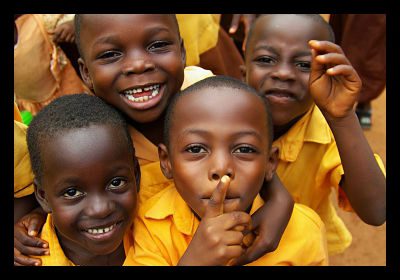
There are millions of children living in poverty throughout the world. Children living in poverty are often malnourished, do not get proper education, lack safe drinking water, and do not have access to essential vaccines. They are more vulnerable to exploitation, abuse, violence, discrimination and stigmatization. Children are deprived from their childhood due to living in poverty. Not only does living in poverty affect a child’s nutrition, but it also damages their mental, physical, emotional and spiritual development.

Here are 10 quick facts about children living in poverty:

  1. There are 1 billion children worldwide living in poverty; this is every second child.
  2. According to UNICEF, 22,000 children die each day from poverty.
  3. In 2011 there was a reduced growth and development rate in 165 million children under the age of 5 due to chronic malnutrition.
  4. Every year, 2 million children die from preventable diseases like diarrhea and pneumonia because they cannot afford proper treatment.
  5. As of 2011, 19 million children worldwide are not vaccinated.
  6. 1 out of 6 infants are born with a low birth weight in developing countries.
  7. Every year, 3.1 million children die ( 8,500 children per day) due to poor nutrition.
  8. About 72 million children who are primary school aged were not in school in 2005.
  9. Every year, 1.4 million die from lack of access to safe drinking water and adequate sanitation.
  10. A child dies every 10 seconds from hunger-related diseases.

If less money were used on weapons for military purposes, then there would be billions of dollars available for better education and health for impoverished children. It is possible to end child poverty. Everyone needs to get together as a community and voice their opinions and interests in helping children living in poverty to their respective governments.

— Priscilla Rodarte

Sources: Do Something, Global Issues, The Hunger Project, UNICEF
Photo: Wikimedia

June 23, 2014
https://borgenproject.org/wp-content/uploads/borgen-project-logo.svg 0 0 Borgen Project https://borgenproject.org/wp-content/uploads/borgen-project-logo.svg Borgen Project2014-06-23 12:38:092024-05-26 23:48:4410 Facts About Children Living in Poverty
Global Poverty

3 Things the U.S. Can Do to Reduce Global Poverty

The United States has one of the biggest economies in the world, yet spends only a small portion of its money on ending global poverty. As one of the most influential agenda-setters and biggest economic and military forces, the U.S. must accept its responsibility to the global project to reduce global poverty. There are several ways the U.S. is already tackling the issue, but it could certainly do more. These three specific methods are already in place, but need to be expanded upon in order to allow the U.S. to fulfill its potential in humanitarian aid. To play its role in reducing global poverty, the U.S. government must…

1. Pass bills.

Bills like the Electrify Africa Act and the Global Food Security Act are crucial to ending global poverty, and rely entirely on the U.S. people and government to be a success.

Take Electrify Africa for example. This bill would help provide electricity to 50 million people in Africa. This progress is essential for providing better security, health care and housing for families in need and is crucial for ending global poverty and inequality. The U.S. government is in an important role to make sure this step is taken. Luckily, the Electrify Africa Act has already seen huge success on the floor of the House of Representatives and was passed with overwhelming bipartisan support. Now it moves into the Senate, where it has already been read and referred to the Committee on Foreign Relations. The U.S. government has a responsibility to pass bills like this one in order to work toward ending global poverty.

2. Give more funding to foreign aid.

When it comes to the amount given as foreign aid, the U.S. ranks 19th in the world. This is simply unacceptable. The U.S. has one of the most powerful economies, yet it ranks 11th of 22 major donors for quality of foreign aid. Only 1.5 percent of the federal budget goes toward international affairs, as compared to 23.6 percent on social security or 18.4 percent on defense spending.

In order to effectively end global poverty, the U.S. must increase their foreign aid, specifically by increasing the budget of the U.S. Agency on International Development (USAID), which oversees all international humanitarian efforts the U.S. is involved in. This money is used to assist developing nations by fighting endemic disease, providing emergency aid after natural disasters and implementing agricultural programs to increase food security. The more aid that goes to these projects, the more successful they can be in ending global poverty and treating its side effects.

3. Work with other governments and international organizations.

The U.S. does have domestic issues to worry about, and as a result, cannot logically put all its energy into fighting global poverty. But it can work with and support international organizations that do just that. In the recent past, USAID, which is the U.S. powerhouse for international assistance projects, has worked with UNICEF and other international aid organizations on programs that tackle issues like poor nutrition in African countries and social development in Nigeria. U.S. collaboration with international organizations through the USAID allows the U.S. to have a role in reducing global poverty. The U.S. government should facilitate more of this type of partnership between USAID and other international aid organizations in order to live up to its obligation to work toward reducing poverty around the world.

Foreign aid and humanitarian assistance are complicated issues when taken in the context of the entire U.S. government, but it is crucial that the U.S. does not forget its responsibility to ending world poverty and continue to work toward this goal. The U.S., as one of the world’s most powerful nations, has the ability to make a significant difference in the world on extreme poverty through several methods and it is our job to ensure that our government stays on track toward achieving this mission.

– Caitlin Thompson

Sources: Leadership News, USAID, Center for Global Development, The concord Coalition, Oxfam America, The White House, Govtrack, Congress.gov, ONE, Vanguard
Photo: WPR

June 15, 2014
https://borgenproject.org/wp-content/uploads/borgen-project-logo.svg 0 0 Borgen Project https://borgenproject.org/wp-content/uploads/borgen-project-logo.svg Borgen Project2014-06-15 09:03:342024-06-05 01:57:313 Things the U.S. Can Do to Reduce Global Poverty
Foreign Aid, Global Poverty

In Search of How to Define Congress

The Oxford English Dictionary defines congress as “the action of coming together (of persons.)” In the United States, that definition takes on a literal meaning and forms one of the three branches of the federal government. Comprised of the House of Representatives and the Senate, the U.S. Congress is the country’s foremost legislative body.

Established by Article I of the U.S. Constitution, Congress convenes in two-year periods and is currently in its 113th session. With 435 members in the House and 100 in the Senate, Congress is a perfect example of the representational government which the Constitution seeks to impart. The results of the U.S. Census dictates the drawing of congressional districts which allow eligible voters to select their representatives. Historically, there is a high reelection rate among incumbents.

Congress draws most of its powers from those expressly written in the Constitution, but the principle of implied powers set forth by the Supreme Court in 1819 gives Congress an incredible amount of leverage. Congress also helps to maintain the system of checks and balances which is essential for the even distribution of power between the different branches of government.

One of the most important roles of members of Congress is their ability to appropriate funds. They are essentially tasked with directing the monetary commitments of the U.S. during any given fiscal period. This makes Congress an essential part of the United States’ government’s efforts to combat global poverty. In 1961, Congress passed the Peace Corps Act, which created one of the most well-known sources of American international aid in recent decades. In its first 50 years of existence, over 200,000 Americans served in nearly 140 different countries under the Peace Corps banner.

In recent years, international aid and American monetary commitments abroad have proven to be a divisive issue due to poor domestic economic prospects. According to the Council on Foreign Relations, in 2011 one percent of the United States federal budget was allocated to non-security foreign aid. Public support for increased foreign aid is substantial, but it often fails to engender significant changes in federal foreign commitments.

In any effort to define Congress, partisanship must be taken into account. Increased public scrutiny and media coverage created a politically polarized climate in the waning decades of the 20th century which has continued into the 21st century. In this climate, lobbying groups have gained influence, but topics like global poverty have also gained more prominence in the public sphere. As political coverage has increased in the media the attention given to the federal government’s commitments abroad has also increased.

As a legislative body it is Congress’s duty to enact legislation on behalf of its constituents, but to define congress a broader view of the interactions of delegates is necessary. Congress, both in its governmental and noun functions, is a forum for discussion. It is in this forum that global poverty asserts its presence and that the recognition process begins.

– Taylor Dow

Sources: OED, CFR, Gallup
Photo: The Washington Update

June 13, 2014
https://borgenproject.org/wp-content/uploads/borgen-project-logo.svg 0 0 Borgen Project https://borgenproject.org/wp-content/uploads/borgen-project-logo.svg Borgen Project2014-06-13 12:38:322024-05-26 23:40:46In Search of How to Define Congress
Activism, Advocacy, Global Health, Global Poverty, Nonprofit Organizations and NGOs

How Do We End Global Poverty?

Putting an end to global poverty seems like a huge undertaking, but the world is making itself a better place every single day.

There is no one set way to end global poverty, and it definitely will not be happening overnight. However, so many people and organizations have already taken strides in order to make things better.

When many consider global poverty they think of commercials in which a man comes out and says, “With just a dollar a day you could save this young child’s life.” But global poverty is so much more than that.

There is a lot more work involved, for one, and there are a lot more people that need help. Those children in that commercial are just one facet of what global poverty really is.

So, how do we end global poverty? The answer is different for everyone. Perhaps, the question to ask is: “What am I good at?” and then find a way to turn talents into something that can be good for everyone around the world.

There are hundreds if not thousands of ways people, charities and politicians around the world are trying to help impoverished nations.

There are people who make billboards that can use humidity and rainwater to create freshwater for the surrounding people, or buildings that use special concrete to suck up air pollution, or even the smallest thing such as the “donate now” button from PayPal.

There are business tycoons that use impact investing to help companies that want to give lanterns to children in Africa so they can do their homework and learn by accelerating investments in the solar lighting industry.

In addition to impact investing, there are also businesses like Domino’s Pizza, Kentucky Fried Chicken and Wal-Mart that have expanded in the African Markets bringing jobs, food and have even created advocacy and buzz to help provide donations to the impoverished peoples near their companies.

There are numerous nonprofits and charities dedicated to advocacy, food collection, shoe donation, vaccine donation and more. Nothing But Nets is one that’s as simple as giving a family in Africa an insecticide-treated mosquito net to help prevent the spread of malaria. Even the smallest things can impact global poverty in a big way.

There are even charities like Girl Up, dedicated to simply telling young girls and boys they can get through it and become better. Global poverty can be impacted by something as simple as positive encouragement.

The question “How do we end global poverty?” may seem intimidating at first, but once you decide what you can do and see what everyone else is already doing, it seems a lot easier.

The goal of ending global poverty is attainable, all it takes is asking yourself two simple questions: “What am I good at?” and “How can it help end global poverty?”

– Cara Morgan

Sources: The Borgen Project, Girl Up, Nothing But Nets, Shot@Life, Wal-Mart
Photo: World Relief

June 7, 2014
https://borgenproject.org/wp-content/uploads/borgen-project-logo.svg 0 0 Borgen Project https://borgenproject.org/wp-content/uploads/borgen-project-logo.svg Borgen Project2014-06-07 16:00:052024-05-26 23:38:33How Do We End Global Poverty?
Advocacy, Global Poverty, Nonprofit Organizations and NGOs

7 Things That Make Global Poverty NGOs Successful

Global Poverty NGOs
When it comes to what makes an aid organization truly successful, we usually think first about the numbers and the flashy website. How many children in rural areas get an education thanks to this organization? How many mosquito nets are being handed out to curb malaria? And how fancy is that all-important website?

All this is important, at least to a degree. But we often neglect to consider what is behind the scenes. We forget about the fundamental structure that makes global poverty NGOs effective or not. In order to be successful, NGOs must…

1. Work together
Collaboration is key. No organization can be entirely efficient on its own. While working together sometimes proves difficult because so many voices spout so many different opinions, cooperation allows for greater expansion of ideas and more creative solutions.

Additionally, organizations gain more influence and issues are given more weight when there is a large rallying force of NGOs and aid organizations behind the cause. This increased importance can get the public more involved, as well as proving to governments and policy makers that these topics need to be discussed. For example, the United Kingdom Food Group is the largest network in the U.K. that helps organizations working on food issues to share ideas and expertise by working together, thus creating maximum change.

2. Be narrow enough to do good work
In order to put the most into a cause, organizations must be narrowly focused. This allows them to put the maximum resources into one issue and thus enables them to make a difference that is more than a drop in the bucket. For instance, the Fistula Foundation focuses specifically on healing women who suffer unnecessarily from an injury sustained in childbirth. True, the organization could tackle prostitution and sexual health in other capacities, but because it focuses on fistula treatment, it is able to make a substantial difference for the cause.

3. But not too narrow as to only solve one narrow slice of the problem
All things related to global poverty are interconnected. Food security goes hand in hand with the local economy. Water sanitation plays a huge role in global health. Organizations need to understand that no matter what topic they choose to address, it is attached to all other aspects of global poverty. ONE combines its efforts to address reducing global poverty on top of reducing the incidence of preventable disease. In doing so, ONE accepts that disease perpetuates poverty, and remedying one helps alleviate the other.

4. Be easy to get involved with
The harsh reality is that while most of our society sympathizes with the plague of global poverty, it has no time to go out of their way all the time to do something about it. Organizations must realize that if they are to be successful, they must be easy to reach, easy to get involved with and easy to share. NGOs must have key small ways to get involved like buying a T-shirt, sharing a video or donating a few dollars. But on top of this, they must have larger scale methods that are just as easy.

Many organizations like Charity: Water and Nothing But Nets, ask people to donate their birthdays by essentially asking for donations to the cause rather than gifts. It is a simple, brag worthy and effective way to get people involved and raise money for the organization.

5. Be transparent
People want to know where their hard earned money goes when they donate, and they are more likely to be resistant when the paths their cash takes within an organization are unclear. Therefore, organizations must work twice as hard to show that the donations they receive go directly to the projects they advertise. Charity: Water has found a way to be utterly transparent.

The organization relies on private donors and sponsors to support its offices’ operations, thus allowing it to ensure with absolute certainty that the donations it receives from the general public go straight to water projects building pumps in rural villages. Charity: Water even shows you exactly what well was built by your donations and their annual reports are easily found on their website. Basically, it is key that people know directly where their money goes when they donate to encourage confidence in the NGO.

6. Work with the local population
The only way to create stable, lasting change is for NGOs to work directly with the local population in the target region. Without it, practices put in place and infrastructure built can fall victim to tradition and cultural practice, and thus become ineffective. However, by working with the local population, organizations can change the local perspective and approach to the problem. They can employ local workers to run the operations, thus helping the economy in more ways than one.

Rape prevention organizations tend to be particularly effective when they go straight to the local people. For example, Apne Aap is an organization in India that aims to change the perspective of rape in the culture and protect women through sustainable development of a new, empowered mindset. By going to local women, organizations like this are able to find the root of the problem and work toward a solution that will cause lasting change.

7.  Be memorable
Finally, an organization must be memorable in order to be successful. People need to feel that itch to share the video, to tell their friends, to spread the story in order to ensure that the organization gets the publicity it needs to do effective work and the cause gets the vocalization it deserves. For all the flaws the Kony 2012 and Invisible Children campaigns had internally, they were undeniably memorable. Everyone who went to high school in 2012 had the group’s logo as their profile pictures and now knows a bit more about child soldiers in the LRA. This is knowledge that can be spread in order to get more and more people involved.

Overall, no matter what process NGOs take, their work is beneficial. However, there are certain criteria that will make their efforts more effective and provide for longer-lasting, sustainable change. Simple changes to the structure of the organization can increase the general interest in the topic as well as improving the overall success of the organization.

– Caitlin Thompson

Sources: Overseas Development Institute, The Guardian, UK Food Group, ONE, Charity Water, Apne Aap, Edna Hospital, Fistula Foundation, Nothing But Nets
Photo: Flickr

June 5, 2014
https://borgenproject.org/wp-content/uploads/borgen-project-logo.svg 0 0 Borgen Project https://borgenproject.org/wp-content/uploads/borgen-project-logo.svg Borgen Project2014-06-05 04:00:002024-06-04 03:01:187 Things That Make Global Poverty NGOs Successful
Development, Education, Global Poverty

Samasource: Outsourcing and Poverty

Outsourcing is a controversial topic in the United States, oftentimes discussed alongside the current unemployment rate. The phenomenon has been addressed politically since the emergence of a world market and is especially infamous in the high-tech industry.

It is difficult to take a hard stance on the issue. On one hand, outsourcing is viewed as unfairly stripping Americans of much needed jobs. On the other hand, outsourcing is seen as essential for the success of some businesses, often involving tasks that Americans have little or no desire to do at unreasonable wages and levels of demand.

Perhaps both stances can be fairly arguable under different contexts, but under which context do American voices fight for the needs of the people taking these outsourced jobs? If high-tech is the future of international industry, shouldn’t the leading nations give way for developing countries to enter the new world market?

One company is framing outsourcing in a whole new light. Samasource, an innovative Silicon Valley startup, views outsourcing jobs to developing nations as not only mutually beneficial, but a key element to lifting communities out of extreme poverty (living on less than $1.75 a day).

Samasource is based in San Francisco and partners with pioneering Bay Area tech giants such as LinkedIn, Google and Microsoft. These companies send Samasource large collections of data (referred to as “big data”) which the nonprofit breaks down into simple projects according to their Microwork model.

The work is then given to their overseas employees in one of nine delivery centers in Haiti, India, Kenya and Uganda. Employment is granted to qualified women and young adults who undergo 2-4 weeks of training. Aside from the fact that tasks are as basic as content moderation, photo-tagging and routine data entry, the workplace imagery resonates with a typical First World office environment that many Americans can identify with.

And that’s the point. The people living in extreme poverty are often educated and willing to work but there is the standing assumption that developing nations have a populace who are limited due to lack of education or political stability. However, many have found that these areas simply lack the economic infrastructure to work in advanced industries.

When founder Leilah Janah graduated high school a semester early to volunteer as an English teacher in Ghana she was surprised to see so many educated and capable individuals living in extreme poverty. They could even speak English, but there just wasn’t any work.

Janah has been praised as a Silicon Valley superstar for her individual incentive to work hard domestically to bring jobs to those in need. Embracing the ideology of “sama,” which means “same” in Sanskrit, Janah has adopted the perspective that everyone deserves the agency to help themselves live a dignified lifestyle through employment. To accomplish this, Janah found outsourcing to be the answer.

Currently, 1.4 billion people live on less than $1.75 a day, and Samasource has calculated that 43 million people can benefit from their Microwork model by creating new jobs in the tech market overseas rather than sending them away. Samasource has already lifted 15,000 people out of extreme poverty by providing jobs to 4,100 workers with families to support. Continuing their efforts to help everyone succeed, the nonprofit has recently created their SamaUSA program which teaches City College of San Francisco students high tech skills at no cost.

Samasource isn’t the end-all solution; international aid is still necessary to provide basic needs for people. Once basic needs are met, providing jobs is the next step to helping those in need to help themselves.

– Edward Heinrich

Sources: Forbes, Mission Local, Samasource, The Telegraph
Photo: The Telegraph

May 14, 2014
https://borgenproject.org/wp-content/uploads/borgen-project-logo.svg 0 0 Borgen Project https://borgenproject.org/wp-content/uploads/borgen-project-logo.svg Borgen Project2014-05-14 04:00:592024-12-13 17:50:16Samasource: Outsourcing and Poverty
Extreme Poverty, Food & Hunger, Gender Equality, Hunger

Carolina Maria de Jesus: Life in Favelas

The book begins: “July 15, 1955. The birthday of my daughter Vera Eunice. I wanted to buy a pair of shoes for her, but the price of food keeps us from realizing our desires. Actually we are slaves to the cost of living.”

Carolina Maria de Jesus’s diaries were edited into a book called “Room of Garbage” (1960), which quickly became one of the most successful books in Brazilian publishing history. In Sao Paulo, 10,000 copies of the book sold out in the first three days and it has since been translated into 13 different languages, becoming an international bestseller. Despite her success, within a few years she would return to living in the favelas and would later die in poverty.

Carolina was born in 1914 to a single mother in Minas Gerais. After attending primary school for two years, she was forced to drop out. She wrote her diary entries while living in the favelas (slums) of Sao Paulo with her three illegitimate children.

After World War II, the number of favelas exploded in major cities such as Rio de Janeiro and Sao Paulo due to mass migrations. Favelas were located on the unwanted lands left behind by urban development, often in the hills surrounding the cities.

A self-confident woman, Carolina refused to conform to social standards. She never married, and she expressed herself aggressively with sometimes racist views. Her diary entries describe her struggle to rise above poverty, living as one of the “discarded” and marginalized.

She collected paper, bottles and cans for coins, held various odds and ends jobs and scavenged in garbage bins for food to feed her children. Her stories, poems and diary entries deal with themes of poverty, loneliness, hopelessness and death. She writes of the racial injustice and discrimination heaped onto the poor and the blacks in the favelas.

She writes about political events and politicians with their empty promises to the urban poor, arguing, “Brazil needs to be led by a person who has known hunger. Hunger is also a teacher. Who has gone hungry learns to think of the future and of the children.” Many readers and critics were surprised that an uneducated black woman from the slums could eloquently write about politics, racism and gender discrimination.

In 1958, Audalio Dantas, a reporter for Diario da Noite, heard Carolina yell at a group of men on a playground, “If you continue mistreating these children, I’m going to put all of your names in my book!” Dantas convinced her to show him her writings and took them to his editor.

Although her book would reach international acclaim, many Brazilians criticized and ostracized her for her refusal to conform to social norms. Today, most Brazilians do not acknowledge her impact, only recognizing her as that “slum dweller who cracked up.” Why is Carolina Maria de Jesus important if her country refuses to remember her?

Her stories humanize poverty and hunger, bringing attention to the human lives behind facts and figures. She describes the pain of hearing her children ask for more food because they are still hungry. She writes about watching restaurants spill acid in the trashcans to prevent looting by the poor. In the favela, she had the “impression she was a useless object destined to be forever in a garbage dump.”

A quick search on the Internet can show you numbers and statistics about the millions of people living below the poverty line in the world, but Carolina’s words showed people “the meaning and the feeling of hunger, degradation and want.” To overcome global poverty and move forward with understanding and empathy, Carolina’s stories and the countless stories of others must not be forgotten.

– Sarah Yan

Sources: Latin American Studies, The Life and Death of Carolina Maria de Jesus, Notable 20th Century Latin American Women
Photo: Omenelick 2 Ato

May 14, 2014
https://borgenproject.org/wp-content/uploads/borgen-project-logo.svg 0 0 Borgen Project https://borgenproject.org/wp-content/uploads/borgen-project-logo.svg Borgen Project2014-05-14 04:00:032024-05-26 23:35:46Carolina Maria de Jesus: Life in Favelas
Education, Food & Hunger, Global Poverty, Health

How Many People Live in Poverty Worldwide?

What do the 700 million people who watched the world cup in 2010 have to do with global poverty? 700 million people is the number of people who survive on less than a dollar a day, which is 10 percent of the world’s population. A shocking 80 percent of the world’s population survives on less than 10 dollars a day. That is almost 6 billion people living in poverty worldwide.

There are a little over two billion children living in the world currently and half of those children live in extreme poverty every day. According to UNICEF, 22,000 of those children die each year, which is roughly the same number of college students attending at a state university in the United States.

The children living in poverty stricken areas do not have access to proper education. The number of school days missed by these children are over 433 million days of absence. Those days not attended could have been utilized to provide a better life for themselves and their families, but because of their circumstances they are ensnared in that world. Children need access to health resources, clean water and sanitation. Unfortunately, almost one billion children do not receive access to those essentials.

Another major problem that touches nearly half of the world’s population is access to water. Over one billion people in developing countries to not have access to clean water and one in three of those people live on less than one dollar a day. The average toilet flush usage is about three liters of water, which is more than the ordinary quantity of access to water in developing countries. This issue causes problems with human development in these developing nations and causes daily life to continue to be a battle. Nearly half of those populations are suffering from health problems linked to the lack of sanitation and fresh water.

In developing countries the gap between the rich and poor continues to grow each day. This limits areas in poverty, particularly rural, isolated areas to accept limitations to opportunities and resources. The progress that has been formed in developing nations is at times threatened by climate change, famine and economic changes making growth in areas of poverty more difficult. The access to clean water, wellness services and education remains difficult to obtain, causing movement between the class systems stagnant. One answer to the issues of worldwide poverty and climate change is the implementation of the proper education for small marginal farming techniques like irrigation and crop rotation. Food security in the growing nations is a number one goal to continue to reduce worldwide poverty.

– Rachel Cannon

Sources: Global Issues, World Bank
Photo: PKH

May 3, 2014
https://borgenproject.org/wp-content/uploads/borgen-project-logo.svg 0 0 Borgen Project https://borgenproject.org/wp-content/uploads/borgen-project-logo.svg Borgen Project2014-05-03 04:00:262024-05-26 23:29:34How Many People Live in Poverty Worldwide?
Global Poverty, Philanthropy

Top 5 U.S. Philanthropists

Bill_Gates_and_Warren_Buffett_US_Philanthropists
When you think of Bill Gates, is your first thought Microsoft or astoundingly wealthy billionaire? How about philanthropist? The latter may have slipped your mind completely.

Through the joint efforts of the Philanthropic Research Institute, a nonprofit organization focused on creating philanthropic awareness, Forbes compiled a list of America’s fifty top philanthropists that have given the most money away. Below are the top five U.S. philanthropists.

Bill Gates falls into the utmost categories of the elite, leading the way as the world’s richest person with a net worth of an estimated $76 billion. Gates has lead the way as the world’s most wealthy man fifteen out of the last twenty years.

1. Not only does Gates’ hold the spot as the world’s richest man, but with the collaboration of his wife, Bill and Melinda Gates have snagged the spot as the U.S. top philanthropists donating $1.9 billion in 2012. The Gates’ lifetime giving is estimated at a whopping $28 billion.

2. Not to be outdone, Warren Buffet makes a close second having donated $1.87 billion in 2012 with a net worth of $58.7 billion. He fell short of the Gates’ by only $35 million. However, Buffet has committed to donating the remainder of his fortune before or upon his death mandating that it be put to use within ten years following the donation.

3. George Soros, founder of Soros Fund Management LLC and Forbes’ number one hedge fund manager, has donated $763 million with a lifetime giving of $10 billion putting him comfortably in third place.

4. Facebook founder and CEO Mark Zuckerberg secured the fourth spot. With an estimated net worth of $23.4 billion, Zuckerberg donated $519 million in 2012 thus extending his lifetime giving to $549 million.

5. The Walton family, most notably known for Wal-Mart, are brought in at the final spot as the top five U.S. philanthropists. With a net worth of $144.4 billion, they gave $432 million dollars in 2012 bringing their lifetime giving to $4.6 billion dollars.

The total amount of money given by these top philanthropists towards philanthropic work in 2012 was more than $5.48 billion. That’s nearly one-fifth of what it would cost to end world hunger with the annual shortfall sitting at $30 billion per year.

Of the top philanthropists mentioned, no one donated more than 3.2 percent of their net worth but the astounding amount given by less than ten individuals cannot be ignored.

Forbes has reported that there are currently 1,645 billionaires in the world. It will take more than a call to action by the elite philanthropists. In order to put world hunger to an end, it will take a small step from everyone capable of helping.

Just think, how much is 3.2 percent of your net worth?  How can a portion of the money you spend regularly be used to make the life of someone stricken by poverty more sustainable? The answers do not lie solely in how much the monetarily elite of the world are donating, but the efforts made by those with the power to influence those groups.

– Janelle Mills

Sources: Philanthropic Research Institute, Forbes, The Borgen Project, BBC, Forbes
Photo: Skunkpot

April 21, 2014
https://borgenproject.org/wp-content/uploads/borgen-project-logo.svg 0 0 Borgen Project https://borgenproject.org/wp-content/uploads/borgen-project-logo.svg Borgen Project2014-04-21 04:00:302024-06-05 01:57:23Top 5 U.S. Philanthropists
Children, Global Poverty, Human Rights, Human Trafficking, Violence Against Women, Women & Children

The Internet’s Role in Sex Trafficking

Internet_sex_trafficking
Sex trafficking exists in the United States. Sex traffickers target women and children with histories of addiction, abuse and even issues with debt and use manipulation to keep these victims trapped in the sex trafficking industry. The leaders in sex trafficking use violence and threats against the victims loved ones as means to force these victims to work against their own will. Accordingly, 83% of sex traffic victims are United States citizens. This issue is larger than most people realize and exists in the form of strip clubs, fake massage businesses, hostess clubs and even online escort services.

The internet is the number one center for sex trafficking in the United States. For example, pimps use websites like Backpage.com and even Craigslist.org disguised as massage services to escort victims for services. Thus, these women are forced into sex trafficking at a young age mostly by older men. Most of the services that are offered on Craigslist are in the form of recruiting. Women post pictures of themselves and answer customer’s calls referencing the ads placed on Craigslist. These women are not willingly posting these pictures, but are in constant fear of their own lives. In addition, these pimps use not only force but the false promise of a better life and threats to harm the victims’ loved ones. Victims are coerced into trafficking by pimps posing as model scouts, or nannies and house maids being recruited and then captured by these sex traffickers.

Because trafficking is unique when based in the internet it has become extremely profitable and it is easier to reach a larger audience. Anyone can post ads on these sites and these ads can be seen by thousands of people in addition to being unnoticed by the police. The average age range these victims enter the sex trafficking industry is 11-15 and due to the vague description of age with words like “young,” these operations slip by unnoticed by authorities.

In addition, many women in places like Nigeria, Thailand, and other places suffering from global poverty are involuntarily forced into sex trafficking. The geological approach to sex trafficking shows high numbers of victims in areas stricken with poverty, as well as remote areas where women are more likely taken from to an area of global capitalization and tourism. These high traffic areas are promoted through the use of the internet and smartphones. Because of the accessibility to these websites, where a brothel can be located in under a minute generates high revenue for the owner.

Accordingly, President Barack Obama released a statement saying “We’re turning the tables on the traffickers. Just as they are now using technology and the Internet to exploit their victims, we’re going to harness technology to stop them.”

To illustrate the alarming statistics of this issue the US Department of Health and Human Services show that 90% of runaways end up in the commercial sex trade industry and in Tennessee 94 children are trafficked every month. Human Trafficking has become a larger issue than most realize and will be addressed accordingly to the advancement of technology.

– Rachel Cannon

Photo: CNN
Sources:
End Slavery Tennessee, Polar is Project

April 16, 2014
https://borgenproject.org/wp-content/uploads/borgen-project-logo.svg 0 0 Borgen Project https://borgenproject.org/wp-content/uploads/borgen-project-logo.svg Borgen Project2014-04-16 01:07:502020-07-25 00:43:36The Internet’s Role in Sex Trafficking
Page 29 of 40«‹2728293031›»

Get Smarter

  • Global Poverty 101
  • Global Poverty… The Good News
  • Global Poverty & U.S. Jobs
  • Global Poverty and National Security
  • Innovative Solutions to Poverty
  • Global Poverty & Aid FAQ’s
Search Search

Take Action

  • Call Congress
  • Email Congress
  • Donate
  • 30 Ways to Help
  • Volunteer Ops
  • Internships
  • Courses & Certificates
  • The Podcast
Borgen Project

“The Borgen Project is an incredible nonprofit organization that is addressing poverty and hunger and working towards ending them.”

-The Huffington Post

Inside The Borgen Project

  • Contact
  • About
  • Financials
  • President
  • Board of Directors
  • Board of Advisors

International Links

  • UK Email Parliament
  • UK Donate
  • Canada Email Parliament

Get Smarter

  • Global Poverty 101
  • Global Poverty… The Good News
  • Global Poverty & U.S. Jobs
  • Global Poverty and National Security
  • Innovative Solutions to Poverty
  • Global Poverty & Aid FAQ’s

Ways to Help

  • Call Congress
  • Email Congress
  • Donate
  • 30 Ways to Help
  • Volunteer Ops
  • Internships
  • Courses & Certificates
  • The Podcast
Scroll to top Scroll to top Scroll to top