• Link to X
  • Link to Facebook
  • Link to Instagram
  • Link to TikTok
  • Link to Youtube
  • About
    • About Us
      • President
      • Board of Directors
      • Board of Advisors
      • Financials
      • Our Methodology
      • Success Tracker
      • Contact
  • Act Now
    • 30 Ways to Help
      • Email Congress
      • Call Congress
      • Volunteer
      • Courses & Certificates
      • Be a Donor
    • Internships
      • In-Office Internships
      • Remote Internships
    • Legislation
      • Politics 101
  • The Blog
  • The Podcast
  • Magazine
  • Donate
  • Click to open the search input field Click to open the search input field Search
  • Menu Menu

Tag Archive for: Global Poverty

Inflammation and stories on global poverty

Posts

Activism, Philanthropy, Poverty Reduction

Ending Poverty Through Mobile Banking

mobile banking
With populations in the developing world on the steady rise and technology becoming more user-friendly, there is no doubt that technology will make drastic changes to the developing world in the next decade.

In a recent 2015 Gates Annual Letter published by the Bill and Melinda Gates Foundation, Gates declared that innovation will play a vital role in improving the lives of people in poor countries in the next 15 years.

Moreover, Melinda Gates argues that an increase in access to mobile banking through cell phones will provide impoverished people with the opportunity to save what they earn or perhaps borrow what they need at a low rate.

One of the many benefits of mobile banking is its socio-economic impact. The country of Kenya was known to have an underdeveloped banking infrastructure, high poverty rate and a large population of migrant people. Since the introduction of mobile banking in Kenya, financial inclusion is reported to have increased to 80 percent. Along with significant changes and improvements in global health and agricultural production, increased access to mobile technologies in developing nations is the starting point to something greater.

Developing countries are limited by the physical infrastructure of financial institutions, which means that a large part of their population is not included in a banking system. Financial inclusions have an important impact on the lives of people. Reports indicate that when poor people receive access to financial services, their cash management improves and creates better infrastructure for business and development of markets.

This change in the infrastructure in developing nations is a start to change the way people live in these countries. A small technological innovation like the mobile phone has made huge impacts in providing the opportunity to build a more developed economy in these countries.

Other innovations in technology have become popular in benefiting the developing world as well. Telecenters are an example of how technology has  changed in order to suit those living in remote areas. Telecenters range from innovations in the education sector to the medical industry.

For learning, distance education developed by technology has the ability to make every child a scholar. For health, telemedicine has the ability to change dysfunctional rural health-care systems by providing clinical health care at a distance.

Other small inventions, such as the Soccket and Lifestraw, have been developed to help those living in poverty-stricken areas and to improve the lives of those individuals.

This shows how a simple change in technology can change the lives of people living in poverty. These types of actions should be embedded in all development efforts that aim to challenge poverty through innovations of new technology.

Although technology does not end poverty, it allows people to create connections and relationships that together can break down the systems that keep people poor, and then it is up to humanity to end it.

– Sandy Phan

Sources: Bill Gates’ Blog, Consultive Group to Assist the Poor

February 2, 2015
https://borgenproject.org/wp-content/uploads/borgen-project-logo.svg 0 0 Borgen Project https://borgenproject.org/wp-content/uploads/borgen-project-logo.svg Borgen Project2015-02-02 12:00:542024-05-27 09:23:15Ending Poverty Through Mobile Banking
Global Poverty

How Falling Oil Prices Affect the Poor

oil prices
Decreasing oil prices directly correlates with the price of food. Fuel transports food and with lowered oil prices, the cost of food is dropping. The price of fuel is important to the global market, because it dictates how imports and exports are priced.

The cost of petroleum determines the cost of agricultural products, like corn and wheat. The price of these crops includes the cost of transportation, chemicals and pesticides – all of which are made from petroleum.

Impoverished citizens will often spend over 50 percent of their budget on food. For instance, in Vietnam, parents will spend 65 percent of their budget on food for themselves and their families. With decreased prices in food, families living in developing countries will be able to purchase larger quantities.

While many living in developing countries are benefiting from the fall in oil prices, there is a population who is not benefiting from lowered oil prices. The fall in oil prices negatively affects independent farmers and crop growers.

These farmers do not use large amounts of pesticides or fuel to transport their goods. Therefore, the decreasing price in oil does not affect their cost in production and distribution. These farmers transport their food only a short distance. Disconnected from the global market, these small-holder farmers are at a disadvantage.

Overall, developing countries are benefiting from the decrease in oil prices, with the exception of small-holder farmers.

Lower oil prices can potentially benefit developing countries in another way, through investment. With lower oil prices, investment is possible because high oil importing countries have the opportunity to invest increased amounts into improving rural infrastructure and social services.

– Maxine Gordon

Sources: Yahoo, New York Times, Reuters
Photo: Inquisiter

January 23, 2015
https://borgenproject.org/wp-content/uploads/borgen-project-logo.svg 0 0 Borgen Project https://borgenproject.org/wp-content/uploads/borgen-project-logo.svg Borgen Project2015-01-23 04:00:402024-06-05 01:58:22How Falling Oil Prices Affect the Poor
Extreme Poverty, Food & Hunger, Global Poverty

Poverty in Singapore

Singapore has a population of almost 6 million people with a $297.9 billion GDP which is growing at the average rate of 3.9 percent every year. Singapore is one of the richest Asian countries per capita. In 2012, Singapore city was ranked as the sixth most expensive city to live in the world—after cities including Tokyo, Sydney and Oslo. Despite these statistics, one-tenth of Singapore’s population is currently living in poverty.

Today, the income inequalities have become more noticeable than ever. Unlike large countries such as China or India where there is a distinct difference between urban towns and rural villages, Singapore is a small island where both the wealthy and poor live in proximity to each other.

Out of 136 countries considered, Singapore currently ranks the 26th most income disparate. This makes them the second most income unequal country in Asia. According to the Singapore government, over 105,000 families live in poverty. This translates to about one in 10 family homes, or 378,000 people.

While Singapore has the highest concentration of millionaires in the world and has an average per capita income of over $52,000, there are 105,000 families left with $5 to spend per day and 114,000 individual residents making less than $805 per month.

Furthermore, the purchasing power of the poor has significantly dropped. It has been determined that the top 10 percent wager-earning households earn as much as 25 times more than the bottom 10 percent. While the top earners saw their real wages increase, those on the bottom saw their real wages decrease. It is further distressing to realize that the price of goods and services rose by 13.1 percent since 2012.

Poverty in Singapore Today

Singapore had never had an official poverty line to measure the rates of poverty in their country. However, the Singaporean Parliament chose to establish a rough definition after neighboring Hong Kong created guidelines to better identify and take strides towards relieving the financial stress those particular citizens.

Currently, while Singapore has no acceptable measure of poverty, they consider any four person household that makes less than $1,250 per month as somewhat struggling. The $1,250 figure is considered the average a four person household would typically spend on food, clothing and shelter per month.

Much of the country’s poverty is created by the influx of foreign workers taking blue collar jobs that were once held by native Singaporeans. Foreign workers unfortunately mean cheaper labor. There is always a cost to globalization, and this time it has affected Singaporeans in their own home.

Despite the large, wealthy buildings in Singapore, many are often struggling to find affordable housing. Those that cannot make it live in tiny government-owned apartments that are barely bigger than 13 square feet. In those cases, rent is paid to the government according to how much they can afford to pay, children from impoverished backgrounds attend school on fees subsidized by the government and food is provided not by the wages earned but by charitable donations.

While Singapore does not have abject poverty like one would find in various parts of Africa, being unable to afford living in your country is an issue that any government should address and find solutions.

– Christina Cho

Sources: BBC, Singaporeans Against Poverty, Al Jazeera, World Bank
Photo: SMU

January 22, 2015
https://borgenproject.org/wp-content/uploads/borgen-project-logo.svg 0 0 Borgen Project https://borgenproject.org/wp-content/uploads/borgen-project-logo.svg Borgen Project2015-01-22 04:00:002024-05-27 09:23:10Poverty in Singapore
Activism, Advocacy, Global Poverty

Ending Global Poverty By 2030

ending global poverty
Videos and pictures of malnourished children play on TV screens in between reality TV shows and donation envelopes arrive in the mail, sometimes to be barely glanced at. A supporter of The Global Poverty Movement said, “Everything that has a beginning has an end,” but what is the world doing to end global poverty?

Two people who are aware of and trying to combat this issue are Hugh Evans and Simon Moss. These two men erected The Global Poverty Movement in 2008 during a “High Level meeting on Millennium Development Goals” and within a year launched in Australia. It is their hope that through this project, global poverty can be eradicated by 2030 through the use of government changes and business and consumer action, along with developing a movement that will inspire and educate people to move to action to affect change.

Since landing in England, New Zealand and the United States, the Project has increased in numbers by the thousands and secured funding for their initiatives, such as Live Below the Line, The End of Polio and Global Citizen, to eradicate poverty by the billions.

The Global Poverty Project has made use of multimedia to reach those all over the world in support of their campaign of ending global poverty through video presentations to recruiting celebrities such as Hugh Jackman to enlist in the cause to free ticketed concerts to spread their mission.

By using these methods, people of all ages—about 250,000 so far—are becoming members of Global Citizen, becoming more conscious of the less fortunate and moving to action by simply using the Internet.

In late September, the organization hosted their third annual Global Citizen Festival with popular singers Jay Z, Carrie Underwood, fun. and The Roots, to name a few. In order to obtain tickets, the organization created an incentive program; sign petitions, email world leaders and share content on social media. By doing so, “fans [became] active participants in campaigning for positive change.” These campaigners earned points to put in a raffle to win tickets to the concert.

With the help of activists lobbying for change, a change will come, even if it’s through sharing an article online or signing a name to a petition because like one Global Citizen said, “What we do in one place effects someone on the other side of the world.”

– Kori Withers

Sources: Global Poverty Project, Global Poverty Project 2, Global Poverty Project 3
Photo: UN Seattle

October 14, 2014
https://borgenproject.org/wp-content/uploads/borgen-project-logo.svg 0 0 Borgen Project https://borgenproject.org/wp-content/uploads/borgen-project-logo.svg Borgen Project2014-10-14 04:00:042024-05-27 09:22:49Ending Global Poverty By 2030
Extreme Poverty, Food & Hunger, Global Poverty, Human Rights

ActionAid USA: Aiding Over 25 Million People

ActionAid USA
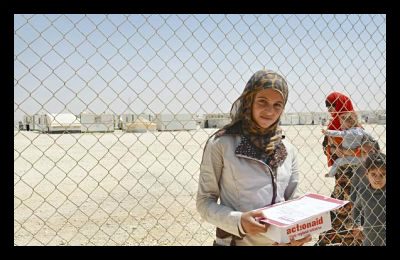
ActionAid USA is working to end global poverty and further enhance human rights. Operating in over 40 countries around the world, through their work the organization has been able to reach and impact the lives of approximately 25 million people.

ActionAid addresses a variety of issues that affect the daily lives of people in an assortment of countries. The organization works to change policies surrounding biofuels (in the hopes of stabilizing food prices) and to help countries in poverty adjust to the shifting changes in climate.

It also focuses its attention on aiding countries that are hit by natural disasters and do not have the resources to help themselves. In providing relief, they have been able to respond to 87 of these occurrences and help about 7 million people.

Additionally, the organization has been looking for new ways to empower women, engage the youth and improve the overall quality of life for people across the globe.

One of ActionAid’s most recent projects has been advocating for President Obama to approve the Assessing Progress in Haiti Act, which he signed on August 8, 2014.

In the aftermath of the Haiti earthquake in 2010, although billions of dollars were donated to Haiti, the money was not always  spent in the most efficient way. The new act  requires that the U.S. government submit an extremely detailed report stating exactly how the money donated to provide relief for the Haitian people is being spent.

The organization, however, is not so supportive of President Obama’s backing of the “New Alliance” plan regarding agriculture in Africa. It claims putting agriculture into the hands of big businesses will hurt smaller farming communities and increase poverty levels. Buba Khan, the ActionAid International Advocacy Officer, stated that, “Companies should be part of Africa’s cultural future, but profit should not be prioritized over people’s rights.”

 As part of their efforts to effectively combat global hunger and poverty, ActionAid works to make sure that their opinions on what the U.S. government is doing right and what the U.S. government is doing wrong are clearly expressed. 

– Jordyn Horowitz

Sources: Lee House
Photo: ActionAid USA

August 28, 2014
https://borgenproject.org/wp-content/uploads/borgen-project-logo.svg 0 0 Borgen Project https://borgenproject.org/wp-content/uploads/borgen-project-logo.svg Borgen Project2014-08-28 04:00:312024-12-13 17:53:55ActionAid USA: Aiding Over 25 Million People
Food & Hunger, Global Poverty

Aquaculture, Poverty and Food Security

For over 40,000 years, humans have developed techniques to breed, rear and harvest animals in water environments. Today, the process is called aquaculture, but only until recently have researchers been able to find the link between aquaculture and poverty reduction.

In a recent study published in the peer-reviewed journal World Development, researchers looked at Bangladeshi fisheries in the period between 2000 and 2010 and found that the growth of aquaculture led to greater consumption among the extremely and moderately poor in Bangladesh.

The “expansion of commercial aquaculture has tended to stabilize or reduce the price of fish, which has become relatively more affordable as incomes have risen,” the study found.

In those ten years, Bangladesh saw a substantial reduction in poverty. Those living below the upper poverty line shrunk from 48.9 percent to 31.9 percent, and those living in extreme poverty decreased from 34.3 percent to 17.6 percent, according to the study. Rising wage rates during this time led to poverty reduction and the increased aquaculture production led to cheaper fish prices.

For Bangladesh, combating food insecurity and malnutrition is remarkably important. The country ranks poorly for food and nutrition security and malnutrition is estimated to cost the economy $1 billion annually. Changes in the supply and consumption of fish, the study argues, have “major public health implications.”

More and more households were able to afford the consumption of fish and the added nutritional value helped make households more food secure. Fish are an excellent source of protein, fatty acids and vital micronutrients that maintain and support health.

The success of Bangladeshi fisheries in alleviating poverty over the past decade brings greater attention to the role of aquaculture in helping the poor meet their nutritional needs. Farming fish efficiently means the cost of fish is cheaper and stable fish prices mean the poor are better able to meet their nutritional needs.

Advancing aquaculture techniques in low-income countries is important insofar as it can help the poor meet basic needs. Bangladesh has had tremendous success in recent years reducing the share of its citizens that live in poverty, but governments can learn from the country’s success by adopting policies that favor the expansion of capture fisheries to most effectively meet the needs of the poor.

– Joseph McAdams

Sources: Science Direct, Daily Link, National Oceanic and Atmospheric Administration, World Fish Center
Photo: Banglabox

August 20, 2014
https://borgenproject.org/wp-content/uploads/borgen-project-logo.svg 0 0 Borgen Project https://borgenproject.org/wp-content/uploads/borgen-project-logo.svg Borgen Project2014-08-20 12:00:322024-06-05 01:58:04Aquaculture, Poverty and Food Security
Global Poverty, Humanitarian Aid

Global Poverty & the Economy

Humanitarian work is intuitively selfless; it is an opportunity to positively impact a stranger’s life without any expectations that he will return the favor. Although this makes a certain amount of sense, the sentiment is not entirely true.

In fact, when federal government agencies such as the United States Agency for International Development invest to eliminate global poverty, they see huge economic returns. Global markets expand and jobs are created. Financial gain should not necessary be the sole motivation for aid, but humaneness and generosity are not always the federal government’s prime movers. Boosting the economy makes for a good supplement.

The process, from foreign aid to market expansion, works like an investment. The investor, the one providing the aid, is essentially buying consumers who will then in turn spend money on foreign goods.

“From an economic perspective, what happens in one country has ripple effects throughout the world,” says Christopher Policinski, the CEO of Land O’Lakes.

The ripple effects starts like this: a small investment is made in a poor overseas community. Maybe this money provides clean and accessible water, maybe it champions education, or maybe it funds electricity and energy projects. In every possibility, it begins to raise the community out of poverty, making consumerism more viable.

The working poor, for example, may have money for apples, soaps, toothpastes and wheat. Middle to upper classes may now have money for plane tickets, clothing, technologies and cars. These goods are purchased from the United States and from other industrialized countries, boosting their economies.

Current data backs this theory. Here are some statistics you will find on the Borgen Project website:

1.

One out of five U.S. jobs is export-based. This means that one out of five U.S. jobs relies on global markets to succeed. Investments in foreign, impoverished communities expand these markets by creating new buyers of U.S. products, bolstering U.S. export-based business.

2.

Developing nations receive 45 percent of our country’s exports. This is important because it shows how much the U.S. really does rely on foreign communities that are still “developing.” Aiding those people in those markets will likely produce strong economic benefits in the U.S.

3.

The list of the countries with the fastest growing gross domestic products (GDP,) according to their annual average GDP increase percentage, may be surprising. The list goes: Angola (11.1,) China (10.5,) Myanmar (10.3,) Nigeria (8.9,) Ethiopia (8.4,) Kazakhstan (8.2,) Chad (7.9,) Mozambique (7.9,) Cambodia (7.7) and Rwanda (7.6.) In comparison, the U.S. GDP growth rate in 2013 was 1.9 percent. Investing in countries like Angola is smart business.

History backs this theory as well.

“From Germany to South Korea, nearly all of the United States’ top trading partners were once recipients of U.S. foreign aid,” reads the Borgen Project’s “Global Poverty & U.S. Jobs” page.

There is a lot of reason to promote foreign aid for its economic benefits, but it is important not to forget that at its core it is a humanitarian act. People are not only consumers. If Congress needs to think otherwise to secure bipartisan support and increase generosity in development projects, which it could stand to do, then so be it. It could be for the best.

– Adam Kaminski 

Sources: The Borgen Project, Bloomberg Businessweek
Photo: Bloomberg Businessweek

August 14, 2014
https://borgenproject.org/wp-content/uploads/borgen-project-logo.svg 0 0 Borgen Project https://borgenproject.org/wp-content/uploads/borgen-project-logo.svg Borgen Project2014-08-14 12:00:582024-05-27 09:20:47Global Poverty & the Economy
Global Health, Global Poverty

First Ever U.S.-Africa Leaders Summit 

From August 4 to August 6, the White House is hosting the first ever United States-Africa Leaders Summit. During the summit, U.S. President Barack Obama aims to strengthen ties with Africa’s leaders and engage in conversation on investing in the future of the continent.

The summit, hosts 50 African leaders in good standing with the U.S. and is focused on trade and investment in Africa. They are also discussing food security, availability of clean water and sustainable housing.

With the continent in the midst of a serious Ebola outbreak, some gears may be shifted toward providing reliable healthcare facilities to the millions who suffer from health problems due to impoverished conditions throughout rural Africa.

Healthcare is a hopeful topic of discussion for the U.S.-Africa Leaders Summit, as the healthcare inequality gap proliferates in both countries. In South Africa, healthcare for the impoverished is increasingly difficult to attain, as no one seems to be making the initial investment to build a hospital where effective healthcare can be provided on a public scale.

Another significant highlight of the summit is climate change. Africa’s rural agriculture relies on the rain. In recent years, Africa has suffered from harsher and more frequent environmental changes, and so Obama has opened a dialogue on implementing sturdier agricultural infrastructure to positively impact food security among African nations.

This has big implications for Africa’s impoverished population, as 65 percent of the entire continent relies on agriculture as their source of livelihood. If environmental conditions can be dealt with more productively, agricultural output will increase. This will have real and beneficial effects on conditions by raising wages and lowering the price of food. Thus, Africa’s impoverished population will have greater buying power.

Obama is also hopeful that his discussions on trading partnerships will have a positive impact on job markets in Africa. In doing this, African companies will be seeking foreign investment and will prove that the continent has more to offer than just commodities and natural resources. If significant investment is secured, many tangible benefits will be brought back to American soil, as these companies will be capable of expanding the economy and beginning to employ Africa’s promising youth.

All in all, the U.S.-Africa Leaders Summit has a lot of potential for aiding Africa’s population.

– Conner Goldstein

Sources: UCSF, WhiteHouse.gov, The World Bank, The Guardian
Photo: The Guardian

August 6, 2014
https://borgenproject.org/wp-content/uploads/borgen-project-logo.svg 0 0 Borgen Project https://borgenproject.org/wp-content/uploads/borgen-project-logo.svg Borgen Project2014-08-06 09:41:482024-05-27 09:20:42First Ever U.S.-Africa Leaders Summit 
Activism, Education, Nonprofit Organizations and NGOs, Poverty Reduction

The Education Development Center

In the fight against global poverty, it is important to acknowledge some of the more successful combatants. The Education Development Center (EDC) is one of these. As a global nonprofit, it recognizes the correlation between the lack of education and increased global poverty and helps give those marginalized in the world — either due to poverty or war — the chance of leading a better life by means of education. As their website states, over 100 million children do not attend school, and it is this statistic that the EDC is fighting to combat and reduce.

With offices based in New York, Chicago, Washington, D.C. and Waltham, Mass., the Education Development Center commands a global staff of 1,350 members. It has over a $190 million budget and over 250 programs spread throughout 30 different countries and across all 50 U.S. states.

Through grants from both private foundations and federal agencies, the EDC creates and implements projects to improve educational and economic prospects of those worldwide. According to the EDC, these projects have ranged from “seed projects to large-scale national and international initiatives.”

Notable donors to the EDC include: the Ford Motor Company, the Bill & Melinda Gates Foundation, U.S. Agency for International Development, the U.S. Department of Education, UNESCO and the World Health Organization. Recently, the EDC has received three grants from the U.S. Department of Education, one for $3.5 million and two for almost $400,000 each, all meant for education development projects within the U.S.

Founded in 1958, the EDC’s first project was to design a new physics curriculum for American high school classrooms. This was partially a reaction to the Soviet Union’s new space program as well as a response to a perceived discrepancy between Soviet Union and American science educations.

Funded by the National Science Foundation, this project became highly successful, and the new curriculum was incorporated into roughly half of American high schools by the early 1960s.

Following the implementation of this first project in the United States, EDC soon began to establish a more global reach. In 1961 and 1966 it began work on advancing mathematics and science programs in Africa. These projects would eventually end up creating, as stated on EDC’s website, “the continent’s first indigenous education research and development organization, Science Education Programme for Africa.”

However, one of its most effective and interesting international projects is the Radio Education or Interactive Radio Instruction.

This radio program that began in 1985 (and still exists today) was funded by the U.S. Agency for International Development. It uses radios to educate large swaths of people, including adults and children from over 30 developing countries, that would otherwise be unable to receive a basic education, either because of war or poverty.

This dedication to improving the world and combating poverty through education has been sustained throughout the organization’s entire existence. As a result of projects from 1997-2007, for instance, student enrollment in Guinea has doubled.

More recently, the international work of the EDC has focused on reducing youth unemployment in both Rwanda and Macedonia. More vocational training centers, concentrated on teaching technical and interpersonal skills, are being created for these youths.

As 2015 draws near, so does the end of the Millennium Development Goals, eight goals signed in 2000 by 191 countries designed to drastically reduce global poverty. As the international community debates and draws up the next set of goals to target poverty, the EDC will be remembered and depended on for the continued positive change it has enacted since 1958.

– Albert Cavallaro 

Sources: EDC 1, EDC 2, EDC 3, EDC 4, EDC 5, IRIN
Photo: Sasaki

July 28, 2014
https://borgenproject.org/wp-content/uploads/borgen-project-logo.svg 0 0 Borgen Project https://borgenproject.org/wp-content/uploads/borgen-project-logo.svg Borgen Project2014-07-28 04:00:282024-06-05 01:57:49The Education Development Center
Global Poverty, Women and Female Empowerment

Convoy of Hope

Convoy of Hope - Borgen Project
Convoy of Hope, founded in 1994 by the Donaldson family, is dedicated to helping those in need. It’s a simple and ambitious goal. To meet it, efforts concentrate on six areas of interest.

Community Events

In the United States, the organization partners with local businesses to provide the community’s poor with a “poverty-free day.” What is a poverty free day? A day which people receive free meals, access to health and dental care, job-placement services and family portrait sittings. The services depend on three things: the input of the partners, the needs of the community and the skills of available volunteers. In 2013, volunteers served more than 120,000 “guests-of-honor”.

Rural Compassion

Like in many places around the world, rural communities in the United States are hit hardest by poverty. By training pastors and community leaders, Convoy helps to spur on positive change.

Children’s Feeding

Convoy of Hope feeds more than 145,000 children in 11 different nations across Africa, Central America and the Philippines. Aware that the meal they provide is the only one some children get, every attention is paid to nutrition. The Convoy carefully monitors the health of each child enrolled in the program. Trying to create healthy living environments, Convoy teaches proper hygiene and sanitation. By collecting and purifying water, and distributing filtration systems, they hope to promote water security.

Agricultural Development

A relatively new Agricultural Initiative is being piloted in Haiti. There, nearly 3,000 farmers trained in applicable agricultural science and crop management, according to their economic and geographic situation. Crop yield has increased among Convoy-trained farmers exponentially. Black bean planting, in particular, is up by 100 percent.

Disaster Services

Working with over 200 partners, Convoy of Hope’s Disaster Response Team aids in both domestic and international disaster relief. They determine relief effort needs and assess the efficacy of Convoy volunteers on the field. These volunteers, grouped in teams, unload supplies from shipments made by their World Distribution Center. Convoy commits to the total recovery of communities, so feet remain on the ground for months, sometimes years.

Women’s Empowerment

Nearly 70 percent of people living in poverty are women. Giving them the chance to earn an income is a significant step towards reducing that poverty. So Convoy provides training to women in Ethiopia, Tanzania, El Salvador, Honduras, Nicaragua and the Philippines. With financial and educational support provided by Convoy, women can start their own businesses. Those in the “Mother’s Clubs” attend sessions on nutrition, health and literacy. Younger girls have access to programs on relevant topics like self-esteem and gender based violence.

By the sheer number of functioning programs run by Convoy, it is obvious that the organization is well established. Volunteers with a multitude of skills serve in many different capacities. Still, their purpose remains to aid those struggling, whenever and wherever they need help.

– Olivia Kostreva

Sources: Convoy of Hope Community Events, Convoy of Hope Children’s Feeding, Convoy of Hope Disaster Services, Convoy of Hope Agriculture, Convoy of Hope Women’s Empowerment, Convoy of Hope Rural Compassion, Charity Navigator, FeedOne
Photo: Dew Foundation

July 11, 2014
https://borgenproject.org/wp-content/uploads/borgen-project-logo.svg 0 0 Borgen Project https://borgenproject.org/wp-content/uploads/borgen-project-logo.svg Borgen Project2014-07-11 09:16:242024-05-27 09:17:53Convoy of Hope
Page 28 of 40«‹2627282930›»

Get Smarter

  • Global Poverty 101
  • Global Poverty… The Good News
  • Global Poverty & U.S. Jobs
  • Global Poverty and National Security
  • Innovative Solutions to Poverty
  • Global Poverty & Aid FAQ’s
Search Search

Take Action

  • Call Congress
  • Email Congress
  • Donate
  • 30 Ways to Help
  • Volunteer Ops
  • Internships
  • Courses & Certificates
  • The Podcast
Borgen Project

“The Borgen Project is an incredible nonprofit organization that is addressing poverty and hunger and working towards ending them.”

-The Huffington Post

Inside The Borgen Project

  • Contact
  • About
  • Financials
  • President
  • Board of Directors
  • Board of Advisors

International Links

  • UK Email Parliament
  • UK Donate
  • Canada Email Parliament

Get Smarter

  • Global Poverty 101
  • Global Poverty… The Good News
  • Global Poverty & U.S. Jobs
  • Global Poverty and National Security
  • Innovative Solutions to Poverty
  • Global Poverty & Aid FAQ’s

Ways to Help

  • Call Congress
  • Email Congress
  • Donate
  • 30 Ways to Help
  • Volunteer Ops
  • Internships
  • Courses & Certificates
  • The Podcast
Scroll to top Scroll to top Scroll to top