• Link to X
  • Link to Facebook
  • Link to Instagram
  • Link to TikTok
  • Link to Youtube
  • About
    • About Us
      • President
      • Board of Directors
      • Board of Advisors
      • Financials
      • Our Methodology
      • Success Tracker
      • Contact
  • Act Now
    • 30 Ways to Help
      • Email Congress
      • Call Congress
      • Volunteer
      • Courses & Certificates
      • Be a Donor
    • Internships
      • In-Office Internships
      • Remote Internships
    • Legislation
      • Politics 101
  • The Blog
  • The Podcast
  • Magazine
  • Donate
  • Click to open the search input field Click to open the search input field Search
  • Menu Menu

Tag Archive for: Economic Growth

Information and news about economic growth

Posts

Developing Countries, Development, Global Poverty

Five Major Development Projects Reshaping Colombia

Development Projects in ColombiaIn February 2017, President Manuel Santos and the Revolutionary Army Forces of Colombia (FARC-EP) successfully completed a definitive cease-fire agreement which ended violence in specific zones of the South American country. This event raised many Colombian citizen’s enthusiasm. But, not all problems in the nation have been solved, as Colombia’s economy depends on oil, exportation and tourism, which have been negatively affected in recent years.

However, the Colombian government and other investors are attempting to reverse this situation, developing new projects in order to help the country’s economy to grow. New highways, ports, as well as advanced infrastructure and stylish developments in several Colombian cities will attempt to improve economy over the next 10 years. Here are the five development projects in Colombia that are changing the nation’s face.

  1. Alfonso Bonilla and El Dorado airports
    The Colombian government has invested $230 million in modernization for the Alfonso Bonilla airport. The remodeled facility will have a new international terminal and six new boarding bridges. In addition, the old terminal was redesigned and new public spaces were added. In total, the airport located in Cali, one of the most important cities in Colombia, will be around 55,000 square meters. In Bogota, a $200 million investment has improved El Dorado airport’s landing zones and infrastructure. Now, it has better logistics that allows aircraft traffic to move faster.
  2. Cartagena port
    In July 2017, the Colombian government approved an investment of $93 million for the Cartagena port. With this contribution, it is expected that the port will triple its cargo capacity thanks to the new infrastructure, better operation and giant cranes that can receive bigger vessels. President Santos defined the Cartagena port as the most important in the Colombian Caribbean, as in 2016, it moved around 201 million tons of cargo containers.
  3. Agora Convention Center
    The new convention center, located in the capital city of Bogota, is the third biggest center in South America in terms of capacity and the most modern on the continent. In October 2017, the building held its first massive meeting for the United Nations First Young World; this left an economic impact of 14 million pesos for Colombia. Conventions and meetings generate 27 percent of Colombian tourism economy. The Agora project cost 414 million pesos and created 15,000 jobs in its construction.
  4. Bogota’s Elevated Railway
    Among all transportation development projects in Colombia, this particular one is essential. The new elevated railway is a local public transportation project that has been in planning for almost 15 years in Bogota. The first construction attempt was in 2000, but multiple government branches failed to reach an agreement. However, this year, President Santos’ administration and Bogota’s authorities revealed the construction will begin in 2018 and that the trains will be electric. It is expected that 35,000 Colombians will use the railway every hour. Authorities commented that the elevated railway construction will finish in 2024 and will be the first development of this kind in the country’s capital.
  5. 4G Project
    The 4G project is the most ambitious road infrastructure project in Colombia. The four generation plan will connect the entire country, making mobility easier and faster for citizens. More than 7,000 kilometers of roadway will be constructed and rehabilitated over the next several years with an investment of $50 billion. In addition, this project will work on bridges and tunnels that link the cities and towns over the mountains of the country. Projects such as Conexion Pacifico 3 and Girardort-Honda-Puerto Salgas have already begun.

These development projects in Colombia will positively affect the country’s future, improving the lives of Colombians as well as the Colombian economy. Although some projects are still in development, within the next 10 years, the Colombia will certainly be one of the most developed nations in South America.

– Dario Ledesma

Photo: Flickr

November 21, 2017
https://borgenproject.org/wp-content/uploads/borgen-project-logo.svg 0 0 Borgen Project https://borgenproject.org/wp-content/uploads/borgen-project-logo.svg Borgen Project2017-11-21 01:30:472024-05-29 22:29:21Five Major Development Projects Reshaping Colombia
Global Poverty

A Rising Tide: Improvements to Infrastructure in Djibouti

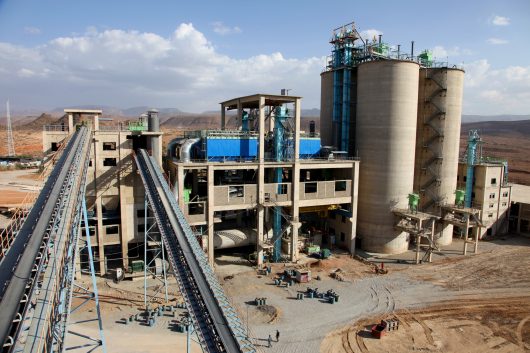
 DjiboutiChinese investment is driving a boom in infrastructure in Djibouti, but gaps still remain when it comes to providing essential services to the country’s most at-risk inhabitants.

Chinese investments promise to revitalize and expand shipping and transportation infrastructure in Djibouti, turning the small African nation of roughly a million people into a major trans-shipment hub on the Gulf of Aden. Chinese-backed projects include an electric train route to Ethiopia’s capital city and developing port facilities in the Port of Doraleh. Djibouti will also host China’s first overseas military base.

Despite these investments and the rapid growth of the nation’s economy over the past 20 years, some people are still left behind, citizens and refugees alike. Djibouti hosts more than 27,000 refugees from across the region, including those fleeing conflict in Ethiopia and Yemen. These refugees typically live in crowded camps with poor sanitation and little access to clean water.

Many citizens of Djibouti also lack reliable sanitation and access to water, particularly in rural areas. Nearly a quarter of the population still lives in extreme poverty, and 48 percent of working-age people are unemployed. The African Economic Outlook estimates that infrastructure development and economic changes driven by foreign investment may trickle down to impoverished citizens in the form of new jobs.

The international community beyond China has also taken an interest in infrastructure in Djibouti. While China’s interests chiefly lie in economic development, others are looking to more humanitarian issues such as education and food security. For example, the United Nations has been working through UNESCO on projects designed to bolster access to water, sanitation and education for both disadvantaged citizens and refugees. Their efforts have reached thousands, but thousands more continue to struggle every day.

The United States is on the ground in Djibouti as well, with the U.S. Agency for International Development (USAID) working with many partners on multiple projects. USAID is active in improving access to education and its quality. USAID is also working with private and governmental partners to address the transmission of diseases such as tuberculosis and HIV/AIDS along the developing Ethiopia/Djibouti transportation corridor.

However, as NPR reports, USAID funding is insecure under the current administration. The current budget proposal offered by President Trump’s administration would cut USAID and related programs by $2.2 billion. According to the New York Times, savings from these cuts will go to fund further investment in the military and domestic infrastructure. This move by the administration is unlikely to go unopposed. Doubts have already surfaced as to whether Congress will get on board with the administration’s proposals. Following a deal with Democrats, the administration’s budget isn’t likely to come up again for consideration until mid-December.

The government of Djibouti has its own ambitious plan to leverage infrastructure development in the mid- to long-term to raise the nation to “developing” status by 2035. In conjunction with humanitarian aid from abroad, this plan may see the fortunes of all Djiboutians rise like the expected ships at dock in the country’s expanding ports at high tide.

– Joel Dishman

Photo: Flickr

November 19, 2017
https://borgenproject.org/wp-content/uploads/borgen-project-logo.svg 0 0 Borgen Project https://borgenproject.org/wp-content/uploads/borgen-project-logo.svg Borgen Project2017-11-19 01:30:062024-05-29 22:26:55A Rising Tide: Improvements to Infrastructure in Djibouti
Global Poverty

Infrastructure in Burkina Faso Shows Great Improvement

 Burkina Faso

The government has made significant improvements to the infrastructure in Burkina Faso, particularly in the water sanitation and supply sector. The government is working hard to ensure that there is better access to safe drinking water, piped water into homes and improved health for the people living in the West African nation.

In past years, people in Burkina Faso went without sustainable water, even though the country is near the Volta River Basin and Niger River Delta. In fact, both of these rivers have proven to be unreliable to Burkina Faso, as they begin to dry out during certain seasons. In addition to the seasonal rivers, the country experiences common droughts throughout the year. With these geographic disadvantages, water became scarce for over 18 million citizens of the country, and water sanitation became an issue.

Fortunately, the infrastructure in Burkina Faso has improved drastically from the past. Over a span of twelve years, drinking water sustainability increased from 54 percent to 90 percent. For the Burkinabé living there, this improvement in drinking water sustainability means that the chances of having better living conditions and health are much higher.

The urban areas of Burkina Faso seem to be improving because of the technological resources that are being made available to the people living there. Yet, the same cannot be said for those who live in the poor rural areas of the country. More than half of the rural population still lives without usable water.

One of the main reasons why the infrastructure in Burkina Faso has issues with water sanitation and supply is because there is a lack of information provided to people living in rural areas. According to UNICEF, 50 percent of Burkinabé still practice open defecation, as they are not aware of the dangers of poor hygiene and see this practice as an everyday norm.

Another issue the country is having with improving water sanitation in rural areas is being able to increase access to technology while saving on funds. Without the proper budget, Burkina Faso must take into consideration the methods in which they plan to continue to help their citizens get better access to water supply and sanitation. This has changed with the assistance of the World Bank, which has mobilized $226 million over the past 20 years for Burkina Faso’s sanitation development. More than 440,000 people, including those in rural areas, have gained access to better water supply and sanitation, thus improving living conditions.

The people of Burkina Faso can hold their heads high knowing that their government is working hard with organizations such as the World Bank, UNICEF, and Wateraid to ensure that conditions continually improve over the next couple of years.

– Seriah Sargenton

Photo: Flickr

November 18, 2017
https://borgenproject.org/wp-content/uploads/borgen-project-logo.svg 0 0 Borgen Project https://borgenproject.org/wp-content/uploads/borgen-project-logo.svg Borgen Project2017-11-18 07:30:342024-05-29 22:29:24Infrastructure in Burkina Faso Shows Great Improvement
Developing Countries, Development, Global Poverty

5 Development Projects in Pakistan

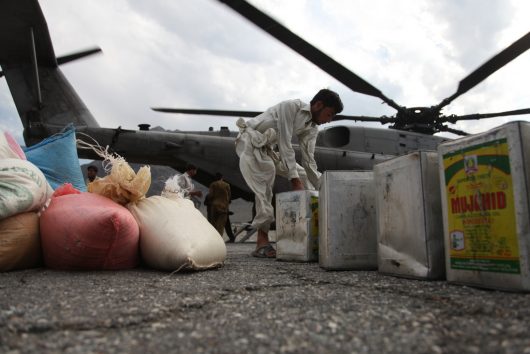
KarachiPakistan is currently undergoing many development projects in order to improve the safety and general quality of life for its people. Here are five development projects in Pakistan that are currently underway.

The Strategic Strengthening of Flood Warning and Management Capacity of Pakistan

In 2010, around 2 million homes were damaged and 20,000 lives were lost due to flooding caused by heavy monsoon rains. There was no system set in place to warn individuals of the impending flooding and no recovery programs to assess the damages. The Strategic Strengthening of Flood Warning and Management Capacity of Pakistan project, developed by the United Nations Educational, Science and Cultural Organization began in 2011. $2.5 million in aid was provided in order to upgrade flood warning systems, asses damages caused by flooding, and update flood hazard maps in order to help with recovery efforts as well as prevent future catastrophes.

Sindh Resilience Project

Another one of the development projects in Pakistan which focused on disaster management is the Sindh Resilience Project. The main goals of this project are to mainstream disaster risk reduction in development budgeting, support restoration and improvement of high-risk sites, and construct rainwater dams in drought regions. Starting in 2016, the Pakistan government allocated $120 million for this project.

Karachi Neighborhood Improvement Project

Many Pakistani people live in neighborhoods that are not easy for pedestrians to navigate and do not have safe transportation. The objective of the Karachi Neighborhood Improvement Project is to create usability of public spaces, increase mobility, improve traffic safety, and provide better city management. Funded by the International Development Association, this project will cost around $98 million.

The Polio Eradication Project

Pakistan is one of the only polio-endemic countries in the world, along with Afghanistan and Nigeria. Due to an increasing trend of polio cases in Pakistan, the government announced the National Emergency Action Plan for Polio Eradication. In order to support these efforts in collaboration with the Bill and Melinda Gates Foundation, the Polio Eradication Project allocated $43 million to provide polio vaccines and to implement campaigns focusing on bringing light to the polio-endemic. 

Ranolia Hydropower Project

Imported oil is Pakistan’s main source of power. The high price of oil is causing a strain on the country and causing power outages. The Ranolia Hydropower Project was started in order to harness clean energy and create jobs. The Renewable Energy Development Sector Investment Program, a $510 million program, is funding the construction of a hydropower plant fueled by the Indus river, which will generate three times the electrical capacity of Pakistan’s current national demand.

These five development projects in Pakistan are all working to make Pakistan a better place to live thanks to the support and cooperation of generous organizations committed to public health and safety in Pakistan.

– Jenae Atwell

Photo: Flickr

November 18, 2017
https://borgenproject.org/wp-content/uploads/borgen-project-logo.svg 0 0 Borgen Project https://borgenproject.org/wp-content/uploads/borgen-project-logo.svg Borgen Project2017-11-18 01:30:392019-11-21 01:05:045 Development Projects in Pakistan
Global Poverty

Government Outlines Plans to Improve Infrastructure in Thailand

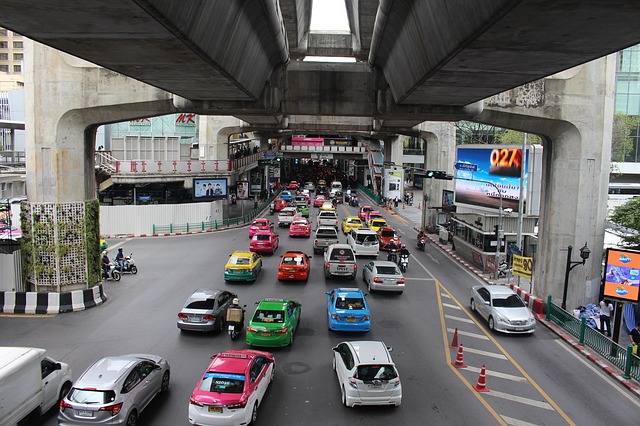
Infrastructure in ThailandGood infrastructure anywhere in the world benefits entire communities and plays a key role in promoting growth and reducing poverty. It increases growth potential through the supply of essential services such as energy, transport, water and communications. Good infrastructure also promotes growth and employment and enables the time and capabilities of the community, creating social interactions and growth. This is particularly important in Thailand, which seeks to continue its advancement from a lower-income country to a much higher-income country.
The population of Thailand makes about 200 million trips on railways each year on old, single tracks with engines from the 1960s, causing many derailment accidents and railway/personal vehicle accidents annually. Why is a good public transportation system important? According to the World Bank, good public transportation can fundamentally improve people’s lives. It can give people more access to economic opportunities, increase productivity and boost growth.

In Thailand, the infrastructure for water, sewage and energy are underdeveloped and slowing the rate of urbanization. Smaller cities and rural areas are also suffering because of their inability to attract investors due to poor infrastructure.

What is the government doing about these problems related to infrastructure in Thailand? There are five main projects that will be put into place between 2015 and 2022.

  1. Urban connection
    This means interconnecting different means of transportation such as buses, metros and taxis in Bangkok, helping to reduce traffic congestion and motivate people to use public transportation instead of a private car.
  2. Rail connection
    Upgrading to a one-meter dual-track system will help serve more passengers. Also, cargo and products will be shipped much faster, on time and more safely. The Ministry of Transportation also plans to expand the system by 3,000 kilometers (1,864 miles) around the country.
  3. Upgrading airports
    Currently, the Suvarnabhumi airport is over-serving its capacity of 45 million people annually by five million people, meaning a new runway has to be built and a new domestic flight terminal will be added, as well as more parking spots. Renovations and major additions will also be added to the Don Mueang and the Utapao airports, which are both international. A few of the domestic airports, like the ones in Phuket and Chiang Mai, will also get a few upgrades.
  4. Seaport expansion project
    Building a new deep seaport in the southern part of the country will ensure the easy transportation of goods and products from Europe and India via the Andaman Sea more effortlessly.
  5. Road expansion project
    Between 2015 and 2017, 12 more economic zones will be added, connecting major cities to smaller towns and neighboring countries.

Thailand has a diverse economic base, exporting both raw materials and finished products to the rest of the world.  As the infrastructure in Thailand improves, the poverty rate will keep decreasing.

– Lorial Roballo

Photo: Pixabay

November 14, 2017
https://borgenproject.org/wp-content/uploads/borgen-project-logo.svg 0 0 Borgen Project https://borgenproject.org/wp-content/uploads/borgen-project-logo.svg Borgen Project2017-11-14 01:30:592024-05-29 22:29:15Government Outlines Plans to Improve Infrastructure in Thailand
Global Poverty

Infrastructure in Panama: One of the Best in Latin America

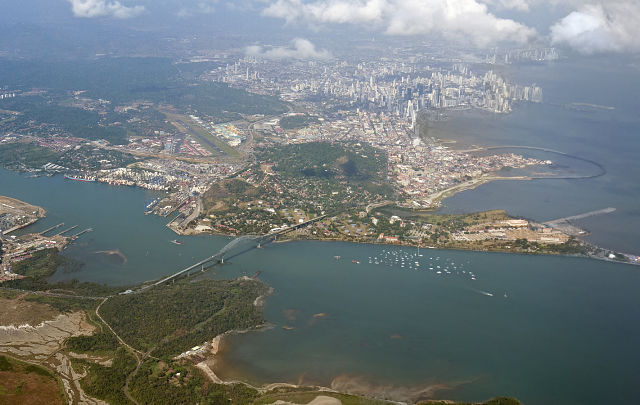
Infrastructure in PanamaPanama’s infrastructure is one of the best systems in Latin America. Infrastructure in Panama includes a network of roads and highways, the Panama Railroad, over 100 international and domestic airports and, of course, the Panama Canal. In 2013, the government of Panama invested an additional $13.6 billion in improvements to trade, tourism and exports, which includes further improvements to infrastructure in Panama.
Roads & Highways

Panama’s roads are in good condition around Panama City and other urban areas, but are in need of improvements in more rural areas. The Pan-American Highway, the world’s “longest motorable road,” runs through the entire country. Panama is continuing to invest in improvements to its roads and other infrastructure through its Government Strategic Plan that is set to be implemented through 2019.

Railways

Construction of the Panama Railroad first began in 1850, and in 1855 the first train traveled from the Isthmus of Panama to the Pacific Ocean. In 1907, large portions of the railroad had to be moved to make room for the construction of the Panama Canal. Today, the New Panama Railroad takes passengers and freight between the country’s Atlantic and Pacific ports.

Airports

Panama has five international airports. The largest is Tocumen International Airport in Panama City. Tocumen has flights to over 90 cities. Panama has over 100 total airports and its location between North and South America helps it serve as an important hub for connecting flights between the continents.

Panama Canal & Waterways

Construction began on the Panama Canal in 1904 and it officially opened in 1914. The canal belonged to the U.S. until 1999, when ownership was transferred to Panama. It runs 80km along one of the narrowest parts of the country and connects the Atlantic and Pacific Oceans. The Panama Canal is open 24 hours a day, 365 days a year and employs 10,000 people. Panama also has 13 ports, including 5 major ports with container service.

Due to its geography, Panama plays a large role in trade and commerce. This has led to lots of investment being poured into the country’s infrastructure both from the government of Panama as well as from foreign governments and companies. Infrastructure in Panama plays an important role in connecting people throughout the Americas with its system of highways, trains, international airports and waterways.

– Aaron Childree

Photo: Flickr

November 14, 2017
https://borgenproject.org/wp-content/uploads/borgen-project-logo.svg 0 0 Borgen Project https://borgenproject.org/wp-content/uploads/borgen-project-logo.svg Borgen Project2017-11-14 01:30:312024-06-04 01:17:48Infrastructure in Panama: One of the Best in Latin America
Education, Global Poverty, Poverty Reduction

Six Ways Global Education Would Reduce Global Poverty

global educationTwo of the biggest myths about global poverty are that countries are doomed to stay poor no matter how much aid they receive and that global poverty is too big to fix. There is progress in the fight to end global poverty every day. Several of the largest importers of American goods and services, including countries such as South Korea, Taiwan and Singapore, have graduated from U.S. foreign aid programs to economic independence, and global poverty has been cut in half since 1990.

Foreign aid helps contribute to the downsizing of global poverty, but there are other ways to help as well. If total global education were achieved, it would have a significant impact on the reduction of poverty.

Here are six ways global education can reduce global poverty.

  1. Education can reduce economic inequalities. If everyone had the same amount of education, disparity in working poverty would shrink by 39 percent.
  2. Education promotes economic growth. According to the Global Partnership for Education (GPE), “In 2050, GDP per capita in low-income countries would be almost 70 percent higher if all children were learning.”
  3. Education can increase earnings. According to UNESCO, one extra year of schooling increases an individual’s earnings by up to 10 percent. According to the GPE, for each additional dollar invested in an extra year of schooling, earnings increase by $5 in low-income countries and $2.5 in lower-middle-income countries.
  4. Education can lead to gender equality. Women have been proven to reap higher returns from schooling, and some countries that fail to educate their girls properly lose out on an estimated $92 billion in economic growth.
  5. Education can lead to access to clean water. In rural areas, girls spend 15 hours a day collecting water for their families. If everyone, girls included, were educated properly about their health and water sanitation, local water sanitation would increase. This could potentially lead to a decline in the amount of time needed to fetch water.
  6. Education can lead to peace and justice. The world’s most dangerous countries are also the poorest. Educated people tend to participate in the democratic process and exercise their civil rights, according to UNESCO. They also tend to be more tolerant of people different than they are.

It would take only $16 billion a year in aid to send all children to school in low-income countries, according to UNESCO. For comparison, the U.S alone spends $601 billion on its military. Global education is attainable, and it can change and save lives.

–Dezanii Lewis

Photo: Flickr

November 13, 2017
https://borgenproject.org/wp-content/uploads/borgen-project-logo.svg 0 0 Borgen Project https://borgenproject.org/wp-content/uploads/borgen-project-logo.svg Borgen Project2017-11-13 07:30:312024-05-29 22:29:01Six Ways Global Education Would Reduce Global Poverty
Economy, Global Poverty

Why is Papua New Guinea Poor?

Why is Papua New Guinea Poor?
Papua New Guinea, the name given to a group of islands situated in the southwest Pacific ocean, has experienced tremendous economic growth since its days of being an Australian colony, and has gone on to hold elections involving the indigenous population. Despite this, however, many people on the island still experience extremes of poverty. 80 percent of Papua New Guinea’s people live in rural communities with little to no modern conveniences, and 39.9 percent of the population lives below the poverty line. So, why is Papua New Guinea poor, despite economic growth? Here’s a brief look at some of the reasons behind this.


Why is Papua New Guinea Poor? 3 Simple Reasons


Income inequality
In 1996, the Gini index rated Papua New Guinea’s income inequality as 55.43 on its scale from 0-1, with 0 being perfectly equal (for comparison, the U.S. was rated around 45 on the scale in 2007). The evidence would seem to suggest that this inequality is due to the failure of economic growth to keep up with population growth, but could also have been caused by structural adjustment policies that came about along with rapid economic growth. Whatever the reason, it is clear that income equality has led to much greater poverty within Papua New Guinea. The good news is that this inequality has gone down significantly since the 1990s: In 2009, Papua New Guinea scored a 43.88 on the Gini scale.

Lack of long-term planning
Many citizens are critical of the fact that the government of Papua New Guinea has had little to no plan in place to modernize the country, which would include steps like building permanent houses, supplying water and sanitation and building infrastructure. The government, instead, acts reactively, creating short-term solutions only when it is absolutely necessary. For example, in 2002, Papua New Guinea faced an incredibly violent and chaotic election, but it was not until 2004 that police were deployed to fight this rampant violence. This lack of planning makes it difficult for real progress to be made in terms of poverty.

Corruption
Why is Papua New Guinea poor? Perhaps the biggest contributor to Papua New Guinea’s continuing poverty problem is the fact that so many government officials, in charge of funds that could help, have historically chosen to pocket the money instead. Michael Somare, prime minister of Papua New Guinea from 1975 to 2011, faced charges of political misconduct and misappropriation of funds spanning over 20 years, while in 2014, Paul Tiensten, former senior minister and later MP, was sentenced to nine years imprisonment for misappropriating over $1 million. Somare’s replacement as prime minister, Peter O’Neill, has also been accused of political misconduct involving a loan of $1.3 billion.

So, why is Papua New Guinea poor? In short, because of income inequality, aggravated by years of poor planning and corruption by the government. To correct this problem, new measures will need to be taken to outline and enforce government oversight and the proper use of government funds. Thankfully, awareness has risen about these issues over the past few years. During the last election, many people in Papua New Guinea protested and called for Peter O’Neill to resign after more corruption allegations were brought to light. And while O’Neill still won re-election, the fact that these protests exist shows that the citizens of Papua New Guinea are beginning to demand more from their politicians, hopefully a first step in strengthening the government and using it to enact real change.

– Audrey Palzkill

Photo: Flickr

October 17, 2017
https://borgenproject.org/wp-content/uploads/borgen-project-logo.svg 0 0 Kim Thelwell https://borgenproject.org/wp-content/uploads/borgen-project-logo.svg Kim Thelwell2017-10-17 01:30:202024-05-26 23:38:02Why is Papua New Guinea Poor?
Global Poverty

10 Facts About the Senegal Poverty Rate

According to the World Bank, Senegal, the westernmost country in Africa, is home to about 17 million people. According to the United Nations Development Programme (UNDP) 2023 Multidimensional Poverty Index report, more than half of Senegal’s population (50.8%) is multidimensionally poor. Furthermore, an additional 18.2% is “classified as vulnerable to multidimensional poverty.” The following 10 facts help explain and contextualize the Senegal poverty rate.

  1. The Senegal poverty rate is determined based on consumption. Estimates of consumption per household are divided by the number of adults; this number excludes children, who are assumed to consume less than adults. From here, a minimum acceptable consumption standard is calculated and individuals below this level of consumption are considered poor or living below the poverty line.
  2. Geographic disparities in poverty exist between rural areas and Dakar, the capital and largest city in Senegal. In rural areas, 57% of residents are considered poor, more than twice the poverty rate of Dakar.
  3. As of 2019, about 32% of Senegal’s population lived on $1.90 or less daily, declining from 38% in 2011.
  4. Senegal’s gross national income as of 2016 was $950.
  5. Senegal’s economy relies heavily on industries such as mining, construction, agriculture, fishing and tourism, as well as foreign aid and remittances. Nearly 75% of the population works in the agricultural sector, regularly threatened by inclement weather, such as drought and other climate changes.
  6. Senegal has a poor economy and as a result, many Senegalese people emigrate to other countries. An economic crisis in 1970 ignited migration, accelerating even more by 1990. Many migrants left for Libya and Mauritania, searching for opportunities in their thriving oil industries. Others went for more developed countries such as France, Italy and Spain for other economic opportunities.
  7. Senegal’s gross domestic product (GDP) rose by an average of 4.5% from 1995 to 2005. After 2005, however, while the rest of Africa enjoyed economic growth, Senegal’s economy started to decline. From 2005 to 2011, Senegal’s economy rose at an average rate of 3.3 percent. Economic growth decline, especially from 2005 to 2011, can be attributed to drought, floods, rising fuel prices and the global financial crisis.
  8. The World Bank reported that Senegal’s GDP growth is too low for significant poverty reduction.
  9. The fertility rate in Senegal is almost 4.4 children per woman. Young people comprise a large portion, 60%, of the Senegalese population. Additionally, Senegal has an illiteracy rate of 40% and a high unemployment rate of 22.3%, both of which provide dim outlooks for Senegalese youth. According to the Hunger Project, 22% of children aged 5 to 14 are working and not attending school.
  10. Unlike many countries facing extreme poverty, Senegal has one of the most stable governments in Africa and is considered a model for democracy. Since its independence from France in 1960, Senegal has elected four presidents and witnessed three peaceful political transitions.

Final Remark

Despite Senegal’s high poverty rate, many projects have been implemented to reduce it. President Macky Sall, who served from 2012 to 2024, unveiled the Emerging Senegal Plan (ESP), which prioritizes economic reforms and growth. The International Monetary Fund assisted the ESP from 2015 to 2017. In addition to the government’s efforts, the Hunger Project, through its Epicenter Strategy, empowers impoverished people in Senegal to end their poverty and hunger. 

Economic growth will be the key component in reducing poverty in Senegal. Projects involving the Senegalese government and other organizations will spark this economic growth, which would, in turn, help to reduce the poverty rate.

– Christiana Lano

Photo: Flickr
Updated: May 27, 2024

September 16, 2017
https://borgenproject.org/wp-content/uploads/borgen-project-logo.svg 0 0 Kim Thelwell https://borgenproject.org/wp-content/uploads/borgen-project-logo.svg Kim Thelwell2017-09-16 01:30:492024-05-27 13:57:4710 Facts About the Senegal Poverty Rate
Global Poverty

Poverty Rate in Laos Falls as Economic Growth Increases

Laos Poverty Rate
Poverty in Laos, formally known as the Lao People’s Democratic Republic, has been on the decline for the last decade. Despite improvements, the poverty rate in Laos rests at 23.2 percent, meaning that more than a fifth of the seven million Laotians must survive below the poverty line in poor living conditions.

Poverty in Laos tends to manifest itself in underdeveloped, mountainous areas. Those that live in these isolated areas are often left without access to electricity, schools and even roads. Many of the ethnic minorities in Laos live in these underserved, rural areas.

These minority groups are further isolated by barriers in language, customs and religion. This, combined with geographic isolation, contributes to a higher rate of poverty for those who live in rural communities.

In comparison to the rest of Southeast Asia, Laos has one of the highest poverty rates, behind only Myanmar. Malaysia and Vietnam both have significantly lower rates of poverty as well as some of the lowest in the region. There is even some indication that the poverty rate in Laos is declining at a slower rate than other countries in Southeast Asia.

This is not to say that all news regarding poverty in Laos is bad—there are many positive signs that indicate Laos will continue to move away from poverty as it has in the past decade. While the poverty rate in Laos is now at 23.2 percent, nearly a decade ago it was at a staggeringly high 33.5 percent. This shift is due largely in part to economic growth that is expected to continue in the future.

Laos has one of the fastest-growing economies—not only in the East Asia and Pacific region but also in the world. This growth can be attributed to the fact that Laos is home to a bounty of natural resources that include water, minerals and forests. Additionally, construction and services have expanded and contributed to an increase in tourism and foreign investment.

By capitalizing on this economic growth, much can be done to improve living conditions in this country. Focusing on educational attainment and teaching skills to workers—especially in rural areas—can have a drastic impact on the lives of many in Laos.

– Jennifer Faulkner

Photo: Flickr

August 30, 2017
https://borgenproject.org/wp-content/uploads/borgen-project-logo.svg 0 0 Borgen Project https://borgenproject.org/wp-content/uploads/borgen-project-logo.svg Borgen Project2017-08-30 07:30:062019-08-22 13:19:05Poverty Rate in Laos Falls as Economic Growth Increases
Page 34 of 44«‹3233343536›»

Get Smarter

  • Global Poverty 101
  • Global Poverty… The Good News
  • Global Poverty & U.S. Jobs
  • Global Poverty and National Security
  • Innovative Solutions to Poverty
  • Global Poverty & Aid FAQ’s
Search Search

Take Action

  • Call Congress
  • Email Congress
  • Donate
  • 30 Ways to Help
  • Volunteer Ops
  • Internships
  • Courses & Certificates
  • The Podcast
Borgen Project

“The Borgen Project is an incredible nonprofit organization that is addressing poverty and hunger and working towards ending them.”

-The Huffington Post

Inside The Borgen Project

  • Contact
  • About
  • Financials
  • President
  • Board of Directors
  • Board of Advisors

International Links

  • UK Email Parliament
  • UK Donate
  • Canada Email Parliament

Get Smarter

  • Global Poverty 101
  • Global Poverty… The Good News
  • Global Poverty & U.S. Jobs
  • Global Poverty and National Security
  • Innovative Solutions to Poverty
  • Global Poverty & Aid FAQ’s

Ways to Help

  • Call Congress
  • Email Congress
  • Donate
  • 30 Ways to Help
  • Volunteer Ops
  • Internships
  • Courses & Certificates
  • The Podcast
Scroll to top Scroll to top Scroll to top