• Link to X
  • Link to Facebook
  • Link to Instagram
  • Link to TikTok
  • Link to Youtube
  • About
    • About Us
      • President
      • Board of Directors
      • Board of Advisors
      • Financials
      • Our Methodology
      • Success Tracker
      • Contact
  • Act Now
    • 30 Ways to Help
      • Email Congress
      • Call Congress
      • Volunteer
      • Courses & Certificates
      • Be a Donor
    • Internships
      • In-Office Internships
      • Remote Internships
    • Legislation
      • Politics 101
  • The Blog
  • The Podcast
  • Magazine
  • Donate
  • Click to open the search input field Click to open the search input field Search
  • Menu Menu

Tag Archive for: Economic Growth

Information and news about economic growth

Posts

Global Poverty

Credit Access in Turkey

TurkeyIt can be difficult to get investment projects off the ground when potential investors themselves cannot access credit. Without investment projects, it becomes difficult to lift people out of poverty, so the issue itself is critically important to The Borgen Project.
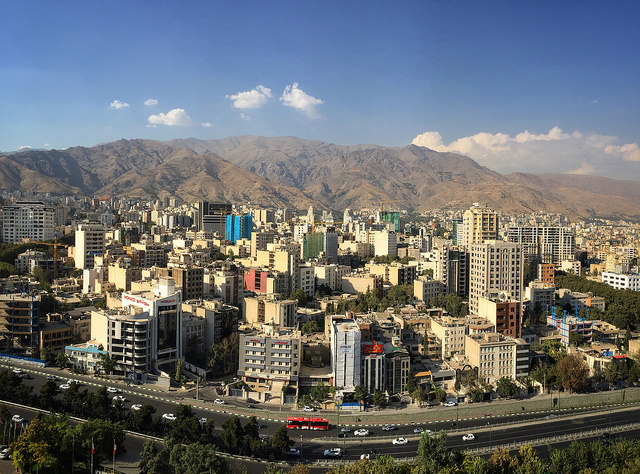
So, how does the current picture look regarding credit access in Turkey?

Turkey boasts the second-largest banking system in Emerging Europe, after Russia. The term “Emerging Europe” refers to poorer economies in central, eastern and southeastern Europe. Think Serbia and Albania, not Germany or France.

The Turkish system is highly liquid and well-capitalized, granting it great flexibility to lend financing to investors looking to develop the region. There are many viable options for those looking to get a loan in Turkey.

Turkey’s system supports three types of banks: standard deposit banks, development and investment banks and participation banks. Any of these may grant loans in the form of cash, non-cash or interest-free (i.e., participation) loans in local or foreign currency. Leasing and factoring companies are also an option and several international development banks also provide funding. The European Investment Bank (EIB) and the International Finance Corporation (IFC) are two such entities.

In 2016, the World Bank reported that Turkish bank account, debit card and credit card ownership were at an impressively high level, which tends to indicate access to finance. As of then, the country had also recently increased its rate of savings, which bodes well for future credit access. However, the data show that women continue to have less access to credit than men, despite progress being made.

Just this past September, Reuters reported that Turkish President Tayyip Erdogan called for banks to open credit access in Turkey for investors and to lower their interest rates. Erdogan strongly opposes high-interest rates and wants to pressure the banks—especially state banks—to makes this change.

According to Hürriyet Daily News, this comes after Deputy Prime Minister Mehmet Șimșek announced earlier this year the creation of a new Credit Guarantee Fund that allows crafts and tradespeople easier access to financing. Bloomberg reports that policymakers don’t intend to expand that fund despite the growth it has already sparked. Time will tell whether that is a good move.

Hopefully, the overall increase in lending power will spur even more investment and growth in Turkey and serve as an example to other nations struggling with high levels of poverty.

– Chuck Hasenauer

Photo: Flickr

December 8, 2017
https://borgenproject.org/wp-content/uploads/borgen-project-logo.svg 0 0 Borgen Project https://borgenproject.org/wp-content/uploads/borgen-project-logo.svg Borgen Project2017-12-08 07:30:242024-05-29 22:29:28Credit Access in Turkey
Development, Global Poverty

Five Development Projects in Jordan

Development Projects in JordanJordan’s economy is projected to grow within the next year. Despite regional instability in Africa and the Middle East, five development projects in Jordan work toward the common goal of improving socio-economic conditions for its citizens.

City-to-City Exchange

In 2015, the US Agency for International Development conducted a city-to-city exchange program between Pocatello, Idaho and Hooksett, New Hampshire and three cities in Jordan: Al-Shou’la, Muath bin Jabal and Tabaquet Fahel. The program began in March of 2015 with the objective to advise the local Jordanian government on economic development ideas and approaches.

US representatives acting as advisors collaborated on plans for a local farmers market in Al-Shou’la, municipal development in Muath bin Jabal and the development of a refrigeration system in Tabaquet Fahel. These projects were devised to stimulate the economy and benefit local farmers and producers. The city-to-city program hopes to help in areas of infrastructure, education and the deliverance of basic needs to Jordanians.

Al-Manar Project

The Al-Manar Project is a free national human resource development center that works to advance the career prospects of Jordanians. This is accomplished by offering human resource information that may support Jordanian advancement in the career field. Gender and social inclusiveness are the main concerns for the project.

Al-Manar provides career counseling, online career development, access to human resource information and guidance for university students and professionals alike. Career Development Coordinator Dr. Khaled AlQudah is currently working on improving support in schools.  Distribution of information is accomplished via physical locations and updated online databases accessible by anyone.

The Rural Economic Growth and Employment Project

The Rural Economic Growth and Employment project was developed in 2015 to involve small-scale local farmers and reinforce the agricultural sector to benefit the country collectively. Designed to reduce unemployment among the youth, the six-year-long project includes loan extensions to farmers and the promotion of their produce. This may include ISO safety and quality certifications.

Renewable Energy

Steady economic growth is succeeding in Jordan, says a 2017 report from the International Institute for Applied Systems Analysis.  Accordingly, the growth is positively correlated with the use of fossil fuel consumption. Fossil fuels currently act as Jordan’s main electrical supply.

The government has set out to replace at least 10 percent of nonrenewable resources with renewable energies by 2020. Nuclear energy, wind and solar energies are among those in contention to comprise the 10 percent goal. Governmentally sanctioned development projects in Jordan are in the planning and implementation phases of working toward this goal, the report says.

Jordan’s Vision 2025

Jordan’s vision for 2025 is a holistic approach that includes the development of nine economic pockets throughout the kingdom. These include support for local businesses and entrepreneurship. E-commerce and gaming were among some of the prospects tied up in this vision’s plan.

Under the same program, Jordan’s foreign trade policy is designed to supplement local businesses by improving market access to Jordanian exports like clothing, pharmaceuticals and produce. The side-effects of empowering local businesses such as Jordan’s Classic Fashion Apparel Industry Co. Ltd. include an emphasis on employee satisfaction and social responsibility.

According to the 2016 World Bank’s Economic Outlook Report for Jordan, these five development projects in Jordan are contributing to its improved future. With all the kingdom’s recent success, the pursuit of economic and social victories are sure to continue.

– Sloan Bousselaire

Photo: Flickr

December 8, 2017
https://borgenproject.org/wp-content/uploads/borgen-project-logo.svg 0 0 Borgen Project https://borgenproject.org/wp-content/uploads/borgen-project-logo.svg Borgen Project2017-12-08 01:30:082019-11-15 06:02:45Five Development Projects in Jordan
Development, Global Poverty

Addressing Five Current Development Projects in Iran

Development Projects in IranIran has the second largest economy in the Middle East and North Africa, after Saudi Arabia. However, since the country’s nuclear program became public in 2002, the United Nations, the European Union and several individual countries and organizations have imposed sanctions on Iran in order to prevent the development of military nuclear capability. These sanctions made it difficult, and in some cases impossible, for international aid to reach impoverished parts of the country. For instance, the World Bank has not approved a Country Assistance Strategy for Iran and has not approved new lending to the country since 2005. Some international organizations, though, are funding programs to aid in providing health care and increasing environmental sustainability.

Here is a look at five development projects in Iran:

  1. Malaria Control (United Nations Development Programme)
    In partnership with national and international partners such as the World Health Organization, the United Nations Development Programme has implemented the Intensified Malaria Control in High Burden Provinces towards Falciparum Elimination project in Iran to eliminate the disease. The project, started in October 2011, includes distributing insect nests to protect against infected mosquito bites, training volunteers to engage in early case findings and collaborating with local women as a symbol of community participation.
  2. Stanford Iran 2040 Project (Stanford University)
    Established in 2006, the Stanford Iran 2040 Project allows researchers all around the world to study issues related to the future of the Iranian economy. The core research centers on economy, population, energy, water, agriculture and the financial system. From this research, experts will be better equipped to aid in Iran’s future development by evaluating how these issues affect the country.
  3. Carbon Sequestration Project (United Nations Development Programme)
    The Carbon Sequestration Project aims to capture and control atmospheric carbon in arid and semi-arid regions of Iran and to improve the socioeconomic status of local communities. So far, the project has created 577 permanent jobs, held 400 training programs, established microcredit systems with 63 Village Development Groups, rehabilitated over 30,000 hectares of land and empowered women to play an active role in all of the project’s initiatives.
  4. Iran Transport Projects (Iranian Ministry of Roads and Urban Development)
    The Ministry of Roads and Urban Development in Iran has signed 13 contracts worth $12 billion since March 2015 with investors from the Iranian private sector and foreign companies. These investments fund development projects in Iran across air, road, marine and rail transportations. Some of the notable plans include a 230-mile freeway connecting the city of Kerman to the Persian Gulf Port of Bandar Abbas, as well as a high-speed railroad connecting Tehran to Isfahan, a central tourism hub.
  5. Country Coordinating Mechanism Funding (United Nations Development Programme)
    Country Coordinating Mechanisms (CCMs) develop and submit grant proposals to the Global Fund based on national needs. The Global Fund is a partnership organization designed to accelerate the end of AIDS, tuberculosis and malaria as epidemics. CCMs allow for local ownership and participation in decision-making processes.

These development projects in Iran provide hope for the nation to move toward a more stable and sustainable future.

– Richa Bijlani

Photo: Flickr

December 6, 2017
https://borgenproject.org/wp-content/uploads/borgen-project-logo.svg 0 0 Borgen Project https://borgenproject.org/wp-content/uploads/borgen-project-logo.svg Borgen Project2017-12-06 07:30:002024-05-29 22:29:27Addressing Five Current Development Projects in Iran
Development, Global Poverty

Five Active Development Projects in India

Development Projects in IndiaIndia is the second-most populous nation, and the eighth largest nation by area in the world, and yet the nation is still lacking many of the necessities of a developed country. Thanks to the World Bank Group, and other investors, India is in the process of becoming a developed country by improving the full range of infrastructural and cultural problems that persist today. Here are five active development projects in India which you should know about.
  1. National Agricultural Higher Education Project. One of the major development projects in India began in August of 2017 and was made possible by $165 million of funding from the World Bank and other organizations. The goal of the project is to improve the current agricultural industry in India through the betterment of the country’s agricultural universities. The idea behind the project is that by improving the quality of agricultural education, farming practices will become more efficient, sustainable and will yield a greater volume of food to feed the nation’s high population.
  2. India Ecosystems Service Improvement Project. The goal of the Ecosystems Service Improvement Project, put broadly, is to try and ensure that interactions between humans and the ecosystem are not overtly harmful to the environment. More specifically, the project will hopefully improve land management and the overall health of the ecosystems of India through increasing and promoting biodiversity and sustainable resource use.
  3. Andhra Pradesh 24x seven Power for All Project. This development project in India focuses on delivering sustainable, reliable and more readily available electricity to citizens living in the Andhra Pradesh region of the country. This region encompasses both urban, and rural communities, with all sharing a common issue of having unreliable access to electricity. The Power for All Project will cost a whopping $570 million, $240 million of which has been pledged as a loan from the World Bank.
  4. Nagaland Health Project. The aim of this development project in India is to increase the availability and quality of healthcare services in the Nagaland region. The project began in 2016 and is expected to conclude in 2023, with a total cost of $60 million.
  5. Shared Infrastructure for Solar Parks Project. This project aims to equip India with the necessary infrastructure to implement solar energy systems across the country. This is being accomplished via the construction of many large scale solar parks throughout the country. These parks will harness solar energy via solar panels and then distribute the collected energy to the larger public power grid. The project will make the nation more efficient in its consumption of power and will make electricity more available to the Indian population.

These are just five of the 121 active development projects in India which are being organized by the World Bank Group. Projects like these are bringing India closer to becoming a fully developed nation and improving the quality of life for all of the Indian people.

– Tyler Troped

Photo: Flickr

December 6, 2017
https://borgenproject.org/wp-content/uploads/borgen-project-logo.svg 0 0 Borgen Project https://borgenproject.org/wp-content/uploads/borgen-project-logo.svg Borgen Project2017-12-06 01:30:002024-05-29 22:29:33Five Active Development Projects in India
Global Poverty

Infrastructure in Comoros Leads to Economic Struggle

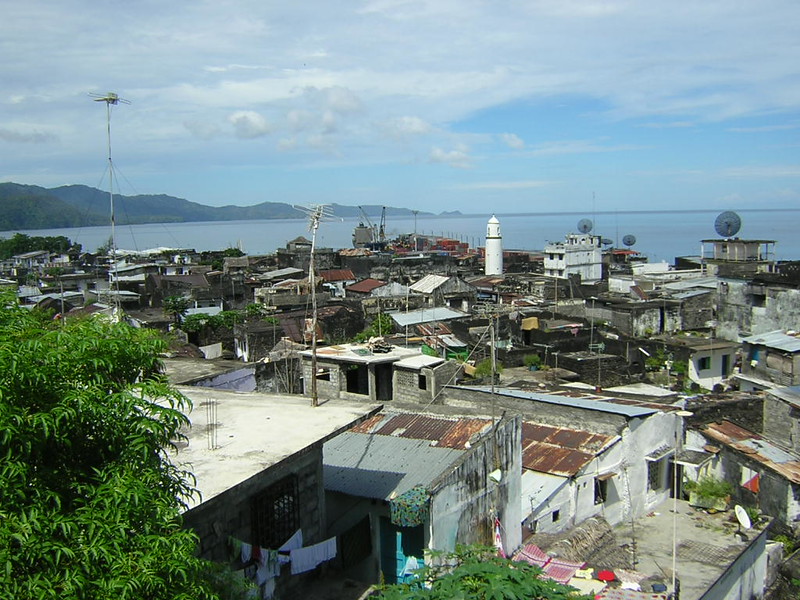
Infrastructure in ComorosComoros is an archipelago of islands in the Indian Ocean, off the coast of Eastern Africa and home to a population of about 734,900 people. It is a nation that has struggled with political instability and poverty despite its picturesque beaches and natural beauty. The issues of poverty can be partially attributed to the poor state of infrastructure in Comoros.

In a worldwide comparison, Comoros ranked 198th, theoretically attributing 1.11 meters of infrastructure for each of the estimated 790,000 inhabitants currently residing in the country. Transport systems are particularly limited in Comoros, with only 673 km of the total 880 km of roads having been paved. Additionally, there are no railway systems of any nature available to its citizens.

The economy and infrastructure have been tied to each other for many years. This has been demonstrated in the fact that the weak infrastructure in Comoros and the business climate have severely hampered economic activity. It is currently ranked 153rd out of 190 countries in the World Banks’ most recent report, dropping one place since the previous assessment.

With these apparent issues in the infrastructure and economy of Comoros, there must be improvements made to these aspects of the country. Some work that has already been undertaken has come in the form of Public-Private Partnerships (PPP). These aim to create long-term contracts between a private party and a government entity, in which a public asset or service is provided, and bear all risk and management responsibilities.

One of these projects was established in 1998, called Comorienne de d’eau et de l’electricite (CEE), but it was cancelled soon after. There was an additional project in 2003, Mutsamudu Port, which received $500,000 in funding.

Other programs include the Infrastructure, Water, and Environment Project for the Comoros, which was established to support the objective of improving living conditions and stimulating economic growth. It aims to do this, while also protecting the environment, through investments to the basic infrastructure in Comoros.

The component of transport to the program is extremely important, as it assists Comoros with improving road maintenance, safety and management. Management improvements are achieved through three subcomponents: national and regional roads periodic maintenance, roads safety and institutional strengthening.

These subcomponents will rehabilitate earthworks, including pothole repair, local reinforcement, resurfacing and resealing. They will also maintain and repair road shoulders, finance the installation of traffic signals and strengthen the capacity of the executing agency, among other things.

The urban water supply is another component of importance that will rehabilitate and extend the urban water infrastructure. This will support technical assistance to strengthen the management and operation of urban water utilities.

With more efforts like these, improvements to the infrastructure in Comoros can make the fight against poverty achievable.

– Drew Fox

Photo: Flickr

December 4, 2017
https://borgenproject.org/wp-content/uploads/borgen-project-logo.svg 0 0 Borgen Project https://borgenproject.org/wp-content/uploads/borgen-project-logo.svg Borgen Project2017-12-04 01:30:392019-11-18 01:15:54Infrastructure in Comoros Leads to Economic Struggle
Global Poverty

Infrastructure in Peru: Benefitting its Entire Population

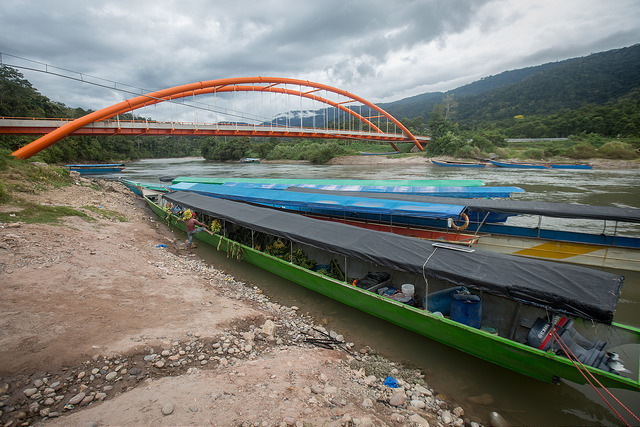
infrastructure in peruIn July 2017, George Mallett from The Market Mogul put it simply: “Peru is at a juncture.” The development of infrastructure in Peru has had a mixed record. The country was devastated by floods in early 2017, leaving many in poor living conditions. However, the country has invested billions in its transport infrastructure that only affects some of the population and is financed by debt. It is important that Peru spend and build in ways that benefit the whole population.
In 2016, prior to the floods, the government of Peru pledged $33 billion toward infrastructure projects. The money was pledged to construct highways, airports and a port. Local governments would also be involved in the projects, which was seen as a great way to involve communities. The President intended to extend potable and sewerage water services to 100 percent of the population over the next five years.

Since the floods, the country’s government has been working on projects to rebuild, as well as improve, the infrastructure to prepare for future disasters. Water supply is an important issue that the government wants to make sure is accessible to its entire population. There are plans to build reservoirs in the mountains.

Its first priority is rebuilding towns and communities, then working on the infrastructure in Peru for future disasters. The government also wants to control where people settle so that people are living in areas that are reachable and have adequate living conditions and resources.

Since Peru wants to continue growing its economy and improve its reputation in Latin America and the world, it must improve its infrastructure for the entire population. As such, it is important to make sure that many people in Peru will benefit from these projects.

The mining and commodity industry in Peru is growing very quickly, so organizations, like The Nature Conservancy, are focused on minimizing the impact of these industries on the environment and the surrounding communities.

The Nature Conservancy recognizes this “boom” as a great opportunity for the country, but wants to make sure that the environment is not affected. It is pushing for zero environmental impacts as well as the development of hydropower plants. It also focuses on informing Indigenous communities about the social and ecological effects the mining industry can have. Infrastructure in Peru must reflect and react to these implications.

At the moment, Peru is at a crossroads: it must rebuild its poorer infrastructure while allowing for economic growth through its mining and commodity industries. The U.N. has pushed for the country to implement multi-hazard warning systems and educate citizens about the environmental risks of these endeavors.

In short, Peru must continue to improve its infrastructure and garner international support for its initiatives. The steady improvements to infrastructure in Peru will have lasting, positive effects on its population.

– Emilia Beuger

Photo: Flickr

December 4, 2017
https://borgenproject.org/wp-content/uploads/borgen-project-logo.svg 0 0 Borgen Project https://borgenproject.org/wp-content/uploads/borgen-project-logo.svg Borgen Project2017-12-04 01:30:342024-05-29 22:29:34Infrastructure in Peru: Benefitting its Entire Population
Global Poverty

Infrastructure in Fiji Shows Growth and Development

Infrastructure in Fiji
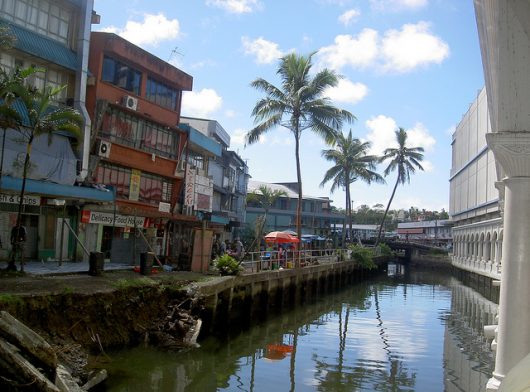
Development of infrastructure is a key factor to establish a growing state. The infrastructure in Fiji benefits from a thriving tourism sector that energizes the islands. Roads, electricity, water supply, ports and the government are showing growth in a positive manner.

Transportation is a key component in the infrastructure of a state. In Fiji, the road system connects all town and cities and ferry rides offer water transportation. There are 25 local airports and two international airports serving as a trans-Pacific air traffic zone from the main island, Viti Levu. Ensuring access to transportation is necessary for the tourism industry in Fiji.

The developments also benefit access to clean water among the islands and electricity to most areas in Fiji.

Eighty percent of Fiji’s electricity comes from hydroelectric generation and 20 percent comes from imported fossil fuels. Electricity is coordinated by Fiji Electricity Authority, but a high demand, as a result of growth, has prompted other electric producers to partake in this industry.

Telecommunications is another avenue seeing great development. Full inter-island and international telephone access, as well as cable links and satellite access, are signs of growth. The deregulation and privatization of telecommunications have left an open market to internet providers. A Fijian-British joint venture gained an investment of $7.1 million in cellular telephone networks.

Infrastructure in Fiji is flourishing and has had large impacts on human rights and liberties as a result of government reforms. November 2014 marked the end of nearly eight years of military rule and the beginning of a free and fair democracy. Prime Minister Bainimarama promised to end corruption, promote economic growth and ease racial and religious tensions. While he is said to rule with a “heavy-hand,” voter turnout is up to 84 percent and reserved seats and special privileges for ethnic or religious groups in parliament are denied. The Fiji Independent Commission Against Corruption (FICAC) is also investigating many cases of corruption and working for better transparency within the government.

Unfortunately, FICAC lacks adequate resources to perform the number of investigations needed and some legislations are viewed as rushed, without due process. However, the Parliament is trying to be more transparent with live broadcasts of sessions, meeting notes and budgets posted for the public to see. The democracy of Fiji is taking action to acknowledge the Fijians.

The development experienced by Fiji is prompting investors to see it as an investment opportunity. The development allows for the people to experience more advantages such as freedom of religion and academy. Hinduism is openly recognized and no attacks on temples have occurred recently. Education can be sought without religious or ethnic bias, but limited resources lower the quality of institutions. Growth is evident within Fiji, allowing for further industries to emerge and prosper within the economy.

International trade was also restored with the emergence of democracy. China is a main trade partner, engaging in international trade and also contributing key foreign aid. The World Bank, European Union and Asian Development Bank (ADB) have invested in the water, water waste, roads and transportation sectors since Fiji’s return to democracy.

As a developing nation, the growth of infrastructure in Fiji has shown great promise for foreign investment and industries. This progress has benefited the locals that occupy the islands and tourists who visit. It has contributed to improving the overall quality of life within Fiji.

– Bronti DeRoche

Photo: Flickr

December 4, 2017
https://borgenproject.org/wp-content/uploads/borgen-project-logo.svg 0 0 Borgen Project https://borgenproject.org/wp-content/uploads/borgen-project-logo.svg Borgen Project2017-12-04 01:30:142024-05-29 22:29:32Infrastructure in Fiji Shows Growth and Development
Global Poverty

Finding a New Way Forward: Infrastructure in Mexico

Finding a New Way Forward: Infrastructure in MexicoUnderdeveloped educational and economic infrastructure in Mexico cultivates conditions where many turn to crime as a means of survival, supplying and staffing the drug cartels ravaging the country and funneling narcotics into the U.S.

In Mexico, one in four youths between the ages of 15 and 24 is neither employed nor enrolled in school. These “ninis” (“ni estudian ni trabajan—[those who] neither study nor work”) represent a potential labor pool of seven and a half million people for the cartels.

The “nini” phenomenon is partly fueled by a lack of accountability in the education infrastructure in Mexico. Mexican universities are not required to report data which would allow for ranking or evaluation of their educational effectiveness, effectively killing accountability and incentives to ensure that curricula adequately prepare students for the modern workforce.

Underdeveloped agricultural infrastructure in Mexico also contributes to the number of narcotics available for the cartels to traffic. Antonio Mazzitelli of the U.N. Office on Drugs and Crime states that “it is not drug production that generates underdevelopment[,] it is the lack of development that generates the opium cultivation.” In this, he agrees with the findings of the Open Society Foundation, which found that underdevelopment of agricultural infrastructure, in conjunction with other development factors, is common among regions where drug cultivation is high.

The Mexican government, recognizing these issues, is working to increase investment in infrastructure across the country. The Peña administration’s current National Infrastructure Plan is slated to inject nearly 7.75 trillion pesos (about $400 billion) into development, especially in transportation and communications infrastructure in Mexico.

Such projects promise to knit the country closer together and bring more opportunities to both rural areas and “ninis” nationwide. The U.S. is working to complement these efforts to improve infrastructure in Mexico through its Agency for International Development (USAID). USAID works with universities in both Mexico and the U.S. as part of the Training, Internships, Exchanges and Scholarships (TIES) program to create partnerships between higher education institutions in both countries to address development issues. USAID also supports training programs for Mexican educators in the U.S., with the intention that they return to rural, disadvantaged communities in Mexico to pass on their skills and help lead local development initiatives.

Whether these programs—and others supported by USAID—will survive potential cuts by the Trump administration remains to be seen. Following a deal with Democrats, a decision concerning the final fate of his budget proposal has been put off until the end of this year.

Domestic political conditions may also have a significant impact on infrastructure in Mexico. Elections will be held in July to vote for a new president. Andres Manuel Lopez Obrador, head of the National Regeneration Movement (MORENA), is currently ahead in the polls, according to Reuters. He is campaigning on a platform of eliminating corruption and putting the money saved towards economic development.

– Joel Dishman
Photo: Flickr

December 4, 2017
https://borgenproject.org/wp-content/uploads/borgen-project-logo.svg 0 0 Borgen Project https://borgenproject.org/wp-content/uploads/borgen-project-logo.svg Borgen Project2017-12-04 00:46:022024-05-29 22:29:37Finding a New Way Forward: Infrastructure in Mexico
Development, Global Poverty

Five Important Development Projects in Algeria

5 Development Projects in Algeria
Since gaining independence from France in 1962, Algeria has been arduously attempting to gain some headway on the international stage. Following a 20-year engagement with the socialist model, Algeria shifted its approach to development in the early 80s, and has been actively engaged in the precepts of globalization ever since.

Yet, the road towards development has yet to reach its end. The following are five development projects in Algeria that aim to settle the country in a place of prosperity and hope, once and for all.

  1. International Fund for Agricultural Development (IFAD)
    IFAD has spent $65.6 million on a series of agricultural development projects in Algeria. First, they aim to strengthen the capacity of rural communities to operate independently. Second, they work to improve irrigation infrastructure, soil and water conservation, management of silo-pastoral ecosystems, livestock husbandry and rural tracks. Lastly, they continue to push for the progression of women’s place in society through the development of rural microenterprises. They have focused assistance on three communities whose economic capabilities are all but limited to agriculture. Currently, their five programs operate in the mountainous areas in the north of the country, the Saharan areas in the south and the coast, where poor fishing communities make up the majority of the population.
  2. Arab Reform Initiative – International Development Research Center of Canada (IDRC)
    After the uprisings in 2011, commonly referred to as the Arab Spring, the fervor slowed as national governments cramped down on protestors. The aim of IDRC funding is to ensure that ideals of democracy and progress are maintained and cultivated in the youth of Algeria. The project, lasting for two years, is managed by the Arab Reform Initiative, and aims to develop the youth as political actors and active citizens engaged in their country’s political, social, economic and cultural spheres.
  3. The Trans-Saharan Highway (La Route Transsaharienne)
    The development of the trans-Saharan highway has been years in the making. The route from Algiers, running through Niger and down through Nigeria, is about 5,000 km. The route itself has been used for trade since the eighth century, but, until recently, has been a road of sand. Paving the road is meant to increase the trade profit between the three nations it runs through. The Algerian government has opted to pay for its portion of the construction from its national budget, a reflection of a trend in their more recent national policy.
  4. World Food Program (WFP) – Algeria’s Sahrawi refugees
    The WFP has operated in Algeria since the late 80s. They work to provide basic food and nutrition needs to the populations of Sahrawi refugees on the country’s Western border. Algeria has hosted Sahrawi refugees from Western Sahara since 1975. The program’s main focus is decreasing a debilitating rate of iron deficiency found in Sahrawi women and children.
  5. Transparency International
    Transparency International is an organization whose aim is to evaluate the transparency of governments. In Algeria, it has determined that transparency is sorely lacking. The country has been scored 34 out of 100, and comes in 108 out of 176 countries. The organization’s tactics are simple. By shining a light on issues of corruption within the government and private sector, Transparency International is able to create accountability in situations where it is sometimes nonexistent. In this way, ideals of transparency have begun to permeate governance, as seen in the 2006 creation of the Central Office for the Suppression of Corruption, an agency tasked with the investigation and prosecution of all forms of bribery in the country.

These five development projects in Algeria are just a small indication of the state of Algerian society today. Ultimately, what these projects exemplify is the potential for further improvement in the North African nation.

– Katarina Schrag

Photo: Flickr

December 3, 2017
https://borgenproject.org/wp-content/uploads/borgen-project-logo.svg 0 0 Borgen Project https://borgenproject.org/wp-content/uploads/borgen-project-logo.svg Borgen Project2017-12-03 11:06:232024-05-29 22:29:35Five Important Development Projects in Algeria
Development, Global Poverty

Five Active Development Projects in Afghanistan

5 Active Development Projects in AfghanistanThe World Bank Group is currently providing funding for 49 active development projects in Afghanistan. These projects are working to address the full spectrum of needs of the Afghan people. Here are five development projects in Afghanistan currently underway.

  1. Trans-Hindukush Road Connectivity Project. The Hindukush Mountain range spreads across a vast piece of central Asia, including much of eastern Afghanistan. Travel throughout this region is limited and road conditions are generally poor. This project will provide aid to the Afghan government to rebuild and maintain roads spanning the Hindukush mountain region. Improved transportation infrastructure will bring economic growth as well as increased access to resources for people living in remote areas. The project started in 2015 and will come to a close in 2022 and The World Bank group has pledged a loan of $250 million.
  2. Women’s Economic Empowerment National Priority Program. This project came about when the Afghani government accepted a loan of $482.3 million in a plan to enact seven new development projects to combat the growing poverty crisis. The Women’s Economic Empowerment National Priority Program aims to ensure better access to economic opportunities and rights for women.
  3. Urban Development Support Project. The Urban Development Support Project was implemented to strengthen urban policymaking and development on both the national and provincial level. The project aims to improve city planning capabilities, census and data management and urban institution development and accountability. The project began this year and cost $20 million in funding; completion is projected for 2020.
  4. Herat Electrification Project. A small province in western Afghanistan, people in the Heratprovince have limited access to electricity. This project aims to provide homes and businesses in this region with a sustainable source of power. The World Bank group plans to accomplish this by expanding the electrical grid in the region. In areas which are further removed from electrical grid access, solar panels are being implemented to supply power to those who need it. The project began in 2017 and will hopefully be complete by 2022. The total cost of the project is $60 million, which was loaned to the Afghani government by The World Bank Group.
  5. Afghanistan Strategic Grain Reserve Project. This project was started in 2017 and aims to create a reliable stockpile of grain in hopes that in the event of an emergency there will be a safety net of food security. The project has an estimated total cost of $30 million and is hoped to be completed by 2022.

Development projects in Afghanistan such as these are radically improving the quality of life in Afghanistan, however, they only begin to scratch the surface of the larger web of issues preventing Afghanistan from becoming a fully developed country. Cooperation between the World Bank Group and the Afghan government has set the stage for Afghanistan to move closer and closer to development as time moves on.

– Tyler Troped

Photo: Flickr


December 3, 2017
https://borgenproject.org/wp-content/uploads/borgen-project-logo.svg 0 0 Borgen Project https://borgenproject.org/wp-content/uploads/borgen-project-logo.svg Borgen Project2017-12-03 01:30:242024-06-05 02:36:41Five Active Development Projects in Afghanistan
Page 32 of 44«‹3031323334›»

Get Smarter

  • Global Poverty 101
  • Global Poverty… The Good News
  • Global Poverty & U.S. Jobs
  • Global Poverty and National Security
  • Innovative Solutions to Poverty
  • Global Poverty & Aid FAQ’s
Search Search

Take Action

  • Call Congress
  • Email Congress
  • Donate
  • 30 Ways to Help
  • Volunteer Ops
  • Internships
  • Courses & Certificates
  • The Podcast
Borgen Project

“The Borgen Project is an incredible nonprofit organization that is addressing poverty and hunger and working towards ending them.”

-The Huffington Post

Inside The Borgen Project

  • Contact
  • About
  • Financials
  • President
  • Board of Directors
  • Board of Advisors

International Links

  • UK Email Parliament
  • UK Donate
  • Canada Email Parliament

Get Smarter

  • Global Poverty 101
  • Global Poverty… The Good News
  • Global Poverty & U.S. Jobs
  • Global Poverty and National Security
  • Innovative Solutions to Poverty
  • Global Poverty & Aid FAQ’s

Ways to Help

  • Call Congress
  • Email Congress
  • Donate
  • 30 Ways to Help
  • Volunteer Ops
  • Internships
  • Courses & Certificates
  • The Podcast
Scroll to top Scroll to top Scroll to top