• Link to X
  • Link to Facebook
  • Link to Instagram
  • Link to TikTok
  • Link to Youtube
  • About
    • About Us
      • President
      • Board of Directors
      • Board of Advisors
      • Financials
      • Our Methodology
      • Success Tracker
      • Contact
  • Act Now
    • 30 Ways to Help
      • Email Congress
      • Call Congress
      • Volunteer
      • Courses & Certificates
      • Be a Donor
    • Internships
      • In-Office Internships
      • Remote Internships
    • Legislation
      • Politics 101
  • The Blog
  • The Podcast
  • Magazine
  • Donate
  • Click to open the search input field Click to open the search input field Search
  • Menu Menu

Tag Archive for: Economic Growth

Information and news about economic growth

Posts

Global Poverty

Infrastructure in Egypt: A Three-Line Metro System to Promote Tourism

Infrastructure in Egypt
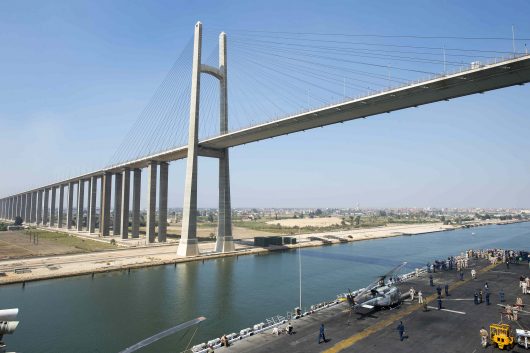
One of the main ongoing projects in regard to infrastructure in Egypt is the building of a three-line metro system. The system’s goal is to encourage more tourists to visit the region, according to Hesham Arafat, the country’s Minister of Transport.

“These three lines are proposed for promoting tourist activity that is expected to reach more than 30 million tourists per year by 2025,” Minister Arafat said.

Speaking at Middle East Rail conference earlier at the top of this year, Minister Arafat declared that the country intends to invest in 14.4 billion euros for the brand new metro system. The ministry is also searching for an ally to control an 8,725-square-meter shopping mall that links a railway station at Alexandria port.

Costing a total of 13 billion euros, the three express rail lines will travel from Luxor to Hurghada, Alexandria to Cairo, and Luxor to Cairo.

The Three Lines

Taking approximately five years to develop a 700-kilometers line, the Cairo to Luxor line was mentioned to be one of the most significant of the three lines and is priced at 6 billion euros.

During the conference, Minister Arafat disclosed research that proved how investors would take home an internal rate of return of about 9 percent on the development as the metro system is anticipated to transport over 3 million passengers each year.

The Alexandria to Cairo line is predicted to cost 3 billion euros and will be 210 kilometers long. Over it’s lifetime, the line is projected to extend returns of 11 percent with the development is predicted to take three years from start to be finish.

Taking four years to develop, the Luxor to Hurghada line totals at 4 billion euros and will be 300 kilometers long. According to Minister Arafat, the line will transport an approximated 1.5 million passengers and render returns of 10 percent.

Other Infrastructure Developments

Other infrastructure developments in Egypt seeking funding include an 82 million euro passenger and freight line from Mansoura to Damietta, an 85 million euro freight line connecting Egypt’s largest phosphate mine site at Abu Tartur to Safaga harbor, a 275 million euro streetcar connecting smaller cities in New Cairo to the underground network, and a 934 million euro, 34 kilometer underground line in Cairo from Imbaba to the airport.

The minister made a point to note that Egypt is a “pro-business” nation that hosts a strongly funded government, and a refreshed investment law that permits total foreign possession of companies and security from seizing of earnings or mandatory pricing. With advantageous characteristics such as these, the hope for the continued improvement of infrastructure in Egypt is extremely promising.

– Jalil Perry

Photo: Flickr

December 12, 2017
https://borgenproject.org/wp-content/uploads/borgen-project-logo.svg 0 0 Borgen Project https://borgenproject.org/wp-content/uploads/borgen-project-logo.svg Borgen Project2017-12-12 01:30:252020-01-03 19:46:33Infrastructure in Egypt: A Three-Line Metro System to Promote Tourism
Global Poverty

Rebuilding Infrastructure in Liberia

infrastructure in LiberiaLiberia, a nation founded on Africa’s west coast by former American slaves, has faced a number of hardships. It is an isolated country that was heavily damaged by a 14-year civil war lasting from 1989 to 2003. What is remarkable is how far it has come since then.
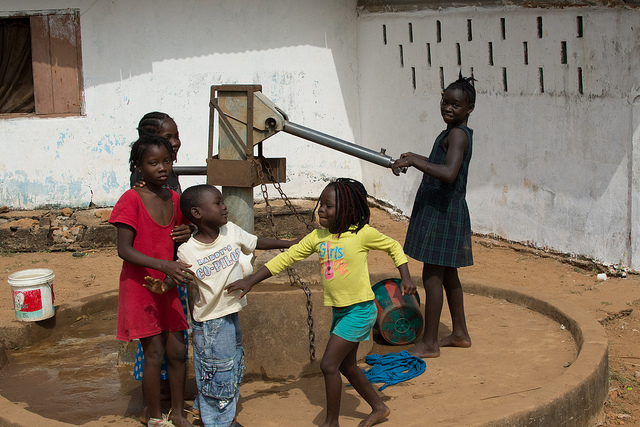
Liberia’s civil war killed more than 270,000 people and displaced another 500,000. The war was also extremely damaging to infrastructure in Liberia. Many roads were completely destroyed during the war. Miles and miles of roads were ruined, and for 15 years, much of the country had no piped water or electricity. The devastation the conflict inflicted on Liberia’s agricultural sector also caused the supporting infrastructure to crumble. Schools and other municipal services were wiped out in many areas.

The destruction of infrastructure in Liberia had devastating effects on the economy and the country’s standard of living. The GDP fell by 85 percent from 1980 to 2003. 75 percent of Liberians live on less than $1 a day.

As thorough as the devastation of its civil war was, Liberia has made major strides since the mid-2000s. The Accra Peace Accords that ended the war and the election of a new government in 2005 brought about major change.

During this time, investors have helped Liberia rebuild a portion of its roads. The capital, Monrovia, has access to electricity and water again. Most impressively, the government did away with school fees, raising enrollment in the school system by 50 percent.

The current government and the African Development Bank recognize that rehabilitating infrastructure in Liberia is important to growing the economy and raising people out of poverty. To this end, it has developed the Agenda for Transformation, focusing on infrastructure.

The plan encourages Liberia to participate in major regional infrastructure projects promoted by the Economic Community of West African States. The government hopes to have its main roads refurbished by 2030. Ultimately, the government sees a need for increased development of rail infrastructure and other modes of transportation to facilitate growth and link the country to its neighbors. Additionally, there are still many parts of the country without power or water.

Infrastructure in Liberia will need continued rebuilding and expansion, but given the damage that almost 15 years of war wrought, it is amazing how far the country has come.

– Andrew Revord

Photo: Flickr

December 11, 2017
https://borgenproject.org/wp-content/uploads/borgen-project-logo.svg 0 0 Borgen Project https://borgenproject.org/wp-content/uploads/borgen-project-logo.svg Borgen Project2017-12-11 18:00:472020-01-03 19:47:56Rebuilding Infrastructure in Liberia
Global Poverty

Credit Access in North Korea Remains Unregulated


After a recent series of verbal threats and missile tests from Supreme Leader Kim Jong-un, President Donald Trump put North Korea back on the U.S. list of state sponsors of terrorism, a designation it shares with only three other countries.

Normally, it is in the U.S.’s interest to see credit access increase responsibly around the world because more credit access generally means more investment, growth and opportunities for trade. However, when it comes to countries from the state-sponsored terrorism list, increased growth can give a boost to dangerous regimes—and their (nuclear) weapons programs.

So, while U.S. and global support for improved credit access in North Korea may be complicated, it is still worth looking closer at how credit access is improving the lives of ordinary North Koreans.


North Korea’s Banking System

According to The Wall Street Journal, there are no commercial banks in North Korea. All banking institutions are either state- or party-run, or state- or party-associated, which leaves North Korea with a highly centralized, unwieldy system.

That system is the legacy of a communist system, set up in the 1950s, that provided financial security for North Koreans. But, a major famine in the 1990s led to an economic collapse that crippled that system—and the North Korean government has done little to change it since.


Credit Access in North Korea: Unauthorized and Unregulated

As The Wall Street Journal notes, a semi-market economy emerged in the wake of that economic collapse that helps provide a living for up to three-fourths of the nation and is largely supported by unauthorized private commerce.

As a result, an unregulated system of lending and currency exchange has risen, making it possible to get loans and financing. North Korean defectors have described a system in which private savings are being channeled into lending to make a profit.

Scams were common at first, due to the lack of legal infrastructure and investment guarantees, but over time, it seems that trust and credit have grown. Lenders are investing in everything from crop seeds and fertilizer to merchants who import foreign goods, like smartphones.


Investment Opportunities in North Korea

Reuters reports that, in theory, plenty of investment opportunities exist in North Korea along China’s border. Most of these are related to tourism or manufacturing and had funding from China and other international investors.

However, U.N. sanctions against North Korea have led the Chinese government to ban new or expanded Chinese investment in North Korea and transactions with North Korean banks.

Ultimately, the growth of North Korean credit access and investment depends on the Kim administration dramatically altering course. It would need to show a willingness to cooperate internationally and develop a legitimate market-based economy. Neither seems likely to happen anytime soon.

– Chuck Hasenauer

Photo: Flickr


Learn about poverty in North Korea


December 11, 2017
https://borgenproject.org/wp-content/uploads/borgen-project-logo.svg 0 0 Borgen Project https://borgenproject.org/wp-content/uploads/borgen-project-logo.svg Borgen Project2017-12-11 07:53:572024-06-04 01:08:27Credit Access in North Korea Remains Unregulated
Global Poverty

Rebuilding Infrastructure in Zimbabwe

Buildings, streets, railways and airports are some of the necessities that make up the infrastructure of a city or country. The infrastructure of Zimbabwe has been struggling over the years to solidify itself, but as of 2016, infrastructure has worsened.
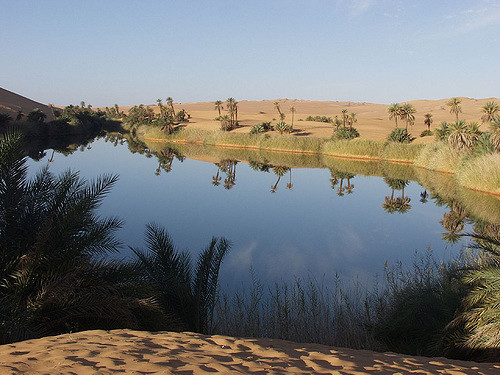
Concerning the infrastructure of Zimbabwe, there are corroded pipes, water leaks, sewage bursts and water shortages taking place in the capital, Harare. In reference to the mobile phone network, there is instability, with the government taking over Telecel, one of the three phone companies in Zimbabwe. To add, the socio-political infrastructure is unstable, as citizen engagement with the government is at its lowest level in over a decade.

Zimbabwe has tried to change things for the better but the country is still in a crisis. The economy is struggling and the politics pertaining to the future of the country are uncertain.

The infrastructure in the Harare showcases the instability in the infrastructure of Zimbabwe. The main issue is problems with the country’s water. The lack of maintenance of the water and sewage infrastructure is a major challenge the country is facing. As of 2010, only 50 percent of the people in Harare had water service all day, every day, while 55 percent of the residents had water that was poor quality. Zimbabwe made plans to redo water piping and began the process in 2009; by 2013, only 150 kilometers of the 6,000 had been replaced. By March 2016, only 40 percent of the work had been completed.

Even though infrastructure in Zimbabwe is struggling and facing issues, there is a plan to improve it. The main goals of the country are to rehabilitate and upgrade the bulk of the basic infrastructure assets and reinforce the existing integration of Zimbabwe’s network with other countries in the southern region of Africa.

The plan is to rehabilitate the national power grid, rehabilitate the national road network, the railway network, upgrade the status of air traffic communications, invest in storage to transport water resources, rehabilitate the existing water supply, develop national communications on a fiber-optic network and bring in a program of institutional reform and strengthening that measures to streamline the regulation of basic infrastructure services.

The process of rehabilitating and rebuilding the infrastructure of Zimbabwe will not be an easy feat nor will it be a cheap venture. Zimbabwe has had issues for many years, but with a plan developed and the desire to improve the country, infrastructure in Zimbabwe has the potential to be much better.

– Chavez Spicer

Photo: Flickr

December 11, 2017
https://borgenproject.org/wp-content/uploads/borgen-project-logo.svg 0 0 Borgen Project https://borgenproject.org/wp-content/uploads/borgen-project-logo.svg Borgen Project2017-12-11 07:32:172019-11-15 05:38:58Rebuilding Infrastructure in Zimbabwe
Global Poverty

Oil Infrastructure in Libya: The Key to Rebuilding its Economy


Lacking stability in politics and social structure, Libya is a state susceptible to widespread volatility. Its economy is no exception. Developing infrastructure in Libya is key to rebuilding its economy.

Before the 2011 Arab Spring Revolution, Libya exported large quantities of oil to China, Italy, Germany, Spain and Turkey, among other countries. In 2010, Libya had a GDP of $74.76 billion, while Tunisia, a bordering state, had a GDP of $44.43 billion. Following the death of Muammar Gaddafi in late 2011, the country’s GDP fell to $34.7 billion, almost half that of the previous year.

While Libya exported 1.6 million barrels of oil per day before the revolution in 2010, in August 2016, just over 200,000 barrels per day were exported. This dramatic fall can be traced to considerable damage to oil infrastructure in Libya as a result of rival factions and militias feuding after the Revolution. The power struggles were not only the result of seemingly endless internal instability but also the ongoing proxy wars in the Middle East.

The struggle for control over Libya’s oil continues even within the high levels of government, especially between the United Nations-backed Libyan Government of National Accord (GNA) and the Libyan National Oil Corporation (NOC). NOC chairman, Mustafa Sanalla, warned the GNA that the new government had overstepped its bounds by closing the oil ministry and by commandeering some of the NOC’s role.

Without an agreement between the rivaling political parties, the future of oil in Libya remains bleak. In an Op-Ed piece penned for the New York Times, Libyan oil boss Mustafa Sanalla suggests that the only way to “save Libya from itself” is to keep oil and politics separate. However, even as Sanalla has been urging investors to have confidence in the oil infrastructure in Libya, it has continually proved to be turbulent.

The Petroleum Facilities Guard, charged with protecting oil infrastructure in Libya, has fallen into a network of local fiefs. The tension between these competing pockets of power has blockaded nearly all of Libya’s main oil ports, costing the country over $120 billion in lost revenue.

A Brookings Institution report on Libya’s economy recommends that the country “drastically change the management of revenues to ensure they are used in the best interests of the population, for example by using revenues to finance large infrastructure investments, creating productive jobs for Libyans in the process.” Sanalla agrees with this sentiment.

According to the NOC, oil production will reach one million barrels per day for the first time since 2013. This milestone, says Sanalla, would give the NOC the opportunity to “restart the economy” using “oil-sector investment to help develop local industry.”

Stabilizing oil infrastructure in Libya could lead to sustained exports and a more stable economy, and country, for all of its citizens.

– Richa Bijlani

Photo: Flickr

December 10, 2017
https://borgenproject.org/wp-content/uploads/borgen-project-logo.svg 0 0 Borgen Project https://borgenproject.org/wp-content/uploads/borgen-project-logo.svg Borgen Project2017-12-10 12:04:592020-01-03 19:53:08Oil Infrastructure in Libya: The Key to Rebuilding its Economy
Global Poverty

Infrastructure in Bangladesh


Bangladesh has long been considered a country approaching middle-income status. Economically, it has been slowly improving poverty levels throughout the nation. However, one major issue stands in the way of further progress: infrastructure in Bangladesh.

Obstacles to Improving Infrastructure in Bangladesh

Under the Sixth Five Year Plan, which was in operation between 2010 and 2015, the government hoped to achieve eight percent GDP growth by the end of the plan.  However, the poor infrastructure development was a major obstacle. Infrastructure includes physical and organizational structures, like access to efficient water sanitation and transportation systems, both which greatly contribute to reducing poverty and improving the economy.

At a five-day meeting on infrastructure, hosted by Bangladesh in 2008, officials said it would take $20 billion in investments to develop a high-quality infrastructure system in the country. Most of this money would come from organizations like the Asian Development Bank.

The Asian Development Bank (ADB) has other projects set up in Bangladesh, such as the Urban Governance and Infrastructure Improvement Project, which takes a community-driven approach to improving infrastructure. Though these organizations contribute to the growth of infrastructure in Bangladesh, it is ultimately up to the government to implement concrete goals and achieve tangible results. The funds committed are vital to the success of such projects, however, there must also be an organized and transparent method of spending these funds.

Current Infrastructure Improvements

Recently, the government of Bangladesh took steps towards improving the infrastructure of its own country.

In March 2017, $2 billion of Bangladesh’s foreign reserves were poured into an infrastructure fund. Further, a legal framework was drafted in order to make this monetary contribution an annual occurrence. While this is a positive improvement, it is not nearly enough to create a completely effective infrastructure system.

In order to successfully improve infrastructure in Bangladesh, there must be an increased commitment from the government, in addition to foreign investments. This will ensure that large-scale projects will be funded continuously and in a transparent manner. These changes will result in further improvements in the future and help the development of Bangladesh. 

– Liyanga de Silva

Photo: Flickr


December 10, 2017
https://borgenproject.org/wp-content/uploads/borgen-project-logo.svg 0 0 Borgen Project https://borgenproject.org/wp-content/uploads/borgen-project-logo.svg Borgen Project2017-12-10 11:19:242024-05-29 22:29:44Infrastructure in Bangladesh
Development, Global Poverty

Five Development Projects in Cabo Verde

Cabo Verde

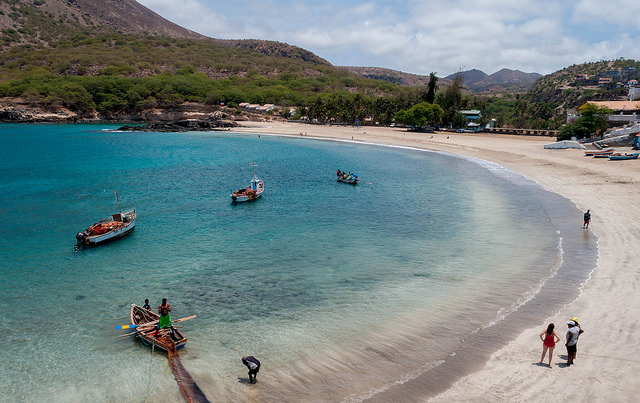
Cabo Verde is a chain of islands off the coast of Senegal, West Africa. Despite having only 10 percent arable land, limited mineral resources, mountainous terrain and an arid climate, Cabo Verde has been developing rapidly. This is mainly due to the booming tourism industry and development projects in Cabo Verde.

Being a small island nation, there are a few challenges with development. The money spent on transportation between the nine inhabited islands is quite high. Several infrastructure constraints exist which make the delivery of public services and energy in need of improvement. Due to Cabo Verde‘s climate, the agriculture industry is not able to reach its full potential. Lastly, being an island in the Atlantic Ocean, it is susceptible to climate change, rising sea levels and natural disasters.

In light of these challenges, five development projects in Cabo Verde have been created to boost the economy, increase tourism and ensure the well-being of the residents on the islands.

  1. The Competitiveness for Tourism Development project recognizes tourism as the economy’s main source of growth, with the public sector as the key force. This project backs the implementation of Cabo Verde’s vision for this industry. The project began in April 2016 and will cost approximately $3.7 million.
  2. The Transport Sector Reform Project consists of four components. The first is road preservation with routine maintenance. The second component is the development and operationalization of a road and bridge management system. The third is a road safety action plan which puts an accident database and monitoring and evaluation system in place. Finally, there will be an inter-island transport strategy to improve the quality of services and the management of ports and airports.
  3. Another one of the five development projects in Cabo Verde is the Water Supply Development Project of Santiago Island. It is a $220 million project aiming to strengthen the bulk of the water supply on Santiago Island. There will be construction on two water treatment plants with reverse osmosis technology, 12 water reservoirs, 14 pumping stations and about 100 miles of water mains.
  4. The Cabeólica Wind Project was created to develop the use of wind power as a more sustainable alternative to imported fossil fuels. This project will help achieve Cabo Verde’s goal of using 100 percent renewable energy sources by 2020. On four of Cabo Verde’s islands, a 25.5-megawatt facility is meeting about 25 percent of the nation’s energy demands.
  5. The final of the five development projects in Cabo Verde is the Watershed Management and Agriculture Support Project. It was created to increase productivity in agriculture by supporting the conversion of dry farmland to higher-value horticultural production. This was done by improving natural resource management, including the sustainable use of soil and water resources. The project also improves the capacity to support the development and implementation of community-based watershed management plans.

As a middle-income country with a relatively low poverty rate, Cabo Verde is able to design projects like these to continue promoting growth and achieve goals. These development goals will boost the economy, increase tourism and ensure the well being of the residents and visitors on the islands and keep the poverty rate low.

– Lorial Roballo

Photo: Flickr

December 9, 2017
https://borgenproject.org/wp-content/uploads/borgen-project-logo.svg 0 0 Borgen Project https://borgenproject.org/wp-content/uploads/borgen-project-logo.svg Borgen Project2017-12-09 10:25:222020-01-08 15:34:37Five Development Projects in Cabo Verde
Global Poverty

Infrastructure in Kosovo: Leaving the Past Behind

Infrastructure in Kosovo Leaving the Past BehindNearly 10 years after its declaration of independence from Serbia and Montenegro, the southeastern European state of Kosovo continues to lag behind its non-E.U. peers in economic indicators. This failure to thrive threatens the fragile peace in the small, multi-ethnic country, raising fears of a return to the sort of violence which battered the region in the 1990s. The government, in conjunction with international partners, has prioritized the revitalization and expansion of infrastructure in Kosovo in order to bolster its economy and grow its human capital.

Located in the center of Europe’s Balkan Peninsula, the territory now known as Kosovo has historically been a hotbed of strife, driven by border disputes and ethnic tensions. The Romans conquered the indigenous Illyrian or Thracian tribes in the first century of the common era; Slavic people began settling the province in the sixth century as the region fell out of the then-Byzantine sphere of influence. This new population would go on to form a central part of a Serbian empire until the 1300s when the Ottomans wrested Kosovo away from Serbia proper. Deepening ethnic tensions came to a head during the Balkan Wars that kicked off the 20th century.

Violence exploded again between Serbs and Albanians in the 1990s. The war in Kosovo in 1998-99 pit Yugoslav and Serbian forces against the Kosovo Liberation Army, comprised of ethnic Albanians with NATO air support. The conflict resulted in tens of thousands of displaced and thousands disappeared. The humanitarian crisis that was caused by mass displacement was witnessed by many humanitarian actors.

The war destroyed both homes and infrastructure in Kosovo, hampering economic growth and the development of a peaceful modus vivendi between the different ethnic groups living in the region. Since its unilateral declaration of independence, the government of Kosovo has made the rehabilitation and revitalization of infrastructure and institutions a key priority, particularly the development of roads, education, good governance and competitive industries.

With help from the international community, progress has been made towards rebuilding the war-torn infrastructure in Kosovo. In partnership with the U.S. government and the World Bank, the country developed plans to build a new coal-fired power plant and rehabilitate an older facility in order to strengthen its electrical grid and improve access for its people.

The U.S. Agency for International Development (USAID) is also active on the ground with a key mission being to improve access to education. USAID contributes to restoring and expanding educational infrastructure and increasing private-sector participation in rebuilding the infrastructure needed for the nation’s economy to thrive. It also focuses on encouraging inter-ethnic cooperation from an early age.

Despite these improvements, Kosovo remains the second-poorest country in Europe. Unemployment hovers at around 33 percent overall, but at 60 percent for young adults. The majority of the population depends on subsistence or near-subsistence farming outside of urban areas. They contend with inefficient agricultural practices and poor availability of equipment and technical expertise.

However, with the continued determination of the national government, assistance from international actors like USAID and private foreign investment in infrastructure in Kosovo, the country’s violent past may be just that — the past.

– Joel Dishman

Photo: Flickr

December 9, 2017
https://borgenproject.org/wp-content/uploads/borgen-project-logo.svg 0 0 Borgen Project https://borgenproject.org/wp-content/uploads/borgen-project-logo.svg Borgen Project2017-12-09 09:36:152024-05-29 22:29:42Infrastructure in Kosovo: Leaving the Past Behind
Global Poverty

Infrastructure in the Maldives: Connecting Locals and the World

Infrastructure in the MaldivesUpgrading infrastructure in the Maldives is more important than ever. The Maldivian government has both its permanent and temporary residents in mind as it makes structural improvements to the Malé airport. Further projects include constructing a city on an artificial island called Hulhulmalé and building a friendship bridge connecting its international airport with the capital of Malé.

The Maldives is a tourist destination that ranks highly in visitor satisfaction, but it is also home to 436,000 people. The government must balance its priorities of ensuring the longevity of its islands and people, while also bolstering tourism, the country’s main industry.

With tourism and finances in mind, the expansion of its international airport is a logical next step.

Adil Moosa, Managing Director of Maldives Airports Company Limited, said: “With the increasing flow of visitors to the Maldives, it was becoming a strain to maintain efficiency and deliver quality experiences due to numerous manual processes.”

These changes come after years of growth that anchored tourism as the Maldives’ main economic contributor. The airport serves close to 2.6 million passengers annually.

In order to ensure that the Maldivian people maintain their land above sea level, upholding the tourism industry is necessary for financial reasons.

The Maldives consists of 26 coral atolls and has a high point of less than eight feet above sea level. It has the lowest average elevation in the world. This puts the islands in serious danger of being submerged under rising seas.

To address this problem head-on, the country has invested in infrastructure in the Maldives, beginning with the construction of man-made islands. Hulhulmalé is one such island, situated near the capital city of Malé and the Velana Airport. Built by pumping sand from surrounding atolls, it is being fortified with walls 3 meters above sea level. The project is should be completed by 2023 and it will be able to accommodate about 130,000 people. Eight such islands have already been built and three more are planned.

Shiham Adam, Director of the Maldives Marine Research Center, believes reclaiming islands in this manner is the solution to the issue brought up by climate change. The people of the Maldives must have land to live on and jobs to work.

In the near future, the China-Maldives friendship bridge will connect Hulhulmalé, Hululé and the capital of Malé. The project budget is $300 million: $100 million has been provided in free-aid from China and a further $170 million was loaned by China with an interest rate of two percent. The Maldivian government is spending $30 million on the project.

The bridge will span from the eastern edge of Malé to the western corner of Hulhulé where the international airport is located.

A lack of bridges has been an issue in the development of infrastructure in the Maldives for years. Local residents have had to make do by traveling between islands via ferry.

– Sam Bramlett

Photo: Flickr

December 9, 2017
https://borgenproject.org/wp-content/uploads/borgen-project-logo.svg 0 0 Borgen Project https://borgenproject.org/wp-content/uploads/borgen-project-logo.svg Borgen Project2017-12-09 01:30:362024-06-04 01:08:27Infrastructure in the Maldives: Connecting Locals and the World
Global Poverty

Infrastructure in Equatorial Guinea

Guinea
Equatorial Guinea is one of the largest oil producers in Africa, producing 186,000 barrels of oil per day and ranking 37 out of 98 countries in crude oil production.

Equatorial Guinea’s economy significantly improved after it struck oil in the mid-1990s; its gross domestic product skyrocketed from .254 to 8.663 within eight years. Despite the country’s inherent wealth, over 70 percent of its population lives below the national poverty lines.

The majority of oil money is spent on infrastructure in Equatorial Guinea, leaving little to no funds for health and education. According to the World Bank, Equatorial Guinea spends $80 out of every $100 in its budget on infrastructure and two to three dollars on health and education.

Infrastructure in Equatorial Guinea appears to be a driving force in the country’s political corruption. Human Rights Watch documented the ruling elite’s misdirected spending in a June 2017 report. The elite primarily benefits from the country’s oil wealth by owning stakes in companies that are awarded grossly inflated public infrastructure contracts.

A Parisian court convicted President Teodoro Obiang Nguema Mbasogo’s son Teodoro Nguema Obiang Mangue, who is also Equatorial Guinea’s vice president, of embezzling millions of euros from his government and laundering it in France. The court seized his assets in France, valued at more than $100 million, in late 2017.

In 2012, the US Department of Justice calculated that Mangue— with an annual salary of less than $100,000 USD— spent $315 million USD between 2004 and 2011. Mangue purchased luxury goods, cars and properties with the $315 million USD— nearly a third more than the Equatoguinean government’s annual spending on health and education combined in 2011.

Mangue exemplifies Equatorial Guinea’s political corruption and its misdirected spending of oil money, but his conviction demonstrates the power of law and accountability. Although infrastructure in Equatorial Guinea remains corrupted, Mangue’s conviction may initiate further investigations into the country’s budget.

– Carolyn Gibson
Photo: Flickr

December 8, 2017
https://borgenproject.org/wp-content/uploads/borgen-project-logo.svg 0 0 Borgen Project https://borgenproject.org/wp-content/uploads/borgen-project-logo.svg Borgen Project2017-12-08 07:30:472019-05-22 13:54:19Infrastructure in Equatorial Guinea
Page 31 of 44«‹2930313233›»

Get Smarter

  • Global Poverty 101
  • Global Poverty… The Good News
  • Global Poverty & U.S. Jobs
  • Global Poverty and National Security
  • Innovative Solutions to Poverty
  • Global Poverty & Aid FAQ’s
Search Search

Take Action

  • Call Congress
  • Email Congress
  • Donate
  • 30 Ways to Help
  • Volunteer Ops
  • Internships
  • Courses & Certificates
  • The Podcast
Borgen Project

“The Borgen Project is an incredible nonprofit organization that is addressing poverty and hunger and working towards ending them.”

-The Huffington Post

Inside The Borgen Project

  • Contact
  • About
  • Financials
  • President
  • Board of Directors
  • Board of Advisors

International Links

  • UK Email Parliament
  • UK Donate
  • Canada Email Parliament

Get Smarter

  • Global Poverty 101
  • Global Poverty… The Good News
  • Global Poverty & U.S. Jobs
  • Global Poverty and National Security
  • Innovative Solutions to Poverty
  • Global Poverty & Aid FAQ’s

Ways to Help

  • Call Congress
  • Email Congress
  • Donate
  • 30 Ways to Help
  • Volunteer Ops
  • Internships
  • Courses & Certificates
  • The Podcast
Scroll to top Scroll to top Scroll to top