• Link to X
  • Link to Facebook
  • Link to Instagram
  • Link to TikTok
  • Link to Youtube
  • About
    • About Us
      • President
      • Board of Directors
      • Board of Advisors
      • Financials
      • Our Methodology
      • Success Tracker
      • Contact
  • Act Now
    • 30 Ways to Help
      • Email Congress
      • Call Congress
      • Volunteer
      • Courses & Certificates
      • Be a Donor
    • Internships
      • In-Office Internships
      • Remote Internships
    • Legislation
      • Politics 101
  • The Blog
  • The Podcast
  • Magazine
  • Donate
  • Click to open the search input field Click to open the search input field Search
  • Menu Menu

Tag Archive for: Economic Growth

Information and news about economic growth

Posts

Global Poverty

Infrastructure in Ukraine Slowly Becoming Modernized

Ukraine has a history of attempts toward developing its infrastructure that have failed thus far. Infrastructure in Ukraine has great potential, but its development has been delayed for multiple reasons, including mismanagement during Soviet rule and periods of economic instability.
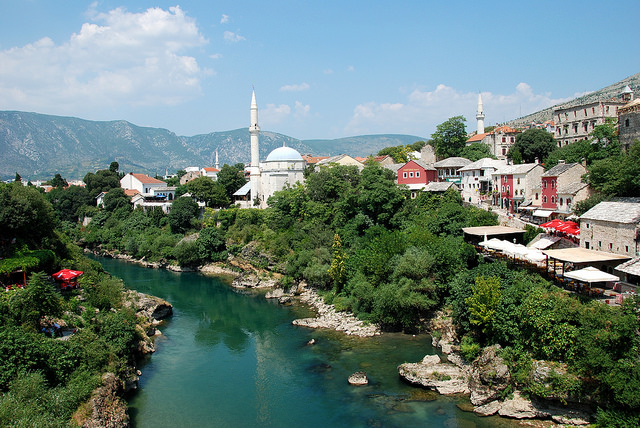
The local energy sector, in particular, is in a poor state. Earlier this year, radical politicians blockaded coal from the unrecognized People’s Republic of Donetsk region of Donbass from delivery to the rest of the country, exacerbating the issue of underdeveloped infrastructure in Ukraine. This threw the country into turmoil, as Ukraine does not have enough resources to serve its power plants without the coal, leading to a downward economic spiral and state of emergency.

Currently, Ukraine is working on modernizing its infrastructure with a focus on making it more energy-efficient. Konstantin Grigorishin, owner of Energy Standard Group and vast assets in the energy sector of Ukraine, stated in an interview with RealClearEnergy, “We should not reconstruct the old infrastructure but introduce complete modernization of the Ukrainian energy system in line with the latest industry trends.”

The World Bank ranks infrastructure in Ukraine at 80 out of 160 countries in its annual Logistics Performance Index. This is mediocre at best, and its transportation systems are out of date with respect to speed, safety, and efficiency. To remedy this issue, Ukraine came out with a plan, Ukraine’s Transport Strategy 2030, that focuses an updating all its internal transportation systems until it is on par with the rest of Europe.

Ukraine is strategically located between the E.U., Russia and the Black Sea, forming a critical point for maritime trade. Its position, and the Dnipro River linking its coast to the interior of the country, makes it uniquely capable of both international and regional trade. The only thing required to make this trade plan possible is a viable route along the Black Sea and the Dnipro River, and this is where issues arise.

Infrastructure in Ukraine requires an investment of at least $2 billion from private investors for maritime trade to be a viable option. To increase investments, the Ministry of Infrastructure intends to establish private-public partnerships (PPPs) with businesses. The Ministry signed a Memorandum of Understanding with the International Finance Corporation (IFC) on November 14, 2017, declaring their intention of mobilizing infrastructure development through PPPs.

The Minister of Infrastructure, Volodymyr Omelyan, has stressed the importance of these partnerships, stating, “Ukraine’s infrastructure needs are enormous. We need to crowd-in private investment to modernize the country’s infrastructure and upgrade it. IFC’s support and technical expertise will help ensure we are implementing the best possible solutions efficiently and transparently.”

Ukraine’s economy is relying on the success of these investments and the jobs they will create. With continued cooperation between the government and the PPPs, the country will steadily overcome its obstacles to infrastructure development.

– Kayla Rafkin

Photo: Flickr

December 16, 2017
https://borgenproject.org/wp-content/uploads/borgen-project-logo.svg 0 0 Borgen Project https://borgenproject.org/wp-content/uploads/borgen-project-logo.svg Borgen Project2017-12-16 01:30:312024-05-29 22:29:51Infrastructure in Ukraine Slowly Becoming Modernized
Global Poverty

Transport Infrastructure in Bosnia and Herzegovina


The infrastructure in Bosnia and Herzegovina has been recovering from the destruction brought by the Bosnian War in 1995 ever since its end. The two main ways of travel, the motorway and the railway, have been and still are the priorities of Bosnia and Herzegovina when reconstructing and rehabilitating after the war. There have been several projects set forth to create safe and business-boosting infrastructure in Bosnia and Herzegovina.

Motorway Transport

Many roadways have been constructed parallel to railways to improve travel times. Corridor Vc is one of the most popular and best ways to travel from big cities like Sarajevo, Zenica and Mostar to the E.U. Recently, there has been a motorway built to lessen the amount of time it takes to travel between these cities.

“It used to take double or even triple the time…when you travel to the north to visit friends and family, it is very convenient” a woman stopping at the toll station told the European Bank for Reconstruction and Development (EBRD).

Between the years of 2007-2011, a Road Infrastructure and Safety Project was put in place to improve traffic conditions, increase road safety and modernize road maintenance procedures. A total of 30 million U.S. dollars were used to finance the rehabilitation of the roadways.

When the Road Infrastructure and Safety Project came to an end in 2011, 61km out of the 241km of road projected to be done had been rehabilitated. Road safety had progressed and the Republika Srpska, a road safety agency, was created to monitor roadway safety. Lastly, a maintenance contract was signed in March 2010 with the Federation of Bosnia and Herzegovina to assist in modernizing road maintenance procedures.

Railway Transport

Since the mountains of Bosnia and Herzegovina are rich with resources like metal, steel and aluminum, it is vital to have proper and heavy duty railways for transportation of these resources. The EBRD contributed 101 million Euros in the early 2000s to build new tracks, reconstruct tunnels and install new signaling systems for the railways.

After the initial contribution, the construction of a better railway boosted business in the country. Heavy industry organizations, such as iron and steel manufacturers, were located along the route and access to their markets became easier.

Based on the Railways of the Federation website, there are 14 core activities that are done to ensure the best railway infrastructure. Included is the organization and management of railway traffic, safety of both passenger and cargo transport, routine maintenance of signaling, telecommunication and contact networks and development of railway regulations.

Also included on the website are tips for passenger and freight traffic for resident travelers and transporters. The traffic indicators let a passenger know what they should expect when taking a train to a different city. For a transporter, there are diagrams that show the tons of goods being transported along the Bosnia and Herzegovina railway.

Transport infrastructure in Bosnia and Herzegovina has been improving each year. Overall, the country has been able to create faster transportation and more efficient means to transport goods in order to increase business.

– Brianna Summ

Photo: Flickr

December 15, 2017
https://borgenproject.org/wp-content/uploads/borgen-project-logo.svg 0 0 Borgen Project https://borgenproject.org/wp-content/uploads/borgen-project-logo.svg Borgen Project2017-12-15 07:30:392024-05-29 22:29:45Transport Infrastructure in Bosnia and Herzegovina
Global Poverty

Infrastructure in Kyrgyzstan

The territory of modern-day Kyrgyzstan was once an important stop on the ancient silk road when brave traders needed to pass through the Tian Shan mountains. Today, many of the routes through the mountain passes remain the same.
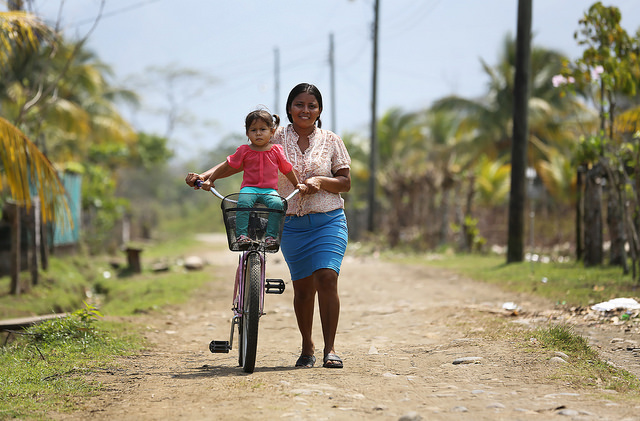
Kyrgyzstan is a recovering ex-soviet state with infrastructure dating back to its occupation. Landlocked within the mountain range without many natural resources, international trade is difficult. The country uses the resources it does have to its benefit, the government is on good terms with many of its neighbors and as long as the current government does not follow the suit of former leaders, Kyrgyzstan is set to grow. However, infrastructure in Kyrgyzstan must improve along with its economy.

Traveling throughout Kyrgyzstan, although a challenge, is not impossible. Most travel takes place between its northern and southern regions; in the north, Bishkek, the capital city of Kyrgyzstan is the main destination and in the south, it is Osh, home to one of the oldest bazaars in the world. The capital is home to the nation’s only international airport but because air services do not match the safety specifications of many nations there is not a high demand for international air travel. It is in Bishkek where the main train line runs across the northern border to Kazakhstan.

The railways are the major trade lines in and out of Kyrgyzstan. Many of the roads in the country are not open all year round due to the winter conditions in the mountains. But because 14.9 percent of the economy and 48 percent of the workforce is based on agriculture, the roads are essential since they are the only way for the people to get their goods to a trade hub. The majority of the manufactured goods come from urban industrialized areas. The steep frozen mountains are a blessing and a curse to infrastructure in Kyrgyzstan. The blessing is that 79.4 percent of electricity produced in Kyrgyzstan is hydro-electric. The many rivers and streams that run down from the mountaintops are a perfect environment for generating electricity, cutting down the country’s need to import natural gas and petroleum.

With electricity comes the internet. Currently, around 1.9 million people in Kyrgyzstan use the internet. The number is set to grow over the next decade. With the help of the European Bank for Reconstruction and Development, Kyrgyzstan’s government is working to upgrade its domestic telecommunication systems. Much of the infrastructure in use is dated and left over from Soviet times.

The EBRD is not the only bank interested in improving the infrastructure of Kyrgyzstan. The Asian Development Bank has invested in Kyrgyzstan to help fight poverty and increase the country’s economic growth and sustainability. One way that the ADB is supporting the infrastructure of Kyrgyzstan is by allowing Kyrgyzstan’s entry into the Central Asian Regional Economic Cooperation Program. CAREC consists of 11 countries, their goal is economic growth in the region. The ADB is supporting the construction of three major transportation infrastructure projects in Kyrgyzstan. The projects are three of six corridors linking the CAREC countries to each other and the world. Europe, the Mediterranean Sea and Russia all have three major roads running through Kyrgyzstan.

In time, and with a stable government, infrastructure in Kyrgyzstan will improve and Kyrgyzstan will improve as a whole. Hopefully making access to its beautiful landscapes easier for everyone.

 – Nick DeMarco

Photo: Flickr

December 15, 2017
https://borgenproject.org/wp-content/uploads/borgen-project-logo.svg 0 0 Borgen Project https://borgenproject.org/wp-content/uploads/borgen-project-logo.svg Borgen Project2017-12-15 07:30:272024-05-29 22:27:21Infrastructure in Kyrgyzstan
Global Poverty

The Future of Infrastructure in Honduras Looks Bright

infrastructure in HondurasHonduras is the only country in its region to be self-sufficient in energy. Infrastructure in Honduras has shifted from oil import dependency to self-created hydroelectric power.

The El Cajón Dam and Rio Lindo/Yojoa system established Honduras’ hydroelectric potential with a total energy output of 577 megawatts (MW). One MW hour can power about 650 residential homes. El Cajón produces 292 MW, enough energy to power 189,000 residential homes.

The El Cajón hydroelectric dam, also referred to as a hydroelectric plant, is located on the Humuya River in central Honduras. The dam’s primary function is electric energy production, but it further controls flood waters and ensures regular irrigation throughout the year.

El Cajón embodies physical infrastructure in Honduras, but the country has also taken action to improve laws related to renewable energy and power supply. Honduras approved its new Law of Electrical Industry in 2014. This law replaces the previous Electricity Subsector Framework Law and outlines the legal framework for the electricity sector.

The Law of Electrical Industry establishes:

  • Conditions for contracting new energy capacity
  • Minimum quotas for renewable energy set by the government
  • Technology-specific auctions for renewable energy
  • Purchase Power Agreements (PPAs) for hydropower facilities that last up to 30 years

A PPA is an agreement between a renewable energy provider and a consumer in order to reduce the total energy bill. The provider arranges the design, permitting, financing and installation of a system on the consumer’s property at little cost. Although the consumer does not own the system, PPAs make renewable energy affordable.

The percentage of Hondurans with access to electricity has significantly increased over the past 24 years, jumping from 55 percent to 88 percent of its nine million residents. Although electricity has become more accessible, nearly 60 percent of the population remains below the poverty threshold.

Infrastructure in Honduras has taken a step forward in its self-sufficient energy production, but the demand for electricity has surpassed initial projections. PPAs may further the country’s progress by offering affordable energy to the 5.57 million Hondurans living in poverty.

– Carolyn Gibson

Photo: Flickr

December 14, 2017
https://borgenproject.org/wp-content/uploads/borgen-project-logo.svg 0 0 Borgen Project https://borgenproject.org/wp-content/uploads/borgen-project-logo.svg Borgen Project2017-12-14 07:30:542024-06-04 05:25:34The Future of Infrastructure in Honduras Looks Bright
Global Poverty

Improving Infrastructure in Croatia


In 2003 Croatia received help from the World Bank to fix damage due to the war from 1991 to 1995. The Bank has rehabilitated roads, improved health care and implemented a national environmental action plan. Since joining the European Union in 2013, Croatia has followed strict guidelines keeping their country up to standards. Infrastructure in Croatia has been a focus and continues to evolve as the nation expands for locals and visitors alike.

The year 2016 generated many projects for improving infrastructure in Croatia. Reported by N1, almost ten billion kuna for investments in transportation that will be used for construction and reconstruction that will assist the transportation of people and goods. According to the Flanders investment report in April 2016, “Construction and Infrastructure Market in Croatia” better “links” were needed to connect inland parts of the country to coastland. August brought in a shift. Not only was emphasis placed on road safety, but also, “improving accessibility to inhabited islands and connecting the islands with the mainland.”

Durbrovnik – Neretva County and the city of Durbrovnik is an area of importance benefiting from the growing connections. With construction of the Peljesac Bridge and expansion of the Durbrovnik airport this city will be more connected to the rest of the country.

Infrastructure in Croatia is showing great results. From 2015-2016 transportation infrastructure gained high marks according to the World’s Economic Forum survey. At the time air-transport and railroads infrastructure brought in low marks for the country. In 2017 however, finance from the EU Cohesion Fund have been constructing ongoing railway and road construction, improving future scores from the forum.

From help of the EU Cohesion Fund as well as the European Investment Bank Infrastructure in Croatia is building at a steady rate. Known as Croatia’s biggest finance provider, in 2014 and 2015 approximately 1.6 billion euro was given to Croatia to finance various projects. With hopes high and a key player in funding Croatia’s infrastructure is on a great track to bridging natives as well as neighboring Europeans.

– Tara Jackson

Photo: Flickr

December 13, 2017
https://borgenproject.org/wp-content/uploads/borgen-project-logo.svg 0 0 Borgen Project https://borgenproject.org/wp-content/uploads/borgen-project-logo.svg Borgen Project2017-12-13 11:14:232020-01-03 19:43:56Improving Infrastructure in Croatia
Global Poverty

Credit Access in Jamaica

Credit Access in JamaicaEarly in September 2017, the Executive Vice President of the Inter-American Development Bank, Julie Katzman (IDB), and the Minister of Finance and the Public Service, Audley Shaw, signed a pact for a loan of $20 million that will allow for greater credit access in Jamaica for micro, small and medium enterprises.
This initiative seeks to implement limited credit pledges to compensate approved financial institutions to upturn their lending to micro, small and medium enterprises in Jamaica. It will benefit the credit enhancement facility that was formed in 2009 and managed by the Development Bank of Jamaica.

The loan will permit the credit enhancement facility to assure a higher percentage of loans, with up to a maximum of $385,000.

These partial credit guarantees provided by the credit enhancement facility are anticipated to reimburse micro, small and medium enterprises that are incapable of meeting insurance requirements. As a result, the credit enhancement facility is acknowledging one of the major issues that limit an enterprise’s access to finance. Katzman pointed out that this will be the blueprint for an improved inclination and capability to loan to the micro, small and medium enterprises in the long run.

Such loans will enable relationship-building efforts among financial institutions and the enterprises, along with supporting the growth of the skill-set to measure credit earnestness. Credit access in Jamaica has become widely acknowledged, with enterprise owners becoming aware of the opportunity to obtain loans.

Since creditors have established greater credit access in Jamaica, the island’s central bank updated its reports noting that there was a collapse in new non-performing loans (NPLs). The collapse accounted for more than $1 billion from 2014 to the end of last December.

Securities institutions have, as a result, provided better credit underwriting and supervision for all commercial banks, building societies and merchant banks. These advances validate the banks’ commitment to managing the credit risks inherent in their portfolios, especially in a context where borrowers have demonstrated an increased appetite for debt.

Over the last two years, the Bank of Jamaica has stated that it has approved longer-tenured loans that back the facilitation of credit terms to revamp borrowers’ servicing of loans.

– Jalil Perry

Photo: Flickr

December 13, 2017
https://borgenproject.org/wp-content/uploads/borgen-project-logo.svg 0 0 Borgen Project https://borgenproject.org/wp-content/uploads/borgen-project-logo.svg Borgen Project2017-12-13 01:30:292024-06-05 02:12:17Credit Access in Jamaica
Global Poverty

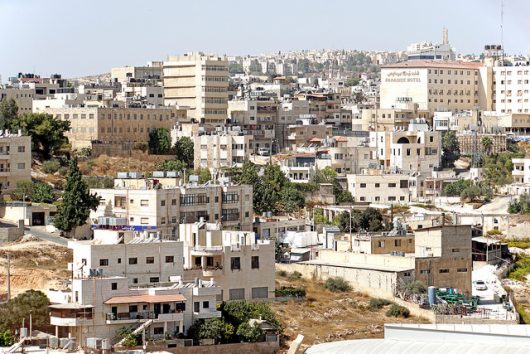
A New Solution: Infrastructure in the West Bank and Gaza

Palestine
The Basics: What are Gaza and the West Bank?

Throughout the twentieth century, the establishment of the State of Israel in Palestine has been a huge point of contention between Arabs and Palestinians and serves to fuel much of the tension that persists in the Middle East to this day.

The result of Israeli occupation of Palestinian territory in the early 20th Century has been an unprecedented 100-year-long struggle for Palestinians. Their struggle is mostly characterized by an egregious lack of functioning infrastructure in Gaza and the West Bank.

Defining Features of Infrastructure in the West Bank and Gaza 

The quality of infrastructure in each of these regions is extremely different from the other. In Gaza, the lack of access to clean water, electricity and proper sewage management are indicative of the region’s current humanitarian crisis. The causes of that situation are many, but the most impactful have been the three wars that have ensued in a period of just 10 years, the rise of Hamas, and the Israeli blockade. Each of these events compounds the other.

For years, the region has had to cope with 12-16 hour blackouts, due in part to the destruction of electricity plants during the wars, but mainly to a political struggle between Hamas (the group that runs the West Bank) and the Palestinian Authority (main Palestinian actor in the West Bank). This strain on the energy infrastructure effects Gaza’s access to clean water, and its ability to treat sewage as well.

The extraction of water from the coastal aquifer, Gaza’s main source of freshwater, requires huge amounts of energy to which Gaza does not have access. Israel is currently providing 10 mcm of water to Gaza every year – an increase from the 5 mcm required by the Oslo Accords of 1995.

Waste management is another of Gaza’s infrastructural problems. Currently, 3.5 million cubic feet of untreated sewage run from Gaza into the Mediterranean every year, threatening not only the health of Palestinians but that of Israelis and the Mediterranean as a whole. Lack of proper infrastructure for schools and hospitals is yet another strain on the livelihoods of Gaza’s 1.8 million inhabitants.

In the West Bank, the picture, though less time sensitive, is still far from acceptable. Governed partially by the Palestinian Authority and partially by Israel, troubles of infrastructure are intensified by the political battle between the two governments.

The most concerning aspect of infrastructure in the West Bank is the access Palestinians have to freshwater. In fact, there is a great discrepancy between the amount of water utilized by the Israeli territories versus that utilized by the Palestinians. In addition to a general strain on water resources, the West Bank is unable to oversee the proper processing of sewage water which leads to groundwater contamination and a lost opportunity – use of recycled sewage water for irrigation.

The difference between infrastructure in the West Bank and Gaza is amplified greatly by the presence, or lack, of Israeli funding. Despite both of the regions experiencing of similar problems related to water and waste management (both impacted by access to electricity), Gaza’s exposure to these troubles is often far worse than those of the West Bank, due to years of isolation from Israel and other wealthy nations.

Is there a solution?

The question of improving Palestinian infrastructure comes down to a finding a solution to the conflict between Israel and Palestine. Except unfortunately, this has proven to be one of the most elusive problems of international diplomacy for nearly seven decades.

Though many proposals have been made, the abuses perpetrated by each side continue to bar sustained, positive progression towards peace. Since the end of the Six-Day-War in 1967 in which Israel annexed the West Bank, Gaza, East Jerusalem, the Sinai Peninsula, and the Golan Heights, a solution has hinged on the idea that Israel will only give up land if they are ensured an end of Palestinian attacks.

Today, the two-state solution, heralded by the United States and the majority of the international community, has reached a standstill as a result of continued conflict and mistrust between Israelis and Palestinians. Yet, some political analysts maintain that peace is still attainable. What it will take to bring about that end, however, remains uncertain.

– Katarina Schrag

Photo: Flickr

December 13, 2017
https://borgenproject.org/wp-content/uploads/borgen-project-logo.svg 0 0 Borgen Project https://borgenproject.org/wp-content/uploads/borgen-project-logo.svg Borgen Project2017-12-13 01:30:262020-01-03 19:45:44A New Solution: Infrastructure in the West Bank and Gaza
Global Poverty

Infrastructure in Armenia

infrastructure in armeniaGround transportation plays a critical role in Armenia’s economy, but the country’s roads and highway systems have needed an overhaul for several decades. The Lifeline Road Network Improvement Project sponsored by the World Bank will play a critical role in improving infrastructure in Armenia in the area where it’s most needed.

During ancient times, Armenia was located at the historic crossroads of Asia and Europe along The Great Silk Road, making it an important center of commerce and trade. Today, Armenia has closed borders with two of its neighboring states, Turkey and Azerbaijan, and no port access, meaning that the transportation of imports and exports is limited to ground transportation. With restricted access to the region and reliance on roads built in the Soviet Era, poor transportation infrastructure in Armenia has hurt the country’s overall economic growth and resulted in the economic isolation of rural areas.

Both of these factors have contributed to increased poverty levels in Armenia. The overall quality and reliability of a country’s infrastructure is a critical factor for businesses in all sectors. Thus, improving infrastructure in Armenia is one of the best ways to fuel its economic growth and thereby reduce poverty.

Statistics have illustrated Armenia’s need to improve infrastructure for some time. In 2014, Armenia ranked 107 in the world for infrastructure and 92 overall in the World Bank LPI Index. The Logistics Performance Index is a measure of each country’s performance across indicators including the quality of trade and transport-related infrastructure, the timeliness of shipments in reaching destination within the scheduled or expected delivery time, as well as competence and quality of logistics services.

Recognizing the significant need for improved infrastructure in Armenia, The World Bank committed to loaning the Armenian government the equivalent of $45 million US dollars in 2013 to fund the Lifeline Road Network Improvement Project for Armenia. This initiative seeks to improve infrastructure in Armenia in relation to its most critical sector, roads and ground transportation, by upgrading select lifeline roads that will allow rural areas to better access to markets and services.

Despite the Lifeline Road Network Improvement Project having been implemented for two years, Armenia’s overall LPI rank fell to 141 in 2016, with its infrastructure indicator falling to the position of 121. This has prompted an expansion of the initiative, complete with additional financing and the added goal of allocating funds to strengthen the capacity of the Ministry of Transport and Communication to manage the lifeline road network in the future. The redoubled efforts surrounding road improvement will continue through 2019, at which time the government is hoping to statistical evidence of significant improvement of transportation-related infrastructure.

The Armenian government hopes that improved infrastructure will mean fewer bumps in the road as the country seeks economic security, and The World Bank’s assistance has hopefully put them on the road to success.

– Savannah Bequeaith

Photo: Flickr

December 12, 2017
https://borgenproject.org/wp-content/uploads/borgen-project-logo.svg 0 0 Borgen Project https://borgenproject.org/wp-content/uploads/borgen-project-logo.svg Borgen Project2017-12-12 10:33:162020-01-03 19:45:57Infrastructure in Armenia
Development, Global Poverty

Exploring Five Important Development Projects in Cameroon

Development Projects in Cameroon
Cameroon, or “miniature Africa” is filled with immense diversity in anthropology, history, and climate geography.  Captivating in its beauty, Cameroon is striking for its undiscovered natural resources and government’s stability. Nevertheless, there are few development projects that have been “left dormant while awaiting investments in the different sectors of agro-industry, road, port and airport infrastructure, energy, real estate and urban planning, in the mining industries and new technologies.”

The April 2013 Act granted various tax and customs exemptions over a five to ten-year period.  Although this act is an incentive for the private sector, the installation phases of new investors were facilitated and their production safeguarded.

With a goal to boost the economic growth rate and tap into a potential 300 million consumer market here are five development projects in Cameroon that aim to be completed by 2035.

  1. National Roadway: The first version of this FCfa 14, 976.5 billion national railroad plan was presented on April 28, 2011 in Yaoundé. This project would expand the current infrastructure, interconnecting the country to adjacent states, “while opening up the main agricultural and mining production areas.”  Currently CAMRAIL, Cameroon’s earliest authorized rail company, is a favorable route compared to travel by bus, especially in rainy seasons. Nevertheless, this project’s progression has been sluggish, with its completion date estimated for 2020 due to a lack of funding.
  2. Agriculture: The Inter-Professional Council for Cocoa and Coffee (CICC) has shared their concerns with the Institute of Agricultural Research for Development (IRAD) regarding climate change challenges faced by farmer. A project in the works, IRAD is formulating a cocoa and coffee variety that will be more resilient to current extreme climate changes as part of the development projects in Cameroon. Dedicated to restarting their cocoa and coffee industry, production will hopefully be increased from 60,000 tons to 185,000 tons by 2020.
  3. Inclusive and Resilient Cities Development Project: Launched on August 22, 2017, this project will focus on improving access to infrastructure in poor urban communities and urban management itself. With a projected cost of $160 million, this project has four major components: strengthening capacity for inclusive and resilient urban management, improving connectivity and living environments in beneficiary cities, the Contingent Emergency Response, and Project Management, Coordination, Monitoring, and Evaluation. The closing date for this project is March 31, 2024. 
  4. Telecommunication: Chinese company, ZTE, opened up in December 2015 with capital of FCfa 480 million. Named “ZTE Cameroun Sarl” the company covers a telecoms infrastructure, training on their networks, as well as repair and maintenance. Using this grant, ZTE can directly promote their equipment to the Cameroon market.
  5. Solar Energy: Seeing the sun as wealth, Vincent Bolloré, president of the Bolloré group, strives for decentralized systems to bring electricity to villages where electricity access is costly. In 2016, the group completed the Canal Olympia cinema, a project located at Yaoundé I University that is entirely operated by solar power.

These five development projects in Cameroon not only promote the welfare of the locals, but also create incentives for international interest.  The year 2035 is a big one for Cameroon, and hopefully, funding will receive a big push so these projects can both thrive but maintain longevity.

– Tara Jackson

Photo: Flickr

December 12, 2017
https://borgenproject.org/wp-content/uploads/borgen-project-logo.svg 0 0 Borgen Project https://borgenproject.org/wp-content/uploads/borgen-project-logo.svg Borgen Project2017-12-12 01:30:272024-05-29 22:29:39Exploring Five Important Development Projects in Cameroon
Global Poverty

Three Predominant Areas of Growth For Infrastructure in Malaysia

3 Areas of Growth For Infrastructure in Malaysia
Malaysia has made vast improvements over recent decades in its economic development. The emphasis the Malaysian government places on developing and upgrading its infrastructure has led to Malaysia becoming one of the most well-developed nations in Asia among newly industrialized countries. The government’s 11th Malaysia Plan, published in 2015, highlighted a development goal of transforming Malaysia into a fully developed nation by 2020.

The economical influx has clearly and drastically improved and strengthened infrastructure in Malaysia as there’s been steady improvement in poverty rates, a 55.3 percent reduction in those living below the poverty line as of 2014, and an increase in the number of the population working and employed.

Some of the major projects boosting infrastructure in Malaysia include:

1. Highways

As a link to major centers like seaports and airports, improving Malaysian highway systems means more efficient transportation of goods, which is vital to the country’s economy. The Asean Rail Express (ARX) has been initiated to become the Trans-Asia Rail Link that will connect Singapore, Vietnam, Cambodia, Laos, and Myanmar, and end in Kunming, China.

The Pan Borneo highway is set to be completed by 2023, which will make driving 2,000 kilometers from Kuching to Kota Kinabalu, a populated and congested area, much easier for both the population and the transportation of goods.

2. Seaports

More than 90 percent of Malaysia’s trade is by sea. With the expansion of their economy and trade, seaports have been a key focus of improving infrastructure in Malaysia. Now, two of the seven international ports have been ranked among the top 20 container ports in the world. Port Klang is now the national load and transshipment center, having grown 5.5 percent in the number of goods passing through the port from 2016 to 2017.

3. Telecommunication

With its widespread application of modern technologies such as fiber optics, wireless transmission, digitalization and satellite services, Malaysia has built one of the more advanced telecom networks in the developing world. The mobile segment continues to dominate the market, while the fixed line market is in decline.

There has been progress on expanding mobile infrastructure in Malaysia to rural areas as well. Telephone subscribers in Malaysia can choose from five network service providers for a full range of local, domestic and international services under the Equal Access Regime. There are also six internet service providers and five telcos’s supporting a full range of domestic and international services.

With a national objective to see Malaysia ranked as a developed country by the year 2020, these developments in telecommunication, seaports, and highways show great progress for the nation and its people.

– Kailey Brennan

Photo: Flickr

December 12, 2017
https://borgenproject.org/wp-content/uploads/borgen-project-logo.svg 0 0 Borgen Project https://borgenproject.org/wp-content/uploads/borgen-project-logo.svg Borgen Project2017-12-12 01:30:262024-05-29 22:29:39Three Predominant Areas of Growth For Infrastructure in Malaysia
Page 30 of 44«‹2829303132›»

Get Smarter

  • Global Poverty 101
  • Global Poverty… The Good News
  • Global Poverty & U.S. Jobs
  • Global Poverty and National Security
  • Innovative Solutions to Poverty
  • Global Poverty & Aid FAQ’s
Search Search

Take Action

  • Call Congress
  • Email Congress
  • Donate
  • 30 Ways to Help
  • Volunteer Ops
  • Internships
  • Courses & Certificates
  • The Podcast
Borgen Project

“The Borgen Project is an incredible nonprofit organization that is addressing poverty and hunger and working towards ending them.”

-The Huffington Post

Inside The Borgen Project

  • Contact
  • About
  • Financials
  • President
  • Board of Directors
  • Board of Advisors

International Links

  • UK Email Parliament
  • UK Donate
  • Canada Email Parliament

Get Smarter

  • Global Poverty 101
  • Global Poverty… The Good News
  • Global Poverty & U.S. Jobs
  • Global Poverty and National Security
  • Innovative Solutions to Poverty
  • Global Poverty & Aid FAQ’s

Ways to Help

  • Call Congress
  • Email Congress
  • Donate
  • 30 Ways to Help
  • Volunteer Ops
  • Internships
  • Courses & Certificates
  • The Podcast
Scroll to top Scroll to top Scroll to top