Three Predominant Areas of Growth For Infrastructure in Malaysia
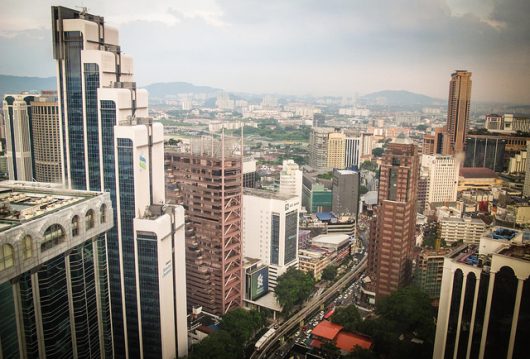
Malaysia has made vast improvements over recent decades in its economic development. The emphasis the Malaysian government places on developing and upgrading its infrastructure has led to Malaysia becoming one of the most well-developed nations in Asia among newly industrialized countries. The government’s 11th Malaysia Plan, published in 2015, highlighted a development goal of transforming Malaysia into a fully developed nation by 2020.
The economical influx has clearly and drastically improved and strengthened infrastructure in Malaysia as there’s been steady improvement in poverty rates, a 55.3 percent reduction in those living below the poverty line as of 2014, and an increase in the number of the population working and employed.
Some of the major projects boosting infrastructure in Malaysia include:
1. Highways
As a link to major centers like seaports and airports, improving Malaysian highway systems means more efficient transportation of goods, which is vital to the country’s economy. The Asean Rail Express (ARX) has been initiated to become the Trans-Asia Rail Link that will connect Singapore, Vietnam, Cambodia, Laos, and Myanmar, and end in Kunming, China.
The Pan Borneo highway is set to be completed by 2023, which will make driving 2,000 kilometers from Kuching to Kota Kinabalu, a populated and congested area, much easier for both the population and the transportation of goods.
2. Seaports
More than 90 percent of Malaysia’s trade is by sea. With the expansion of their economy and trade, seaports have been a key focus of improving infrastructure in Malaysia. Now, two of the seven international ports have been ranked among the top 20 container ports in the world. Port Klang is now the national load and transshipment center, having grown 5.5 percent in the number of goods passing through the port from 2016 to 2017.
3. Telecommunication
With its widespread application of modern technologies such as fiber optics, wireless transmission, digitalization and satellite services, Malaysia has built one of the more advanced telecom networks in the developing world. The mobile segment continues to dominate the market, while the fixed line market is in decline.
There has been progress on expanding mobile infrastructure in Malaysia to rural areas as well. Telephone subscribers in Malaysia can choose from five network service providers for a full range of local, domestic and international services under the Equal Access Regime. There are also six internet service providers and five telcos’s supporting a full range of domestic and international services.
With a national objective to see Malaysia ranked as a developed country by the year 2020, these developments in telecommunication, seaports, and highways show great progress for the nation and its people.
– Kailey Brennan
Photo: Flickr
