• Link to X
  • Link to Facebook
  • Link to Instagram
  • Link to TikTok
  • Link to Youtube
  • About
    • About Us
      • President
      • Board of Directors
      • Board of Advisors
      • Financials
      • Our Methodology
      • Success Tracker
      • Contact
  • Act Now
    • 30 Ways to Help
      • Email Congress
      • Call Congress
      • Volunteer
      • Courses & Certificates
      • Be a Donor
    • Internships
      • In-Office Internships
      • Remote Internships
    • Legislation
      • Politics 101
  • The Blog
  • The Podcast
  • Magazine
  • Donate
  • Click to open the search input field Click to open the search input field Search
  • Menu Menu

Archive for category: Women and Female Empowerment

information and Stories about woman and female empowerment.

Advocacy, Global Poverty, Poverty Reduction, Women and Female Empowerment

Why Female Education Fights Poverty

Female_Education_Fights_Poverty_Afghan_Girl_In_School
While providing equal education to girls is necessary from a moral standpoint, it is also essential for a more peaceful and poverty-free world.

Education affects the age at which women marry and have children. Therefore, until girls have equal access to quality education, maternal mortality, overpopulation, and other factors contributing to poverty will continue to terrorize our world.

In sub-Saharan Africa, and South and West Asia, child marriage affects 1 in 8 girls. By the age of 17, 1 in 7 females will have their first child. Since girls in these areas are not given access to education or job opportunities, they are often locked into these marriages, and forced to become mothers far before they are ready.

In the long run, these women can’t afford to take care of their children or even attain proper health services during labor. The line of poverty continues as children are born into impoverished families that are unable to help their offspring escape this cycle.

Providing women with a secondary education brings enormous benefits to both women and to the world. Educated women are empowered women. They can make their own choices and follow their own dreams. If girls receive a secondary education, 64 percent of them won’t get married while still attending school. By giving girls a chance to pursue their own future and making them aware of the risks associated with consecutive childbearing, the vicious cycle will finally reach its end.

The advantages in investing in female education are endless – for individuals, for the fight against poverty, and for lowering child mortality rates. The rise in female education between 1970 and 2009 prevented more than 4 million child deaths. With the Millennium Development Goals still met, perhaps this is an essential place for the U.N. to make a change.

– Sonia Aviv

Sources: Global Post, TIME, Huffington Post
Photo: The Guardian

October 2, 2013
https://borgenproject.org/wp-content/uploads/borgen-project-logo.svg 0 0 Borgen Project https://borgenproject.org/wp-content/uploads/borgen-project-logo.svg Borgen Project2013-10-02 21:05:432018-02-05 15:14:31Why Female Education Fights Poverty
Inequality, Women and Female Empowerment

Failure to Meet Millennium Goals for Women Will Have Lasting Echoes

UN_Failure_to_Meet_Womens_Needs
Of all the Millennium Development Goals adopted by the UN, those pertaining to the reproductive health of women seem most likely to be unmet when the 2015 deadline hits. Whatever the other MDG successes, the failure to meet the reasonable objectives set for women should be remembered as a defining symbol of the UN’s ability to get things done in 2015. The issue of reproductive health in and of itself is insufficient to merit that reaction, but it does stand as a weather-vane to all kinds of gender-related issues; it points to a future of injustice.

The Millennium Development Goals in question were meant to achieve universal reproductive health and reduce maternal mortality rates by 75 percent of their 1990 levels. Currently, the rates remain double their intended 2015 targets. As Eva Joly, Chair of the European Parliament’s Committee on Development, observed, “It is a failure of the fight against poverty…but it is also linked to other questions.”

The “questions” which have stymied progress on the issue are mainly cultural in nature. Throughout the world, for many hundreds or even thousands of years, women have been viewed as an inferior sex, in some times and places ranking below valued animals such as horses. From the spatial organization of public and private spaces and places, the norms of social interaction, and the ratio of economic independence, to acceptable activities, clothing, and even mentality, women have long been the second sex.

In failing to keep its MDGs, the UN is not only harming today and tomorrow’s women biologically, it fails to make any headway in provoking a cultural revolution which will allow women to be recognized as equally valuable human beings.

Such sentiments may be senseless to men living in particularly sexist cultures. Indeed, there is a strong argument to make for abstaining from building a homogenous global culture which, conveniently enough, is predicated on modern, Western values, and sees all deviation from that standard as unhealthy, unjust, and immoral. Cultural diversity makes humanity strong, and those who pine for days of a culturally unified humanity may wish to second-guess some of their assumptions.

But the UN has made it clear that it does not intend to allow some cultures to continue to exist according to their traditional ways if those traditions conflict with what the UN perceives to be universal rights. And in that light, the UN has failed to convince these disparate cultures that the lives of their women are worth the cost to be saved from death or trauma in childbirth.

When 2015 comes around, the UN will doubtlessly celebrate their many achievements, as well they should. The effort to meet the Millennium Development Goals has been well spent, and many of the results from it are incontrovertibly good. But the UN should not forget that in this major arena, it has failed.

– Alex Pusateri

Sources: Euractiv, The Atlantic, AWID
Photo: The Gaurdian

October 2, 2013
https://borgenproject.org/wp-content/uploads/borgen-project-logo.svg 0 0 Borgen Project https://borgenproject.org/wp-content/uploads/borgen-project-logo.svg Borgen Project2013-10-02 20:55:442018-03-28 22:10:34Failure to Meet Millennium Goals for Women Will Have Lasting Echoes
Nonprofit Organizations and NGOs, Women and Female Empowerment

LandWise: Empowering Women

landwise
Landesa Center for Women’s Land Rights, a capacity building organization, has recently launched LandWise, a free online searchable database and tool. LandWise provides important information and practical applications that may be used for capacity building and technological assistance for strengthening women’s land rights across the globe.

In many places across the world, women’s land tenure is not recognized or is consistently undermined. Without rights to their land, women lack the ability to use, control, and transfer this asset. In some areas, men may have sole control of land that is owned by their wife. The absence of legal land ownership by women is recognized as a constraint for overcoming rural poverty. Without legal ownership of this valuable asset, women are placed in a precarious position where they may lose their family’s only form of income.

There are many facets to women’s rights to land that must be addressed. The country’s legal codes, cultural norms, and administration all play a part in this problem, since these factors can often be very complex and difficult to determine. Landesa’s LandWise seeks to organize this information in an easily searchable database that practitioners may access. While LandWise is not intended to take the place of field work, it will help with the initial research, since the legal codes that govern land rights are often difficult to uncover. The issue of land rights is often bound up with family and marriage law as well as property law. LandWise organizes these laws in an easily searchable database.

Sometimes, rural women are unaware of the rights they have under law. In these cases, practitioners can use the research gathered to engage women in clinics or information sessions. In areas where women’s land rights are not legally codified practitioners may use advocacy to engage civil society and government officials and promote policy recommendations.

LandWise also provides Practice Guides. The Practice Guides help practitioners use the information provided on the database. The Guides include checklists that help analyze the issues that may affect women and men differently in regards to property rights. In addition to the legal codes provided on LandWise, users also receive information regarding how the law is in fact carried out and cultural norms that may affect its implementation.

LandWise is overseen by a full-time librarian. Practitioners in the field are encouraged to submit information that they may come across to LandWise in order to help expand its database.

– Callie D. Coleman

Sources: IFAD, LandWise, Landesa Center for Women’s Land Rights
Photo: Landesa

August 19, 2013
https://borgenproject.org/wp-content/uploads/borgen-project-logo.svg 0 0 Borgen Project https://borgenproject.org/wp-content/uploads/borgen-project-logo.svg Borgen Project2013-08-19 04:04:482016-03-07 11:18:52LandWise: Empowering Women
Food & Hunger, Health, Nonprofit Organizations and NGOs, Women and Female Empowerment

Project Concern International

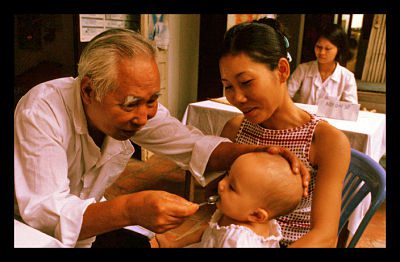
Africa-Kenya-Agricultural-Extension-Development
Project Concern International (PCI) is an organization which seeks to to prevent disease, improve community health, and promote sustainable development worldwide. PCI was founded in 1961 by Dr. James Turpin after saving the lives of two children suffering from pneumonia while working in a Tijuana clinic. This experience inspired the young doctor to go on and forever change the lives of millions. PCI envisions a world in which resources are abundant and shared, communities are capable of providing for the basic health and well-being of its members, and children and families can achieve lives of hope, good health and self-sufficiency. PCI conducts its work through field offices in host countries where directors can live in the area and get an intimate understanding of local needs.

Working in 16 countries, PCI hopes to reach at least 5 million people per year with its services. Overtime, PCI has expanded its reach through increased funding: from the Bill and Melinda Gates Foundation to government grants to the Starbucks foundation, PCI has a well rounded list of supporters. PCI’s ultimate goals include addressing the root causes of poverty and poor health; working with the community to leverage their assets, capabilities and goals to create community-inclusive solutions; implementing holistic solutions; cultivating long-standing relationships with community leaders, investors, and stakeholders to catalyze the impact of aid spent; and developing tools which measure the long-term success of such programs. PCI addresses poverty through programs focused on women’s empowerment & poverty, children’s health, disease prevention, food & water programs, and disaster relief & recovery. Between 2013-2016, PCI hopes to reach over 10 million people worldwide and become a leader in building community capacity, resilience and self-sufficiency.

In addition to its programs worldwide, PCI also has a series of initiatives to further promote its goals. These intiatives include: Women Empowered, Legacy, Who Cares? and SHE.

  • Women Empowered: Established in May of this year, Women Empowered is an initiative in support of women’s equality, human rights and success. PCI believes that women are the solution to poverty, poor health and vulnerability and that through WE, women can attain social and economic empowerment. WE programs are currently being implemented in Guatemala, Bolivia, Botswana, and Malawi. One such success story comes from Maweta in Zambia. After raising six children of her own, Maweta returned to parenthood to raise her grandchildren after their parents died from AIDS. Without a steady source of income, Maweta struggled to provide for her grandchildren. After attending a community orientation hosted by PCI, Maweta began mobilizing women in her community to form a self-help group. Nine months later, Maweta has learned how to read and write, perform basic accounting and save $60 by selling mangoes to her community. Maweta has since received a loan to start a small business. Maweta buys food in bulk, repackages it into smaller quantities and sells these to her village. Since starting the business, Maweta has been able to provide for her grandchildren’s basic needs and education.
  • Legacy: PCI’s Legacy Programs focus on maternal/child health and nutrition, as well as economic empowerment. As the name suggests, ‘Legacy’ for PCI means consistent and compassionate commitment to the communities involved. These programs include: Well Baby clinics, Ventanilla de Salud (VDS), Casa Materna, and the Street and Working Children Program. Ventanilla de Salud (VDS) targets at risk immigrant populations near the border, by providing basic health and community services, while these families are waiting for service at the Mexican consulate. VDS has reached more than 41,000 people with health education information and nearly 20,000 with HIV/AIDS prevention messages. However, the VDS program suffers from a lack of funding and has been scaled back by more than 25 percent.
  • Who Cares?: An online campaign which celebrates, recognizes and encourages those who are giving back to the greater good. Who Cares? provides volunteers with the opportunity to network, share stories, or just get motivated about a cause. Who Cares targets the youth and young adults because they believe that the ability of today’s youth to mobilize others is huge, yet largely untapped. In addition, Who Cares provides tools to help the youth mobilize others and make their efforts pay off.
  • SHE: SHE, which is short for Strong, Health and Empowered, is a group of ambassadors who dedicate their time to PCI’s projects across the globe. These ambassadors work within the community to promote women’s empowerment and find innovative solutions to ensure that women lead strong, healthy lives.

To learn more about PCI’s work, explore PCIglobal.org for more info.

– Kelsey Ziomek

Sources: PCI Global, The San Diego Foundation, Washington Global Health Alliance, Coronado Eagle

August 19, 2013
https://borgenproject.org/wp-content/uploads/borgen-project-logo.svg 0 0 Borgen Project https://borgenproject.org/wp-content/uploads/borgen-project-logo.svg Borgen Project2013-08-19 03:25:382024-12-13 17:49:38Project Concern International
Education, Women and Female Empowerment

5 Powerful Advocates of Female Education

malala
1. Malala Yousafzai works tirelessly as a young advocate for female education, despite being shot in the head last year by the Taliban for these very same efforts. She—in her bravery and brilliance– exemplifies the struggle for girls’ education everywhere.

2. Hillary Rodham Clinton, having served as the first lady and Secretary of State, is now a partner with her husband and daughter at the Bill, Hillary, and Chelsea Clinton Foundation. Within the organization, she has committed herself to improving access to female education and empowering women worldwide.

3. Richard Robbins directed Girl Rising, the extremely popular new documentary that tells the stories of nine struggling girls in the developing world. The film, which has met with great success, espouses the urgent global need for equal access to education.

4. Nicholas Kristof and Sheryl WuDunn published “Half the Sky: Turning Oppression Into Opportunity for Women Worldwide” in 2010, a compelling journalistic account of the developing world, and more specifically, of its disadvantaged women. The book, which spans the entire globe and a diverse set of lifestyles, seems to somehow convey a singular edict: in order to progess—particularly in the developing world– we must provide all women access to an adequate education.

5. Lawrence Chickering has worked for more than thirty years in order to improve the conditions of girls in the developing world, particularly in India, a country where 40% of women are not educated beyond the fifth grade level. His NGO, Educate Girls Globally, has significantly improved female enrollment, retention, and performance in India’s government schools, giving girls access to a variety of transformative resources.

– Anna Purcell

Sources: CBS News, Huffington Post, The Guardian

August 17, 2013
https://borgenproject.org/wp-content/uploads/borgen-project-logo.svg 0 0 Borgen Project https://borgenproject.org/wp-content/uploads/borgen-project-logo.svg Borgen Project2013-08-17 09:59:232024-05-24 23:49:425 Powerful Advocates of Female Education
Activism, Education, Women and Female Empowerment

Malala Day: July 12, 2013

Malala_Day
Perhaps no adolescent in the world is regarded with more widespread veneration than sixteen-year-old Malala Yousafzai, the well-known Pakistani advocate for female education who was shot by the Taliban for her convictions in October 2012. Seriously injured from the shooting, Malala was immediately flown to the United Kingdom to undergo a series of emergency operations. Miraculously, she recovered.

Just over a year later, Malala is back in school. However, her life is far from blithe—the urgency for access to education for all girls is ever present. Thus, Malala continues to ceaselessly advocate for girl’s rights, disseminating her message on the global stage.

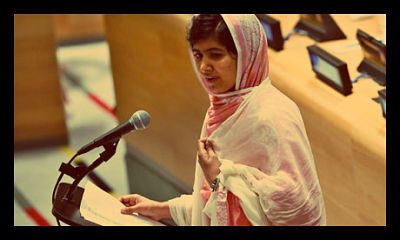
In order to honor her prodigious efforts in the name of girls everywhere, the United Nations hosted Malala Day on July 12, 2013, her sixteenth birthday. The event—which evolved to be known as “Malala Day”—included a speech by Malala herself, pushing for female education everywhere.

Standing amongst the most powerful leaders in the world, Malala spoke confidently. She beseeched courage from the world’s women: “Let us pick up our books and pens. They are our most powerful weapons. One child, one teacher, one pen and one book can change the world. Education is the only solution.”

She then addressed the personal, demonstrating the unwavering nature of her principles: “The terrorists thought that they would change my aims and stop my ambitions but nothing changed in my life, except this: weakness, fear and hopelessness died. Strength, power and courage were born.”

In a world where 115 schools were attacked last year in Mali, 165 in Yemen, 321 in occupied Palestine, and 167 in Afghanistan, Malala’s struggle has never been more pressing.

– Anna Purcell

Sources: AlJazeera, The Guardian
Photo: National Secular Society

August 12, 2013
https://borgenproject.org/wp-content/uploads/borgen-project-logo.svg 0 0 Borgen Project https://borgenproject.org/wp-content/uploads/borgen-project-logo.svg Borgen Project2013-08-12 16:27:132017-10-04 12:35:10Malala Day: July 12, 2013
Health, Women and Female Empowerment

Improving Access to Reproductive Health Services

reproductive_opt
Improving access to reproductive health services in the developing world is critical to poverty alleviation. Pregnancy and childbirth-related complications are a leading cause of death of girls, aged 15 to 19, in developing countries. An estimated 7.3 million girls under age 18 give birth each year, and a great percentage of births occur in Africa. To counter this, the United Nations Population Fund (UNFPA) has announced it will partner with eight African countries to improve access to reproductive health services for millions of girls. The programs will span over the next three years, and will hopefully make a difference in lives of millions of young people.

“We are working specifically to ensure that the continent’s adolescent girls, between the ages of 15 and 19 – some 45 million of whom live in sub-Saharan Africa – get a good education, are able to decide whether and when to marry and have children, are protected from HIV, remain safe from violence, and have their fair share of opportunities to work and contribute to the economic development of their countries,” said UNFPA Executive Director Babatunde Osotimehin.

UNFPA will partner with the Democratic Republic of the Congo, Ethiopia, Mozambique, Niger, Nigeria, Sierra Leone, South Sudan and Tunisia. The programs will deliver comprehensive sexual and reproductive health services for young people. The hope is to reach disadvantaged and impoverished girls who are most at risk for poor sexual and reproductive health, violence and exploitation.

UNFPA programs will ensure young people have access to age-appropriate sex education, whether they are in school or out, to prepare them for adult life. The programs will bring together governments, young people, the private sector and other stakeholders to access the needs of young people.

UNFPA is the lead United Nations agency that promotes sexual and reproductive health services. They are at work in 150 countries, ensuring that young people have the information, services, and supplies they need to make safe and healthy decisions.

“Over the next three years, in partnership with governments and young people themselves, we will commit to making a tangible difference in the lives of millions of young people right across the continent. It is their rights we must uphold and it is they who are our best hope for a prosperous and peaceful Africa,” said Dr. Osotimehin.

– Catherine Ulrich
Sources: UNFPA, UN News
Photo: Join Tokyo

August 10, 2013
https://borgenproject.org/wp-content/uploads/borgen-project-logo.svg 0 0 Borgen Project https://borgenproject.org/wp-content/uploads/borgen-project-logo.svg Borgen Project2013-08-10 05:10:442024-06-11 01:49:27Improving Access to Reproductive Health Services
Children, Women and Female Empowerment

Women’s Disempowerment in Yemen

nada_opt
In Yemen, the custom of early marriage just met a vocal challenger.

Going viral last week was a video of 11-year-old Nada al-Ahdal ranting about her parents’ decision to forcibly marry her off to a much older man. “What have the children done wrong? Why do you marry them off like that?” she asks the camera. Her powerful words have touched a delicate nerve amongst Yemenis, some of whom have upheld and continue to practice the custom of early marriange for generations. According to a 2006 joint report by the Ministry of Public Health and Population, the Pan-Arab Project for Family Health and UNICEF, this tradition is still widely practiced: 52% of Yemeni women and girls are married by the time they turn 18.

The recent video highlights Yemen’s history of early marriage laws and the government’s and society’s unwillingness to modernize conceptions of marriage. In 1994, the official age for lawful marriage stood at 15. Five years later, the law was abolished on religious grounds, eliminating a minimum age for early marriage. A brief legislative effort in 2009 to amend the situation was ultimately stalled and aborted, despite that fact that Yemen is party to multiple international treaties that require married couples to be at least 18 years old. Overall, the issue remains to be addressed, leaving countless children susceptible to premature marriage and the social and economic disadvantages that come with it.

Interviews with Yemeni girls and women reveal troubling facts. In rural areas, some girls were married off at the age of 8. Once married, women often have little power in their marriages which can also mean they have limited control over the timing and spacing of children, which increases the risk of reproductive health problems. Early marriage also diminishes the chance that wives will return to school to complete their education, putting them at a distinct social and economic disadvantage. Verbal and physical abuse against women is also prevalent in early marriages in Yemen.

In some ways, Nada al-Ahdal’s words do not just refute the practice of robbing girls of their childhood and sexual purity; they also underline the crucial “cycle of poverty and early marriage” that plagues tens of millions of women around the world. Poverty and early marriage tend to be mutually reinforcing phenomena: girls born into poverty are more likely to have mothers who ‘transmit intergenerational poverty’ and lack social assets and networks. In addition, early marriages greatly increase the chance that young girls will live in poverty. The cycle, parallel to the strong customary tradition of early marriage most prevalent in rural areas, reinforces young women’s roles as undereducated child-bearers with limited social networks.

Nada al-Ahdal eloquently defends her decision to flee from arranged marriage. But behind her words lies Yemen’s ugly reality of women’s disempowerment and its central role in the country’s greater puzzle of poverty reduction and economic growth. As one of the poorest nations on earth and a hotbed of terrorist activity, poverty in Yemen has resulted in a globally destabilizing situation. Instituting a minimum age for marriage could be a key policy for addressing women’s inequality and poverty. In doing so, Yemen would have a more solid foundation for development and more human capital to support its economy.

– Zach Crawford

Sources: BBC, Multiple Indicator Cluster Survey (MICS), Human Rights Watch, Save the Children’s “Champions for Children” report, Washington Post
Photo: Washington Post

August 9, 2013
https://borgenproject.org/wp-content/uploads/borgen-project-logo.svg 0 0 Borgen Project https://borgenproject.org/wp-content/uploads/borgen-project-logo.svg Borgen Project2013-08-09 05:28:092024-12-13 17:49:38Women’s Disempowerment in Yemen
Education, Global Poverty, Health, Poverty Reduction, Women and Female Empowerment

Top 5 Poverty Prevention Tactics

Poverty Prevention
Global poverty can seem to many to be an insurmountable task. However, much progress has already been made to lift people out of poverty. According to The Global Citizen organization, global poverty has effected 1.3 billion individuals, a number which is actually 52% lower than statistics in the 1980s.

Development practitioners recognize that global poverty can be minimized by addressing other areas including reproductive health, HIV prevention, education, women’s empowerment, and gender equality. UNFPA states that poverty is a multidimensional issue that deprives people of education, resources, services, opportunities, and economic opportunities. UNFPA states that investments to address global poverty should “…[empower] individual women and men with education, equal opportunities and the means to determine the number, timing and spacing of their children – [which] could create the conditions to allow the poor to break out of the poverty trap.”

Reproductive health and HIV prevention can both act as poverty prevention tactics. Reproductive health education, family planning resources, and widely accessible contraception can decrease fertility rates by providing families with the knowledge and tools to space out pregnancies. Furthermore, improved healthcare can reduce population growth because families recognize that they do not need to have as many children to ensure that at least 2 of them survive to adulthood.


HIV prevention is also an important poverty prevention tool because  helpful for when men and women know the dangers of HIV, they are able to use protection and are able to prevent the spread of the disease not only from partner to partner, but also from partners to undesired pregnancies and children. By learning how to protect oneself from HIV, individuals are able to prevent untimely deaths as well as preventing the disease to spread within a community, states The ONE organization. By lowering fertility rates through an education in reproductive health and by preventing the spread of HIV through an education in HIV prevention, communities will thrive due to a lower healthier population level.

The third poverty prevention tactic is education. Education is a very important factor in preventing global poverty, for providing an education to young boys and girls will help prevent undesired child marriage as well as early teen pregnancies which can lead to maternal death. An education helps boys and girls obtain the proper knowledge to keep themselves safe, healthy, and helps to plant the seeds of inspiration. Once obtaining an education, these individuals can create sustaining businesses which produce and return economic gains into their communities. By providing an education, individuals are able to thrive and break through the barriers of global poverty by creating strong businesses which will help the economy thrive and will lead to a stable community environment.

The fourth and fifth poverty prevention tactics are women empowerment and gender equality. Women empowerment is a positive prevention tactic because women who are encouraged to attend school and receive an education are more likely to defeat child marriage, are able to marry latter in life, and are able to have less children which lowers population rates. Women who have an education are more likely to work after receiving an education, which boosts the economy and provides a sustainable household for a family. Gender equality offers similar benefits, for if women are able to obtain an education and receive equal pay in employment, both the man and women are able to create a sustainable home for their children. By providing a sustainable environment, the child is able to attend school and is able to receive employment opportunities, continuing this positive cycle.

Through these five poverty prevention tactics, developing countries are able to defeat global poverty and are able to create sustainable economies, healthy environments, and equal opportunities.

– Grace Beal

Sources: Global Citizen, UN FPA, ONE Campaign
Photo: Ambergris Today

August 5, 2013
https://borgenproject.org/wp-content/uploads/borgen-project-logo.svg 0 0 Borgen Project https://borgenproject.org/wp-content/uploads/borgen-project-logo.svg Borgen Project2013-08-05 09:17:212017-11-30 10:45:20Top 5 Poverty Prevention Tactics
Women and Female Empowerment

MDG 3: Promote Gender Equality and Empower Women

MDG 3
This is the third in a series of posts discussing the UN’s Millennium Development Goals. These are set of 8 interconnected goals agreed upon by most countries around the world based on a shared commitment to improving the political, social, and economic lives of all people. They are to be achieved by 2015 and, two years out from this deadline, it is important to celebrate all the progress we have made and to recognize the work we have left.

The third of the MDGs is to promote gender equality and embolden women. Education is the primary mode of empowerment, so the UN’s stated goal is to eliminate the gender disparity in primary and secondary education by 2005 and in all levels of education by 2015. The gender disparity in education is judged by statistics such as the ratio of girls to boys in all levels of education, literacy in women as compared to men, women working outside the agricultural sector, and female governmental leaders worldwide.

The gender gap in primary school has decreased substantially in recent years. In 1999, there were 16 million more girls than boys out of primary school. Over the next ten years, this number dropped dramatically to just 4 million. However, this still leaves significantly more educated boys than girls, a phenomenon that perpetuates gender inequality later in life.

According to the World Bank, equal percentages of girls and boys complete primary school in Latin America and East Asia. However, in all other developing regions, this ideal has not yet been achieved.

The significant gender gap in youth literacy rates has been shrinking in recent years. However, girls are still considerably less likely to graduate from primary school with basic literacy skills than boys. This is a concerning trend that often leads to the disempowerment of women, and perpetuation of a discriminating patriarchal societal structure.

In many countries, women have less access to stable jobs, education, economic assets, and governmental participation. They may not be allowed to work outside the home, forcing them to rely on men for their family’s income. And even when they do enter the job market, they tend to hold lower-paying positions with less job security and benefits. This represents an unacceptable inequity that must be addressed seriously. Not only does it devalue women’s work, it also means that men tend to have more influence on how the family’s money is spend, consistently minimizing women’s authority. Through extensive work toward MDG 3, women’s role in the workplace is improving, with 40% of wage-earning jobs in the non-agricultural sector held by women as of 2011.

The number of women in government is also on the rise, thanks in part to quota systems that require a certain percentage of leaders to be female. Worldwide, just over 20% of parliament members were female as of January 2013. While this still reflects a heavy bias towards men, it also represents incredible progress. In 1995, women held a meager 10% of parliamentary seats. This percentage has been steadily increasing, and progress will continue to be made if girls’ education is made an international priority.

The education of girls affects every facet of society as children grow into adults. While we have made significant progress towards gender equality, we clearly have work to do when girls do not graduate with the same basic skills that boys do and are not consistently presented with the same opportunities in the workplace and government. Educated girls become educated women that are empowered in their personal, social, political, and work lives. They demand to be treated respectfully, and are not constrained by their gender. They are strong women that can be leaders just as well as they can be wives. They are the women this world needs.

– Katie Fullerton

Sources: UN, UNDP, World Bank, UN Stats
Sources: The Guardian

August 5, 2013
https://borgenproject.org/wp-content/uploads/borgen-project-logo.svg 0 0 Borgen Project https://borgenproject.org/wp-content/uploads/borgen-project-logo.svg Borgen Project2013-08-05 05:02:062018-03-28 21:52:05MDG 3: Promote Gender Equality and Empower Women
Page 76 of 82«‹7475767778›»

Get Smarter

  • Global Poverty 101
  • Global Poverty… The Good News
  • Global Poverty & U.S. Jobs
  • Global Poverty and National Security
  • Innovative Solutions to Poverty
  • Global Poverty & Aid FAQ’s
Search Search

Take Action

  • Call Congress
  • Email Congress
  • Donate
  • 30 Ways to Help
  • Volunteer Ops
  • Internships
  • Courses & Certificates
  • The Podcast
Borgen Project

“The Borgen Project is an incredible nonprofit organization that is addressing poverty and hunger and working towards ending them.”

-The Huffington Post

Inside The Borgen Project

  • Contact
  • About
  • Financials
  • President
  • Board of Directors
  • Board of Advisors

International Links

  • UK Email Parliament
  • UK Donate
  • Canada Email Parliament

Get Smarter

  • Global Poverty 101
  • Global Poverty… The Good News
  • Global Poverty & U.S. Jobs
  • Global Poverty and National Security
  • Innovative Solutions to Poverty
  • Global Poverty & Aid FAQ’s

Ways to Help

  • Call Congress
  • Email Congress
  • Donate
  • 30 Ways to Help
  • Volunteer Ops
  • Internships
  • Courses & Certificates
  • The Podcast
Scroll to top Scroll to top Scroll to top