• Link to X
  • Link to Facebook
  • Link to Instagram
  • Link to TikTok
  • Link to Youtube
  • About
    • About Us
      • President
      • Board of Directors
      • Board of Advisors
      • Financials
      • Our Methodology
      • Success Tracker
      • Contact
  • Act Now
    • 30 Ways to Help
      • Email Congress
      • Call Congress
      • Volunteer
      • Courses & Certificates
      • Be a Donor
    • Internships
      • In-Office Internships
      • Remote Internships
    • Legislation
      • Politics 101
  • The Blog
  • The Podcast
  • Magazine
  • Donate
  • Click to open the search input field Click to open the search input field Search
  • Menu Menu

Archive for category: Women and Female Empowerment

information and Stories about woman and female empowerment.

Women and Female Empowerment

New Plan for Women’s Rights in Morocco

women_opt
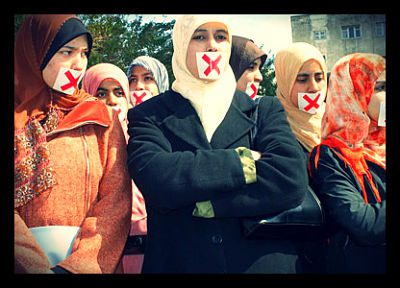
A new plan was recently released to advance women’s rights in Morocco over the next four years. The plan, called “IKRAM,” will provide shelter for domestic violence victims, increase educational opportunities for girls, and increase the percentage of women in public office.

While the plan is commendable, some women’s rights activists believe it falls far short of what is necessary. Morocco reformed its family law in 2004, but many of these reforms are circumvented by conservative judges. Sex outside of marriage remains illegal.

The reform raised the legal age for marriage from 15 to 18, but according to 2010 data, courts have allowed minors to marry in 90% of cases. In 2012 the global community was shocked by the suicide of a young girl who was forced to marry her rapist by her parents and a conservative judge.

Advocates of women’s rights believe a pressing issue is amending the 475 law. The 475 law allows statutory rape charges to be dropped if the two individuals involved are married. This encourages rapists to marry their victims to avoid all charges. Conservative judges support this action as they believe it will save the girls’ honor. While there are rumors that the government will review the penal code, it is uncertain how they plan to approach it or if they will take women’s rights into consideration.

The government has set up a committee that will monitor IKRAM and ensure that its goals are met. This committee will monitor action across all ministries. The committee will also advocate legislation supporting women’s rights.

– Callie D. Coleman

Sources:Open Equal Free,New York Times,Al Monitor,All Africa
Photo: Monsite

August 2, 2013
https://borgenproject.org/wp-content/uploads/borgen-project-logo.svg 0 0 Borgen Project https://borgenproject.org/wp-content/uploads/borgen-project-logo.svg Borgen Project2013-08-02 06:07:282024-05-25 00:14:17New Plan for Women’s Rights in Morocco
Education, Global Poverty, Poverty Reduction, Women and Female Empowerment

How to Solve Poverty

How to Solve Poverty
The following is not a definite plan for how to solve poverty. There are many causes and factors to consider that promote and sustain impoverishment, thus there are also myriad of solutions. By embracing all possibilities related to global education and technology, we can put a sizable, irreparable dent into poverty.


How to Solve Poverty


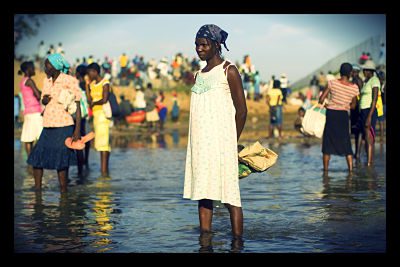
Education for women: 70% of all women in the world live in poverty, and over 32 million women are considered “missing.” Poor health conditions, famine, and social injustice contribute greatly to the problem. Women work some of the most difficult but crucial hours worldwide, yet earn pennies on the dollar for their effort. This leads to desperation and informal employment which opens the door to problems like human trafficking. When women receive education, the results are indisputable: lower fertility and infant mortality rates, less instance of sexually transmitted disease, and a greater chance of employment and contributions to local economies. The benefits of female education are much broader than male education.

Using Positive Deviance: Somewhere in every community lives a person or a family that is not poor for a reason. Finding those positive deviants in the community and letting others around them learn from their experience is becoming a very popular approach in places. Lewiston Elementary in Utah is one of 300 schools to be nationally recognized for outstanding academics, despite the fact that half of their students are poor and 10% speak English as a second language. The kids consistently exceed what is expected of them all due to how they are taught, which includes, “…small group instruction; an evidence-based reading curriculum; progress monitoring; parent involvement; and instructional coaching.” Other schools have begun to take note of Lewiston’s success.

Entertainment Education: One might not immediately see the correlation between entertainment and poverty, but when considering impoverished or uneducated children, it becomes highly apparent. Education is clearly a poverty deterrent, thus using the media to promote education in communities in ways that will entertain can have major impacts. A well known example of this is the television program Sesame Street, watched the world over by young, hungry minds. Other prosocial programs and themes have been used with great results in the developing world, ranging from simple radio programs to a project called Soul City which has been running in South Africa for years. One organization leading the way with entertainment education is Population Media Center.

– David Smith

Sources: Women and Poverty, Learning The Lessons of Sesame Street
Photo: Infosur Hoy

August 2, 2013
https://borgenproject.org/wp-content/uploads/borgen-project-logo.svg 0 0 Borgen Project https://borgenproject.org/wp-content/uploads/borgen-project-logo.svg Borgen Project2013-08-02 05:55:112024-05-25 00:13:02How to Solve Poverty
Education, Women and Female Empowerment

Homework, Not Housework

child_labor_pakistan
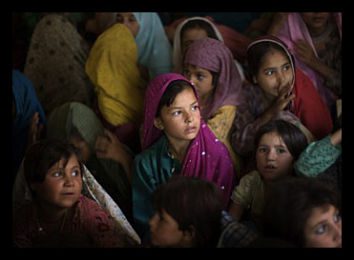
Malala Yousafzai’s speech at the UN called for “free, compulsory education all over the world for every child.” Her speech was a reminder that back in her home country of Pakistan several million children are unable to attend school, exploited for their labor, and abused.

The most recent annual State of Pakistan’s Children report—published by the Islamabad-based NGO Society for the Protect and Rights of the Child (SPARC)—found that, out of 120 countries, Pakistan has the second largest number of children not attending school. 5.1 million Pakistani children ages 5 through 9 are not attending an educational institution. A large portion of these children end up in the workplace.

Child labor is a widely accepted social norm in Pakistan for both boys and girls. These children are denied their rights to education, protection, health, and development, and are also highly susceptible to abuse and exploitation. Figures on the exact number of child laborers in Pakistan are somewhat unreliable, with estimates ranging from 3.3 million to 12 million.

According to an estimate from The International Labor Organization, one quarter of these children are involved in the worst forms of child labor—slavery, commercial sexual exploitation, the use of children for committing crimes, and work that is harmful to the health and safety of children. The Pakistan Bureau of Statistics 2010-11 Labor Force Survey estimates the number of child workers to be around 4.29% of the country’s children ages 10 through 14.

The only major law relating to child labor is the Employment of Children Act 1991, which regulates child labor for children under 14 years of age and prohibits it in specific occupations. However, the law is rarely enforced, especially in the area of domestic labor.

Earlier this month an incident was reported in which a wealthy employer had beaten her 13-year-old servant to death after he dropped a jug. The incident was widely covered by the media and confirmed by the police in the area. Such stories are not unusual. According to SahibaIrfan Khan, the program officer at SPARC, thousands of children working as domestic servants are deprived of their basic right to education and are often subjected to abuse and violence.

Other data compiled by the organization shows at least 18 confirmed cases of severe torture and abuse of child domestic laborers. 13 of these children died as a direct result of the violence inflicted upon them at the hands of their employers.

– Scarlet Shelton

Sources: IRIN, Pakistan Bureau of Statistics
Photo: Dawn

August 2, 2013
https://borgenproject.org/wp-content/uploads/borgen-project-logo.svg 0 0 Borgen Project https://borgenproject.org/wp-content/uploads/borgen-project-logo.svg Borgen Project2013-08-02 04:41:372024-05-25 00:14:13Homework, Not Housework
Children, Health, Women and Female Empowerment

What if the Royal Baby was Born in Afghanistan?

Baby_Royal_Kate_Middleton
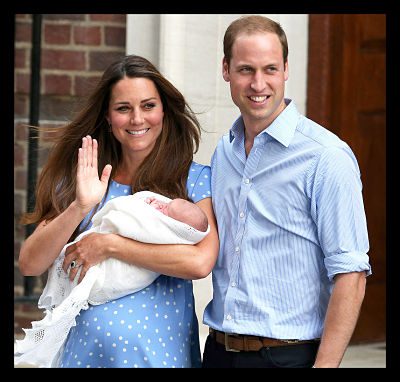
On the afternoon of July 22nd, the British commonwealth grew excited in anticipation for the arrival of the Royal baby, but what if baby George, the Prince of Cambridge, never arrived? What if complications had severed his chances of survival? Despite the joy the Royal baby received on his safe arrival, what would this baby and his mother would have done if they lived in a Third World country?

In the developing world, childbirth complications contribute to high maternal and infant mortality rates. The highest infant mortality rate comes from Afghanistan with more than 1 in every 10 newborns dying during childbirth. Around the world, nearly 3 million newborn infants die, with an additional 2.6 million born stillborn every year.

Yet, we must remember that such high figure does not take into account the mother in these events. An estimated 800 women die each day from pregnancy related causes. As it stands, 99% of these maternal deaths come from developing countries.

The greatest causes of maternal mortality include severe bleeding, infections, contaminated delivery rooms, high blood pressure, high risk abortions, and harmful diseases. Fortunately, these deaths are preventable. Unfortunately, there is much to be done in order to reduce these numbers.

Along with health issues, other challenges include “delays in seeking care, inability to act on medical advice, and failure of the health system to provide adequate or timely care” according to the WHO’s 2005 World Health Report.

However, there is a bright side; maternal deaths have been nearly halved since 1990. This improvement is due, in large part to an increase in social acceptance of midwives, adequate training of attendants, and proper implementation of health expert strategies. With a 2.4% annual rate of decline in maternal mortality, many experts agree that it proves the success of strategies and more resources must be committed.

Health experts point to success stories, such as in Rwanda. Despite genocide and destroyed infrastructure, maternal mortality has been reduced by more than half since 1990. Even more, women in Rwanda have doubled their access to skilled attendants, up to 52%. Many attribute this success to the government’s commitment to women’s health with proper planning.

But Rwanda is not the only country cutting their maternal mortality rate. Progress is being made around the world. However, more must be done in order to continue this progress. Although current strategies are proving successful, the developing and developed countries must continue committing themselves to the development of international health sectors.

– Michael Carney

Sources: AlertNet Climate, CIA World Factbook, UNFPA, WHO
Photo: US Weekly

August 1, 2013
https://borgenproject.org/wp-content/uploads/borgen-project-logo.svg 0 0 Borgen Project https://borgenproject.org/wp-content/uploads/borgen-project-logo.svg Borgen Project2013-08-01 04:36:382024-05-25 00:13:18What if the Royal Baby was Born in Afghanistan?
Women and Female Empowerment

Rape as a Weapon of War

War_Women_Rape
Dating as far back as the Japanese occupation of Nanking in 1937, rape as a weapon of war has been prevalent in conflicts throughout the 1990s and continues to be used today.

A common misconception is that rape is simply a by-product of war. Sexual violence is certainly occurring in every conflict around the world but its role has evolved from an unfortunate effect of war to a tactic used to humiliate and control entire populations.

The United Nations Security Council passed a resolution (UN Resolution 1820) in 2008 defining the use of sexual violence as a war tactic and calling for an end to impunity for those who perpetrate such acts. This resolution came too late for many, including the over 20,000 Muslim women and girls raped in Bosnia during the Bosnian War as well as the estimated 200,000 women and girls raped during the fight for Bangladeshi independence in 1971.

Sexual violence has become a common element of 21st century war. To be able to combat its prevalence, we must first understand the methods and reasoning behind its use.

Perpetrators utilize sexual violence in conflict situations for many different reasons. Rape can be used as a method of ethnic cleansing, as was seen in the Bosnian War. Serbian fighters raped Muslim women to produce Serbian offspring and thereby “cleanse” the population. During the Sudanese War, however, the Janjaweed militia typically used rape as a scare tactic to humiliate, intimidate, and punish the non-Muslim women and communities. Currently in Colombia rival groups are using rape and murder as part of a punitive code to strengthen control in specific regions.

Not only is rape considered the most invasive of war crimes, it has long-lasting consequences for entire communities and countries. Sexual violence during conflicts has contributed to the spread of HIV/AIDS and other sexually transmitted diseases in multiple regions. In addition, mass rape has produced a new generation of young adults that are growing up with only one parent or as orphans because their mother was killed during the conflict. This has long-lasting ramifications for countries that will only be seen in the coming decades as this generation reaches working and reproductive age.

It appears that the use of rape as a war strategy will continue to be employed in conflicts across the globe as long as the culture of impunity surrounding this crime persists. Although the United Nations made sexual violence an official war crime in 2008, the International Court of Justice has yet to find efficient means to indict and prosecute the many thousands of people guilty of this heinous crime.

– Sarah C. Morris 

Sources: BBC, UNICEF, United Nations
Photo: The Wip

July 31, 2013
https://borgenproject.org/wp-content/uploads/borgen-project-logo.svg 0 0 Borgen Project https://borgenproject.org/wp-content/uploads/borgen-project-logo.svg Borgen Project2013-07-31 05:07:562024-06-11 01:44:57Rape as a Weapon of War
Advocacy, Women and Female Empowerment

What is The Hunger Project?

Hunger_Project
The Hunger Project is an international nonprofit devoted to ending hunger sustainably by giving those in need the tools and power to ensure their own wellbeing and a healthy future for their children. The Hunger Project operates in 11 countries and is backed by Partner Countries in the developed world who fundraise and support developing country programs. The Hunger Project was established in 1977  in response to the new awareness raised about hunger by the Rome World Food Conference.

The Hunger Project was designed to be a ‘strategic’ organization that evolved in response to the changing battle against hunger. Three key concepts reinforce The Hunger Project’s fight to end poverty and hunger.

  1. Mobilizing people at the grassroots level to build self-reliance.
  2. Empowering women as key change agents.
  3. Forging partnerships with local government.

These elements support initiatives such as building community centers, creating a microfinance program, focusing on maternal and childhood nutrition, and battling HIV/AIDS.

Included in its key concepts is a focus on empowering women. The Hunger Project proudly espouses the belief that women effect positive and sustainable change. For instance, The Hunger Project’s branch in Australia leads numerous initiatives to provide women in villages in Africa, India, and Bangladesh with the ability to join together to successfully run businesses and become involved in local politics. As women develop leadership skills and develop a voice in the community, larger scale change becomes possible.

The Hunger Project not only leads anti-poverty and anti-hunger initiatives but also evaluates the results of these programs to provide involved organizations with useful data for better project implementation. The organization has a participatory monitoring and evaluation program and also hires external evaluators on occasion. The Hunger Project believes it is an integral part of fighting poverty and hunger to help communities assess their own programs to end hunger and evolve as necessary.

– Zoë Meroney 

Sources: The Hunger Project, Daily Life
Photo: The Wild

July 30, 2013
https://borgenproject.org/wp-content/uploads/borgen-project-logo.svg 0 0 Borgen Project https://borgenproject.org/wp-content/uploads/borgen-project-logo.svg Borgen Project2013-07-30 06:39:152024-06-05 01:53:34What is The Hunger Project?
Nonprofit Organizations and NGOs, Women and Female Empowerment

What is Dining for Women?

Dining_for_Women
That is what Dining for Women is an organization that hopes to end poverty and empower the women of the world simply by getting together once a month in each other’s homes. It is just as easy as baking a pie, literally.

In 2002 Marsha Wallace, a former nurse from Greenville, SC, saw an episode of Oprah where an Iraqi woman was interviewed about her experience as the daughter of Saddam Hussein’s personal pilot. The woman, Zainab Salbi, went on to start the Women for Women International organization with the goal of helping women on a global scale.

Marsha knew that she wanted to help women, but was not sure how she would go about doing this. The idea came to her suddenly after reading an article about hosting a potluck birthday dinner to raise money for charity. She said in an interview with Philanthropy journal, “I was meditating one day when the idea hit me like a thunderbolt. I had a birthday coming up and I decided to give this a try to raise money for Women to Women.”

The potluck dinner was a huge success and her friends wanted to continue the practice of getting together and helping people. After formally making Dining for Women in a 501(c)3, a non-profit organization, Marsha was ready to roll with her idea. There are now over 400 chapters throughout the world, including Canada, the United Kingdom and Germany as well as over 9,000 current active members. Once a month women from all walks of life in all parts of the globe get together with their chapter and bring fresh food to share with the group. The money they save from dining in as opposed to going out that night is then collected and sent to various good will groups who focus on the well-being and empowerment of women.

In the last 10 years DFW has raised an astounding $2.6 million for their supported causes and has helped to lift numerous women and their families out of the grip of poverty. With their donations Dining for Women has supported the launch of 60 female-led businesses, boosting the incomes and livelihoods of 300 women and about 1,500 children in Kenya, and sent 75 women in India to school for a literacy education with books and supplies. And that is just the beginning of it. Every year since 2007 members of the organization have taken part in trips to various places around the world to meet with the groups they have helped fund and see the impact they made in person.

What started out as a simple birthday dinner gathering has turned into a multi-national campaign to empower, educate, assist, and change women. Now women are flocking to join the organization and Marsha Wallace was even included in Women for Women International’s cookbook. Their mission is to provide women around the world with better lives by funding programs that promote health, education, and economic self-sufficiency for women and girls living in extreme poverty.

– Chelsea Evans 

Sources: Dining for Women, Philanthropy Journal
Photo: Dining for Women

July 30, 2013
https://borgenproject.org/wp-content/uploads/borgen-project-logo.svg 0 0 Borgen Project https://borgenproject.org/wp-content/uploads/borgen-project-logo.svg Borgen Project2013-07-30 06:33:502024-05-25 00:09:26What is Dining for Women?
USAID, Women and Female Empowerment

USAID Seeks to Empower Afghan Women

Education_Afghan_Women_USAID
Despite the progress Afghanistan has made in regard to women’s rights since the end of the Taliban regime in 2001, the position of Afghan women in society is deplorable. Afghan women have won the vote and the opportunity for jobs and education, but there is much work to be done. Afghanistan is still a male-dominated culture, one that is rampant with forced marriages, cruelty, and violence against Afghan women.

Recently, the United States Agency for International Development (USAID) launched the “Promote” program to further the position of Afghan women in society. With “Promote,” the U.S. will fund a $200 million program to empower women between the ages of 18 and 30 in Afghanistan. With expressed interest in assistance from Australia, Britain, Japan, and the European Union, the funding for this program could double. In addition to furthering women’s position in society, this program also seeks to engage in economic development in Afghanistan.

This five-year program, the largest of its kind to date, intends to help at least 75,000 women overcome the restraints on their true potential and attain economic and educational security. Rajiv Shah, head of USAID in Afghanistan, states that this program seeks to create 3,500 small businesses by providing women entrepreneurs with credit and microfinance to promote economic growth. Training will also be provided to women who want an active role in the economy so that women will seek out government and policymaking positions in higher numbers.

USAID’s Women in Government Internship Program over the last three years has provided training and placed more than 440 interns in Afghan government agencies. This program seeks to increase female representation in government to 30%. Currently less than 20% of government officials in Afghanistan are women.

If women are successful, Afghanistan will be successful, which is why Shah demonstrates that there must be progress on women’s role in Afghan society. If the withdrawal of U.S. forces after the Afghan presidential elections scheduled for 2014 results in the resurgence of the Taliban, women will continue to be undermined, and all developments in women’s rights issues may be lost. Shah urges that the opportunities for women to be successful must increase because their role in society is vital for poverty reduction efforts and economic development. It is now more crucial than ever to empower women, because after foreign troops withdraw from Afghanistan, there will likely be a decrease in foreign assistance.

– Rahul Shah

Sources: Khaama, Washington Post, Al Arabiya, USAID
Photo: Women of Vision

July 29, 2013
https://borgenproject.org/wp-content/uploads/borgen-project-logo.svg 0 0 Borgen Project https://borgenproject.org/wp-content/uploads/borgen-project-logo.svg Borgen Project2013-07-29 04:23:292017-11-30 10:45:19USAID Seeks to Empower Afghan Women
Health, Women and Female Empowerment

Sierra Leone Demands Maternal Health Improvements

maternal_health_sierra_leone
In Sierra Leone, a new initiative is encouraging local communities to demand a higher level of health care services, in order to reduce the country’s high maternal mortality rates. One in every 21 women in Sierra Leone is at risk of death due to childbirth, and the campaign aims at empowering communities to push healthcare higher on the political agenda, by providing evidence to local authorities that they require higher standards.

The initiative, Evidence for Action (E4A), works in Sierra Leone and five other sub-Saharan countries, and brings together experts from academic institutions, internationally recognized advocacy and accountability coalitions and civil society organizations. E4A acknowledges while progress is possible, reducing infant and maternal mortality requires the effort of everyone involved. The leader of the project, Dr. Mohamed Yilla, said “The issue of babies and maternal health should no longer just be a government issue; it should be of community interest. The community can bring about the sustainable health system and maintain it.”

As part of E4A, the MamaYe! campaign is an program that advocates for safer maternal clinics. The campaign provides information to individuals and communities so that they can make more well-informed decisions about supporting maternal healthcare and encourage government authorities and politicians to improve healthcare services. The project collects data from clinics across the country, and draws attention to those that fall short on utilities such as electricity, running water and blood supply.

Last year, the program distributed 5,000 score cards to communities, rating clinics from all over the country. Yilla notes that thanks to the information, people started to ask questions and demand more from their government. Since the election in November 2012, Sierra Leone’s health spending has increased from 7.5% to 10.5%. Regarding the increase in spending, Yilla said, “Attribution is always difficult, but this advocacy work showed we were way below the budget target and contributed to that increase.”

Looking forward, Sierra Leone has huge prospects, partly due to a thriving mining industry and iron ore production. With an increase in GDP, along with more awareness concerning the condition of maternal healthcare facilities, Yilla is hopeful that investment in health will see major progress over the next two years.

– Chloe Isacke

Sources: The Guardian, Evidence for Action
Photo: New Security Beat

July 29, 2013
https://borgenproject.org/wp-content/uploads/borgen-project-logo.svg 0 0 Borgen Project https://borgenproject.org/wp-content/uploads/borgen-project-logo.svg Borgen Project2013-07-29 04:19:412014-07-29 16:33:09Sierra Leone Demands Maternal Health Improvements
Education, United Nations, Women and Female Empowerment

What Malala Means to Women Worldwide

Malala_Ban_Ki_moon
In a piece on the Huffington Post website on July 8, United Nations Secretary-General Ban Ki-Moon highlighted the young Pakistani girl Malala Yousafzai as an example of the empowering effect of education.

Malala entered the public domain in 2009 when she was in a BBC documentary about life under the Taliban. Three years later, in October 2012, she was shot in the head by a member of the Taliban who boarded her school bus because of her fight for girls’ education. The story gained international recognition. Since then Malala has been named one of TIME magazine’s most influential people of 2013, and has continued to advocate for girls’ education. On July 12, Malala was joined by hundreds of students from more than 80 countries in a unique Youth Assembly where they demanded quality education for children across the globe.

Ban Ki-Moon contended that violent actions against Malala, her teachers, and her fellow students prove how frightened extremists are of empowering women. For every year of schooling she attends, a girl’s future earnings increase by 20%. Ban asserts that Malala and her colleagues are teaching the world the lesson that “education is the pathway to saving lives, building peace, and empowering young people.”

With this in mind the Secretary-General enacted the “Global Education First” Initiative, a program with the goal of getting all children in schools with an improved quality of education that prepares them to grow up to be global citizens. The 57 million children out of primary school deserve a proper education because education is a fundamental human right.

July 12 marks the United Nations’ Malala Day, where Malala addressed over 500 youth at the UN and celebrated her birthday. The Secretary-General recognized in his article for the Huffington Post the importance of the courageous actions of students like Malala, and how the education which they advocate for is crucial for development and growth in the global system.

– Martin Drake

Source: Huffington Post, BBC
Photo: Mid Day

July 28, 2013
https://borgenproject.org/wp-content/uploads/borgen-project-logo.svg 0 0 Borgen Project https://borgenproject.org/wp-content/uploads/borgen-project-logo.svg Borgen Project2013-07-28 04:00:122017-10-04 12:36:45What Malala Means to Women Worldwide
Page 77 of 82«‹7576777879›»

Get Smarter

  • Global Poverty 101
  • Global Poverty… The Good News
  • Global Poverty & U.S. Jobs
  • Global Poverty and National Security
  • Innovative Solutions to Poverty
  • Global Poverty & Aid FAQ’s
Search Search

Take Action

  • Call Congress
  • Email Congress
  • Donate
  • 30 Ways to Help
  • Volunteer Ops
  • Internships
  • Courses & Certificates
  • The Podcast
Borgen Project

“The Borgen Project is an incredible nonprofit organization that is addressing poverty and hunger and working towards ending them.”

-The Huffington Post

Inside The Borgen Project

  • Contact
  • About
  • Financials
  • President
  • Board of Directors
  • Board of Advisors

International Links

  • UK Email Parliament
  • UK Donate
  • Canada Email Parliament

Get Smarter

  • Global Poverty 101
  • Global Poverty… The Good News
  • Global Poverty & U.S. Jobs
  • Global Poverty and National Security
  • Innovative Solutions to Poverty
  • Global Poverty & Aid FAQ’s

Ways to Help

  • Call Congress
  • Email Congress
  • Donate
  • 30 Ways to Help
  • Volunteer Ops
  • Internships
  • Courses & Certificates
  • The Podcast
Scroll to top Scroll to top Scroll to top