• Link to X
  • Link to Facebook
  • Link to Instagram
  • Link to TikTok
  • Link to Youtube
  • About
    • About Us
      • President
      • Board of Directors
      • Board of Advisors
      • Financials
      • Our Methodology
      • Success Tracker
      • Contact
  • Act Now
    • 30 Ways to Help
      • Email Congress
      • Call Congress
      • Volunteer
      • Courses & Certificates
      • Be a Donor
    • Internships
      • In-Office Internships
      • Remote Internships
    • Legislation
      • Politics 101
  • The Blog
  • The Podcast
  • Magazine
  • Donate
  • Click to open the search input field Click to open the search input field Search
  • Menu Menu

Archive for category: Women and Female Empowerment

information and Stories about woman and female empowerment.

War and Violence, Women and Female Empowerment

Women in War

women-in-war_opt
Women in War is the Harvard Humanitarian Initiative’s groundbreaking interdisciplinary approach to addressing problems that females face in impoverished and conflict-ridden states. By conducting research in affected areas, the program strives to produce pragmatic community and policy-based solutions.

Although Women in War has worked in countries ranging from Sierra Leone to Sudan, it has concentrated the majority of its efforts into ending sexual assault and violence against women in the Democratic Republic of Congo. For decades, DRC has been embroiled in what has been referred to as the greatest multistate war in the African continent.

Despite its estimated worth of $24 trillion in natural resources (DRC holds up to a third of worldwide diamond reserves), DRC’s annual GDP per capita of $171 is shockingly low. Just as political instability and social unrest have undoubtedly contributed to its struggling economy, they too have factored into the prevalence of sexual assault–often by military personnel–against civilians.

While the roots of gender-based violence are manifold, Jocelyn Kelly, an HHI Research Coordinator, postulates that soldiers–who are often enlisted at a young age through coercion–may justify rape by dissociating their actions from themselves as individuals. It has been noted that the crude process of army initiation dehumanizes the soldiers and strips them of their former identities. Moreover, among soldiers, there exists the superstitious belief that rape may lead to victory on the battlefield.

The aftermath of sexual assault is equally complex. Many women have been raped in the confines of their own homes and in front of their loved ones. Naturally, rape may also result in unwanted pregnancies and/or damage to a woman’s reproductive organs, thereby adding tangible reminders on top of psychological wounds. Women in War has sought the skills and expertise of both gynecologists and counselors to give survivors a new lease–both inside and out–on life.

A helping hand has also been extended to the perpetrators. Researchers have been developing methods to reintegrate traumatized ex-soldiers into civilian society. By recognizing the humanity inherent in both the survivor and the offender, Women in War serves as a beacon of hope in times of strife.

– Melrose Huang

Sources: Harvard Humanitarian Initiative, Women Under Siege Project BBC The OTC Investor Global Security PBS
Photo: Ms. Magazine

July 27, 2013
https://borgenproject.org/wp-content/uploads/borgen-project-logo.svg 0 0 Borgen Project https://borgenproject.org/wp-content/uploads/borgen-project-logo.svg Borgen Project2013-07-27 10:00:502024-05-25 00:09:35Women in War
Women and Female Empowerment

10 Years of African Womens Rights Protocol


africa_opt
Despite less than ideal conditions for women in many African countries, the African continent does boast in international instrument to protect women’s rights. The Protocol to the African Charter on Human and Peoples’ Rights on the Rights of Women was passed ten years ago and  is commonly referred to as the Maputo Protocol.

The Maputo Protocol’s objective is to make it possible for women in Africa to participate equally in the political process, to obtain social and political equality, have control over their reproductive health, and put an end to misogynistic practices such as female genital mutilation. The protocol has been ratified by the forty-eight of the fifty-four member states of the African Union and has been in force since 2005.

Recently there has been an increased push from civil society organizations ensure that women actually enjoy the rights afforded to them by the protocol. These organizations have placed pressure on governments to sign and enforce the protocol guaranteeing their citizens the rights contained within the document. There are still 18 countries that have yet to ratify the Protocol.

This is, however, a hard battle to win. In order for African women to enjoy their freedoms, there are steep societal and cultural barriers and hurdles which must be overcome. The key to success is working to make sure the protocol acts as a tool for empowerment of women. In order to accomplish this, civil society organizations need to implement strategies ranging from national campaigns to grassroots approaches in order to mobilize support. Additionally, agents of the law need to work to enforce the protocol and hold violators responsible for their actions.

The Maputo Protocol is revolutionary and incredibly important for women in Africa. It exists to protect the human rights of women, a topic often overlooked by local governments in Africa. The protocol establishes vital rights in regards to women’s bodies, marital property, and land and labor. While the Maputo Protocol represents significant progress in the field of women’s rights and it should be celebrated, there is much more work to be done in the area of implementation.

– Caitlin Zusy
Sources: Reuters, No Peace Without Justice
Sources: IBI Times

July 27, 2013
https://borgenproject.org/wp-content/uploads/borgen-project-logo.svg 0 0 Borgen Project https://borgenproject.org/wp-content/uploads/borgen-project-logo.svg Borgen Project2013-07-27 05:46:062024-06-04 02:43:5610 Years of African Womens Rights Protocol
Human Rights, Women and Female Empowerment

What is FEMEN?

Femen_Women
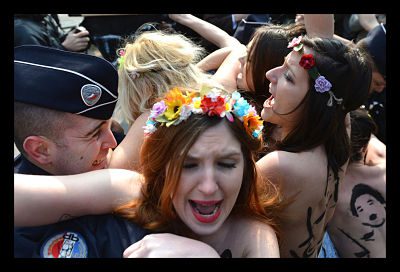
You have probably heard about the women who have been protesting, bare-breasted, all over Europe. They are FEMEN.

Started in Ukraine, the FEMEN movement describes itself as “the scandal famous organization of topless women activists, who defend with their breast sexual and social equality in the world.” With “Sextremism” as their motto, FEMEN activists clearly display their struggle: “Be FEMEN – means to mobilize every cell of your body on [sic] a relentless struggle against centuries of slavery of women!” Radical in their beliefs and actions, FEMEN activists depict themselves as “morally and physically fit soldiers, who every day make civil actions of the high [sic] degree of difficulty and provocativity [sic].”

Radical words require radical actions. Since 2010, FEMEN have become increasingly visible on the international political scene because of their turbulent interventions throughout Europe. FEMEN have been protesting intensively against sexism, homophobia, prostitution and religion. Using their bodies as their best weapons, FEMEN activists fight for women’s rights against dictates imposed by dictators, the church and the sex industry. “My Body, My Manifesto,” “Sextremism – FEMEN is the death of Patriarchy,” “I am Free” are some of the messages you can read on FEMEN activists’ breasts. Their protests incorporate political messages displayed on their bodies, enacting shocking scenes which gather attention and mobilization of greater numbers of people.

For instance, on July 3, three FEMEN activists demonstrated in front of the Elysee Palace, in Paris, in order to ask the French President to show solidarity with their imprisoned Tunisian fellow Amina. They were wearing barbed wired around their breasts and faces, lacerating their flesh as the police arrested them.

Banned from Ukraine after she denounced the arrest and subsequent imprisonment of the Pussy Riot – a Russian female punk group that had organized a punk prayer at Moscow’s Cathedral of Christ the Savior- Inna Shevchenko, one of the leading activists of the group, has been granted “political refugee” status in France.

The FEMEN ‘headquarters’ are now based in Paris, France. Recently, the creation of a new postage stamp in effigy of Marianne triggered political turmoil in France. Indeed, the Marianne depicted on the stamp is wearing a crown of flowers, symbol of the FEMEN activists. Inna Shevchenko provocatively commented “FEMEN is on [sic] French stamp. Now all homophobes, extremists, fascists will have to lick my ass when they want to send a letter.” Protest against the new French stamp has arisen, mostly because of the many Islamophobic comments of FEMEN activists.

FEMEN’s extreme actions and statements have been criticized by other feminists. Journalist Mona Chollet denounced the use of stereotyped young, skinny and beautiful women who display their bodies naked to fight for human rights, at the detriment of all those who do not fight naked and do not abide by the classic criteria of beauty and youth.

– Lauren Yeh

Sources: Le Monde, FEMEN, L’Express
Photo: The Atlantic

July 27, 2013
https://borgenproject.org/wp-content/uploads/borgen-project-logo.svg 0 0 Borgen Project https://borgenproject.org/wp-content/uploads/borgen-project-logo.svg Borgen Project2013-07-27 05:12:572017-02-15 10:53:17What is FEMEN?
Global Poverty, Women and Female Empowerment

Why “Women’s Issues” Are Actually Human Issues

Why “Women’s Issues” Are Actually Human Issues
Many political campaigns, government agencies, and non-profit organizations categorize a series of topics as “women’s issues.” These issues generally address subjects such as birth control, reproductive rights, and women’s access to education and equal pay. Yet, these issues affect more than just women—they affect everyone. Women’s issues are actually human issues.

In many parts of the world, women are viewed as inferior to men. While boys are encouraged to receive an education, girls are often removed from school to take care of the home, losing out on an education that could increase a woman’s pay and her household’s earning potential in the future. At a microscopic level, a reduced household income increases the chance of a single-family living in poverty. However, when entire cultures neglect the role of women as productive members of society, not only do individual households suffer, but entire economies lag, negatively affecting everyone.

Even in societies where women are allowed to work, women are undervalued for their skills and labor. They are concentrated in “insecure jobs in the informal sector with low income and few rights.” According to the Global Poverty Project, “women work two-thirds of the world’s working hours, produce half of the world’s food, but earn only 10% of the world’s income and own less than one percent of the world’s property. On average, women earn half of what men earn.” This pay reduction, while better than a complete ban on allowing women to work, also contributes to poverty. When women earn less, their family earns less, increasing a household’s chance of living in poverty.

Because many areas of the world limit a woman’s access to education and job opportunities, women are often viewed as inferior to men and are left powerless in their societies. Throughout the globe, “three million women die each year because of gender-based violence, and four million girls and women a year are sold into prostitution. One in five women is a victim of rape or attempted rape in her lifetime.”

Societies are better off economically and socially when women are valued, are allowed to receive an education, are presented with equal work opportunities, and are protected from abuse. In areas where women are educated, fertility rates are lower, helping to reduce overpopulation and contributing to a higher GDP per capita. Children are also better cared for and healthier when their mothers are educated. And as stated before, women with access to education and equal work opportunities are able to earn higher wages, reducing the chance of their family living in poverty and improving overall economic production.

“Women’s issues” are truly human issues because they affect everyone. The role that women play in society not only affects sisters, mothers, and daughters, but also their brothers, fathers, sons, and husbands. By enabling women with the tools they need to be safe, healthy, and productive members of society, the entire world will be a better place.

– Jordan Kline

Sources: Global Poverty Project, UN Women
Photo: Current Gender Issues

July 23, 2013
https://borgenproject.org/wp-content/uploads/borgen-project-logo.svg 0 0 Borgen Project https://borgenproject.org/wp-content/uploads/borgen-project-logo.svg Borgen Project2013-07-23 13:24:522024-06-11 01:39:12Why “Women’s Issues” Are Actually Human Issues
Human Rights, Women and Female Empowerment

5 Ways to Empower Women

5 Ways to Empower Women
Though women produce roughly half of the world’s food supply and are often held responsible for their family’s well being, they are treated as second-class citizens in many places around the world. According to the United Nations, women’s empowerment is important not only from a human rights standpoint but also because it is “a pathway to achieving the Millennium Development Goals and sustainable development.” Listed below are five ways to empower women that will simultaneously bolster the fight against global poverty.

1. Give a Microloan

Organizations such as Kiva allow people to lend small amounts of money to individuals who cannot access traditional banking systems. When given microloans, women can start their own small businesses and better support themselves and their families. Microloans also help women to gain financial independence, which often allows them to escape domestic violence.

2. Help Girls Empower Each Other

Girl Up, a United Nations organization, allows American girls to connect with their peers in developing nations. Girl Up ensures that girls across the world can inspire each other and learn to stand up for the rights and opportunities to which they are entitled.

3. End Gender-Based Violence

Roughly 70% of females experience physical or sexual violence during their lifetime, and many more are subjected to other forms of abuse. Social mobilization is imperative in the battle against gender-based violence because it ensures that educational, psychological, and legal resources are offered to the many women who face violence. Organizations such as Say NO: UNiTE To End Violence Against Women provides funding for advocacy programs, volunteer opportunities at shelters, and protective government legislation in order to eliminate gender-based violence.

4. Grant Equal Educational Opportunities

Two-thirds of children denied an education across the world are girls. Left uneducated, girls are much more likely to live in poverty because of their low-earning potential and high fertility rate. Girls who attain higher levels of education have fewer children, earn higher salaries, and encourage education within their own households, gradually reducing poverty over time. The UN’s Global Fund for Women works to bridge the educational gap by investing in organizations that provide women with valuable skills and knowledge.

5. Help Women Recover from Conflicts

Women are one of the most vulnerable populations in times of conflict, subject to higher rates of violence, rape, and poverty. Advocating for food assistance following violent conflict helps to ensure that women receive food assistance after they have been crippled by the difficult side effects of war. This assistance helps them to restart their lives, giving them the tools and training they need to rebuild their communities.

– Katie Bandera

Sources: WFP, Oprah, Huffington Post
Photo: Flickr

July 23, 2013
https://borgenproject.org/wp-content/uploads/borgen-project-logo.svg 0 0 Borgen Project https://borgenproject.org/wp-content/uploads/borgen-project-logo.svg Borgen Project2013-07-23 09:26:282024-05-25 00:03:385 Ways to Empower Women
Education, Women and Female Empowerment

Girl Rising Spotlights Education

girl_rising_education
“I feel as though I have power.” These are the powerful words of one of nine girls whose stories are documented in the critically acclaimed film “Girl Rising.” Released this year and featured on CNN recently, the documentary follows the struggles of nine girls in nine countries all striving to achieve the same goal: an education. The obstacles they faced were daunting. From forced marriage to war, from bondage to orphanhood, these girls were able to climb out of the depths of despair with a perseverance that has already inspired millions.

The film’s Academy Award nominated director, Richard Robbins, describes his film project’s founding goals as, “Change minds. Change lives. Change policy.” His vision has since led to the 10X10 organization, a campaign that strives to educate girls around the world. Centered around the film, 10X10 has spread its roots through partnerships with companies like Intel that run programs to educate the world’s women, and through networks like CNN that promote women’s education via featured programs and documentaries.

Among the inspiring stories told in the film are those of Sokha and Azmera. Sokha, an orphan from Cambodia, struggled for most of her life to find enough food to eat. And Azmera, one of two children in her Ethiopian family, was nearly married off at the young age of 13. But for each girl a guiding light,  a “series of miracles” in Sokha’s case, and an incredibly supportive brother in Azmera’s case, helped them get to school. Sokha and Azmera’s narratives are shared by those of their counterparts in the film originating from Egypt, India, Nepal, Peru, Afghanistan, Haiti, and Sierra Leone.

These girls have found fans in some of the biggest names in Hollywood. Meryl Streep, Anne Hathaway, Selena Gomez, Kerry Washington, Salma Hayak, Cate Blanchett, Frieda Pinto, Liam Neeson, Priyanka Chopra, Chloe Moretz, and Alicia Keys have all joined the campaign and are featured in the film.  In Meryl Streep’s own words, “If to see it is to know it, this film delivers hope; reasonable, measurable, tangible hope that the world can be healed and helped to a better future.”

– Lina Saud

Sources: 10 By 10 Act, Girl Rising, CNN
Photo: WWeek

July 22, 2013
https://borgenproject.org/wp-content/uploads/borgen-project-logo.svg 0 0 Borgen Project https://borgenproject.org/wp-content/uploads/borgen-project-logo.svg Borgen Project2013-07-22 11:54:432017-03-20 13:03:37Girl Rising Spotlights Education
Human Rights, Women and Female Empowerment

Widows Rights Limited in Cameroon

Widows Rights Limited in Cameroon

Widows’ rights have been an issue for centuries, but, with the advent of the HIV/AIDS epidemic, the cause for concern has grown exponentially.

In Cameroon, when a woman’s husband dies, all of his belongings go directly to his surviving family regardless, of whether he had children. This is because women and children are regarded as property and therefore cannot inherit it, this practice leaves many women struggling to raise children after having been stripped of assets that they feel are rightfully theirs. Furthermore, many are forced to take part in mourning rituals that can last years.

One woman, who is now an advocate for the program, states, “I would get up in the morning and sit with those who came to mourn with me. I could not go out, I could not attend church. It was like you were not your own person.” Joseph Nij, a retired police officer, also told of the hardships he saw some widows face. “They had ­widows isolated and barefoot,” he said. “Some of them were told not to wear clothes, and could only eat from a separate dish.”

Another woman was forced to urinate in front of a large crowd to prove she had no part in her husband’s death. Other injustices include forcing the widow to have sexual relations with her male in-laws, making her lie next to her husband’s corpse for up to three days, forcing her to remarry or prohibiting her from marrying again, and required displays of public nudity.

The rationale for such behavior is almost as shocking as the abuse itself. A report by Pingpoh Margaret Hongwe from the Cameroon Association of University Women (CAMAUW) reads, “Hardly is any death considered natural. Most deaths are attributed to witchcraft and the power of witchcraft is very often attributed to women. When a man dies, society quickly accuses the wife. The ill-treatment of the widow is considered a punishment, a test of fidelity and a cleansing exercise.”

In Cameroon, one young student is looking to turn things around. Sundze Mamah Natari, known as “Mallam,” is the president of the Muslim Students’ Association of Bamenda (MUSAB), and is working with the fons, or kings, of different regions within the country. He believes that because some of the younger fons have been university-educated, they may be able to approach this issue with an open mind. Noting that change will not happen overnight, Mallam adds, “Some of these traditions have lasted more than 500 years. This project is very sensitive.”

Fortunately, some are starting to pay attention to the issue. This year on June 23rd marked the first International Widows’ Day, which was started by the United Nations to raise awareness on the rights of widows around the world.

– Samantha Mauney

Sources: Mail & Guardian, Widows’ Rights, All Africa
Photo: Flickr

July 21, 2013
https://borgenproject.org/wp-content/uploads/borgen-project-logo.svg 0 0 Borgen Project https://borgenproject.org/wp-content/uploads/borgen-project-logo.svg Borgen Project2013-07-21 09:22:182024-05-24 23:42:26Widows Rights Limited in Cameroon
Extreme Poverty, Family Planning and Contraception, Global Poverty, Health, Women and Female Empowerment

Worst Countries in Which to Give Birth

worst-countries-to-give-birth-in-borgen-project-rural-poverty_opt
Many of us spent some time in May being thankful for our mothers. Something else that we may not think to be thankful for is the healthy and sanitary conditions mothers were able to give birth in. For women living in developing countries, this is a huge concern for pregnant women. One country, however, has proven to be the worst place to give birth: Chad.

This statistic was identified by the organization, Save the Children, in their annual Mother’s Index. The group uses an index that includes a woman’s risk of death during childbirth or pregnancy. Chad was deemed the worst place for a mother to give birth because 1 in 15 mothers are at high risk of dying while pregnant or in child labor.

A contributing factor to these startling statistics is that women get married and become pregnant at a young age. 50% of girls are mothers by the age of eighteen. These girls are at risk because their bodies are not fully developed enough to safely experience pregnancy and childbirth. Malnutrition is also a concern for mothers in Chad. High levels of poverty make healthy diets unattainable for many mothers.

The second worst country for women to give birth in is Somalia. This country is the highest ranking in not providing proper care during pregnancy, with 74% of women not receiving adequate care. Somalia also is barely behind Chad in terms of the risk of death during pregnancy and childbirth. In Somalia, one in sixteen women are at risk. The newborn child is also at danger when it is born in Somalia. About eighteen newborns die per 1,000 live births.

Other countries that are ranked in worst places to have a child are Niger, Sierra Leone, Liberia, Guinea-Bissau, Central African Republic, Mali, Nigeria and Guinea. In order to improve childbirth conditions in these developing countries, it is necessary to invest in health systems and the training of health employees, midwives and other who may assist in the birth process. With these improvements in healthcare, more women will survive and be able to celebrate Mother’s Day with their children.

– Mary Penn

Source: Devex, Save the Children
Photo: Global Giving

July 19, 2013
https://borgenproject.org/wp-content/uploads/borgen-project-logo.svg 0 0 Borgen Project https://borgenproject.org/wp-content/uploads/borgen-project-logo.svg Borgen Project2013-07-19 05:00:012024-12-13 17:49:20Worst Countries in Which to Give Birth
Global Poverty, Women and Female Empowerment

Single Mothers and Poverty in Latvia

Latvia is a country with one of the widest income gaps in the European Union. This gap was expanded by the global economic crisis, which caused income levels in the country to decline by 19%. The IMF confirms that the economic recession very severely damaged the economy of Latvia. According to the Fund, “the richest 20 percent of the population (in Latvia) earn seven times more than the bottom 20 percent.” The IMF warns that these adverse conditions put Latvians at a higher risk of poverty.

The Baltic Center for Investigative Journalism notes that the country does not provide adequate government-funded support for its poor. In fact, the small Baltic nation spends less on social welfare programs than any other European Union member state. For example, when compared to her northern neighbor Estonia, which spends 40% more per capita on social protection programs annually for the poor than Latvia, the lack of poverty-reduction programs from the Latvian government is quite conspicuous.

One of the most “at risk” groups in post-recession Latvia are single mothers. The cost of living has increased over the last few years, due in a large part to changes in tax policies which caused the price of heat and water utilities to rise significantly. The Baltic Center’s report highlights the struggles of a single mother living in Saldus, a town in western Latvia, trying to make ends meet in a small apartment with her two young children.  The mother can’t afford to buy or run a refrigerator, so the family lives off of a meager subsistence of room temperature dry foods and water. The tiny apartment also does not have a shower, so the children are forced to wash in the gym locker rooms at the primary school, a school where they attend classes with no supplies because their mother doesn’t have the money to buy them.

The plight of single mothers in Latvia has prompted many of them to leave the country. The income provided from a minimum wage job in Latvia is simply not enough to support a woman with one or more children, even in the smallest of living spaces. The mother in the Baltic Center article earns only three euros a day and has been forced to ask her friends for donations to keep her family afloat. Three euros a day is hardly enough money for a single, childless woman to survive in a developed country, let alone a mother responsible for a family.

As the Latvian government comes out of the recession, politicians should propose welfare programs for single mothers living below the poverty line. Failure to confront this critical social issue will only result in increased emigration and a more extreme wealth gap.

– Josh Forgét

Sources: Baltica, The Washington Post
Photo: Baltica

July 18, 2013
https://borgenproject.org/wp-content/uploads/borgen-project-logo.svg 0 0 Borgen Project https://borgenproject.org/wp-content/uploads/borgen-project-logo.svg Borgen Project2013-07-18 05:00:042024-06-04 02:43:56Single Mothers and Poverty in Latvia
Activism, Education, United Nations, Women and Female Empowerment

Malala Proves Education is Key to Empowerment

malala_opt-1
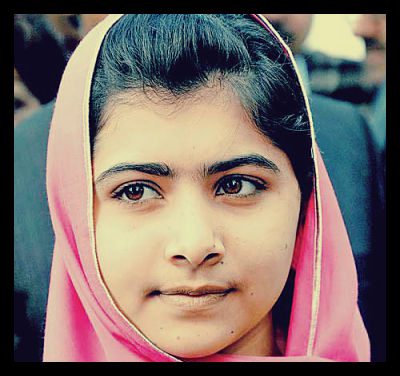
Malala Yousafzai is a young education rights campaigner from Pakistan. Malala will soon be celebrating her 16th birthday, a miracle after she was shot by extremists for her outspoken beliefs on education. Malala will celebrate her birthday by traveling to the United Nations where students from more than 80 countries will join her.

Malala and the other young activists will be assembled to call for global education for everyone in the world. She and the other young diplomats believe that education is a right for all – one of the Millennium Development Goals, and a vital component of the path to global citizenship. This belief is well founded in the fact that universal compulsory education represents a future that the world wants. Malala was the first person to sign on to a new worldwide petition calling for urgent action to ensure the right of every child to safely attend school. The petition serves as an initial step in focusing the UN agenda on education.

UN Secretary General Ban Ki-moon supports Malala’s mission to bring education to the world. He states that education is an essential step in a world without poverty, violence, discrimination, and disease. He also recognizes that in order to achieve these objectives, the global society needs to continue pushing forward. The secretary general recognizes that we, as a global society, have made progress on this issue, however, there is much more work to be done. Ban expresses that no child or woman should have to consider going to school as an act of bravery.

Ban states that too many girls around the world are subjected to extremist threats for trying to obtain an education. The benefits of educating women in developing countries have been proven time and time again. Ban explains that when women and girls are educated, a society develops at a more rapid pace than without their education. Additionally, education increases future earnings for women, allowing them to provide their families with additional resources, over time, lifting them out of poverty.

If education is key to empowerment as the path to economic stability and development, why is it so widely contested in many developing countries? The answer lies in fear. If we as a global community continue to fear education for all, we will fail to grow as a global economy. More steps must be taken to ensure each child has access to education.

-Caitlin Zusy
Source: Huffington Post, UN News Center
Photo: Stanford Bookhaven

July 15, 2013
https://borgenproject.org/wp-content/uploads/borgen-project-logo.svg 0 0 Borgen Project https://borgenproject.org/wp-content/uploads/borgen-project-logo.svg Borgen Project2013-07-15 15:21:182024-06-11 01:39:24Malala Proves Education is Key to Empowerment
Page 78 of 82«‹7677787980›»

Get Smarter

  • Global Poverty 101
  • Global Poverty… The Good News
  • Global Poverty & U.S. Jobs
  • Global Poverty and National Security
  • Innovative Solutions to Poverty
  • Global Poverty & Aid FAQ’s
Search Search

Take Action

  • Call Congress
  • Email Congress
  • Donate
  • 30 Ways to Help
  • Volunteer Ops
  • Internships
  • Courses & Certificates
  • The Podcast
Borgen Project

“The Borgen Project is an incredible nonprofit organization that is addressing poverty and hunger and working towards ending them.”

-The Huffington Post

Inside The Borgen Project

  • Contact
  • About
  • Financials
  • President
  • Board of Directors
  • Board of Advisors

International Links

  • UK Email Parliament
  • UK Donate
  • Canada Email Parliament

Get Smarter

  • Global Poverty 101
  • Global Poverty… The Good News
  • Global Poverty & U.S. Jobs
  • Global Poverty and National Security
  • Innovative Solutions to Poverty
  • Global Poverty & Aid FAQ’s

Ways to Help

  • Call Congress
  • Email Congress
  • Donate
  • 30 Ways to Help
  • Volunteer Ops
  • Internships
  • Courses & Certificates
  • The Podcast
Scroll to top Scroll to top Scroll to top