• Link to X
  • Link to Facebook
  • Link to Instagram
  • Link to TikTok
  • Link to Youtube
  • About
    • About Us
      • President
      • Board of Directors
      • Board of Advisors
      • Financials
      • Our Methodology
      • Success Tracker
      • Contact
  • Act Now
    • 30 Ways to Help
      • Email Congress
      • Call Congress
      • Volunteer
      • Courses & Certificates
      • Be a Donor
    • Internships
      • In-Office Internships
      • Remote Internships
    • Legislation
      • Politics 101
  • The Blog
  • The Podcast
  • Magazine
  • Donate
  • Click to open the search input field Click to open the search input field Search
  • Menu Menu

Archive for category: Water

Global Poverty, USAID, Water

8 Facts About Water Quality in Morocco

8 Facts About Water Supply in MoroccoIn Morocco, water supply and quality can be the deciding factor in the survival of a community. Today, 83 percent of Moroccans have access to improved drinking water, and 72 percent have access to improved sanitation. However, in a steadily growing population, the percentage of Moroccans lacking such access are faced with many challenges. Here are eight facts about water quality in Morocco.

8 Facts About Water Quality in Morocco

  1. In just half a century, Morocco’s population has more than tripled from 10 million to 32 million. Mass migrations have brought more than half the population to cities, giving rise to “tin cities,” or slums. These communities are located on the outskirts of urban areas, where access to clean water, electricity and sanitation services does not exist.
  2. The one-third of Moroccans without access to proper sanitation services are at high risk of waterborne diseases such as gastrointestinal infections, malaria and typhoid.
  3. Agriculture is responsible for 19 percent of Morocco’s GDP, but only 15 percent of agricultural land has access to irrigation. Due to a lack of sanitation services and inadequate wastewater treatment, the already scarce water resources for irrigation are often contaminated.
  4. Due to climate change, rainfall in Morocco is predicted to decline by as much as 50 percent by the year 2050, increasing the risk of droughts.
  5. Between 2004 and 2011, Morocco’s own Cities Without Slums urban development campaign created 100,000 new housing units in different parts of the country, providing 1.5 million people with access to water, power and sanitation.
  6. In 2016, USAID provided 336 Moroccan families with information on the best sanitation and hygiene practices. It also rehabilitated the retaining walls of a community’s water reservoir to prevent contamination.
  7. The same year, Moroccan farmers received irrigation advice for their crops from USAID through an SMS service, helping the country’s agrarian society achieve the greatest potential from limited resources.
  8. Also in 2016, the U.N. Food and Agriculture Organization teamed up with USAID to create a regional drought monitoring system that serves to maximize early warnings for droughts in North Africa and the Middle East.

While steps are being made toward a promising future, efforts of local and foreign aid to improve water quality in Morocco and strengthen resources must gain momentum in order to counter the effects of a growing population and a warming world.

– Sophie Nunnally

Photo: Flickr

June 27, 2017
https://borgenproject.org/wp-content/uploads/borgen-project-logo.svg 0 0 Borgen Project https://borgenproject.org/wp-content/uploads/borgen-project-logo.svg Borgen Project2017-06-27 07:30:242024-12-13 17:58:128 Facts About Water Quality in Morocco
Global Poverty, Water

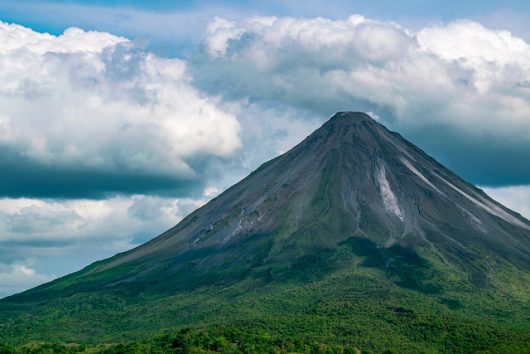
Efforts to Improve Water Quality in Costa Rica


Only four percent of Costa Rica’s water has been treated so far in 2017, and many of its residents lack access to sanitation areas. However, efforts are being made to enhance the country’s wastewater and sewerage systems. Past projects focused more on water supply than on sanitation. The following organizations and initiatives are working to improve water quality in Costa Rica.

6 Efforts to Improve Water Quality in Costa Rica

  1. The Development Bank of Latin America predicts that the U.S. will spend $33 billion on water sanitation and $80 billion on sewage infrastructure between 2010 and 2030. While the monetary investments are large ones, they are necessary in order to increase the country’s water sanitation over the next decade. With this level of funding, Costa Rica could benefit from a 50 percent improvement in its water quality.
  2. The World Bank continues investments in wastewater treatment for countries such as Costa Rica. By providing much-needed guidance and promoting integrated approaches to pollution control, the World Bank could significantly improve the country’s water quality. Costa Rica established its first national policy on sanitary wastewater this year, along with a plan to spend $520 million in infrastructure and provide environmental and public health services.
  3. AyA (Acueductos y Alcantarillados), Costa Rica’s public water and sewerage utility, is taking action to fulfill the PNSAR’s (Política Nacional en Saneamiento de las Aguas Residuales’) established goals, one of which is the U.S.’s $345 million environmental improvement program for San José, Costa Rica’s capital city. The program was launched in 2015, and San José’s sewage network is already expanding. PNSAR will focus on building water treatment institutions, procedures for wastewater management and financial sustainability.
  4. Los Tajos is a planned wastewater treatment plant designed by ACCIONA Agua and AyA intended to alleviate pollution in the country’s Tiribí, María Aguilar and Torres rivers. It will serve over a million people, 65 percent of San José’s population. Phase one of the project involves rehabilitating and extending the sewerage network over 360 kilometers, and phase two focuses on cleaning the basin from the Tárcoles River and reducing pollution in San José’s aquifers. It will be the country’s largest wastewater treatment plant when completed.
  5. The Costa Rica-U.S. Foundation, along with various other institutions, undertook a project that would help several aqueducts in the country’s Central Pacific region to function through solar energy. With the panels expected to save residents up to 50 percent in electrical costs, the leftover funding could provide means to increase water quality in Costa Rica. Virginia Reyes, the project’s coordinator, says water in dry areas is necessary for attracting tourists and commercial activities.
  6. In October 2015, the Latin American Water Funds Partnership launched Agua Tica, Costa Rica’s first water fund specifically designed to benefit the country’s millions of residents whose water supply comes from the polluted rivers of the Río Grande de Tárcoles. Agua Tica will invest in regenerating soils, restoring degraded areas and other strategies to improve water quality in Costa Rica. Edgar Gutierrez, the Minister of Environment and Energy, calls the water fund a “sign” of how Costa Rica’s citizens can work together in ensuring their resources.

Much of Costa Rica’s water supply is in need of sanitation, but notable efforts are being made. Time and money will determine the quality of improvements, but organizations and constituents will continue to invest in bettering water quality in Costa Rica. If the efforts prove successful, all of Costa Rica’s residents may gain access to clean, healthy water.

– Rhondjé Singh Tanwar

Photo: Flickr

June 27, 2017
https://borgenproject.org/wp-content/uploads/borgen-project-logo.svg 0 0 Borgen Project https://borgenproject.org/wp-content/uploads/borgen-project-logo.svg Borgen Project2017-06-27 01:30:262024-05-28 00:02:20Efforts to Improve Water Quality in Costa Rica
Global Poverty, Water

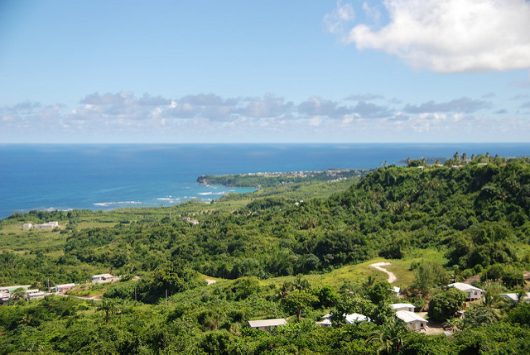
Infrastructure to Maintain Water Quality in Barbados


Barbados sits near the end of the Lesser Antilles arc of the Caribbean. It is surrounded by the Atlantic Ocean, the country’s water source, which supplied the public via ponds, springs and wells in Barbados’ early days. Methods to provide water to the public developed from hauling well water up with buckets to steam-driven pumps to the first electric pump in 1944.

Water quality in Barbados is maintained by its two wastewater treatment plants: the Bridgetown Sewage Treatment System, commissioned in 1982 and the South Coast Sewage Treatment System, commissioned in 2003.

A brackish water reverse osmosis desalination plant in Spring Garden, Saint Michael also contributes to water quality in Barbados. It supplies potable water to 44,000 people.

Barbados now has a cultivated irrigation system. The Golden Ridge Reservoir, the Castle Grant Reservoir and the Spring System provide water to parishes including St. Andrew, St. John, St. Joseph and St. Thomas.

According to the Barbados Water Authority (BWA), these very parishes experience long-term reduced water supply.

In 2015 the Caribbean shifted the focus of its strategies and programs from storms and floods to droughts. Climate change and El Nino increased the severity and frequency of drought conditions in the Caribbean. As a result, Barbados is one of the top 10 water-stressed countries.

The drought caused the Barbadian cost of living to rise, increasing the number of kitchen gardens and water demands from local water systems. Agriculture is Barbados’ largest water user, and there are about 120 privately owned wells to contend with this heavy usage.

Consequently, the functionality of water in Barbadian homes changed. In early 2016, the BWA implemented a three-month water ban. The ban prohibits filling and supplying tanks, swimming pools, baths and ponds as well as washing roadways, pavements, paths, garages, out rooms and vehicles. It requires Barbadian domestic tanks be connected to their water supply and sewerage system.

In 2016 the BWA established long-term water management solutions to ameliorate water scarcity. The first goal is the installation of eight water tankers to provide water for residents of St. Joseph, St. Andrew and St. John. The second is rehabilitating a well in St. George to provide an additional 500,000 gallons of water to the Golden Ridge and Castle Grant systems. The third is completing the pumping station at the Lazaretto, St. Michael, pushing desalinated water into the St. Peter’s system for St. Peter and St. Lucy.

The final goal is the commencement of the St. Philip Water Augmentation Project. After conducting hydrogeological investigations in the St. Philip aquifer and constructing new wells, improved water quality in Barbados will be a reality for the people of St. Philip.

– Tiffany Santos

Photo: Flickr

June 26, 2017
https://borgenproject.org/wp-content/uploads/borgen-project-logo.svg 0 0 Borgen Project https://borgenproject.org/wp-content/uploads/borgen-project-logo.svg Borgen Project2017-06-26 07:30:222024-05-28 00:02:25Infrastructure to Maintain Water Quality in Barbados
Global Poverty, Water

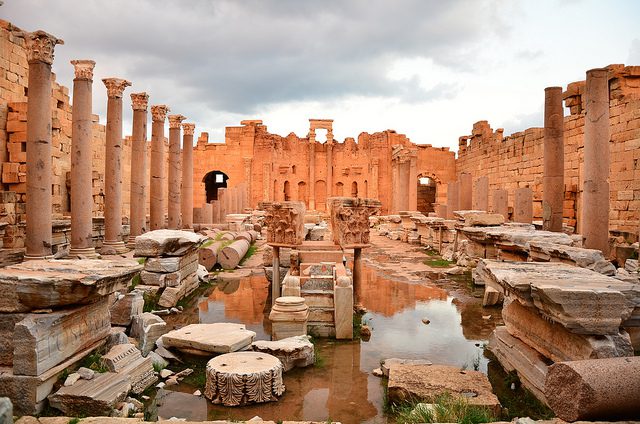
Water Quality in Libya: A Country’s Most Precious Resource


As a primarily desert country, Libya is a place where clean water is one of the most valuable commodities, used for agricultural production and human consumption. Increased levels of pollution from oil drilling and the salt water contamination of natural aquifers, however, have strained the water quality in Libya and made an already scarce water supply increasingly difficult to attain.

Rising sea levels and increased oil drilling have particularly plagued Libya and exposed its already limited and crucial water supply to pollutants and contamination.

Most of Libya’s water exists in naturally formed aquifers located underneath the country’s vast deserts. The only geographic area to receive more than 100 millimeters of rainfall a year is the coastal region, which accounts for less than 5 percent of Libya’s land area. Because of this, water purity is an increasingly crucial issue.

Since the 1950s, the sea level in Libya has advanced approximately one to two kilometers inland due to global warming and rising ocean levels. The slow move inward has caused a dramatic increase in the salinity of groundwater found in natural aquifers, from 150 parts per million in 1950 to 1,000 parts per million in 1990, according to Rajab M El-Asswad, a professor at Al-Fateh University Tripoli. As a direct consequence, the amount of water available and the water quality in Libya is becoming increasingly stretched.

In addition to limiting the amount of water that can be accessed, the increased salinity of seawater has made the overall process of obtaining water in Libya more expensive due to the need for desalination.

As aquifer water salinity and the need for water increases, the Libyan government must expand its desalinization processes. Unfortunately, desalinization is expensive and may require the diverting of funds necessary to help a nation develop.

Coinciding with the water pollution seen from natural causes like rising sea levels, man-made activities like oil drilling also creates pollution. The increase in standard drilling procedures and techniques such as fracking have exposed the vast natural aquifers to contaminants and chemicals, another negative effect on the water quality in Libya.

As the population of Libya continues to grow and the supply of water slowly declines, increased foreign aid funding becomes more important. Funds could be used to help complete the Great Manmade River Project, which aims to install hydraulic equipment necessary to withdraw and transport water from beneath the desert to high population centers for consumption and agricultural purposes.

Clean water is essential for life and agricultural growth and is necessary for a healthy ecosystem. The issue of water pollution in Libya has devastating effects on the country’s people and ecosystems and is a cause deserving of increased foreign aid.

– Garrett Keyes

Photo: Flickr

June 26, 2017
https://borgenproject.org/wp-content/uploads/borgen-project-logo.svg 0 0 Borgen Project https://borgenproject.org/wp-content/uploads/borgen-project-logo.svg Borgen Project2017-06-26 07:30:032020-02-12 19:16:22Water Quality in Libya: A Country’s Most Precious Resource
Global Poverty, Water

Infrastructure to Maintain Water Quality in the Maldives


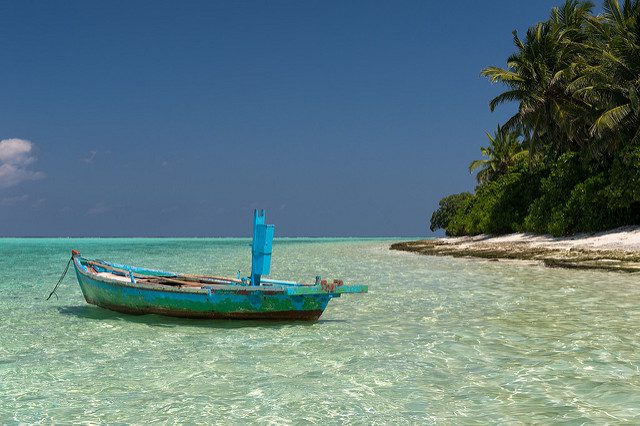
The Republic of Maldives is an island nation located in the Indian Ocean comprised of more than 1,000 tiny coral islands split into 26 geographical atolls. The country spans 90,000 square kilometers and is the flattest country on earth. As such, even the smallest rise in sea levels can have extensive effects on the country’s land mass, infrastructure, agriculture and water quality.

There are many reasons why there are troubles with water scarcity and poor water quality in the Maldives.

Changing climate conditions

The Maldives’ second greatest source of freshwater, after rainfall, comes from groundwater. The groundwater can be found under every island in what hydrologists call lenses. A lens refers to a curved layer of freshwater that floats on top of a denser layer of saltwater. However, as sea levels rise, groundwater becomes contaminated and salinized. Certain estimates state that if sea levels rise by one meter, it will reduce the capacity for groundwater by as much as 79 percent.Since the 1950s, the sea level in the Maldives has been rising by 0.03-0.06 inches every year and is expected to rise, at a mid-level scenario, 1.5 feet by 2100, losing 77 percent of the country’s land area. This will have a significant impact on water quality in the Maldives. Additionally, warmer temperatures continue to allow for high levels of evaporation, which reduces the amount of rainwater left to infiltrate through the ground into the aquifers.

Since the 1950s, the sea level in the Maldives has been rising by 0.03-0.06 inches every year and is expected to rise, at a mid-level scenario, 1.5 feet by 2100, losing 77 percent of the country’s land area. This will have a significant impact on water quality in the Maldives. Additionally, warmer temperatures continue to allow for high levels of evaporation, which reduces the amount of rainwater left to infiltrate through the ground into the aquifers.

Rising population and increase in water pollution

Groundwater that remains nonsalinized faces other obstacles, most notably, pollution from poor sewage systems. In the 1970s, rapid development in the capital city, Malé, caused an influx of immigrants from other islands to the capital. The quantity of water being extracted from aquifers increased tenfold, and groundwater pollution increased as well, due to more sewage in the system, causing poorer water quality in the Maldives.

Lack of government initiatives

The Maldivian government has been slow to assess the impacts of climate change and groundwater pollution and create policies around water resource management. However, many strides have been made and show positive potential future change.

The first important technique for managing quality water in the Maldives is rainwater harvesting. In 2013, in the Southern region of the Maldives, 69 percent of households had rainwater tanks, while only 36 percent of households in the South Central region had tanks. On the island of Muli, the capital of the South Central region, 80 percent of households had tanks. However, on the neighboring island of Ribudhoo, only 20 percent of households had tanks. Many islands do not have rainwater tanks whatsoever and have reported water shortages to the Maldive National Defense Forces and asked for emergency water supplies. Increasing the number of rainwater tanks could greatly improve access to clean water and overall water quality in the Maldives.

Saltwater desalination could help provide clean drinking water to not only the Maldivian islands, but to other island nations around the world. In February 2014, government officials met with from the Aquiva Foundation, Memsys, Aquaver, and STELCO, a local power company, to commission a desalination facility on the island of Gulhi. The goal was for the plant to produce up to 10 tons of quality water per day from seawater for drinking, cooking and hygiene.

Gulhi is a small island 600 meters by 300 meters with a population of 1,200 people. Seasonal rain does not provide adequately for year-round water needs, and the island has relied on imported water. Much of the population spent up to 50 percent of their income on safe water, and the rest of the population opted for cheaper, unsafe water which was causing diseases.

The new plant uses captured waste heat from energy generators and membrane distillation technology to power the desalination plants. The desalinated water is then mineralized using local coral sand. The water is distributed through taps at communal water kiosks and must be collected by citizens in reusable containers 1.5-20 liters. The water costs $0.05-$0.07 per liter, significantly lower than imported water.

In 2016, the Aquiva Foundation acknowledged the two-year anniversary of the desalination plant. Despite many bumps in the road, the plant has seen many great successes. It produces up to 10,000 liters of drinking water per day. It is energy efficient, reliable and consistent in producing high quality of water in the Maldives. The success of this plant provides hope to other island nations similar to the Maldives.

The best method to improve water quality in the Maldives is education. Thanks to ample understanding of climate change and NGOs educating citizens on the concerns of sea levels rising, there is potential for improvement. Creating sustainable irrigation to cut down on rainwater evaporation, increasing the number of rainwater tanks and building up infrastructure will all be vital in ensuring that the Maldives continues to have access to quality water.

– Phoebe Cohen

Photo: Flickr
June 26, 2017
https://borgenproject.org/wp-content/uploads/borgen-project-logo.svg 0 0 Borgen Project https://borgenproject.org/wp-content/uploads/borgen-project-logo.svg Borgen Project2017-06-26 01:30:012024-05-28 00:02:25Infrastructure to Maintain Water Quality in the Maldives
Global Poverty, Water

5 Facts About the Water Quality in Trinidad and Tobago


Known for its beautiful beaches, tropical weather and delicious foods, Trinidad and Tobago is a dual-island Caribbean nation and a favorite vacation destination. The vast majority of its citizens live in Trinidad. Even though tourism accounts for less than 1 percent of Trinidad and Tobago’s entire economic output, about half of Tobago’s 60,000 residents are employed in the industry. Due to tourism’s importance, the government is extremely concerned with water quality in Trinidad and Tobago.

  1. Trinidad and Tobago have had issues with water quality in the past. In 2012, a “black, poisonous liquid run-off” from the Guanapo Landfill was discovered to have been polluting nearby water sources for 30 years. In 2009, the tap water in Arima, a Trinidadian borough, was found to have a level of mercury 150 percent greater than the Environmental Protection Agency’s standard for inorganic chemicals.
  2. As of Feb. 17, Trinidad and Tobago’s Water and Sewage Authority (WASA) confirmed that the water it treats is safe to drink. The safe drinking water includes the water sources affected by the landfill mentioned above. Parliament established the WASA in 1965 to provide citizens throughout both islands with clean water.
  3. In 2015, improved water sources in Trinidad and Tobago were available to 95 percent of the population, a three percent increase from the 1990s.
  4. Another motivation for maintaining the water quality in Trinidad and Tobago is reverence for the ocean among the population. In a feature on this subject, Food and Agriculture Organization (FAO) technical adviser Neila Bobb Prescott told U.N. News about a number of local customs: After a child is born, they are taken to the beach to dip their feet in the saltwater to mark the occasion and “bring them to the age.” Prescott went on to say that people go to the ocean when they are having emotional and physical problems; some even drink a bit of saltwater to soothe an upset stomach.
  5. The WASA anticipates that the city of San Fernando’s population will rise to 111,600 by 2035. To accommodate this, it launched the San Fernando Wastewater Project. The goal is to construct a new wastewater treatment plant in the same place as the current one and replace all such plants currently operating within the project’s borders.

A year after construction began, contractor Triple ‘A’ Water Treatment Plant Limited said it had underpriced the project. To rectify this, the Inter-American Development Bank, which is already financing the project, agreed to provide the contractor with a $10 million second advance payment along with an attachment of terms and conditions.

While the water quality in Trinidad and Tobago has fluctuated, the citizens and government continue to do their best to keep it safe and clean.

– Jada Haynes

Photo: Flickr

June 25, 2017
https://borgenproject.org/wp-content/uploads/borgen-project-logo.svg 0 0 Borgen Project https://borgenproject.org/wp-content/uploads/borgen-project-logo.svg Borgen Project2017-06-25 07:30:192024-06-11 02:48:295 Facts About the Water Quality in Trinidad and Tobago
Global Poverty, Water

Government Intervention Spawns Hope for Water Quality in Tonga


Poor water quality is a prevalent epidemic in the Polynesian islands of Tonga. Despite the fairly steady supply of water in the islands, sourced from rainwater catchment systems and groundwater, water quality in Tonga needs improvement to prevent potentially deadly waterborne illnesses. The inability to access appropriate sanitation, as well as the cultural absence of hygienic attitudes, led the Tongan government to intervene in community affairs.

A major contributor to poor water quality in Tonga is the lack of any statistical information about water distribution or a centralized sewage system. No data exchange systems have been enforced because much of the country’s water consumption is managed at a communal level, bearing little to no legislative authority. Although Tonga’s Ministry of Health attempted to keep the water supply free from wastewater contamination, the local community remains in control of wastewater due to the culture of the islands.

Another factor that inhibits water quality in Tonga is that the population has grown by 46,000 people in the last decade, according to the Pacific Community. The steady increase of population created greater pressure on how the water supply is managed and treated. It is now more important than ever for Tonga to ensure that the quality of water is acceptable.

Despite the absence of authority regarding water resources, the Tongan government recently enforced the Water Supply Plan. The World Health Organization defines this as “a risk assessment and risk management plan for water supplies that, when implemented, reduces or eliminates the water becoming contaminated by pathogens, chemical or through physical means.” Part of this plan includes educational programs which are also successful in raising cautionary awareness towards water quality and personal sanitation.

The road to improvement for Tongan water quality is optimistic. According to the Secretariat of the Pacific Community, external aid from the EU provided 1.1 million euros to address water security for the Kingdom of Tonga, which is used for innovative technology to make collecting and cleaning water more efficient and secure. However, establishing lasting improvement of the water quality in Tonga is ultimately dependent on members of the community who must comply with the governmental pleas to change.

– Mary Hocker

Photo: Flickr

June 24, 2017
https://borgenproject.org/wp-content/uploads/borgen-project-logo.svg 0 0 Borgen Project https://borgenproject.org/wp-content/uploads/borgen-project-logo.svg Borgen Project2017-06-24 01:30:182024-05-28 00:02:19Government Intervention Spawns Hope for Water Quality in Tonga
Development, Food & Hunger, Global Poverty, Water

Efforts to Improve Abysmal Water Quality in Bahrain


The Kingdom of Bahrain is a group of islands located in the southern waters of the Persian Gulf in the Middle East. Comprising 40 islands, Bahrain was ranked as the second-largest user of water per square centimeter of land in the world, according to the Bahrain Economic Development Board, which is a disproportionately large level of water consumption for its size. Water quality in Bahrain continues to be a prominent problem despite efforts toward water security.

In the early 1900s, a majority of Bahrain’s water came from freshwater springs that flowed through the northern part of the country. After 1980, freshwater stopped flowing while the demand for drinkable water increased alongside population size.

Bahrain was listed among the top 10 countries that are the most likely to suffer from a water crisis in the next 25 years in a report released by the World Resources Institute. According to the study of 167 countries, 33 countries, half of which are in the Middle East, are at risk of facing a severe water crisis by 2040.

Water quality in Bahrain is further affected by the extremely high salinity of its accessible water. In 2008, AQUASTAT, a program measuring water quality within the U.N. Food and Agricultural Organization, reported that “over-utilization of the Dammam aquifer, the principal aquifer in Bahrain, by the agricultural and domestic sectors has led to its salinization through water coming from adjacent brackish and saline water bodies.”

Salinization refers to the toxic buildup of salt content within a natural resource. Bahrain relies heavily on unconventional sources of water, including its four desalination plants. Water desalination plays a crucial role in water security for the nation. A possible solution to a lack of freshwater would be to extract it from the surrounding sea.

According to a study done in 2013, records reveal that the rate of growth of water demand has been on average four percent per year. Despite the implementation of increased desalination efforts, the Kingdom of Bahrain continues to suffer from the water shortage due to population increase, industrial development, commercial growth and tourism projects.

One solution appears to be the creation of water storage facilities throughout the country. As a large part of its water security system, storage tanks of potable water are used to ensure supply during crisis situations. In 2013, the storage tanks held a water capacity that could ensure the survival of the nation for two days in case of extreme emergency conditions, leading to improvement of water quality in Bahrain.

Ninety percent of water in Bahrain is secured through desalination processes. Water security remains a high priority, with the government seeking the aid of the Water Resources Council of the Kingdom of Bahrain. In the council’s most recent meeting in February, Abdul Rahman Al Mahmoud, Water and Science Technology Association (WSTA) President, briefed Sheikh Khalid bin Abdullah Al Khalifa, the Deputy Prime Minister of Bahrain.

The council encourages interest in the science of water, training programs, the development of local capacity and contribution to public awareness programs that achieve the optimal use of water. It also encourages the use of scientific methods for the development of various water sources, according to a press release by the WSTA. Despite current efforts, improving water quality in Bahrain remains one of the country’s top national concerns.

– Riley Bunch

Photo: Flickr

June 23, 2017
https://borgenproject.org/wp-content/uploads/borgen-project-logo.svg 0 0 Borgen Project https://borgenproject.org/wp-content/uploads/borgen-project-logo.svg Borgen Project2017-06-23 07:30:432024-12-13 17:58:09Efforts to Improve Abysmal Water Quality in Bahrain
Developing Countries, Disease, Global Poverty, Water

Prevention of Waterborne Diseases in Developing Countries


Water is an easy traveling venue for many small particles and microorganisms. Many developing countries suffer from poor prevention of waterborne diseases. Much of the water in areas with poor water filtration is filled with particles ranging from natural silt and oils to human waste and animal feces. These particles infiltrate a community’s water system, including the drinking water, leading to easy infection. Eighty percent of all diseases in developing countries are linked to poor water and sanitation conditions. Within developing countries, 1.8 million people die each year from waterborne diseases. Of these deaths, over 90 percent are children under the age of five.

Waterborne diseases are easily transmitted through unclean hands, uncovered food and contaminated water. The bacteria and worms that live in the contaminated water can easily be prevented. However, in a low-income country where health care is dismal, infections become detrimental to a person’s life. On top of living in an area with poor sanitation facilities, children living in these areas usually suffer from malnutrition. This leads to a weakened immune system, leaving them unable to fight off the infections caused by waterborne diseases.

Many steps are taken to aid in the prevention of waterborne diseases in developing countries. The easiest way to prevent diarrhea diseases is simple sanitation actions. This includes boiling water to disinfect it, washing hands frequently and cleaning dishes. On a small scale, these actions are incredibly helpful to reduce the risk of infection. On a large scale, much more must be done to prevent waterborne diseases. However, most developing countries do not have access to the necessary sanitation products such as soap. They also lack access to water systems that can easily filter out bacteria and waste.

Organizations such as Clean the World and The Water Project have dedicated their resources to make it possible to prevent waterborne diseases in low-income areas and provide access to soap, clean water and sanitation facilities. Clean the World distributes hygiene products, especially soap, to low-income areas that normally do not have access to such goods. This is done through recycling old, barely-used hotel soap and re-purposing them to developing countries. The Water Project combats diarrhea diseases by going directly to the source. It is an organization that brings clean water filtration to developing countries by building wells, rainwater catchment systems and spring protections. Clean water and sanitation is the key to preventing waterborne diseases.

– Taylor Elgarten

Photo: Flickr

June 22, 2017
https://borgenproject.org/wp-content/uploads/borgen-project-logo.svg 0 0 Borgen Project https://borgenproject.org/wp-content/uploads/borgen-project-logo.svg Borgen Project2017-06-22 01:30:312024-05-28 00:02:15Prevention of Waterborne Diseases in Developing Countries
Global Poverty, Water

Water Quality in Kazakhstan


The water quality in Kazakhstan is poor, despite the nation’s access to other natural resources. Unsanitary conditions in water supply systems contribute to poor quality, which leads to a rise in illnesses including gastroenteritis and hepatitis.

United Nations Development Programme (UNDP) adviser Zhanar Sagimbayeva stated, “The population [often] use[s] water which doesn’t meet bacteriological standards. This is related to bad conditions of our water infrastructure. It has a direct effect on the health of the population.”

Furthermore, the situation is worse for those living in rural Kazakhstan. As the Central Asia Regional Economic Cooperation (CAREC) stated, “Many villagers use surface water and groundwater of poor quality.” However, urban regions in Kazakhstan are also not free from water pollution.

Water availability is unevenly distributed throughout the nation. According to a U.N. report, only three percent of Kazakhstan’s water was available to those living in the central region in 2004.

Even more concerning, is the country’s access to water as a whole. A report by Anatoly Ryabtsev, the Chairman of the Committee on Water Resources in Kazakhstan, wrote that “Kazakhstan is one of the most water-scarce countries on the Eurasian continent.”

It is unsurprising then that approximately half of Kazakhstan’s available water passes through its neighbors, according to the UNDP. Controlling the quality of water would involve regional negotiations in addition to stronger sanitation policies.

Ryabtsev warns that if provisions are not put into effect soon, Kazakhstan will face dire consequences. Not only will disease continue, but the economic and social development of the nation will be hindered.

Fortunately, the government of Kazakhstan has taken initiatives to improve the nation’s water system. Most recently, the Development Strategy of Kazakhstan up to 2030 was finalized. This establishes the government’s commitment to better water quality and conservation.

Assuming the government of Kazakhstan follows through on its strategy, the water quality in Kazakhstan is likely to improve in the near future.

– Gigi DeLorenzo

Photo: Flickr

June 21, 2017
https://borgenproject.org/wp-content/uploads/borgen-project-logo.svg 0 0 Borgen Project https://borgenproject.org/wp-content/uploads/borgen-project-logo.svg Borgen Project2017-06-21 07:30:242020-02-12 20:28:59Water Quality in Kazakhstan
Page 35 of 57«‹3334353637›»

Get Smarter

  • Global Poverty 101
  • Global Poverty… The Good News
  • Global Poverty & U.S. Jobs
  • Global Poverty and National Security
  • Innovative Solutions to Poverty
  • Global Poverty & Aid FAQ’s
Search Search

Take Action

  • Call Congress
  • Email Congress
  • Donate
  • 30 Ways to Help
  • Volunteer Ops
  • Internships
  • Courses & Certificates
  • The Podcast
Borgen Project

“The Borgen Project is an incredible nonprofit organization that is addressing poverty and hunger and working towards ending them.”

-The Huffington Post

Inside The Borgen Project

  • Contact
  • About
  • Financials
  • President
  • Board of Directors
  • Board of Advisors

International Links

  • UK Email Parliament
  • UK Donate
  • Canada Email Parliament

Get Smarter

  • Global Poverty 101
  • Global Poverty… The Good News
  • Global Poverty & U.S. Jobs
  • Global Poverty and National Security
  • Innovative Solutions to Poverty
  • Global Poverty & Aid FAQ’s

Ways to Help

  • Call Congress
  • Email Congress
  • Donate
  • 30 Ways to Help
  • Volunteer Ops
  • Internships
  • Courses & Certificates
  • The Podcast
Scroll to top Scroll to top Scroll to top