• Link to X
  • Link to Facebook
  • Link to Instagram
  • Link to TikTok
  • Link to Youtube
  • About
    • About Us
      • President
      • Board of Directors
      • Board of Advisors
      • Financials
      • Our Methodology
      • Success Tracker
      • Contact
  • Act Now
    • 30 Ways to Help
      • Email Congress
      • Call Congress
      • Volunteer
      • Courses & Certificates
      • Be a Donor
    • Internships
      • In-Office Internships
      • Remote Internships
    • Legislation
      • Politics 101
  • The Blog
  • The Podcast
  • Magazine
  • Donate
  • Click to open the search input field Click to open the search input field Search
  • Menu Menu

Archive for category: Water

Aid, Developing Countries, Global Poverty, Water

How S’well Bottles Serve the World

How S'well Bottles Serve the World
Sarah Kauss, the CEO and Founder of S’well, launched the company in 2010 with the primary goal of ridding the world of plastic water bottles and doing some good for the environment. S’well grew immensely in popularity since its creation. It now partners with UNICEF, American Forests, Drink Up and (RED) to serve global needs.

S’well bottles serve the world through the company’s partnership with UNICEF USA, contributing $800,000 since 2015 to help provide clean and safe water to the world’s most vulnerable communities. S’well is dedicated to supporting water programs across Madagascar through 2018, where nearly 50 percent of the population lacks access to clean drinking water. The company aims to assist in building infrastructure, educating families on water-borne diseases and promoting national reform to make long-lasting change.

In addition to UNICEF, S’well also supports (RED), an organization paving the way toward an AIDS-free generation. Through its global impact and the help of many partners, (RED) raised $465 million over the past decade. This year, S’well introduced the (RED) Water Bottle to fight HIV, after an eye-opening and hopeful visit to Kenya to witness (RED)’s efforts firsthand. Since 1990, Kenya successfully halved both the number of child deaths and HIV prevalence in adults. To continue down this road of achievements, S’well supports education, treatment and awareness-building efforts in the fight against HIV/AIDS. Twenty percent of the retail price for every (RED) bottle is donated to the cause.

The fact that S’well bottles serve the world with such an embedded purpose contributes to the company’s success. The product is marketable by its listed description as “… the only reusable bottle that looks great and does good. It keeps your drinks cold for 24 hours and hot for 12 while giving back to those in need.” S’well’s social mission is best outlined by Kauss, “… it’s just the right thing to do… It’s part of our DNA, it’s part of our mission statement and part of everything that we do.” S’well has expanded rapidly through its ties with Starbucks. It is launching its products at the bustling business around the world – with thousands of locations in North America, Brazil, Asia, Europe, the Middle East, Russia and South Africa.

The thought of how the purchase of a single water bottle can make a difference in developing areas is inspiring and certainly worth reflecting on. S’well bottles serve the world in more ways than one. They benefit the environment and charitable causes in America, while reaching out on a global scale.

– Mikaela Frigillana

Photo: Flickr
June 21, 2017
https://borgenproject.org/wp-content/uploads/borgen-project-logo.svg 0 0 Borgen Project https://borgenproject.org/wp-content/uploads/borgen-project-logo.svg Borgen Project2017-06-21 01:30:302024-12-13 17:58:07How S’well Bottles Serve the World
Global Poverty, Water

Water Quality in Nicaragua: Poor, But Getting Better


Nicaragua is nestled between Honduras and Costa Rica, bordering the waters of the Pacific Ocean and the Caribbean Sea. Though it has abundant sources of fresh water, they are often difficult to access. According to WaterAid, an organization aimed at providing the world with safe drinking water, water quality in Nicaragua is poor and water is seldom considered safe to drink.

Of a population of nearly 6 million, about 800,000 Nicaraguans lack access to improved water sources. Furthermore, at least 100 children die annually from diseases such as diarrhea, which is largely caused by unsafe drinking water and poor sanitation. Much of Nicaragua’s water is unsafe due to contamination from chemicals used in mining and agriculture.

Organizations such as WaterAid have been diligently working to provide Nicaraguans with safe drinking water. One of their methods is teaching locals how to install rope pumps, which are a simplified version of a water pump. WaterAid also teaches locals how to install toilets and rainwater catchment systems and how to drill and properly clean out wells. Their efforts have provided more than 2,000 Nicaraguans with safe drinking water.

An ambitious project, Water for Waslala, seeks to end the water crisis in Waslala, a region in Nicaragua. The nonprofit strives to educate communities in Waslala on how to build their own water systems. The inclusion of Waslalans into the process, and not simply U.S. volunteers, ensures that the systems can remain effective in the long term.

Water for Waslala also teams up with Villanova University to hold semi-annual workshops in Waslala to inform the locals about water system creation. In 2015 and 2016 their efforts have contributed to three water systems being built in Waslala, serving about 819 Waslalans. On top of this, about 2,115 Waslalans were given household filters to ensure safe household drinking water.

Water for Waslala hopes to reach its goal of providing all Waslalans with access to safe drinking water by 2030. In 2016, Water for Waslala joined WaterAid and has since partnered with El Porvenir, a nonprofit organization focused on serving Nicaraguans, to create the Agua Para Waslala Program Alliance.

Tremendous strides have been made towards improving the water quality in Nicaragua. Community collaboration, smart engineering and thoughtful individuals have made it all possible.

– Rebeca Ilisoi

Photo: Flickr

June 20, 2017
https://borgenproject.org/wp-content/uploads/borgen-project-logo.svg 0 0 Borgen Project https://borgenproject.org/wp-content/uploads/borgen-project-logo.svg Borgen Project2017-06-20 07:30:542024-12-13 17:58:05Water Quality in Nicaragua: Poor, But Getting Better
Global Poverty, Water

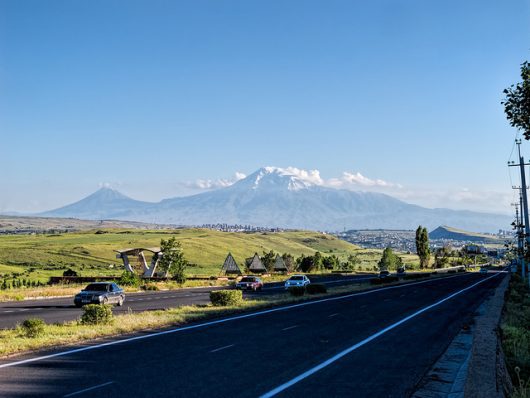
Water Quality in Armenia


In 2014, water quality in Armenia was less than satisfactory. Some of the water infrastructures had not been touched since the Soviet era, but after governmental efforts and investments from entities like the World Bank, today water quality in Armenia is now abundant and clean.

Before the investments transformed the water quality in Armenia, the head of the National Water Cooperation, a non-governmental organization, indicated that water pollution and supplying people with clean water were the two biggest challenges. Compared to a decade ago, added Arevik Hovsepyan, who heads the NGO, the level of water pollution had grown because of lack of governmental control.

After years of neglect, the government finally stepped in to improve leaking municipal water and wastewater systems and extend hours of delivery for running water. The cost to upgrade the water infrastructure, which had deteriorated over time and resulted in water losses of over 85 percent — one of the worst in the world — was estimated at $179 million.

The World Bank stepped in with assistance that resulted in 330,000 homes having 21 hours of running water a day, an increase from six hours, as well as improved water delivery and quality, and new pumping stations that decreased the amount of energy used by 40 percent. Other improvements included rebuilding and minimizing operation costs and water losses, as well as, refurbishing chlorination stations.

With these new improvements to water quality in Armenia, the country now has adequate water for drinking, irrigation, and industrial use throughout the country. In addition, the issues that had arisen from poor workmanship during the Soviet era have been improved. More than half of water loss from leaks were fixed, 70 percent of the distribution system was replaced, and the availability of running water increased to nearly 24 hours a day. In addition, the drinking water pollution and inaccessibility is at 28.91 percent while general water pollution comes in at 35.48 percent, both considered low on the scale.

With improving water quality in Armenia, the country will continue to find solutions to give all citizens access to adequate water, improve water delivery and maintain city pipelines.

– Amira Wynn

Photo: Flickr

June 19, 2017
https://borgenproject.org/wp-content/uploads/borgen-project-logo.svg 0 0 Borgen Project https://borgenproject.org/wp-content/uploads/borgen-project-logo.svg Borgen Project2017-06-19 07:30:172020-04-18 12:50:55Water Quality in Armenia
Global Poverty, Water

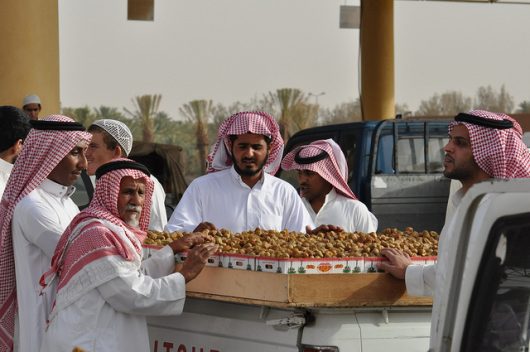
Vanishing Groundwater Threatens Water Quality in Saudi Arabia


During President Trump’s recent visit to Saudi Arabia, he stressed the importance of combating global terrorism and addressing extremism within the country. With a population exceeding 28 million people, Saudi Arabia’s extreme temperatures and the shortage of groundwater have been detrimental toward providing sufficient amounts of consumable water to the country. The poor water quality in Saudi Arabia demonstrates a greater risk to the region than global terrorism does.

As a leading producer of oil and natural gas, Saudi Arabia continues to hold roughly 16 percent of the world’s oil reserves. Unfortunately, declining global oil prices in recent years have significantly affected Saudi Arabia’s economy, leading to governmental cuts and taxes in order to compensate for economic losses.

These struggles have led to problematic issues for the state to address, especially the water quality in Saudi Arabia. Since the country holds no permanent rivers or lakes and rainfall is a rarity, underground reservoirs were built in order to preserve water throughout the region. In addition to these reservoirs, Saudi Arabia utilizes desalinated water.

The process of desalinization extracts certain minerals from saline water, thus creating consumable water for the region. There are 27 desalination stations throughout the country, fully operable by the Saline Water Conservation Corporation. Together, these stations produce more than 792 million gallons of water per day for Saudi Arabia, which is currently the largest country that processes desalinated water.

As oil revenues continue to decline, Saudi Arabia has begun taxing water in order to address the region’s threatening debt. These taxes support the numerous warnings that predict the region’s groundwater will run out in the next 12 years. These warnings are spread throughout several Gulf countries, primarily due to the overwhelming water consumption throughout these regions, which highlights some of the highest levels per capita in the world.

The region relies on two sources of water: groundwater, which accounts for 98 percent of the water sources throughout Saudi Arabia, and water produced from desalination plants. In light of recent warnings, Saudi Arabia continues to improve water conditions through additional desalination plants and innovative technological advancements, which hope to enhance the water quality in Saudi Arabia and save millions of lives throughout the region.

– Brandon Johnson

Photo: Flickr

June 14, 2017
https://borgenproject.org/wp-content/uploads/borgen-project-logo.svg 0 0 Borgen Project https://borgenproject.org/wp-content/uploads/borgen-project-logo.svg Borgen Project2017-06-14 01:30:412024-05-27 09:21:52Vanishing Groundwater Threatens Water Quality in Saudi Arabia
Global Poverty, Water

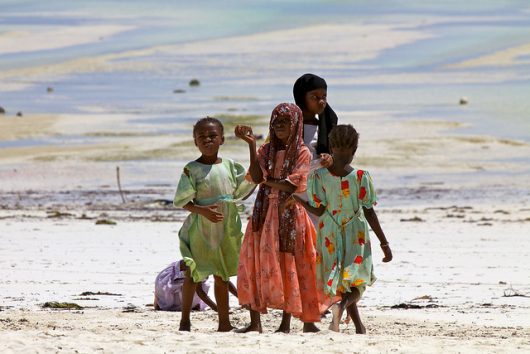
Sewage Regulation Crucial for Improving Water Quality in Tanzania


Due to widespread pollution, the water quality in Tanzania is poor. While the nation as a whole is affected, cities on the coast receive the most contaminated water because of insufficient sewage regulation.

Untreated sewage is often deposited into the sea, polluting the country’s coastal waters. Not only does this threaten marine biodiversity, but it has spread diseases on land as well. Salim M. Mohammed, a researcher at the University of Dar es Salaam, says that the most common of these diseases are diarrhea, gastroenteritis, cholera and dysentery, all of which can cause death under certain circumstances.

Sewage mismanagement occurs inland as well, although the dynamics vary. Ground wells, which provide water to some Tanzanians, are often contaminated by leaks from drainage systems. As a result, the water often contains fecal matter that people have no choice but to drink from, bathe in or wash their clothes in, as reported by The Water Project.

Aside from domestic waste, these coastal cities often experience industrial pollution as well. For example, debris may stem from textile production, oil and gas regulation or food processing that affects the quality of the water.

And while coastal cities may suffer from dirtier water, other coastal areas experience contamination as well. The difference comes, as Mohammed states, in that these residents suffer from the input of agricultural wastes, such as pesticides and fertilizers, via rivers and streams compared to domestic or industrial wastes.

While water purification is a complex issue, the immediate solution would involve an improvement in sewage regulation. The government of Tanzania needs to build more sewerage systems, and governmental policies must ensure its widespread implementation. Otherwise, only a small percentage of the population will continue to have access to these systems.

Likewise, similar policies must be enforced to ensure that industrial and agricultural waste does not pollute the water. If such methods are executed through the strategic use of financial resources, it is certain that the water quality in Tanzania will improve.

– Gigi DeLorenzo

Photo: Flickr

June 11, 2017
https://borgenproject.org/wp-content/uploads/borgen-project-logo.svg 0 0 Borgen Project https://borgenproject.org/wp-content/uploads/borgen-project-logo.svg Borgen Project2017-06-11 07:30:032020-04-18 13:26:29Sewage Regulation Crucial for Improving Water Quality in Tanzania
Global Poverty, Water

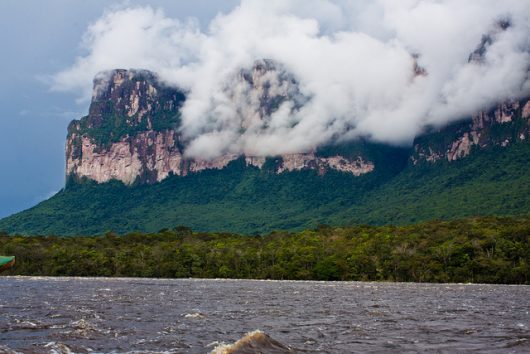
Health Concerns Over Water Quality in Venezuela


The poor water quality in Venezuela has caused health concerns throughout the country.

Venezuela’s water has, in recent years, been very poor quality, even coming out of faucets with a yellow color, reports Ana Carvajal, a worker at the Universitario Hospital in Caracas specializing in infectious diseases. Venezuelans are seeing a spike in a variety of illnesses, especially diarrhea. The lack of clean water is also bringing about skin issues such as scabies and folliculitis. Stomach illnesses have also spread due to the water quality.

Beyond water pollution, the country is also facing a severe water shortage. The 2016 drought brought on by El Niño put major limits on water consumption, resulting in today’s current use of water trucks. However, as water official Tatiana Noguera accounts, these trucks are often robbed by gangs.

Unfortunately, it comes with little surprise that Venezuelans must resort to desperate measures in order to maintain water. Residents often purify water with vinegar, and carefully ‘recycle’ it from the kitchen to toilet. Some collect and recycle rainwater, as well.

Other consequences come in the form of limited electricity. Because 65 percent of Venezuela’s electricity relies on the Guri Dam, which has maintained low water levels, the country has undergone severe power shortages. Even Venezuela’s time zone has been altered in order to increase the amount of sunlight during the day by an extra 30 minutes.

Just like his predecessor Hugo Chavez, President Nicolas Maduro has not taken substantive action in order to counter this water pollution or shortage. Taxi driver Luis Felipe Pedroso comments on the lack of water: “On the days when it comes, it’s only for a few hours and it’s very dirty. This is unbelievable. The government hasn’t taken any measures to solve these problems.”

If the poor water quality in Venezuela is not addressed soon, diseases are likely to spread further. Given citizens’ limited access to medicine, this has seriously negative implications, especially considering the issue is one that is easily preventable. Therefore, the country’s leaders must take immediate action in order to secure the health of their citizens.

– Gigi DeLorenzo

Photo: Flickr

June 9, 2017
https://borgenproject.org/wp-content/uploads/borgen-project-logo.svg 0 0 Borgen Project https://borgenproject.org/wp-content/uploads/borgen-project-logo.svg Borgen Project2017-06-09 01:30:442024-12-13 17:57:57Health Concerns Over Water Quality in Venezuela
Global Poverty, United Nations, Water

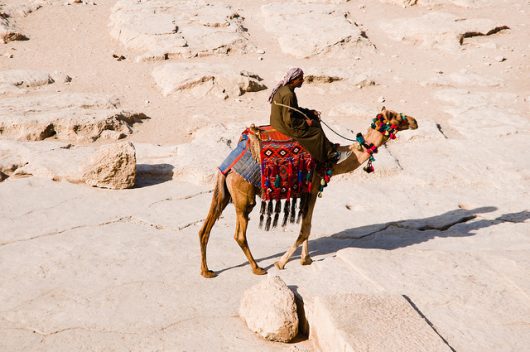
10 Facts About the Struggle to End the Water Crisis in Egypt


For the past 10 years, the Egyptian government has struggled with figuring out ways to improve their water system in order for water to be accessible and also in order for the water supply to thrive. The U.N. warns that Egypt could run out of the water by 2025. Here are 10 facts about the water crisis in Egypt.

10 Facts About the Struggle to End the Water Crisis in Egypt

  1. Egypt is suffering from severe water scarcity. Only 20 cubic meters of water per person of internal renewable freshwater resources remain.
  2. Population growth is a massive contributor to the water crisis in Egypt. Since the 1990s, the population has grown by 41 percent. The population is also predicted to grow from 92 million to 110 million by 2025.
  3. Ninety-five percent of the Egyptian population lives within a ten-mile radius of the Nile River. Egypt also controls 90 percent of the Nile River, more than any other country surrounding the Nile. Even with this proximity to the river, two out of five households do not have water.
  4. Human life on the Nile is partially responsible for the water crisis in Egypt. Most pollution comes from municipal and industrial waste. The industrial waste affects the drinkability of the water along with the ecosystems within the water.
  5. Polluted water is being distributed to citizens. Because of the water scarcity, most water is not treated properly, leading to 95.5 percent of the nation drinking poorly sanitized water.
  6. Egypt consists of mostly desert land, with only six percent of land being arable and useful for agriculture. This type of environment leads to the nation only receiving 80 mm of rainfall annually.
  7. Egypt’s poor irrigation system is wasting a majority of the nation’s water sources. Thirty-five percent of underground water leaks through, as caused by the deteriorating infrastructures that haven’t been replaced in the decades since they were first put in place.
  8. In June 2015, the water crisis in Egypt led to the city of Bilquas and its 50,000 inhabitants being without water for an entire week. This type of scarcity leads to an annual state of emergency, where many towns do not have any access to water. The town of Ezbit Al-Taweed also suffered from the water crisis. Every day government trucks of water travel to the city who have no access to water.
  9. Water prices have skyrocketed because of the water crisis in Egypt. Dozens of people wait in lines outside shops and kiosks and the price of a 1.5-litre bottle can jump from three pounds to 10 pounds within a matter of days.
  10. In desperation for water, people have succumbed to illegally digging for water sources in their backyards. Due to the illegality of such digging, the water is not treated, leaving people to drink water infused with high amounts of magnesium, iron, and sodium. This water has been the cause of 13 percent of all child deaths in the country.

For now, water sources in Egypt are still hard to come by. Government officials have announced a plan to replace underground infrastructure within the next decade. Through the hopelessness, this leaves hope for the people of Egypt.

– Maria Rodriguez

Photo: Flickr

June 9, 2017
https://borgenproject.org/wp-content/uploads/borgen-project-logo.svg 0 0 Borgen Project https://borgenproject.org/wp-content/uploads/borgen-project-logo.svg Borgen Project2017-06-09 01:30:242024-12-13 17:57:5710 Facts About the Struggle to End the Water Crisis in Egypt
Global Poverty, Water

Private Help Needed to Improve Water Quality in Gambia


With the steady decline of freshwater, accessing sanitary drinking water is an escalating global catastrophe. In West Africa, the Gambia faces significant challenges in sanitation and water quality. Water quality in Gambia is being affected due to expanding urban populations near water sources and discarding waste into waterways.

According to the World Health Organization (WHO), the primary environmental issue in Gambia is waste management, specifically in urban neighborhoods. In highly populated areas, unsustainable waste and landfill management create environmental hazards that affect the quality of drinking water. The exponential growth of Gambia’s urbanized regions and insufficient resources to support the subsequent waste has intensified water pollution.

The water quality in Gambia has decreased from the insufficient waste collection, the common disposal of trash from small industries and households and lacking appropriate disposal practices. Without proper surveillance methods, monitoring the quality of surface and groundwater has become a major challenge.

From 2002 to 2011, the government of Gambia invested approximately $1.7 million annually on “water-related infrastructure and programs.” The funds were primarily distributed between water supply and sanitation on large systems (61.4 percent) and agricultural water resources (21.3 percent).

The amount of reliable drinking water sources has risen 15 percent from 1992 to 2010 and continues to increase. In 2010, 15 percent of rural and eight percent of urban Gambians did not have access to sanitary drinking water. Nearly all of Gambia’s potable water must be drilled from underground. The surface water, which includes and is affected by the River Gambia and its tributaries, is incredibly saline and undrinkable. Groundwater sources supply potable water for urban areas, industry, tourism, livestock and irrigation watering.

Rural areas depend on the help of independent charities for access to potable water. The investment-based charity, Water for Africa, believes that the best help for a country’s infrastructure and prosperity begins with accessible, clean water. So far, it has primarily helped West African countries by using donations to find regions that have unreliable access or none at all. It has specifically helped two regions in the north and south of Gambia by identifying the villages, Bambara and Kuntair, as the best hubs for wells and funding their installation to improve the water quality in Gambia.

– Madison O’Connell

Photo: Flickr

June 7, 2017
https://borgenproject.org/wp-content/uploads/borgen-project-logo.svg 0 0 Borgen Project https://borgenproject.org/wp-content/uploads/borgen-project-logo.svg Borgen Project2017-06-07 07:30:432024-05-28 00:02:10Private Help Needed to Improve Water Quality in Gambia
Global Poverty, Water

Urban-Rural Disparity in Water Quality in Argentina

Clean Water in Argentina

For years, Argentina, a nation surrounded by water, has been lacking the resources to secure clean and safe drinking water for its people. Travel websites often question, “Can you drink the tap water in Buenos Aires?”, leading to discussions regarding water quality in Argentina.

In 1996, Argentines protested after they found manganese in their water, turning the water brown. Also, because of the poor economic growth in the early 2000s, water bills have increased by 70 percent.

Some urban areas of Argentina have access to clean water, but the rural communities are far behind their urban counterparts. These people face issues of water pollution from industrial influences, urbanization and harmful agriculture.

Arsenic, chromium, copper, zinc, and lead have been found in the Riachuelo river in Argentina, which in 2013 was named one of the 10 dirtiest places on the planet. Muddy bubbles can be seen forming at the river’s surface. “These are gases produced by heavy metals on the bottom,” explained Alfredo Alberti of the La Boca Neighbors Association.

Those in poorer areas of Argentina suffer greatly because of the little influence they have on their government, leading to political neglect. Dan Adaszko, a research scholar at the Argentine Catholic University observatory on social debt, explained that the percentage of the population lacking access to water and sanitation represents a national average that covers much higher levels among poor households.

Eleven percent of the population lacks piped water, leading those without access to safe drinking water. Marisa Arienza, head of the Green Cross Argentina and research specialist in water, went into detail about the situation. Arienza explained that there has been “substantial improvement” in water quality in Argentina, yet there are many challenges for more progress.

“The main problem in inequity of water access. When a family does not have access to drinking water, they drink polluted water from wells, with the result that they suffer from diseases and even disabilities,” Arienza explained.

There are plentiful water supplies in the nation but citizens in specific areas lack to tools to have access to clean water.

– Mary Waller

Photo: Flickr

June 7, 2017
https://borgenproject.org/wp-content/uploads/borgen-project-logo.svg 0 0 Borgen Project https://borgenproject.org/wp-content/uploads/borgen-project-logo.svg Borgen Project2017-06-07 01:30:432020-04-19 16:57:01Urban-Rural Disparity in Water Quality in Argentina
Global Poverty, Water

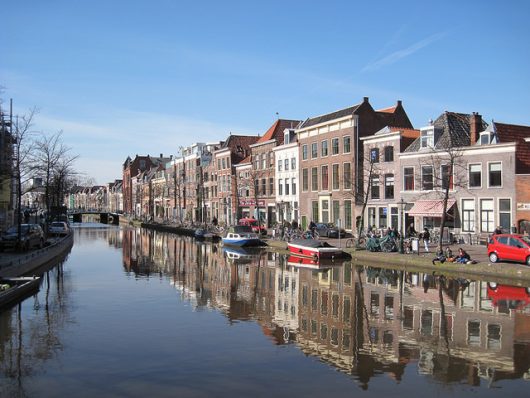
Water Quality in the Netherlands

Water Quality in the Netherlands
Water quality in the Netherlands is high, allowing the Dutch to have universal access to a potable water supply and sanitation. However, there is still concern for future improvement. Improving and increasing the quality of water is a high priority, particularly regarding the nutrient concentrations of nitrogen and phosphorus in surface water.

Improving Water Quality in the Netherlands

Water quality in the Netherlands continues to improve through a sustainable water system and integrated water management. The Dutch have organized an international river basin level with the aid of the European Union water framework directive.

The Dutch have a water pollution control policy focusing on the polluter pays principle, aiding in maintaining water quality for the country.

Amsterdam has the highest quality of water in the country and the safest and cleanest tap water in Europe. Dutch water companies are using advanced technology to turn surface water into pure, drinkable water without chlorine or fluoride.

The Netherlands’ water pipe system has a leakage rate of three to five percent, which is below that of all other European countries. The Netherlands attributes this to proper maintenance measures and sensor technology.

Water quality in the Netherlands is different than in other countries because the Dutch government does not add chlorine to the drinking water. Many people have stated that chlorinated water tastes bad, and it is believed that chlorine contains poisonous substances, damaging to the environment.

The Dutch are very proud of their quality of water, and of the facts that it is good tasting and non-chlorinated. However, recently, some Dutch water companies have had to add chlorine to drinking water to combat bacteria that causes legionnaires disease. The Dutch use mono-chloramine, a compound of chlorine without a taste.

Water quality in the Netherlands has been praised for its non-chlorinated “super-water”, and the country is very proud to be one of the nations with the highest water quality in the world.

– Rochelle R. Dean

Photo: Flickr

June 4, 2017
https://borgenproject.org/wp-content/uploads/borgen-project-logo.svg 0 0 Borgen Project https://borgenproject.org/wp-content/uploads/borgen-project-logo.svg Borgen Project2017-06-04 01:30:352024-06-04 01:08:20Water Quality in the Netherlands
Page 36 of 57«‹3435363738›»

Get Smarter

  • Global Poverty 101
  • Global Poverty… The Good News
  • Global Poverty & U.S. Jobs
  • Global Poverty and National Security
  • Innovative Solutions to Poverty
  • Global Poverty & Aid FAQ’s
Search Search

Take Action

  • Call Congress
  • Email Congress
  • Donate
  • 30 Ways to Help
  • Volunteer Ops
  • Internships
  • Courses & Certificates
  • The Podcast
Borgen Project

“The Borgen Project is an incredible nonprofit organization that is addressing poverty and hunger and working towards ending them.”

-The Huffington Post

Inside The Borgen Project

  • Contact
  • About
  • Financials
  • President
  • Board of Directors
  • Board of Advisors

International Links

  • UK Email Parliament
  • UK Donate
  • Canada Email Parliament

Get Smarter

  • Global Poverty 101
  • Global Poverty… The Good News
  • Global Poverty & U.S. Jobs
  • Global Poverty and National Security
  • Innovative Solutions to Poverty
  • Global Poverty & Aid FAQ’s

Ways to Help

  • Call Congress
  • Email Congress
  • Donate
  • 30 Ways to Help
  • Volunteer Ops
  • Internships
  • Courses & Certificates
  • The Podcast
Scroll to top Scroll to top Scroll to top