• Link to X
  • Link to Facebook
  • Link to Instagram
  • Link to TikTok
  • Link to Youtube
  • About
    • About Us
      • President
      • Board of Directors
      • Board of Advisors
      • Financials
      • Our Methodology
      • Success Tracker
      • Contact
  • Act Now
    • 30 Ways to Help
      • Email Congress
      • Call Congress
      • Volunteer
      • Courses & Certificates
      • Be a Donor
    • Internships
      • In-Office Internships
      • Remote Internships
    • Legislation
      • Politics 101
  • The Blog
  • The Podcast
  • Magazine
  • Donate
  • Click to open the search input field Click to open the search input field Search
  • Menu Menu

Archive for category: Water

Global Poverty, Water

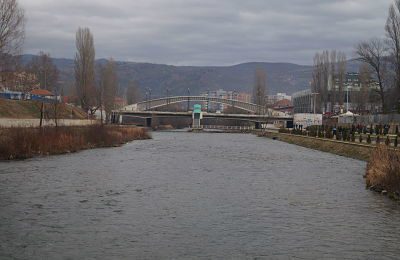
Water Quality in Kosovo an International Concern

Drinking Water in Kosovo
Heightened pollution in rivers, as well as a lack of wastewater treatment and disposal, is having drastic adverse effects on the water quality in Kosovo.

Located in southeast Europe, between Serbia and Macedonia, Kosovo is a small country with a population of fewer than two million. The armed conflict that took place during 1998 and 1999 has had lasting effects on the country’s economy and general welfare, leaving its citizens with the lowest per capita GDP in Europe.

Although there has been much progress, the war’s devastation remains visible in the country. Only 44% of the country’s population has access to drinking water, and in rural areas, that number drops to 8.4%. Water quality in Kosovo is almost solely reliant on the country’s many rivers, but as pollution increases in the nation, the water quality plummets.

In bacteria and chemical testing of the water, the Water and Waste Regulatory Office reports a 90% rate of purity, while the international standard is above 99%.

Although frequently used interchangeably, sewage and wastewater are not the same things.  Thus, it is important when looking at the issues Kosovo has to understand their differences. Sewage is simply a category of the broader term, wastewater.  This category includes all excess water from domestic and non-residential establishments. The non-residential waste requires lengthy procedures to purify properly, and in Kosovo, there is no established system.

Kosovans who regularly drink tap water become sick, as there is no wastewater treatment system. The largest threat to water quality in Kosovo, however, lies in the nation’s lack of a sewage system.  Beyond urban lines, only 28% of homes are connected to any type of sewage system. The rest is disposed into downstream rivers which then contaminates the groundwater as well.  Kosovo’s government has recognized these threats and is working to improve protection standards for the country’s rivers.

In September 2016, the World Bank’s Executive Board of Directors agreed to allocate $24.5 million to restore Kosovo’s main water source, the Ibër Canal. The project is scheduled to be completed in 2022 and will restore water access to 500,000 people who live in proximity to the canal.

– Emily Trosclair

Photo: Google

July 12, 2017
https://borgenproject.org/wp-content/uploads/borgen-project-logo.svg 0 0 Borgen Project https://borgenproject.org/wp-content/uploads/borgen-project-logo.svg Borgen Project2017-07-12 07:30:202024-05-28 00:02:53Water Quality in Kosovo an International Concern
Global Poverty, Water

Efforts to Improve Water Quality in Belize

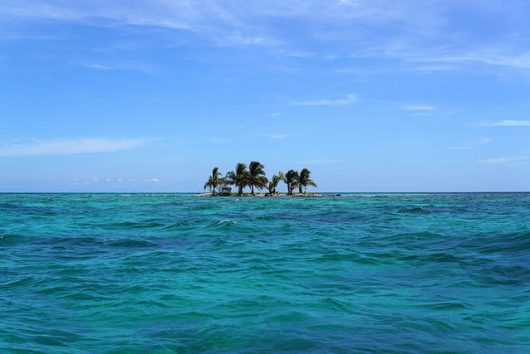
Water Quality in Belize
Water quality is Belize? Even a tropical paradise can have challenges. Belize, located just south of Mexico, is home to almost 375,000 people. Unfortunately, about 41.3 percent of these people live below the poverty line. Poverty in Belize manifests as a result of several factors, including a lack of equal opportunities to receive an education and proper healthcare. For years, the government has put a focus on addressing the poor water quality in Belize.  This lack of access to clean water makes it difficult for families to rise above the poverty line.

As of 2008, almost everyone living in urban areas was able to access safe drinking water. However, only 86 percent of the population living in the countryside have access to a clean water source. In these areas, boiling water before using it is a necessity.

Belize has historically struggled with keeping their water sources clean. Between the months of July and December, floods and hurricanes can interfere with the disposable of human waste and redirect it into sources of drinking water. As a result, bacteria can spread diseases.

Water quality in Belize faces another roadblock due to the lack access to a sewage system. As of 2014, almost 90 percent of citizens reported not having a proper place to dispose of their liquid waste. Without a latrine, the disease can quickly spread in a community through the wastewater.

Many organizations are working hard to improve the water quality in Belize. In 2015, the government created the Belize River Valley rural water system with a loan from the Caribbean Development Bank. The CDB’s primary goal is to reduce the number of people living under the poverty line through improving conditions in developing communities. The Belize River Valley rural water system provided over 3,000 people with access to clean water.

The Belize Social Investment Fund also uses the water supply to change lives. By investing in providing a clean water supply to impoverished communities, the BSIF gives the population the tools to improve their quality of life.

Access to safe drinking water is crucial in the fight against poverty and work put into the water quality in NotBelize has and will continue to result in life-changing progress.

– Julia McCartney

Photo: Flickr

July 11, 2017
https://borgenproject.org/wp-content/uploads/borgen-project-logo.svg 0 0 Borgen Project https://borgenproject.org/wp-content/uploads/borgen-project-logo.svg Borgen Project2017-07-11 01:30:192024-05-28 00:02:49Efforts to Improve Water Quality in Belize
Developing Countries, Global Poverty, Water

How to Provide Access to Clean Water In Innovative Ways


One in nine people worldwide have little access to clean water, and, in developing countries, 80 percent of illnesses stem from unclean water and lack of sanitation. Water is the most integral component required to sustain human life, and in 2010, the United Nations General Assembly recognized clean drinking water and sanitation as an essential human right. Here are five innovative new ways organizations and people are working on the problem of how to provide access to clean water throughout the world:

The OmniProcessor

Invented by Peter Janicki and his team at Janicki BioEnergy, the OmniProcessor is a machine that can convert 14 tons of sewage into water and electricity. The OmniProcessor can have an enormous impact on the two billion people on the planet who cannot properly dispose of waste. This waste eventually makes its way into water sources, which contaminates it and can spread diseases such as cholera and dysentery. The OmniProcessor solves both problems with one machine. Bill Gates, whose foundation gave Janicki a grant to research the OmniProcessor once stated, “If you can get thousands of these things out there, then you have ensured the people will grow up healthily.”

The SaTo Pan

This innovative toilet, supported by the Bill and Melinda Gates Foundation, is an alternative to open defecation, and a game-changer when looking at the problem of how to provide access to clean water. The toilet is made of plastic and thus is much more affordable that other restroom alternatives.  The toilet works by closing off the pit latrine from the open air and reducing the amount of water needed to flush waste. This simple but inventive SaTo pan (the name is derived from “Safe Toilet”) prevents water from being contaminated by waste left behind by open defecation and is a sure step in the journey to provide clean water access to all.

SODIS

SODIS (Solar Water Disinfection) is a method ideal for purifying water in developing countries. All one has to do is take a clear plastic bottle, fill it with clear water and set it out in the sun for six hours or more. The UV rays in the sunlight hitting the bottles will kill viruses, bacteria and parasites that may contaminate the water, making it clean and safe to drink. SODIS is an easy, safe and inexpensive method which makes it ideal for the world’s poor.

Microloans

Another solution for the problem of how to provide access to clean water is to empower the people searching for access. Microloans are a way of doing just this, providing small loans to people who otherwise would not be approved for loans at all. According to a study done by A. M. Muazam Husain, “microcredit loans provided to women in Bangladesh increased the presence of latrines in their households from nine to 26 percent over three years.” When given the opportunity, people without clean water and proper sanitation, especially women in families with children to look after, actively seek it out.  This kind of change is sustainable because it teaches individuals to solve their problems without the help of outsiders.

The Water Project

The Water Project is an innovative non-profit that does on-the-ground work in sub-Saharan Africa to build wells, dams and systems to catch rainwater. They collaborate with in-country teams to ensure that the services they are providing are needed and sustainable.  They also regularly check in on projects they have sponsored to ensure they are going well. Anyone can contribute to the water project simply by raising awareness, fundraising or sponsoring an entire project. These sorts of organizations are an integral part of broadening access to clean water in the developing world.

In the past ten years, the world has made leaps and bounds in how to provide access to safe drinking water and sanitation. Moreover, with more investment in research, an increase in aid to nonprofit organizations and a continued commitment to finding innovative solutions to the lack of water, access to clean water is sure to become a certainty for every single person in the world.

– Adesuwa Agbonile

Photo: Flickr

July 8, 2017
https://borgenproject.org/wp-content/uploads/borgen-project-logo.svg 0 0 Borgen Project https://borgenproject.org/wp-content/uploads/borgen-project-logo.svg Borgen Project2017-07-08 01:30:532024-12-13 17:58:19How to Provide Access to Clean Water In Innovative Ways
Developing Countries, Global Poverty, Water

Engineers Without Borders Creates Accessible Drinking Water

Accessible Drinking Water
Engineers Without Borders (EWB) is an organization of 16,800 volunteers who hope to give worldwide communities the opportunity to sustainably meet basic human needs. They install footbridges to accommodate travel, solar panels to facilitate energy and light and, in a world where one in 10 people don’t have accessible drinking water, Engineers Without Borders is implementing technology that can help. Here are six places where EWB is bringing water to those who need it most.

Cyanika, Rwanda

This northern community rests near the country’s border with Uganda, and for many villages, the closest accessible drinking water is kilometers away. Women and children make multiple trips to collect water, and when they arrive they must pay for their water, often leaving them with the decision of choosing between hunger or dehydration. They wait in line, sometimes only to realize that the well is dry. Engineers Without Borders has installed three unique community rainwater catchment systems, two single tank systems and one system of four tanks in the larger town of Munini. In Gasebeya and Nyarotosho, the single-tank systems save an average of 11 hours that would usually be spent collecting water. The saved time leaves community members with opportunities for raising more livestock and developing more income, and the saved income and time also means that they can maintain the systems on their own.

Mugonero, Rwanda

Along the western border of Rwanda, Mugonero was hit incredibly hard by the 1994 genocide, with 3,000 people killed in the community. Rebuilding continues slowly but surely in this small community accessible only by a small dirt road of switchbacks. Engineers Without Border worked with L’Esperance, a local NGO in Mugonero, and despite the NGO closing in 2013, EWB’s efforts in the region have been maintained for years and continue to benefit the community. Engineers Without Borders installed three rainwater catchment tanks, a UV water treatment system and an irrigation system that drastically improved the conditions of accessible drinking water.

Amayo, Nicaragua

In Nicaragua, 800,000 people do not have access to safe drinking water, leaving 37 percent of rural communities reliant on contaminated sources. EWB partnered with Potters for Peace, a U.S. nonprofit that uses clay pottery techniques to create water filters, to install 30 water filters. Accessible clean water means safer health conditions for the community, which uses the clay filters for both drinking and cooking. In addition, Potters for Peace educated locals (often rural women) on how to reproduce the water filters. This element of community engagement left Amayo highly self-sufficient and far healthier.

Jinotepe Hogar de Ancianos, Nicaragua

The Hogar Board of Directors, a local municipal body, benefitted from the reserve water system installed in Jinotepe by gaining the respect of their community. The reserve uses gravity in a 2,500-gallon tank to bring a fresh water supply to the community. Unfortunately, the tank itself has been in need of repairs since 2015, but the community feels that the current emphasis on health and the faith in the Hogar Board would be impossible without the EWB project. Accessible drinking water is now a priority of the community, thanks to the (albeit temporary) system provided by EWB, and the Board of Directors has a new confidence and dedication to provide it. Funding will remain a challenge.

Pueblo Nuevo, Nicaragua

Reaching clean water required long and frequent trips for the community members of Pueblo Nuevo. Engineers Without Borders cite the benefits of their integrated water distribution system as providing men with more time to tend to crops, children with more time to make it to school, and women with the liberation from five to six daily trips to the river. The distribution system does rely on rainwater, and so the impact it has can vary from serving 150 to 350 people. It pumps water from a hand-dug well to a holding tank, which then is distributed to three different districts. The rationing and maintenance required to benefit from the distribution system mean that the community has not only benefited from increased accessible drinking water but from increased community organization.

Guatemala

Seventeen projects are in the “implementation” phase in Guatemala, and 15 are considered “complete,” but most are still under review to evaluate their impact. The involvement of Engineers Without Borders in Guatemala is incredibly concentrated on potable water projects. These efforts comprise 58 percent of EWB’s Guatemala Project. At least five systems are considered functioning, each reaching between 350 and 1,500 people depending on the size of the community. The largest system involves 26 kilometers of pipe, and the projects have brought flowing water to every tap in the community. In addition to putting this infrastructure in place, the Guatemala projects focused on whether it was necessary to introduce a circuit rider (water technician) to the community to maintain the system. As implementation continues with new systems, Engineers Without Borders has placed an emphasis on training for pump maintenance, so that Guatemalan communities can be self-sufficient and continually have accessible drinking water.

– Brooke Clayton

Photo: Flickr

July 6, 2017
https://borgenproject.org/wp-content/uploads/borgen-project-logo.svg 0 0 Borgen Project https://borgenproject.org/wp-content/uploads/borgen-project-logo.svg Borgen Project2017-07-06 07:30:422024-12-13 17:58:17Engineers Without Borders Creates Accessible Drinking Water
Global Poverty, Water

Water Quality in Azerbaijan

Water Quality in Azerbaijan

Energy-rich Azerbaijan has recently begun to provide its citizens with reliable access to gas and electricity. However, the government is lagging on one key front: potable water. A large percentage, if not a majority, of Azerbaijan’s 8.2 million citizens lacks easy access to drinkable water. Water quality in Azerbaijan is thus a major issue.

Several factors have transformed Azerbaijan into a country where there is dynamic progress in all regions. Successful implementation of public programs and further improvement of infrastructure have all had a positive impact. Incoming modern enterprises have also been a boon to Azerbaijan’s economy. Unfortunately, these improvements come at the expense of environmental sustainability and water quality.

Groundwater pollution from oil spillage and leakage from pipeline and storage tanks results in petroleum, heavy metals and possibly radiation contamination spoiling the water in Azerbaijan. Furthermore, runoff from heavy usage of fertilizers and pesticides, as well as factory waste dumped into rivers, has heavily polluted the water. Finally, the salinity of the water table due to sea water intrusion, rusted water pipes and obsolete and broken equipment in water treatment plants has further reduced the water quality.

Azerbaijan has the reputation of being an environmental disaster zone. Many scientists consider Absheron Peninsula, where 50 percent of Azerbaijanis live, to be the most ecologically devastated area in the world due to severe air, water and soil pollution. Decades of pollution have created medical concerns. Poor water quality in Azerbaijan can facilitate the transmission of bacterial diseases such as cholera and hepatitis. Additionally, traces of heavy metals in the water lead to health complications such as cancer.

The country’s government is motivated and has made efforts to improve the environmental situation in the country. Ten years ago, the centralized water supply system in Baku, the capital, covered only 1.56 million people. Now, 2.366 million people have access. The volume of water usage has also increased. In the last ten years, the volume of water supplied from various sources in Baku and the Absheron Peninsula increased by 23 percent, the U.N. reports. As a result of various projects between 2011 and 2013, 600,000 more people have gained access to an uninterrupted water supply.

The Ministry of Ecology and Natural Resources also installs modular sewage treatment plants in villages along rivers. More than 200 villages see the benefits of these projects. In the future, it might be possible to acquire drinking water from the Caspian Sea.

Despite these obstacles, Baku’s new water pipeline and the government’s interest in expanding regional water purification facilities suggest that there is a desire to bring about positive change with the water quality in Azerbaijan.

– Yana Emets

Photo: Flickr

July 6, 2017
https://borgenproject.org/wp-content/uploads/borgen-project-logo.svg 0 0 Borgen Project https://borgenproject.org/wp-content/uploads/borgen-project-logo.svg Borgen Project2017-07-06 01:30:262024-05-28 00:02:37Water Quality in Azerbaijan
Global Poverty, Water

Water Quality in Cameroon Improving Slowly But Surely

Water Quality in Cameroon
With 663 million individuals who lack access to clean water, it is apparent that the condition of water in many places around the world is very poor. Cameroon, a country located in Central Africa, is one of those places. However, water quality in Cameroon has improved in the last decade.

In both rural and urban areas, people suffer because of the poor water quality in Cameroon. In more rural areas, people walk great distances just to reach rivers. They do not only use rivers to gather water to drink but to bathe as well. These rivers are often contaminated with feces and a plethora of pathogens, making the water unsafe for both drinking and hygienic purposes.

In the capital city of Yaoundé, only 35 percent of the water needed for survival is distributed through pipes. That percentage is simply not enough to provide for an entire city. Individuals are then forced to travel to and navigate rural areas and search for rivers to collect water. Some of the people that live in cities possess a filter that can purify the water that they collect, but not everyone is that fortunate.

Drinking unsanitary water leads to diarrheal diseases, such as cholera. The World Health Organization reports that there are at least 1.3 million cholera cases yearly in Cameroon.

Although the poor water quality in Cameroon is a severe issue, efforts are being made to improve it. Individuals like Franck Eben Onambele, a Cameroon native, are making a difference. Onambele is a Cornell University alumnus and founder of the program One Summer, One Well, which focuses on building wells in Cameroon to provide potable water.

Besides Onambele’s work, there are also plans to use the Sanaga River for pipe-borne water. Utilizing the Sanaga River could nearly double the clean water supply for the people of Yaoundé.

Some efforts being made to better Cameroon’s water quality have proven to be successful. From the start to the end of the Millennium Development Goals, access to better water sources in the country increased by a total of 19 percent. While there has been an improvement in the water quality in Cameroon, much work is necessary for the future.

– Raven A. Rentas

Photo: Flickr

July 5, 2017
https://borgenproject.org/wp-content/uploads/borgen-project-logo.svg 0 0 Borgen Project https://borgenproject.org/wp-content/uploads/borgen-project-logo.svg Borgen Project2017-07-05 07:30:222024-12-13 17:58:17Water Quality in Cameroon Improving Slowly But Surely
Global Poverty, Water

Speaking About the Problems of Water Quality in Denmark


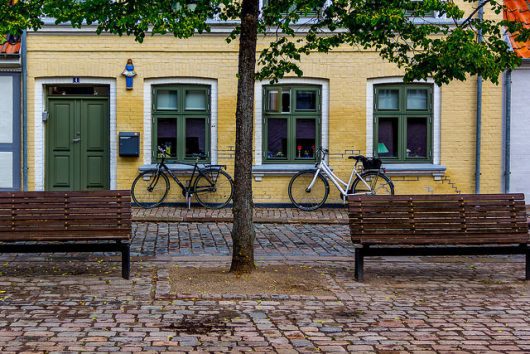
Denmark is the smallest of the Scandinavian countries and, as of 2015, holds a population of just under 5.7 million. Denmark’s the proud owner of some of the best drinking water in Europe and luckily hasn’t faced many challenges accessing clean water over the last few decades. The water quality in Denmark is quite high and matches the high price tag that consumers pay for their water.

Although the country has come a long way, Denmark hasn’t always had such clean drinking water. In the 1960s, polluted water, especially around the capital in Copenhagen, made up the majority the country’s aquatic substances.

Water prices have been historically high in Denmark. The high price of water deters unnecessary consumption, helps conserve water and led to a significant drop in water consumption over the last 20 years. In 1989, the water consumption rested at 170 liters per day on average, while in 2012 that number dropped to 114. This is mirrored and encouraged by the increase in the price of water from two euros to seven euros per cubic meter.

Denmark has a total land area of about 43,000 km. The drinking water purchased by citizens comes entirely from groundwater. The government believes that drinking water should only need minimal treatment to classify as great quality. Some of the treatments that the water goes through are filtration, pH testing and adjustments.

The majority of the water is already of high quality and often needs only a few adjustments. The groundwater in the deeper aquifers is also generally very favorable for the small amount of intervention needed.

The shallow aquifers closer to the surface are the ones that need the most purification and are the most polluted water in the country today. Recently, water suppliers have been forced to go deeper down to find cleaner water.

The water quality in Denmark is vastly superior to many other countries around the world. Consumers are getting what they are paying for with very safe and clean water.

– Brendin Axtman

Photo: Flickr

Photo: Flickr

July 4, 2017
https://borgenproject.org/wp-content/uploads/borgen-project-logo.svg 0 0 Borgen Project https://borgenproject.org/wp-content/uploads/borgen-project-logo.svg Borgen Project2017-07-04 01:30:452024-05-28 00:02:28Speaking About the Problems of Water Quality in Denmark
Global Poverty, Water

Water Quality in Mongolia Decreasing at Alarming Rate


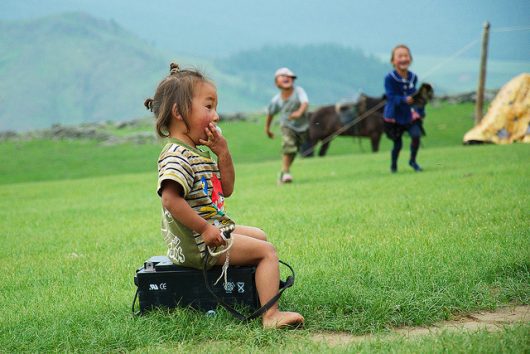
Mongolia, a country in central Asia, has some of Earth’s most beautiful mountains and wonders. Despite its abundance of natural resources, lakes and rivers, water quality in Mongolia has begun decreasing at an alarming rate.

Climate change is one of the largest factors in Mongolia’s decreasing supply of drinking water; many lakes and rivers continue to dry up. The land in southern Mongolia around the Gobi desert has had an increase in desertification as climate change emphasizes the unequal distribution of drinkable water between Mongolia’s mountain region and its drier areas.

Mongolia’s economy relies heavily on herding culture, an industry that requires accessible drinking water nationwide. However, the presence of so much livestock also poses a threat to public health, as the lack of infrastructure around water supply often leads to contamination.

An increase of urbanization and an economic reliance on mining have also contributed to the gradual pollution of groundwater resources in Mongolia, the country’s main source of water outside of mountainous regions.

However, multiple organizations have implemented plans to address these growing concerns for water quality in Mongolia. The Water Supply and Sewage Authority (USUG) aims to supply safe drinking water to an estimated 1.2 million people living in Ulaanbaatar, the capital of Mongolia. USUG has a three-year program to maintain sustainability and is a pilot project of a larger organization: the WHO/AusAID Partnership on Water Quality, created in 2012.

The Mongolian government has implemented several revisions in policy, such as an order for the Compulsory Establishment of Centralized Water Supplies, and the Methodological Guidance on Water Safety Plans for Small Communities, established in 2015.

Awareness among water-related government agencies is another crucial part of the process toward higher water quality in Mongolia. Water safety plans (WSPs) advocate for such awareness among water suppliers, health facilities, academic institutions and inspection agencies.

Meanwhile, The Asia Foundation works at the local level to ensure smaller towns and herder communities can protect their water. The process for such awareness spans from the household levels of conservation, city-wide treatment and sanitation, and global climate change-related activity. All of these issues intersect in Mongolia’s water supply, with WSPs ready to take action.

– Ellen Ray

Photo: Flickr

June 30, 2017
https://borgenproject.org/wp-content/uploads/borgen-project-logo.svg 0 0 Borgen Project https://borgenproject.org/wp-content/uploads/borgen-project-logo.svg Borgen Project2017-06-30 07:30:502020-05-09 19:23:45Water Quality in Mongolia Decreasing at Alarming Rate
Global Poverty, Water

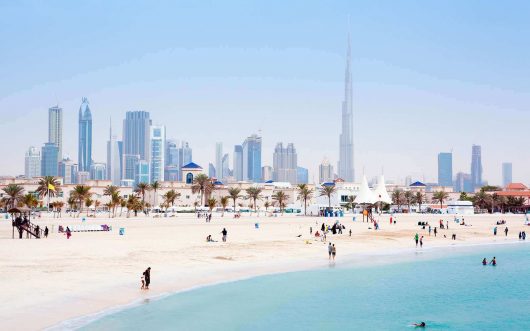
Water Quality in the United Arab Emirates

Water Quality in the United Arab Emirates

Known for having one of the largest oil reserves in the world, the United Arab Emirates (UAE) currently faces daunting issues with its water. Water availability and water quality in the United Arab Emirates are both areas of concern.

Because of the country’s extremely arid landscapes, water scarcity is a crucial issue, especially since the country has one of the highest rates of consumption of water per capita at 550 liters a day. The scarcity of groundwater coupled with the limited and expensive processing and treatment of existing water creates a challenging situation for the UAE. With so little water available in the area, water becomes a commodity that some predict will eventually become more expensive than oil.

The water crisis in the United Arab Emirates is a growing concern for government officials. One company even proposed a plan to bring icebergs all the way from Antarctica to the coast in order to deal with the water scarcity. Others focus on desalination plants as a solution, but desalination is an expensive and energy-intensive process. There are also risks of negative environmental impacts on the coast, and the water that these plants produce has a higher risk of oil pollution.

Two main sectors are responsible for most of the water consumption in the UAE: the private sector and the agricultural sector. The approach that these sectors take when dealing with water scarcity will be crucial to how the country deals with the water crisis.

The Private Sector

The private sector consumes about 24 percent of the UAE’s water. In such a brutally hot climate, much of the water used in private homes is because of air conditioning units, but the most important use of water is drinking water. Due to concerns about water quality in the United Arab Emirates, many people prefer to drink bottled water. Because it takes about three liters of water to make one liter of bottled water, the prevalence of bottled water greatly inflates water use on an individual level.

Contaminated water is not an imagined problem for UAE households, so it is understandable why so many choose to drink bottled water. Private water can be contaminated by old and rusty pipes filled with bacteria, and because water is often stored in tanks, there is a risk of contamination by foreign objects such as animals, insects, and metals. Since the UAE has no law to enforce the replacement of pipes or the cleaning of such tanks, water contamination is a possibility.

Despite these risks of water contamination, the water quality in the United Arab Emirates is adequate, and most experts maintain that this sort of contamination is very unlikely. In an effort to reduce unnecessary water use, many people advocate against the overuse of bottled water. They teach that bottled water and filtered tap water are almost exactly the same in quality and taste, yet there is a prevailing attitude that the water is dangerous to use or drink. The water quality is blamed for problems such as dry skin, premature aging and hair loss.

Advocates against the dependence on bottled water also warn that bottled water might have its own harmful consequences, such as the presence of fluoride, a substance still under scrutiny, and BPA, an industrial chemical that may have negative health effects on the brain and blood pressure. The environmental impact is important to consider as well since most people use the bottle once and throw it away, leading to a large amount of unnecessary and expensive waste. Even with these concerns in mind, many UAE citizens continue to rely on bottled water.

The Agricultural Sector

Though the private sector has a great deal of influence on the water availability crisis, the agricultural sector has the biggest impact and is the largest consumer of water. The agriculture sector consumes nearly two-thirds of the nation’s water. Due to the continually growing population of the UAE, there was a recent surge in demand for food, causing the UAE’s agricultural sector to have a higher demand than ever.

The agriculture industry is attempting to move away from water-intensive crops and introduce drip irrigation, and people continue to search for ways to reduce the excessive use of water in agriculture. Some have suggested an improved system of collecting and treating wastewater to use for agriculture. Wastewater processing plants are cheaper than desalination plants in part because they make use of the water already present in the system rather than relying on extracting water from the surrounding environment, but these solutions have yet to be put in place.

There are many possible ways for the UAE to address the water crisis, but along with the various proposed solutions, education about the crisis is an important step along the way. The water quality in the United Arab Emirates is only a part of the problem; the water crisis is a long-term problem that is likely to have profound impacts for decades to come. Therefore, the continued education about water scarcity and responsible water use is crucial to further efforts of reducing water consumption and working to end the water crisis.

– Rachael Lind

Photo: Flickr
June 29, 2017
https://borgenproject.org/wp-content/uploads/borgen-project-logo.svg 0 0 Borgen Project https://borgenproject.org/wp-content/uploads/borgen-project-logo.svg Borgen Project2017-06-29 01:30:182024-12-13 17:58:12Water Quality in the United Arab Emirates
Global Poverty, Water

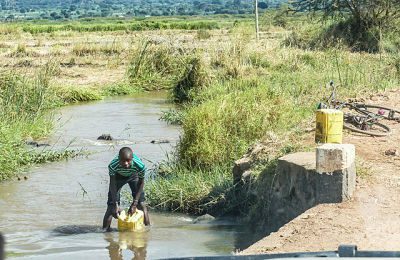
7 Facts About Water Quality in Mozambique

7 Facts About Water Quality in Mozambique Pollution
Mozambique is a country in southeast Africa with a population of over 27 million people. The country is particularly susceptible to floods, droughts and earthquakes, which are a major hindrance to development. Mozambique is still recovering from a 15-year civil war that began in 1977 after the country gained its independence from Portugal. Listed by Business Insider as the seventh poorest country in the world (GDP per capita: $1,208), Mozambique has extremely limited access to clean water. To better understand the impact of this, here are the leading facts about water quality in Mozambique.

7 Facts About Water Quality in Mozambique

  1. The life expectancy in Mozambique is 49 years. This relatively low number, compared to 79 in the U.S., is due in part to communicable diseases such as diarrhea that are spread by the poor water quality in Mozambique. A large number of Mozambicans must use unsanitary water for drinking and sanitation.
  2. UNICEF reports that only 49 percent of Mozambicans have access to clean water. The urban areas of Mozambique seem to be faring better than the rural areas, with 80 percent of city inhabitants having access to clean water. Of the rural population, 35 percent have this access, making their situation especially precarious.
  3. UNICEF also reports that two in five Mozambicans defecate in the open due to a shortage of adequate sanitation facilities. Even health facilities and schools, places that should have good access to safe water and sanitation, suffer from this shortage. Just 40 percent of rural schools have safe water, sanitation and hygiene.
  4. Some nonprofit organizations have stepped in to assist with water quality in Mozambique. Among these, UNICEF, WaterAid and Water and Sanitation for the Urban Poor have had the largest impacts to date.
  5. UNICEF has invested in clean drinking water, restrooms and hand-washing stations for children in schools as well as in improving water quality in small towns and provinces in Mozambique. Thanks to its efforts, 487 elementary schools no longer require students to defecate outside the school, 265,000 people living in rural Mozambique now have improved quality water and 292,000 Mozambicans have better sanitation services.
  6. WaterAid has provided 500,000 people in Mozambique with safe drinking water and 220,000 people with adequate sanitation. This organization credits its success to the introduction of simple yet long-lasting technologies to poor communities. These include rope pumps (a type of deep well) and bathrooms that mix human feces with soil and ash to create compost, which has also helped Mozambicans’ crops.
  7. Water and Sanitation for the Urban Poor (WSUP) has created communal restrooms and provided technical support for wastewater treatment systems in poor urban communities, providing 123,000 people with improved sanitation services.

Steps have been taken to improve water quality in Mozambique, but help is still needed in this country to ensure access to basic sanitation for the majority of the country.

– Anna V. Gargiulo

Photo: Flickr

June 28, 2017
https://borgenproject.org/wp-content/uploads/borgen-project-logo.svg 0 0 Borgen Project https://borgenproject.org/wp-content/uploads/borgen-project-logo.svg Borgen Project2017-06-28 01:30:072024-12-13 17:58:107 Facts About Water Quality in Mozambique
Page 34 of 57«‹3233343536›»

Get Smarter

  • Global Poverty 101
  • Global Poverty… The Good News
  • Global Poverty & U.S. Jobs
  • Global Poverty and National Security
  • Innovative Solutions to Poverty
  • Global Poverty & Aid FAQ’s
Search Search

Take Action

  • Call Congress
  • Email Congress
  • Donate
  • 30 Ways to Help
  • Volunteer Ops
  • Internships
  • Courses & Certificates
  • The Podcast
Borgen Project

“The Borgen Project is an incredible nonprofit organization that is addressing poverty and hunger and working towards ending them.”

-The Huffington Post

Inside The Borgen Project

  • Contact
  • About
  • Financials
  • President
  • Board of Directors
  • Board of Advisors

International Links

  • UK Email Parliament
  • UK Donate
  • Canada Email Parliament

Get Smarter

  • Global Poverty 101
  • Global Poverty… The Good News
  • Global Poverty & U.S. Jobs
  • Global Poverty and National Security
  • Innovative Solutions to Poverty
  • Global Poverty & Aid FAQ’s

Ways to Help

  • Call Congress
  • Email Congress
  • Donate
  • 30 Ways to Help
  • Volunteer Ops
  • Internships
  • Courses & Certificates
  • The Podcast
Scroll to top Scroll to top Scroll to top