• Link to X
  • Link to Facebook
  • Link to Instagram
  • Link to TikTok
  • Link to Youtube
  • About
    • About Us
      • President
      • Board of Directors
      • Board of Advisors
      • Financials
      • Our Methodology
      • Success Tracker
      • Contact
  • Act Now
    • 30 Ways to Help
      • Email Congress
      • Call Congress
      • Volunteer
      • Courses & Certificates
      • Be a Donor
    • Internships
      • In-Office Internships
      • Remote Internships
    • Legislation
      • Politics 101
  • The Blog
  • The Podcast
  • Magazine
  • Donate
  • Click to open the search input field Click to open the search input field Search
  • Menu Menu

Archive for category: Water Quality

Global Poverty, Water Quality

Recycling Small, Religious Flowers In India Creates Big Business

Religious Flowers in indiaThe idea of profiting from recycling religious flowers in India and receiving recognition from the U.N. for it may seem ludicrous, but cofounders of Indian startup Kanpur Flowercycling made it possible. Ankit Agarwal and Karan Rastogi saw an opportunity in these religious flowers in India on the day of Makara Sankranti, an ancient Indian festival celebrated by bathing in the sacred water of the river Ganges for the end of the winter solstice.

Toxic Flowers in the Ganges

People worship, bottle and drink these waters, even though it has become visibly carcinogenic. Agarwal and Rastogi noticed small, colorful flowers discarded from the temples nearby turn into mulch in the river waters. Research shows that the flowers are filled with pesticides and insecticides. In the river, the chemicals mix with the water, making toxic compounds, suppressing the oxygen level and endangering marine life.

After a year and a half of pitching their temple-waste maintenance idea and countless hours in a makeshift laboratory, Agarwal and Rastogi’s idea came to life. The flower recycled incense and vermicompost that would open the door to conserve the Ganges, provide livelihood and employment for people even of lower-caste were born.

Livelihood and Employment Opportunities

HelpUsGreen, the brand over this project, grew to receive recognition as one of the young leader projects that helps achieve the U.N. Sustainable Development Goals. Although the vision of HelpUsGreen might have started at preserving the river Ganges, it didn’t stop there. The startup, supported by Tata Trusts, uses its flower-recycling technology to also provide employment for people. HelpUsGreen provided a livelihood for 73 scavenging families that now earn six times what they earned before. It also sent 19 children to school and provided a predictable livelihood for almost 200 women.

The startup makes empowering women specifically of lower-caste a priority by employing 1,200 women to collect flowers. “Many of them are more confident now,” Agarwal told Fast Company, “They’re earning more than their husbands. They got some say in the decisions that are made in the home and they’re saving money so they can send their children to school.” Making women a priority for their business taps into a global poverty reduction strategy of putting women in the workforce. The significance of this strategy stems from the gender disparity in the workforce which made women an untapped market to downsize global poverty.

India’s Pollution & HelpUsGreen’s Plan

According to the World Health Organization (WHO), cities in India suffer from particulate pollution more than anywhere else in the world and Kanpur comes first. Poor governance, kerosene lighting and cookstoves are major sources of pollution in big cities in developing countries. Kanpur, located in an industrial region of India, suffers severely from particulate pollution.

HelpUsGreen decided to set goals that will make a difference in these circumstances. The 8 million tonnes of showering flowers annually are symbols of devotion discarded in toxic ways to water bodies, groundwater and the Indian civilization. “Kanpur Flowercycling already collects some 7.2 tons of flowers a day from two dozen sites but it’s just scratching the surface,” Agarwal explained. Agarwal believes the startup can gather 50 tons a day and branch out into new products. These religious flowers in India represent a symbol of devotion but more than 420 million people use the Ganges where they are dumped. People rely on it for food, water, bathing and agriculture. If the river is dying, it will put the Indian civilization in a very vulnerable position.

Fighting Pollution Is Fighting Poverty

HelpUsGreen considers Kanpur and India’s environmental challenges in the vision for its business. This vision aligns with the Sustainable Development Goals of life on land, sustainable cities and communities, clean water and sanitation, good health and well-being, zero hunger and no poverty. The startups’ priority for women employment creates alignment with the Sustainable Development Goals of gender equality, decent work and economic growth and reduced inequalities. The values of Kanpur Flowercycling matching over half of the U.N.’s goals justifies their nomination for a UNICEF award by the Bill and Melinda Gates Foundation.

World Bank President Jim Yong Kim also recognizes cleaning the Ganges river as part of the poverty fight. Kim visited the Ganges to observe an Indian government initiative supported by the World Bank to clean the river. Kim recognized reducing the number of sources of pollution entering the river as a way to reduce poverty in India. HelpUsGreen has already begun to gather tons of flowers away from the river to eliminate factors polluting it. These religious flowers in India can still represent a symbol of devotion and be discarded in sustainable ways that will also help reduce poverty.

– Janiya Winchester
Photo: Pixabay
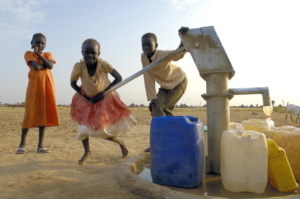
June 9, 2019
https://borgenproject.org/wp-content/uploads/borgen-project-logo.svg 0 0 Kim Thelwell https://borgenproject.org/wp-content/uploads/borgen-project-logo.svg Kim Thelwell2019-06-09 01:30:452024-05-29 23:00:08Recycling Small, Religious Flowers In India Creates Big Business
Development, Global Poverty, Health, Water, Water Quality, Water Sanitation

How to Provide Clean Water to the Poor

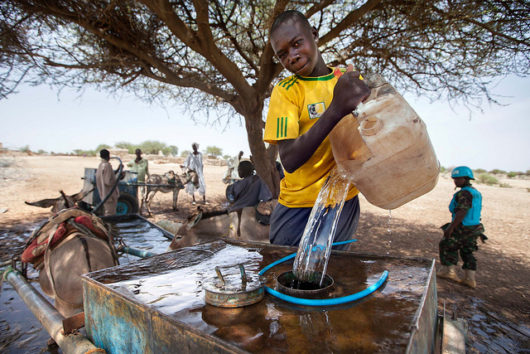
provide clean water to the poorWater is the source and sustainer of life everywhere, but that does not mean it is readily available everywhere. Developing countries and communities often have limited or difficult access to water, and even then it may not be clean enough to safely drink. With so many people needing help, and the situation different in each community, the question remains: what are some available ways to provide clean water to the poor? Fortunately, many have explored this question
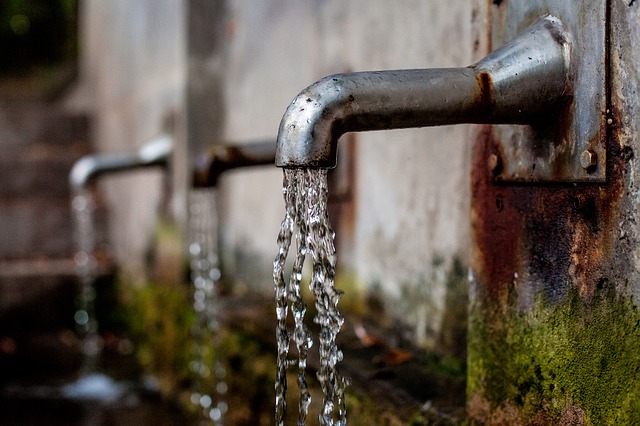
The Water Project

The Water Project is an organization that builds sustainable sources of clean water for poor communities. In March 2019, they improved an existing well in the village of Lungi in Sierra Leone and the well provides clean water today. The well was initially completed in 2000, but did not provide water from March to July. During those months, people relied on a nearby swamp for water. The swamp was unhygienic and far away. After deepening the well and giving it a new hand pump, 333 people had access to water year-round. The Water Project also provided hygiene training, which included teaching the community how to create hand-wash stations using a jerry can, string, and some sticks.

Another method for cleansing water of pathogens before consumption is solar disinfection, referred to as SODIS, where water is placed in a clear plastic bottle and left in sunlight to disinfect. When done correctly, it is a zero cost method of purifying water. In a project that lasted from 2013 to 2015, HELVETAS, a Swiss organization, introduced the SODIS method to the region of Benin. The method was taught at schools and brought to the local government and it resulted in 66,000 people learning how to disinfect their water.

AtmaGo

Other ways to provide clean water to the poor come from technological innovation, such as AtmaGo. Initially launched in Indonesia as a website, it has since become an Android app for originally for building a web of information about water prices. Families in some areas could spend 10 percent of their income on clean water from a vendor, not knowing that better prices could be found nearby. With AtmaGo, this knowledge became more readily available, allowing clean water to become a safe part of a family’s budget. AtmaGo has since taken on other functions, including disaster relief and preparedness. Now, more than one million people in Indonesia use the app.

Hippo Water Roller

Simple innovations can also provide clean water to the poor. A prime example is the Hippo Water Roller, a barrel that can be filled with water, and then rolled long distances via handle. It helps people more much more water than is possible with the containers most communities use, and rolling a barrel is easier than carrying a container. It is a significant boon for communities that have to travel long distances for their water supply.

This has been useful to the communities of Tanna Island in Vanuatu. World Vision International distributed Hippo Rollers to communities in Southwest Tanna, where many live on narrow ridges away from the ocean and cannot rely on wells. The result is a journey of 100 to 300 meters down to rivers, creeks or the sea. The containers often held only 20 liters of water for transport at a time. The Hippo Roller, by contrast, holds 90 liters of water and can be transported more easily. As a result, Tanna communities have easier access to clean water, which means more time for the children who help with water collection to study.

Wide-scale installation, increased communication and simple innovation are all ways to provide clean water to the poor, and anyone can help implement them. New, more efficient methods of water preservation and transportation are always in demand. The organizations undertaking these efforts require constant funding and a steady supply of manpower. Thanks to dedicated organizations and people from all walks of life, solutions that provide clean water to the poor remain plentiful.

– Mason Sansonia
Photo: Flickr

May 30, 2019
https://borgenproject.org/wp-content/uploads/borgen-project-logo.svg 0 0 Kim Thelwell https://borgenproject.org/wp-content/uploads/borgen-project-logo.svg Kim Thelwell2019-05-30 09:21:492024-05-29 23:10:36How to Provide Clean Water to the Poor
Global Poverty, Health, United Nations, USAID, Water, Water Quality, Water Sanitation

5 Interesting Facts About World Water Day 2019

World Water Day 2019While water might seem like a basic necessity, more than 650 million people worldwide lack easy access to clean water. Every year, the United Nations sponsors World Water Day. World Water Day raises awareness about global water crises, demonstrating the need for water in developing nations. Take a look at these interesting facts about how the U.N. celebrated World Water Day 2019.
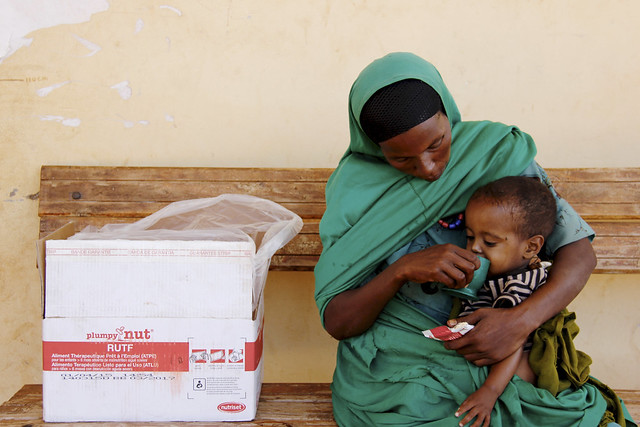
5 Interesting Facts About World Water Day 2019

  1. “Leaving No One Behind”
    The theme for World Water Day 2019 was “Leaving No One Behind.” Technology is providing new methods to increase access to clean water. Additionally, it mobilizes programs combating water scarcity. Above all, technology connects individuals interested in making a difference, no matter where they are. However, these advances can’t only benefit privileged populations. Improvements must be available to marginalized groups, as well. World Water Day 2019 emphasized access to clean water is a human right, as recognized by the U.N. in 2010. Everyone deserves water, regardless of sex, race, ethnicity, religion or age.
  2. USAID’s Strategy
    The U.S. government is working to implement a strategy to improve global water access through the U.S. Agency for International Development. While the fight to bring access to clean water is global, USAID renewed its commitment to providing clean drinking water this World Water Day. As such, USAID supports the core objectives outlined in the U.S. Government Global Water Strategy. These objectives include promoting better stewardship of freshwater resources and expanding the availability of sanitation services. Additionally, USAID is enacting policy and programs aimed at providing 15 million people access to clean water by 2022.
  3. “Water Action Decade”
    This World Water Day marked the first completed year of the U.N.’s “Water Action Decade.” Three years ago, the U.N. General Assembly unanimously decided to make the global water crisis a top priority for 10 years straight. The “Water Action Decade” kicked off in 2018. Therefore, efforts to increase sustainable water management and access to safe water will last through World Water Day 2028. And nations around the world execute large-scale programs, addressing water scarcity stemming from pollution, drought and urbanization.
  4. Women and Water
    Women played a key role in the message of World Water Day 2019. While many suffer due to water scarcity, women disproportionately carry the burden. According to U.N. research, women and girls make up the majority of people responsible for obtaining water in areas where clean water isn’t accessible. Collectively, women devote around 200 million hours to finding and gathering clean water. Subsequently, a major goal for World Water Day 2019 was improving women’s access to water, which can lead to awesome opportunities that promote independence for women. Therefore, the U.N. sponsors women-led projects in rural areas to include women in community decisions about water as just one part of its commitment to improving universal access to clean water worldwide.
  5. U.N. Sustainable Development Goals
    In fact, World Water Day is just one example of U.N. efforts to meet Sustainable Development Goal 6. Overall, the U.N. has agreed on 17 different goals to promote sustainable development worldwide, specifically in growing and impoverished nations. These Sustainable Development Goals must meet their goals by 2030. Particularly, the primary task of Sustainable Development Goal 6 is to make water safe, affordable and accessible universally. And World Water Day marks just one of many U.N. efforts to reach this crucial goal on target. Ultimately, the first step in achieving universal access to clean water is raising awareness.

Nevertheless, on World Water Day 2019, nations joined hands to strengthen efforts toward making clean water accessible worldwide. The celebration honored organizations that provide aid, unite communities and save lives. And they celebrate innovations that revolutionize water management, along with the people dedicated to campaigning for water access without leaving anyone behind.

– Emmitt Kussrow
Photo: Unsplash

April 29, 2019
https://borgenproject.org/wp-content/uploads/borgen-project-logo.svg 0 0 Kim Thelwell https://borgenproject.org/wp-content/uploads/borgen-project-logo.svg Kim Thelwell2019-04-29 11:37:562024-05-29 22:59:545 Interesting Facts About World Water Day 2019
Global Poverty, Water, Water Quality

Meeting Basic Needs: Assessing Water Resources in Ethiopia

Water Resources in EthiopiaEthiopia — located in the horn of Africa — is the most populated landlocked country on earth with 102 million citizens. It is incredibly ecologically diverse, with mountains, river valleys, highlands and deserts existing side by side. There are significant surface and groundwater resources but the country is considered water-stressed due to its rapid population growth. Climate change has been affecting the already inconsistent rainfall patterns, and during the dry season puts pressure on remaining water sources.
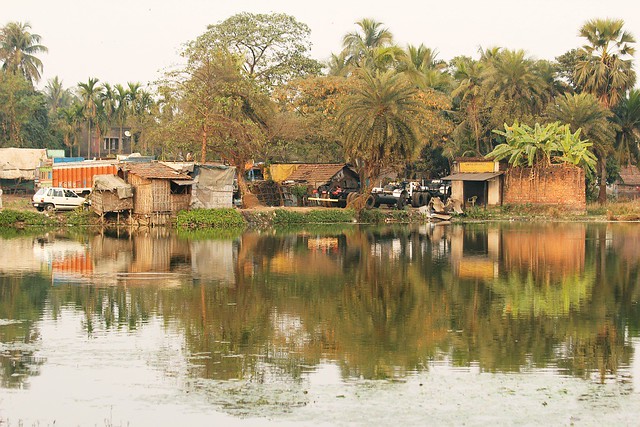
Water resources in Ethiopia should be three things: available, accessible and free from contamination. But where does the country stand in terms of achieving these goals?

Availability of Water Resources in Ethiopia

In a 2017 UNICEF survey, 78 percent of Ethiopians reported no problems with availability. Although rural areas of Ethiopia are more likely to drink from springs or wells, these sources are more consistent than their urban counterparts. Almost 75 percent of people living in the cities of Addis Ababa and Tigray have access to piped water, but half of urban respondents reported that water had been unavailable for a full day or more in the past two weeks. Access to piped water definitely has its advantages, but in Ethiopia, is it also the least reliable.

Accessibility of Water Resources in Ethiopia

The advantage of living in an urban area is that water is likely to be available on the premises, while rural areas deal with the burden of time-consuming collection. Nationally, 55 percent of people spend 1 to 30 minutes fetching water, and 26 percent spend more than 30 minutes.

This burden is not divided equally in the average household. Three-quarters of water bearers are female, most likely the daughter of the household head. Nationally, about 35 percent of those fetching water are children between the ages of 7 and 14. This may be a contributor to the fact that less than half of Ethiopian children attend primary school.

Safety of Water Resources in Ethiopia

In Ethiopia, water may be contaminated through fecal matter or industrial chemicals. Rural areas are more likely to rely on surface water or dug wells, which have the highest rates of E. coli in the country. There is also a higher risk that the water will become infected after it has been brought into the home. The practice of open defecation, still used by 27 million Ethiopians, contributes to these high numbers.  The fact that humans and livestock rely on the same water sources also adds to the risk. The UNICEF report found that only 14 percent of tested water had no detectable E. coli.

Larger sources of water, such as rivers, are more likely to be contaminated with industrial waste. Ethiopia is largely reliant on agriculture, with industry focused around textiles and food industries. As the country continues to industrialize, pollution is expected to increase. Foreign investment in the Ethiopian economy has shown a positive influence on this issue, as these investors prefer nonpolluting activities.

In 2006, only 24 percent of the population had access to drinking water. In 2015, that number was 57 percent. The Ethiopian government and international charities have worked hard to bring about such rapid change. With continued interest, Ethiopia will see the day of 100 percent access to clean and available water.

– Jackie Mead
Photo: Flickr

April 24, 2019
https://borgenproject.org/wp-content/uploads/borgen-project-logo.svg 0 0 Kim Thelwell https://borgenproject.org/wp-content/uploads/borgen-project-logo.svg Kim Thelwell2019-04-24 12:31:442019-04-24 12:33:42Meeting Basic Needs: Assessing Water Resources in Ethiopia
Global Poverty, Water Quality

Indigo Dye Is Affecting the Water Supply in India

Indigo dye in indiaIn 2017, the people in Mumbai, India saw something strange happening with the stray dogs of the city. The dogs all seemed to be turning a light blue color. People reported to the Maharashtra Pollution Control Board that a company in the Taloja Industry area was dumping indigo dye, which was primarily used by that company, in the local Kasadi river. The dogs were hunting for food in the area and, consequently, their fur was turned blue. Authorities quickly shut down the factory to prevent more dye from entering the river, but the question remained about how toxic this dye is not only to the animals but the locals as well? With the long history of indigo dye and India, why has this only recently become a problem?
Indigo Dye in India

Indigo is a natural dye, but unlike most natural dyes, indigo dye penetrates clothes directly when heated. Indigo dye and India are correlated because the country had been using it naturally for centuries. Now, however, most factories use a chemical agent called mordant to increase the number of clothes produced in less time. Mordants can be just acidic, not necessarily toxic, but most companies choose to use mordant with aluminum and chromium. Both of these can cause great damage to the ecosystem. Factory wastewater can poison rivers, killing plants, animals and poisoning drinking water for the people of India.

Even without mordants, natural indigo dye is not great for the environment either. It is slow to decompose and darkens river water, so flora and fauna starve from lack of sunlight. That is why the dogs of Mumbai turned blue upon entering the river. The best approach to preventing toxic dyes from entering and poisoning the rivers is prevention and filtration. If factories used local plants for dyes, that would help filtration. Prevention is tricky. Scientist Juan Hinestroza is working on using nanotechnology to apply dye directly to cloth fibers. If this is successful, it would make toxic dyes and mordants obsolete.

Water Pollution

Groundwater, rivers and streams are being severely affected by this fashionable color. With such a high demand for cheap clothes in indigo, like denim jeans, factories and workshops find cheap, quick ways to produce products at high volumes. Tirupur, India is home to many factories specifically used for making and dyeing clothes. These factories have been dumping the wastewater from production into rivers in the area. Despite tougher regulations, they continue the process, rendering local and groundwater undrinkable.

With dying waters and a rising population, India is struggling to clean up its rivers. The fight is far from over, and people have turned to the government for an answer. Activists are heading to court to get municipalities and states to rise and take action. They started with one demand for the restoration for the Mithi river, a river polluted with dye, paint and engine oil. Citizens started legal petitions then gathered volunteers to get other rivers in the area cleaned up. After a terrible flood in 2005, dams were built to reduce overflow, which was helpful because the rivers are now split it in two.

Back To Nature

India is one of the few countries that produce indigo and denim clothes at high volumes, so the ways of naturally applying indigo to clothing is a long lost art. However, one designer is working to change that. Payal Jain, a fashion designer in India, is bringing back the natural ways of getting indigo straight from the plant and onto the clothes. Using mud and intricate wood carvings, artisans use this method to print the color directly to the fabric. Bringing back traditional ways of dying could relieve the environment from toxic, synthetic dyes.

Blue dogs appearing in the streets, poisoned rivers and groundwater, crops dying and limited access to clean drinking water are all direct results of indigo dye waste being dumped into the rivers. As long as factories continue to dump dye waste into rivers, this problem will persist. The citizens of India are coming together to clear the neglected rivers and push for tougher regulations on clothing factories. With the government’s support and the use of new scientific methods to dye clothing, Indigo dye in India could remain popular without being dangerous.

– Kayla Cammarota
Photo: Flickr
April 12, 2019
https://borgenproject.org/wp-content/uploads/borgen-project-logo.svg 0 0 Kim Thelwell https://borgenproject.org/wp-content/uploads/borgen-project-logo.svg Kim Thelwell2019-04-12 01:30:322019-04-15 11:26:24Indigo Dye Is Affecting the Water Supply in India
Disease, Water Quality, Water Sanitation

Five Diseases That Thrive in Poor Sanitation

Five Diseases That Thrive in Poor Sanitation
Around 4 billion people in the world lack access to basic sanitation facilities like toilets or latrines and nearly 900 million people still defecate in the open. In addition, USAID estimates that 2.1 billion people currently do not have access to safe drinking water. These dismal conditions pose serious health hazards to the men, women and children living in these communities. Without toilets and latrines to separate human waste from living conditions and water sources, bacteria and virus are easily spread through food, water and direct human contact with waste.

World Health Organization (WHO) estimates that 4 percent of all deaths worldwide are the result of waterborne diseases like diarrhea, cholera, dysentery, typhoid and polio that thrive in unimproved sanitation conditions. This might not sound like a high number, but when considering that these diseases can be relatively easily prevented with inexpensive sanitation and potable water solutions, this percentage sounds absurd. The following list of five waterborne diseases that thrive in poor sanitation provides a glimpse of what is at stake when communities are devoid of proper water, sanitation and hygiene infrastructure.

Five Waterborne Diseases that Thrive in Poor Sanitation

  1. Diarrhea causes approximately 480,000 childhood deaths each year. This condition is linked to several viruses, bacteria and protozoans and ultimately depletes a person of water and electrolytes which, for many without oral rehydration solution, leads to death. One of the most important factors in eliminating diarrheal deaths, next to proper sanitation facilities, is handwashing. Something so simple can save lives and stop the cycle of diarrhea.
  2. Cholera is not just a disease from the pages of a history book, it is currently endemic in 51 countries in the world. It is unknown precisely how many deaths are directly the result of this waterborne disease, but WHO estimates that cholera kills from 21,000 to 143, 000 on a yearly basis. Contact with waste from an infected individual either directly or through food and water perpetuates the cycle of infection at an alarming rate. Proper sanitation is currently the first line of defense needed to curb this disease.
  3. Dysentery can be caused by either bacteria or an amoeba and presents an infection of the intestines. Fortunately, dysentery is usually cleared up on its own without treatment. However, this disease can be easily spread throughout communities without a system to separate waste from food and water.
  4. From 11 to 20 million people are infected with typhoid fever every year, causing up to 161,000 deaths on yearly basis. Typhoid fever is a life-threatening infection caused by bacteria Salmonella Typhi through contaminated food or water and sometimes from direct contact with someone who is infected. Unlike many waterborne diseases, antibiotics and new vaccines can provide treatment and limited immunity. Yet, without proper water, sanitation and hygiene typhoid infection will persist and antibiotic-immune typhoid will spread which will make treatment of the disease more complicated.
  5. Polio transmission has significantly decreased over the past 30 years thanks to aggressive, worldwide immunization. Still, the threat of infection continues to spread as a direct result of poor sanitation. Poliovirus is spread when humans come into contact with the virus from human excreta or poliovirus that survives in the wild. Polio is close to being eradicated and providing sanitation to the areas where the disease persists is imperative if the world hopes to one-day be polio-free.

Strategies to Eradicate Waterborne Diseases

Efforts to control these five waterborne diseases that thrive in poor sanitation come from both government and international aid organizations. There is also a concerted effort to implement strategy and resources to address the need for clean water and sanitation.

On the strategy front, a 2013 call to action from the U.N. Deputy Secretary-General on sanitation that included the elimination of open defecation by 2025, the sixth Sustainable Development Goal that aims ensure clean water and sanitation for all as well as numerous global guidelines and action plans for water and waste management set forth by WHO, UNICEF and partners are paving the way for large-scale change.

Meanwhile, in terms of providing resources, some examples include USAID’s country-based programs between 2012 and 2017 that supplied potable water to 12.2 million people worldwide. Numerous companies are partnering with large development organizations to develop their own campaigns or are developing products like LifeStraw, Life Sack and PeePoople that provide immediate potable water and sanitation solutions to millions around the world. These examples, in addition to new vaccines, antibiotics and other disease-specific campaigns are working together to eliminate the threats posed by unimproved sanitation and to eradicate waterborne diseased that are taking the lives of millions of people across the globe.

– Sarah Fodero

Photo: Flickr

February 23, 2019
https://borgenproject.org/wp-content/uploads/borgen-project-logo.svg 0 0 Kim Thelwell https://borgenproject.org/wp-content/uploads/borgen-project-logo.svg Kim Thelwell2019-02-23 19:30:052024-05-29 22:58:25Five Diseases That Thrive in Poor Sanitation
Water Quality

Organizations Fighting Against Water Crises

Organizations Focused on the Water Crisis
Most of us can get a glass of water with the turn of a faucet. We even have the choice of which type of water we want to drink. But in many areas of the world clean water is completely inaccessible. Currently, 844 million people do not have access to clean water. Their lives revolve around trying to find or afford it and this cycle sends them into poverty for generations. Women and children face the greatest hardships from the global water crisis. They spend an estimated 200 million hours carrying water for their families.

These conditions are amplified by the fact that only 2.5 percent of water is drinkable and less than 1 percent is easily accessed through lakes and streams. The lack of safe drinking water contributes to 80 percent of disease in impoverished countries. The following organizations are focused on working so that the water crisis stops affecting those who need help the most.

Organizations Fighting Against Water Crises

  1. WaterCan is a Canadian charity working to increase clean water access, sanitation and hygiene education in impoverished areas. It was established in 1987 in order to break the cycle of poverty and sickness that affects areas without clean water access. The charity does not have a specific method of implementation but instead creates a unique solution for each area. It receives funding from the Canadian International Development Agency and individual donations.
  2. Drop In the Bucket is a grassroots organization formed in 2006. A small group of friends decided to fundraise to build a well in sub-Saharan Africa, and 12 years later, they have raised enough money for more than 350 wells. Drop In the Bucket not only installs wells in impoverished villages, but it also implements finance plans to maintain the wells it builds.
  3. WaterisLife. This organization has pledged to give safe drinking water to one billion people by New Year’s Eve of 2020. It focuses on educating the people it helps on the importance of clean water, sanitation and basic hygiene. It has also partnered with Innovative H2O to implement the SunSpring clean water system, a water treatment system that is completely self-sustainable, self-cleaning and can filter over 5,000 gallons of water every day for more than ten years.
  4. Blood: Water was formed in 2004 by the band Jars of Clay and activist Jena Lee. Its mission is to address the water crisis in Eastern Africa by focusing on individuals who were affected by HIV/AIDS. It works through the grapevine of communities to spread knowledge and awareness about hygiene and sanitation procedures, as well as all of the nearby locations with clean water. By increasing their awareness and education Blood: Water hopes to improve the longevity of people suffering from the autoimmune disorder and reduce the stress of access to drinkable water.
  5. This Shirt Helps. This organization was founded in 2011 on the idea that what matters most is what you do to help others. For every shirt sold buyer provides one month of education, one year of clean water, one animal saved or three trees planted for an area in need.
  6. Four men work to make the world a better place with Thirst Relief International. This organization is saving the planet from the water crisis by tailoring to the needs of impoverished areas with limited access to clean water. The methods they use to increase access to clean water are well drilling, well repairment, using BioSand filters and implementing the water, sanitation, and hygiene (WASH) program.
  7. The Blue Planet Network works to end the global safe drinking water crisis. Instead of directly implementing a program to build wells or educational resources, it functions as a networking service. The Blue Planet Network connects those in need with various partner organizations that go into areas of need and create direct clean water solutions.
  8. WaterAid is education based. The organization works with local partners to deliver clean water and decent toilets, promote good hygiene and campaign to change normal for everyone. Its goal for 2019 is to bring water into 29 schools in Colombia and Nicaragua.
  9. Run for Water also focuses on small regions that need clean water the most. This organization organizes runs in cities across the United States to raise funds for the sanitation systems in schools for a specific area. Access to clean drinking water will allow communities to function effectively and improve their overall health. The improved health of the children will allow them to gain a more comprehensive education, extend their quality of life, and contribute to the economy effectively one day.
  10. It requires one liter of water and one liter of oil to produce a single plastic bottle. The Dopper Foundation believes this is a waste of water and a threat to the Earth. The Dopper water bottle is reusable and has a warranty that allows broken and damaged parts to be sent back into the company and recycled. Five percent of every Dopper purchase goes to the Dopper Foundation that works to create safe access to drinking water in impoverished countries. In this way, Dopper bottles help the Earth and those in need.

Water is necessary for human life. These 10 organizations presented above go above and beyond to help ensure that this necessity is met without risk to the health of developing countries. From merchandise that donates money toward improved drinking water access to organizations that focus on specific cities and schools, each charity makes a huge impact on the lives of many people. Reducing world poverty is a step-by-step process and access to safe water and adequate sanitation facilities are only the beginning.

– Emily Triolet

Photo: Flickr

February 17, 2019
https://borgenproject.org/wp-content/uploads/borgen-project-logo.svg 0 0 Kim Thelwell https://borgenproject.org/wp-content/uploads/borgen-project-logo.svg Kim Thelwell2019-02-17 19:30:362024-05-29 22:58:11Organizations Fighting Against Water Crises
Water Quality

The Truth About Water Security in Gaza

Water Security in Gaza
The Gaza Strip is a Palestinian territory, located on the Mediterranean Sea, that borders with Egypt and Israel. However, it is separated from the West Bank, with Israel severely limiting movement of Gazans wishing to transit between the two territories. Additionally, since Hamas, a Palestinian Sunni-Islamist fundamentalist organization, got elected to power in 2007, the help from the Western nations to Gaza has been limited.

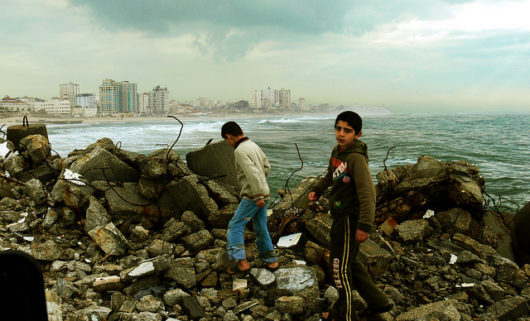
This has hampered Gaza’s infrastructure, including a resource vital for all life on Earth, water. Pollution and groundwater depletion are the major concerns, with some sources estimating that 95 percent of groundwater sources are contaminated in the area. Water security in Gaza depends mainly on improving infrastructures, such as sewage treatment and groundwater withdrawal practices.

A Brief History of Gaza

Following the partition of Israel into Jewish and Palestinian territories in 1948, Egypt occupied Gaza. The territory remained under the Egypt control until Israel seized it in the Six Day War of 1967. Israel withdrew in 2005 and only two years later, the Palestinian Authority was ousted in elections in favor of Hamas, considered to be a terrorist organization by most of the world. Israel’s response was a complete blockade of Gaza, limiting the abilities of goods and services to enter the territory.

With the blockade came severe restriction of movement for Gazans, at both the Israeli and Egyptian borders. Beginning with the second Intifada, the Palestinian uprising against Israeli occupation, Israel drastically reduced the number of Palestinian crossings at the Erez border, the only land crossing for the movement of the people, generally limited to humanitarian aid and medical treatment. Statistics outline the decline in crossings. Before the outbreak of the intifada in 2000, an average of 780,000 Palestinians entered Israel through Erez monthly. That number is now around 12,000. Such restrictive border controls have implications for water security in Gaza as well.

Water Security in Gaza

Water accessibility and quality in Gaza are quite poor. Compounding to the problem of poor facilities, Gaza’s location in a water-stressed, drought-prone region affects water security in Gaza. Israel handles droughts through innovate methods such as drip irrigation and desalination plants. The Israeli government can afford to finance these projects because they are a highly prosperous nation. However, these methods are a luxury in Gaza.

Gaza’s main source of drinking water for decades, an underground aquifer, is depleted, with rapid population growth outpacing supply. Consequentially, seawater from the Mediterranean is seeping in, making the aquifer largely unusable. Gaza imports desalinated water from Israel, but the tense situation on the border has resulted in an increase of just five million more cubic meters of water in 20 years, a meager amount for a population of over two million people.

International Response

The international community has a strategic interest in water security in Gaza. The present, squalid conditions in Gaza create an environment ripe for extremism and resentment towards its more affluent neighbor. Recently, Israel has approved a shipment of building materials to enter Gaza in order to construct a large desalination plant. A notable nonprofit organization called Interpal is providing Gazans with immediate solutions, such as water filtration systems. However, effective water quality reform will require infrastructure reform, as well as coordination with Israel to ensure lasting water supply in the region.

Water security in Gaza affects at least two million people living in the region but should concern the international community as well. Desperate conditions create desperate civilians, and given the history of conflict in the region, solving this problem is paramount. A water-secure Gaza improves Israel’s long term security and improves the security of the Middle East, which has positive implications for everyone.

– Joseph Banish
Photo: Flickr

February 16, 2019
https://borgenproject.org/wp-content/uploads/borgen-project-logo.svg 0 0 Kim Thelwell https://borgenproject.org/wp-content/uploads/borgen-project-logo.svg Kim Thelwell2019-02-16 19:30:432020-02-27 15:39:25The Truth About Water Security in Gaza
Water, Water Quality

The State of Water in Gaza

Water Crisis in Gaza
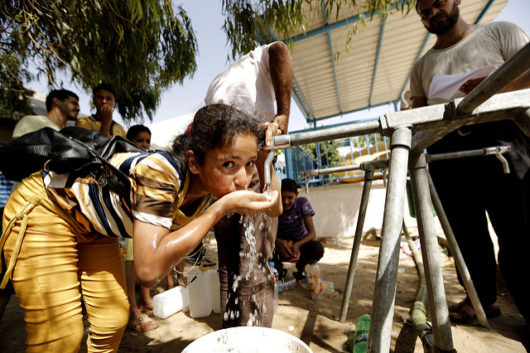
Although access to safe drinking water is a basic human right, many people in Gaza are struggling to find sanitary water. There is an acute water crisis in Gaza, as only one in 10 households has access to safe water sources.  People in this region struggle to find access to a clean and safe water source, only adding to the already bad living conditions in the area. Contaminated water causes severe problems such as disease outbreaks, which can be fatal without proper hygiene tools.

The Water Crisis in Gaza

Experts have estimated that 97 percent of drinking water in Gaza is contaminated by sewage and salt. The regions main source of water is from their coastal aquifer, but the extreme overuse of the aquifer is diminishing its supply at an unprecedented rate. The system has also been contaminated by seawater, meaning that only 4 percent of the water that comes from the aquifer is safe to drink. Water in the region has even become privatized and many families must pay a vendor that owns a private well simply to obtain water. Even when this water is delivered to households, two-thirds of it is already contaminated. On average, around 33 percent of an individual’s income in Gaza goes towards purchasing water.

Effects on Hygiene

This water crisis in Gaza not only affects water consumption but hygiene as well. Gaza is only able to have electricity for four to five hours a day, which prohibits sewage pants from being able to treat all of the sewage that comes through. An extreme amount of sewage is pumped back into the ocean in Gaza daily and around 70 percent of the beaches in the region are contaminated. As a result, polluted water is the leading cause of child mortality in Gaza. As aid organizations work to improve access to clean water,  the sanitation crisis can be improved as well.

Organizations Working to Improve Water Quality

In January 2017, UNICEF built the largest desalination system in Gaza to provide 75,000 citizens with access to drinking water. Electricity remains a problem in the region, but UNICEF plans to build a large solar panel field to ensure that the plant remains running at full capacity so that it can provide up to 250,000 people with clean water. The organization also partnered with Massachusetts Institute of Technology (MIT) to create a new desalination technique that can make almost 90 percent of water from the aquifer into safe drinking water. The United Nations’ WASH program has also concurred that other steps still need to be taken such as purifying the aquifer and improving rainwater harvesting.

Some experts believe that the region will be uninhabitable by 2020 due to the extreme burden of the water crisis in Gaza. Aid organizations along with the Palestinian Water Authority are aiming to avoid that by planning to build a large sewer network with several desalination plants. Donors have already pledged $500 million to the project. The only problem with the project is the lack of electricity in the region, but officials are claiming that they will soon solve this problem.

Although the water crisis in Gaza has only worsened in the last 20 years, recent aid work in the region provides hope for those who have been struggling to find clean water. As UNICEF and other agencies work to give clean water to the people of Gaza, the privatized water vendors may disappear and the idea of having to purchase largely contaminated water can become a thing of the past for the people of the region.

– Olivia Halliburton
Photo: Flickr

February 14, 2019
https://borgenproject.org/wp-content/uploads/borgen-project-logo.svg 0 0 Kim Thelwell https://borgenproject.org/wp-content/uploads/borgen-project-logo.svg Kim Thelwell2019-02-14 13:30:502024-05-29 22:58:11The State of Water in Gaza
Activism, Water Quality

Matt Damon and the WASH Program

Matt Damon and WASH
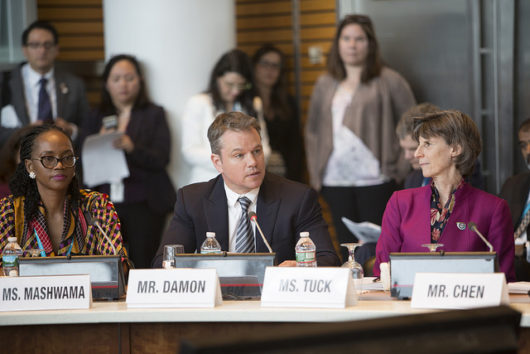
Matt Damon is an academy award winning actor, screenwriter, producer and humanitarian. Inspired by his trips to Mexico and Guatemala as a youth, Matt has been devoted to ending the struggle for basic human needs. He learned about the immense challenges of accessing and retrieving clean water and sanitation in sub-Saharan Africa and this inspired him to create the H20 Africa Foundation.

The Foundation of WASH Program

Later on, he teamed up with Gary White to merge into one foundation and launched the WASH program with the official website water.org. The WASH is an abbreviation from Water, Sanitation and Hygiene. Matt Damon works with the WASH program by doing active organization work. He visits multiple countries to strategize on how to improve water condition and meets with high-level organizations like the World Economic Forum and the World Bank. This hands-on activity has positioned him as one of the world’s experts on water and sanitation issues.

Matt Damon knows water is a basic human need. In many areas around the world, women and children walk miles on a daily basis to the nearest source of clean water for cooking, drinking and bathing. Having to go so far for water every day takes people away from education and their families and Matt believes this robs people of their potential. As Matt says it himself: “Access to clean water is access to education, access to work, access-above all- to the kind of future we want for our own families, and all the member of the human family.”

The Effects of Water Crisis

The water crisis around the globe has been an ongoing battle for many countries. More people die from unsafe water than from any form of violence, due to the waterborne diseases. These diseases kill more children than malaria, measles and HIV/AIDS combined. Over 100 million families are in a constant cycle of disease and lack of opportunities to improve lifestyle. One in three families lacks access to a clean toilet, increasing the chance of disease. With the journey to get decent water being so long, 443 million school days are wasted, just because families do not have clean water. Time spent gathering water also affects the economy as well as nearly $24 billion is lost annually. Even with these setbacks, every dollar donated to improve clean water and sanitation increases economic activity by eight dollars.

The Work of WASH Program

For more than 25 years, Matt Damon has been working closely with the WASH program to bring clean, accessible water to people in poverty around the world. With the WASH program, safe water has the power to turn problems into potential. The potential for health, education and economic prosperity lie in the power of clean water and sanitation. Gary and co-founder Matt are out there making this happen. So far, they have brought clean water and sanitation stations to over 16 million people. Charity alone is not a permanent or not even long-term solution. Through government and economic outreach, they can raise money with percentages from products sold and government funding. Another way the organization is tackling the ongoing water crisis is with its own type of credit called water credit. Water credits are small loans families can apply for in order to have proper sanitation systems built. The payback on these loans has been high, with a 97 to 99 percent payback rate.

Wash Program Super Bowl Ad

In an attempt to reach out to the masses of people, Matt Damon took the WASH program and put it in a Super Bowl ad. The ad states that, although the water is available at the turn of the knob, for roughly two billion people around the world, water is difficult to access. This includes 750 million people in sub-Saharan Africa and 63 million people in India that lack access to clean water. For example, conflict in Yemen has completely cut off the supply for clean water. At least half a million of those people are infected by waterborne diarrheal diseases. To take action, Matt urges governments and businesses to invest in clean water and toilets. The commercial promotes the sale for Stella glasses. This company has dedicated a portion of 300,000 sales that will go towards water projects correlated with the WASH program. Getting clean water to people globally will require donations, but most importantly companies that will invest in this program.

With millions of people affected by the water crisis, there is no one size fits all solution. Matt Damon and the WASH program are using their influence and are utilizing all their resources to bring people water, a basic survival need, straight to their homes.

– Kayla Cammarota
Photo: Flickr

February 11, 2019
https://borgenproject.org/wp-content/uploads/borgen-project-logo.svg 0 0 Kim Thelwell https://borgenproject.org/wp-content/uploads/borgen-project-logo.svg Kim Thelwell2019-02-11 19:30:312019-05-07 13:07:29Matt Damon and the WASH Program
Page 8 of 16«‹678910›»

Get Smarter

  • Global Poverty 101
  • Global Poverty… The Good News
  • Global Poverty & U.S. Jobs
  • Global Poverty and National Security
  • Innovative Solutions to Poverty
  • Global Poverty & Aid FAQ’s
Search Search

Take Action

  • Call Congress
  • Email Congress
  • Donate
  • 30 Ways to Help
  • Volunteer Ops
  • Internships
  • Courses & Certificates
  • The Podcast
Borgen Project

“The Borgen Project is an incredible nonprofit organization that is addressing poverty and hunger and working towards ending them.”

-The Huffington Post

Inside The Borgen Project

  • Contact
  • About
  • Financials
  • President
  • Board of Directors
  • Board of Advisors

International Links

  • UK Email Parliament
  • UK Donate
  • Canada Email Parliament

Get Smarter

  • Global Poverty 101
  • Global Poverty… The Good News
  • Global Poverty & U.S. Jobs
  • Global Poverty and National Security
  • Innovative Solutions to Poverty
  • Global Poverty & Aid FAQ’s

Ways to Help

  • Call Congress
  • Email Congress
  • Donate
  • 30 Ways to Help
  • Volunteer Ops
  • Internships
  • Courses & Certificates
  • The Podcast
Scroll to top Scroll to top Scroll to top