Driven by Industry: Water Pollution in Russia from Coast to Coast
A quarter of the world’s fresh water supply is in Russia, but a large portion of the resource has been tainted by industrial waste. Water pollution in Russia is problematic for Moscow, considering the city is 70 percent dependent on surface water.
With estimates of 35 to 60 percent of total drinking water reserves not meeting sanitary standards, water pollution in Russia effects all corners of the country. In fact, a report from Russia’s Ministry of Natural Resources in April of 2017 stated that 74 percent of Russians live in environmental deterioration, and that 40 percent of them consumed water unhealthy to drink.
Incidents of Environmental Abuse
Prosecutors recently charged that Russia’s Natural Resources Ministry neglected to collect environmental fines across Russia. Back in 2016, an industrial company named Norilsk Nickel was fined a mere $530 for contaminating an entire Siberian river with heavy metals.
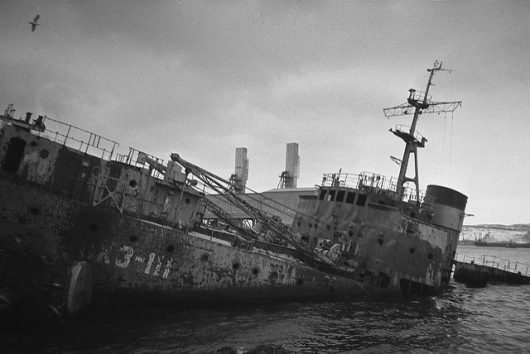
In the northwest of Russia near Finland is a region known as Murmansk. In the past, this area suffered nuclear hazards and acted as the dumping ground of ship skeletons. The Kola Bay fishing community, a port town in Russia’s Murmansk region, is now under stress due to the polluted water.
In a progressive move, Russia’s federal budget allocated 50 million rubles ($880,000) towards cleaning the unauthorized ship dumps out of Kola Bay.
Karabsh
To the east of Moscow and just north of Kazakhstan lies the town of Karabsh in Russia’s Ural Mountains. There, a copper smelting plant dominates the environment and has been polluting the ground and water since the beginning of the last century.
When the town was young, it’s population reached 50,000, but Karabash now has a very high mortality rate from cancer and respiratory disease due to the plant; in consequence, the current population is 11,000.
“I’ve long since given up drinking the tap water,” said Vladimir Kartashov, a lifelong resident of Karabash.
The copper plant in Karabash has turned the town into an environmental disaster zone with water concentrations of arsenic 279 times, copper 600 times and lead is 300 times the permitted level.
Siberia
In Siberia, the large part of Russia east of the Urals, the deepest lake in the world lies just north of Mongolia. Lake Baikal hold’s one-fifth of the world’s unfrozen fresh water and is of exceptional value to evolutionary science; unfortuantely, the body of water can no longer absorb human pollution without consequence.
The lake’s ecosystem experienced an explosion of algal blooms, which deplete the water of dissolved oxygen and practically suffocate fish.
“I am 150 percent sure that the reason is the wastewater runoff from towns without proper sewage treatment,” said Oleg Timoshkin, biologist at the Russian Academy of Science’s Limnological Institute in Irkutsk.
Improve the Industry, Improve Water Pollution in Russia
In an effort of good faith, the Russian government is putting 26 billion rubles ($452 million) into a cleanup program, but water pollution in Russia is driven predominantly by industry.
Corporations do not have much incentive to practice eco-friendly habits due to the ineffective, unenforced fines. All across the country, rivers and lakes have been flooded with waste runoff from factories. Russia has the means to enforce its own environmental regulations, but Russia’s Natural Resource Ministry has neglected to collect on 132,075 instances of entire-river poisoning.
Hopefully the restoration efforts of Russia will become the nation’s norm, but for now, the world must wait and see what becomes of water pollution in Russia.
– Sam Bramlett
Photo: Flickr
