The State of Water Quality in Nigeria
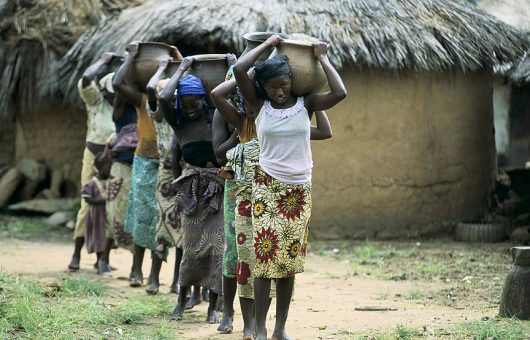 In Nigeria, one of the foremost necessities for survival has become a luxury reserved for a fortunate few. Clean water quality in Nigeria is essential, but for many, it is elusive if not outright unobtainable. Seventy million Nigerians lack access to safe drinking water, according to the Pulitzer Center. This means that more than 35 percent of people in the continent’s most populous nation face the daily deprivation of their basic needs.
A confluence of geographic, climatic and institutional factors contribute to their plight. Because much of Nigeria’s drinking water is unpurified groundwater, it usually contains pollutants and chemical contaminants like heavy metals responsible for debilitating diseases like dysentery, typhoid and cholera. Estimates suggest that these diseases – preventable with clean water and basic sanitation – claim the lives of about 60,000 Nigerian children under five each year.
The Nigerian government is tasked with reducing these numbers and providing potable water to their people. So far, they have been largely unsuccessful. Despite annual budgets of around $500 million for water sanitation programs, the country was unable to meet its goals for clean water access by 2015.
This is due to pervasive government corruption and ineffectual mechanisms to hold them accountable. Typically, funds are dispersed from the national government to the 36 states, which have discretion in spending and giving some of the money to localities.
According to a senior official, “There is no clear tracking for budgeted funds or expenditures…Most of the states don’t have water policies; there is no state in the federation that has a regulatory agency for water”.
To mitigate this corruption, the Pan Africa Chemistry Network suggests a national water strategy with clear roles for all institutions involved, as well as instruments to ensure better accountability. With such a framework in place, the government would be better equipped to meet the challenges of water quality in Nigeria.
Despite these setbacks, there are significant opportunities for improvement. Amid government dysfunction, optimism emanates from ingenuity. Technological innovation is enabling the purification of water across the continent.
One such invention to improve water quality in Nigeria is the EPA Compact Water Plant, which uses a process called hydraulic flocculation to clean contaminated water. One model uses a solar panel to provide the energy for the process, which can be performed by an individual. Tested in four African communities, this technology has performed well, and its proliferation across Nigeria could be an enormous improvement to current methods.
Janet Daniels, a resident of the capital city of Abuja, has an acute understanding of the impact such technology could have. Currently, she is forced to collect her water from a local borehole.
“We cannot wait for the government to do anything” she laments. “I have to boil the water [because] it has little particles of stuff in it”.
For people like Janet Daniels, gaining access to potable water is a daily toil. By emphasizing accountability and providing new technologies like the EPA Compact Water Plant, Nigeria can ensure that clean water is no longer mistaken for a luxury.
– Brendan Wade
Photo: Flickr
