• Link to X
  • Link to Facebook
  • Link to Instagram
  • Link to TikTok
  • Link to Youtube
  • About
    • About Us
      • President
      • Board of Directors
      • Board of Advisors
      • Financials
      • Our Methodology
      • Success Tracker
      • Contact
  • Act Now
    • 30 Ways to Help
      • Email Congress
      • Call Congress
      • Volunteer
      • Courses & Certificates
      • Be a Donor
    • Internships
      • In-Office Internships
      • Remote Internships
    • Legislation
      • Politics 101
  • The Blog
  • The Podcast
  • Magazine
  • Donate
  • Click to open the search input field Click to open the search input field Search
  • Menu Menu
Blog - Latest News
Children, Global Poverty, Refugees, War and Violence

Refugee Child Abuse in Libya
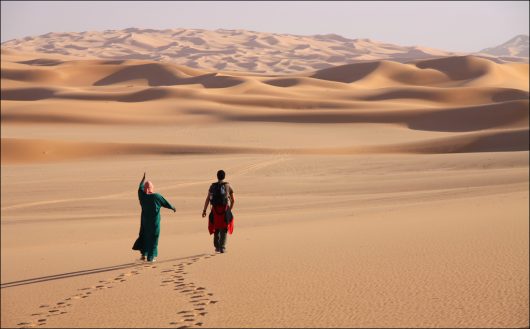
Libya
A recent United Nations International Children’s Emergency Fund (UNICEF) study titled A Deadly Journey for Children: The Central Mediterranean Migration Route, surveyed migrant women and children in Libya making their way to Europe. Refugee children leaving war and poverty are being mentally and physically abused, sexually assaulted and starved.

Last September, it was estimated that 256,000 migrants were in Libya, 11 percent of whom were women and nine percent of whom were children. A third of these children were unaccompanied. However, these figures are estimations and the actual statistics are assumed to be much higher.

About 70 percent of migrants traveling through Africa to Europe experience some type of exploitation, according to an October International Organization for Migration (IOM) survey. Last year, nine of out 10 children who used the Central Mediterranean Migration Route arrived in Europe unaccompanied. Nearly 26,000 children made the journey in 2016, which is twice the number of children from the previous year. Unaccompanied children are more prone to different types of abuse, trafficking and exploitation.

UNICEF staff members in Libya have documented many cases of refugee child abuse over time. Three-quarters of the children interviewed in the survey said they had experienced some type of violence from an adult. A majority of the children had experienced emotional abuse, with girls reporting higher rates than boys. Some children also said that they had to rely on smugglers, which resulted in other types of abuse like trafficking.

Amid the refugee child abuse shown in this study, UNICEF has created a six-part plan that they want governments and the European Union to adopt. The UNICEF Agenda for Action is comprised of the following goals:

  1. Protect child refugees and migrants, particularly unaccompanied children, from exploitation and violence.
  2. End the detention of children seeking refugee status or migrating by introducing a range of practical alternatives.
  3. Keep families together as the best way to protect children and give them legal status.
  4. Keep all refugee and migrant children learning and give them access to health and other quality services.
  5. Press for action on the underlying causes of large-scale movements of refugees and migrants.
  6. Promote measures to combat xenophobia, discrimination and marginalization in countries of transit and destination.

UNICEF spokesperson Sarah Crowe told Al Jazeera, “We need to work on finding a solution to the root causes of the problem and we need to do more to support children at every step of the way.”

– Shannon Elder

Photo: Flickr

April 24, 2017
Share this entry
  • Share on Facebook
  • Share on X
  • Share on WhatsApp
  • Share on Pinterest
  • Share on LinkedIn
  • Share on Tumblr
  • Share on Vk
  • Share on Reddit
  • Share by Mail
https://borgenproject.org/wp-content/uploads/borgen-project-logo.svg 0 0 Borgen Project https://borgenproject.org/wp-content/uploads/borgen-project-logo.svg Borgen Project2017-04-24 01:30:182024-12-13 17:56:47Refugee Child Abuse in Libya

Get Smarter

  • Global Poverty 101
  • Global Poverty… The Good News
  • Global Poverty & U.S. Jobs
  • Global Poverty and National Security
  • Innovative Solutions to Poverty
  • Global Poverty & Aid FAQ’s
Search Search

Take Action

  • Call Congress
  • Email Congress
  • Donate
  • 30 Ways to Help
  • Volunteer Ops
  • Internships
  • Courses & Certificates
  • The Podcast
Borgen Project

“The Borgen Project is an incredible nonprofit organization that is addressing poverty and hunger and working towards ending them.”

-The Huffington Post

Inside The Borgen Project

  • Contact
  • About
  • Financials
  • President
  • Board of Directors
  • Board of Advisors

International Links

  • UK Email Parliament
  • UK Donate
  • Canada Email Parliament

Get Smarter

  • Global Poverty 101
  • Global Poverty… The Good News
  • Global Poverty & U.S. Jobs
  • Global Poverty and National Security
  • Innovative Solutions to Poverty
  • Global Poverty & Aid FAQ’s

Ways to Help

  • Call Congress
  • Email Congress
  • Donate
  • 30 Ways to Help
  • Volunteer Ops
  • Internships
  • Courses & Certificates
  • The Podcast
Link to: 5 Ways Poverty Affects the Developing Brain Link to: 5 Ways Poverty Affects the Developing Brain 5 Ways Poverty Affects the Developing Brain Link to: Welfare Database Reform May Improve Poverty in Thailand Link to: Welfare Database Reform May Improve Poverty in Thailand Welfare Database Reform May Improve Poverty in Thailand
Scroll to top Scroll to top Scroll to top