• Link to X
  • Link to Facebook
  • Link to Instagram
  • Link to TikTok
  • Link to Youtube
  • About
    • About Us
      • President
      • Board of Directors
      • Board of Advisors
      • Financials
      • Our Methodology
      • Success Tracker
      • Contact
  • Act Now
    • 30 Ways to Help
      • Email Congress
      • Call Congress
      • Volunteer
      • Courses & Certificates
      • Be a Donor
    • Internships
      • In-Office Internships
      • Remote Internships
    • Legislation
      • Politics 101
  • The Blog
  • The Podcast
  • Magazine
  • Donate
  • Click to open the search input field Click to open the search input field Search
  • Menu Menu
Blog - Latest News
Global Poverty, War and Violence

Nine Facts About Refugees in Georgia
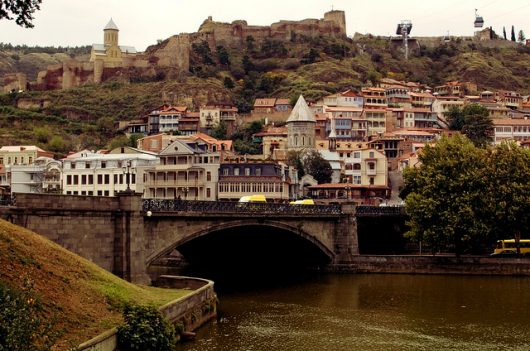

Georgia is a nation well-known for its conflict with Russia over provinces South Ossetia and Abkhazia in 2008. Georgia is a former member of the Soviet Union, and South Ossetia and Abkhazia declared independence from Georgia shortly after it left the Soviet Union. However, neither Abkhazia nor South Ossetia is fully recognized as independent from Georgia internationally. Their declarations of independence resulted in conflict with Georgia.

Nine Facts About Refugees in Georgia

1. As of mid-2015, there were more than 250,000 “refugees and other persons of concern to UNHCR” in Georgia. This includes refugees, people in refugee-like situations (who have not been formally recognized as refugees), internally displaced persons, asylum seekers and other stateless persons.

3. The 2008 conflict created 150,000 Georgian asylum seekers. Fewer than 1,000 Georgian asylum seekers had been accepted each year globally since the early 2000s.

4. More than 1,400 refugees from other countries were accepted into Georgia in 2015. The majority of them were from Iraq and Syria.

5. Since Russia’s second invasion of Chechnya in 1999, about 12,000 Chechnya refugees came to Georgia. Russia has made claims that Georgia hid Chechnya rebels, but Georgia has deemed those claims as false.

6. The International Criminal Court started investigating the war crimes of South Ossetia, Russia and Georgia in and around South Ossetia in order to bring justice to over 6,000 victims. Still, it is doubtful the victims will receive reparations.

7. There are almost 300,000 internally displaced persons in Georgia due to the conflicts with Abkhazia and South Ossetia over the last 20 years. Five percent of the population is internally displaced.

8. During Georgia’s conflict with Abkhazia in 1992-1993, both sides terrorized civilians based on which group they were from and this led to many displaced persons.

9. The EU voted in February to allow Georgians to travel visa-free into the EU for up to 90 days. The EU was concerned this could cause an upsurge in Georgian migrants overstaying illegally, therefore it reserved the right to reinstate visa requirements if needed.

These are just nine facts about refugees in Georgia. Refugees in Georgia are affected by the conflict in South Ossetia, Abkhazia and Russia.

– Jennifer Taggart

Photo: Flickr

April 13, 2017
Share this entry
  • Share on Facebook
  • Share on X
  • Share on WhatsApp
  • Share on Pinterest
  • Share on LinkedIn
  • Share on Tumblr
  • Share on Vk
  • Share on Reddit
  • Share by Mail
https://borgenproject.org/wp-content/uploads/borgen-project-logo.svg 0 0 Borgen Project https://borgenproject.org/wp-content/uploads/borgen-project-logo.svg Borgen Project2017-04-13 01:30:232020-05-04 17:16:45Nine Facts About Refugees in Georgia

Get Smarter

  • Global Poverty 101
  • Global Poverty… The Good News
  • Global Poverty & U.S. Jobs
  • Global Poverty and National Security
  • Innovative Solutions to Poverty
  • Global Poverty & Aid FAQ’s
Search Search

Take Action

  • Call Congress
  • Email Congress
  • Donate
  • 30 Ways to Help
  • Volunteer Ops
  • Internships
  • Courses & Certificates
  • The Podcast
Borgen Project

“The Borgen Project is an incredible nonprofit organization that is addressing poverty and hunger and working towards ending them.”

-The Huffington Post

Inside The Borgen Project

  • Contact
  • About
  • Financials
  • President
  • Board of Directors
  • Board of Advisors

International Links

  • UK Email Parliament
  • UK Donate
  • Canada Email Parliament

Get Smarter

  • Global Poverty 101
  • Global Poverty… The Good News
  • Global Poverty & U.S. Jobs
  • Global Poverty and National Security
  • Innovative Solutions to Poverty
  • Global Poverty & Aid FAQ’s

Ways to Help

  • Call Congress
  • Email Congress
  • Donate
  • 30 Ways to Help
  • Volunteer Ops
  • Internships
  • Courses & Certificates
  • The Podcast
Link to: “Power Africa” and the Return on Investment of USAID Link to: “Power Africa” and the Return on Investment of USAID “Power Africa” and the Return on Investment of USAID Link to: Improving Literacy Rates and Education in Malta Link to: Improving Literacy Rates and Education in Malta Improving Literacy Rates and Education in Malta
Scroll to top Scroll to top Scroll to top