• Link to X
  • Link to Facebook
  • Link to Instagram
  • Link to TikTok
  • Link to Youtube
  • About
    • About Us
      • President
      • Board of Directors
      • Board of Advisors
      • Financials
      • Our Methodology
      • Success Tracker
      • Contact
  • Act Now
    • 30 Ways to Help
      • Email Congress
      • Call Congress
      • Volunteer
      • Courses & Certificates
      • Be a Donor
    • Internships
      • In-Office Internships
      • Remote Internships
    • Legislation
      • Politics 101
  • The Blog
  • The Podcast
  • Magazine
  • Donate
  • Click to open the search input field Click to open the search input field Search
  • Menu Menu

Archive for category: USAID

Topics covering about USAID

Global Poverty, USAID

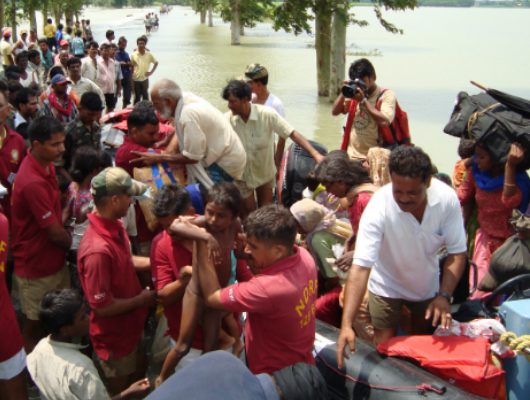
Natural Disaster Education Eases Economic Blow

natural_disaster_education

As El Niño once again stirs the atmosphere. Skiers look forward to a good amount of snow and developing countries anticipate disaster.

El Niño is defined as “above-normal sea surface temperatures in the eastern and central equatorial Pacific Ocean.” It occurs every two to seven years and can last for several months.

When ocean temperatures change, so do wind and precipitation patterns and land temperatures. Some areas receive life-saving rainfall while others experience heavy flooding and droughts. Tropical cyclones and wildfires are also common side-effects.

Countries vulnerable to harsh weather, such as agriculture-based economies and areas with unstable infrastructure, face famine, disease and increased poverty. Economies without the means to make repairs deteriorate further, and families are left homeless and hungry.

This year, as the world faces one of the strongest El Niños in 50 years, USAID is implementing natural disaster education in vulnerable countries. The more prepared a country is to respond to and prevent natural disasters, the quicker its economy can recover.

In New Guinea, where a combination of drought and floods decimated the sweet potato crop and left many without a source of income, USAID is providing agricultural training to make fields more resilient. Techniques such as planting over last season’s crop stubble and using cover crops help the soil retain three times as much moisture.

Latin American meteorologists are learning to use the Flash Flood Guidance System to predict flash floods. Studying rainfall and absorption buys as much as six hours to evacuate people and animals. It’s not a lot of time, but it’s enough to prevent heavy casualties.

As more people move in Nacala, Mozambique, they risk settling in areas that are vulnerable to the climate. Flooding, erosion and water scarcity can damage infrastructure and impede development.

USAID founded the Climate Resilient Infrastructure Services program to educate newcomers about climate vulnerabilities and high-risk areas, as well as teach natural disaster response techniques. Climate change awareness saves a lot of money and prevents future heartache.

Similar to Nacala, Vietnam has begun studying climate change and proper responses. One of its cities, Hue, experiences frequent heavy floods, which encourage extreme poverty and disease.

USAID is helping Hue, and Vietnam in general, to predict flooding and create infrastructure that can withstand heavy water over an extended period of time.

As a result of warnings, communities in Africa organized food, medicine and housing in anticipation of natural disasters and resulting diseases. El Niño is occurring more frequently in Africa, leaving little time for recovery, so food and supply storage is vital.

Families who lose their homes and occupations can utilize the supplies until they regain their livelihood. Instead of dissolving, communities will remain intact and functional and poverty will be kept at bay.

Natural disasters leave thousands dead or impoverished each year, but it doesn’t have to be this way. Natural disaster education saves lives and prevents poverty. Instead of having to rebuild their lives from the ground up, people in developing countries can continue to move forward and improve their situations.

– Sarah Prellwitz

Sources: USAID 1, USAID 2, NOAA, Accuweather, IB Times, Live Science
Photo: Wikimedia

October 26, 2015
https://borgenproject.org/wp-content/uploads/borgen-project-logo.svg 0 0 Borgen Project https://borgenproject.org/wp-content/uploads/borgen-project-logo.svg Borgen Project2015-10-26 01:30:012024-06-04 04:33:51Natural Disaster Education Eases Economic Blow
Education, Global Poverty, Technology, USAID

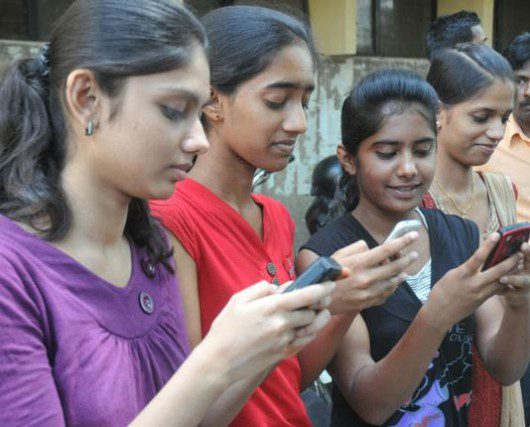
Smartphones Affect Education Gaps in Rural Pakistan

smartphones_affect_education
Throughout rural Pakistan, many teachers don’t have access to quality educational training for a variety of reasons, including cost, distance and family commitments.

Online distance learning could easily fill-in these educational gaps, but limited Internet coverage has proven to be a stumbling block for educators and students alike.

Developments in Literacy (DIL), a nonprofit founded by Pakistani-Americans in order to bring quality education to disadvantaged children in underdeveloped regions, has created a revolutionary solution to end this problem.

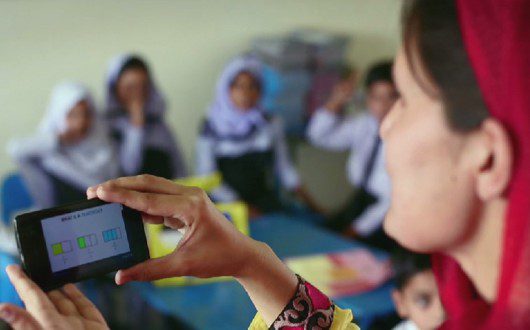
Funded by USAID, DIL created a mobile distance learning program known as mLearning. The parameters of the program were straightforward. Teachers were each given a smartphone with video lessons loaded onto them, giving teachers unlimited access to the material.

Once a month, teachers would meet at one of the 23 WiFi hubs DIL established throughout the nations to download more training videos. The 8- to 10-minute videos cover a variety of techniques to engage and inspire students to love learning, especially math and English.

Although the program’s focus is on bettering the understanding of school subjects and the teaching ability of rural educators, the end-game is to inspire children to stay in school. The goal is to have smartphones affect education gaps in rural Pakistan.

MOBILELEARN_2048847g

The average number of years that Pakistani children stay in school is only eight years, with most dropping out before age 16. This low level of academic participation has capped the Pakistani literacy rate at 57 percent, with only 45 percent literacy for women.

Because of this, mLearning is aimed at improving the education and opportunities of poor children and at-risk rural girls through better teacher training and learning resources.

During the course of the initial mLearning program, 200 teachers were given smartphones and completed the program from January 2013 to November 2014. Currently, more than 5,000 children benefit from being taught by teachers who have participated in mLearning.

Since the end of mLearning, the educational aid videos have been shared with 40 schools not affiliated with DIL, and countless teachers have shared the videos personally from their smartphones.

That’s the real brilliance behind mLearning using smartphones as its method of delivery. Since DIL owns the majority of the content, teachers are able to share the videos freely.

mLearning’s results thus far have been impressive. Across the board, teachers reported a 30 percent increase in their English skills and a 40 percent increase in their comprehension of mathematics. As the mLearning videos continue to be spread around, DIL is looking to expand the program.

– Claire Colby

Sources: USAID, World Factbook
Photo: USAID
Photo: The Hindu.Com

October 22, 2015
https://borgenproject.org/wp-content/uploads/borgen-project-logo.svg 0 0 Borgen Project https://borgenproject.org/wp-content/uploads/borgen-project-logo.svg Borgen Project2015-10-22 09:15:342024-05-27 09:28:14Smartphones Affect Education Gaps in Rural Pakistan
Global Poverty, Technology, USAID

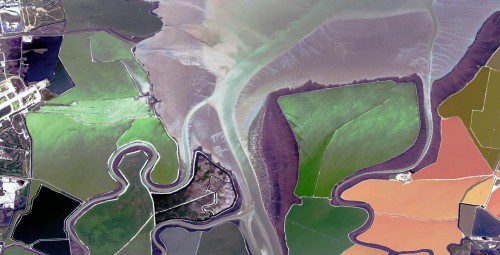
NASA and USAID Partnership: Mekong River


What do you think of when you think of NASA technology? “Space” is probably going to be the answer most people give, unless they’ve heard of SERVIR, the result of a partnership between NASA, USAID, the World Bank in Washington, and several other organizations.

Daniel Irwin, the director of the program, knows this better than anyone. “When people think of NASA,” he says, “they think of Mars Exploration Rovers or finding water on the moon, but a big part of our mission is to study earth from space, to advance scientific understanding and meet societal needs.”

SERVIR is actually not an acronym – it is taken from the Spanish word meaning “to serve,” because the goal of the initiative is to do just that.

By combining NASA’s technology and humanitarian groups’ understanding of what areas need what resources and what would benefit people the most, SERVIR is able to better serve the needs of populations.

The NASA website says that the resources developed by SERVIR can help governments and other agencies to more effectively “respond to natural disasters, [improve] food security, safeguard human health, [and] manage water and natural resources.”

SERVIR has hubs at locations throughout the globe, ad just this August, SERVIR-Mekong was launched in Bangkok, Thailand.

The Mekong river is located in Southeast Asia that acts as a major trade route to China. Depending on the seasons, the Mekong sometimes floods the surrounding area, leaving the residents of the Mekong area in severe need.

This is one of the reasons why Mekong was chosen as a location for this SERVIR project.

The Mekong center in particular was the result of NASA and USAID partnership with the Asian Disaster Preparedness Center (ADPC.) This is a partnership that will work to make land use more sustainable and to monitor and (hopefully) decrease the effects of climate change.

For example, the Normalized Difference Vegetation Index (NDVI) is something that can be monitored with NASA technology. It is an indicator that comes from the amount of light reflected off of the surface of the earth based on the quantity and quality of plant life.

Areas that have lots of healthy vegetation will have a high NDVI and vice versa. Understanding the NDVI of an area can provide everyone from small farmers to forestry service personnel a better understanding of where to plant crops, develop urban centers, and more carefully preserve vegetation.

The power to help individuals and populations all over the world better respond to the effects of climate change extends to areas of food security and water resourcing as well. It truly is a remarkable innovation.

NASA technology can also be used to chart the course of natural disasters. For example, in the past, during hurricanes, it has allowed scientists to map out the paths of mudslides, which allowed them to understand which areas would be most affected and need the most help.

SERVIR’s track record has been vastly successful. Its team has worked with over 200 institutions in over 30 countries to develop local solutions, and to link local offices all over the globe in a network of ideas and innovations. Over 40 custom tools have been developed through the work of SERVIR.

It’s an excellent example of many of the tenets of humanitarianism: utilizing technology, creating partnerships, thinking big (even beyond the global scale) and dedicating existing resources towards a worthwhile cause.

As Irwin says, NASA technology and USAID’s resources together are helping to create “real time, real world applications that are changing the lives of people where they live.”

– Emily Dieckman

Sources: USAID, NASA, Servir Global, Washington Post
Photo: AmericaSpace

September 30, 2015
https://borgenproject.org/wp-content/uploads/borgen-project-logo.svg 0 0 Borgen Project https://borgenproject.org/wp-content/uploads/borgen-project-logo.svg Borgen Project2015-09-30 10:18:542024-12-13 18:05:11NASA and USAID Partnership: Mekong River
Global Poverty, USAID, Women & Children

Maternal and Child Health: Keeping Mother and Baby Alive

Maternal_and_Child_HealthDuring the 2015 Call To Action Summit, health ministers and global experts take a look at the progress that has been made. USAID has helped save the lives of an estimated 2.5 million children and nearly 200,000 mothers since 2008.
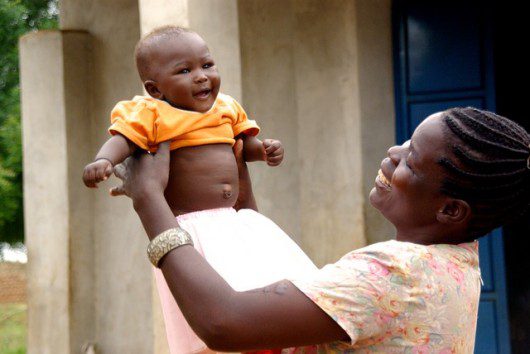

It has been a little over a year, in June 2014, since USAID introduced its newest strategic plan for maternal and child health. They hope to prevent the deaths of 15 million children and 600,000 mothers by 2020.

At the summit the participants reviewed the impact the USAID’s support has had all around the world; often putting a name and a face to those benefitting from the aid provided.

In India, mothers like Satyawati now know how to best take care of their newborns and other children thanks to the ability to obtain health-related knowledge and help from a local health worker.

Because Satyawati has access to this information, she has had her children properly vaccinated and employs proper hygiene practices in her home. In 1990 in India, children under the age of five had a mortality rate of 126 per 1,000 live births but in 2013 that number has been reduced to 53 per 1,000 live births.

Also, thanks to the support of the USAID, 27 hospitals in Malawi now have a device called a Pumani bCPAP that helps newborns with underdeveloped lungs breathe until they can do so own their own.

This device has tripled the survival rate of babies like Gloria Mtawila’s son Joshua, who stayed on the machine for a month until he could breathe on his own and is now a completely healthy baby.

All across the world bundles of joy are being born to tired but radiant mothers. Hospital staff assures that both have the best possible care in these first crucial hours, days and sometimes weeks after childbirth.

But also all across the world there are mothers on makeshift cots or laying on dirt floors. They and their babies do not have dedicated hospital staff looking after them.

Mom did not have access to prenatal vitamins and baby may not have access to life-saving vaccines. With poor living conditions, poor pre and post-birth care, and a poor quality of life all around, mom and her little one may not make it.

This is what USAID is working to prevent. USAID’s maternal and child health programs focus on cost-effective initiatives such as enabling access to nutritional supplements and vaccines.

The USAID has achieved great success. Maternal death rates have decreased by five percent in each of its 24 target countries while child mortality rates went down by four percent.

But this is still not enough. The USAID hopes to receive $850 million in funding for the maternal and child health program in order “to reduce child mortality to 20 or fewer deaths per 1,000 live births in every country by 2035, and to end preventable maternal deaths” (interaction.org).

Through this initiative, the USAID has inspired developing countries to develop strategies to reach these goals, and make the eradication of unnecessary maternal and child deaths possible.

– Drusilla Gibbs

Sources: USIAD, Interaction, Call to Action
Photo: Google Images

September 28, 2015
https://borgenproject.org/wp-content/uploads/borgen-project-logo.svg 0 0 Borgen Project https://borgenproject.org/wp-content/uploads/borgen-project-logo.svg Borgen Project2015-09-28 07:39:422024-05-27 09:27:52Maternal and Child Health: Keeping Mother and Baby Alive
Developing Countries, Global Poverty, USAID

USAID Sets New Goals for Maternal Health

maternal health
The United States Agency for International Development, or USAID, is a government organization in charge of allocating funds and aid to global issues.

Millions around the globe have felt such power and emotion in the form of kisses, hugs, listening ears, and countless late nights.

However, maternal and child survival continues to be among the key issues that feed into the poverty crisis in developing countries around the world.

According to the UN, “a woman dies from complications in childbirth every minute – about 529,000 each year – the vast majority of them in developing countries.”

As part of the Millennium Development Goals, which concluded earlier this year in 2015, several countries banded together in order to increase maternal and child survival by three-quarters. While the target was not met, significant progress was made and millions of lives were saved in countries that normally do not receive the care and resources required for a healthy delivery.

Now that 2015 is coming to an end, many countries and organizations are now setting new goals to improve maternal and child survival. USAID recently came out with its new goal to reach an additional 38 million women with increased access to care during childbirth.

With this goal in mind, an action plan was put together in order to achieve this milestone. On their site the organization stated, “the USAID report details how to reach 38 million of the most vulnerable women around the world with increased access to health care during delivery by 2020.”

This plan includes a focus on 24 target countries including, but not limited to Ethiopia, Nepal, Afghanistan, Haiti, and India.

With this aid, more mothers have had access to care during and after the birth of their children. A recent article from the USAID Impact blog reported successes within some of these target countries.

The organization reports that in Ethiopia, 38,000 workers have been trained and dispatched around the country to help mothers and children. In Nepal, female workers travel to provide women with antiseptic gel, free of charge, to reduce infant infection. Malawi has increased efforts to save infants born without fully developed lungs.

Similar stories are beginning to flourish in developing countries around the world. With countries receiving the necessary resources and aid during this vulnerable time for both mother and child, lives are being saved and general health standards improved.

The survival of these mothers and children around the globe is imperative if we are to alleviate the poverty crisis our world now faces.

To quote the USAID Impact post, “When a child dies, and when a mother dies giving birth, it is a tragedy for all of us…because it continues the cycle of extreme poverty that holds the entire world back. Together, we can break that cycle.”

When a mother is lost, children and fathers feel the strain and the community as a whole is affected. When a child is lost, the community misses out on that child’s potential accomplishments and impact. With USAID reaching out to the formerly unreachable, maternal and child survival increases and the community as a whole improves.

– Katherine Martin

Sources: UNICEF, USAID 1, USAID 2
Photo: pixabay

September 21, 2015
https://borgenproject.org/wp-content/uploads/borgen-project-logo.svg 0 0 Borgen Project https://borgenproject.org/wp-content/uploads/borgen-project-logo.svg Borgen Project2015-09-21 01:30:072024-12-13 18:05:08USAID Sets New Goals for Maternal Health
Foreign Aid, Global Health, Global Poverty, USAID

USAID: Interview with International Development Worker

international_development
Since 2009, USAID’s budget has gone down by about 16 percent. The United States’ foreign aid organization is already underfunded, making up less than one percent of the federal budget. Yet, USAID has 1,920 projects across almost every continent in the world.

With so little funding, it is impressive how much the organization can accomplish. Given the funding cuts, I talked to an active international development specialist and visiting professor at Colorado College.

Dr. Joseph Derdzinski had much experience with law and security forces in foreign countries during his time in the U.S. Air Force. Since then, he has conducted research on the democratic consolidation processes of post-authoritarian states as well as serving on election observation missions in Afghanistan and Egypt.

Q: Why do you think that USAID’s funding has gone down so significantly since 2009?

A: USAID was a main focal point of building infrastructure in Iraq and Afghanistan, so USAID funding was contingent on Afghanistan and Iraq. The reduction in USAID’s funding and budget is largely due to a reduction of foreign military personnel as well as development agencies from Afghanistan and Iraq.

Q: Why is the organization so underfunded?

A: It would make sense to fund more fully the agency, but there’s very little will from taxpayers or incentive for elected officials to increase USAID’s funding. In the annual federal budget, foreign aid doesn’t get the same level of attention as other budget items or priorities. This is due in part to the low level of understanding of how little funding foreign aid programs actually receive.

During or in the immediate wake of a war, foreign development funding is easier to justify, but it’s harder for a lawmaker to make a case for aid once the war is over. Moreover, everything to do with the war in Iraq, including development projects, was never part of the annual budgets. They were a supplement to the annual budget.

Q: Can you give me an example of how foreign aid helps the United States?

A: What’s happening in Greece in terms of migrations of people into Greece is a good example. The great majority who aren’t from Syria are fleeing authoritarian regimes and economic woes. And that’s the same as what’s happening at the U.S. border. Migrants to the US are fleeing social unrest and oppressive regimes.

And so, if the goal is to keep people in their home countries, one potential impact of international development is to allow people the option to remain in their home countries.

Q: Would you say that the budget cuts make working in international development difficult?

A: Yes, now more than ever it is more challenging to work in international development.

Conclusion: USAID is an important and undervalued organization in the United States. While at first glance, the work that USAID is doing may appear to primarily benefit the countries that are receiving assistance, it is in fact work that is beneficial to the United States as a whole. International development creates jobs for Americans, protects national security, and as Dr. Derdzinski described, can assist with the United States’ immigration dilemma.

With all of these factors kept in mind, foreign development assistance should no longer be something that is difficult for lawmakers to justify, but rather should be an integral part of policymaking.

– Clare Holtzman

Sources: Colorado College, Foreign Policy, USAID 1, USAID 2
Photo: United States Air Force Academy

September 5, 2015
https://borgenproject.org/wp-content/uploads/borgen-project-logo.svg 0 0 Borgen Project https://borgenproject.org/wp-content/uploads/borgen-project-logo.svg Borgen Project2015-09-05 07:36:142024-06-05 01:53:29USAID: Interview with International Development Worker
Food Aid, Global Poverty, Humanitarian Aid, USAID

World Food Program Increases Food Assistance to Syrians

food_assistance
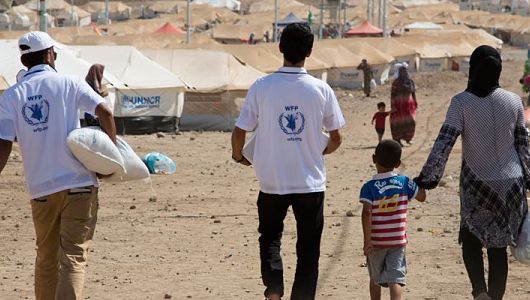
As fighting persists in Syria, life for the population remains a struggle and food security a challenge. Millions of people have been affected amid the escalating violence and the situation is rapidly deteriorating. The U.S. has announced a contribution of $65 million dollars to the World Food Program, which is operating within the Syrian borders.

The armed conflict in Syria, also called the Syrian Civil War, has been ongoing for years since unrest began in 2011. In the wake of the Arab Spring, a revolutionary wave of demonstrations and protests occurred across the Arab world. What began as protests against the government gradually morphed into a rebellion after a violent military force used by President Bashar al-Assad’s government.

As of January 2015, the death toll in Syria had risen above 220,000 and approximately 6 million people have been displaced, cut off from basic human needs such as water, food and electricity.

The United States Agency for International Development (USAID) is giving $65 million dollars to the United Nations World Food Program (WFP) to achieve their goal of providing food assistance to 4 million starving people inside the country and 1.6 million more in the neighboring countries of Jordan, Lebanon, Turkey and Egypt.

In Syria, the WFP has been running dangerously low on funding but the money infusion from USAID will keep the WFP afloat and operating through November preventing what could have been a complete shutdown.

The U.S. being the biggest donor to the Syrian crisis has contributed more than $4 billion dollars overall, allowing millions of needy families within Syria and those affected outside access to food and clean water.

According to USAID, the U.S. has now given more than $1.2 billion to the WFP for its Syrian operations – including more than $530 million for operations inside Syria and more than $693 million for operations benefiting Syrian refugees.

Although USAID has donated billions to the WPF, the international community has for the most part dropped the ball, forcing the WFP to devalue their food vouchers by half to refugees and lowered the amount of food in monthly household parcels inside Syria. USAID and the WFP continues to reach out to other governments hoping to rally more support and pressure them to take more actions.

In a press release by USAID on Friday, July 31, 2015, Dina Esposito, Director of USAID’s Office of Food for Peace said, “we have heard tragic stories of hungry refugees returning to war-torn Syria and taking children out of school to beg.” He continued, “We hope this new funding will help mitigate such difficult choices and help Syrians as the winter months approach.”

In war torn Syria, families are fleeing what were once their homes, desperately seeking safety. Starving and suffering from illness, people are getting life-saving food, water and medical care, thanks to the WFP and the disaster averting financial rescue from USAID.

– Jason Zimmerman

Sources: USAID, Reuters
Photo: Huffington Post

August 22, 2015
https://borgenproject.org/wp-content/uploads/borgen-project-logo.svg 0 0 Borgen Project https://borgenproject.org/wp-content/uploads/borgen-project-logo.svg Borgen Project2015-08-22 01:30:072020-07-02 10:27:41World Food Program Increases Food Assistance to Syrians
Aid, Humanitarian Aid, USAID

USAID’s Camp Hope Provides Relief in Nepal

Camp_Hope
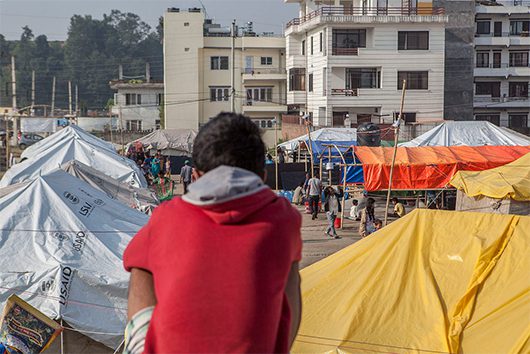
Camp Hope is giving survivors of the Nepal earthquake a beacon of light and symbol of recovery. A single square kilometer compound in Jorpati, Kathmandu, Camp Hope is composed of innumerable tents that house 330 families who once lived in five villages north of Kathmandu. Eighty-eight percent of these families had no houses to return to after the earthquake—they were utterly destroyed. This tight community is representative of the broader 500,000 Nepalese who were displaced after the earthquake last April, which shook hilly terrain that once served as housing foundations into rubble.

However, Camp Hope is permeated with a sense of, well, hope. Children laugh in the open spaces between their temporary houses, people relax in the line for the water pump, the elderly bask in the sun amid clucking chickens. Set up by the owner of the boutique hotel chain, Dwarika, the camp is full of people of all ages strengthening a community that will one day serve as a launchpad for rebuilding and recovery. Sangeeta Shrestha, founder of the camp, describes how she came to acquire the land for the camp when a local youth club donated their soccer field.

“I am lucky to have my hotel team of engineers and technicians whom I could call on to help set up the camp,” she said. The resources offered by the hotel have certainly come a long way in making the camp what it is. A kitchen tent run by the Dwarika offers residents three meals a day that often include chicken and eggs. Beyond basic medical services, housing and meals, the camp also offers its residents emotional solace. There are prayer tents, job training facilities and field trips for the 83 children enrolled in the local school.

Beyond being an awe-inspiring emblem of growth after disaster, Camp Hope also serves as a prime example of the benefits that come when public and private partnerships cooperate to further a cause. USAID stepped in to provide heavy plastic shelters that would sustain heavy rains during monsoon season. Additionally, the organization provided shelter to 310,000 families across affected regions.

There’s clearly more to be done, both within Camp Hope and beyond its walls. At the recent International Conference on Nepal’s Reconstruction, USAID pledged emergency relief and early recovery assistance totaling $130 million, with promises of more funding in the coming years. The U.S. government has also committed to helping rebuild Nepal through a number of programs, including:

  • Training Nepalis to build earthquake-sustainable houses;
  • Establishing approximately 1,000 Temporary Learning Centers for displaced children;
  • Distributing cash to the most at-risk families to help them immediately begin to reestablish their lives and strengthen the country’s agricultural system, which supports 75% of its population;
  • Protecting those who are vulnerable to human trafficking and other breaching of human rights; and
  • Planning and organizing groups that can efficiently tackle future natural disasters.

Despite the immense amount of work that lies ahead, the work of USAID in partnership with local groups such as Dwarika demonstrate how shared work between the private and public sectors can bring international resources to help build sustainable growth in at-risk communities. These efforts, like Camp Hope, are a source of inspiration for all.

– Jenny Wheeler

Sources: USAID, Dwarikas
Photo: Flickr

August 11, 2015
https://borgenproject.org/wp-content/uploads/borgen-project-logo.svg 0 0 Borgen Project https://borgenproject.org/wp-content/uploads/borgen-project-logo.svg Borgen Project2015-08-11 08:41:542020-03-20 13:26:49USAID’s Camp Hope Provides Relief in Nepal
Food Security, Global Poverty, USAID

USAID Helps Vietnam Boost Rice Yields

USAID Helps Vietnam Increase its Rice YieldsAs climate change affects agriculture across the developing world, food security is a painful reality for farmers who depend on their crops to eat and eke out a meager living. Every grain of rice they grow is valued — USAID is helping farmers in Vietnam to bolster their harvest yields.

USAID, the United States Agency for International Development, implemented the Vietnam Forests and Deltas Program in 2012, aimed at promoting rice production practices that can reduce greenhouse gas emissions and improve livelihoods with Vietnam’s agricultural extension services.

The program is focused on enhancing climate change resilience and working with all echelons of the Vietnamese society, from the community level up to the national level. Farmers are learning new agricultural techniques and are putting into practice climate-smart livelihoods in order to improve quality of life. They are applying new national policies and strategies in response to rising temperatures and changing weather pattern concerns. The program mainly concentrates on environmental conditions in Vietnam’s vulnerable forest and delta landscapes.

The Thanh Hoa and Kon Tum provinces have been selected by pilots for moving green growth strategies. With the implementation of innovative land use planning and training programs including local government, civil society and the private sector are demonstrating measurable improvements in carbon stocks and environmental services.

The Mekong and Red River Delta areas are increasingly falling victim to climate-related hazards such as storms, flooding, drought, salinity and sea level rise. These deltas are home to some of the most heavily populated and economically productive areas of Vietnam, making the region especially important as well as vulnerable to the country’s stability. USAID is working with the government and communities of the Long An and Nam Dinh provinces to help the population identify climate-related risks and how to take action in order to provide long term resilience.

USAID is working in partnership with several organizations including Winrock International, Vietnam’s Ministry of Agriculture and Rural Development, provincial governments, the Netherlands Development Organization, American Red Cross, Vietnam Red Cross and the Center for Sustainable Rural Development.

In Long An province, with training provided by USAID, farmers across the region have boosted rice yields dramatically, in many cases up to 25 percent more. This means that families once struggling with food insecurity and little to no profit from rice sales are eating better and making a better living, improving quality of life.

Before The Vietnam Forests and Deltas Program went into effect, farmers with minimal agricultural experience suffered preventable crop losses due to ignorance such as overuse or imbalance of fertilizers. As a result of the program, people learned how to apply new techniques including development of internal drainage lines and favoring conditions that lead to stronger and healthier rice plants such as rice paddy leveling.

No matter what one’s views of climate change are, it is a very real problem for the poor with real effects on the people struggling to survive in the delta and forest regions of Vietnam. USAID has proved an essential resource in the developing world. With the programs offered by the agency and its partners, poverty could soon be a thing of the past.

– Jason Zimmerman

Sources: USAID 1, USAID 2, Winrock, MARD

Photo: OceanBitesE

August 1, 2015
https://borgenproject.org/wp-content/uploads/borgen-project-logo.svg 0 0 Borgen Project https://borgenproject.org/wp-content/uploads/borgen-project-logo.svg Borgen Project2015-08-01 01:13:482020-07-06 12:23:07USAID Helps Vietnam Boost Rice Yields
Foreign Aid, Global Poverty, USAID

The Consequences of Cutting Aid to Palestine

Palestine
When it comes to the polarizing issue of the $400 million of foreign aid the United States is giving to Palestine, Senator Lindsey Graham (R-S.C.) says, “There’s a new game in town.”

On January 7, Senator Rand Paul (R-KY) introduced a new bill in the wake of Palestine’s application and recent acceptance to the International Criminal Court. Rand, Graham and their proponents argue that this action is in direct conflict with the one of United States’ three stipulations regarding aid to the West Bank, which is that the Palestinians will never seek to persecute Israel at the Hague.

Graham believes this bill presents a change in the dynamic between USAID, Palestine and Israel. Formerly, Israel fought against cutting assistance to Palestine and viewed international aid as an investment in national security and a movement toward the elusive “two state solution.” Rand and Graham now believe that it is time for the tide to turn in favor of a more aggressive statement.

“I cannot tell you the number of times the Israelis have engaged me to try to stop an emotional reaction by the Congress to terminate aid,” Graham said to Foreign Policy. “[But now] I’m going to lead the charge to make sure the Palestinians feel this.”

This aggressive approach is lauded as a defense of Israel, one of the United States’ closest allies. Yet research has shown that making the people of Palestine “feel” the loss of roughly $400 million could have the opposite effect, putting the civilians of the West Bank at a greater risk than ever before.

Primary defenders of the “cut aid” camp argue that aid to Palestine is akin to bankrolling the terrorist group Hamas. When they look at that $400 million, they see missiles pointed directly at Israel’s iron dome. What they do not see is the 515,000 Palestinian civilians who have been raised from poverty by the affordable water programs, infrastructural efforts and humanitarianism that flow from this aid.

According to an investigation done by the Government Accountability Office (GAO), USAID to Palestine has been carefully vetted and primarily channeled through in-kind efforts to change lives on the ground. In 2011, they found that the majority of aid was focused on the building of five hospitals, six clinics, the upgrade of 23 schools and the revamping of over 20 small- and medium-sized water systems. It was used to computerize hospitals in the main city of Mendabollah and provide 127,000 people with access to potable water.

“These aids are very helpful for us,” said Dr. Niha Sawaheh, head of the ER at the Palestinian Medical Center (a USAID project hospital) in Ramallah. “When they stop, they will affect us.”

What happens when the aid stops is not a theoretical question to Sawaheh. It is a recent memory. When the United States froze half of their allocated funds to Palestine in 2011, the hospital saw sharp declines in efficiency and diagnostic potential. After those cutbacks, the new, computerized CT system sat unused in Ramallah’s largest hospital, yet there was no discernible decline in Hamas-initiated bombings of Jerusalem.

Ghassan Khatib, a spokesman for the Palestinian government, commented that “by such a decision, [Congress is] punishing the Palestinian public in education, and in health, in a way that is very, very difficult to understand.”

Research has shown that declines in public education, health and accessibility to necessities such as clean water have little effect on ethnically charged violence like that between the Israelis and Palestinians.

In their famous 2010 paper, Professors Christopher Blattman and Edward Miguel of the University of California Berkeley argue that “greed” or the desire to improve one’s living conditions by targeting another regime is a much more powerful incentive to violence than is “grievance” or deep-rooted primordialism. “At present,” they write, “the economic motivators for conflict are better theorized than psychological or sociological factors.”

Removing the programs that allow Palestinian civilians to live above the margin — where they do not have to live on Hamas’ assurance that the downfall of Israel will put water in their wells and computers in their hospitals — will not, as some argue, quench Hamas’ thirst for terror. Rather, it would push those who in better times would not raise arms to Israel to resort to those same desperate measures. From this perspective, it is likely that Israel (America’s ally) would be the one to feel the effects of the $400 million cuts, not the terrorist groups hell-bent on Israeli destruction.

As this bill and others like it move through Congress, there is no doubt heated debate over “our duty to Israel” and the “message we send to Hamas” will circulate. Yet from a national security standpoint, the answer is simple: $400 million can buy lasting infrastructural development, something that in 30 years will drive off more missiles than even the iron dome.

– Emma Betuel

Sources: Berkley, NPR, Foreign Policy, Huffigton Post, Al-Monitor, GAO, FAS, Reuters
Photo: Caritas

July 31, 2015
https://borgenproject.org/wp-content/uploads/borgen-project-logo.svg 0 0 Borgen Project https://borgenproject.org/wp-content/uploads/borgen-project-logo.svg Borgen Project2015-07-31 01:18:472020-07-06 13:57:16The Consequences of Cutting Aid to Palestine
Page 24 of 33«‹2223242526›»

Get Smarter

  • Global Poverty 101
  • Global Poverty… The Good News
  • Global Poverty & U.S. Jobs
  • Global Poverty and National Security
  • Innovative Solutions to Poverty
  • Global Poverty & Aid FAQ’s
Search Search

Take Action

  • Call Congress
  • Email Congress
  • Donate
  • 30 Ways to Help
  • Volunteer Ops
  • Internships
  • Courses & Certificates
  • The Podcast
Borgen Project

“The Borgen Project is an incredible nonprofit organization that is addressing poverty and hunger and working towards ending them.”

-The Huffington Post

Inside The Borgen Project

  • Contact
  • About
  • Financials
  • President
  • Board of Directors
  • Board of Advisors

International Links

  • UK Email Parliament
  • UK Donate
  • Canada Email Parliament

Get Smarter

  • Global Poverty 101
  • Global Poverty… The Good News
  • Global Poverty & U.S. Jobs
  • Global Poverty and National Security
  • Innovative Solutions to Poverty
  • Global Poverty & Aid FAQ’s

Ways to Help

  • Call Congress
  • Email Congress
  • Donate
  • 30 Ways to Help
  • Volunteer Ops
  • Internships
  • Courses & Certificates
  • The Podcast
Scroll to top Scroll to top Scroll to top