• Link to X
  • Link to Facebook
  • Link to Instagram
  • Link to TikTok
  • Link to Youtube
  • About
    • About Us
      • President
      • Board of Directors
      • Board of Advisors
      • Financials
      • Our Methodology
      • Success Tracker
      • Contact
  • Act Now
    • 30 Ways to Help
      • Email Congress
      • Call Congress
      • Volunteer
      • Courses & Certificates
      • Be a Donor
    • Internships
      • In-Office Internships
      • Remote Internships
    • Legislation
      • Politics 101
  • The Blog
  • The Podcast
  • Magazine
  • Donate
  • Click to open the search input field Click to open the search input field Search
  • Menu Menu

Archive for category: USAID

Topics covering about USAID

Development, Global Poverty, USAID

U.S. Support for Mozambican Farmers

mozambican_farmers
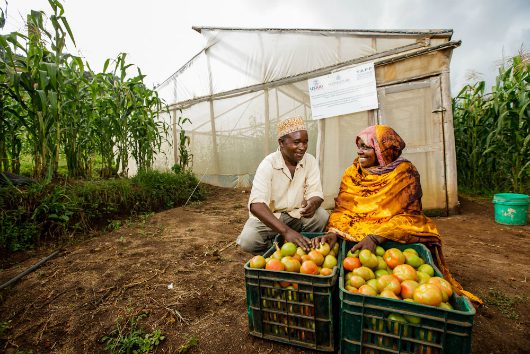
In order to help improve access opportunities between smallholder farmers and private sector distributors in Mozambique, the United States Agency For International Development (USAID) initiated four public-private partnerships amounting to $30 million in 2014. On June 3, USAID signed four memorandums of understanding to further propel the partnerships into action. The memorandums were signed in the presence of Deputy Minister of Agriculture Luisa Meque, and U.S. Ambassador Douglas Griffiths.

USAID launched the partnerships as a part of Feed the Future Partnering for Innovation, a program that creates partnerships for development between USAID missions and the private sector. The partnerships in Mozambique are predicted to increase opportunities for 50,000 smallholder farmers in the provinces of Manica, Nampula, Tete and Zambezia.

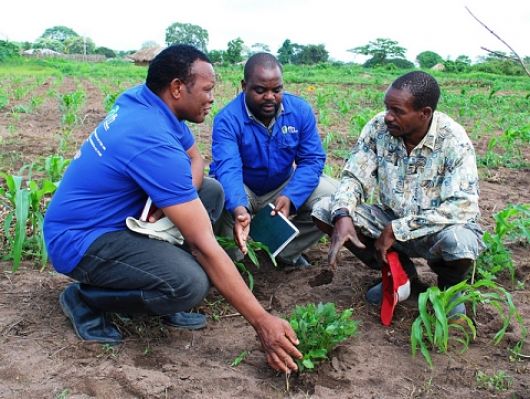
The project has partnered the U.S.’s National Cooperative Business Association CLUSA International with farmer-owned company IKURU and start-up seed-provider Phoenix Seeds to facilitate better distribution of services and inputs. Various representatives from IKURU and Phoenix Seeds will also be trained to better serve small communities. This partnership is expected to assist 10,000 smallholder farmers within three years.

Export Marketing Company Limited, Agro Tractors and Techno Brain have also partnered to create 23 retail hubs comprised of agro-input retailers, equipment suppliers and storage facilities to benefit 23,000 smallholder farmers. Rental services and training workshops will be available for farmers, along with new market opportunities.

Additionally, 10,000 Mozambican farmers in Zambezia and Nampula will receive access to imported seeds and inputs through the new partnership between Portuguese supplier Lusosem Mocambique, Lda., Colorado-based International Development Enterprises and HUB Assistancia Technica e Formacao. The partnership will involve guidance in agro-dealer expansion and training for agribusiness development in rural communities.

Through the final partnership, Illinois-based Opportunity International will provide financial training to Banco Oportunidade de Mozambique in order to provide banking services for 5,000 sesame and soybean farmers.

These partnerships are part of a larger 10-year strategic agricultural development plan developed by USAID with the Mozambican government. According to USAID, Mozambique’s agricultural sector provides employment for the vast majority of the nation’s labor force and has the potential to boost the country’s economic growth significantly. Additionally, USAID in Mozambique focuses on agricultural development in order to create sustainable systems, which can ultimately decrease malnutrition and poverty rates throughout the country.

– Arin Kerstein

Sources: All Africa, Feed the Future, Partnering For Innovation, Star Africa, USAID
Photo: Feed the Future

June 22, 2015
https://borgenproject.org/wp-content/uploads/borgen-project-logo.svg 0 0 Borgen Project https://borgenproject.org/wp-content/uploads/borgen-project-logo.svg Borgen Project2015-06-22 10:45:462024-05-27 09:25:13U.S. Support for Mozambican Farmers
Foreign Aid, Global Poverty, United Nations, USAID

What is International Aid & Why Should We Care?

What is International Aid
What is International Aid? International aid is any form of needed assistance by one country, or multilateral institution, to another.

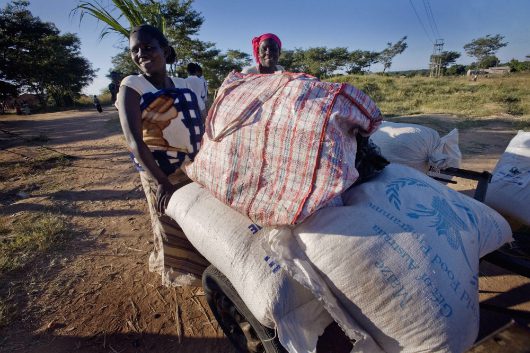
Aid is most commonly provided as official developmental assistance (ODA), which targets poverty reduction and the promotion of public welfare and economic development. The World Food Programme and the United Nations are examples of international organizations that provide significant amounts of aid to developing countries.

Investing in foreign aid is a just cause. The leading U.S. Government agency, USAID, alone saves more than 3 million lives each year through immunization programs. Over 850,000 people are educated about HIV prevention annually through USAID, and 40,000 have been trained to protect their countries for the long-term. Other forms of lasting education strategies include USAID’s population program, which serves more than 50 million couples worldwide, and USAID land cultivation training in Honduras that helps 21,000 families to practice subsistence farming and has reduced soil erosion by 70,000 tons.

Foreign aid is not just giving away money and resources; it means making a concerted attempt to restructure sectors in need of improvement. USAID invested $15 million in technical assistance for developing countries’ energy sectors, which created a $50 billion annual market for private power.

With all this good, would it surprise you that U.S. foreign assistance uses less than 1% of the total federal budget?

Less than 1% of the U.S. total federal budget values to about $50 billion. In comparison, the U.S. military defense budget totals to about $663 billion. To put this in per capita terms, The Guardian calculated that the U.S. spends $73 per person on aid and $1,763 per person on defense.

In 1970, The U.S. joined the ranks of many other wealthy nations with plans to give 0.7% of their gross national income as ODA. Of the twenty-three players, only five succeeded in 2011,and the U.S. was not one of them.

The U.S. gave 0.2% of their net ODA.

But why is this even a problem?

Other countries with fewer capabilities are doing more than their part while the U.S. is falling short. Public perception plays a huge role in how the budget is made and, subsequently, the degree of U.S. involvement in global aid. Americans, on average, estimated 28% of the federal budget is spent on foreign aid. Four in ten Americans also believe aid is given remotely, allowing the recipient to use it as they see fit. As a result, few people vote for budget increases.

In actuality, most U.S. foreign aid is issued to a specific issue and program with clear endpoints.

Most commonly, Americans believe foreign aid to be a waste of resources. Who does the money help and in what ways? In fact, it helps both the recipient and donor.

International aid strengthens national security, garners international support and establishes diplomatic ties between the donor and recipient countries.

Today, the donor-consumer relationship is far more influential than ever because developing countries and economies are in transition. Africa’s net growth momentum, for example, is expected to continue to rise with GDP growth increasing from 4.6% in 2015 to 4.9% in 2016. Home to five of the world’s twelve fastest growing economies, the supercontinent hosts a growing middle class and large youth population. While Africa’s political and economic history promises a challenge, its potential is enormous.

– Lin Sabones

Sources: Encyclopaedia Britannica, UN, The Guardian, OECD, USAID, CNBC
Photo: Flickr

June 15, 2015
https://borgenproject.org/wp-content/uploads/borgen-project-logo.svg 0 0 Borgen Project https://borgenproject.org/wp-content/uploads/borgen-project-logo.svg Borgen Project2015-06-15 08:33:402024-05-30 22:22:56What is International Aid & Why Should We Care?
USAID

Azerbaijan’s Oil Money – What Will it Do With it?

Azerbaijans_Oil_Money_What_Will_it_Do_With_it
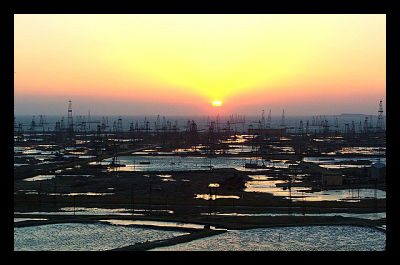
Since 2005, the Baku-Tbilisi-Ceyhan pipeline has brought Azerbaijan a newfound prosperity, but the money from the oil windfall is still tightly concentrated, and inequality remains a huge issue. Even with the enormous bounty from the pipeline, it is still a struggle for the average Azerbaijani to make a living.

Azerbaijan, a former member of the USSR, is home to some of the richest people around the Caspian Sea. Despite its lack of universities, public services, or manufacturing sectors, it has a plentiful supply of oil.

This is the first time in centuries that Azerbaijan has had a lucky break in geopolitics. It has been occupied by Cyrus the Great, Alexander the Great, the Seljuks, the Mongols, the Persians, the Russians, the Ottomans and, finally, the Soviets over the centuries. Now, finally, Azerbaijan has a chance of controlling its own destiny. Between 2006 and 2008, Azerbaijan’s economy grew at an annual average rate of 28 percent, the fastest in the world.

Many would argue that Azerbaijan is not spending its new money wisely. Instead of overhauling its creaking social security system, or investing in schools, it is building sports stadiums and luxury mega-developments. Gulnara Suleymanova, an impoverished mother living in the shadow of Azerbaijan’s brand-new stadium, built especially for the European Games, said that she can barely afford to feed her children, let alone provide them with an educated and treatment for their health problems.

“They build sports complexes, construct roads, but who benefits from them? Why don’t they help children? Why don’t they think that there are small children, sick and poor people living in this country? Why don’t they help them?” she asks.

Huge undertakings like the stadium and the mega-development can be argued to have some merit, as the publicity from the games and the over-the-top extravagance of the mega-developments can signal to investors that the country’s government supports growth. They serve as a kind of international billboard, advertising a friendly business climate to anyone who wants to build anything spectacular.

That being said, experts at USAID have said that Azerbaijan must diversify its economy if it wants to maintain a high rate of growth. Right now, there is too much emphasis on the extraction-sector and not enough focus on other sectors, or on investments for the future. Without movement into other sectors, a failure in the oil supply could send Azerbaijan back into an agrarian economy.

Azerbaijan used to rely primarily on its exports of pomegranates and hazelnuts to make money, but even high-worth crops like these are subject to droughts, floods, blights, and other events outside of the country’s control. USAID hopes to help Azerbaijan achieve a diverse and sustainable economy, with much less inequality than is present now.

If USAID succeeds, Azerbaijan may be able to mold its new-found wealth into a well-rounded and diverse economy.

– Marina Middleton

Sources: USAID, Doing Business, New York Times, Massispost, The Guardian
Photo: Flickr

June 6, 2015
https://borgenproject.org/wp-content/uploads/borgen-project-logo.svg 0 0 Borgen Project https://borgenproject.org/wp-content/uploads/borgen-project-logo.svg Borgen Project2015-06-06 16:00:072020-07-17 20:33:14Azerbaijan’s Oil Money – What Will it Do With it?
Education, USAID, Women & Children

USAID Initiative to Educate Girls

educate_girls
Women from around the world are denied a proper education. The pressure to provide and help raise their families causes them to drop out of school early, leaving them uneducated. In developing countries, families often sell their daughters for child marriage or human trafficking. These decisions are made based on food insecurity and are a direct result of living in poverty.

Because of this continuous struggle for girls to finish school, “the Obama administration has embarked on a high-profile initiative to empower girls through education — saying the inability of girls to attend school worldwide should be a foreign policy priority,” according to Voice of America News. With education comes empowerment, and empowering girls to have a voice allows them more control of their lives.

USAID’s Let Girls Learn initiative works to educate girls. By letting girls learn, their lives and the lives around them are improved. When women are more educated they are more likely to live longer and take better care of their children. Educated girls often go on to pursue higher education and gain an income for themselves. This income is then invested in their communities and families, therefore creating more sustainable development.

USAID’s initiative page shares this information in a video featuring famous celebrities fighting for the cause. Bringing awareness to the affects of female empowerment across the world is the first step to helping girls gain an education. USAID has made tremendous progress in ensuring the success of their initiative. “Around $1 billion has been invested in education programs, provided 35 million textbooks, and helped train over 300,000 teachers world wide,” reports USAID.

The initiative focuses on an important aspect of ending world poverty. Empowering and educating women gives developing countries the opportunity to thrive and sustain their development.

– Kimberly Quitzon

Sources: Voice of America, USAID

Photo: FUTDteach

May 18, 2015
https://borgenproject.org/wp-content/uploads/borgen-project-logo.svg 0 0 Borgen Project https://borgenproject.org/wp-content/uploads/borgen-project-logo.svg Borgen Project2015-05-18 12:00:012024-05-27 09:09:32USAID Initiative to Educate Girls
Global Poverty, USAID, Water

USAID’s Water Fund

USAID was one of many organizations to celebrate World Water Day on March 22. USAID’s Water and Development Strategy focuses on using water programs in developing countries to improve health and fight poverty.

In 2014, Senator Paul Simon created the Senator Paul Simon Water for the World Act, which passed unanimously in the House and Senate, and was signed into law by President Obama. The Act supports more targeted, effective and sustainable investments in water, sanitation and hygiene, known as WASH programs.

Both the Act and Water Strategy recognize that WASH programs need to be sustainable, designed to have lasting impact over time in order to better the lives of future generations. They also need to build stronger foundations for those countries.

Approximately 2.5 billion people live without access to sanitation every day, and another 748 million live without safe drinking water. Unsanitary environments and infected water increase the chances of lifelong illnesses, low incomes, malnourishment and fatalities. In fact, an estimated 622,000 children die each year from diarrheal diseases, which is most often water-related. Every minute, a child dies from a water-related disease.

For many, the closest access to a water source is miles away, requiring hours of walking in the hot sun. Water.org conducted a survey of 45 African countries, the majority answering that women and children bear the primary responsibility for water collection in the majority of households.

If every gallon of water was supplied, women and children would have more time to take care of their homes, loved ones, attend school and earn money. For every safe sanitation facility, another girl could spend more time in school during her menstruation, avoiding the risk of sexual assault when she does not have access to a facility.

The work to increase access to water and sanitation will reduce enormous suffering. In the 2013 Fiscal Year alone, USAID’s worldwide programs helped make sanitation facilities available to nearly 1.3 million people and improved access to drinking water for more than 3.5 million people.

– Alaina Grote

Sources: Water.org,  USAID 1,  USAID 2
Photo: USAID

April 2, 2015
https://borgenproject.org/wp-content/uploads/borgen-project-logo.svg 0 0 Borgen Project https://borgenproject.org/wp-content/uploads/borgen-project-logo.svg Borgen Project2015-04-02 12:00:292024-05-27 09:23:32USAID’s Water Fund
Aid Effectiveness & Reform, Poverty Reduction, USAID

What is USAID?

Want to really know what the United States Agency for International Development (USAID) is doing? To learn more about USAID, go explore their official video channel. See videos about agriculture, development, health, war and famine relief, videos in the field, and on the ground showing their progress and impact.

The bigger overall question though: What is USAID, really?

USAID is the agency of the US government that handles all international affairs relating to diplomacy, development, and foreign policy. Started in 1961 by John F. Kennedy, USAID works in over 100 countries, creating markets and trade partners, protecting human rights, food security, and the environment, addressing health issues, prevention and recovery from conflicts, reduction of poverty, basic humanitarian response, and addressing US interests and security. While all of this is massively challenging and consuming work, USAID tries to do it all while working with less than 1% of the total federal budget.

One of their agendas is to make all governments more transparent, accessible, and accountable in order to build democracy worldwide and “make every voice count.”  In partnership with Sweden, the UK Department for International Development (DFID), and Omidyar Network (ON), they have launched an inclusive campaign for citizen involvement; a global fund to support innovation, scaling-up, and research that will harness new technologies to enable citizen engagement and government responsiveness.

Want to know more of the inside scoop about what they’re doing and what it all means? Click here.

– Mary Purcell

Source: You Tube, Makingallvoicescount.org, USAID


What is USAID

March 9, 2015
https://borgenproject.org/wp-content/uploads/borgen-project-logo.svg 0 0 Borgen Project https://borgenproject.org/wp-content/uploads/borgen-project-logo.svg Borgen Project2015-03-09 14:17:192016-02-04 10:34:45What is USAID?
Humanitarian Aid, USAID

USAID Fights Poverty, Addresses Criticism

For over fifty years, USAID has been addressing the needs of those living in extreme poverty overseas, promoting stable, self-sustaining democracies and advancing security and prosperity on a global scale.

Founded by President John F. Kennedy in 1961, USAID, or United States Agency for International Development, works in over 100 countries to address a wide array of prosperity goals. These include advancing food security and agriculture, improving global health, providing humanitarian assistance and protecting human rights, among other objectives.

Despite its humanitarian efforts, USAID has garnered some criticism over the past few years. First and foremost, critics and watchdogs have claimed that USAID policies and actions are often more focused on advancing U.S. policy interests than global humanitarian interests.

In particular, a 2010 study by two Harvard and Yale economics professors found that the size of U.S. food aid shipments are determined more by the size of U.S. crops than they are by recipient need. Moreover, the study found that about half of the funding for food aid was allocated for shipping, often for American cargo ships.

Additionally, a 2012 study by the Center for Economic and Policy Research examined contracts issued by USAID for the 2010 relief effort in Haiti. It found that only .02 percent of these contracts went directly to local Haitian firms, while over 75 percent of the contracts went to American firms. One of these firms has received up to $173.7 million from USAID since the Haitian earthquake. However, the data provided does not track local subcontracting and grant making, which may or may not be significant.

Amidst these and a variety of other allegations against USAID involving wasteful or misplaced spending, the U.S. government has made some concerted efforts in the past few years to reform USAID.

Beginning in 2010, President Obama and former Secretary of State Hillary Clinton launched USAID Forward, an ambitious reform effort aiming to increase USAID’s transparency and provide more efficient, effective service.

In particular, USAID Forward incorporates rigorous evaluations for each new program undertaken, investments in new innovations to aid in sustainable development, better risk assessment tools and transparent fiscal reports.

In addition, USAID Forward has significantly increased its public-private partnerships and is working more directly with local governments, the private sector, civil society and academia.

The Agricultural Reform, Food and Jobs Act of 2013, passed in early 2014, also included some major food aid reforms. Specifically, the bill placed greater emphasis on improving the nutritional quality of food aid products, ensured that sales of agricultural commodity donations do not adversely affect local markets and created a new local and regional purchase program, among other reforms.

The Obama Administration has additional food aid reform goals in mind, including reducing the volume of commodities subject to cargo preference legislation, increasing cash donations and “providing greater flexibility in procuring commodities in local and regional markets.”

– Katrina Beedy

Sources: USAID, Reuters 1, Reuters 2, FAS, Reuters 3, Hagstrom Report, CEPR, Business Week, GovTrack
Photo: Flickr

January 30, 2015
https://borgenproject.org/wp-content/uploads/borgen-project-logo.svg 0 0 Borgen Project https://borgenproject.org/wp-content/uploads/borgen-project-logo.svg Borgen Project2015-01-30 16:00:162024-05-27 09:23:15USAID Fights Poverty, Addresses Criticism
Economy, Food Security, Nonprofit Organizations and NGOs, USAID

VEGA Brings Economic Growth Globally

VEGA
The Volunteers For Economic Growth Alliance, or VEGA, is a nonprofit that brings its members together to execute economic growth projects overseas.

Founded in 2004, VEGA was originally an initiative of the United States Agency for International Development. The organization was meant to be a procurement partner.

Today, VEGA represents itself as a respected NGO alliance of 23 member organizations. Each member brings its expertise to the Alliance to allow VEGA programs to grow in development and scale.

Based in Washington, D.C., VEGA can effectively manage its programs stationed in developing nations.

With a mission to mobilize expertise and resources to promote sustainable economic opportunities, VEGA’s programs aim to scale the services of local organizations, create jobs, increase commerce and trade and improve management.

Volunteers from the U.S. offer their expertise to programs that are committed to serving women, youth and others who are ready to be entrepreneurs in order to lift themselves out of poverty.

Currently, VEGA manages 36 programs in 28 countries.

These programs include: Farmer-to-Farmer, Capacity Building of Cambodia’s Local Organizations, Competitive Agriculture Systems for High Value Crops and Kazakhstan Business Connections.

Though programs only run in 28 countries, members have worked in over 140 countries, bringing their values and skills to local partnerships.

The expertise that VEGA members bring to the team range in areas from agriculture and food security, to tourism development and financial services. Also included are environment and energy, enterprise development and trade and investment.

VEGA believes that economic growth that emphasizes innovation, local partnerships and integrated solutions is the best way to promote prosperity.

With the power of volunteers rallying behind this mission, the strength in collaboration has allowed this NGO to make an impact in economic growth for the developing communities it serves.

– Chelsee Yee

Sources: VEGA Alliance, ACDI VOCA, Africa Agribusiness Magazine

Photo: USAID

December 11, 2014
https://borgenproject.org/wp-content/uploads/borgen-project-logo.svg 0 0 Borgen Project https://borgenproject.org/wp-content/uploads/borgen-project-logo.svg Borgen Project2014-12-11 04:00:092024-06-05 01:58:19VEGA Brings Economic Growth Globally
Global Poverty, Technology, USAID

New Technology Can End Poverty

new_tech
As we near the 2015 deadline for the Millennium Development Goals, there needs to be something done to increase our progress towards ending poverty. Last month, the Frontiers in Development Forum had many visitors who had bright ideas about what would be best to try to achieve our main goal. Leaders like the Tanzanian President Jakaya Kikwete and Secretary of State John Kerry attended the forum, along with many different innovators, who have been creating mobile apps to combat human trafficking.

What was decided at the forum was that bringing new technologies into play and creating new partnerships is essential in the plan to end extreme poverty. In the U.S., many new technologies have changed the way Americans communicate, work and earn with one another. But there was something launched about two decades ago called the Leland Initiative, which was an effort to help increase access to information for 20 African countries.

To build more onto this idea, USAID has partnered with the U.K., Google.org and the Omidyar Network to create something new called the Alliance for Affordable Internet. This was created in an effort to reduce the cost of internet access and to bring to the table new opportunities for doctors, entrepreneurs and local leaders across the developing world.

Another way that USAID is trying to speed up the process of ending poverty is by using mTrac in Uganda. mTrac is a tool that helps local health workers send the government reports via text message. For example, the Ministry of Health used mTrac to survey 10,000 health workers on whether their health unit had a fridge that was used to keep perishable drugs and vaccines cold. The survey ended up costing only $150 and was done in just less than three days.

New technology is something that many in the Western World are used to and often take for granted, but in Senegal, rice millers are learning about how important technology can be for their community. For example, the rice millers buy expensive Asian imports, while local rice farmers are having a hard time selling their crops. USAID is helping to build the supply chains and improve the quality of the harvests by teaching the farmers to share their information through Excel and Dropbox. This allows the millers to track the local crops, schedule shipments and collect payments online.

This is just the start of what technology can do for the world in helping end poverty, and there is still a long way to go. USAID iterates that creating apps just for the sack of having them is not what will help the world achieve the overall objective of ending poverty. But by looking at the need in countries where technology is not overflowing and creating a solution for that will be the key component in ending extreme poverty.

– Brooke Smith

Sources: USAID Blog, USAID
Photo: Flickr

November 17, 2014
https://borgenproject.org/wp-content/uploads/borgen-project-logo.svg 0 0 Borgen Project https://borgenproject.org/wp-content/uploads/borgen-project-logo.svg Borgen Project2014-11-17 04:00:402024-05-24 23:52:49New Technology Can End Poverty
Global Poverty, USAID

USAID’s Strategies to End Child Marriages

USAID recently renewed its commitment to end child marriages – as well as early and forced marriage – both by allocating U.S. $4.8 million dollars to be spent over the next year on prevention efforts and by announcing a new set of strategies for combating the practice that leaves so many children (mostly girls) devoid of resources, health, and dignity.

With the support of several key U.S. legislators, USAID will implement new prevention programs in seven nations: Africa, Asia, and the Middle East, Bangladesh, Burkina Faso, Ethiopia, India, Nepal, Tanzania, and Yemen. These prevention programs, which have been updated after analyzing the weaknesses of previous prevention programs, are customized to the needs and features of each of the countries USAID is targeting, making their eventual success very probable.

The advent of child marriage is highly correlated not only with increased rates of poverty, but also with increased maternal and infant mortality and increased incidence of HIV/AIDS and other sexually-transmitted diseases. Ending the practices of forced child marriage, which is “perpetuated by cultural norms, poverty, and lack of access to education,” will re-empower over 10 million girls per year, as well as the families from which they were taken, to make their own choices about their health, education, and futures.

Though child marriage by definition includes all children wed before their 18th birthdays, as many as a third of child marriages occur before the 15th birthday, and some children are married at as young an age as eight years old.

Among USAID’s new strategies for preventing child marriage are improved legislation advocacy measures, increased public awareness of the effects of child marriages and cash incentives to families whose girls have not been married at the age of 18. USAID is setting an influential and inspiring example to other organizations, like The Borgen Project, to continue to promote a change.

USAID’s previous commitment to preventing child marriage was already impressive. Their renewed focus will only serve to keep more children from the bonds of early matrimony.

– Elise L. Riley

Sources: USAID, AllAfrica, The Guardian
Photo: The Guardian

July 28, 2014
https://borgenproject.org/wp-content/uploads/borgen-project-logo.svg 0 0 Borgen Project https://borgenproject.org/wp-content/uploads/borgen-project-logo.svg Borgen Project2014-07-28 15:24:572024-05-27 09:19:04USAID’s Strategies to End Child Marriages
Page 26 of 33«‹2425262728›»

Get Smarter

  • Global Poverty 101
  • Global Poverty… The Good News
  • Global Poverty & U.S. Jobs
  • Global Poverty and National Security
  • Innovative Solutions to Poverty
  • Global Poverty & Aid FAQ’s
Search Search

Take Action

  • Call Congress
  • Email Congress
  • Donate
  • 30 Ways to Help
  • Volunteer Ops
  • Internships
  • Courses & Certificates
  • The Podcast
Borgen Project

“The Borgen Project is an incredible nonprofit organization that is addressing poverty and hunger and working towards ending them.”

-The Huffington Post

Inside The Borgen Project

  • Contact
  • About
  • Financials
  • President
  • Board of Directors
  • Board of Advisors

International Links

  • UK Email Parliament
  • UK Donate
  • Canada Email Parliament

Get Smarter

  • Global Poverty 101
  • Global Poverty… The Good News
  • Global Poverty & U.S. Jobs
  • Global Poverty and National Security
  • Innovative Solutions to Poverty
  • Global Poverty & Aid FAQ’s

Ways to Help

  • Call Congress
  • Email Congress
  • Donate
  • 30 Ways to Help
  • Volunteer Ops
  • Internships
  • Courses & Certificates
  • The Podcast
Scroll to top Scroll to top Scroll to top