• Link to X
  • Link to Facebook
  • Link to Instagram
  • Link to TikTok
  • Link to Youtube
  • About
    • About Us
      • President
      • Board of Directors
      • Board of Advisors
      • Financials
      • Our Methodology
      • Success Tracker
      • Contact
  • Act Now
    • 30 Ways to Help
      • Email Congress
      • Call Congress
      • Volunteer
      • Courses & Certificates
      • Be a Donor
    • Internships
      • In-Office Internships
      • Remote Internships
    • Legislation
      • Politics 101
  • The Blog
  • The Podcast
  • Magazine
  • Donate
  • Click to open the search input field Click to open the search input field Search
  • Menu Menu

Archive for category: United Nations

Information and stories about United Nations.

Refugees and Displaced Persons, United Nations

What the UNHCR is doing for Refugees

refugee_opt
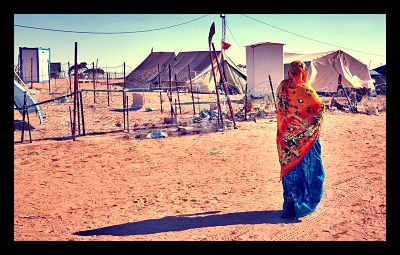
Abdel is a refugee in Choucha Refugee Camp, Tunisia. He arrived there in 2011 after years as an orphan in Libya. Originally from Cote D’Ivoire, Abdel’s parents had to flee that country for unspecified reasons, and his mother died before he turned five years old.

During the Libyan uprising against Muammar Gaddafi in February 2011, Abdel was held captive for ten months, during which time he and his father were forced to watch his sister’s rape and murder. After the ten months, he was freed and fled to Choucha in the city of Misrata, which at its peak held tens of thousands of Libyan refugees (most of which have been relocated to other countries).

Abdel soon decided that he could not tolerate sitting around in the camp all day, being bored and lonesome. That drive inspired him to apply for a pilot skills training program organized by the UN Refugee Agency (UNHCR) and the Danish Refugee Council, located about 87 miles from Choucha.

Abdel’s enrollment not only gave him something to do other than sit in Choucha, it also gave him a bit of hope for the future. In an interview, he admitted that for the first time in years he is sleeping well and that he’s looking at opportunities to continue his studies beyond Choucha.

In his class, Abdel is learning to make jewelry. The refugees eat and sleep in dormitories during the program, and the close quarters allow them to form friendships that help with feeling lonely or helpless. The program consists mostly of young males, but as the classes have begun to soar in popularity, young women have started to apply as well.

Abdel isn’t the only success story of the pilot programs. Danish Refugee Council project officer Gianmaria Pinto expressed in an interview that at the last session before the end of year break, all of the refugees were excited about that prospect of learning and did not want to return to Choucha.

Choucha is scheduled to close at the end of June 2013. Spokesperson for UNHCR Ursula Aboubacar insisted during a press conference in Tunis that the closing of Choucha will give the 900+ refugees still living there a better life. Though many of the refugees have nowhere to go and are still waiting to be relocated, the closing of Choucha will force them to make arrangements to support themselves.

Choucha housed many North African refugees in a time of violent tumult, and in the cases of young men and women like Abdel, has even given them skills and resources that they can use to generate some sort of revenue or self-worth. UNHCR and the Danish Refugee Council have put together a program that will help refugees and Tunisians alike get on their feet and build futures for themselves that, if all goes well, don’t reflect their pasts.

– Lindsey Rubinstein

Sources: Libya Herald, UNHCR
Photo: Demotix

July 20, 2013
https://borgenproject.org/wp-content/uploads/borgen-project-logo.svg 0 0 Borgen Project https://borgenproject.org/wp-content/uploads/borgen-project-logo.svg Borgen Project2013-07-20 04:33:022017-03-20 13:03:14What the UNHCR is doing for Refugees
Foreign Aid, Poverty Reduction, United Nations

Extreme Poverty Has Been Cut in Half Since 1990

Economist_global_poverty_stats _opt
In 1990, 43% of the world’s population subsisted on less than $1.25 per day. By 2010, that number had shrunk to 21%. This success comes 5 years before the United Nation’s Millennium Development Goal of achieving such a number by 2015.

The conversation has now shifted to the remaining 21%. Optimists hope to achieve similar success by 2030. However, there are several unique obstacles to addressing that 21%, and the economic conditions that allowed such a rapid decline before are unlikely to be replicated in the coming decade.

Much of the success of the last two decades was achieved by slightly elevating the conditions of those living just below the $1.25 per day line. Pulling a person living at $1.15 per day over the $1.25 line is much easier than pulling someone living at $0.25 to over $1.25. In other words, much of the remaining 21% was the bottom half of the original 43 percent. The challenge of the next decades will be to improve the lives of the most impoverished people on Earth.

China’s growth over the past decades was instrumental in lowering the extreme poverty rate. In the twenty years, from 1981 to 2001, China pulled 680 million of its own citizens out of extreme poverty as it rapidly developed. With China’s extreme poverty rate now at low levels, the focus will now shift to new developing countries, primarily India and Africa. The challenge will be to replicate the economic conditions for such an achievement in vastly different governmental and cultural contexts.

Should such a success be achieved by 2030, however, the fight against poverty will hardly be over. The $1.25 a day figure is simply an accepted global standard of extreme poverty, and does not account for those living in poverty in developed countries. In the U.S., the poverty line sits at $30 a day–a marked difference. However, with extreme poverty levels eradicated, the world would be able to focus anew on those living just below the line.

– Andrew Rasner

Sources: The Economist, The Wall Street Journal, The Economist
Photo: The Economist,

July 17, 2013
https://borgenproject.org/wp-content/uploads/borgen-project-logo.svg 0 0 Borgen Project https://borgenproject.org/wp-content/uploads/borgen-project-logo.svg Borgen Project2013-07-17 08:46:192013-08-14 15:18:42Extreme Poverty Has Been Cut in Half Since 1990
Activism, Education, United Nations, Women and Female Empowerment

Malala Proves Education is Key to Empowerment

malala_opt-1
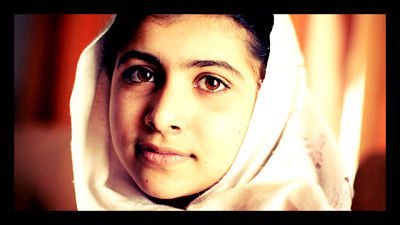
Malala Yousafzai is a young education rights campaigner from Pakistan. Malala will soon be celebrating her 16th birthday, a miracle after she was shot by extremists for her outspoken beliefs on education. Malala will celebrate her birthday by traveling to the United Nations where students from more than 80 countries will join her.

Malala and the other young activists will be assembled to call for global education for everyone in the world. She and the other young diplomats believe that education is a right for all – one of the Millennium Development Goals, and a vital component of the path to global citizenship. This belief is well founded in the fact that universal compulsory education represents a future that the world wants. Malala was the first person to sign on to a new worldwide petition calling for urgent action to ensure the right of every child to safely attend school. The petition serves as an initial step in focusing the UN agenda on education.

UN Secretary General Ban Ki-moon supports Malala’s mission to bring education to the world. He states that education is an essential step in a world without poverty, violence, discrimination, and disease. He also recognizes that in order to achieve these objectives, the global society needs to continue pushing forward. The secretary general recognizes that we, as a global society, have made progress on this issue, however, there is much more work to be done. Ban expresses that no child or woman should have to consider going to school as an act of bravery.

Ban states that too many girls around the world are subjected to extremist threats for trying to obtain an education. The benefits of educating women in developing countries have been proven time and time again. Ban explains that when women and girls are educated, a society develops at a more rapid pace than without their education. Additionally, education increases future earnings for women, allowing them to provide their families with additional resources, over time, lifting them out of poverty.

If education is key to empowerment as the path to economic stability and development, why is it so widely contested in many developing countries? The answer lies in fear. If we as a global community continue to fear education for all, we will fail to grow as a global economy. More steps must be taken to ensure each child has access to education.

-Caitlin Zusy
Source: Huffington Post, UN News Center
Photo: Stanford Bookhaven

July 15, 2013
https://borgenproject.org/wp-content/uploads/borgen-project-logo.svg 0 0 Borgen Project https://borgenproject.org/wp-content/uploads/borgen-project-logo.svg Borgen Project2013-07-15 15:21:182024-06-11 01:39:24Malala Proves Education is Key to Empowerment
Development, Technology, United Nations

Economic and Social Council Focuses on Science

tech_science_development
The Economic and Social Council (ECOSOC) kicked off its annual forum at the start of this month, focusing on the importance of science and innovation to achieve development goals. The top UN officials, who were in attendance at the forum, stressed that technology and science are crucial for tackling todays global challenges, from reducing poverty to ensuring sustainable development. Some of the key speakers on the first day of this forum were ECOSOC president, Ambassador Nestor Osorio of Columbia, Secretary-General Ban Ki-moon, and President of the UN General Assembly, Vuk Jeremic.

“The steadily increasing pace of technological innovation makes ours an era of a long profound change…So many fields of human endeavor – medicine, energy, agriculture – have made significant, even drastic, improvements in just a few generations. Yet in the field of development, despite our progress, there are still over one billion people living in extreme poverty. And tonight many, if not most, will go to bed hungry,” said Osorio.

Secretary-General Ban Ki-moon stressed the importance of science and innovation as the Millennium Development Goals (MDGs) come to a close in 2015. While some of the MDGs have already been met, there are several that need extra attention if the international community wishes to achieve them by 2015. “We must intensify out efforts, particularly to tackle the disparities across regions and between social groups…the future we want is within reach. Let us innovate together to achieve it,” stated Ki-moon.

Finally, Vuk Jeremic, President of the UN General Assembly, spoke about the need for a renewed commitment from Member States to face these development challenges together. He urged for a revitalized General Assembly and a renewed ECOSOC to lead the UN in setting the world on a more equitable, prosperous and environmentally sound path.

The ECOSOC forum will last for 26 days, but this assembly on innovation and science will last for four, including several more speeches from world leaders as well as collaboration meetings between several international institutions.

– Catherine Ulrich

Source: UN News, UNOG
Photo: Ventures

July 15, 2013
https://borgenproject.org/wp-content/uploads/borgen-project-logo.svg 0 0 Borgen Project https://borgenproject.org/wp-content/uploads/borgen-project-logo.svg Borgen Project2013-07-15 06:00:242024-06-11 01:36:04Economic and Social Council Focuses on Science
Food & Hunger, United Nations

Importance of Small-Scale Farmers

Small-Scale Farmers
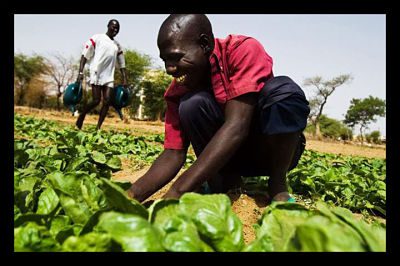
With a rising population and a high demand on food production, our world is looking for solutions to increase food production. Small-scale farmers play an important role in the dilemma of feeding our world. Currently small-scale farmers produce the majority of food for the developing world.

There are millions of success stories about these farmers reaching out and sustaining whole communities. For example, in Brazil there is a food security policy known as Zero Hunger. In this program the government buys products directly from small-scale farmers and distributes the products to day-care centers, hospitals and community associations.

However, the UN and FAO in a report, Smallholder Integration in Changing Food Markets, highlight the challenges still ahead for small-scale farmers. The report calls attention to the importance of policymakers in the growth of small-scale farmers. The report focuses on the fact that most of these farmers are removed from the market. It calls for policymakers to create greater market integration and more inclusive value chains. The report concludes that by doing these things, these farmers will be more inclined to adopt new technologies to grow productivity.

The report stresses the two main ways to link small-scale farmers to the market are to provide better access to credit and insurance, and to strengthen the links between farmers and buyers. The report discusses the fact that, in many countries, transportation is too costly, infrastructure is inadequate, and the cost of storage is too high. These farmers are unlikely to risk producing a surplus of products if they think that their products would go to waste.

“High levels of price, production risks and uncertainty, and limited access to tools to manage them deter investment in more productive new technologies that would enable smallholders to produce surpluses for sale in markets,” according to the report.

Policymakers must focus on the inclusion of small-scale farmers into the market. They are important to the future of our world and must be supported.

– Catherine Ulrich

Sources: FAO, International Institute for Environment and Development, UN News

July 15, 2013
https://borgenproject.org/wp-content/uploads/borgen-project-logo.svg 0 0 Borgen Project https://borgenproject.org/wp-content/uploads/borgen-project-logo.svg Borgen Project2013-07-15 04:44:302024-06-11 01:36:17Importance of Small-Scale Farmers
Children, Human Rights, United Nations

The World’s Most Oppressed People: The Rohingya

Rohingya_people_in_Myanmar

The Rohingya people represent a small Muslim minority in the Southeast Asian country of Myanmar. They are denied citizenship, forbidden from colleges, and have suffered mass killings and violence that the government has done nothing to halt. And recently, Myanmar passed a law restricting Rohingya childbirths, an action which may qualify as an act of genocide.

The Rohingya people have lived in Myanmar since the eighth century. However, their existence was wiped from official record in 1982 with the passage of a citizenship law. The law had the effect of making the Rohingya stateless peoples, illegal immigrants in their own country, with no rights or international recognition.

Rohingya people have experienced harsh violence and now will suffer an enforced two-child limit. The limitation is officially claimed as an effort to ease tensions between the Buddhist majority and Muslim minority, however the policy serves as a frightening indicator that genocide may not be far away. Genocide Watch has even gone so far as to issue a “Genocide Emergency Alert” for Myanmar, and the United Nations has also expressed similar concerns.

Genocide Watch breaks down genocides into eight distinct stages. In order, they are as follows: Classification, Symbolization, Dehumanization, Organization, Polarization, Preparation, Extermination and Denial. Myanmar is quickly ticking stages off the list.

Rohingya people are regularly forced to live in ethnic enclaves with enforced curfews. They experience intense violence which the government has done little if anything to prevent. They are becoming increasingly isolated from resources and from the outside world. If nothing is done to stop these policies, the Rohingya may be removed entirely from their country. The international community must act now to hold the Burmese government responsible and stop the eradication of the Rohingya ethnic group before it is too late.

-Caitlin Zusy

Sources: UN Dispatch, News.com
Photo: News.com

July 13, 2013
https://borgenproject.org/wp-content/uploads/borgen-project-logo.svg 0 0 Borgen Project https://borgenproject.org/wp-content/uploads/borgen-project-logo.svg Borgen Project2013-07-13 06:59:012024-12-13 17:49:27The World’s Most Oppressed People: The Rohingya
Human Rights, Refugees and Displaced Persons, United Nations

Refugees: The Forgotten Problem in Central Africa

Refugees_in_central_Africa_and_insurgency
In Central Africa and the Great Lakes region, countries with already large numbers of Internally Displaced Persons (IDPs) are burdened with refugee influx from neighboring conflicts. Many of the IDPs and refugees in Central Africa are served by U.N. camps across the region. Others are housed by local populations or public buildings. With recent outbreaks of violence humanitarian services have become unavailable in  regions.

In April, a UNHCR spokesman gave the number of Central African Republic (CAR) refugees in the Democratic Republic of Congo (DRC) at 30,000. Many of these were forced to flee the violence in the capital Bangui. UNHCR also estimated that the number of IDPs in CAR reached 173,000. While this situation is grim the added strain on refugee camps and humanitarian services is exacerbated by the refugees crossing into CAR. Driven by conflict in the Western Darfur region and recent fighting in the DRC capital of Goma, Sudanese and Congolese refugees are seeking care in CAR. In April UNHCR estimated 21,000 refugees from the DRC and Sudan have sought refuge in CAR.

Despite peace talks currently taking place between the DRC government and the M23 rebel forces, the environment in the DRC remains uncertain and rife with tension. Rebel troops briefly held the capital, Goma, in November 2012 but lost control again to the government after a short period. The current standoff between the two sides has boosted the potential for forced recruitment in the countryside. Citizens fleeing the conflict and young men trying to avoid forcible recruitment spill into neighboring countries. In the last six months of 2012 UNHCR estimates that 60,000 Congolese refugees fled to Uganda and Rwanda. Many more were internally displaced.

Recent violence in the DRC has led the U.N. to deploy troops with one of its strongest mandates yet: counter insurgency operations. Despite a 20,000 U.N. peace force deployed in the region the rebel forces took and held Goma for 10 days last November, committing many atrocities including mass rape. The new U.N. deployment, consisting of troops from South Africa, Tanzania, and Malawi is intended to prevent new atrocities. The effectiveness of this newest deployment is uncertain. Troops will be engaging in joint operations, requiring coordination in an unfamiliar setting and already logistics and bureaucracy have delayed troop deployment.

Other military forces also have a presence in CAR. South Africa deployed 200 soldiers in January this year with the potential to deploy an additional 200. These forces will assist in training the CAR army and are not intended to engage directly with rebel forces. Ugandan soldiers with U.S. Special Forces support are also deployed in CAR. The Economic Community of Central Africa has authorized forces to deploy in the country as well. And France recently boosted their troop presence in CAR from 250 to 600.

The global and regional community recognizes the need for military intervention in the region demonstrated by the troop deployments. Whether this leads to a cessation in violence or even a lasting peace is uncertain.

– Callie D. Coleman

Sources: IRIN, The Economist, UNHCR
Photos: IRIN

July 12, 2013
https://borgenproject.org/wp-content/uploads/borgen-project-logo.svg 0 0 Borgen Project https://borgenproject.org/wp-content/uploads/borgen-project-logo.svg Borgen Project2013-07-12 04:20:142024-05-24 23:59:46Refugees: The Forgotten Problem in Central Africa
United Nations

UN Report Says MDGs are Within Reach

MDG_opt

A new report launched by UN Secretary-General Ban Ki-moon, celebrates the success of achieving some of the Millennium Development Goals (MDGs), but acknowledges that others need to be addressed in order for them to be realized. The MDGs, established at a UN summit in 2000, identify eight areas of focus: poverty alleviation, education, gender equality, child and maternal health, environmental protection, HIV/AIDS and malaria reduction, and a global partnership for development. The report demonstrates how the combined effort of the government, civil society, and the private sector have made significant progress in meeting many of these goals.

Already, millions of lives have been improved – global poverty rates have been cut in half, access to safe water has increased and gender equality in primary schools has improved substantially. Advances in global healthcare are particularly notable; malaria fell by more than 25% globally between 2000 and 2010, saving 1.1 million lives. In addition, between 1995 and 2011, 51 million TB patients were successfully treated, saving another estimated 20 million lives.

However, the report also urges more action to be taken with regard to maternal healthcare and universal access to education. In particular, environmental sustainability is under threat, as global emissions of carbon dioxide continue to increase, with 46% more CO2 being emitted today compared to 1990. The report also notes that there has been uneven progress; there is disparity not only between regions and countries, but also among population groups within countries. In particular, people living in rural areas remain at a disadvantage – 83% of those without access to an improved drinking water source live in rural communities.

“Redoubled efforts are urgently needed, particularly in regions most behind to jump-start advancement and achieve maximum gains”, the MDG report says. While the global community should be proud of its efforts and accomplishments, the report encourages governments, organizations, and individuals to continue “building on existing momentum to reach as many goals as possible by 2015 and to realize gains for all”.

– Chloe Isacke
Source: All Africa, UNDP

July 9, 2013
https://borgenproject.org/wp-content/uploads/borgen-project-logo.svg 0 0 Borgen Project https://borgenproject.org/wp-content/uploads/borgen-project-logo.svg Borgen Project2013-07-09 14:00:292024-05-25 00:02:15UN Report Says MDGs are Within Reach
Food & Hunger, United Nations

Understanding Hidden Hunger

Understanding Hidden Hunger
Sight and Life, a prominent group working to fight micronutrient deficiencies prevalent among the world’s poor, has recently released its Hidden Hunger Index. Hidden hunger is defined as a chronic deficiency of necessary micronutrients. Rather than a lack of food or calories, this type of hunger results from a diet low in specific nutrients. This condition affects approximately 1 in 3 people in the world today and accounts for about 7% of diseases around the world. Although the signs are not visible, hidden hunger has long-term consequences for overall health, productivity, and mental development. The most common deficiencies are in vitamin A, iodine, folate, and B vitamins. Women of reproductive age and young children are most severely affected by this condition.

In addition to its negative and often permanent health effects, hidden hunger has numerous economic consequences. It aggravates global poverty in multiple ways and minimizes countries’ growth in economic productivity. It also increases child and maternal mortality, causes birth defects, diseases, and disabilities. Unfortunately, it also restrains the empowerment of women by adversely affecting their health.

The Hidden Hunger Index concluded that hidden hunger in pre-school age children was alarmingly high in sub-Saharan Africa, India, and Afghanistan. High Hidden Hunger Index was found to correlate with low Human Development Index, a measure based on three basic qualities of human well-being: a long and healthy life, education, and standard of living. While many micronutrient deficiencies were found to occur in groups, iodine deficiencies were often found independently. This is probably due to differing country laws on salt iodization. Iodine deficiency accounts for approximately 18 million children born mentally impaired each year.

Hidden hunger and its related health issues are significant obstacles to achieving the Millennium Development Goals (MDGs) laid out by the United Nations. The Hidden Hunger Index shines a light on micronutrient deficiencies and acts as a tool for activism. While there is information concerning hunger issues with root causes in a lack of food and calories, and about single micronutrient deficiencies, information about multiple micronutrient deficiencies is sorely lacking. Sight and Life developed the Hidden Hunger Index in the hopes that it will “serve as a tool to stimulate global efforts towards scaling up nutrition interventions”.

– Katie Fullerton

Sources: Micronutrient Initiative, Hidden Hunger Index
Photo: The Guardian

June 27, 2013
https://borgenproject.org/wp-content/uploads/borgen-project-logo.svg 0 0 Borgen Project https://borgenproject.org/wp-content/uploads/borgen-project-logo.svg Borgen Project2013-06-27 03:55:532020-07-06 18:43:39Understanding Hidden Hunger
Education, United Nations

Universal Primary Education

Universal Primary Education
Since 1999, when 106 million children were not in school, much progress has been made. Today, approximately 61 million are out of school, and yet more progress is needed. In the past five years, due to the economic crisis, many nations decreased their foreign aid spending and thus progress was hindered. According to the World Bank and the U.N., the majority of children not attending schools live in sub-Saharan Africa and South Asia, with at least half living in areas that are politically unstable.

Despite some progress, it is crucial to note that there is a percentage of people/areas that is not accounted for in the statistics of progress and primary education. For example, according to the U.N., 90% of primary aged children living in developing countries are now in school as opposed to that percentage being 82% in 1999. While the rise in percentage sounds great, “broad figures [have the tendency to] mask localized problems,” and thus, in actuality some countries barely have any primary aged children attending school. The children who are most unaffected by the progress and recent advancement are the extremely poor and the minorities. Nigeria, Yemen, Ethiopia, South Sudan, India,  Haiti, the Democratic Republic of Congo, and Bangladesh account for half of the world’s children not going to school.

There is a demand for new donors or ‘funders,’ now that many nations have cut back on their foreign aid, from the private sector and through public fundraising. Part of the U.N. 2015 Millennium Goals was to ensure that all children have equal access to primary education and to increase females’ enrollment in schools. However, experts are claiming that education goals are difficult to reach due to issues such as child labor, cultural values, and other reasons. For example, in some cultures, it is valued more that daughters stay home while the sons receive an education. The women assume the housewife role while the men are valued to be the knowledgeable providers.

In addition to child labor and cultural values, there are many concerns regarding harassment and safety of the children attending schools. For example, some female students in Sierra Leone reported being sexually harassed by teachers in exchange for good grades. And it is almost impossible to forget the story of Malala Yousafzai, the Pakistani girl, who was shot by the Taliban for her advocacy of education for girls. Despite the unfortunates, where instituting education does work, it makes an incredible difference. Rebeca Winthrop, the director of the Center of Universal Education at the Brookings Institution in Washington, expressed that there are children who continue to learn even in refugee camps. Where there is desire, willingness, and determination, there is much hope for universal primary education and even further schooling.

– Leen Abdallah
Source: New York Times
Photo: Globalization 101

May 19, 2013
https://borgenproject.org/wp-content/uploads/borgen-project-logo.svg 0 0 Borgen Project https://borgenproject.org/wp-content/uploads/borgen-project-logo.svg Borgen Project2013-05-19 04:26:112024-05-24 23:49:42Universal Primary Education
Page 33 of 35«‹3132333435›»

Get Smarter

  • Global Poverty 101
  • Global Poverty… The Good News
  • Global Poverty & U.S. Jobs
  • Global Poverty and National Security
  • Innovative Solutions to Poverty
  • Global Poverty & Aid FAQ’s
Search Search

Take Action

  • Call Congress
  • Email Congress
  • Donate
  • 30 Ways to Help
  • Volunteer Ops
  • Internships
  • Courses & Certificates
  • The Podcast
Borgen Project

“The Borgen Project is an incredible nonprofit organization that is addressing poverty and hunger and working towards ending them.”

-The Huffington Post

Inside The Borgen Project

  • Contact
  • About
  • Financials
  • President
  • Board of Directors
  • Board of Advisors

International Links

  • UK Email Parliament
  • UK Donate
  • Canada Email Parliament

Get Smarter

  • Global Poverty 101
  • Global Poverty… The Good News
  • Global Poverty & U.S. Jobs
  • Global Poverty and National Security
  • Innovative Solutions to Poverty
  • Global Poverty & Aid FAQ’s

Ways to Help

  • Call Congress
  • Email Congress
  • Donate
  • 30 Ways to Help
  • Volunteer Ops
  • Internships
  • Courses & Certificates
  • The Podcast
Scroll to top Scroll to top Scroll to top