• Link to X
  • Link to Facebook
  • Link to Instagram
  • Link to TikTok
  • Link to Youtube
  • About
    • About Us
      • President
      • Board of Directors
      • Board of Advisors
      • Financials
      • Our Methodology
      • Success Tracker
      • Contact
  • Act Now
    • 30 Ways to Help
      • Email Congress
      • Call Congress
      • Volunteer
      • Courses & Certificates
      • Be a Donor
    • Internships
      • In-Office Internships
      • Remote Internships
    • Legislation
      • Politics 101
  • The Blog
  • The Podcast
  • Magazine
  • Donate
  • Click to open the search input field Click to open the search input field Search
  • Menu Menu

Archive for category: United Nations

Information and stories about United Nations.

Developing Countries, Development, Extreme Poverty, United Nations

UNCTAD Says Developing Countries Show Real Growth

UNCTAD Says Developing Countries Show Real Growth
The United Nations Conference on Trade and Development (UNCTAD) said that developing countries are now contributing much more to the global economy than ever before.

UNCTAD released the information that developing countries’ share in global value-added trade is now at about 40 percent, whereas the same figure was about 20 percent in 1990. Economists give most of the credit to transnational markets and global value chains, the chain of different countries in which a single multinational company operates.

These global value chains allow a weaker developing country to create an economic partnership with more developed economies by supplying raw materials and basic manufacturing or design. The capacity from growth comes from climbing the “chain,” by building the local economy, training workers, and producing more complex goods. People always ask for results in the mission to fight poverty, this growth is definitely evidence that economies around the developing world are growing.

These statistics, along with the rapidly decreasing statistic of people living in extreme poverty, are proof that real progress is being made as developing countries show real growth.

– Kevin Sullivan

Source: Industry Week
Photo: The Graduate Institute

March 3, 2013
https://borgenproject.org/wp-content/uploads/borgen-project-logo.svg 0 0 Borgen Project https://borgenproject.org/wp-content/uploads/borgen-project-logo.svg Borgen Project2013-03-03 14:45:062020-05-17 21:41:59UNCTAD Says Developing Countries Show Real Growth
United Nations

How Quinoa Can Lead to Nutritional Security

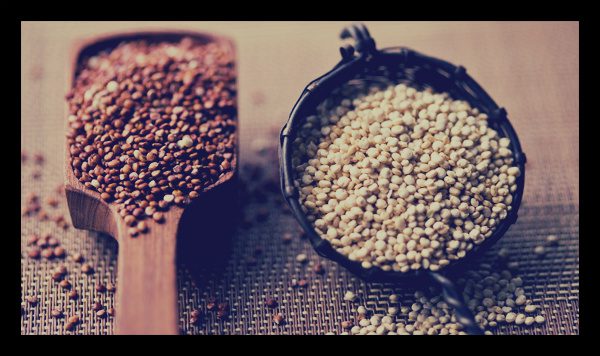
How Quinoa Can Lead to Nutritional SecurityFebruary 20th marked the beginning of the International Year of Quinoa, a project designed to raise awareness of the benefits of quinoa and its ability to bring nutritional security. The project was launched by the United Nations and the Andean Community of Bolivia, Colombia, Ecuador and Peru to help reach the Millenium Development Goal of reducing world hunger to a half by 2015.

Quinoa contains essential amino acids and vitamins, yet has no gluten. It is easy to grow because of its adaptability to different environments – thriving in below-freezing temperatures, as well as altitudes way above sea level. Thus, cultivating quinoa in areas with arid farming conditions and high malnutrition rates is both a possible and effective way to help combat global poverty and improve the standard of living in many countries. During the project’s launch, Secretary-General Ban Ki-Moon commented that the International Year of Quinoa will act as “a catalyst for learning about the potential of quinoa for food and nutrition security, for reducing poverty.”

Bringing awareness to the value of quinoa worldwide is beneficial not just to the fight against global hunger and poverty, but to quinoa farmers as well. As the price of quinoa rises due to its increased popularity with large companies, farmers that cultivate quinoa will experience higher incomes.

– Angela Hooks

Source: AllAfrica
Photo: NY Times

February 26, 2013
https://borgenproject.org/wp-content/uploads/borgen-project-logo.svg 0 0 Borgen Project https://borgenproject.org/wp-content/uploads/borgen-project-logo.svg Borgen Project2013-02-26 01:30:442020-05-11 04:10:53How Quinoa Can Lead to Nutritional Security
Food Security, United Nations

2013: The International Year of Quinoa

2013: The International Year of QuinoaThe year 2013 has been titled “The International Year of Quinoa” by the United Nations and the Food and Agricultural Organization (FAO) has named Bolivia’s president, Evo Morales, the Special Ambassador for the International Year of Quinoa. So, why is that important?
Quinoa is a semi-cereal, not quite a grain, that is mostly grown in Peru and Bolivia. If you have any “foodie” friends or know any hip cooks, you will probably have heard a lot about quinoa. In fact, the factor of “hipness” may have had a huge part in increasing the popularity of the food, as well as the fact that it has astonishing nutritional value. The UN’s declaration of 2013 being the International Year of Quinoa is part of an effort to further increase the food’s popularity. The real reason that quinoa is being pushed as a popular food is that quinoa is extraordinarily hardy, and is a great source of amino-acids. It is one of the most durable foods on Earth. Quinoa is able to thrive even in semi-arid deserts and the high Altiplano.

Quinoa is now being planted more and more in other harsh climates that span countries like Chad and Niger. While most of the world’s quinoa still comes from Peru and Bolivia, it is gaining ground in other countries. The heightened popularity of the food has increased the average crop value and provided higher income to farmers and local business owners alike. Hopefully, the popular attention that quinoa is receiving will help consumers make the choice to join in and celebrate the International Year of Quinoa.

– Kevin Sullivan

Source: United Nationsl

February 23, 2013
https://borgenproject.org/wp-content/uploads/borgen-project-logo.svg 0 0 Borgen Project https://borgenproject.org/wp-content/uploads/borgen-project-logo.svg Borgen Project2013-02-23 19:33:562024-06-10 02:52:482013: The International Year of Quinoa
Developing Countries, Development, Foreign Policy, Global Poverty, Human Rights, United Nations

Who is Benefiting From Land and Water Grabbing?

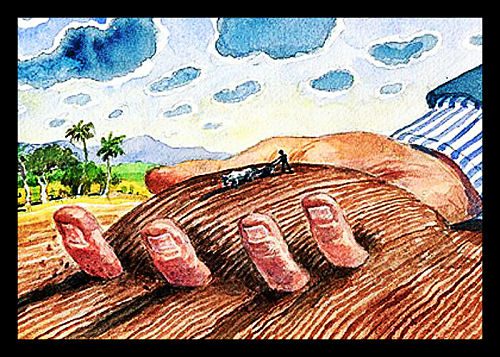
Who is Benefiting From Land and Water Grabbing?It is assumed that the already existing gap between developed and developing nations is large and apparent enough that wealthier nations would try and fill this gap and bring these opposite ends closer together. According to an ABC Environmental article, however, wealthy nations are instead competing over ‘land’ and ‘water grabbing’ to appease their growing populations and the “stressed” supply of basic necessities such as food and water. Investors in a foreign land, or better yet, the land-grabbers, are countries and investment firms from biofuel producers to large-scale farming operations (agricultural investors).

Since 2000, the major countries that have contributed to this land purchasing are the U.S., Malaysia, the U.K., China, and the U.A.E. Experts aren’t sure of these investors’ motives but it is clear that they are only focusing on buying land where there is clear access to water.

‘Land grabbing’ is defined by Paolo D’Odorico, a professor at the University of Virginia, as “a deal for about two km2 or more that converts an environmentally important area currently used by local people to commercial production.” According to an environmental study, 454 billion cubic meters sums up the ‘water-grabbing’ per year by corporations on a global scale, which is about 5 percent of the world’s annual water consumption. According to the public database Land Matrix “1,217 deals have taken place, which transferred over 830,000 square kilometers of land” since 2000, with 62 percent of such deals happening in Africa alone.

From 2005 to 2009, during a major food price crisis, land purchases, which fall under a very low level of regulation, skyrocketed. In 2011, the Food and Agricultural Organization of the U.N. released guidelines that advise investors to consider the people and communities whose land is being used. However, such guidelines are viewed as humanitarian concerns and have little enforcement, meaning that they aren’t strict enough to have corporations and investors abide by them or even care for them.

Governments who are interested in and have been leasing and selling land to foreign countries and investors are mainly those in Eastern Africa and Southeast Asia. They are interested in these sales because they want to modernize their farming and believe this is the way to do it. However, the reality is that the resulting development from such ‘land and water grabbing’ depends on the investors’ terms and conditions, as well as their sense of morality.

The main problem is that the majority of these sales are happening in poor countries in which there are high rates of hunger and where resources valuable to the local populations are being purchased by wealthier developed nations or even by private corporations. The main question of the matter is this: Who is benefiting from land and water grabbing? Are these sales helping the local people since it is their land? Or are these purchases only concerned about foreign benefits and the population concerns of developed nations?

– Leen Abdallah

Source: ABC
Photo: Water Governance

February 19, 2013
https://borgenproject.org/wp-content/uploads/borgen-project-logo.svg 0 0 Borgen Project https://borgenproject.org/wp-content/uploads/borgen-project-logo.svg Borgen Project2013-02-19 17:33:172024-06-07 04:44:44Who is Benefiting From Land and Water Grabbing?
Page 35 of 35«‹333435

Get Smarter

  • Global Poverty 101
  • Global Poverty… The Good News
  • Global Poverty & U.S. Jobs
  • Global Poverty and National Security
  • Innovative Solutions to Poverty
  • Global Poverty & Aid FAQ’s
Search Search

Take Action

  • Call Congress
  • Email Congress
  • Donate
  • 30 Ways to Help
  • Volunteer Ops
  • Internships
  • Courses & Certificates
  • The Podcast
Borgen Project

“The Borgen Project is an incredible nonprofit organization that is addressing poverty and hunger and working towards ending them.”

-The Huffington Post

Inside The Borgen Project

  • Contact
  • About
  • Financials
  • President
  • Board of Directors
  • Board of Advisors

International Links

  • UK Email Parliament
  • UK Donate
  • Canada Email Parliament

Get Smarter

  • Global Poverty 101
  • Global Poverty… The Good News
  • Global Poverty & U.S. Jobs
  • Global Poverty and National Security
  • Innovative Solutions to Poverty
  • Global Poverty & Aid FAQ’s

Ways to Help

  • Call Congress
  • Email Congress
  • Donate
  • 30 Ways to Help
  • Volunteer Ops
  • Internships
  • Courses & Certificates
  • The Podcast
Scroll to top Scroll to top Scroll to top