• Link to X
  • Link to Facebook
  • Link to Instagram
  • Link to TikTok
  • Link to Youtube
  • About
    • About Us
      • President
      • Board of Directors
      • Board of Advisors
      • Financials
      • Our Methodology
      • Success Tracker
      • Contact
  • Act Now
    • 30 Ways to Help
      • Email Congress
      • Call Congress
      • Volunteer
      • Courses & Certificates
      • Be a Donor
    • Internships
      • In-Office Internships
      • Remote Internships
    • Legislation
      • Politics 101
  • The Blog
  • The Podcast
  • Magazine
  • Donate
  • Click to open the search input field Click to open the search input field Search
  • Menu Menu
Blog - Latest News
Children, Human Rights, United Nations

The World’s Most Oppressed People: The Rohingya
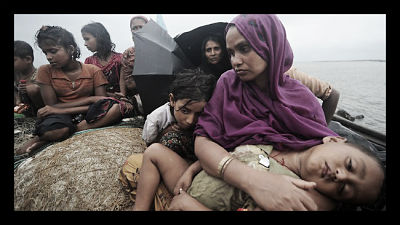
Rohingya_people_in_Myanmar

The Rohingya people represent a small Muslim minority in the Southeast Asian country of Myanmar. They are denied citizenship, forbidden from colleges, and have suffered mass killings and violence that the government has done nothing to halt. And recently, Myanmar passed a law restricting Rohingya childbirths, an action which may qualify as an act of genocide.

The Rohingya people have lived in Myanmar since the eighth century. However, their existence was wiped from official record in 1982 with the passage of a citizenship law. The law had the effect of making the Rohingya stateless peoples, illegal immigrants in their own country, with no rights or international recognition.

Rohingya people have experienced harsh violence and now will suffer an enforced two-child limit. The limitation is officially claimed as an effort to ease tensions between the Buddhist majority and Muslim minority, however the policy serves as a frightening indicator that genocide may not be far away. Genocide Watch has even gone so far as to issue a “Genocide Emergency Alert” for Myanmar, and the United Nations has also expressed similar concerns.

Genocide Watch breaks down genocides into eight distinct stages. In order, they are as follows: Classification, Symbolization, Dehumanization, Organization, Polarization, Preparation, Extermination and Denial. Myanmar is quickly ticking stages off the list.

Rohingya people are regularly forced to live in ethnic enclaves with enforced curfews. They experience intense violence which the government has done little if anything to prevent. They are becoming increasingly isolated from resources and from the outside world. If nothing is done to stop these policies, the Rohingya may be removed entirely from their country. The international community must act now to hold the Burmese government responsible and stop the eradication of the Rohingya ethnic group before it is too late.

-Caitlin Zusy

Sources: UN Dispatch, News.com
Photo: News.com

July 13, 2013
Share this entry
  • Share on Facebook
  • Share on X
  • Share on WhatsApp
  • Share on Pinterest
  • Share on LinkedIn
  • Share on Tumblr
  • Share on Vk
  • Share on Reddit
  • Share by Mail
https://borgenproject.org/wp-content/uploads/borgen-project-logo.svg 0 0 Borgen Project https://borgenproject.org/wp-content/uploads/borgen-project-logo.svg Borgen Project2013-07-13 06:59:012024-12-13 17:49:27The World’s Most Oppressed People: The Rohingya

Get Smarter

  • Global Poverty 101
  • Global Poverty… The Good News
  • Global Poverty & U.S. Jobs
  • Global Poverty and National Security
  • Innovative Solutions to Poverty
  • Global Poverty & Aid FAQ’s
Search Search

Take Action

  • Call Congress
  • Email Congress
  • Donate
  • 30 Ways to Help
  • Volunteer Ops
  • Internships
  • Courses & Certificates
  • The Podcast
Borgen Project

“The Borgen Project is an incredible nonprofit organization that is addressing poverty and hunger and working towards ending them.”

-The Huffington Post

Inside The Borgen Project

  • Contact
  • About
  • Financials
  • President
  • Board of Directors
  • Board of Advisors

International Links

  • UK Email Parliament
  • UK Donate
  • Canada Email Parliament

Get Smarter

  • Global Poverty 101
  • Global Poverty… The Good News
  • Global Poverty & U.S. Jobs
  • Global Poverty and National Security
  • Innovative Solutions to Poverty
  • Global Poverty & Aid FAQ’s

Ways to Help

  • Call Congress
  • Email Congress
  • Donate
  • 30 Ways to Help
  • Volunteer Ops
  • Internships
  • Courses & Certificates
  • The Podcast
Link to: Child Sponsorship Works Link to: Child Sponsorship Works Child Sponsorship Works Link to: Why Mental Healthcare Is Important to Development Link to: Why Mental Healthcare Is Important to Development Why Mental Healthcare Is Important to Development
Scroll to top Scroll to top Scroll to top