• Link to X
  • Link to Facebook
  • Link to Instagram
  • Link to TikTok
  • Link to Youtube
  • About
    • About Us
      • President
      • Board of Directors
      • Board of Advisors
      • Financials
      • Our Methodology
      • Success Tracker
      • Contact
  • Act Now
    • 30 Ways to Help
      • Email Congress
      • Call Congress
      • Volunteer
      • Courses & Certificates
      • Be a Donor
    • Internships
      • In-Office Internships
      • Remote Internships
    • Legislation
      • Politics 101
  • The Blog
  • The Podcast
  • Magazine
  • Donate
  • Click to open the search input field Click to open the search input field Search
  • Menu Menu

Archive for category: United Nations

Information and stories about United Nations.

Health, United Nations

EU Fights Against AIDS in Eastern Europe

eastern-europe-fight-aids
For the last decade, the European Union (EU) and other organizations and coalitions like the United Nations (UN) have delivered significant results in treating and preventing AIDS-related illnesses in the developing world. For example, according to the World Health Organization, (WHO) deaths from AIDS in Ethiopia have decreased by over 45%. In countries like Zimbabwe and Botswana, this number is over 60%.

Unfortunately, over the same timespan, there has been a considerate increase in the rate of deaths from AIDS in Eastern Europe. Even though the number of cases of HIV/AIDS in Eastern Europe is lower than in African nations, any percentage increase is great cause for concern. As a result, many are urging the European Union to review their objectives and to improve treatment and prevention of this disease in not only developing countries, but Eastern Europe as well.

In Ukraine, there has been a 144% increase in the number of AIDS-related deaths, and in Belarus, it was an 1100% increase. These startling statistics have led many to criticize the European Union in their decision to concentrate funding for response to HIV/AIDS in developing countries instead of Eastern European nations. The majority of EU funding for the treatment and prevention of AIDS currently goes to developing countries.

Due to the rise in infections of AIDS in European Nations over the last decade, however, various organizations are placing pressure on the European Nation to review the appropriation of funding that goes to fight this disease, especially in Eastern Europe, Russia, and Central Asia.

In addition to inadequate funding for middle-income countries like Ukraine for HIV/AIDS response, there exist many problems in directly dealing with this increasing disease crisis. Many of these countries have religious taboos of HIV, since many times people relate sexually transmitted diseases to promiscuous sexual practices. In addition to this stigmatization, since many cases of disease transmissions are due to unsafe drug use and needle sharing, the government will have to exhibit courage and make a stance in supporting sterile needle programs for drug users. This type of support is unheard of in many religiously conservative countries.

Many affirm that it is important for the European Union to recognize that it is also important to invest in middle-income countries, because they also struggle with infectious diseases like those in developing countries. The stigma and discrimination that the people living in Eastern Europe face may even make it harder for them to receive treatment. Nevertheless, the increase in HIV transmissions in any part of the world is unacceptable as the international community attempts to treat, prevent, and cure HIV/AIDS and many other diseases in the world.

– Rahul Shah

Sources: PANCAP, EurActiv
Photo: IPS

August 23, 2013
https://borgenproject.org/wp-content/uploads/borgen-project-logo.svg 0 0 Borgen Project https://borgenproject.org/wp-content/uploads/borgen-project-logo.svg Borgen Project2013-08-23 04:31:382017-11-30 10:46:27EU Fights Against AIDS in Eastern Europe
Foreign Aid, Refugees and Displaced Persons, United Nations

Refugees in Ethiopia Receive Monetary Relief

Somali_Refugees_Ethiopia
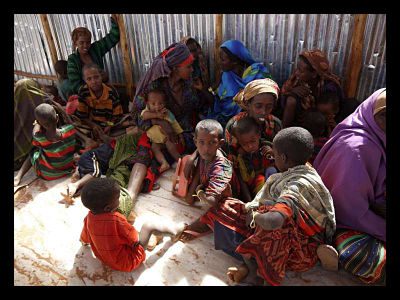
Somali refugees continue to arrive in Ethiopia in large droves due to poor growing conditions, food shortages, and continued conflict. While the situation is slowly improving, John Ging, Director of Operations in the Office for the Coordination of Humanitarian Affairs, urges continued attention to the crisis and says, “I call on the international community to invest now to build the resilience of Somalis and stop the cycle of crisis they have endured far too long.”

To that end, The United Nations World Food Program, UNHCR, European Commission Humanitarian Aid and Civil Protection, and the government of Ethiopia have partnered to launch an aid project that provides Somali refugees with monthly cash installments in addition to food aid. Currently, 12,000 refugees are receiving monetary relief and the project plans to extend cash aid to 13,000 more by October.

Monetary relief allows Somali refugees to round out their diet with fresh produce, proteins, and dairy from the local market, providing an important supplement to the basic grains and non-perishables received from aid agencies. It also gives the refugees an opportunity to inject money into the local economy. This economic boost is helpful to the communities supporting the large number of refugee settlements.

Currently the refugees who are part of the pilot cash program receive 100 Ethiopian Birr per month, or about $5.00. The organizations backing this program are optimistic that these cash transfers will greatly alleviate the most acute suffering and make the refugee situation less of a burden. Between Ethiopia, Kenya, and Yemen, there are over 1 million Somali refugees. The cash relief program gives refugees an opportunity to regain a little agency and make decisions about what groceries to purchase while also offering much needed hunger relief.

– Zoe Meroney

Sources: World Food Program, United Nations, All Africa
Photo: UNHCR

August 12, 2013
https://borgenproject.org/wp-content/uploads/borgen-project-logo.svg 0 0 Borgen Project https://borgenproject.org/wp-content/uploads/borgen-project-logo.svg Borgen Project2013-08-12 05:02:342024-06-11 01:49:27Refugees in Ethiopia Receive Monetary Relief
Global Poverty, Poverty Reduction, United Nations

Make Poverty History

Make Poverty History Aims
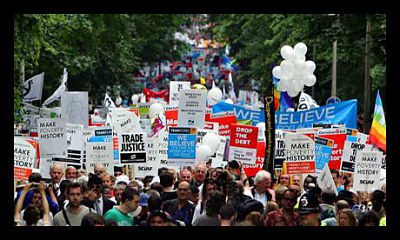
Make Poverty History (MPH) is staging a worldwide campaign. Its mission statement matches its name as it aims to raise awareness about global poverty and make concrete policy changes in various nations’ governments and in intergovernmental organizations.

The various national Make Poverty History campaigns are part of a larger international campaign called Global Call to Action Against Poverty, a worldwide alliance committed to making world leaders live up to their promises and ending global poverty.


The Admirable Aims of Make Poverty History


In comparison to other aid organizations that may struggle trying to apply single, cure-all strategies on a universal scale, MPH has experienced such widespread success because each participating country can focus its national campaign on different issues within the broader topic of alleviating global poverty.

Despite these slight variations, however, all countries generally focus on issues such as aid, trade, and justice that are relevant to the UN’s eight Millennium Development Goals. Besides alleviating global poverty, MPH also aims to reduce the corruption that plagues many developing countries’ governments and prevents foreign aid from reaching the poorest members of society.

For example, the British MPH campaign is a coalition of charities, religious organizations, trade unions, and celebrities whose campaign slogans include “trade justice,” “drop the debt,” and “more and better aid.”

The call for “trade justice” demands a global trade system that does not allow half of the world’s population to live on less than $2 USD per day. This aspect of the campaign seeks to prevent the wealthiest countries and individuals from reaping all of the trade benefits at the expense of the impoverished.

Meanwhile, the “drop the debt” aspect of the campaign suggests canceling unpayable debt of the world’s poorest countries without cutting these countries off to the prospect of future aid. This includes creating a fair and transparent international process to ensure that human needs take priority over debt repayments .

Finally, the “more and better aid” component notes that increasing the proportion of national budgets allocated to foreign development aid will not make much of a difference unless nations can also change the way in which they deliver their aid. MPH believes that targeting aid specifically to basic health care and education, rather than giving money to governments for further allocation, is the best way to avoid corruption and address the underserved people’s true needs.

Meanwhile, Australia’s MPH campaign focuses on increasing Australia’s effective foreign development aid to 0.7% of its gross national income, tackling global climate change issues, and addressing chronic hunger problems across the globe.

While both the MPG and its parent campaign were originally created as a one-time-only campaign in 2005, the dual campaigns’ continued success have spurred leaders to extend the campaigning alliance until at least 2015. MPH is now considered the biggest, most widespread anti-poverty movement in history.

The leaders of MPH acknowledge that, despite its many successes, the fight against poverty continues on. Through campaigning, fundraising, and fighting to make their voices heard by politicians and policy makers around the globe,  MPH can ensure that the fire it has ignited in the hearts of its followers never dies.

– Alexandra Bruschi

Sources: Make Poverty History, The Guardian, Oxfam Australia, Millennium Development Goals,
Photo: The Guardian

August 11, 2013
https://borgenproject.org/wp-content/uploads/borgen-project-logo.svg 0 0 Borgen Project https://borgenproject.org/wp-content/uploads/borgen-project-logo.svg Borgen Project2013-08-11 05:51:332018-02-01 13:38:01Make Poverty History
Food & Hunger, Food Security, United Nations

FAO Perennial Crops for Food Security

perennial_crops
The UN Food and Agriculture Organization (FAO) will hold a workshop on Perennial Crops for Food Security later this month to highlight the development of a perennial wheat variety by NSW Department of Primary Industries (DPI), CSIRO and Charles Sturt University.

DPI was recently successful in growing a perennial wheat variety in the Cowra district in Australia. Perennial crops offer significant benefits in sustainability that support efforts to address food security. The wheat variety will produce for three consecutive years compared to other wheat varieties produce only one year. DPI is also pursuing research in inter-cropping of perennials in Cowra. Their work involves planting perennial grain and legumes side by side to boost soil nutrition.

In addition to discussing developing new perennial crops the workshop will focus on increasing perennial crop yields and integrating these crops in production cycles. Perennial crops are more sustainable as they are able to be harvested without killing the plant. This ensures that the plant continues to grow and produce. The perennial crops are also heartier and able to survive temperature changes and extremes. However, annual plants have received the vast amount of technological attention (i.e. corn).

However, there are several barriers to encouraging farmers to adopt these crops. In regions where land tenure or ownership rights are tenuous, investing in perennials crops does not appeal to farmers who do not need investment security of perennials. Many of these crops take several years to establish and produce a crop and it can be difficult to convince farmers that this investment is worth the wait. The specialized equipment and the new techniques required do not make conversion any easier and often involve a high price tag.

The FAO expert workshop will include speakers from several countries. These experts will discuss trends and the status of various perennial crop developments. The gaps and opportunities for integrating these crops in the production chain will also be addressed by presenters. Speakers and participants also come from diverse public and private backgrounds.

Perennial crops will be a long term solution for food security, as demonstrated by the various barriers that must be overcome. However, the many benefits that they present make it an important endeavor. If food security is to be achieved and 9 billion people fed by 2050, scientists and international development specialists must pursue a variety of options.

– Callie D. Coleman

Sources: Cowra Guardian, FAO, Perennial Solutions
Photo: Perennial Solutions

August 6, 2013
https://borgenproject.org/wp-content/uploads/borgen-project-logo.svg 0 0 Borgen Project https://borgenproject.org/wp-content/uploads/borgen-project-logo.svg Borgen Project2013-08-06 06:18:572024-12-13 17:49:37FAO Perennial Crops for Food Security
Refugees and Displaced Persons, United Nations

Refugees and World Refugee Day 101

refugees_war
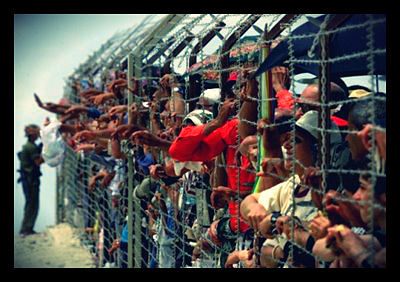
Every year on June 20, refugees around the world are recognized for the bravery and strength of fleeing their homelands in search of a new peaceful life. Established in 2000 by the UN General Assembly, World Refugee Day not only celebrates the achievements of displaced peoples but also raises awareness on global issues pertaining to those who are driven out of their countries of origin due to war, threats of violence, and persecution.

Worldwide, there are 43.7 million displaced individuals, among whom nearly half are children. While they may choose to resettle in their motherland, many refugees choose to stay in the country from which they seek asylum. Even in countries such as the United States, however, refugees are vulnerable to a host of problems.

Due to the violence or trauma they may have experienced, refugees are prone to depression and post-traumatic stress disorder (PTSD), among a number of other psychiatric disorders. The highest occurrence rates recorded for PTSD and depression are 86 percent and 31 percent, respectively. Refugees may also experience culture shock in attempting to adjust to their new environment. Conversely, instances of discrimination from host nation members are not uncommon.

Despite their employment rights being clearly stated in international law, refugees may still face employer bias and discrimination in the workplace. Thus, they often have no choice but to turn to less than reputable means of earning an income whether that be prostitution, child labor, or criminal organizations.

What can be done to help? –Though a month has passed since World Refugee Day 2013, UNHCR works hard year-round to provide refugees with basic healthcare services, food, clean water, access to employment and education, and reunions among the families that have been divided by conflict. Beyond the UN, multiple civic organizations, including the International Rescue Committee and the US Committee for Refugees and Immigrants, aim to protect standards for refugees’ rights. Volunteer opportunities and donations are always welcome and have the potential to create an indelible impact on millions of lives.

– Melrose Huang
Sources: UNHCR, Yemen Times, US Department of Veterans Affairs, International Rescue Committee
Photo: David Mixner

August 6, 2013
https://borgenproject.org/wp-content/uploads/borgen-project-logo.svg 0 0 Borgen Project https://borgenproject.org/wp-content/uploads/borgen-project-logo.svg Borgen Project2013-08-06 05:05:242024-06-04 01:05:58Refugees and World Refugee Day 101
Food & Hunger, Food Aid, Food Security, Foreign Aid, United Nations

What Is Global Food Insecurity?

Global Food Insecurity
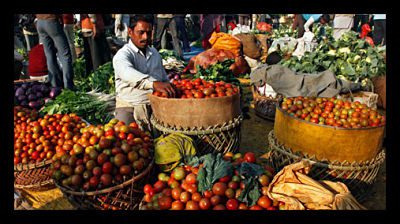
There really is no formula to defining global food insecurity. Still, many world health organizations use the term to point out deficiencies in global food security. To understand what something is, it sometimes helps to understand what it is not. This may just be the case with food insecurity. To understand food insecurity, that is, one must first define and understand food security and work backwards. If food security does not exist, then, by definition, you have food insecurity.

The World Food Summit of 1996 defined food security as existing “when all people at all times have access to sufficient, safe, nutritious food to maintain a healthy and active life.” This definition hinges on three qualifications: namely food availability, food access, and food use. Lacking one of these elements of food security, a population faces food insecurity, which can and does arise in an endless permutation of manners.


Global Food Insecurity: Failing Food Security Criteria


To establish food security, say, in a developing nation, food must first be available on a consistent basis. Some will argue that there is currently enough food in the world to feed everyone in the world. Nonetheless, people go hungry due to inconsistency in their daily intake of food. For example, one may go days without a meal. In this situation, a cornucopia of food, arriving two weeks later, does nothing to alleviate that person’s current hunger. As such, food security depends on food availability.

Second, the nation’s population must have access to the right kinds of food to sustain a healthy diet. Not only must a person have food available, that is, it must be the right kind of food. For example, a human cannot survive on rice alone. We need all different kinds of food to live healthy lives. The definition of healthy diet here also includes accommodations to particular dietary needs, such as avoiding certain foods or increasing intake of others.

Finally, food security requires appropriate use of food based on adequate knowledge of basic nutrition and care. In order to maintain a healthy diet, one must know how to eat the food that is available to him or her and portion that food out in a way that best serves the needs of his or her body. When USAID drops bags of food over Africa, for example, it will be helpful to also teach those receiving the aid how to ration the food. Basic sanitation and access to water are included in appropriate use to complete the qualifications of food security.

If even one of these three elements or qualifications is not met, it is easy to see how even a full plate of food, three times a day, may not be enough to maintain a healthy diet. Food security requires that the food is enough to satisfy the short, mid, and long-term needs of the human body and that the person consuming the food does so in an appropriate manner to maintain him or herself. Global food insecurity, or deficient food security from a worldwide perspective, exists in a world where even one person goes hungry.

Though great strides have been made in alleviating global hunger, the current level of food insecurity is unacceptable. Even in the United States, 1 out of 10 households were food insecure, hence the importance of food provision and education programs, like, local food banks. To learn more about food (in)security in the U.S., you can visit this site.

– Herman Watson

Sources: U.S. Food Aid and Security, World Health Organization, World Food Programme, Food and Agriculture Organization
Photo: Security and Sustainability Forum

August 5, 2013
https://borgenproject.org/wp-content/uploads/borgen-project-logo.svg 0 0 Borgen Project https://borgenproject.org/wp-content/uploads/borgen-project-logo.svg Borgen Project2013-08-05 11:35:562024-05-25 00:15:01What Is Global Food Insecurity?
Education, United Nations, Women and Female Empowerment

What Malala Means to Women Worldwide

Malala_Ban_Ki_moon
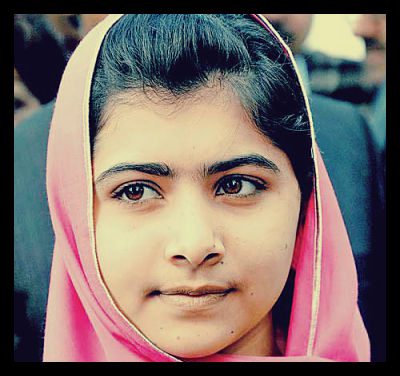
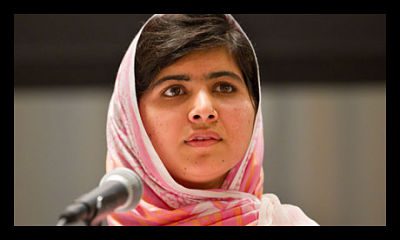
In a piece on the Huffington Post website on July 8, United Nations Secretary-General Ban Ki-Moon highlighted the young Pakistani girl Malala Yousafzai as an example of the empowering effect of education.

Malala entered the public domain in 2009 when she was in a BBC documentary about life under the Taliban. Three years later, in October 2012, she was shot in the head by a member of the Taliban who boarded her school bus because of her fight for girls’ education. The story gained international recognition. Since then Malala has been named one of TIME magazine’s most influential people of 2013, and has continued to advocate for girls’ education. On July 12, Malala was joined by hundreds of students from more than 80 countries in a unique Youth Assembly where they demanded quality education for children across the globe.

Ban Ki-Moon contended that violent actions against Malala, her teachers, and her fellow students prove how frightened extremists are of empowering women. For every year of schooling she attends, a girl’s future earnings increase by 20%. Ban asserts that Malala and her colleagues are teaching the world the lesson that “education is the pathway to saving lives, building peace, and empowering young people.”

With this in mind the Secretary-General enacted the “Global Education First” Initiative, a program with the goal of getting all children in schools with an improved quality of education that prepares them to grow up to be global citizens. The 57 million children out of primary school deserve a proper education because education is a fundamental human right.

July 12 marks the United Nations’ Malala Day, where Malala addressed over 500 youth at the UN and celebrated her birthday. The Secretary-General recognized in his article for the Huffington Post the importance of the courageous actions of students like Malala, and how the education which they advocate for is crucial for development and growth in the global system.

– Martin Drake

Source: Huffington Post, BBC
Photo: Mid Day

July 28, 2013
https://borgenproject.org/wp-content/uploads/borgen-project-logo.svg 0 0 Borgen Project https://borgenproject.org/wp-content/uploads/borgen-project-logo.svg Borgen Project2013-07-28 04:00:122017-10-04 12:36:45What Malala Means to Women Worldwide
Activism, United Nations

Top 5 Malala Quotes

Malala_Yousafzai
Malala Yousafzai, a Pakistani teenager shot by the Taliban after advocating for girls’ right to education, addressed the United Nations on her 16th birthday, speaking about the power of education to overcome extremism. The U.N. declared July 12 “Malala Day” to honor Yousafzai, who went back to school in March after recovering from the October attack.

According to a report released by UNESCO and Save the Children, 95 percent of the 28.5 million children who are not receiving a primary education live in low and lower-middle income countries, and girls make up 55 percent of those who are not in school. The report also stated that there were more than 3,600 documented attacks on education similar to that faced by Yousafzai. Listed below are five of her most inspiring “Malala quotes”, which highlight the influence and importance of education.

  1. “We realized the importance of pens and books when we saw the guns. The extremists are afraid of books and pens. The power of education frightens them.”
  2. “There was a time when women social activists asked men to stand up for women’s rights, but this time we will do it by ourselves.”
  3. “I raise up my voice – not so that I can shout, but so that those without a voice can be heard.””
  4. “We cannot succeed when half of us are held back.”
  5. “One child, one teacher, one book and one pen can change the world. Education is the only solution. Education first.”

– Katie Bandera

Sources: Huffington Post
Photo: The Guardian


Read Humanitarian Quotes.

July 27, 2013
https://borgenproject.org/wp-content/uploads/borgen-project-logo.svg 0 0 Borgen Project https://borgenproject.org/wp-content/uploads/borgen-project-logo.svg Borgen Project2013-07-27 03:00:552017-10-04 12:37:20Top 5 Malala Quotes
United Nations

UN Forum Aims to Strengthen Disabled Employment

Around the world, more than one billion people live with disabilities. Of these one billion people, roughly 800 million are of working age but encounter physical, social, and economic restraints from accessing education, employment, and ways to develop skills.

Roughly 54 million Americans have a disability and this number continues to grow. Much like the rest of the world, Americans with disabilities face greater financial difficulties than those without. Those with a disability double their likelihood of living with an annual household income of $15,000 or less.

In an attempt to alleviate the stresses of the disabled and empower them with equal opportunities the United Nations began a three day meeting. Beginning on July 17th, they aimed at improving the lives of the globally disabled, both occupationally and by strengthening the standard of living.

A background paper for the 6th Conference of States Parties to the Convention on the Rights of Persons with Disabilities (CRPD) states that the disabled face a higher likelihood of living in poverty than those that are not disabled. The paper also found that the economic status of a country had little impact on the placement of the disabled in society.

Yet, according to a pilot study conducted by the UN International Labour Organziation (ILO), it is not advisable to exclude the disabled minority. Performed in ten low and middle income countries, the ILO found that when those with disabilities were rejected from the labor market there was an estimated loss of 3-7% of the country’s GDP. By not educating and tapping into this handicapped minority, many countries are losing out on a pool of skilled workers.

Meeting annually, these States Parties come together for the CRPD to discuss experiences and ways in which to protect disabled rights. However, it is acknowledged that the convention is a stepping stone for the national protection of disabled persons. As Ivan Šimonović, Assistant Secretary General for Human Rights, stated, “The obligations of the Convention must be implemented at the national level to take real effect in the lives of persons with disabilities. Changes in law, policies and programs are required. But even more importantly, attitudes must change.”

– Michael Carney 

Sources: All Africa, Disability Funder’s Network, UN News Centre
Photo: Facebook

July 22, 2013
https://borgenproject.org/wp-content/uploads/borgen-project-logo.svg 0 0 Borgen Project https://borgenproject.org/wp-content/uploads/borgen-project-logo.svg Borgen Project2013-07-22 14:32:462024-12-13 17:49:32UN Forum Aims to Strengthen Disabled Employment
Health, Nonprofit Organizations and NGOs, United Nations

AMREF USA’s Pledge for a Healthy Africa

AMREF USA’s Pledge for a Healthy AfricaDespite the substantial improvements made in the last few decades, Africa still faces major public health problems. The continent accounts for two-thirds of the global population infected with HIV/AIDS, with 22.5 million citizens suffering. Malaria and diarrhea continue to kill children daily. The rise of tuberculosis, prevalent in mining areas across Africa, infected 2.3 million citizens in 2011 and killed 220,000. And childbirth still remains very dangerous, with 1 in every 16 women dying while giving birth.

African Medical and Research Foundation USA seeks to improve the health standards of all African nations, one community at a time. Founded in 1957, AMREF looks to improve the quality of life for African communities and eradicate public health problems.

AMREF understands local health systems are essential in developing quality, sustainable health standards. AMREF has trained many African locals to return to their communities in order to improve health conditions. The organization educates volunteers and on the symptoms and treatment of diseases to prevent diseases from spreading further and decrease the number of citizens infected. AMREF has trained over 10,000 health workers in over 40 African nations.

AMREF estimates that a million more health workers need to be properly trained and educated to meet the United Nation’s Millenium Development Goals for improved public health. As the fight for better health conditions in Africa continues, educating and training citizens may be the solution for healthier African communities and improved health standards.

– William Norris

Sources: AMREF USA, All Africa
Photo: Flickr

July 22, 2013
https://borgenproject.org/wp-content/uploads/borgen-project-logo.svg 0 0 Borgen Project https://borgenproject.org/wp-content/uploads/borgen-project-logo.svg Borgen Project2013-07-22 06:47:362020-07-16 18:54:21AMREF USA’s Pledge for a Healthy Africa
Page 32 of 35«‹3031323334›»

Get Smarter

  • Global Poverty 101
  • Global Poverty… The Good News
  • Global Poverty & U.S. Jobs
  • Global Poverty and National Security
  • Innovative Solutions to Poverty
  • Global Poverty & Aid FAQ’s
Search Search

Take Action

  • Call Congress
  • Email Congress
  • Donate
  • 30 Ways to Help
  • Volunteer Ops
  • Internships
  • Courses & Certificates
  • The Podcast
Borgen Project

“The Borgen Project is an incredible nonprofit organization that is addressing poverty and hunger and working towards ending them.”

-The Huffington Post

Inside The Borgen Project

  • Contact
  • About
  • Financials
  • President
  • Board of Directors
  • Board of Advisors

International Links

  • UK Email Parliament
  • UK Donate
  • Canada Email Parliament

Get Smarter

  • Global Poverty 101
  • Global Poverty… The Good News
  • Global Poverty & U.S. Jobs
  • Global Poverty and National Security
  • Innovative Solutions to Poverty
  • Global Poverty & Aid FAQ’s

Ways to Help

  • Call Congress
  • Email Congress
  • Donate
  • 30 Ways to Help
  • Volunteer Ops
  • Internships
  • Courses & Certificates
  • The Podcast
Scroll to top Scroll to top Scroll to top