• Link to X
  • Link to Facebook
  • Link to Instagram
  • Link to TikTok
  • Link to Youtube
  • About
    • About Us
      • President
      • Board of Directors
      • Board of Advisors
      • Financials
      • Our Methodology
      • Success Tracker
      • Contact
  • Act Now
    • 30 Ways to Help
      • Email Congress
      • Call Congress
      • Volunteer
      • Courses & Certificates
      • Be a Donor
    • Internships
      • In-Office Internships
      • Remote Internships
    • Legislation
      • Politics 101
  • The Blog
  • The Podcast
  • Magazine
  • Donate
  • Click to open the search input field Click to open the search input field Search
  • Menu Menu

Archive for category: United Nations

Information and stories about United Nations.

Developing Countries, Development, United Nations

Progress Is Being Made Towards MDGs

Millennium Development Goals

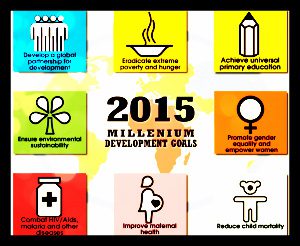
Twenty nations have made huge strides in just a few years towards the Millennium Development Goals (MDGs). The Millennium Development Goals are a series of international development goals set by the United Nations in 2000 that aim to eradicate poverty, hunger, and disease and improve the quality of life for the world’s poorest by the year 2015. Nations, that were described as troubled and conflict-hit, had not met any of the MDGs in 2010 have now at least met one. The World Bank cites better data collection and monitoring that have made progress more discernible.

The World Bank noted that countries Afghanistan, Nepal and Timor-Leste have decreased the number of people in extreme poverty by fifty percent or increased the number of girls enrolled in schools.

The World Bank aims to find ways to help countries that have relapsed such as Yemen which until the Arab Spring in 2011 was on course to reduce maternal mortality. It also aims to help conflict-hit countries transition from receiving humanitarian aid that ends once the cameras leave to building foundations for long-term development. To do so, the World Bank is working with the UN which has historically assisted with peace-keeping and humanitarian assistance.

World Bank President, Jim Yong Kim, called the results a wake-up call to “the global community [to] not dismiss these countries as lost causes. Development can and is being achieved, even amid fragility and violence.”

The World Bank plans to focus on aid effectiveness by studying how aid money is used and if it actually impacts the poor, particularly with the reduction of aid from the U.S. and Europe.

– Essee Oruma

Source: Reuters
Photo: A Celebration of Women

May 7, 2013
https://borgenproject.org/wp-content/uploads/borgen-project-logo.svg 0 0 Borgen Project https://borgenproject.org/wp-content/uploads/borgen-project-logo.svg Borgen Project2013-05-07 13:00:252020-05-26 08:45:52Progress Is Being Made Towards MDGs
Development, Global Poverty, United Nations

Human Rights a Priority for World Bank

Human Rights a Priority for World BankIndependent United Nations experts are advising the World Bank to include human rights standards in their criteria for giving loans and all other interactions with developing countries. The World Bank will hold a review in the upcoming months to discuss its social policies and is expected to adopt international human rights standards.

When the World Bank does not consider the human rights of a specific country before investing, the organization risks unintentionally hurting the extremely poor in that country. This happens because some development ends up benefiting the wealthy people while the poor suffer. For example, poor farmers may lose their land, and therefore livelihood, in order to build new housing structures that have been sanctioned by the World Bank.

The group advocating for human rights standards in the World Bank includes representatives for the Special Rapporteur (and its sub-groups on extreme poverty and human rights, rights of indigenous peoples, and rights to food) and the Independent Expert on foreign debt and human rights.

As such, the World Bank can expect to hear arguments from this group urging them to consider issues like “disability, gender, labor, land tenure, and the rights of indigenous people” in the meeting. These suggestions will also be open for public comment. The goal of adding human rights criteria to World Bank standards is to ensure that the poor benefit development as well as wealthy people.

The World Bank will update its “safeguard policies,” its social and environmental policies, to make sure that the voices of the poor are not overpowered by the wealthy. This review, which will analyze the activities of the World Bank for the past two years, is a huge opportunity for the organization to begin to reach out to the world’s poorest.

– Mary Penn

Source: India Blooms
Photo: The Foundry

April 26, 2013
https://borgenproject.org/wp-content/uploads/borgen-project-logo.svg 0 0 Borgen Project https://borgenproject.org/wp-content/uploads/borgen-project-logo.svg Borgen Project2013-04-26 14:00:322020-06-16 01:39:20Human Rights a Priority for World Bank
Children, Education, Family Planning and Contraception, United Nations

UNICEF’s Global Education First Initiative

UNICEF's Global Education First Initiative
Josephine Bourne is the Associate Director of UNICEF. She sat down for an interview with the Inter Press Service to give her thoughts on the upcoming meetings to be held in Washington D.C. on the Global Education First Initiative.

The meetings will bring together Ministers in Finance from the Democratic Republic of the Congo, Haiti, South Sudan, Yemen, Nigeria, Ethiopia and Bangladesh. The topic of conversation will focus on sustainable solutions between the private sector and civil society organizations. The meetings will center around the importance of education on the global economy.

Bourne believes that the initiative will provide an increased pressure for political commitment in the field of education.  She stated that UNICEF would like to continue to work towards ensuring education for the most vulnerable children, particularly girls, with disabilities as well as children living in conflict territories.

When Bourne was asked if there was one thing in particular that greatly diminished a child’s opportunity to obtain an education, she bluntly stated that being born into poverty as a girl in a rural area is a huge disadvantage. The longer a girl is able to attend school, the fewer children she will have – an incredibly important factor in poverty reduction.

Around the world, girls who have seven years of education have 2.2 fewer children than those that do not. When those girls have children, those children will be healthier and better educated, helping to lower the poverty percentage in their given communities. Bourne believes that this environment leads to economic growth, more female leaders, and more sustainable development.

In the interview, Bourne was also asked about gender equality and education. She said that girls from disadvantaged groups are oftentimes the most marginalized because of the special risks that could take them out of school. She believes that there is serious inequity in schools around the world.

Women’s education and empowerment have been a popular theme in the media lately with the recent release of the documentary “Girl Rising”. While this is a very positive thing, Bourne was quick to note, however, that the increased media attention to gender and education inequality, as well as the empowerment that comes with it are not enough to bring about social change. In her opinion, in order to create lasting change, we need the complete commitment of all duty bearers; from organizations such as UNICEF and the UN to parents and communities; to be involved in the promotion of the human right of education for all children around the world.

– Caitlin Zusy

Source: Inter Press Service
Photo: UNESCO

April 20, 2013
https://borgenproject.org/wp-content/uploads/borgen-project-logo.svg 0 0 Borgen Project https://borgenproject.org/wp-content/uploads/borgen-project-logo.svg Borgen Project2013-04-20 11:41:582024-05-24 23:48:53UNICEF’s Global Education First Initiative
Global Poverty, United Nations

Berry and Kors Launch Watch Hunger Stop

Berry and Kors Launch Watch Hunger StopThe LA Times has reported that Halle Berry has teamed up with Michael Kors to help stop world hunger. The duo has announced their new campaign entitled, Watch Hunger Stop. The program will provide meals to children in Africa, Syria, and possibly Central America. The money will be raised through the sale of Kors’ $295 runway watch. The program has a high-efficiency rate as each watch can provide 100 meals for children as part of the U.N. World Food Programme.
The announcement of the campaign comes during Berry’s pregnancy- an additional beneficial aspect of the program. The actress states that she hopes to be able to travel to these countries during her pregnancy to speak with women about prenatal care. This helps raise awareness for women who may not have been exposed to such education. Increased knowledge of prenatal care as well as increased food in the region could greatly improve children’s quality of life, as well as potentially work to lower infant mortality rates. The lowering of infant mortality rates is incredibly important as mothers who have confidence their children will survive to have fewer children.

Berry has told the press that she would like to use her celebrity status for the benefit of people around the world. She would like to use this opportunity to speak to women around the world who struggle to feed and tend to their children. Berry seems well versed in the knowledge that hunger is a dangerous predictor of quality of life, and seems motivated to work towards the elimination of world hunger, something we could all strive to achieve.

– Caitlin Zusy

Source: LA Times

April 13, 2013
https://borgenproject.org/wp-content/uploads/borgen-project-logo.svg 0 0 Borgen Project https://borgenproject.org/wp-content/uploads/borgen-project-logo.svg Borgen Project2013-04-13 09:43:262020-06-07 22:00:45Berry and Kors Launch Watch Hunger Stop
Refugees and Displaced Persons, United Nations

NGOs Make Emergency Appeal for Aid to Syria

Syria_NGO_Aid
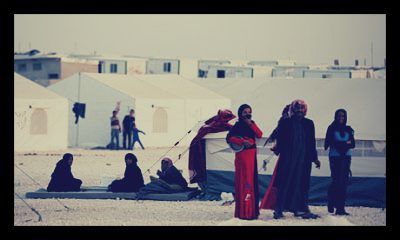
A group of 14 UK-based NGOs, The Disasters Emergency Committee (DEC), has made an “emergency appeal” to provide aid to Syria, which is struggling under the duress of a civil war. With recent news of chemical warfare being used against civilians and a death toll that has reached nearly 70,000, aid groups are struggling to keep up with the deteriorating humanitarian situation.

Recent estimates place at least 8,000 refugees fleeing the country per day, compared to 1,000 per day a few months ago.  Because of mass displacement and intense fighting, NGOs and other aid groups are finding it extremely difficult to reach civilians who are in need. Members of the DEC have been able to extend aid to refugees who have fled to other surrounding countries, and a number of other groups have had success reaching people throughout Aleppo, Damascus, Homs, and other areas throughout northern Syria.

The UN asserted that although they have requested $1.5 billion in emergency aid, only a small portion of that need has been met. The DEC’s Chief Executive, Saleh Saeed, said that even though a number of agencies are attempting to work together in the region, there remain a high number of civilians in urgent need, and that “the greatest challenge to meeting those needs remains the barriers to delivering aid which are faced by impartial humanitarian agencies such as our members,” as well as financial pressures.

The total number of people who are in need of aid directly stemming from the situation in Syria has reached 5 million, as the DEC plans to appeal to public and government officials for additional help.

– Christina Kindlon

Source: Guardian

March 25, 2013
https://borgenproject.org/wp-content/uploads/borgen-project-logo.svg 0 0 Borgen Project https://borgenproject.org/wp-content/uploads/borgen-project-logo.svg Borgen Project2013-03-25 11:03:342020-04-27 06:10:17NGOs Make Emergency Appeal for Aid to Syria
United Nations, Water, Water Crisis, Water Quality, Water Sanitation

5 Water Cooperation Facts for World Water Day

 International Year of Water Cooperation
Friday, March 22, 2013 is World Water Day. This year’s World Water Day is especially important because the UN has designated 2013 the International Year of Water Cooperation. Those new to water rights issues may wonder: what is water cooperation? Why have a year dedicated to water cooperation? This post will address some of the most important points about international water cooperation.

According to UN-Water:

1. The International Year of Water Cooperation aims to: raise awareness of water cooperation, initiate innovative action toward water cooperation, foster dialogue about water as a top international priority, and address water-related development goals for beyond 2015, when the Millennium Development Goals expire.

2. Water cooperation is: cooperation between all parties involved in water management. If one party does not cooperate, efficiency of water management decreases, to the detriment of human lives. Water cooperation happens on local, national, and international levels. Vital water sources such as rivers and ground water extend across political boundaries; cooperation is needed to share these resources. Building a village well or pumping water for irrigation requires the cooperation of separate parties, often with conflicting interests.

3. Water cooperation is essential because: without water cooperation, progress is impossible in other areas of human development such as food security, gender equality, and poverty reduction. Improving water access is key to reducing poverty, especially for women and children. Water cooperation creates economic benefits, and is necessary for preserving and protecting the natural environment. Life on earth depends on water; we are responsible for managing it sustainably and effectively.

4. Challenges to water cooperation are: reaching across social, political, and economic boundaries. Those involved in water management and policy-making must work with a broad range of stakeholders, local residents, governments, and NGOs. In these situations, cooperation and cultural understanding are essential for effective communication and decision-making. Water cooperation is further complicated by the increasing water needs of a growing population. Urbanization, pollution and climate change continue to threaten water resources, placing them under even greater pressure.

5. There are endless ways you can get involved with water cooperation efforts: educate yourself and others about water rights, impediments to water access, and water cooperation efforts. Engage others in your community to advocate for sustainable water management. Click here for more about how to get involved in World Water Day and the International Year of Water Cooperation!

– Kat Henrichs
Source: UN-Water
Photo:Tree Hugger

March 21, 2013
https://borgenproject.org/wp-content/uploads/borgen-project-logo.svg 0 0 Borgen Project https://borgenproject.org/wp-content/uploads/borgen-project-logo.svg Borgen Project2013-03-21 09:25:542024-05-24 23:45:055 Water Cooperation Facts for World Water Day
United Nations, Water, Water Quality, Water Sanitation

March 22 is World Water Day

world-water-day-2013-water-cooperation_opt
Is water a commodity or a human right? Too many people, governments, and institutions see water as something merely to be bought and sold, and not as something every person on earth needs for survival. Like food, health care, educational and economic opportunities, and many of the other things we write about on the blog, safe water is a human right and necessity. Since 1993, the UN has designated March 22 as World Water Day. This serves to bring attention to, advocate for sustainable management of, and celebrate clean, fresh water.

2013 has also been designated the International Year of Water Cooperation, so this year’s World Water Day holds special significance. Events will be held across the globe to foster international cooperation around water. Because of the organization’s interdisciplinary approach to worldwide problems, the United Nations Educational, Scientific, and Cultural Organization (UNESCO) will coordinate the Day on behalf of UN-Water.

This day serves many purposes, including raising public awareness of water issues facing the globe and advocating for improvements in water management. Access to clean, safe drinking water is a major health concern among the world’s poorest populations. 88 percent of cases of diarrhea, the number one cause of death and illness in the world, are due to a lack of access to clean water and sanitation facilities. Almost a billion people do not have access to improved water sources, while 2.5 billion live without adequate sanitation facilities.

While the statistics are disturbing, we can do something to improve these conditions. World Water Day is an opportunity to learn about water issues and take action on behalf of those whose basic water needs are not being met. To learn more about World Water Day 2013 and the International Year of Water Cooperation, visit the UN’s World Water Day page.

– Kat Henrichs
Source: UN-Water
Photo:UN

March 21, 2013
https://borgenproject.org/wp-content/uploads/borgen-project-logo.svg 0 0 Borgen Project https://borgenproject.org/wp-content/uploads/borgen-project-logo.svg Borgen Project2013-03-21 09:18:102024-05-24 23:44:43March 22 is World Water Day
Global Poverty, United Nations

UN Says Poverty has Decreased Throughout the Developing World

UN Says Poverty has Decreased Throughout the Developing WorldAccording to a new study released by the United Nations, global poverty has seen drastic decreased in recent times, and “up to 80 percent of the world’s middle class will live in developing countries by 2030.”

Calling the rapid reduction in poverty an “epochal global rebalancing,” the UN says that rising incomes and economic development have engendered a rising middle class and have lifted hundreds of millions of people out of severe poverty, citing that at least 40 developing countries with growing economies have contributed to these latest figures.

Helen Clarke, the UN’s Development Program Administrator, said that these countries created fast economic growth by accepting foreign investment and focusing on improving infrastructure and increased education for their citizens.

Also cited as a reason for improved well-being was the GDP boom that occurred in India, China, and Brazil, where China and India managed to double output within the last 20 years.

The study, using the Human Development Index (HDI) as a measurement, also acknowledged other developing countries as having greatly improved individual well-being, with Afghanistan, Sierra Leone, Ethiopia, Rwanda and Angola “among 14 countries that have recorded gains in HDI of more than 2 percent a year since 2000.”

The UN found that global poverty has nearly decreased in half since 1990 when it was recorded at 43 percent. In 2008, global poverty was recorded at just 22 percent. The study highlighted that within this time period, 500 million people in China alone rose out of extreme poverty.

The report found that the largest factor in the reduction of poverty in recent years as global trade, which grew by 22 percent since 1980, which contributes to greater and more rapid economic growth.

– Christina Kindlon

Source: Financial Times
Photo: Ministry of Foreign Affairs, Denmark

March 18, 2013
https://borgenproject.org/wp-content/uploads/borgen-project-logo.svg 0 0 Borgen Project https://borgenproject.org/wp-content/uploads/borgen-project-logo.svg Borgen Project2013-03-18 10:05:452020-05-26 00:15:40UN Says Poverty has Decreased Throughout the Developing World
United Nations, Women and Female Empowerment

Women in Zimbabwe Demand Answers

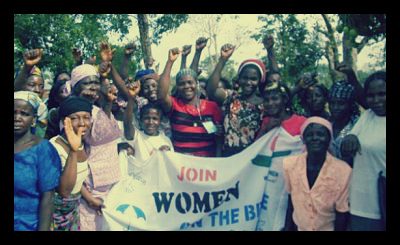
women
The theme for this year’s International Women’s Day deals with ending violence against women. So did the theme in 2009 (“Ending impunity for violence against women and girls”) and in 2007 (“Women and men united to end violence against women in girls”). While International Women’s Day can choose a theme that highlights different issues plaguing women in rural and urban areas, the UN seems to keep going back to violence against women.

Why?

Violence against women is still a huge issue across the world and looking at Zimbabwe, how large of an issue it is becomes apparent. In Zimbabwe, women may be faced with abuse from their spouses, family members, and even their children. Reported cases of domestic violence have risen from 1,940 cases in 2008 to 10,351 cases in 2011, according to AllAfrica.org. The number of domestic violence cases in 2012 are said to surpass even that number, showing that domestic violence is not going away and bringing attention to the issue, which the UN’s International Women’s Day is doing, as necessary.

Even though the country has taken great strides to end violence against women, a 2010-2011 Zimbabwe Demographic Health Survey shows that 30 percent of women have experienced some form of domestic violence since the age of 15. This violence, most often, comes from the people that women should be able to trust, who are supposed to protect them. Women are asking questions now – “what has to happen for violence against women to end, what are the challenges, who will stand up and look straight in the eyes of perpetrators to say enough is enough?” – and demanding answers.

Women in Zimbabwe are using International Women’s Day to denounce all types of violence against women, and are coming together to demand answers.

– Angela Hooks 

Source: AllAfrica
Photo: AllAfrica

March 10, 2013
https://borgenproject.org/wp-content/uploads/borgen-project-logo.svg 0 0 Borgen Project https://borgenproject.org/wp-content/uploads/borgen-project-logo.svg Borgen Project2013-03-10 20:40:532020-04-24 02:35:35Women in Zimbabwe Demand Answers
Children, United Nations, Women and Female Empowerment

Early Marriage as a Form of Violence

Early Marriage as a Form of ViolenceIn 2020, more than 140 million girls will be attending a wedding – their own. Of these 150 million girls, 50 million will be attending their own wedding before they have even celebrated their 15th birthday.

These numbers are based on current rates of early marriage, according to the UN.

Most child marriages occur in sub-Saharan Africa and South Asia. In fact, nearly half of all young women are married before the age of 18 in South Asia. In Africa, this percentage drops, but only to one-third.

In light of International Women’s Day, whether child marriage should be considered a form of violence against women and children is up for debate. According to UN Women, early marriage increases a girl’s chance of becoming a victim of sexual violence in the home. It also limits a girl’s access to education because she is often expected to have children and take care of her husband and household. It is also associated with increased health risks due to early pregnancy and motherhood.

The Commission on the Status of Women (CSW) was recently presented a petition by the World Young Women’s Christian Association (WYWCA) that urged CSW to help end child marriage by 2030.

Yet, fighting early marriage will be an uphill battle. In many countries and cultures, marrying at a young age is traditional and is not seen as a problem. In some areas, particularly poorer countries, there are not enough resources for girls to continue in school as their male counterparts. Marriage serves as an easy way to justify girls abandoning their education to stay at home. Another issue plaguing poorer countries and people is the practice of a “bride price.” Some fathers will marry their daughters off for the price of a cow, especially during difficult times. According to Catherine Gotani Hara, Health Minister of Malawi, “Someone will come in and give a father a cow for a girl when they are eight or nine years old and when they reach puberty they will give another cow.” Out of need or necessity, a daughter may be worth two cows.

Getting around the barriers surrounding child marriage will require the support of governments and the passing of legislation that raises the legal age of marriage, as well as provides more resources for schools so that girls can reach the same level of education as their male counterparts. Currently, this is what happening in Malawi. The rate of child marriage in Malawi is currently 50 percent but by 2014, the age of legal marriage will hopefully have moved up from 15 to 18. Only time will tell if these steps will help eradicate child marriage.

– Angela Hooks

Source: Guardian

March 9, 2013
https://borgenproject.org/wp-content/uploads/borgen-project-logo.svg 0 0 Borgen Project https://borgenproject.org/wp-content/uploads/borgen-project-logo.svg Borgen Project2013-03-09 17:30:052020-05-19 22:10:29Early Marriage as a Form of Violence
Page 34 of 35«‹32333435›

Get Smarter

  • Global Poverty 101
  • Global Poverty… The Good News
  • Global Poverty & U.S. Jobs
  • Global Poverty and National Security
  • Innovative Solutions to Poverty
  • Global Poverty & Aid FAQ’s
Search Search

Take Action

  • Call Congress
  • Email Congress
  • Donate
  • 30 Ways to Help
  • Volunteer Ops
  • Internships
  • Courses & Certificates
  • The Podcast
Borgen Project

“The Borgen Project is an incredible nonprofit organization that is addressing poverty and hunger and working towards ending them.”

-The Huffington Post

Inside The Borgen Project

  • Contact
  • About
  • Financials
  • President
  • Board of Directors
  • Board of Advisors

International Links

  • UK Email Parliament
  • UK Donate
  • Canada Email Parliament

Get Smarter

  • Global Poverty 101
  • Global Poverty… The Good News
  • Global Poverty & U.S. Jobs
  • Global Poverty and National Security
  • Innovative Solutions to Poverty
  • Global Poverty & Aid FAQ’s

Ways to Help

  • Call Congress
  • Email Congress
  • Donate
  • 30 Ways to Help
  • Volunteer Ops
  • Internships
  • Courses & Certificates
  • The Podcast
Scroll to top Scroll to top Scroll to top