• Link to X
  • Link to Facebook
  • Link to Instagram
  • Link to TikTok
  • Link to Youtube
  • About
    • About Us
      • President
      • Board of Directors
      • Board of Advisors
      • Financials
      • Our Methodology
      • Success Tracker
      • Contact
  • Act Now
    • 30 Ways to Help
      • Email Congress
      • Call Congress
      • Volunteer
      • Courses & Certificates
      • Be a Donor
    • Internships
      • In-Office Internships
      • Remote Internships
    • Legislation
      • Politics 101
  • The Blog
  • The Podcast
  • Magazine
  • Donate
  • Click to open the search input field Click to open the search input field Search
  • Menu Menu

Archive for category: United Nations

Information and stories about United Nations.

Development, Global Poverty, Technology, United Nations

Virtual Reality Films Provide Powerful Insights

virtual_reality_films
It is unlikely that the average American will experience poverty firsthand in Africa, South America or elsewhere. However, with the adoption of virtual reality (VR) technology, citizens across the globe can gain insight into what it is like to live in poverty, deal with life-threatening diseases or survive without basic necessities.

In a change from traditional advocacy campaigns, the United Nations collaborated with VR Director and Pioneer Chris Milk to release two virtual reality films in 2015.

The first, “Clouds Over Sidra,” follows a 12-year-old Syrian refugee through her day at a bustling camp of 84,000 in Jordan. The film captures a 360-degree view, a navigable window into the young refugee’s world.

“Waves of Grace,” the second VR film for the UN Millennium Campaign, is narrated by a Liberian Ebola survivor confronting a still fragile community. Scenes of life, illness and death with unimaginable detail document the scale and impact of the Ebola crisis in a country with more than 10,000 cases.

Gabo Arora, co-creator of “Waves of Grace” and senior advisor for the UN Millennium Campaign, thinks incorporating VR experiences into the campaign against Ebola “will promote greater understanding of the socio-economic impact of the disease and empathy for those who continue to overcome it.”

Strong responses to the films upon release indicate the powerful emotions virtual reality films inspire. In addition to spotlighting an issue, VR conveys an experience many viewers react to with increased empathy and compassion.

Organizations utilizing virtual reality films noted a higher contribution rate after individuals viewed the film and an increase in monthly contributions. The films demonstrate the potential of VR to immerse viewers and ignite empathy. In turn, this drives fundraising and advocacy.

In March of 2015, the Humanitarian Pledging Conference for Syria added a screening of “Clouds Over Sidra” in the hope of increasing support for displaced Syrians. The conference raised $3.8 billion in funds, $1.5 billion more than projected. Other organizations have also turned to VR to convey refugee experiences.

The Clinton Global Initiative also released the short VR film “Inside Impact: East Africa” following President Clinton and Chelsea Clinton’s trip to visit CGI sponsored programs in East Africa.

The featured programs, called commitment sites by the organization, include rural solar power use, malaria prevention education and supplying hearing aids to people in need.

According to The Clinton Foundation, when speaking at CGI’s annual meeting, President Clinton emphasized the effectiveness of the VR experience. “I think that the film will give people the opportunity to understand the difference CGI members can make in a whole different way,” he says.

In November 2015, the New York Times debuted NYT VR, a virtual reality application for storytelling. The inaugural story, titled “The Displaced,” follows three children displaced from their homes in Lebanon, South Sudan and Ukraine.

According to the New York Times, Editor of the New York Times Magazine Jake Silverstein echoes Arora about VR’s potential for impact and says, “This new filmmaking technology enables an uncanny feeling of connection with people whose lives are far from our own.”

Although still an expensive medium for storytelling, VR offers an intensified and comprehensive experience. Viewers see the multi-faceted world of poverty and the solutions that they can support.

– Cara Kuhlman

Sources: The Clinton Foundation, Fast Company, The New York Times, Smithsonian Magazine, UN Millennium Campaign, Vrse.works, The Wall Street Journal
Photo: Flickr 

November 11, 2015
https://borgenproject.org/wp-content/uploads/borgen-project-logo.svg 0 0 Borgen Project https://borgenproject.org/wp-content/uploads/borgen-project-logo.svg Borgen Project2015-11-11 01:30:192024-12-13 18:05:23Virtual Reality Films Provide Powerful Insights
Global Poverty, Sustainable Development Goals, United Nations

What Exactly Does Sustainable Mean?

SustainableThis year, 190 world leaders committed to the 17 Sustainable Development Goals (SDGs) endorsed by the U.N. to help eradicate poverty in a maintainable manner.

The goals focus on reducing hunger and inequality as well as increasing good health, quality education and economic growth around the globe. All of this must be done sustainably. But what exactly does sustainable mean?

The word sustainable or sustainability is used more than 75 times in the SDGs and has really become a buzzword among ecologists, researchers and policy makers.

Douglas Beal, who is the managing director of the Boston Consulting group, points out that sustainability was first used in the business world and really just means “longevity—something that can continue.”

The programs and public policies developed and instilled to accomplish the standards set through the SDGs must be able to be maintained long term in order to make prolonged effective progress.

While the SDGs are a recent set of targets, sustainable development is not a new goal.

The concept first appeared during the World Commission on Environment and Development’s report Our Common Future in which they stated that sustainable development is that which “meets the needs of the present without compromising the ability of future generations to meet their own needs.”

So while we need to feed people through agriculture in order to end hunger and starvation, we must also ensure that we do not deplete natural resources in the process.

These conflicts occur in almost every aspect of our social, political, economic and environmental spheres, which is why development goals must balance meeting our current needs while still guaranteeing that we can continue to meet those needs in the future.

Some of the ways we can work to avoid depletion is through innovations that create renewable and clean energy. Natural resources are limited; they take far more time to be replenished than the amount provided by how fast we need them. Therefore, part of the sustainable aspect of our future will need to include renewable energy.

Sustainability is more than a noble goal or a catchy buzzword, it is a requirement for creating development that not only lasts but also improves our global policies and thereby our future.

– Brittney Dimond

Sources: World Bank, Global Giving, NPR
Photo: Flickr

November 3, 2015
https://borgenproject.org/wp-content/uploads/borgen-project-logo.svg 0 0 Borgen Project https://borgenproject.org/wp-content/uploads/borgen-project-logo.svg Borgen Project2015-11-03 01:30:142024-12-13 18:05:19What Exactly Does Sustainable Mean?
Education, Global Poverty, United Nations

Zimbabwe Education System Improves

phd-graduates
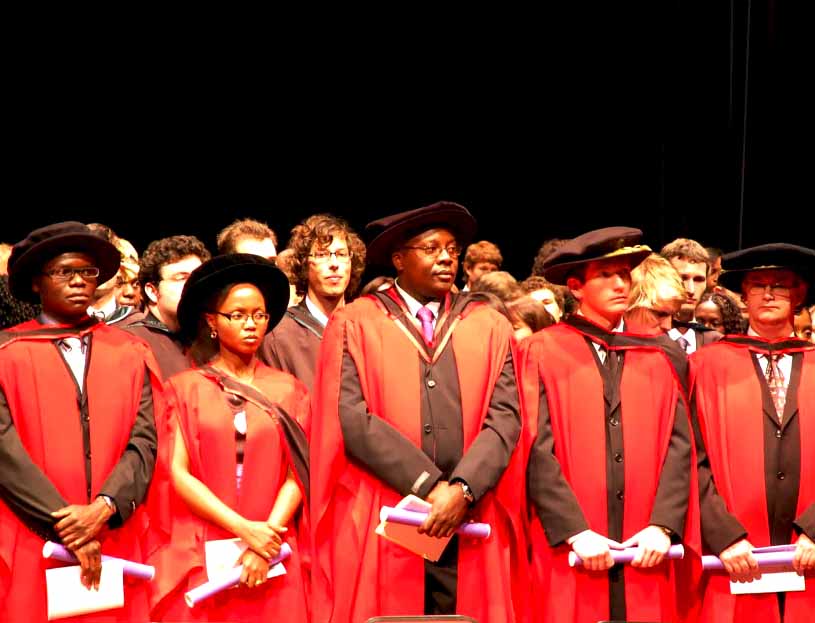
According to recent statistics provided to UNICEF by the Zimbabwe Ministry of Education, about 2 million children are attending school throughout the country.

However, despite this seemingly good news, the classroom environment provided in the Zimbabwe education system suffers from a chronic lack of funding. In many classrooms throughout the country, they go without the proper facilities, materials and supplies for students to learn. In addition, the Zimbabwe education system’s curriculum is considered unbalanced and leaves students unprepared for higher education.

In response to this crisis in education, in 2013 the government of Zimbabwe instituted a series of reforms to revitalize the education system, including a review and overhaul of the curriculum.

An article titled “Education: Literacy is not enough,” published by the Zimbabwe Independent in 2014, states that the country maintains a literacy rate of approximately 90 percent, making the people of Zimbabwe among the most learned African scholars.

However, despite the growing literacy rate in Zimbabwe, very few people pass the national exams. The Ordinary Level Exams are the country’s measure of competence – roughly the equivalent of high school exit exams.

As seen in a report by UNESDOC, the United Nations Development goals for Zimbabwe for 2013-2015 show that education is a clear priority for development. The UN’s goals for the education system in Zimbabwe are to:

  1. Stabilize the teaching force
  2. Increase participation in education and training
  3. Increase participation in higher education and tertiary schools

But challenges remain. A story published by National Public Radio recounts the tale of a 14-year-old girl who was held back from attending school because of the fees. Government schools charge about $40 to $90 per child to attend. In poorer areas of the country, the families just cannot afford it.

An article by the African Report has the dropout rate at roughly 43 percent of students, forced out of school because they cannot not pay the government fees. This amounts to about 13,000 students in Zimbabwe last year.

Finding qualified teachers is yet another significant obstacle for the education system in Zimbabwe.

The United Nations is working closely with the government of Zimbabwe to help rectify these issues. The international community through the United Nations is committing $166.2 million to ensure that primary school children receive a proper education.

– Robert Cross

Sources: African Economist, Education Zimbabwe, The African Report, The Independent, United Nations 1, United Nations 2, UNICEF
Photo: African Economist

November 1, 2015
https://borgenproject.org/wp-content/uploads/borgen-project-logo.svg 0 0 Borgen Project https://borgenproject.org/wp-content/uploads/borgen-project-logo.svg Borgen Project2015-11-01 05:01:452024-12-13 18:05:18Zimbabwe Education System Improves
Disease, Global Poverty, Refugees and Displaced Persons, United Nations

Syrian Conflict: Typhoid Outbreak Among Palestinian Refugees

typhoid_outbreak
The United Nations (U.N.) is calling for access to Yarmouk, a Palestinian refugee camp in the outskirts of Damascus, due to the increasing evidence of a typhoid outbreak. As of Sept. 20, a total of 90 cases has been reported.

The UN Relief and Works Agency (UNRWA) discovered the outbreak in August among Palestinian refugees outside Syria’s capital after conducting more than 500 medical exams.

The agency was able to gain access to one of the areas affected and established a mobile health point, which provides limited health care, water, sanitation and hygiene supplies, according to a UNRWA spokesperson.

Before the Syrian war began in 2011, there were 160,000 Palestinians in the Yarmouk camp, many of which were employed.

In late March of 2015 when the Islamic State entered the camp, there were 18,000 refugees. Since then, several thousand have fled and the U.N. has no access to the camp. ISIL left days later, but they still have a heavy presence on the al-Nursa Front.

Access has been blocked by the government as a result of clashes with rebels in December 2012. In addition, the government controls the entrance to the camp and sets limits on food, medicine and other humanitarian supplies that enter, claims the Jafra Foundation.

The organization adds that people are trapped inside with very little resources and estimates that there are about 5,000 to 8,000 people left within Yarmouk.

Other affected areas of the typhoid outbreak are Yalda, Babila and Beit Saham.

UNRWA’s $15 million Syria Crisis Program has only gotten 30.8 percent of the fund it needs for this year. The current situation is so dire that 95 percent of Palestinian refugees depend on UNRWA for their daily need of water, food and health care.

Additional help in priority intervention includes cash assistance, which can help up to 470,000 Palestinian refugees. There is still additional funding needed for critical non-food items such as blankets, mattresses and hygiene kits.

Typhoid is a life-threatening illness caused by bacteria in Salmonella typhi and spread by eating contaminated food and drinking contaminated water, according to the U.S. Centers for Disease Control and Prevention.

The disease can be treated with antibiotics but can be fatal in some cases. UNRWA is administering antibiotics, giving out water purifying tablets and educating the population.

– Paula Acevedo

Sources: Aljazeera, Associated Press, U.N. News Centre
Photo: Wikimedia

October 17, 2015
https://borgenproject.org/wp-content/uploads/borgen-project-logo.svg 0 0 Borgen Project https://borgenproject.org/wp-content/uploads/borgen-project-logo.svg Borgen Project2015-10-17 01:30:472024-06-11 02:48:16Syrian Conflict: Typhoid Outbreak Among Palestinian Refugees
Development, Global Poverty, United Nations, Women and Female Empowerment

UN Sustainable Development Summit Highlights Women’s Rights

 Sustainable_Development_Summit
Global economics, health and sustainability are some of the usual discussion points at the United Nations. However, at the recently held U.N. Sustainable Development Summit, Ban Ki-moon, the U.N.’s secretary-general, put the spotlight on women’s empowerment.

“We cannot achieve our 2030 Agenda for Sustainable Development without full and equal rights for half of the world’s population, in law and in practice. We cannot effectively respond to humanitarian emergencies without ensuring women and girls are protected and their needs prioritized,” said Ban Ki-moon during an event hosted by U.N. Women and China.

The Sustainable Development Summit discussed the Sustainable Development Goals, which are a follow-up to the Millennium Development goals created in 2000. These Sustainable Development Goals include the goal to “achieve gender equality and empower all women and girls.”

To this end, Ban Ki-moon asked leaders to commit to ending gender inequality, pointing to “This means urgently addressing structural barriers, such as unequal pay.” He also discussed other gender inequalities, such as the importance of women’s bodily autonomy, gender violence and the encouragement of women’s participation in the workforce.

The United Nations, founded in 1945, began addressing gender inequalities prior to this summit. In 2010, The United Nations Entity for Gender Equality and the Empowerment of Women, or U.N. Women, began. U.N. Women helps to streamline the U.N.’s efforts in advancing gender equality in all member states.

This past summer, the United Nations Security Council condemned the use of sexual violence during wartime, in reference to Syria and Iraq.

To help encourage gender equality to reality by 2030, businesses pledged millions of dollars At the Business and Philanthropy Leader’s Forum, co-hosted by U.N. Women, The Bill and Melinda Gates Foundation and the Alibaba Group.

Now global citizens wait to see how many of the 17 Sustainable Development Goals will become a reality. With the recent attention to women’s rights, the United Nations starts the journey to make gender equality a reality within member states.

– Rachelle Kredentser

Sources: UN 1, UN 2, UN 3, UN Women, UN 4, UN 5
Photo: Pixabay

October 3, 2015
https://borgenproject.org/wp-content/uploads/borgen-project-logo.svg 0 0 Borgen Project https://borgenproject.org/wp-content/uploads/borgen-project-logo.svg Borgen Project2015-10-03 11:17:182024-12-13 18:05:12UN Sustainable Development Summit Highlights Women’s Rights
Activism, Advocacy, Global Poverty, United Nations

Ending Extreme Poverty: Politics Weighs Us Down

Ending Extreme Poverty: Politics are Weighing Us Down
In November, The United Nations Climate Change Summit will commence in Paris, France, the last of three paired conferences that set to discuss action regarding two great problems of our time: extreme poverty and climate change. Even though extreme poverty has been cut in half since 1980, political systems are making it difficult to envision the end of extreme poverty by 2030.

Since 2000 when the UN adopted the Millennial Development Goals (MDGs), major victories have been made in regard to extreme poverty. Compared to 1990, the number of people in the world living on less than $1.25 per day has dropped from 1.9 billion to 836 million.

Despite the efforts of the 17 Sustainable Development Goals (SDGs) implemented in September 2015, politics may be halting the fight to eradicate extreme poverty.

Due to war and climate change, 59.5 million people worldwide have left their homes, a global displacement figure that has not been this high since World War II.

With this high displacement, the European Union (EU) has failed to find homes for a mere 60,000 asylum seekers. Since the EU has a population of over 500 million, political leaders have no excuse for finding homes.

In regards to the UN’s Third Financing for Development Summit this past July in Ethiopia, the goal was to discuss ways to finance the end to extreme poverty in 2030.

One key phrase from the conference linked climate, environment, and development: “All of our actions need to be underpinned by our strong commitment to protect and preserve our planet and natural resources, our biodiversity and our climate.”

Unfortunately, no dates or commitment to the clause ensures physical action, lacking a sense of urgency that should be present.

As the Climate Change summit approaches, world leaders will decide a necessary strategy in regard to the growing problem with climate change and its connection to extreme poverty.

With only 15 years left to solve extreme poverty, world leaders and the general population cannot expect the matter to solve itself. More compromise and effort is needed with all world leaders to solve extreme poverty.

– Alexandra Korman

Sources: Arab News, Devex, Irish Examiner
Photo: Flickr

October 3, 2015
https://borgenproject.org/wp-content/uploads/borgen-project-logo.svg 0 0 Borgen Project https://borgenproject.org/wp-content/uploads/borgen-project-logo.svg Borgen Project2015-10-03 09:46:132024-12-13 18:04:58Ending Extreme Poverty: Politics Weighs Us Down
Global Poverty, Poverty Reduction, Sustainable Development Goals, United Nations

From Millennium Development Goals to Sustainable Goals

From Millennium Development Goals to Sustainable Development Goals
The final report of the Millennium Development Goals (MDGs) says it has been the most successful anti-poverty effort in history. But despite significant gains, there are many global poverty issues that still need to be addressed. These include sanitation, gender equality, maternal and children’s health, and access to family planning, among others.

After 15 years, the transition from MDGs to the Sustainable Development Goals (SDGs) begins. The new goals will be adopted this September at the United Nations Sustainable Development Summit, which will provide a guideline for policy and funding for the next 15 years. There are set to be 17 goals and 169 indicators to measure the progress of these goals.

Among the proposed goals are the following:

  • No poverty
  • Zero hunger
  • Good health and well being
  • Quality Education
  • Gender Equality
  • Clean Water and Sanitation
  • Affordable and Clean Energy
  • Decent Work and Economic Growth
  • Industry, Innovation and Infrastructure
  • Reduced Inequalities
  • Sustainable Cities and Communities
  • Responsible Consumption and Production
  • Climate Action
  • Life Below Water
  • Life on Land
  • Peace and Justice, Strong Institutions
  • Partnerships for the Goals

The goals were conceived through a collaboration of the UN Development Programme (UNDP) and the UN Development Group (UNDG), which undertook an unprecedented global conversation among a diverse group of stakeholders over the last three years. Stakeholders included women, young people, people with disabilities, the private sector and all levels of government.

For example, the UN’s online My World Survey, which asked participants to rank their six highest priority issues, gathered the ranked priorities for the future of 7.3 million people.

In addition, the UNDG collected the perspectives from over one million people on “the world we want,” eliciting 88 national consultations and input on 11 thematic dialogues.

“As member states consult on the shape and content of a successor framework to the Millennium Development Goals (MDGs) beyond 2015, it is hoped that the opportunity to listen to these voices will contribute to reaching consensus on what is needed to move towards a common sustainable future,” states the World We Want website.

Partnerships will be key to realizing the proposed goals. Some of the important players that will assist in partnerships and collaboration between different entities are the Department of State’s Office of Global Partnerships, which will work with public and private sectors. The U.S. Agency for International Development will work with corporations, foundations, NGOs and others in developing countries through the Global Development Alliance.

Looking ahead, the need to work together across stakeholder groups is paramount. “World leaders have an unprecedented opportunity this year to shift the world onto a path of inclusive, sustainable and resilient development,” said Helen Clark, UNDP Administrator. And the message from the global conversation was clear: People want to be involved in the process of accomplishing these goals and to hold governments and businesses accountable for their promises and commitments.

– Paula Acevedo

Sources: Millennium Development Goals Final Report, Devex, United Nations Development Programme
Photo: Flickr

September 18, 2015
https://borgenproject.org/wp-content/uploads/borgen-project-logo.svg 0 0 Borgen Project https://borgenproject.org/wp-content/uploads/borgen-project-logo.svg Borgen Project2015-09-18 02:55:262024-12-13 18:04:38From Millennium Development Goals to Sustainable Goals
Children, Global Poverty, Human Rights, United Nations

10 Ways the UNCRC Helps Children Around the World

children_around_the_world
The Convention on the Rights of the Child (UNCRC), passed in 1989, is the most widely accepted human rights treaty. This landmark piece is the first international treaty to ensure the civil, political, social, cultural and economic rights of all children under eighteen.

The treaty has 42 articles that are guided by four main principles. First, all children are equal and have the same rights. Second, every child has the right to have his or her basic needs fulfilled.

Third, every child has the right to protection from abuse and exploitation. Fourth, every child has the right to express his or her opinion and be respected.

All member states, except for the U.S. and South Sudan, have ratified the UNCRC. Here are ten ways in which the UNCRC supports children around the world:

10 Ways the UNCRC Helps Children Around the World

  1. It changed the way lawmakers and governments view children. Prior to the passing of the treaty, it was acceptable to view children as passive objects that were products of their parents. Through the UNCRC, children are viewed as distinct individuals with lives, needs and opinions separate from that of their parents.
  2. It gives power to international bodies to intervene to support children’s rights. The passage of the UNCRC gives aid agencies and relief operations more power, particularly with regards to children’s health, safety and well-being. Since 1998, for example, UNICEF has been able to rescue more than 100,000 child soldiers.
  3. It empowers international organizations into holding nations accountable. When nations are pressured or face sanctions for human rights violations, they are more likely to make efforts to fix things. Furthermore, it enables international bodies to create regulatory framework to ensure children’s rights are protected outside of their country, such as with refugees, immigrants, trafficking victims and asylum-seekers.
  4. It acknowledges that children exist and have the rights of citizens. Articles mandate that children have a right to documentation and their culture, even if it is not the culture supported by their country. This is especially important for children of marginalized ethnic groups and populations, such as the Rohingya in Myanmar and the Yadizis living under ISIS territory.
  5. It addresses children with disabilities. Children with disabilities worldwide are often excluded and marginalized, particularly when it comes to education. By saying that all children are entitled to the same rights, it empowers children whose voices are frequently silenced.
  6. It improves the quality of life for children around the world. By bringing children into the spotlight, it raises awareness for children’s rights. Working to improve the lives of children in developing countries is an indication that progress is being made. In the fight against global poverty, people are often fighting for the children. The UNCRC helped make impoverished children a more visible population for policymakers and governments to consider.
  7. It explicitly states that children have the right to go to school. As education becomes increasingly powerful as a means for empowerment, especially in developing countries, it is critical that everyone has the opportunity to go to school. Education leads to knowledge, employment and potential income, which benefits all families. By not excluding certain children from education (girls, special-needs children, children of marginalized ethnic groups), communities develop more power to fight global poverty at home and worldwide.
  8. It prohibits forced labor. Many articles mandate that children working is only acceptable if they are not exposed to hazardous conditions or violence and if the work does not interfere with their education. Most importantly, the children working must choose to; their parents cannot force them.
  9. It empowers children directly. Articles in the UNCRC state that children have the right to be heard. The old tenet that “children should be seen, not heard” is seen as an infringement against a child’s rights. A child knowing that they can stand up for themselves is a powerful thing.
  10. With it now comes the World’s Children’s Prize! Established in 2000, the World’s Children’s Prize (WCP) holds annual elections in which children vote on a children’s rights hero.

More than 36.5 million children have cast their votes in the WCP; more than 60,000 schools in 113 different countries take part in the opportunity to educate children about their rights and let them choose a hero for their cause. Past winners of the WCP include Nelson Mandela and Malala Yousafzai.

The UNCRC was a landmark human rights treaty that empowers children and those who help them. A quarter of a century later, progress still needs to be made, but much is to be celebrated.

More children receive access to health care, birth registration, nutrition and schooling, and reductions have been made in infant mortality, children trapped in forced labor, and children recruited into the armed forces.

Let’s hope that further support from policymakers, governments and international organizations continue to promote children’s rights worldwide.

– Priscilla McCelvey

Sources: Amnesty International, UNICEF, United Nations Human Rights, The World’s Children’s Prize
Photo: Flickr

September 16, 2015
https://borgenproject.org/wp-content/uploads/borgen-project-logo.svg 0 0 Borgen Project https://borgenproject.org/wp-content/uploads/borgen-project-logo.svg Borgen Project2015-09-16 01:30:562024-12-13 18:04:5310 Ways the UNCRC Helps Children Around the World
Development, Global Health, Global Poverty, United Nations

UN 15-Year Executive Summary on AIDS: Hopes and Lessons

UN 15-Year Executive Summary on AIDS: Hopes and Lessons
Over the past 15 years, many lessons have been learned, and much hope has been gained toward the future of eradicating HIV. The U.N. Executive Summary on Aids, published this last month, highlights many hopes and lessons learned over that time period.

U.N. Secretary General Ban Ki-Moon writes in the introduction, “The AIDS response has been like no other. From the start it has put the focus on people and put their needs first. It has been a turning point for the recognition of health as a human right.”

The HIV response has been one of the greatest unifying factors in the modern world. Hundreds of countries have put aside their differences, be it social, political or economic, to combat the spread of AIDS. In 2001, $4.9 billion was invested in combattng HIV, today that number is over $32 billion.

With experience comes the opportunity to learn and share. Here are a few of lessons from the past 15 years:

Global access to antiretroviral treatment is key

As more and more people have received access to HIV testing, those who are infected are more likely to receive the proper treatment—helping them live better lives and preventing the virus from spreading to others. In 2001, one million people worldwide were on HIV antiretroviral therapy.

In 2014, that number had grown to over 15 million. The goal is to give medical access to all infected individuals by 2030.

The impact generated by people receiving treatment is the bar by which success is measured. This is because of the direct correlation between HIV treatment and death from AIDS. The summary states, “Treatment access has resulted in AIDS-related deaths declining by more than 42% between 2004 and 2014.

An estimated 1.2 million [1.0 million–1.5 million] people died of AIDS-related causes globally in 2014, but in the absence of antiretroviral therapy, AIDS-related deaths would have risen to 2.0 million by 2014.”

Transmission prevention among children

Infants born with HIV has been a focus strategy in AIDS globally. Millions of children were becoming orphans due to infected parents dying from AIDS. In 2009 14.4 million children were orphaned due to AIDS, over the last 6 years that number dropped to 13.3 million.

Another major concern was the transfer of HIV from pregnant mothers to children. In 2001, 580,000 children were infected with HIV. Today that number has been reduced by a little over 50 percent. The strategy educates and recognizes that childbirth is not the only means of infection, but even breastfeeding can lead to HIV infection.

The prevention strategy aggressively targets pregnant women who are infected with HIV. By providing testing, education and treatment, the transmission has been successfully halted and is now being reversed. The goal is to reduce the number to less than 50,000 HIV infections among children by 2030.

Safe Sex and HIV awareness

The youth are the leaders of tomorrow. Educating and preparing them to lead the world tomorrow is one of the keys in fighting HIV and AIDS. When HIV first became widely known in the 1980’s and 1990’s, many misunderstandings prevailed. The disease was thought to be only spread by homosexuals and many did not understand how it was contracted.

As time has gone by, campaigns to spread HIV awareness have led to young people understanding the two best methods of preventing HIV transmission—reducing the number of sexual partners and using condoms.

In 2001, awareness among youth worldwide about HIV was at 25 percent, with most being in developed nations. Today, that number is close to 35 percent. The goal is to raise awareness over 90 percent by the year 2030. The goal of reducing multiple sexual partners has been modest at the most, but still progressive.

Globally, condom use has increased, but levels are still too infrequent among youth in Central and Western Africa (large HIV-populated regions). Sub-Saharan Africa is a huge target population and conservative efforts have been made to allow access to contraceptives such as condoms.

Financing and Aid will allow us to reach the U.N. goals

Over the past 15 years, the fight has moved from millions of dollars to billions being spent annually. This has allowed the resources needed to be allocated appropriately.

The world has learned from HIV that political commitment for public health investments can continuously be created and when adequate levels of spending on health is allowed, it leads to unprecedented levels of success.

At this point in time, the United States cannot waiver in its support of programs funding HIV and AIDS prevention. Hard lessons learned have helped us unite and combat one of the deadliest outbreaks in world history. The road ahead is still going to be hard, but it is not out of reach.

– Adnan Khalid

Sources: UNAIDS, World Bank
Photo: UN AIDS

September 12, 2015
https://borgenproject.org/wp-content/uploads/borgen-project-logo.svg 0 0 Borgen Project https://borgenproject.org/wp-content/uploads/borgen-project-logo.svg Borgen Project2015-09-12 10:37:232020-06-30 09:07:34UN 15-Year Executive Summary on AIDS: Hopes and Lessons
Food Security, United Nations

Ecosystem Based Adaptation for Food Security Conference

Ecosystem Based Food Security Conference 2015
More than 1,400 participants gathered in Nairobi, Kenya for the second annual Ecosystem Based Adaptation for Food Security Conference. This year’s theme is “Re-imagining Africa’s Food Security Now and into the Future under a Changing Climate,” and the conference included round tables, discussions and plenary sessions that explored how to sustainably use African soils.

The overarching idea behind the conference was to generate discussion and propose solutions to Africa’s food crisis by focusing on using the resources at hand and capitalizing on existing adaptations in the food production chain that may aid food producers in the face of impending climate change.

The conference did not just focus on food production, however, but also addressed the labor behind food production, including supporting the expansion of local agricultural businesses and employment for women and youth in Africa.

Building on the thematic discussions throughout the conference, attendees had the opportunity to discuss how to maximize policy framework and develop an action plan to ensure not only food security, but livelihood security as well.

Organized in collaboration with a number of United Nations agencies, the conference took place July 30 and 31, 2015, at the U.N. Complex in Nairobi, Kenya.

– Gina Lehner

Sources: International Policy Digest, 2nd Africa Food Security Conference
Photo: EBASouthE

September 10, 2015
https://borgenproject.org/wp-content/uploads/borgen-project-logo.svg 0 0 Borgen Project https://borgenproject.org/wp-content/uploads/borgen-project-logo.svg Borgen Project2015-09-10 11:00:512024-12-13 17:52:16Ecosystem Based Adaptation for Food Security Conference
Page 22 of 35«‹2021222324›»

Get Smarter

  • Global Poverty 101
  • Global Poverty… The Good News
  • Global Poverty & U.S. Jobs
  • Global Poverty and National Security
  • Innovative Solutions to Poverty
  • Global Poverty & Aid FAQ’s
Search Search

Take Action

  • Call Congress
  • Email Congress
  • Donate
  • 30 Ways to Help
  • Volunteer Ops
  • Internships
  • Courses & Certificates
  • The Podcast
Borgen Project

“The Borgen Project is an incredible nonprofit organization that is addressing poverty and hunger and working towards ending them.”

-The Huffington Post

Inside The Borgen Project

  • Contact
  • About
  • Financials
  • President
  • Board of Directors
  • Board of Advisors

International Links

  • UK Email Parliament
  • UK Donate
  • Canada Email Parliament

Get Smarter

  • Global Poverty 101
  • Global Poverty… The Good News
  • Global Poverty & U.S. Jobs
  • Global Poverty and National Security
  • Innovative Solutions to Poverty
  • Global Poverty & Aid FAQ’s

Ways to Help

  • Call Congress
  • Email Congress
  • Donate
  • 30 Ways to Help
  • Volunteer Ops
  • Internships
  • Courses & Certificates
  • The Podcast
Scroll to top Scroll to top Scroll to top