• Link to X
  • Link to Facebook
  • Link to Instagram
  • Link to TikTok
  • Link to Youtube
  • About
    • About Us
      • President
      • Board of Directors
      • Board of Advisors
      • Financials
      • Our Methodology
      • Success Tracker
      • Contact
  • Act Now
    • 30 Ways to Help
      • Email Congress
      • Call Congress
      • Volunteer
      • Courses & Certificates
      • Be a Donor
    • Internships
      • In-Office Internships
      • Remote Internships
    • Legislation
      • Politics 101
  • The Blog
  • The Podcast
  • Magazine
  • Donate
  • Click to open the search input field Click to open the search input field Search
  • Menu Menu

Archive for category: United Nations

Information and stories about United Nations.

Global Poverty, United Nations

Why Clean Energy Development and Poverty Reduction Are Related

clean energyThere is a strong case to be made for the hand-in-hand relationship between clean energy development and poverty reduction across the globe. Both causes deserve greater funding and attention because of the profound effects they will have on the future of the globe and generations to come. Economic incentive is important to ensuring that both causes move forward in strides.

Clean energy, or green energy, is providing populations with energy for heating, cooking, electronics and everything else that requires energy, but without polluting the atmosphere to aggravate more climate change or destroy environmental resources. Its importance will become increasingly more significant in the future as more environmental challenges arise. However, human foresight is often not the strength of political institutions, and there will likely be an abbreviated rush towards clean energy that ramps up exponentially in the future. In order to build up clean energy infrastructure and a clean energy supply, which most countries lack, a “new deal” will have to be enacted. Countries will need to invest heavily in the research and development of clean energy technologies while also putting into place clean energy infrastructure and facilities that will decrease dependence on oil.

The process of having many nations attempting switches to clean energy technologies in an effort to ease off of oil will have structural effects on the local and global economies. Currently, on the global scene, developed nations are responsible for about 80 percent of the world’s total energy usage. As developed nations begin to lean toward clean or green energies, they are focusing on strategies that could hurt developing nations. For example, carbon emission caps and some clean energy technologies that take up large patches of land have both been introduced by developed nations and criticized by developing nations. Many argue that large land grabs could have potentially poor consequences for agricultural workers pushed off the land and that carbon emission caps could stunt economic growth. But is there a silver lining to these possible downsides?

If developing nations are forced to confront the issue of green energy sooner rather than later, they may end up saving an incalculable sum of money by directly adopting cleaner energies instead of transitioning to oil and coal to meet growing energy demands, and then making another eventual switch to clean energies. Also, forcing developing nations to use clean energy could spur innovative manufacturing sectors. The switch to clean energies across the globe will prompt massive amounts of funding in new areas that will be able to revitalize economies across the world and create jobs for millions through construction, research and ripple effects.

Energy poverty is also an issue. The UN has goals of getting electricity to everyone by 2030. Right now, hundreds of millions of people go without energy like electricity, and a disproportionate number of them are women. Energy poverty is a problem that contributes to the vicious cycle of poverty because of the amount of labor and time that must go into collecting wood or other sources of energy for the family. Decreasing dependence on sources like oil and coal and adopting cleaner sources such as solar energy will help mitigate pressures on poor families that keep them poor, like energy poverty.

The impending growth of clean energies will be most beneficial to those in need possibly more than anyone else. There is enormous potential for leveraging the urgency and priority that both of these issues will take on in the future to create economic prosperity for many more countries and to slow down the catastrophic implications of climate change.

– Martin Yim

Sources: European Commission, Forbes, National Geographic
Photo: Needpix.com

August 1, 2015
https://borgenproject.org/wp-content/uploads/borgen-project-logo.svg 0 0 Borgen Project https://borgenproject.org/wp-content/uploads/borgen-project-logo.svg Borgen Project2015-08-01 01:30:532020-07-06 12:00:25Why Clean Energy Development and Poverty Reduction Are Related
Global Poverty, United Nations

Is AIDS on the Rise Again?

The Threat of a Major AIDS Resurgence
Is AIDS on the rise despite the increase in HIV treatment availability throughout the world? A recent report by the Joint U.N. Programme on HIV/AIDS (UNAIDS) and The Lancet, a medical journal, have called attention to the emerging risk of a major AIDS resurgence in already affected regions.

According to the study, high rates of population growth in heavily affected areas and staggering infection rates, which continue to only fall slowly, will increase the number of people who need access to life saving treatment.

Director of the London School of Hygiene & Tropical Medicine and lead author of the report, Professor Peter Piot, stated, “We must face hard truths — if the current rate of new HIV infections continues, merely sustaining the major efforts we already have in place will not be enough to stop deaths from AIDS increasing within five years in many countries.”

Among the most vulnerable populations, women and girls have not reaped the same benefit from slowly falling infection rates in comparison to their male counterparts. According to UN News Centre, AIDS-related illnesses are the leading cause of death for Sub-Saharan woman and girls of reproductive age.

The population of HIV-positive adolescent girls reaches sevenfold that of males. Additionally, many adolescent girls become infected with HIV 5 to 7 years before men.

In a commitment to prevent new HIV infections and increase treatment among women and girls, UNAIDS and the African Union have come together in a report called “Empower young women and adolescent girls: Fast-Track the end of the AIDS epidemic in Africa”.

“As we work with our communities, our networks, our health service providers and our governments, we must commit to demanding a comprehensive focus on young women in the AIDS response,” said Rosemary Museminali, UNAIDS Representative to the African Union.

In this response lies the answer to the threat of resurgence. As the study argues, efforts to combat AIDS must be enhanced to proportionally treat those infected, improve knowledge and prevention, and provide better access to medication.

More recently, the United Nations sponsored a successful deal with Roche Diagnostics in order to reduce the price of early infant diagnostic technology by 35 percent to US$9.40. Early diagnosis of HIV is essential to accessing treatment at a vital stage since many children who go undiagnosed only live up to 2 or 5 years.

“We have to act now,” Michel Sidibé, executive director of UNAIDS cautions, “The next five years provide a fragile window of opportunity to fast-track the response and end the AIDS epidemic by 2030. If we don’t, the human and financial consequences will be catastrophic.”

– Jaime Longoria

Sources: UNAIDS, UN News Centre 1, UN News Centre 2, UN News Centre 3

Photo: HealthNest

August 1, 2015
https://borgenproject.org/wp-content/uploads/borgen-project-logo.svg 0 0 Borgen Project https://borgenproject.org/wp-content/uploads/borgen-project-logo.svg Borgen Project2015-08-01 01:30:302024-06-11 02:48:11Is AIDS on the Rise Again?
Global Poverty, United Nations

Can $160 Per Year Eradicate Hunger?

World’s Poorest Need Just $160 Per Year to Eradicate Hunger
A new report released last week by the United Nations has predicted that only $160 per year for each individual currently living in extreme poverty is necessary to eradicate hunger in the world by 2030.

The joint report, which was prepared by the UN Food and Agriculture Organization (FAO), World Food Program (WFP), and International Fund for Agricultural Development, argued that such funding to eradicate hunger should be provisioned through both the transfer of cash and certain investments considered supportive of impoverished areas.

In order to meet the current base poverty line of $1.25 per day stipulated by the World Bank, the UN hopes that cash transfers will assist in the immediate elimination of hunger. Officials estimate that this undertaking would cost $116 billion per year, of which $75 billion would be designated to rural areas.

The UN has also estimated that an additional $151 billion per year will be necessary to fund “pro-poor” investment projects designed to support the predicted decreases in the frequency of poverty while also encouraging sustainability. Such endeavors could include the expansion of irrigation systems, the construction of more effective sanitation systems or infrastructural repair.

The FAO stated within their report: “Eradicating world hunger sustainably by 2030 will require an estimated additional $267 billion per year on average for investments in rural and urban areas and social protection so that poor people have access to food and can improve their livelihoods.”

The FAO estimates that over 800 million people across the earth still do not have access to adequate and sustainable food resources. A large portion of these people have been found to live in rural areas, a geographical prevalence which has caused many organizations to shift the focus of development projects towards rural regions in recent years.

Noting the necessity for increased efforts to eradicate hunger, José Graziano da Silva, Director General of the FAO, recently stated: “If we adopt a ‘business as usual’ approach, by 2030, we would still have more than 650 million people suffering from hunger.”

Graziano also argued, “The message of the report is clear: Given that this ($267 billion) is more or less equivalent to 0.3 percent of the global GDP, I personally think it is a relatively small price to pay to end hunger.”

The Sustainable Development Goals, which are new objectives designed by the United Nations to replace the outdated Millennium Development Goals, will be completed this fall and currently have created 17 different goals regarding global development. The second Sustainable Development Goal is focused on the issues of hunger, food insecurity and malnutrition.

In regards to the structure of plans outlined by the new report, Graziano stated: “We are championing an approach that combines social protection with additional targeted investments in rural development, agriculture and urban areas that will chiefly benefit the poor.”

– James Thornton

Sources: Business Day Online, Reuters, India Times
Photo: NDTV

August 1, 2015
https://borgenproject.org/wp-content/uploads/borgen-project-logo.svg 0 0 Borgen Project https://borgenproject.org/wp-content/uploads/borgen-project-logo.svg Borgen Project2015-08-01 01:22:492020-07-06 12:27:53Can $160 Per Year Eradicate Hunger?
Global Poverty, Refugees and Displaced Persons, United Nations

UN Funding Crisis Could Lead to Massive School Year Delay

funding_crisis
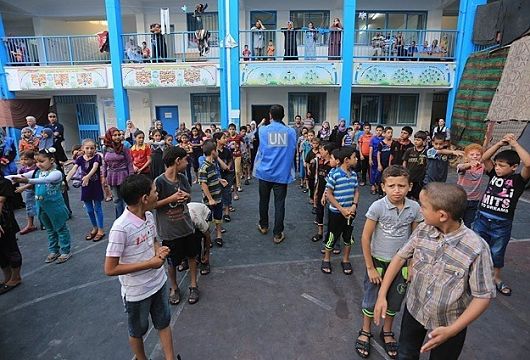
The United Nations is in the midst of its most severe funding crisis to date and the amount of people affected by it is continuing to rise.

The UN Relief and Works Agency for Palestine Refugees in the Near East (UNRWA) is one of the UN agencies most heavily affected by a lack of funding. After a recent emergency meeting conducted by its Advisory Commission, the UNRWA said that “drastic measures” would have to be taken if the current deficit of $101 million couldn’t be funded before the upcoming school year.

If the deficit is not met, the academic year could be delayed for over half a million students in the middle east across nearly 700 schools. The UN stresses, however, that there is still enough funding available to provide “immunizations for children, primary health care, relief and sanitation and some emergency programmes” through the end of 2015.

The UN has also stated that from September and on it can’t ensure the stability of those resources.

“Education lies at the very heart of the identity and dignity of Palestine refugees and of what UNRWA stands for,” says a UNRWA press release concerning the issue. “Our schools also provide a measure of stability in a very unstable region. Possible delays in opening the school year would also have grave implications for host governments.”

These budget cuts also have a serious effect on Palestinian refugees currently living in the Gaza Strip. Children who attend school in the region received $20 cash vouchers until very recently, when that service stopped entirely along with free meals provided at schools.

Coupled with additional UNRWA assistance is often what families depend on. Continuing to cut these services could have severely life-altering consequences.

“Our conditions worsen every day,” Bilal Mekdad, a Gaza Strip refugee, told the Anadolu Agency. “We fear the day we will find ourselves in the street.”

– Alexander Jones

Sources: Anadolu Agency, UN 1, UN 2
Photo: Anadolu Agency

July 31, 2015
https://borgenproject.org/wp-content/uploads/borgen-project-logo.svg 0 0 Borgen Project https://borgenproject.org/wp-content/uploads/borgen-project-logo.svg Borgen Project2015-07-31 01:30:482024-12-13 17:52:15UN Funding Crisis Could Lead to Massive School Year Delay
Activism, Children, United Nations

Celebrating World Youth Skills Day

world_youth_skills_day
On July 15, 2015, the world celebrated the first annual World Youth Skills Day. Founded by the United Nations General Assembly this past winter, the goal of this day is to raise awareness of the need for training youth in the development of general life and work skills. It is also a part of the Sustainable Development Goals for the United Nations, which emphasizes the importance of education and skills training. In June 2014, following a meeting with John W. Ashe, the President of the UN General Assembly, the Sri Lankan Minister for Youth Affairs and Skills Development during the World Conference on Youth in May 2014, a draft resolution for World Skills Day was put forth for the 68th session of the General Assembly, according to a United Nations press release.

The day included a number of panels and presentations across the globe. One such event was titled “Investing in Youth and Ensuring Decent Jobs to Harness the Demographic Dividend” at the Financing for Development Conference in Addis Ababa, Ethiopia, which was attended by Ahmad Alhendawi, the U.N. Secretary General’s Envoy on Youth.

This day also reinforces the need for education in order to further economic development in the country. By educating the youth, they are more prepared for jobs, and by getting a more skilled labor force, the country may provide for greater economic opportunities individually and for the country.

According to the U.N. Secretary-General, Ban Ki-moon, “Skills development reduces poverty and better equips young people to find decent jobs. It triggers a process of empowerment and self-esteem that benefits everyone.”

– Rachelle Kredentser

Sources: UN 1, UN 2, UN 3, UN 4, UNESCOV, World Skills Day
Photo: Save the Children

July 31, 2015
https://borgenproject.org/wp-content/uploads/borgen-project-logo.svg 0 0 Borgen Project https://borgenproject.org/wp-content/uploads/borgen-project-logo.svg Borgen Project2015-07-31 01:30:322024-06-11 02:48:12Celebrating World Youth Skills Day
Global Poverty, United Nations

Empowering Youth to End Poverty

We are always told that children are the future; that to have a successful future we must invest in them, giving them the opportunities and the education they need and deserve. The youth makes up 43% of the world’s population. This means there is a large potential force out there that can change the world. Of these youth, 90% live in the developing world. That means there is a huge importance to reach these youths. If given the proper tools, they could change poverty in their countries.

Ensuring that children in developing nations have access to education is crucial. By attending school, boys and girls learn skills that enable them to find professions besides agriculture and mothering, respectively. It gives them a sense of empowerment and self-esteem.

Government leaders and organizations have seen success in addressing policies and programs for the young populations of their countries. The key is to “create and support the enabling conditions under which young people can act on their own behalf, and on their own terms.”

The United Nations has implemented Youth Empowerment and Employment Programs across the developing world. The programs work to provide business development and career advice to youth. There are three goals that the programs hope to address. First, institutional and policy development to ensure that government policies passed help youth gain employment. Second, the programs empower youth by creating and working with existing youth councils and youth leadership positions. Lastly, the programs provide employment and job experience by providing internships and directing student graduates to jobs.

In Sierra Leone, the results of these programs have been positive and have expanded businesses. In one community, there have been 204 jobs created, 400 students (half being women) supported to create their own businesses, and 150 interns placed in 20 institutions. Both men and women had access to the resources and saw success as the numbers show that about half of the empowered youth were women.

In the end, giving the youth education and training provided them opportunities to flourish. They were able to use their skills and make better lives for themselves. They were able to find jobs, which means that they were not left in dire poverty. Empowering the youth not only helps them to feel successful, but it also helps the local community by growing the economy.

– Katherine Hewitt

Sources: OECD, UN, UNCSD 2012, UNDP
Photo: AANF

July 28, 2015
https://borgenproject.org/wp-content/uploads/borgen-project-logo.svg 0 0 Borgen Project https://borgenproject.org/wp-content/uploads/borgen-project-logo.svg Borgen Project2015-07-28 12:07:222024-05-27 09:26:14Empowering Youth to End Poverty
Developing Countries, Global Poverty, United Nations

The MDGs Are the “Most Successful Anti-Poverty Movement in History”

anti-poverty_movementThe Millennium Development Goals (MDGs) progress, endorsed exactly fifteen years ago in 2000, was recently reflected upon in July 2015. This substantial success set a significant precedent for the upcoming United Nations summit at the high-level plenary meeting of the General Assembly in New York this September.

The MDGs proved the power behind global action. This reassured the United Nations that this methodology demonstrates success and shows encouraging results. The United Nations and other intergovernmental organizations monitored more than 28 countries during the fifteen years to determine the results of eight MDGs, the first of which was a reduction in global poverty.

The results were highly satisfying. The United Nations noted that the MDGs showed shortcomings in its inability to reach the most vulnerable and did little to improve the conditions of the “ultra-poor,” but the U.N. Secretary-General firmly stated that these “successes should be celebrated [by] our global community,” while staying “keenly aware of where we have come short.”

The success of these developing countries was a direct consequence of “targeted interventions, sound strategies, adequate resources, and political will.” While the U.N. Secretary General’s special adviser, Jeffery Sachs, states that the upcoming Sustainable Development Goals (SDGs) proposal will be “the greatest, most complicated challenge humanity has ever faced” due to a “juggernaut of a world economy is pressing against the finite limits of the planet,” the MDGs are a shining beacon of hopeful resolve.

The global problems of the world are a global and generational responsibility that Sachs believes “requires the best intellects around the world to help solve [these] problems and design new, more sustainable systems.” Innovation is key. Sachs states that the world needs to reimagine its vision for the future in order to make the improvements envisioned in the SDGs to be proposed in September.

Millennium to Sustainable Development Goals, the United Nations clearly visualizes a future that, as Ban states, “strives to reflect these lessons [learned from the MDGs], build on the successes and put all countries together, firmly, on track towards a more prosperous, sustainable, and equitable world.” The SDGs aim to take a working methodology, global action and universal cooperation to see extreme poverty eliminated by 2030.

– Felicia L. Warren

Sources: UN 1, UN 2, UN 3, The Guardian
Photo: The Guardian

July 28, 2015
https://borgenproject.org/wp-content/uploads/borgen-project-logo.svg 0 0 Borgen Project https://borgenproject.org/wp-content/uploads/borgen-project-logo.svg Borgen Project2015-07-28 08:31:432024-06-11 02:48:10The MDGs Are the “Most Successful Anti-Poverty Movement in History”
Global Poverty, Sustainable Development Goals, United Nations

UN Launches New Deal to End Global Poverty

new_deal_to_end_global_poverty

After three days of negotiations in Addis Ababa, Ethiopia, the United Nations has established a new deal that will finance the U.N.’s new Sustainable Development Goals. Ultimately, these goals set a 2030 deadline to greatly reduce global poverty.

The negotiations in Addis Ababa involved representatives from around 200 different countries. Seventeen goals make up the new U.N. plan, which mainly includes large, overarching goals such as completely eliminating global poverty and hunger, obtaining gender equality worldwide, creating environmentally sustainable cities and ensuring everyone quality education.

These goals also come with a hefty price tag. U.N. experts estimate that the Sustainable Development Goals will cost around $3 trillion each year in order to properly finance each goal. World Bank President Jim Yong Kim also estimates that along with billions of dollars in foreign aid, these goals will require “trillions in investments.”

“This agreement is a critical step forward in building a sustainable future for all,” U.N. Secretary-General Ban Ki-moon said. “The results here in Addis Ababa give us the foundation of a revitalized global partnership for sustainable development that will leave no one behind.”

– Alexander Jones

Sources: BBC, Cheyne, Solomon
Photo: BBC

July 27, 2015
https://borgenproject.org/wp-content/uploads/borgen-project-logo.svg 0 0 Borgen Project https://borgenproject.org/wp-content/uploads/borgen-project-logo.svg Borgen Project2015-07-27 13:36:112024-12-13 17:52:04UN Launches New Deal to End Global Poverty
Aid, Global Poverty, Humanitarian Aid, United Nations

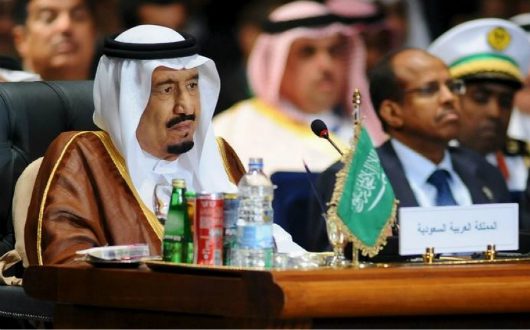
King Salman Humanitarian Center

humanitarian_aid
In May 2015, Saudi Arabia launched a new, unified government humanitarian aid organization called the King Salman Humanitarian Center (KSC) — named after the nation’s new monarch.

Saudi Arabia is eighth largest aid donor in the world and spent over 736 million dollars in humanitarian aid in 2014. The new center has the potential to transform how Saudi Arabia donates, organizes and distributes millions of dollars in emergency aid.

This administration transformation was not widely reported, though the scale of this change is immense. A source in the UN reported to IRIN that he believes the King Salman Humanitarian Center will be Saudi Arabia’s version of USAID and that it will establish multiple departments such as monitoring, evaluation and research.

Rafaat Sabbagh, a KSC spokesman, elaborated on the new organization’s goals. “We are very ambitious… We are only one month and a half old. But at the same time we are very keen to learn to learn from the experience of DFID [in the UK] and USAID. Our work is not only for one country. Whenever there are people in need, especially with natural disasters, we will be there.”

Before the creation of KSC, Saudi Arabia’s humanitarian aid was notorious for being “highly unpredictable, hard to navigate, and – some argued – incoherent,” writes IRIN. There were often miscommunication errors between different branches, causing confusion and unnecessary overlap.

The Center plans to take a more direct, hands-on approach to its funding techniques, spending on local organizations rather than large international organizations.

The country is known for its large donations or powerful financial potential. For example, in 2008, it gave 500 million to the World Food Program in one large payment. In 2014, it also gave 500 million to help the Iraq crisis.

Donations like this are expected to be approved and processed by the KSC now, and some worry that Saudi Arabia’s involvement with UN aid programs will decrease.

These worries are not unfounded. Saudi Arabia has become increasingly frustrated with the United Nations in the past few years. “In late 2013, it rejected a seat on the UN Security Council, condemning ‘double standards’ in Syria and wasteful use of resources,” says the IRIN.

KSC spokesperson, Sabbagh, said to IRIN that the KSC will “avoid the bureaucracy that some organizations are suffering from” and will be “more flexible” than other organizations. Some believe this is a subtle critique of the United Nations.

At the same time, Sabbagh maintains that he wants to continue to work with the UN. “We are very keen to build a partnership [with the UN]. At the same time we have our own networks. Our work through the UN partnership can be complimentary,” he tells IRIN.

If the King Salman Humanitarian Center is successful, Saudi Arabia’s donations will become much more impactful, strategic and effective. The Center’s first project is to disburse 250 million dollars in Yemen, where Saudi Arabia is involved actively in the civil war.

– Aaron Andree

Sources: Aawsat, Irin News
Photo: Today Online

July 24, 2015
https://borgenproject.org/wp-content/uploads/borgen-project-logo.svg 0 0 Borgen Project https://borgenproject.org/wp-content/uploads/borgen-project-logo.svg Borgen Project2015-07-24 08:12:152024-05-27 09:26:04King Salman Humanitarian Center
Development, Global Poverty, Sustainable Development Goals, United Nations

Sustainable Development Goals: Why They Matter

Sustainable_Development_Goals

In 2000, the United Nations set the Millennial Development Goals. Ambitious proposals that sought to improve the lives for the billions of impoverished around the world. Fifteen years later, many of those goals have been accomplished.

Globally, 700 million people were lifted out of extreme poverty. Millions were saved due to vaccinations for malaria, tuberculosis and other non-communicable diseases. The number of people who didn’t have access to freshwater dropped significantly and the disparity of boys to girls enrolled in school dropped in every region on earth.

This was all accomplished before 2015.

Some goals are still in progress. For example, efforts to lift people out of poverty can result in environmental degradation. The rate of hunger, while dropping, is not falling quickly enough to meet the goal set in 2000.

Despite this, the United Nations is now going even bolder. Set to be adopted by world leaders in September, the new Sustainable Development Goals seek to finish what the Millennial Development Goals started, while adding their own components.

The seventeen goals are comprehensive, and apply to individuals as well as countries. Despite their broadness in scope, these goals demonstrate that poverty, climate change, health and economic wellbeing are all interconnected issues.

These are the seventeen Sustainable Development Goals:

1. End Poverty in all its forms everywhere

2. End hunger, achieve food security and improved nutrition and promote sustainable agriculture

3. Ensure healthy lives and promote well-being for all at all ages

4. Ensure inclusive and equitable quality education and promote lifelong learning opportunities for all

5. Achieve gender quality and empower all women and girls

6. Ensure availability and sustainable management of water and sanitation for all

7. Ensure access to affordable, reliable, sustainable and modern energy for all

8. Promote sustained, inclusive and sustainable economic growth, full and productive employment and decent work for all

9. Build resilient infrastructure, promote inclusive and sustainable industrialization and foster innovation

10. Reduce inequality within and among countries

11. Make cities and human settlements inclusive, safe, resilient and sustainable

12. Ensure sustainable consumption and production patterns

13. Take urgent action to combat climate change and its impacts

14. Conserve and sustainable use the oceans, seas and marine resources for sustainable development

15. Protect, restore and promote sustainable use of terrestrial ecosystems, sustainably manage forests, combat desertification, and halt and reverse land degradation and halt biodiversity loss

16. Promote peaceful and inclusive societies for sustainable development, provide access to justice for all and build effective, accountable and inclusive institutions at all levels

17. Strengthen the means of implementation and revitalize the global partnership for sustainable development

Indeed, ambitious.

The United Nation website has a more comprehensive explanation of how each of these goals are to be accomplished by 2030.

It is estimated that these goals will cost roughly one trillion dollars a year. However with international tax reform, developing countries will generate more domestic tax revenue and be able to meet their own development agendas with less foreign aid. Members of the United Nations believe this will allow international aid to become a thing of the past.

In an interview with the BBC, International Development Secretary Justine Greening said the Sustainable Development Goals are different from other United Nation initiatives because it harnesses the private sector investment, in addition to developing country’s domestic resources.

She believes this will “turbo charge” development.

The ambitiousness of the Sustainable Development Goals is daunting. However the past fifteen years saw so much progress that the world can be cautiously optimistic.

– Kevin Meyers

Sources: BBC, Post2015.org, UN Department of Economic and Social Affairs
Photo: Fiinovation

July 23, 2015
https://borgenproject.org/wp-content/uploads/borgen-project-logo.svg 0 0 Borgen Project https://borgenproject.org/wp-content/uploads/borgen-project-logo.svg Borgen Project2015-07-23 08:49:412020-07-07 14:41:23Sustainable Development Goals: Why They Matter
Page 24 of 35«‹2223242526›»

Get Smarter

  • Global Poverty 101
  • Global Poverty… The Good News
  • Global Poverty & U.S. Jobs
  • Global Poverty and National Security
  • Innovative Solutions to Poverty
  • Global Poverty & Aid FAQ’s
Search Search

Take Action

  • Call Congress
  • Email Congress
  • Donate
  • 30 Ways to Help
  • Volunteer Ops
  • Internships
  • Courses & Certificates
  • The Podcast
Borgen Project

“The Borgen Project is an incredible nonprofit organization that is addressing poverty and hunger and working towards ending them.”

-The Huffington Post

Inside The Borgen Project

  • Contact
  • About
  • Financials
  • President
  • Board of Directors
  • Board of Advisors

International Links

  • UK Email Parliament
  • UK Donate
  • Canada Email Parliament

Get Smarter

  • Global Poverty 101
  • Global Poverty… The Good News
  • Global Poverty & U.S. Jobs
  • Global Poverty and National Security
  • Innovative Solutions to Poverty
  • Global Poverty & Aid FAQ’s

Ways to Help

  • Call Congress
  • Email Congress
  • Donate
  • 30 Ways to Help
  • Volunteer Ops
  • Internships
  • Courses & Certificates
  • The Podcast
Scroll to top Scroll to top Scroll to top