• Link to X
  • Link to Facebook
  • Link to Instagram
  • Link to TikTok
  • Link to Youtube
  • About
    • About Us
      • President
      • Board of Directors
      • Board of Advisors
      • Financials
      • Our Methodology
      • Success Tracker
      • Contact
  • Act Now
    • 30 Ways to Help
      • Email Congress
      • Call Congress
      • Volunteer
      • Courses & Certificates
      • Be a Donor
    • Internships
      • In-Office Internships
      • Remote Internships
    • Legislation
      • Politics 101
  • The Blog
  • The Podcast
  • Magazine
  • Donate
  • Click to open the search input field Click to open the search input field Search
  • Menu Menu

Archive for category: Activism

Information and stories on social activism.

Activism, Global Poverty, Technology

Google Plans to Bring Internet to Remote Areas

Google has partnered with the French space agency, the Centre National d’Etudes Spatiales, to provide rural and remote areas of the world with Internet access. The partnership aims to reach higher ground with the Project Loon initiative.

Project Loon is a Google research and development project with the mission of providing Internet access to rural and remote areas. The project uses high altitude balloons to create an aerial wireless network that project Wi-Fi signals.

The balloons are solar powered and each is coordinated to make movements in a complex formation to provide continuous service. Google’s new approach on these balloons involves using technology with powerful satellites. Powerful satellites will provide more responsive Internet for the balloons to harness and spread.

They rise more than 60,000 feet above the Earth’s surface, placing them far beyond the reach of airplanes and atmospheric storm systems.

Satellite Internet is already becoming faster and more inexpensive at a steady rate. About 1.5 billion people get home Internet through a satellite connection, though only 0.2 percent of people in developed countries are connected through satellite.

Google wants to launch 100,000 balloons into the stratosphere to offer free Internet access in remote and rural locations around the world, and retrieve them when they lose air and fall to the ground.

To date, there are 75 Google balloons airborne, hovering somewhere near the far reaches of the Southern Hemisphere. These balloons automatically regulate their altitudes according to the algorithms to catch wind drafts and keep them on path.

A majority of the world still lacks Internet access, even after the 1.8 billion people that joined the Internet in 2014. An astounding 4.4 billion people still have never been online.

Internet access can benefit those in developing countries, especially those in India, where the population has more mobile phones than sanitary toilets. In India, over 1 billion people are still offline.

Moreover, China’s massive population of 1.3 people may be iPhone-obsessed, but more than half of its population still remains disconnected.

The Internet can be a useful tool for farmers, as access to the Internet allows farmers to be updated on constant climate changes, and projected problems in the seasons that may affect crop growth. Moreover, Internet access can also be a useful education tool used in schools for learning, and it can improve literacy rates.

Google’s balloons may sound expensive, but research actually indicates that these balloons are cheaper than setting up and maintaining cell towers, and the balloons are also more effective to bring access to remote areas.

Although Google’s project has faced criticism and doubts along the process among Project Loon, Google notes that the next big step is testing how the balloons handle thousands of pounds of pressure.

Google’s engineers have spent weeks trying to isolate any problems they had in the past with the balloons that are already hovering over vast remote areas. Google has the potential to deliver its promise of Internet access across the world and to regions that have been without it with precise research and design.

– Sandy Phan

Sources: Google, NPR
Photo: Digital Trends

January 15, 2015
https://borgenproject.org/wp-content/uploads/borgen-project-logo.svg 0 0 Borgen Project https://borgenproject.org/wp-content/uploads/borgen-project-logo.svg Borgen Project2015-01-15 04:00:592024-06-05 01:58:21Google Plans to Bring Internet to Remote Areas
Activism, Advocacy, Volunteer

Five Places to Volunteer this Holiday Season

volunteer_this_holiday_season
Many people think that they can’t help others if they don’t have money to donate, yet there are many other ways to give back to those in need. Most organizations would be grateful for a pair of helping hands if you have a little time to spare this holiday season. At a time when many people are caught up in the commercial aspect of the holidays, giving back to others can be a very fulfilling and rewarding experience. Here are five international organizations where you can volunteer this holiday season.

1. Stop Hunger Now

Stop Hunger Now is an international relief organization that provides food packages with over 23 essential nutrients to those in need. The organization has helped provide food and aid to people in 65 different countries. Stop Hunger has over 25 meal packaging locations across the U.S. where anyone is welcome to go and volunteer. You can also arrange a meal packaging drive in your local community where Stop Hunger Now will travel to you. The group makes meal packaging a fun activity and encourages teamwork between volunteers to raise production goals.

2. Heifer International

Hiefer has helped bring over 20.1 million families out of hunger and poverty through the use of animals, water purification, women’s empowerment and sustainable farming. The organization’s unique donation system allows donors to fund life-saving projects as well as partial and complete animal donations (mainly cows, goats, sheep, llamas and bees). These animals can help provide a community with valuable resources so they can learn to feed themselves.

In addition, Hiefer offers a multitude of volunteering experiences that range from simply getting the word out about the cause to working on one of Heifer’s animal farms. For those who want to stay local, volunteers can conduct fundraising campaigns like the Read to Feed drive, which promotes a love of reading in children as well as community service. Volunteers can also help advocate Heifer International at local and national events or even travel to one of Heifer’s U.S. farms where they can chose from a variety of volunteer programs lasting from several hours to five days long. You can even sign up to stay and work on the farm for several months if you aren’t quite ready to leave.

3. Oxfam International

Oxfam has established development programs in over 90 countries which work to improve human rights, food security, healthcare and education. The organization allows volunteers to work towards global human rights and poverty-elimination at the local level. Volunteers have the opportunity to join the organization’s Action Corps, a group of trained grassroots advocates that work together locally to gain support for life-saving policies, defend human rights and help communities across the world to overcome hunger and climate change. Action Corps members primarily work as advocates at local events, as event organizers and as leaders. Oxfam’s volunteer program has received great feedback, helping many to develop valuable leadership skills and standout in the job market.

If you aren’t looking to make the commitment to the Action Corps program, Oxfam also looks for volunteers to represent the group at concerts and festivals as well as local events such as farmers markets.

4. Habitat for Humanity

Habitat for Humanity strives to provide safe, affordable housing for low-income families throughout the world. The organization prides itself on an open door policy which brings people together from all walks of life. Habitat has local branches throughout all 50 states, making it easy and convenient for volunteers. Individuals can volunteer at their local branch or even participate in an international Global Village volunteer trip. Volunteers work as a team to build and repair houses for those in need and they can devote as little as one day since there are no time requirements to help out. Volunteering at Habitat helps individuals build skills, meet other like-minded people, while providing a rewarding experience to those involved.

5. Mercy Corps

Similar to Heifer International, Mercy Corps offers many charitable gift ideas that go to those living in poverty. This includes donations of livestock, clean water systems, solar power, vaccinations and education for women and children. Mercy Corps’ gift site makes it easy and fun to give rewarding and charitable gifts- a unique idea for this holiday season!

Mercy Corps Action Center volunteers are able to use their people skills by speaking at events and managing information tables for the organization. In addition, the organization’s MicroMentor system connects business mentors, volunteers and entrepreneurs.

Volunteering at one of these organizations is a great way to give back this holiday season. Though, don’t forget that these groups need help throughout the rest of the year as well.

– Meagan Douches

Sources: Habitat For Humanity, Heifer International, Mercy Corps, Oxfam, Stop Hunger Now
Photo: Wikipedia

December 9, 2014
https://borgenproject.org/wp-content/uploads/borgen-project-logo.svg 0 0 Borgen Project https://borgenproject.org/wp-content/uploads/borgen-project-logo.svg Borgen Project2014-12-09 04:00:102024-06-07 04:44:46Five Places to Volunteer this Holiday Season
Activism, Advocacy, Human Rights, Humanitarian Aid

Episcopal Relief and Development Celebrates 75

Episcopal_relief_and_development
In 1938, in the midst of the Second World War, Episcopalians around the country raised money to help European refugees. In 1940, the Episcopal Church formally founded the Bishop’s Fund for World Relief. Throughout the 1940s and 1950s, the Bishop’s Fund continued to help with post-WWII efforts to rebuild. In 2000, the Fund was renamed to Episcopal Relief and Development. In 2002, it was incorporated as a 501(c)(3). In 2003 it shifted to long-term development projects, officially endorsing the Millennium Development Goals (MDGs).

The platform which Episcopal Relief and Development works from is based on partnership, both with church and other partners in host countries that are working in the same regions with the same goals.

Each year, Episcopal Relief and Development works in over 40 countries and reaches over three million people. Some of those countries are the most impoverished in the world, including Haiti, Burundi, Malawi and Nicaragua.

Episcopal Relief and Development’s four core programs are to alleviate hunger and improve food supply, create economic opportunities and strengthen communities, promote health and fight disease and respond to disasters and rebuild communities. Specific programs include fighting malaria, micro-finance, clean water and maternal and child health. All of their programs relate directly to the MDGs.

The official mission of Episcopal Relief and Development is “to bring together the generosity of Episcopalians and others with the needs of the world.” According to their financial statements, 84 percent of their 2013 budget went to programs. Ten percent went to fundraising and the remaining six percent went to administration. Episcopal Relief and Development is accredited by the Better Business Bureau, InterAction, Charity Navigator and GuideStar. They are based out of New York City.

– Caitlin Huber

Sources: Episcopal Relief, Charity Navigator
Photo: Episcopal Relief

December 8, 2014
https://borgenproject.org/wp-content/uploads/borgen-project-logo.svg 0 0 Borgen Project https://borgenproject.org/wp-content/uploads/borgen-project-logo.svg Borgen Project2014-12-08 12:00:022020-07-18 04:36:27Episcopal Relief and Development Celebrates 75
Activism, Development

World AIDS Day 2014

world_aids_day
As World AIDS Day 2014 fast approaches, organizations strive to promote awareness and support for the cause. Led by groups such as the World Health Organization, World AIDS Day takes place on December 1 each year. This year’s campaign aims to promote social change and focuses on closing the access gap to important treatment.

Over 39 million people have lost their lives to HIV over the last few decades, and an estimated 35 million people were living with the disease in 2013. World AIDS Day is intended to pay homage to those who have died while advocating awareness and support for an HIV-free future.

The 2014 campaign asserts that closing the gap in HIV testing accessibility would help 19 million unknowingly affected people receive care and support. Additionally, the 35 million HIV-positive people across the world would gain access to vital medicine.

The campaign also aims to allow for children to receive better access to HIV treatment, as currently only 24 percent are able to receive care.

Organizations declare that by closing the access gap, the world could see an end to the AIDS pandemic by the year 2030.

The WHO plans to honor World AIDS Day by releasing new information and recommendations to assist countries in their progress toward HIV prevention and treatment. The new WHO guidelines will cover recommended use of antiretroviral drugs for those that have been exposed to HIV including healthcare professionals, sex workers and rape victims. The manual will also include information regarding the treatment of infections and diseases that can be detrimental to HIV patients.

For the last several years, the WHO has been a strong advocate of antiretroviral, or ARV drug treatment for HIV infections. The latest statement reported, “The ARV regimens now available, even in the poorest countries, are safer, simpler, more efficacious and more affordable than ever before.”

As World AIDS Day approaches, many are showing their support for the cause and the 2030 virus-free goal. Leader of the U.S. National Institute of Allergy and Infectious Diseases, Anthony Fauci, states, “With collective and resolute action now and a steadfast commitment for years to come, an AIDS-free generation is indeed within reach.”

However, WHO officials urge that there is still a great deal of work to be done in order for these treatments to become accessible to communities in need. Officials hope that the new HIV guidelines will help to close the gap in prevention and treatment for everyone affected.

In honor of World AIDS Day 2014, many companies are providing special offers that allow for proceeds to go toward the fight against AIDS. The (RED) campaign has partnered with businesses including the Apple Store, Starbucks, CocaCola, Bank of America and many more to raise awareness and gain support for the cause.

Getting involved this holiday season, either by participating in the campaign or helping as a consumer, can make an enormous difference in the future of our world.

– Megan Douches

Photo: World Aid Day UN AIDS, WHO
Photo: Flickr

November 28, 2014
https://borgenproject.org/wp-content/uploads/borgen-project-logo.svg 0 0 Borgen Project https://borgenproject.org/wp-content/uploads/borgen-project-logo.svg Borgen Project2014-11-28 12:00:072024-05-27 09:23:03World AIDS Day 2014
Activism, Refugees and Displaced Persons, Women and Female Empowerment

Girl Scouts Arise in Refugee Camps

girl_scouts
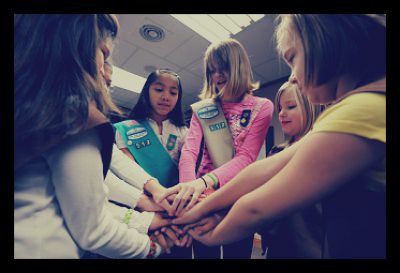
The Girl Scouts of the U.S.A. is an organization known for building girls’ confidence, courage and character in order to make the world a better place. Girl Scouts is active in more than 92 countries across the globe and is a part of the World Association of Girl Guides and Girl Scouts (WAGGGS), which comprises of over 10 million girls and adults in 145 countries. The Association’s purpose is to connect member organizations and promote girls and young women to develop to their fullest potential.

Two U.S. college students have taken the initiative further and brought Girl Scouts to refugee camps in Jordan. U.S. college students Howlader Nashara and Ameera Naguib are the troop’s leaders. They started with helping the girls get to know each other, and they planned the different badges they wanted the girls to earn throughout the year. Because of the troop, the girls are now versed in skills that they would not have had the opportunity to learn otherwise, such as first-aid, self-defense, gardening, computer skills and financial literacy.

A grassroots effort, the Collateral Repair Project, has joined forces with the Girl Scouts and is sponsoring more than 20 Girl Scout troops, assisting girl refugees of the Syrian civil war three years ago. The mission of this grassroot effort is to bring assistance to refugees and other victims of war/conflict. The Collateral Repair Project seeks to repair this damage, offer guidance, assistance and even temporary homes to thousands of Iraqis and Syrian refugees.

Girl Scouts empowers girls and encourages them to discover that life can be filled with fun, friendship and the power of forming a community. Through field trips, sports clinics, community service projects, cultural exposure, environmental stewardship and basic life-skills training, girls are able to grow and reach their true full potential.

– Charisma Thapa

Sources: The Girl Scouts, Good News Network Collateral Repair Project
Photo: Flickr

November 15, 2014
https://borgenproject.org/wp-content/uploads/borgen-project-logo.svg 0 0 Borgen Project https://borgenproject.org/wp-content/uploads/borgen-project-logo.svg Borgen Project2014-11-15 08:00:422024-05-27 09:23:00Girl Scouts Arise in Refugee Camps
Activism, Global Poverty, Inequality

Great Quotes on Poverty

poverty_quotes
Poverty affects us all, whether indirectly or directly. Here are 10 quotes on poverty to get you thinking:

“Poverty is the parent of revolution and crime.”
― Aristotle

“The test of our progress is not whether we add more to the abundance of those who have much; it is whether we provide enough for those who have too little.”
― Franklin D. Roosevelt

“Poverty is the worst form of violence.”
― Mahatma Gandhi

“Once poverty is gone, we’ll need to build museums to display its horrors to future generations. They’ll wonder why poverty continued so long in human society – how a few people could live in luxury while billions dwelt in misery, deprivation and despair.”
― Muhammad Yunus

“History is written by the rich, and so the poor get blamed for everything.”
― Jeffrey D. Sachs

“In a country well governed, poverty is something to be ashamed of. In a country badly governed, wealth is something to be ashamed of.”
―Confucius

“I am for doing good to the poor, but I differ in opinion about the means. I think the best way of doing good to the poor is not making them easy in poverty, but leading or driving them out of it.”
―Benjamin Franklin

“Saving our planet, lifting people out of poverty, advancing economic growth… these are one and the same fight. We must connect the dots between climate change, water scarcity, energy shortages, global health, food security and women’s empowerment. Solutions to one problem must be solutions for all.”
―Ban Ki-moon

“Almost half of the population of the world lives in rural regions and mostly in a state of poverty. Such inequalities in human development have been one of the primary reasons for unrest and, in some parts of the world, even violence.”
―A.P.J. Abdul Kalam

“Anyone who has ever struggled with poverty knows how extremely expensive it is to be poor.”
―James A. Baldwin

– Leeda Jewayni

Sources: GoodReads, BrainyQuote
Photo: Flickr

November 9, 2014
https://borgenproject.org/wp-content/uploads/borgen-project-logo.svg 0 0 Borgen Project https://borgenproject.org/wp-content/uploads/borgen-project-logo.svg Borgen Project2014-11-09 08:00:362024-06-05 01:57:14Great Quotes on Poverty
Activism, Health

Denmark: The Happiest Country in the World

Denmark
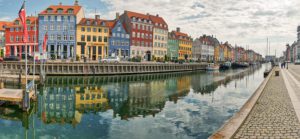
Denmark has been ranked as the happiest country in the world. This ranking is based on a multitude of factors ranging from healthcare to riding a bike. According to a Huffington Post article, Denmark ranks as the leader of the happiest countries for six key reasons. Here is a list:

  1. Denmark supports parents: Parents are given a combined total of 52 weeks of leave after a child is born. Comparatively, the U.S. offers only 10 weeks on average to American parents. Child care is also much cheaper and more easily accessed by all parents in Denmark.
  2. Health care is a right: Another difference between Denmark and Americans is their attention to healthcare. Danish citizens will see their primary physician on average seven times a year. Danish citizens see only one doctor. Healthcare is not only a right in Denmark, but it is a continuous, dependable right.
  3. Biking: More than half of commutes are via biking in Denmark. This statistic contributes to a more fit country, a country with a longer life expectancy and also a wealthier country.
  4. Gender equality: Women contribute six to 10 percent more to household incomes in Denmark than in the U.S. In fact they have had female prime ministers and were one of the first countries to allow women to vote.
  5. Culture: Hygge is utilized in this chilly environment. It is a tactic to fight the cold weather of Denmark and to create a cozy, united environment.
  6. Volunteerism: Social responsibility is valued in Danish culture. Over 40 percent of citizens volunteer.

According to DailyFinance, Denmark ranks as the happiest country in the world for more black and white reasons as well. For example, the country has one of the lowest percentages of long workdays and a life expectancy of almost 80 years old.

Denmark’s happiness sheds light on the positive effects a stable economy can have on the overall wellbeing of a country’s citizens.

– Kathleen Lee

Sources: Huffington Post, Daily Finance
Photo: Flickr

November 4, 2014
https://borgenproject.org/wp-content/uploads/borgen-project-logo.svg 0 0 Borgen Project https://borgenproject.org/wp-content/uploads/borgen-project-logo.svg Borgen Project2014-11-04 04:00:572020-08-21 20:48:32Denmark: The Happiest Country in the World
Activism, Advocacy, Global Poverty

SKYE Program Boosts Guyana Youth

SKYE
President Barack Obama’s Caribbean Basin Security Initiative (CBSI) was implemented in the early part of this decade. The United States is working with nations in the Caribbean on substantially reducing illicit trafficking, increasing public safety and security and promoting social justice.

SKYE

SKYE, or The Skills and Knowledge for Youth Employment, program was a direct result of this initiative. It is funded by USAID, managed by the Education Development Center and works with private sector partners, government ministries, community agencies and NGOs.

Their goal is to train and educate the community’s youth in the areas that have been identified as priorities by public and private sector employers in Guyana. Those areas are communications, personal development, local labor laws and financial literacy.

SKYE works with the local youth that are school dropouts, youth who have completed formal education or training but do not have the necessary skills to find employment, and youth involved in the juvenile justice system. Not only does SKYE train these youth, but it sees them into the working force through the use of “employment coaches.”

It is often easy to train the youth, but to see them into the workforce is the daunting task. That is why many employment coaches stayed paired with their youth until they find work. As of June 2014, more than 1,100 youth have completed SKYE’s work readiness training and 400 graduates have already found employment.

Popularity and Success

The program has become so popular and received such a reputation for producing work-ready employees with positive attitudes that BK Quarries, one of the region’s largest employers, recently asked for twenty more SKYE graduates after hiring fourteen.

An April 2004 SKYE graduation ceremony, in which 57 youth graduated, was led by the U.S. ambassador to Guyana, D. Brent Hardt. In the ceremony’s opening speech, he said that SKYE was focused on “strengthening an environment that facilitates youth development, supporting the reintegration to society of high-risk populations, supporting Guyana’s youth in their efforts to find employment or start their own businesses, and supporting the greater engagement of young people as active Guyanese citizens.”

Fiona Wills, who directs SKYE, credited the program’s success to its emphasis on providing youth with one-on-one support and letting each one decide on a path that interests him or her: “Everything we do is about empowering young people to help themselves.”

With this momentum, the program will only continue to move forward at its empowering pace, as it is targeting the right demographic. For there to be a better tomorrow, in any country, we need to focus on breaking the preconceived notions of the youth.

Poverty, and the constraints it invokes, needs to be shown to be breakable. If the youth of a country can’t break free of the poverty cycle through employment programs and other aids, then that country is permanently stuck in poverty’s grip. With programs like SKYE in effect, the world has a better chance of elevating all of its citizens to a place where they can provide their own food, shelter, and clothing.

— Frederick Wood II

Sources: InterAction, Guyana Times, Embassy of the United States, USAID Blog
Photo: Flickr

October 25, 2014
https://borgenproject.org/wp-content/uploads/borgen-project-logo.svg 0 0 Borgen Project https://borgenproject.org/wp-content/uploads/borgen-project-logo.svg Borgen Project2014-10-25 04:00:312024-05-27 09:22:55SKYE Program Boosts Guyana Youth
Activism, Advocacy, Education

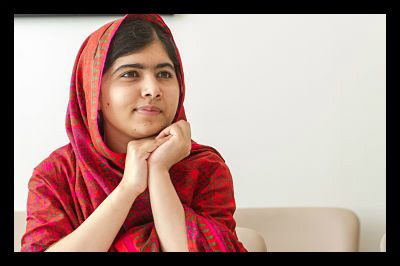
Malala Wins Nobel Peace Prize

nobel_peace_prize
By the age of 17, if a teenager has secured a part-time job, a driver’s license and takes home a good report card, they typically feel pretty accomplished. But 17-year-old Malala Yousafzai has already experienced and accomplished more than most do in a lifetime. On October 10, she added another accomplishment to her list: the youngest person to ever receive the Nobel Peace Prize.

Yousafzai was awarded the Nobel Peace Prize along with Kailash Satyarthi, “for their struggle against oppression of young people and children and children’s right to education,” Chairman of the Norwegian Nobel Committee Thorbjorn Jagland said.

To get to this monumental point in her life, Yousafzai has been through incomprehensible trials, including threats against her life. But through it all, this young girl has been a beacon to the girls in undeveloped countries, in particular Pakistan.

Yousafzai’s story began in 2009, when the young girl took to a blog to transcribe her thoughts and feelings of the world around her, in her native home of Swat Valley in northwestern Pakistan. The Taliban announced an edict that no girls were to be educated. Yousafzai, whose father is a schoolteacher, knew the value of education and chose to attend school, even after the edict was issued.

While journaling her days online, Yousafzai started to receive death threats from the Taliban. On Oct. 9, 2012, the threats came to life.

CNN reported of her attack, “[Gunmen] halted the van…demanded the other girls in the vehicle to identify her…she was pointed out. At least one gunman opened fire, wounding three girls.” The two girls survived the shooting and Malala sustained shots to the head and neck.

Malala underwent a surgery to remove the bullets, and doctors had to remove a part of her skull to reduce brain swelling. She was eventually taken to Queen Elizabeth’s Hospital in the U.K. via helicopter. This young girl who fought for her right to be educated now was fighting to recover from what could have been life-ending injuries. After close to three months, Malala was released from the hospital to rehabilitate in her family’s new home.

Word spread globally of the young heroine, resulting in the United Nations creating a global education campaign entitled, “I am Malala,” even proclaiming November 10 to be Malala Day, focusing on “’Malala and the 32 million girls like Malala not in school.”

Yousafzai recovered from her wounds and returned to school at Edgbaston High School for Girls in Birmingham, England. Since the ordeal, she has become a light for girls all over the world.

Yousafzai has created the Malala Fund, which focuses on educating girls in Pakistan, Kenya, Nigeria and the girls who are Syrian refugees in Jordan. She has also published a book entitled “I am Malala.”

This advocate for education and most recent recipient of the Nobel Peace Prize still has work cut out for her. A CNN infographic from 2012 showed over 4.5 million girls are still out of school in Pakistan.

Even though the statistic is staggering, Yousafzai’s influence can be seen in young girls in her home country. Ahmad Shah, who was an aide to Yousafzai’s father and an educator himself, asked a young girl what she wanted to be when she grew up. Her reply? “I want to become Malala Yousafzai to work for education and peace,” Shah recalled.

The world has its eyes on Malala Yousafzai for now and for the foreseeable future because she is sure to change the world, one little girl at a time.

– Kori Withers

Sources: CNN, CNN 2, The Washington Post, Nobel Prize
Photo: Flickr

October 23, 2014
https://borgenproject.org/wp-content/uploads/borgen-project-logo.svg 0 0 Borgen Project https://borgenproject.org/wp-content/uploads/borgen-project-logo.svg Borgen Project2014-10-23 04:00:262024-12-13 17:51:16Malala Wins Nobel Peace Prize
Activism

Bethesda Lutheran Communities Advocate for the Disabled

bethesda_lutheran_communities
Nearly one and a half out of every 10 people in the United States has difficulty living independently and a similar ratio of the population is categorized with cognitive difficulty. The disabled community in America totals roughly 46 million people and generally receives far too little attention and assistance from the general public. But fortunately, there are groups that labor to create a better life for the disabled. Among these unsung heroes is Bethesda Lutheran Communities.

Since 1903, Bethesda Lutheran Communities have been playing an active role in housing, educating and advocating for women and men “living with intellectual and developmental disabilities.” As far back as the early 1960s, Bethesda has been playing an active role in providing musical, occupational, physical and speech therapy. These invaluable resources facilitate personal growth for many who have been forgotten.

Deriving its name from a biblical story of healing waters, the word Bethesda is Aramaic for “House of mercy,” and over the years the organization has extended their particular mission of mercy to 14 states. Bethesda Lutheran Communities has also diversified its offerings to the disabled, operating 20 thrift shops that serve not only as a fundraising arm, but as a place for the disabled to work and further their involvement in the greater community. The organization also runs a unique summer camp that is fully accessible for women and men with disabilities.

This fall, in conjunction with Concordia University Wisconsin, Bethesda is offering its first college level classes to the disabled. President and CEO John Bauer explains the philosophy behind this bold venture by saying, “People with developmental disabilities often find it very challenging to discover postsecondary opportunities. Bethesda College will provide choices and opportunities that are responsive to each student’s unique learning style as well as help prepare them for future growth and success.”

While there are many challenges ahead in their pursuit to offer a better range of choices for their people, Bethesda Lutheran Communities points to a bill that has been introduced in Congress. The ABLE Act of 2013 (H.R.647) would make it possible for disabled persons to pursue work and education while still receiving government aid, which is currently hindered by the Internal Revenue Code. While the bill has nearly 400 cosponsors in the House of Representatives, there has yet to be a vote to move it forward to the Senate.

True to their legacy as humanitarian innovators, the leadership of Bethesda Lutheran Communities is pushing forward in hopes that the law will catch up and help to improve the future of the disabled in America.

– Casey Hobbs

Sources: U.S. Census, Bethesda Lutheran Communities, BizTimes Milwaukee, U.S. Congress
Photo: Bethesda Blog

October 18, 2014
https://borgenproject.org/wp-content/uploads/borgen-project-logo.svg 0 0 Borgen Project https://borgenproject.org/wp-content/uploads/borgen-project-logo.svg Borgen Project2014-10-18 04:00:162024-06-10 02:23:34Bethesda Lutheran Communities Advocate for the Disabled
Page 29 of 56«‹2728293031›»

Get Smarter

  • Global Poverty 101
  • Global Poverty… The Good News
  • Global Poverty & U.S. Jobs
  • Global Poverty and National Security
  • Innovative Solutions to Poverty
  • Global Poverty & Aid FAQ’s
Search Search

Take Action

  • Call Congress
  • Email Congress
  • Donate
  • 30 Ways to Help
  • Volunteer Ops
  • Internships
  • Courses & Certificates
  • The Podcast
Borgen Project

“The Borgen Project is an incredible nonprofit organization that is addressing poverty and hunger and working towards ending them.”

-The Huffington Post

Inside The Borgen Project

  • Contact
  • About
  • Financials
  • President
  • Board of Directors
  • Board of Advisors

International Links

  • UK Email Parliament
  • UK Donate
  • Canada Email Parliament

Get Smarter

  • Global Poverty 101
  • Global Poverty… The Good News
  • Global Poverty & U.S. Jobs
  • Global Poverty and National Security
  • Innovative Solutions to Poverty
  • Global Poverty & Aid FAQ’s

Ways to Help

  • Call Congress
  • Email Congress
  • Donate
  • 30 Ways to Help
  • Volunteer Ops
  • Internships
  • Courses & Certificates
  • The Podcast
Scroll to top Scroll to top Scroll to top