• Link to X
  • Link to Facebook
  • Link to Instagram
  • Link to TikTok
  • Link to Youtube
  • About
    • About Us
      • President
      • Board of Directors
      • Board of Advisors
      • Financials
      • Our Methodology
      • Success Tracker
      • Contact
  • Act Now
    • 30 Ways to Help
      • Email Congress
      • Call Congress
      • Volunteer
      • Courses & Certificates
      • Be a Donor
    • Internships
      • In-Office Internships
      • Remote Internships
    • Legislation
      • Politics 101
  • The Blog
  • The Podcast
  • Magazine
  • Donate
  • Click to open the search input field Click to open the search input field Search
  • Menu Menu

Archive for category: Activism

Information and stories on social activism.

Activism, Advocacy

Community Service Ideas for High School Students

community_service
In order to fully comprehend poverty on a global scale, one first must understand how it affects his or her own backyard.

The only way to do that is to go out into a community, talk to members of that community and volunteer. Local volunteer work serves as the stepping stone to understanding the root causes of poverty at home and around the world.

Stacie Nevadomski Berdan and husband Marshall Berdan, authors of the book “Raising Global Children,” highlight the importance of introducing American teenagers to the world of service.

According to their book, the local service teenagers perform allows them to “develop key life skills such as empathy, compassion, negotiation skills, teambuilding and communication.” Similar skills are needed to work with people across all cultures in different situations.

There are some nationally-renowned organizations in the United States that are always searching for volunteers, especially from the middle and high school demographics. Participating in the local chapters of some of these organizations can be a springboard to completing international service trips, mission trips or even internships with NGOs.

Habitat for Humanity – With more than 1,400 chapters around the U.S., Habitat for Humanity is one of the largest nonprofit organizations in the country. For high school students, it means there are a plethora of opportunities close to home to help build a home for someone in need. Habitat also has a presence in more than 70 countries around the globe, making this organization a nice transition for students who want to do service abroad with an organization they recognize.

Girl Up – The United Nations Foundation created this campaign in order to equip and empower young women to fight for the rights of other women around the world. There are 750 Girl Up clubs across thirty-five states and forty-five countries. Anyone can start a club using the Girl Up guide, begin to advocate for women’s rights, educate about the plight of women around the world and fundraise for U.N. projects and their partners.

Boys and Girls Club of America – The BCGA was founded to provide after-school activities, tutoring, leadership training and life skills programs to students who come from impoverished areas of the U.S. without a safe place to go when the final bell rings. There are 4,000 clubs around the country with opportunities to mentor young students, to tutor or to help run camps and other activities.

Feeding America – This organization is the leader in alleviating hunger in the U.S. It is a network of food pantries that help feed more than 46 million Americans who suffer from varying degrees of hunger. The Feeding America website has an easy-to-use navigation system to find the closest food pantry. Volunteer opportunities are not limited to serving meals or packaging. Volunteers also help deliver meals, work “farmers’ markets” and grocery stores, and tutor.

Salvation Army – The Salvation Army touches upon almost every kind of service. They work with veterans, freed prisoners looking to get back on their feet and families without homes or food. They, too, have an international component. Volunteers can choose to sponsor Salvation Army projects and kids in need around the world.

By participating in service on a regular basis, high school students can expand their world view and begin to grasp what poverty must be like outside of the wealthiest country in the world. This profound realization will make them want to help not just those within their neighborhood, but also fellow human beings.

– Morgan Abate

Sources: The Salvation Army, Feeding America, Boys and Girls Club of America, Girl Up, Habitat for Humanity
Photo:Flickr


June 15, 2015
https://borgenproject.org/wp-content/uploads/borgen-project-logo.svg 0 0 Borgen Project https://borgenproject.org/wp-content/uploads/borgen-project-logo.svg Borgen Project2015-06-15 14:37:052024-05-27 09:24:15Community Service Ideas for High School Students
Activism, Advocacy

Projects For Social Change as a High School Senior

social_change
Graduation season is in full swing and high school seniors around the nation are getting ready to accept their diplomas. . . . as well as finish their senior projects! With the high stress of leaving high school and becoming increasingly independent, graduating seniors often hurry to finalize their end-of-the-year, self-directed projects. What better way to leave a legacy behind than to use a senior project to help change the world? Here are four project ideas that inspire social change:

1. Host a presentation about U.S. foreign aid statistics.

There are many myths in public opinion that hurt positive policy making and social change. For example, contrary to popular belief, the U.S. actually spends 2 percent of its budget on foreign aid and not 25-30 percent. Sending foreign aid to nations with high rates of corruption does not make them more corrupt, and the U.S. actually does receive positive returns when we increase our foreign aid. These social myths make social change harder to achieve.

For a senior project, create a slideshow correcting social myths. Take full advantage of an eager, energetic crowd of friends and family, and spread knowledge to educate and inspire people.

2. Volunteer at a nonprofit organization for a semester.

Volunteering: good for the soul and good for the community – and also good for the brain.

Volunteering at a nonprofit organization for a semester gives students the chance to learn the inner workings of the nonprofit industrial complex. Students can learn how resources are obtained and distributed, how politics play out in charity affairs and how a group of people with passionate ideas can become an organization in the first place. Learning this process and sharing it with classmates has invaluable domino effects of inspiration. Volunteering for a semester gives students the tools to build social change.

3. Collect garbage instead of throwing it away.

A senior project consisting of not throwing out the trash, sounds easy right? We often underestimate the amount of trash we produce. Storing full trash bags is more difficult than it sounds and produces a shock factor to any audience. Use a senior project to weigh the school’s waste and make people more aware of their waste. This will instigate social change as people will be inspired to use less and recycle more. The environment will appreciate it.

4. Host a graduation party to raise awareness.

Use this occasion to reflect not just upon personal successes but upon other successes in the world as well. Dedicate a party to raising awareness about a particular cause and spend the evening educating friends as well as celebrating them.

There are various ways to make a difference in the world. We are seldom given audiences as eager as those that attend high school senior project presentations. By spreading awareness among our friends and family about social issues, graduating high school seniors can help change the world – and maybe even an “A” along the way.

– Tanya Kureishi

Sources: Borgen Project, The Hill
Photo: Flickr

June 13, 2015
https://borgenproject.org/wp-content/uploads/borgen-project-logo.svg 0 0 Borgen Project https://borgenproject.org/wp-content/uploads/borgen-project-logo.svg Borgen Project2015-06-13 16:00:202024-12-13 17:51:26Projects For Social Change as a High School Senior
Activism, Advocacy, Development

Crowdfunding for Development

crowdfunding
In 2014, the space-based video game ‘Star Citizen’ raised almost 40 million dollars via crowdsourcing, earning it a Guinness World Record for the largest single amount ever raised through crowdfunding. To put this in context, funding for all of the specialized agencies of the U.N., including WHO, UNICEF and UNDP, totalled about 20 billion dollars in 2011, only 500 times the amount raised for a single video game.

Crowdfunding, the raising of funds for a particular venture or project directly from the population through the internet, has been gaining considerable steam in recent years. Worldwide crowdfunding volume in 2011 was over one billion dollars. In the U.S. alone, there are over 190 platforms for crowdsourcing.

In 2012, social causes made up 30 percent of all crowdfunded projects. This statistic reveals that it is possible to enthuse the public about socially beneficial projects, consequently reducing the burden on the government.

Floating Doctors is just one example of such a project. The organization aims to provide free medical care and deliver medical supplies to isolated populations of Central America. The unique approach of this project is that they voyage by ships to reach these populations and their ships are completely self-sustained in their ability to serve as a doctor’s office. They do not require the existence of a permanent hospital building in the locations they serve. In 30 days, they have been able to raise 3,000 U.S. dollars on KickStarter, a crowdfunding platform.

Another example is Energy for Old Fadama. It is trying to provide solar energy to a large urban slum in Ghana. In 18 months, the organization has equipped 20 community buildings with solar energy and are also trying to empower women in the community by providing them the opportunity to be small solar system entrepreneurs. So far, Energy for Old Fadama has raised 17,000 euros from 59 backers.

Several platforms dedicated specifically to civic projects are starting to appear. According to Deutsche Welle, one such platform, Germany-based nonprofit BetterPlace.org, has collected 10 million euros for 5,000 projects in 147 countries since its launch in 2007.

StartSomeGood is another example. This platform, as the name suggests, supports projects focussed on social good. The platform generates revenue for itself only if a project on its platform meets its fundraising goal. Start Some Good also asks fundraisers to decide on a “tipping-point goal”, an amount required to launch all projects. Donations are only processed if a campaign raises enough to meet its tipping-point. In this way, donors are assured that their money is going toward a goal that will be realized.

Like any good investor, a donor should also be able to evaluate a project for its merit. BetterPlace accommodates this by allowing donors to rate projects and ask questions to project organizers. Incorporating more approaches like donor questions and tipping-point goals will give crowdfunding campaigns more credibility.

Crowdfunding allows for innovations for development to be realized. As it grows, crowdfunding might well become another mainstream approach, just like aid from governmental and intergovernmental sources, to secure funding for civic projects.

– Mithila Rajagopal

Sources: Daily Crowd Source, Deutsche Welle, Guinness World Records, Statista, Start Some Good, World Watch
Photo: Flickr

May 30, 2015
https://borgenproject.org/wp-content/uploads/borgen-project-logo.svg 0 0 Borgen Project https://borgenproject.org/wp-content/uploads/borgen-project-logo.svg Borgen Project2015-05-30 12:00:222024-12-13 17:51:24Crowdfunding for Development
Activism, Global Poverty

Creativity for Social Change

Creativity for Social Change
Creativity for social change includes non-linear thought processes when rigidity is not conducive to resolution, change or positivity. Creativity also broadens one’s audience and allows one’s message to further spread across time, space and culture.

There has long been a connection to creativity and social change, for artists and creative thinkers have employed countless songs, paintings and other visual arts in the name of activism in order to raise awareness of oppression, inequalities and injustice. Technology has furthered the prominence of creativity in social activism, through video installations, movies, short video clips and the infinite possibility to share links.

Creativity allows for a proliferation of education. Audiences affected by poverty, narcotics and violence are able to be accessed through creative avenues. Engaging the youth in the arts can both transform individual lives while creating a new generation who may go on to produce important works that raise awareness of the issues they feel passionate about. Art is able to act as a tool for therapy, for reconciliation is vital for social change, conflict prevention and fomenting a positive future. Creativity encourages communication and self-expression, and these factors are invaluable in an attempt to foster social change.

Creativity acts as a natural conduit to create interest, and creative thinkers and artists have power in organizing civic engagement and activists for a common cause. Creative leaders are able to inspire the people, particularly the youth, and are able to mobilize communities. Creative leaders are necessary for social change, for they are able to challenge the status quo while engaged in productive dialogue. Creative leaders articulate clear ideas, take courageous risks, focus on a positive future, generate alternative solutions and most importantly, are adaptable to changing environments.

Organizations, such as ArtCorp, believe that every person has the capacity for creativity. It adheres to the idea that a message is much more effective if the audience is involved; it believes in the power of human beings to overcome problems through communication and collaboration; that art is a crucial leverage tool for creative thinking, critical analysis and generative solutions; and that art and culture affect change by accessing all of the senses and speaking to multiple types of intelligence.

The act of art and creativity ultimately inspires action and reaction. The Art of Dismantling offers, “Visual art forms can transcend all barriers and stimulate a lasting emotional response. As long as oppression, inequalities and injustice exist in the world, art and artists will have a role, even a responsibility, to make a positive change to people’s lives; whether on a global or individual level.”

– Neti Gupta

Sources: ArtCorp, Creative Social Change, The Heart of Dismantling
Photo: Flickr

May 4, 2015
https://borgenproject.org/wp-content/uploads/borgen-project-logo.svg 0 0 Borgen Project https://borgenproject.org/wp-content/uploads/borgen-project-logo.svg Borgen Project2015-05-04 04:00:452024-06-05 01:58:29Creativity for Social Change
Activism, Global Poverty

Bono Fights Poverty

Bono Global Poverty
Bono, lead performer of the band U2, is as much of an activist as he is a rockstar.

Bono has drawn attention to the global poverty endemic, enacting a call to action. He claims he is a “factivist,” for he believes in evidence-based activism. In a recent interview with CNN, Bono explained that factivism is a virtuous, data-based virus. He said, “spread it, share it, pass it on … by doing so, you will join us and countless others in what I truly believe is the greatest journey ever taken — the ever-demanding journey of equality.”

According to The Guardian, Bono states, “The rate [of poverty] is still too high … there’s still work to do. But it’s mind-blowing stuff.” He continued to state that the rate could hit zero by 2030. “For number crunchers like us, that’s the erogenous zone. It’s fair to say I’m sexually aroused by the collating of data.”


Bono’s Impressive Record Against Global Poverty


The Irish front man of U2 began his work with poverty after viewing a series of performances called “The Secret Policeman’s Ball.” He then collaborated with Amnesty International to launch the “Conspiracy of Hope” tour with Sting. As a result of his work, Bono was invited to Ethiopia by World Vision, where he developed an education program with his wife, Ali, addressing health, hygiene and music. Inspired by his work in Ethiopia, Bono pursued his activism in Nicaragua and El Salvador to work with children and draw attention to world conflicts.

Bono utilizes his passion for music to aid his passion for equality. He wrote a song called “Silver and Gold” for Artists Against Apartheid and participated in Van Zandt’s anti-apartheid single “Sun City.” In addition, Bono attended the Festival Against Racism in Hamburg, Germany with The Edge. The event consisted of a concert, a press conference, a theatrical event and a debate on the subject of anti-racism.

Bono has been a leader in the fight against poverty, making significant contributions to the ONE Campaign, RED, EDUN and DATA.

Making outstanding donations to charity, he has received three nominations for the Nobel Peace Prize, and was knighted by the Queen of England in 2007.

– Neti Gupta

Sources: CNN, Look To The Stars, New York Post, The Guardian
Photo: AP

April 28, 2015
https://borgenproject.org/wp-content/uploads/borgen-project-logo.svg 0 0 Borgen Project https://borgenproject.org/wp-content/uploads/borgen-project-logo.svg Borgen Project2015-04-28 04:00:582020-06-25 15:47:32Bono Fights Poverty
Activism, Global Poverty

Angelina Jolie as UNHCR Special Envoy

Angelina Jolie UNHCRAngelina Jolie is invested in refugee issues, and has been involved with the United Nations High Commissioner for Refugees, also known as UNHCR, since 2000. Her interest and activism in humanitarian affairs began in 2000 when she visited Cambodia to shoot her film “Tomb Raider.” Her dedication to displaced persons, refugees and humanitarian assistance has generated substantial domestic and international attention.
In 2001, she was named a UNHCR Goodwill Ambassador, as she conducted forty field missions to some of the most remote areas of the world. In April 2012, she was appointed as Special Envoy of UN High Commissioner for Refugees António Guterres. According to UNHCR, “In her new and expanded role, she will be focusing on major crises resulting in mass population displacements; undertaking advocacy and representing UNHCR and Guterres at the diplomatic level; and engaging with decision-makers on global displacement issues. Through this work, she will help contribute to the vital process of finding solutions for people displaced by conflict.” Her first mission as Special Envoy was in Ecuador in 2012.

Jolie’s contributions to UNHCR have been tremendous. Not only does she advocate on the behalf of refugees, engage with diplomacy and activities relating to global displacement issues and inspire others, she has also donated over five million dollars to UNHCR since 2001. Jolie continues to bear witness to and support disaster relief, vulnerable children, environmental conservation and international law and justice efforts.

In 2003, she started the Maddox Jolie-Pitt Foundation, which has contributed funds to Namibia, Ethiopia and Cambodia. This foundation includes microcredit programs, rural planning, health care, agriculture, education and infrastructure. She also launched the National Center for Refugee and Immigrant Children, co-chairs the Education Partnership for Children of Conflict, became a member of the influential Council on Foreign Relations and continues to be active in the international community and zones of conflict and instability.

In January 2015, Jolie visited Dohuk, Iraq in pursuits of ending suffering in the region. She met with Syrian refugees and Iraqi citizens of the Kurdistan region, investigating the current humanitarian situation. She reported, “As the conflict in Syria approaches its fifth year, the war in Syria is at the root of so many of the problems faced here in Iraq and across the region. There is an urgent need for international leadership to break the cycle of violence in Syria, and to find a way forward towards a just and sustainable peace agreement.” Her dedication to the cause of refugees, displacement and humanitarianism is indispensable.

Jolie has been recognized for her effective efforts. She was the first recipient of the Citizen of the World Award in 2003, followed by the Global Humanitarian Award in 2005 for her work with refugees. Her efforts were further recognized in 2007, when the International Rescue Committee awarded the Freedom Award to Jolie and High Commissioner Guterres for their contributions to the cause of refugees and human freedom.

– Neti Gupta

Sources: UNHCR 1, UNHCR 2, USA for UNHCR
Photo: Flickr

April 5, 2015
https://borgenproject.org/wp-content/uploads/borgen-project-logo.svg 0 0 Borgen Project https://borgenproject.org/wp-content/uploads/borgen-project-logo.svg Borgen Project2015-04-05 12:00:172024-06-05 01:58:26Angelina Jolie as UNHCR Special Envoy
Activism, Development, Education

Pencils of Promise

Pencils of Promise
Pencils of Promise’s programs have impacted more than 300,000 lives. Its schools have served more than 31,240 students and its scholarship recipients are two times more likely to progress to secondary school than the regional average.

Founder Adam Braun was a college student backpacking across the globe when he asked a small boy begging on the streets of India what he wanted most in the world—the answer? A pencil. Braun reached in his backpack and handed him his pencil as ‘a wave of possibility washed over him.’ Over the next five years, Braun backpacked through more than 50 countries handing out thousands of pens and pencils across six continents.

These pencils led to powerful conversations with local parents and children across numerous cultures and languages. In October 2008, PoP was founded. What began with a mere $25 deposit has now built more than 200 schools, breaking ground on a new school every 90 hours.

“We’ve learned that education is a living, breathing entity that with the right nurturing, evolves into something spectacular,” Braun writes on the website.

“We’ve learned that every piece of its growth is a challenge and that each pencil, each dollar, each supporter is essential. Pencils of Promise is now a global movement of passionate individuals, many of which are the most dynamic and impactful leaders we have ever seen. They are committed to supporting a world with greater educational opportunity for all. Thousands have joined us, making contributions through acts both large and small.”

There are three main things that set PoP apart from other organizations. PoP is 100 percent for-purpose, 100 percent direct giving and has a 100 percent success rate. It is a unique organization  because it blends the head of a for-profit business with the heart of a humanitarian nonprofit— by covering operational costs through private donors, events and companies, 100 percent of every dollar donated online goes directly into its programs to educate more children. Furthermore, it does not just “build a school and move on.” PoP monitors and evaluates every project it undertakes— ensuring that every school it opens is fully operational and educating students daily.

On its website, one can donate various amounts of money, each detailing exactly how much of an impact it would make— $100 to keep children healthy, $250 to educate a child, $500 to train a teacher and $25,000 to build a school.

Pencils of Promise is true to its word in terms of a functioning education system. PoP’s students score three times higher on language literacy tests than their peers and the teachers enrolled in PoP’s teacher training program attend school with 97 percent frequency. Additionally, 85 percent of PoP’s teachers report student literacy increases, 88 percent of the teachers report student numeracy increases and an astonishing 90 percent of the teachers report increases in student engagement due to its programs.

PoP can also be credited with being extraordinarily innovative. PoP works to provide schools with smartphones, e-readers, long-range radio and creative materials in order to reach the most under-served communities in the countries where PoP works. One e-reader provides a student with 50 books in both English and the local language. Smartphones deliver interactive audio lessons to provide expanded access to learning and a mobile learning kit contains books, phonic games and creative educational tools for teachers.

This  organization not only trains teachers, but also teaches and trains students about WASH (water, sanitation and hygiene). Students miss 272 million school days due to preventable illness and the international WASH program has allowed PoP to train more than 5,040 students since 2009. Pop does this via a three-step approach: building bathrooms and hand washing stations, teaching students and tracking behavior change.

The Huffington Post reported that the program has brought hope to children around the world in the form of 10 million hours of education as of March 2014.

As Braun writes in his book, “Take the first small step, and chase the footprints you aspire to leave behind.” To take this first small step, visit https://pencilsofpromise.org/.

– Eastin Shipman

Sources: Pencils of Promise 1, Pencils of Promise 2, Pencils of Promise 3, Pencils of Promise 4, Huffington Post,
Photo: Pac For Kids

April 1, 2015
https://borgenproject.org/wp-content/uploads/borgen-project-logo.svg 0 0 Borgen Project https://borgenproject.org/wp-content/uploads/borgen-project-logo.svg Borgen Project2015-04-01 08:00:382024-12-13 17:51:21Pencils of Promise
Activism, Global Health, Humanitarian Aid, Nonprofit Organizations and NGOs, Poverty Reduction

World Concern Makes an Impact

world concern
World Concern is a nonprofit organization devoted to transforming the lives of deeply impoverished people. Founded by pharmacist Jim McCoy and Doctor Wilbert Saunders in 1955, the organization was intended to provide resources to hospitals and clinics overseas.

In 1976, the functions of World Concern shifted dramatically when they realized that sending medicines and medical supplies was not enough to aid countries affected by a variety of crisis. They began sending passionate volunteers and expert to work on the ground with people living in the targeted community.

In addition to long-term support, they offer emergency relief support to countries that have experienced earth quakes and tsunamis among other situations. Their most recent contribution to relief was after the devastating earthquake.

World Concern is revolutionary because they work in some of the world’s most diseased and dangerous places. Some of these locations include Darfur, Myanmar, Somalia, Ethiopia and Rwanda. In some of the countries World Concern works, literacy rates are as low as 25 percent. A committed staff of approximately 900 people work on behalf of World Concern’s mission to aid poor communities.

In addition, 90 percent of the donations World Concern receives go to their programs abroad. They are transparent with their fiscal information to ensure that money is being maximized where it is most effective. Fundraising takes up only 5.2 percent of all expenses and promotions. 4.7 percent goes to management and general administrative duties.

World Concern is devoted to providing clean water to communities. Clean water is pertinent to maintaining the health of the people living in the community. They bring in wells and latrines to facilitate better hygiene and access to clean water.

Another service they provide is bettering children’s access to education. Many children in these poor communities have to walk for miles and the classes are usually held is sub standard conditions either outside or in very informal settings.

In poor communities of developing countries the way that most people earn a living is through farming. These forms of subsistence living are vulnerable to food insecurity; reliance on environmental conditions and floods and drought greatly affect the income stability.

World Concern is devoted to the long-term solutions to working out solutions in some of the world’s poorest communities. They foster a sense of hope through providing access to education and clean water.

– Maxine Gordon

Sources: CRISTA Ministries, World Concern
Photo: World Concern

February 26, 2015
https://borgenproject.org/wp-content/uploads/borgen-project-logo.svg 0 0 Borgen Project https://borgenproject.org/wp-content/uploads/borgen-project-logo.svg Borgen Project2015-02-26 04:00:362020-07-16 09:45:06World Concern Makes an Impact
Activism, Philanthropy, Poverty Reduction

Ending Poverty Through Mobile Banking

mobile banking
With populations in the developing world on the steady rise and technology becoming more user-friendly, there is no doubt that technology will make drastic changes to the developing world in the next decade.

In a recent 2015 Gates Annual Letter published by the Bill and Melinda Gates Foundation, Gates declared that innovation will play a vital role in improving the lives of people in poor countries in the next 15 years.

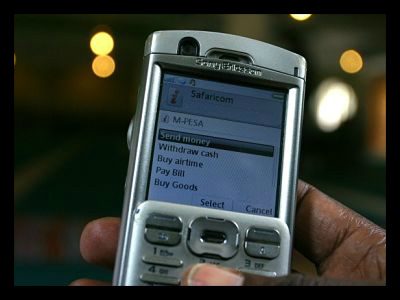
Moreover, Melinda Gates argues that an increase in access to mobile banking through cell phones will provide impoverished people with the opportunity to save what they earn or perhaps borrow what they need at a low rate.

One of the many benefits of mobile banking is its socio-economic impact. The country of Kenya was known to have an underdeveloped banking infrastructure, high poverty rate and a large population of migrant people. Since the introduction of mobile banking in Kenya, financial inclusion is reported to have increased to 80 percent. Along with significant changes and improvements in global health and agricultural production, increased access to mobile technologies in developing nations is the starting point to something greater.

Developing countries are limited by the physical infrastructure of financial institutions, which means that a large part of their population is not included in a banking system. Financial inclusions have an important impact on the lives of people. Reports indicate that when poor people receive access to financial services, their cash management improves and creates better infrastructure for business and development of markets.

This change in the infrastructure in developing nations is a start to change the way people live in these countries. A small technological innovation like the mobile phone has made huge impacts in providing the opportunity to build a more developed economy in these countries.

Other innovations in technology have become popular in benefiting the developing world as well. Telecenters are an example of how technology has  changed in order to suit those living in remote areas. Telecenters range from innovations in the education sector to the medical industry.

For learning, distance education developed by technology has the ability to make every child a scholar. For health, telemedicine has the ability to change dysfunctional rural health-care systems by providing clinical health care at a distance.

Other small inventions, such as the Soccket and Lifestraw, have been developed to help those living in poverty-stricken areas and to improve the lives of those individuals.

This shows how a simple change in technology can change the lives of people living in poverty. These types of actions should be embedded in all development efforts that aim to challenge poverty through innovations of new technology.

Although technology does not end poverty, it allows people to create connections and relationships that together can break down the systems that keep people poor, and then it is up to humanity to end it.

– Sandy Phan

Sources: Bill Gates’ Blog, Consultive Group to Assist the Poor

February 2, 2015
https://borgenproject.org/wp-content/uploads/borgen-project-logo.svg 0 0 Borgen Project https://borgenproject.org/wp-content/uploads/borgen-project-logo.svg Borgen Project2015-02-02 12:00:542024-05-27 09:23:15Ending Poverty Through Mobile Banking
Activism, Advocacy

SID: Promoting Policy Dialogue

SID
At the forefront of shaping the theory and practice of development, the Society for International Development (SID) challenges existing practices and suggests alternative approaches to three notable themes— environment, women in development and the concept of human development.

SID is a global network of individuals and institutions that are concerned with development, believing it is participative, pluralistic and sustainable.

Founded in Washington D.C. in 1957 and based in Rome since 1978, SID is a policy-oriented organization that focuses on advocacy and service-delivery actions but plays a unique role that sets their society apart from the rest. What differentiates SID from other development organizations is that the organization builds on multi-disciplinary dialogues, future-minded thinking and scenarios-based and holistic policy planning. Three core actions truly distinguish SID from any other organization: knowledge building through research, facilitating dialogue and catalyzing policy change.

According to the SID website, “since its inception in 1957, SID has always acted as a unique global space for honest dialogue and effective interconnected nature among diverse actors at community, national and international level.” The Society’s broadly-stated vision and mission has remained unchanged and generally, SID’s activities will aim to, “contribute to building consensus for the need for a new convivencia (or coexistence) by supporting initiatives that generate new visions for society, leadership and political will; Encourage and facilitate dialogue between diversities through knowledge based activities; [and] facilitate knowledge generation, sharing and dissemination.”

SID’s website further states that the organization is “recognized as a pertinent, innovative and future oriented institution that fosters learning, innovation and constructive dialogue; one that nudges institutional boundaries and enlarges the spaces for exchange and exploration in the search for social justice and development that is just, equitable and sustainable.”

Today, SID has more than 3,000 members in 80 countries and more than 45 chapters worldwide. SID works with more than 100 local and international associations, networks and institutions involving parliamentarians, academics, students, political leaders and development experts. This society has a holistic, multi-disciplinary and multi-sectoral approach to development.

– Eastin Shipman

Sources: Society for International Development 1, Society for International Development 2, Society for International Development 3, Society for International Development 4, Society for International Development 5 SIDW
Photo: Facebook

January 18, 2015
https://borgenproject.org/wp-content/uploads/borgen-project-logo.svg 0 0 Borgen Project https://borgenproject.org/wp-content/uploads/borgen-project-logo.svg Borgen Project2015-01-18 08:00:132024-12-13 17:51:18SID: Promoting Policy Dialogue
Page 28 of 56«‹2627282930›»

Get Smarter

  • Global Poverty 101
  • Global Poverty… The Good News
  • Global Poverty & U.S. Jobs
  • Global Poverty and National Security
  • Innovative Solutions to Poverty
  • Global Poverty & Aid FAQ’s
Search Search

Take Action

  • Call Congress
  • Email Congress
  • Donate
  • 30 Ways to Help
  • Volunteer Ops
  • Internships
  • Courses & Certificates
  • The Podcast
Borgen Project

“The Borgen Project is an incredible nonprofit organization that is addressing poverty and hunger and working towards ending them.”

-The Huffington Post

Inside The Borgen Project

  • Contact
  • About
  • Financials
  • President
  • Board of Directors
  • Board of Advisors

International Links

  • UK Email Parliament
  • UK Donate
  • Canada Email Parliament

Get Smarter

  • Global Poverty 101
  • Global Poverty… The Good News
  • Global Poverty & U.S. Jobs
  • Global Poverty and National Security
  • Innovative Solutions to Poverty
  • Global Poverty & Aid FAQ’s

Ways to Help

  • Call Congress
  • Email Congress
  • Donate
  • 30 Ways to Help
  • Volunteer Ops
  • Internships
  • Courses & Certificates
  • The Podcast
Scroll to top Scroll to top Scroll to top