• Link to X
  • Link to Facebook
  • Link to Instagram
  • Link to TikTok
  • Link to Youtube
  • About
    • About Us
      • President
      • Board of Directors
      • Board of Advisors
      • Financials
      • Our Methodology
      • Success Tracker
      • Contact
  • Act Now
    • 30 Ways to Help
      • Email Congress
      • Call Congress
      • Volunteer
      • Courses & Certificates
      • Be a Donor
    • Internships
      • In-Office Internships
      • Remote Internships
    • Legislation
      • Politics 101
  • The Blog
  • The Podcast
  • Magazine
  • Donate
  • Click to open the search input field Click to open the search input field Search
  • Menu Menu

Archive for category: Activism

Information and stories on social activism.

Activism, Advocacy, Global Poverty

Ending Global Poverty By 2030

ending global poverty
Videos and pictures of malnourished children play on TV screens in between reality TV shows and donation envelopes arrive in the mail, sometimes to be barely glanced at. A supporter of The Global Poverty Movement said, “Everything that has a beginning has an end,” but what is the world doing to end global poverty?

Two people who are aware of and trying to combat this issue are Hugh Evans and Simon Moss. These two men erected The Global Poverty Movement in 2008 during a “High Level meeting on Millennium Development Goals” and within a year launched in Australia. It is their hope that through this project, global poverty can be eradicated by 2030 through the use of government changes and business and consumer action, along with developing a movement that will inspire and educate people to move to action to affect change.

Since landing in England, New Zealand and the United States, the Project has increased in numbers by the thousands and secured funding for their initiatives, such as Live Below the Line, The End of Polio and Global Citizen, to eradicate poverty by the billions.

The Global Poverty Project has made use of multimedia to reach those all over the world in support of their campaign of ending global poverty through video presentations to recruiting celebrities such as Hugh Jackman to enlist in the cause to free ticketed concerts to spread their mission.

By using these methods, people of all ages—about 250,000 so far—are becoming members of Global Citizen, becoming more conscious of the less fortunate and moving to action by simply using the Internet.

In late September, the organization hosted their third annual Global Citizen Festival with popular singers Jay Z, Carrie Underwood, fun. and The Roots, to name a few. In order to obtain tickets, the organization created an incentive program; sign petitions, email world leaders and share content on social media. By doing so, “fans [became] active participants in campaigning for positive change.” These campaigners earned points to put in a raffle to win tickets to the concert.

With the help of activists lobbying for change, a change will come, even if it’s through sharing an article online or signing a name to a petition because like one Global Citizen said, “What we do in one place effects someone on the other side of the world.”

– Kori Withers

Sources: Global Poverty Project, Global Poverty Project 2, Global Poverty Project 3
Photo: UN Seattle

October 14, 2014
https://borgenproject.org/wp-content/uploads/borgen-project-logo.svg 0 0 Borgen Project https://borgenproject.org/wp-content/uploads/borgen-project-logo.svg Borgen Project2014-10-14 04:00:042024-05-27 09:22:49Ending Global Poverty By 2030
Activism, Global Poverty, Nonprofit Organizations and NGOs

Global Citizen Festival Raises Awareness


In many ways, Global Citizen reflects the mission of The Borgen Project by uniting American citizens in the fight to end global poverty. Global citizen is a website and mobile application that was developed to help the general population find ways to tackle extreme poverty. It is a tool to draw attention to the suffering of the 1.2 billion people in the world who live on less than $1 per day and to act upon this injustice.

A Global Citizen is one who “identifies with being part of an emerging world community and whose actions contribute to building this community’s values and practices”. It is up to the citizens of the globe to request change for the most vulnerable populations. The systems that perpetuate a cycle of poverty must be brought to light.

Although Global Citizen does not ask for donations or charity, they work to learn more about pertinent issues that relate to extreme poverty and ways we can overcome them. Initiated by the Global Poverty Project, the Global Citizen Festival kicked-off this past September in New York City for its third annual gathering.

Accompanying United Nations Secretary-General Ban Ki-moon and Indian Prime Minister Narendra Modi were stars such as Jay Z, No Doubt, Sting, Foo Fighters, John Legend, the Roots and many more. Almost 60,000 people joined the celebration of global unity and aspiration to address the world’s most urgent problems. Tickets were free for all audience members, who assisted or volunteered in some way to help spread awareness about global poverty.

This year’s Global Citizen Festival efforts were aimed in improving access to education, vaccination and sanitation. Although not an official event for the U.N. General Assembly, the Global Citizen Festival has assembled a host of world leaders who have voiced their commitment to focus and address the issues of extreme poverty, climate change and sustainable development.

With less than 465 days to achieve all eight of the Millennium Development Goals, Ki-moon reassured the crowd that “a better world was around the corner.”

– Leeda Jewayni

Sources: United Nations, Global Citizen, MSNBC, Kosmos JournalE
Photo: MSNBC

October 8, 2014
https://borgenproject.org/wp-content/uploads/borgen-project-logo.svg 0 0 Borgen Project https://borgenproject.org/wp-content/uploads/borgen-project-logo.svg Borgen Project2014-10-08 15:00:522024-12-13 17:51:13Global Citizen Festival Raises Awareness
Activism, Women, Women and Female Empowerment

Mountain2Mountain: Bikes for Change

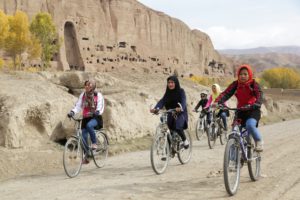
Mountain2Mountain is a recently established nonprofit that believes change can happen through the use of bikes. One of its biggest campaigns is women’s rights and equality for women in Afghanistan.

It is illegal for women to ride bikes in Afghanistan. However, bikes have long been a “symbol of freedom of mobility.” In the United States, they were used as such during the women’s suffrage movement of the early 1990s.

M2M was founded in 2006 by Shannon Galpin. In 2009, she became the fist woman to bike across Afghanistan. The goal of this mission was to “challenge perceptions of gender.” One of her biggest inspirations was the four years she worked in Kandahar prison. In this all women’s Afghan prison, Galpin found that women there lacked a voice. These women had passionate stories of struggle and injustice and Galpin wanted to help them be heard.

This inspired the creation of two M2M projects, Combat Apathy and Strength in Numbers. Combat Apathy is the activist wing of M2M and is an online platform where women and men can share their stories of hardship and triumph. Strength in Numbers, or SIN, is a campaign to create awareness and support for women on bikes.

There will be a summit this fall in Rome for SIN in which expansion to other countries will be attempted, as well as a solidarity ride. The project is also organizing U.S. based summer bike camps, which are aimed at young girls who are at risk or have experienced gender violence.

In Afghanistan, though, the biggest accomplishment for the SIN campaign is their support of the women’s cycling team. The project gives support to the team in the form of buying equipment, recruiting coaches, securing sponsorships, arraigning safe travel to and from training and financing regional traveling. SIN has even petitioned for the cycling team’s access as observers to the 2016 Olympics in Brazil, with further efforts to gain access to the 2020 Olympics in Tokyo.

An attempt at expanding the movement outside Kabul has also begun by starting the first women’s mountain biking team in the province of Bamiyan. The team is financed by SIN and given gear and clothing.

The press coverage and international media attention have helped raise the popularity of the cycling team and there has been evidence of growing national pride. This changing perception will help advance women’s rights in Afghanistan.

The goal of the Afghan women’s cycling team is to give women a chance to achieve freedom in an otherwise oppressive country. Cycling on the team is not just about exercise or confidence building for these women. Its about all Afghan women who can gain greater access to education and healthcare by riding bikes. Access to both leads to higher literacy rates and lower maternal mortality.

These women cyclist are extremely brave as they endure a lot of criticism and even violence for their actions: rocks are often thrown at them as they ride and they are insulted by passing cars.

One of the team members, Marjan Sidiqqi, said that, “They tell us that it is not our right to ride our bikes in the streets and such. We tell them that this is our right and that they are taking our right away. Then we speed off.” This is a bold thing to say in a country where many still believe that women who ride bikes dishonor their families and that women’s cycling is a moral crime slightly worse than adultery.

Mountain2Mountain is still in its infancy, so data on the nonprofit is hard to find. It has not yet been reviewed on charity network and not been completely evaluated by GuideStar. This does not mean it is illegitimate, only that attention should be paid to its development and individual and government donors should keep an eye out for possible support now or in future.

— Eleni Marino

Sources: Mountain2Mountain, Combat Apathy, CityLab, GuideStar
Photo: Mountain2Mountain

September 17, 2014
https://borgenproject.org/wp-content/uploads/borgen-project-logo.svg 0 0 Borgen Project https://borgenproject.org/wp-content/uploads/borgen-project-logo.svg Borgen Project2014-09-17 03:00:132024-05-27 09:21:44Mountain2Mountain: Bikes for Change
Activism, Advocacy, Global Poverty

Anti-Malaria Group Rallies on World Mosquito Day

Since 1897, August 20 has been a particularly important date for those in the developing world. On this day, British scientist Sir Ronald Ross made the breakthrough discovery that malaria, the deadly disease that kills 600,000 to one million people each year, was not caused by “bad air,” but rather by the female anopheles mosquito. His findings became the foundation for all scientific research and efforts to eradicate the widespread pandemic. And while institutions commemorate and celebrate Ross’s discovery with World Mosquito Day, anti-malaria groups perceive August 20 as a yearly reminder that the battle against mosquitoes continues.

Flash forward 117 years from 1897 and people are still dying from mosquitoes, with 3.4 billion people, or nearly half of the world’s population, at risk of malaria. According to the World Health Organization, there have been about 207 million malaria cases and an estimated 627,000 malaria-related deaths, particularly in poor countries in Africa. While virtually all of these deaths could be prevented by mosquito control and early treatment, malaria remains the fifth-leading cause of death from infectious diseases globally.

But since Ross’ discovery, increased malaria prevention and control measures have dramatically reduced the disease’s burden in many regions. Malaria mortality rates have fallen by 42 percent globally since 2000 and 49 percent in Africa, where 90 percent of the world’s malaria deaths occur. Cures and solutions such as artemisnin-based combination therapy drugs, insecticidal protection nets and indoor residual sprays have contributed to these decreased rates.

While people have been talking less about “malaria control” and more about “eradication,” it is clear that we are still far off from completely ridding the world of malaria parasites. But on World Mosquito Day, anti-malaria groups are organizing rallies to draw attention to the fight against malaria and empower those most at-risk to participate and take action.

In Cameroon, the NGO Malaria No More sent junior ambassadors to the country’s capital city to lead a raucous World Mosquito Day street rally. While some ambassadors dig out sewage trenches to prevent mosquitoes from breeding, others promote music, dancing and speeches to produce a celebratory atmosphere. Children are quizzed about malaria and given mosquito nets in exchange for right answers.

This is only a small part of Malaria No More’s efforts to diminish malaria outbreaks in Cameroon. In 2011, the organization launched NightWatch, a program that reminds Cameroonians to sleep under their mosquito nets through nightly television and radio advertisements, billboards featuring Cameroon’s celebrities and two hit songs about malaria by popular musicians.

Malaria No More also established a system to ensure that clinics are always supplied with malaria tests and treatments, known as SMS For Life. The initiative allows health workers to report stock levels of life-saving malaria medications before they run out to reduce the frequent shortages through simple cell phones.

A crucial role in Malaria No More’s mission to save lives from malaria in Cameroon and other African countries is advocacy. With cost-effective malaria interventions contributing to a 48 percent global decline in malaria deaths, the organization seeks to raise awareness and galvanize support among policymakers and businesses leaders for funding and policies needed to end the fight.

For Malaria No More, August 20 is another opportunity to increase recognition of the persistent disease and the millions that suffer from it. Olivia Ngou of Malaria No More claims that “maybe giving mosquitos as much publicity as the diseases they cause will help,” while encouraging other organizations and anti-malaria projects to draw attention to World Mosquito Day.

While we can celebrate how much progress we have made in the global battle with malaria, it is important to remember that mosquitoes will not become extinct any time soon.

– Abby Bauer

Sources: Global Post, Malaria No More, WHO
Photo: Blogspot

September 12, 2014
https://borgenproject.org/wp-content/uploads/borgen-project-logo.svg 0 0 Borgen Project https://borgenproject.org/wp-content/uploads/borgen-project-logo.svg Borgen Project2014-09-12 09:56:182024-05-27 09:21:42Anti-Malaria Group Rallies on World Mosquito Day
Activism, Health

Barbara Bush Advocates for Africa

Barbara Bush Advocates for Africa - The Borgen Project
While many recognize Barbara Pierce Bush for her legacy as the child and grandchild of two United States Presidents, the Yale graduate is carving a name for herself in the global health advocacy community. Having traveled several times to Africa in her adolescence, former first lady Barbara Bush was inspired by the trips and has dedicated her post-collegiate career to helping solve the global health crises on the continent.

Upon having seen the devastation of AIDS and malaria in Africa, Bush has followed a philanthropic path to help raise awareness and treat patients. Upon noting the large demand for medicines that were easily accessible and affordable in the U.S., Bush saw an opening for young professionals to be trained and to assist others.

As the CEO and co-founder of Global Health Corps, Bush has mobilized a series of health professionals to address global health inequalities. In conjunction with non-governmental organizations as well as national government health departments, Global Health Corps is addressing the challenges that poverty creates in addressing some of Africa’s most preeminent health crises.

All of the Global Health Corps Fellows are under the age of 30, and Bush is investing in and training a new generation of global health advocates. In the past five years alone, nearly 500 fellows have participated in the Global Health Corps as they partnered with local medical facilities in over 12 countries.

Though there are many medically trained professionals to assist in the field, Bush sees policy making to be another field of possible improvement. Though the Global Health Corps aligns with national governments, there is still room for improvement in terms of resource allocation and public assistance. A large percentage of the fellows work in various African nations, some are allied with partner organizations in the U.S. to help influence access to healthcare and change abroad.

— Kristin Ronzi

Sources: AARP, KTEP, Global Health Corps
Photo: Kansas City Public Media

September 9, 2014
https://borgenproject.org/wp-content/uploads/borgen-project-logo.svg 0 0 Borgen Project https://borgenproject.org/wp-content/uploads/borgen-project-logo.svg Borgen Project2014-09-09 04:00:492024-12-13 17:51:11Barbara Bush Advocates for Africa
Activism, Global Poverty, Women & Children, Women and Female Empowerment

Inner Mongolia: Changing China’s Views on Women

Inner Mongolia
In the northern Chinese province of Inner Mongolia, a recent conference was held by the Inner Mongolia Women’s Federation in the provincial capital. The topic of conversation was the role of women in the family and maintaining harmonious ties.

With the discussion taking place at a psychology center, psychologists provided an open dialogue about household relationships and engaged the women to openly discuss some problems and provide insight.

Though there are many who are considered homemaking women, the goal of the meeting was to provide insight, assistance and discussion around topics that previously had not been adequately discussed.

In recent months, Inner Mongolia has been in the forefront of equalizing opportunities for women. Along with having open dialogues about women’s interests in the capital, other events have focused on the professional development of women.

Though much of the Chinese agricultural business is dominated by men, women are becoming farming agents and spreading their professional wisdom with others. By including women in the conversation, the Chinese government is hoping to expand the potential of the agricultural business by accessing a greater population.

Though many of these local conferences are supported by women’s interest groups in the region, to improve domestic and professional conditions for women, Inner Mongolia is not alone. The dialogue in Inner Mongolia is reflective of a greater conversation in China as more women are entering the workforce and developing professional careers

With more conferences happening in large cities across China including Beijing, the recognition of women as resources for growth and development has influenced the way they are being acknowledged. While the dichotomy of women working professionally or staying home is still strong other ventures are emphasizing both roles.

These women’s interest groups are maximizing the opportunities of every day women both in Inner Mongolia and the rest of China. The projected goal of these endeavors is to help better economic conditions for women and enable greater social equality both in the home and in their professions.

– Kristin Ronzi

Sources: Women of China, Catalyst
Photo: Little Star


10 Facts about Poverty in China


September 6, 2014
https://borgenproject.org/wp-content/uploads/borgen-project-logo.svg 0 0 Borgen Project https://borgenproject.org/wp-content/uploads/borgen-project-logo.svg Borgen Project2014-09-06 12:00:142024-05-27 09:21:38Inner Mongolia: Changing China’s Views on Women
Activism, Global Poverty

Africa Gathering and Sustainable Collaboration

Africa Gathering
In the African savannah, the baobab tree is a symbol of life, a sign of positivity in a dry landscape where very little other life can survive. The baobab tree is also a place where people come to share knowledge, discuss their thoughts and learn from one another; it is the meeting point for people from different walks of Africa.

The Africa Gathering movement draws its inspiration from the baobab tree, and brings together individuals with very different career focuses.

From writers to activists, techies to artists, the organization creates a place where passionate innovators can share their ideas and celebrate their dreams for a positive Africa. It provides a network for creative individuals to collaborate and share ideas on how technology can transform the continent on both small and large scales.

In its sixth year, Africa Gathering draws on inspiration from change from within its own country through the methods of planting seeds of innovation in the continent’s young men and women. By increasing visibility and allowing anyone who has an idea to share it, the organization hopes to mobilize people for change and create a sustainable Africa.

Africa Gathering frequently hosts events to engage supporters and allow African thinkers to share their ideas on technology and sustainable development. In celebration of its five-year anniversary in 2013, the movement hosted a conference with BBC Africa that focused on the increasing number of African women in the technology sector.

The conference focused on how women taking the lead in developing technological solutions could solve problems. While there was no anniversary party this year, leaders from Africa Gathering traveled to Geneva, Switzerland for the Africa CEO 2014. The group debated on the increasingly competitive nature of Africa and the delocation of foods from where they are manufactured.

“In my short but very entertaining life, there have been the few moments that have created great change – Having a child at a young age, discovering my life’s purpose, and attending the Africa Gathering last year,” said Tonisha Tagoe, a film producer and artist. “My reason for attending was as simple as a Tweet, but the results have been life changing. Africa has got a lot to offer to the world, but most importantly to Africans. It is beautiful to see such focus, determination, and family spirit fused into one space at this event.”

– Julia Thomas

Sources: The Tree of Life, Africa Gathering, The Guardian
Photo: National Geographic

September 6, 2014
https://borgenproject.org/wp-content/uploads/borgen-project-logo.svg 0 0 Borgen Project https://borgenproject.org/wp-content/uploads/borgen-project-logo.svg Borgen Project2014-09-06 04:00:032020-07-16 22:41:09Africa Gathering and Sustainable Collaboration
Activism, Advocacy, Education, Global Poverty

#GirlWithABook

Last month, the creators of #GirlWithABook, a project advocating for girl’s education, had the opportunity to meet Malala Yousafzai, their inspiration. #GirlWithABook, the hashtag coined by college students Olivia Curl and Lena Shareef, has caught the attention of leaders and advocates worldwide.

Students at American University in Washington, D.C., Curl and Shareef shared the world’s reaction of astonishment and disgust after 14-year-old Pakistani Yousafzai was attacked on her way home from school in October 2012.

Malala Yousafzai survived after she was shot in the head by the Taliban, and when United Nations Secretary-General Ban Ki-moon admonished the Taliban in an address to the world, his words stuck with the two American girls. Ki-moon explained that what frightens terrorists the most is “a girl with a book.”

Curl and Shareef decided to start a campaign based on those words. They sent out a call to action, asking their female friends and family to pose for photos with books and flood social media with the pictures accompanied by the hashtag #GirlWithABook.

“Stand with Malala Yousafzai and show the Taliban that there’s no way they can stop us girls from getting an education,” their website reads. “Post a picture of yourself reading a book or holding a sign of support.”

Just a month after the project had begun, hundreds of photos flooded in from notable figures around the world. Ki-moon is pictured reading to his granddaughter, violinist Midori sent in a photo and even scientist Jane Goodall participated in the campaign.

The overwhelming response from women’s education supporters worldwide prompted Curl and Shareef to compile all the photos into a book. The Secretary-General presented Yousafzai with the book on her 16th birthday, when she visited the United Nations headquarters in New York.

A year has passed since #GirlWithABook was published, but the excitement over the movement continues.

Recently, Curl and Shareef were invited to participate in a conversation about the Millennium Development Goals as a part of the U.N.’s 500 days of action. On August 18, the girls spent the day at United Nations headquarters, along with 500 other young people.

They had the opportunity to meet face to face with Yousafzai and her father, who showered the girls with words of encouragement to continue their advocacy efforts.

Lena Shareef speaks on behalf of her partner when she describes the future of #GirlWithABook: “If Malala wants us to keep going, then there’s no question that we will.”

– Grace Flaherty

Sources: UN
Photo: UN

September 4, 2014
https://borgenproject.org/wp-content/uploads/borgen-project-logo.svg 0 0 Borgen Project https://borgenproject.org/wp-content/uploads/borgen-project-logo.svg Borgen Project2014-09-04 08:00:262024-06-05 01:58:08#GirlWithABook
Activism, Global Poverty

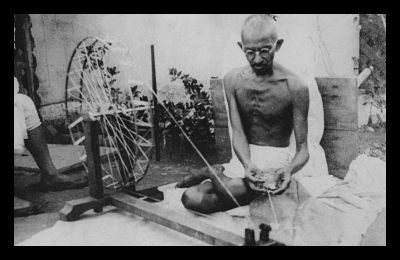
How Gandhi Utilized Advocacy

Gandhi Utilized Advocacy
Martin Luther King Jr. once referred to Gandhi’s philosophy as “the only morally and practically sound method open to oppressed people in their struggle for freedom.” Mahatma, or “Great Soul,” Gandhi was an advocate for human rights and is largely known for initiating the idea of nonviolent resistance.

Gandhi’s journey as an advocate began in South Africa. As a young legal adviser, he saw firsthand the damage caused by race-oriented laws and class-based oppression.

This is when Gandhi began to teach his philosophy of passive resistance. Gandhi’s organization of the Indian community in South Africa began widespread social change.

When Gandhi returned to India in 1915, he began working as an advocate for various local struggles concerning working conditions. Four years after his arrival home, British authorities passed the Rowlatt Acts, which allowed imprisonment without trial of any Indian accused of sedition.

Gandhi advocated through a national day of fasting and a refusal to work. He termed this as an act of Satyagraha, or love-force.

Gandhi eventually transformed the Indian National Congress into a large movement committed to nonviolent resistance in support of India’s independence, otherwise known as the non-cooperation movement.

As a consequence of his activism, he was arrested in March of 1922 and served two years for sedition.

Eight years later, in 1930, Gandhi organized 80 volunteers for a 200-mile march to the sea where the volunteers made salt out of seawater in protest of British Salt Laws. The movement eventually grew to 60,000 Indians who were all arrested and imprisoned for their defiance until Gandhi negotiated a truce with representative Lord Irwin.

After Irwin left office and his successor continued the oppressive measures taken against Indians, Gandhi began his movement once again and was immediately imprisoned. In prison, Gandhi began fasting in protest of a new Indian constitution, which was to include different representatives for the “untouchables” or members of India’s lowest level on the caste system.

His fasting gained international attention and was the precursor to the 1947 resolution, which made the discriminatory practice illegal. Britain left India that same year. Gandhi had won his country’s independence back, without the use of violence.

Gandhi’s approach to advocacy inspired many leaders, from Nelson Mandela to Martin Luther King Jr. The Dalai Lama, a follower of Gandhi, expressed, “As Mahatma Gandhi showed by his own example, nonviolence can be implemented not only in politics but also in day-to-day life. That was his great achievement. He showed that nonviolence should be active in helping others.”

– Christopher Kolezynski

Sources: Stanford University, New York Times, MSN News, The Borgen Project
Photo: Wikiphotos

August 30, 2014
https://borgenproject.org/wp-content/uploads/borgen-project-logo.svg 0 0 Borgen Project https://borgenproject.org/wp-content/uploads/borgen-project-logo.svg Borgen Project2014-08-30 12:00:252024-06-05 01:58:07How Gandhi Utilized Advocacy
Activism, Advocacy, Global Poverty

History of Advocacy 101

History of Advocacy
John Wilkes, a man from England born in the 18th century, is credited as the forefather of modern advocacy. Wilkes was critical of the Treaty of Paris that ended the Seven Years War and was imprisoned for libel shortly thereafter, although he was later acquitted. After Wilkes’ act of defiance, a pro-abolition movement arose in England, effectively ending slavery in England.

The beginning of the 19th century was relatively quiet, but in the middle of the century, a philosopher coined the term social movement. The term was only used to describe relatively smaller events at the time.

Around the turn of the century, advocacy began to make progress. The socialist movement and the labor movement were the most popular, and were soon to be the model of contemporary advocacy. Out of these movements, the communist and democratic parties were born.

Following World War I, there was a renewed push for activism. This period led to a new classification of groups—the new social movements. The post-industrial economy gave way to a large number of groups, including women’s rights, gay rights, civil rights, the peace movement and the environmentalist movement. These movements stayed fairly static in terms of organization. More groups, such as the anti-nuclear movement, joined toward the middle of the century.

With the advent of the television, advocacy began to see incredible progression, which only foreshadowed the contemporary movement. The 1960s, in particular, were heavily influential, as civil rights took center stage.

The next step occurred around the 1990s. This period marked the era of global social activism, spurred on by the rise of the Internet. E-mail replaced postal mail and e-bulletin boards replaced traditional ones. The transition from analog to digital communication proved to be more effective in gathering support and more effective in increasing awareness. Groups that once couldn’t afford traditional publishing began to use the web as a platform for their activism.

Beyond Internet activism is the rise of social media and the role it plays in the history of advocacy. Popular social networks like Facebook and Twitter have begun to be utilized as platforms for advocacy. Sites like these allow people to connect and interact in ways that were previously impossible.

– Andrew Rywak

Sources: University of Michigan, Mashable, Academia.edu, The Borgen Project
Photo: GuardianLV

August 29, 2014
https://borgenproject.org/wp-content/uploads/borgen-project-logo.svg 0 0 Borgen Project https://borgenproject.org/wp-content/uploads/borgen-project-logo.svg Borgen Project2014-08-29 03:00:142024-05-27 09:21:35History of Advocacy 101
Page 30 of 56«‹2829303132›»

Get Smarter

  • Global Poverty 101
  • Global Poverty… The Good News
  • Global Poverty & U.S. Jobs
  • Global Poverty and National Security
  • Innovative Solutions to Poverty
  • Global Poverty & Aid FAQ’s
Search Search

Take Action

  • Call Congress
  • Email Congress
  • Donate
  • 30 Ways to Help
  • Volunteer Ops
  • Internships
  • Courses & Certificates
  • The Podcast
Borgen Project

“The Borgen Project is an incredible nonprofit organization that is addressing poverty and hunger and working towards ending them.”

-The Huffington Post

Inside The Borgen Project

  • Contact
  • About
  • Financials
  • President
  • Board of Directors
  • Board of Advisors

International Links

  • UK Email Parliament
  • UK Donate
  • Canada Email Parliament

Get Smarter

  • Global Poverty 101
  • Global Poverty… The Good News
  • Global Poverty & U.S. Jobs
  • Global Poverty and National Security
  • Innovative Solutions to Poverty
  • Global Poverty & Aid FAQ’s

Ways to Help

  • Call Congress
  • Email Congress
  • Donate
  • 30 Ways to Help
  • Volunteer Ops
  • Internships
  • Courses & Certificates
  • The Podcast
Scroll to top Scroll to top Scroll to top