• Link to X
  • Link to Facebook
  • Link to Instagram
  • Link to TikTok
  • Link to Youtube
  • About
    • About Us
      • President
      • Board of Directors
      • Board of Advisors
      • Financials
      • Our Methodology
      • Success Tracker
      • Contact
  • Act Now
    • 30 Ways to Help
      • Email Congress
      • Call Congress
      • Volunteer
      • Courses & Certificates
      • Be a Donor
    • Internships
      • In-Office Internships
      • Remote Internships
    • Legislation
      • Politics 101
  • The Blog
  • The Podcast
  • Magazine
  • Donate
  • Click to open the search input field Click to open the search input field Search
  • Menu Menu

Archive for category: Politics

Aid, Global Poverty, Politics

Agencies of the State Department Fighting Poverty Abroad

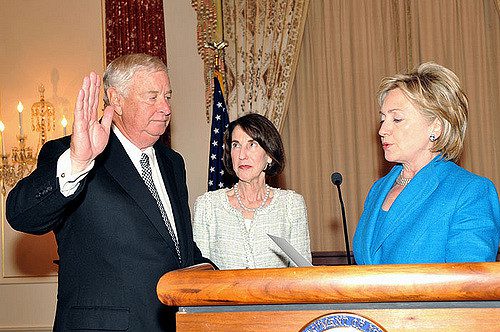
Fighting Poverty AbroadThe vast apparatus of the U.S. State Department can make it an overwhelming organization to understand. However, by assessing its individual offices, it becomes clear how vital these agencies are to the State Department fighting poverty abroad. These are some of the most prominent branches of the State Department and what they do to alleviate global poverty.
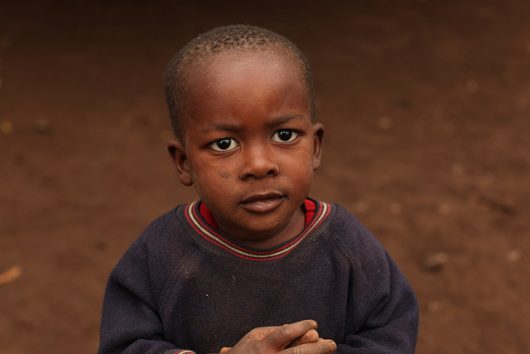
The Bureau of African Affairs (BAA) has operated for decades, promoting democracy, human rights and economic ties beneficial to both the U.S. and its African partners. Democratic transitions in unstable nations have been assisted and coordinated in conjunction with the BAA. The Africa Growth and Opportunity Act, coordinated by the agency, contributes to the economic development that has seen millions lifted out of poverty in Africa.

The diplomacy conducted through the BAA highlights the importance of strong relations in allowing poverty alleviation programs to be deployed. By ensuring the cooperation of host nations, the State Department has been able to implement the Power Africa and Feed the Future programs. This is supported by the Global Health Initiative, aimed at eradicating debilitating diseases on the continent, with around 63 billion now invested in the project.

The Office of Global Food Security is another branch of the State Department that contributes to poverty alleviation. As with the BAA, it utilizes its diplomatic toolbox to put in place development programs aimed at eradicating poverty.

The office is particularly focused on agricultural development and promotes employment and entrepreneurship opportunities in agricultural sectors to end famines and establish more secure rural economies.

Aside from boots-on-the-ground agencies, the Bureau of International Organization Affairs is vital for developing and sustaining relationships with important organizations in the fight against global poverty. This office uses diplomacy to strengthen ties with the U.N. and its auxiliaries (such as UNICEF) in concert with promoting U.S. leadership in democracy promotion and poverty reduction. Despite receiving scant media attention, U.S. cooperation with Amnesty International and the Red Cross depends on the IO Bureau.

These agencies of the State Department fighting poverty abroad emphasize how important diplomatic skills are for furthering poverty alleviation efforts. In order for the State Department to continue to promote American leadership in this area, its budget must be preserved.

– Jonathan Riddick

Photo: Flickr

September 10, 2017
https://borgenproject.org/wp-content/uploads/borgen-project-logo.svg 0 0 Borgen Project https://borgenproject.org/wp-content/uploads/borgen-project-logo.svg Borgen Project2017-09-10 01:30:412024-05-28 00:16:10Agencies of the State Department Fighting Poverty Abroad
Developing Countries, Global Poverty, Politics

What Do Most Developing Countries Have in Common?

What do most developing countries have in common that most developed countries do not? Global poverty is a complex issue that involves many historical, regional and social factors. One important factor that most developing countries have in common is a history of agricultural dependence.
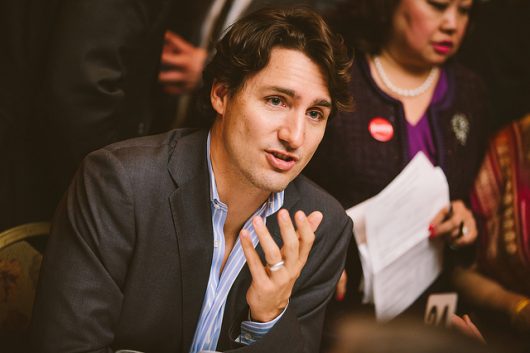
Some regions, like Latin America, are in prime geographical positions for growing important foods such as produce, sugar and cacao. Countries in these farming-friendly areas have historically been colonized and exploited by industrialized nations who are unable to grow these crops in their own countries. As a result of this historical process, many agricultural countries have been devastated by foreign influences in their countries and overzealous farming practices on their lands.

Agricultural countries are also challenged by their dependence on many factors beyond their control. Uncontrollable issues such as the environment disproportionately affect those whose livelihoods come from the natural world. The emphasis on producing certain crops for the rest of the world also limits these countries’ agency in the global market. When the international demand for a product such as sugar decreases, countries that focus on sugar production are helpless to find other sources to bolster their economies.

A focus on farming can also limit these nations’ abilities to develop infrastructure and diversify their economies. Agricultural work requires a lot of manpower but little education. In agricultural countries, the educational levels and human capital are not always sufficient to advance beyond the production of a few crops.

Understanding the answer to the question of what do most developing countries have in common can help these countries escape global poverty. Industrialized nations can help their agricultural counterparts through strategy and technology. For example, researchers in the United States can help farmers in Bangladesh by equipping them with the best irrigation practices, most cost-effective tools and highest yield crops.

Climate change is another important area that those in developed countries should focus on in order to help their developing counterparts. Addressing the impact of climate change is a priority for all, but farmers in poor countries feel its effects most strongly.

Foreign aid from wealthy nations is also an important way for developing countries to diversify beyond agriculture. With start-up funding from rich countries, more agricultural nations can follow in the footsteps of rapidly developing countries such as India and China.

Agricultural countries feed the world, yet many of them cannot meet their own people’s needs. Understanding the link between agriculture and poverty is important for dispelling myths about why certain countries prosper while others struggle. Realizing what most developing countries have in common is crucial to truly helping these populations emerge beyond the developing world.

– Bret Anne Serbin

Photo: Flickr

September 10, 2017
https://borgenproject.org/wp-content/uploads/borgen-project-logo.svg 0 0 Borgen Project https://borgenproject.org/wp-content/uploads/borgen-project-logo.svg Borgen Project2017-09-10 01:30:392020-07-09 05:59:14What Do Most Developing Countries Have in Common?
Government, Politics, Politics and Political Attention

How to Become a Politician: 4 Crucial Steps to Success

How to Become a PoliticianAre you looking into how to become a politician? Living the life of a politician can be a very stressful and demanding job. However, the profession can also be very rewarding and eye opening.

To anyone who is interested in becoming a politician- whether local or federal government- be ready for some tough days and long nights in the office. Before you are guaranteed the coveted seat of a politician, though, it takes a bit of preparation. Here are a few tips on how to become a politician.


Becoming a Politician


1. Become Educated: Although it is not required that certain politicians hold a college degree – one in 20 members of Congress doesn’t – it is a good idea to get as much schooling as possible.

Not only will constituents like to see a degree on a candidate’s resume, but the things learned in school can actually be helpful for planning a legislative and governmental future. The other aspect of “becoming educated” is studying up on legislature, government policies and voter patterns.

Politics takes a dedicated person willing to devote their whole being to their campaign. Learning the ropes of government is a bit more involved than merely knowing how to recite the Pledge of Allegiance.


2. Acquire Funding: Running for a position in politics is also a money game. Printing campaign posters, hosting charitable events, paying your campaign staff and a laundry list of other costs add up to a hefty bill just to run for a position, let alone hold one.

It is also important to have a steady job before running for office. This allows you to then have some money in the bank and establish resources or even potential voters. U.S. news stated that, “Running for office is a job in itself that no one will pay you for.”

Having friends and business connections is another important part of running for office. Connections with prominent people will allow your campaign to rise in popularity.

Be cautious of how much you spend on your campaign – you want to be able to survive afterward if you don’t end up winning.


3. Be Friendly: When they step in the polling booth, most voters do not actually know exactly which candidate stands for what issues. However, they will remember a candidate’s behavior and whether or not he or she was rude during an interview.

Cordiality and humbleness are a couple of key characteristics that attract voters. Making connections with voters so that they remember you and what you stand for could be the deciding factor between you and a competent running mate.


4. Don’t Let Your Feelings Get Hurt: Politics can be a harsh field that few thrive in. There will be hard times throughout your campaign, but knowing that you could help the lives of thousands of people is a great reward to the hardships you endure as a hopeful politician.

These may sound like some harsh pieces of advice on how to become a politician, but it is only because the politician’s role is a very important one in the United States. These people make, enforce and interpret the laws.

No matter the obstacles, if becoming a politician is your life’s goal then do not let these words, or others, deter you from becoming the next President of the United States (or a Superintendent of Schools, if that is what you so desire). Instead, use them as warnings to avoid road blocks on your journey to political change.

– Sydney Missigman

Photo: Flickr

August 29, 2017
https://borgenproject.org/wp-content/uploads/borgen-project-logo.svg 0 0 Borgen Project https://borgenproject.org/wp-content/uploads/borgen-project-logo.svg Borgen Project2017-08-29 01:30:382020-06-25 09:38:50How to Become a Politician: 4 Crucial Steps to Success
Global Poverty, Politics, Women and Female Empowerment

Increasing Political Participation for Women in Iran

Women in IranOn May 19th this year, Iranians held presidential and local elections in their country. This particular election saw an increase in registered women candidates, along with the number of elected women officials, bringing hope and giving voice to women in Iran at both the national and local level.

In some parts of the country, there was a 34 percent decrease in the number of women elected compared to 2013; however, although the number decreased in 16 provincial capitals, 3 remained the same, while 11, including Tehran, saw increases in women being elected to councils. Iran’s Sistan-Balochistan province—an underdeveloped and impoverished area in the southeast of Iran with the highest percentage of illiterate girls and women in the country—saw a total of 415 women elected to office. In a village called Afzalabad located in the province’s Khash district, all of the 10 elected candidates were women.

Some of the concerns that women in Iran campaigned on included women’s civic engagement, citizens’ rights, employment, education, health and social security and welfare.

Recently, Iran’s newly reelected president Hassan Rouhani has been under pressure to appoint female ministers to his cabinet. During his last term, his all-male list of ministers disappointed his followers, even though he appointed a number of women to vice-president positions. Despite this, Shahindokht Molaverdi, Rouhani’s vice-president for women and family affairs, has won support among women’s rights advocates in Iran.

Ghonchech Ghavami, a leading women’s rights activist based out of Tehran, has said that “this structure has eliminated women on the excuse of meritocracy and experience but it looks like that main criteria for them is being male. That’s why appointing female ministers is symbolically important and would send a powerful signal in a country where politics still originates from men.”

One may find it surprising, though, that Iran as a whole has near-universal female literacy: women make up the majority (60 percent) of university students, as well as the majority of graduates earning degrees in science (68 percent). Furthermore, women in Iran are consistently outperforming their male counterparts.

Workplace biases in general are very much alive for women in Iran, and these biases often compel employers to hire male workers that are of identical or even lesser qualifications than their female counterparts. Although women in Iran have been as whole increasing their political participation within their government, they clearly still have a long way to go before achieving true gender equality.

– Sara Venusti

Photo: Flickr/span>

August 29, 2017
https://borgenproject.org/wp-content/uploads/borgen-project-logo.svg 0 0 Borgen Project https://borgenproject.org/wp-content/uploads/borgen-project-logo.svg Borgen Project2017-08-29 01:30:032024-06-04 01:08:23Increasing Political Participation for Women in Iran
Government, Politics

Understanding How to Run for Office in the United States

How to Run for Office
If you feel like you want to make more of an impact in the political sphere outside of advocacy and voting, you may want to consider running for office. There are around 520,000 elective offices in the United States, meaning that more than one out of every thousand people in the U.S. are an elected official.

All citizens of the U.S. have the right to run for political office. If eligible, any average citizen can play a role in the government. However, not many Americans are taking advantage of this right. In 2012, about a third of the candidates running for a state legislative positions ran unopposed.

Many people do not run because they are not sure how to do so. To begin, you can use Run For Office’s website to search for public positions available near you. After you find the right fit, the next step is to run a campaign.

Here are some tips on how to run for office in the United States:

  1. Do plenty of research beforehand. Find out the requirements for the office such as age and residency. Understand how long the term is and what time commitment is required. Find out how much money is generally spent on successful campaigns. Once you understand the position and you feel comfortable that you can fulfill the requirements, you can begin planning your campaign.
  2. Running a campaign is a great deal of work, so you will need a good team behind you. Decide whether you want to be volunteer-based or whether you can hire professional help. Unless you plan on paying for everything, you’ll need to rely on others for fundraising as well. Start with family and friends and build a database of donors and supporters.
  3. In order to make your campaign official, you will need to file for office. You can figure out what the requirements are by filing a seat through your town clerk or Secretary of State. Make a comprehensive list of all the paperwork that needs to be completed, as well as all the deadlines so you stay on track. Look into the financing laws as well.
  4. Decide what you are running for – pick three issues your campaign is going to focus on and what you would want to work towards if you become elected. Then look at your own background and skill set and see how they will assist you in accomplishing your goals. Issue a profile for your campaign, then create an identifiable branding and message that will help people remember you and your views.
  5. Once you feel prepared, announce your intention to run. Preferably, do so with much press. Then you can begin to actively campaign. Go door to door. Print lawn signs. Keep up-to-date social media accounts. Go to events and get your name out there. Prepare a short 30-second appeal and a three-minute speech regarding your campaign and why you are running. Do what you can to publicize yourself and gain support.

Even if you have never held a political position, once you know how to run for office you have the power to do so. If you want to see changes made, if you want to do more for those who don’t have a voice, don’t stand around waiting – run for office.

– Hannah Kaiser

Photo: Unsplash

August 26, 2017
https://borgenproject.org/wp-content/uploads/borgen-project-logo.svg 0 0 Kim Thelwell https://borgenproject.org/wp-content/uploads/borgen-project-logo.svg Kim Thelwell2017-08-26 01:30:042020-06-24 10:37:51Understanding How to Run for Office in the United States
Global Poverty, Human Rights, Politics

Human Rights in Malawi

Human Rights in MalawHuman rights in Malawi have gone through periods of both exacerbation and improvement. The new constitution that was ratified in 1994 – which included a section specifically dedicated to human rights – guaranteed every individual’s right to life, right to be protected from genocide, entitlement to education and other basic rights. With the adoption of this constitution, multi-party democracy was introduced to the country’s government, which led many to expect noticeable improvement of human rights in Malawi.

Unfortunately, toward the end of the presidency of Bingu wa Mutharika, who died while in office in 2012, the situation worsened. As stated in the U.S. State Department’s 2010 Country Report on Human Rights Practices, numerous cases of the state’s violation of human rights were reported, such as: the security forces killing innocent individuals; torture, sexual abuse and other inhumane treatment of prisoners; and arbitrary arrest or detention.

Fortunately, inauguration of the new president Joyce Banda in April 2012 brought about positive changes to the country. While her attempt to overturn the law banning homosexuality turned out unsuccessful in the end, she did manage to repeal a section of Malawi’s penal code which banned all publication not to be deemed in the public interest. Moreover, she announced that she would arrest the infamous Sudanese President Omar Al-Bashir – who was convicted of genocide – if he entered the Malawian territory. This helped her gain favor among international donors and improved Malawi’s international relations.

Although human rights in Malawi have improved, problems do still exist. For instance, since November 2014, people with albinism have faced an increased risk of being abducted or killed in murders associated with witchcraft. On March 9, 2017, four men attempted to drill through the house of Gilbert Daire, former president of the Association of the People with Albinism, while he was asleep. Highlighting the lack of protection and safety for people with albinism in Malawi, Amnesty International’s Regional Director for Southern Africa, Deprose Muchena, strongly suggested that the “Malawian authorities must end this cycle of impunity of perpetrators of these crimes.”

– Minh Joo Yi

Photo: Flickr

August 24, 2017
https://borgenproject.org/wp-content/uploads/borgen-project-logo.svg 0 0 Borgen Project https://borgenproject.org/wp-content/uploads/borgen-project-logo.svg Borgen Project2017-08-24 01:30:182020-06-19 08:44:46Human Rights in Malawi
Developing Countries, Global Poverty, Politics

The Threat of Lake Victoria’s Failing State

Lake Victoria's Failing StateResponsible for over 35 million lives, Lake Victoria is a vital resource for the people of Kenya, Tanzania and Uganda. However, overfishing, pollution and mismanagement threaten its existence. The threat of Lake Victoria’s failing state is a danger to those who have built their livelihoods around it. Fortunately, there are multiple initiatives being implemented by humanitarian organizations to restore the lake and the people who live by it.

After coffee, Uganda’s second biggest export is fish. Lake Victoria gained international attention the 1980s when the native species of Nile perch and tilapia came into high demand. This fishing boom acted as an economic boost for fishermen, but it costs the lake severely.

Unfortunately, whilst the fishing boom was in full motion, the government’s environmental policies had yet to progress. Even when laws were implemented, they were scarcely enforced. Unregulated pollutants from agricultural run-off, sewage and industrial waste became a large contributor to Lake Victoria’s failing state.

With the pollution in the lake suffocating fish, desperate fishermen have resorted to practices that deplete the lake even more. Illegal fishing methods, such as using an insecticide as poison, have led to the destruction of breeding grounds. Fishermen use these techniques in order to catch more fish but add to Lake Victoria’s failing state.

While the average weight of a perch was 50 kilograms in 1980, it is now just 10 kilograms. Even more, about 300 smaller species have gone extinct. With the fishing industry in Lake Victoria producing about $640 million a year, it is vital to the 35 million who have built their livelihoods on the lake. However, it is being threatened by the environmental impact of pollutants.

Fortunately, there are many initiatives working to help both the fishermen and the lake. The World Bank started The Lake Victoria Environmental Management Project as an effort to both restore the lake’s environmental status and improve the lives of those who depend on it. One program this project is working on is providing income to fishermen through fish farms to alleviate the pressure on Lake Victoria.

This crisis occurring in Lake Victoria can still be solved. Until fishermen are educated on their impact on the lake and practices becomes more regulated, the problem will continue to grow.

– Kelly Hayes

Photo: Pixabay

August 22, 2017
https://borgenproject.org/wp-content/uploads/borgen-project-logo.svg 0 0 Borgen Project https://borgenproject.org/wp-content/uploads/borgen-project-logo.svg Borgen Project2017-08-22 01:30:162017-08-19 10:16:31The Threat of Lake Victoria’s Failing State
Global Poverty, Politics

Operation Good Neighbor: Syrians and Israelis Together

Operation Good NeighborUnder the cover of darkness, Syrian children and their adult chaperones cross the border into Israel. They are greeted by the Israel Defense Forces (IDF), but not with guns or bombs. They are greeted with medical care and food. This is Operation Good Neighbor.

The beginnings of this aid project started in 2013, when injured Syrians arrived at the Israeli border. The government made the decision to give them treatment. Since then, 4,000 Syrians have been treated. Operation Good Neighbor, started in 2016, expands this humanitarian initiative to a larger scale. The IDF serves around 200,000 Syrian residents who live in southwestern Syria. These Syrians are close to the Syrian-Israeli border, along the Golan Heights. One-third of them are displaced refugees and half of them are children. They all have been devastated by the Syrian civil war.

The IDF not only gives out medical care, it has begun supplying other necessities as well. The list is expansive and includes medicines like painkillers, anesthetics and insulin, 450,000 liters of fuel for heating, baking and energy for water wells, generators, water pipes, equipment for schools, 12,000 containers of baby formula, 1,800 diaper packages, 12 tons of shoes and 55 tons of clothing for cold weather.

In a statement, the IDF explained its two reasons for helping Syria. The first was the obvious “moral imperative.” The second was more nuanced. It contended that “the aid will ultimately create a less hostile environment across the border.” This security would “lead to improved Israeli security.” These two reasons are both compelling arguments for providing aid to Syria.

Operation Good Neighbor becomes more incredible after considering the historical Israeli-Syrian animosity. Currently, Syria and Israel are technically in a state of war. Syrians have historically been taught to resent Israel and vice-versa. But citizens on the ground in Israel and Syria have found ways to look past their history of enmity. In fact, Israeli citizens have been pressuring Israel’s government to give more aid to Syria for years.

Syrian victims bear striking resemblance to Jews displaced by tyrannical regimes throughout history. Gadi Eizenkot of the IDF puts it best: “I think this [Operation Good Neighbor] is our basic obligation as neighbors and as Jews.”

Being a good neighbor means watching out for everyone around you, even if they don’t look like you. It means treating others how you would like to be treated. It means reaching out, with a helping hand, when someone close to you is hurting. With this in mind, it becomes clear that Operation Good Neighbor is aptly named and that the work that it’s doing is indispensable.

– Adesuwa Agbonile
Photo: Flickr

August 20, 2017
https://borgenproject.org/wp-content/uploads/borgen-project-logo.svg 0 0 Borgen Project https://borgenproject.org/wp-content/uploads/borgen-project-logo.svg Borgen Project2017-08-20 01:30:392024-12-13 17:58:26Operation Good Neighbor: Syrians and Israelis Together
Global Poverty, Politics

On the Main Causes of Poverty in North Korea

Causes of Poverty in North KoreaNorth Korea, the only country in the world which still adopts Stalinist principles, has long been one of the most impoverished countries in the world. Recently, it scored 28.6 in the 2016 Global Hunger Index, a level which the International Food Policy Research Institute classified as “serious.” A report published by the Korea Institute for National Unification (KINU) in 2013 estimated that about half of North Korea’s 24 million lives in “extreme poverty,” who are “severely restricted in access to fuel for cooking and heating.”

The two primary causes of poverty in North Korea are as follows:

Climate and geography
North Korea’s climate is less suitable for agricultural production than that of South Korea. Northern and northwestern winds that blow from Siberia cause the winters in North Korea to be bitterly cold, often involving heavy snow storms. This type of weather is particularly harsh in the mountainous regions in the north, contributing to the relative lack of arable land in North Korea. Due to the cold temperatures, single cropping is usually practiced in the north, while double cropping is possible in the south where winters are less severe.

Because of the country’s mountainous terrain, the regime has sought to increase agricultural production mainly through double cropping, rather than through expanding the cultivable area. However, due to factors such as short cropping season, prolonged and harsh winter, and uncertainty of the spring weather, the results have often been disappointing.

Despotic regime
Another one of the causes of poverty in North Korea is the despotic regime succeeded by the Kim family. During the 1980s, the North Korean regime embarked on a radical economic policy of self-sufficiency known as “juche.” This policy wreaked havoc on the country’s economy, especially after the collapse of the Soviet Union in 1991, after which the country could not import cheap fuel, its industrial base was fractured and its production of fertilizer decreased.

North Korea’s provocations on the international stage, such as the shelling of the South Korean island in 2010 and repeated nuclear tests, also resulted in numerous sanctions by the U.N., which restricted the amount of humanitarian aid going into North Korea.

These are the main causes of poverty in North Korea. Whether North Korea will be able to escape from poverty will heavily depend on the international community’s efforts, as well as the regime’s willingness to adopt open-market reforms, just as China did in the late 1970s.

– Minh Joo Yi

Photo: Flickr

August 16, 2017
https://borgenproject.org/wp-content/uploads/borgen-project-logo.svg 0 0 Borgen Project https://borgenproject.org/wp-content/uploads/borgen-project-logo.svg Borgen Project2017-08-16 01:30:392020-06-12 08:50:57On the Main Causes of Poverty in North Korea
Global Poverty, Politics

Facts and Figures of North Korea

Facts and Figures of North Korea

Hidden behind the tensions of military bluster between the U.S. and North Korea lies a sad and often overlooked reality: North Korea is an incredibly impoverished country.

The conflict on the Korean peninsula can be traced back to when Japan controlled Korea till 1910. After the Japanese lost in World War II, the peninsula was divided between a communist northern half and a democratic southern half.

Tensions between the north and south erupted into war in 1950. The U.S. led a United Nations coalition to support the south; China was the principal ally of the north. The war ended in a stalemate with the current division becoming a demilitarized zone. North Korea has languished since, relying heavily on outside aid.

Most of the developed world stopped sending monetary aid to North Korea in 2009. South Korea ended aid in 2010 due to conflicts with the incoming government of Kim Jong Un.

Much of North Korea’s poverty problem stems from government spending, or the lack thereof. Most of the country’s budget is allocated to military and defense spending. This means that most of North Korea’s budget is not invested in its people.

This lack of aid has impacted North Korea’s investment in education, health services and infrastructure.

The average education level for a North Korean is only 11 years. The average annual income is only $1300. These disparities stem from the government’s sole interest in military spending, and its lack of interest in its people. These facts and figures of North Korea illustrate that the impoverished Asian nations strongly needs foreign aid, as well as restructuring its own budget, to combat its extreme poverty.

In the interest of its citizens, North Korea could decrease spending on its military and defense program. This could increase international confidence in the country’s financial and political system, therefore increasing foreign aid that could be used for basic services for its populace.

Until the North Korean government focuses on its people instead of its military, and makes serious efforts to combat these disastrous poverty-related facts and figures of North Korea, it will continue to be an impoverished nation.

– Raymond Terry

Photo: Google

August 13, 2017
https://borgenproject.org/wp-content/uploads/borgen-project-logo.svg 0 0 Borgen Project https://borgenproject.org/wp-content/uploads/borgen-project-logo.svg Borgen Project2017-08-13 07:30:282024-05-27 23:53:56Facts and Figures of North Korea
Page 12 of 17«‹1011121314›»

Get Smarter

  • Global Poverty 101
  • Global Poverty… The Good News
  • Global Poverty & U.S. Jobs
  • Global Poverty and National Security
  • Innovative Solutions to Poverty
  • Global Poverty & Aid FAQ’s
Search Search

Take Action

  • Call Congress
  • Email Congress
  • Donate
  • 30 Ways to Help
  • Volunteer Ops
  • Internships
  • Courses & Certificates
  • The Podcast
Borgen Project

“The Borgen Project is an incredible nonprofit organization that is addressing poverty and hunger and working towards ending them.”

-The Huffington Post

Inside The Borgen Project

  • Contact
  • About
  • Financials
  • President
  • Board of Directors
  • Board of Advisors

International Links

  • UK Email Parliament
  • UK Donate
  • Canada Email Parliament

Get Smarter

  • Global Poverty 101
  • Global Poverty… The Good News
  • Global Poverty & U.S. Jobs
  • Global Poverty and National Security
  • Innovative Solutions to Poverty
  • Global Poverty & Aid FAQ’s

Ways to Help

  • Call Congress
  • Email Congress
  • Donate
  • 30 Ways to Help
  • Volunteer Ops
  • Internships
  • Courses & Certificates
  • The Podcast
Scroll to top Scroll to top Scroll to top