• Link to X
  • Link to Facebook
  • Link to Instagram
  • Link to TikTok
  • Link to Youtube
  • About
    • About Us
      • President
      • Board of Directors
      • Board of Advisors
      • Financials
      • Our Methodology
      • Success Tracker
      • Contact
  • Act Now
    • 30 Ways to Help
      • Email Congress
      • Call Congress
      • Volunteer
      • Courses & Certificates
      • Be a Donor
    • Internships
      • In-Office Internships
      • Remote Internships
    • Legislation
      • Politics 101
  • The Blog
  • The Podcast
  • Magazine
  • Donate
  • Click to open the search input field Click to open the search input field Search
  • Menu Menu

Archive for category: Human Rights

Information and stories about human rights.

Human Rights, Refugees, Refugees and Displaced Persons

A Way Forward: Alternatives to Refugee Camps

Alternatives to Refugee Camps
Refugees are a reoccurring topic in the global news cycle recently and yet their living situations are rarely understood. The common picture on the news of long lines at refugee camps is a sad one that illustrates the unfortunate conditions displaced people often live in. Fortunately, it does not need to be this way. According to the U.N.’s official policy, alternatives to refugee camps should be pursued whenever possible as they increase the freedom of their inhabitants, build a sustainable community and reduce costs.

The Problems with Camps

While camps are one of the first things that come to mind when talking about refugees, they are far from an ideal setting. The most glaring issue with camps is that they restrict the freedom of their residents. According to the United Nations High Commissioner for Refugees, the defining feature of a camp…”is some degree of limitation on the rights and freedoms of refugees…”. This usually refers to restrictions on things like moving around, starting businesses or even protection services.

While restricting the freedom of refugees is bad from a human rights perspective, it also has negative implications for the countries hosting them. A key failure of camps is the inability to create a community. This makes it difficult for refugees to reintegrate to either their host or home countries after they leave the camp.

Despite these problems, there are always going to be situations where camps are unavoidable. Thankfully, by finding alternatives, the U.N. and other organizations would be better equipped to make the few necessary camps as hospitable as possible.

A Way Forward Through Alternatives

In contrast to camps, the U.N. says alternatives “will be defined by the degree to which refugees are able to exercise their rights”. One common feature of alternatives is that they allow refugees to hold jobs and participate in the local economy. This allows refugees to have somewhat of a normal life while they are displaced and lets them live with dignity in a community.  Refugees also integrate better back into their home communities when they have greater freedoms while displaced.

A shining example of this is an alternative employed with Sudanese refugees living in Nigeria. The group of refugees came from a tribe of nomads. Having restricted movement in a camp would have been such a disruption for their way of life that it would have been hard for them to reintegrate into their communities. The UNHCR recognized this and set them up in a situation where they could continue to move nomadically with their livestock. Out of this situation, a community market formed organically, allowing the refugees to live richer lives and integrate back into their home easier.

Alternatives can also provide an answer to conflicts that arrive between host countries and refugees. The clash of cultures that often occurs can alienate refugees and disrupt the host country’s citizens. A camp only exacerbates this problem by further isolating each group without taking either’s concerns into account. A key focus for alternatives is to pay attention to everyone’s perspective. The Nigerian example illustrates this well since the nomadic culture of the refugees allows them to live peacefully rather than struggling against being kept in a camp.

Alternatives to refugee camps should be pursued whenever possible. Protecting the freedom of refugees is vital to maintaining their dignity and helping them reintegrate once they can go back to their homes. While some sort of camp will always be necessary, the worst parts of them can be avoided and alternatives offer a bright path forward.

– Jonathon Ayers
Photo: Flickr

July 7, 2018
https://borgenproject.org/wp-content/uploads/borgen-project-logo.svg 0 0 Borgen Project https://borgenproject.org/wp-content/uploads/borgen-project-logo.svg Borgen Project2018-07-07 13:37:222019-09-25 12:28:51A Way Forward: Alternatives to Refugee Camps
Aid, Human Rights

The Criminalization of Human Rights Work

Criminalization of Human Rights Work
In June, the Hungarian government passed a series of laws titled “Stop Soros.” The laws advocate for the criminalization of human rights work as they make the act of aiding undocumented immigrants illegal. Breaking this new law will result in up to a year imprisonment.

Hungarians have been made to fear immigrants overwhelming the country and changing its culture. Hungary’s action is in response to a new European Union (EU) migrant relocation plan. This plan would see the spread of more than 150,000 asylum seekers throughout EU member states, thus easing the strain on countries such as Italy and Greece.

Hungary is not the first country to legislate the criminalization of human rights work, however, it demonstrates the struggles NGOs face and the challenges that are being met across Europe in the face of the immigration crisis. It also substantiates the growing tensions between governments and the negative sentiment that groups have toward immigrants.

The Impact of the Criminalization of Human Rights Work

The act of aiding the victims of human rights violations is being delegitimized. By criminalizing aid to migrants, it deters people in need of assistance and those seeking to assist. The fear of prosecution is imminent. This further alienates the two populations, natives and refugees, and encourages the close-minded views of natives.

Violence against human rights workers has been on the rise. In 2016, 288 aid workers were targeted for violence, resulting in the death of 101 human rights defenders. In 2017, more than 300 human right workers were killed in 27 countries. The rise in targeted attacks against those speaking up against human right violations must not go unnoticed, yet many of the perpetrators go unpunished.  

A Message of Intolerance

The criminalization of human rights work also sends a message to society of intolerance and creates an environment for xenophobic sentiments to fester. Hungary passed the law that largely targets immigrants from Muslim countries, such as Iraq and Syria. In 2017, Hungary rejected 2,417 asylum seeker applicants while granting protection to only 321 people.

Hungary fears the dilution of its Christian values. A fenced border was constructed to ensure no illegal entry into the country. There seems to be no regard for the safety of the migrants and refugees who are fleeing their homes not out of choice, but out of necessity. Hungary is not ready to become a multi-faith and multi-cultural country.

European Response

EU countries and NGOs have implored Hungary to not pass laws in contradiction to European law. In regards to Hungary, the European director of Amnesty International, Gauri Van Gulik, stated, “It is a new low point in an intensifying crackdown on civil society, and it is something we will resist every step of the way.” Others have voiced similar concerns. The primary solution to laws such as these being passed is to push back against institutional intolerance, which has been steadily on the rise among European countries toward refugees and migrants.

One of the major challenges to human rights is the lack of value and recognition given to it. There must be a promotion of a culture that publicly acknowledges the role of human right activists. The great increase in immigrants to Europe has tested the humane response to conflict and suffering. This may not be the last example of the criminalization of human rights work.

– Trelawny Robinson
Photo: Flickr

July 6, 2018
https://borgenproject.org/wp-content/uploads/borgen-project-logo.svg 0 0 Borgen Project https://borgenproject.org/wp-content/uploads/borgen-project-logo.svg Borgen Project2018-07-06 19:05:382024-12-13 17:58:51The Criminalization of Human Rights Work
Child Soldiers, Human Rights

Girls’ Education in the Democratic Republic of the Congo

Democratic Republic of CongoDuring the civil war in the Democratic Republic of the Congo (DRC), from 1998 to 2003, more than 5.2 million children did not receive an education. Although the situation has improved since then, the legacy of the war remains, especially its effect on the female population.
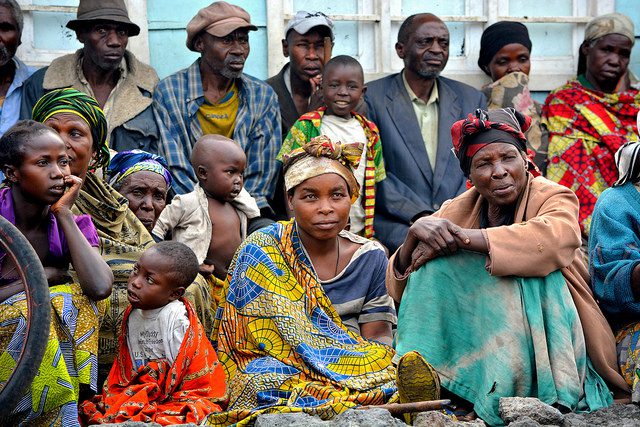

In 2012, it was reported that approximately 62.92 percent of female youth aged 15 years and older were literate compared to an 87.91 percent literacy rate for young males.

Factors Impacting Girls Education in the Democratic Republic of the Congo

The overarching traditional outlook about the role of females in society: Many families believe that girls have a responsibility at home, while boys should work outside as the main breadwinners. This thinking leads people to discredit education as an important part of girls’ lives, whereas boys are encouraged to attend schools.

Poverty: According to the World Bank, although the poverty rate in the DRC declined from 71 percent to 64 percent between 2005 and 2012, the country still remains one the poorest countries in the world with a ranking of at176 out of 187 countries per the United Nation’s 2015 Human Development Index. As a result of high levels of poverty, many girls take up jobs to support their families.

Opportunities in armed groups: About 30 to 40 percent of children in the armed groups are girls. Girls are often lured into joining local militias because of enticing factors like wages. However, the NGO Child Soldiers International interviewed over 200 female former child soldiers, who reported that instead of finding opportunities within these groups, they were drugged, raped or forced to commit crimes.

For those who are able to escape, they attempt to matriculate into school but are unable to because of the stigma associated with the former sexual relationships between the girls and male soldiers. The same girls who were interviewed cited how they were called “prostitutes” and “HIV carriers” by schools and were not allowed to enroll.  

Solutions

To resolve the issue of lack of girls’ education in the Democratic Republic of Congo, the nation is reforming its system so that more children are able to pursue an education. For example, the DRC has increased its education budget from 7.9 percent in 2012 to 14.7 percent in 2015. In addition, the government has received a $100 million grant from the Global Partnership for Education to continue its efforts. 

Moreover, USAID and the United Kingdom Department for International Development have funded a five-year education program that focuses on reading outcomes in the DRC. It is the largest implemented education program in the DRC and plans to improve the reading outcomes of 1.5 million grades 1-4 students.

Furthermore, USAID has worked to create safe school environments, especially for girls, by training teachers and administrators on how to assess safety and security at the school. Through this, girls will not have to fear for their safety, the lack of which also caused them to join militias.

The results of these actions are clear in the numbers. In 2016, UNESCO reported that approximately 66.5 percent of females aged 15 years and older were literate. Although a small increase, this is still an improvement from 2012. 

Girls’ education in the Democratic Republic of the Congo has faced many obstacles. However, the country is combating this crisis and ensuring that all children are provided with this opportunity, an action that other underdeveloped countries should follow.

– Sheharbano Jafry
Photo: Flickr

June 29, 2018
https://borgenproject.org/wp-content/uploads/borgen-project-logo.svg 0 0 Kim Thelwell https://borgenproject.org/wp-content/uploads/borgen-project-logo.svg Kim Thelwell2018-06-29 01:30:382024-05-29 22:42:54Girls’ Education in the Democratic Republic of the Congo
Global Poverty, Human Rights, Malaria

10 Biggest World Issues

Biggest World Issues
World issues range from a variety of different factors; it could be anything from an environmental problem to a global health risk or an international conflict.

10 Biggest World Issues

  1. Malnutrition and Hunger: Malnutrition and hunger continue to be issues in developing countries, such as the Central African Republic, Chad and Yemen. According to the Food Aid Foundation, 795 million people in the world are not receiving the proper amount of nutrients. Additionally, hunger is the leading health problem among children and adults, causing approximately 45 percent of children’s deaths.
  2. AIDS: HIV/AIDS is an epidemic, in which more than 36.7 million people are living with the disease. About 2.1 million children currently have the disease, and in 2016 alone, one million people have died. The prevalence of AIDS is still alive; however, many international organizations have contributed to its decrease in recent years.
  3. Malaria: Malaria is a major health risk in tropical, developing countries, such as Kenya and the Congo. Approximately 3.2 billion individuals are vulnerable to Malaria — this is half of the world’s population. Young children are the most susceptible, and about 445,000 people died from Malaria in 2016.
  4. Air Pollution: Air Pollution is a global environmental problem that causes health issues and food shortages. Pollutants harm food supplies and crops, which further create problems for malnutrition and hunger. Pollutants also directly harm human life. According to Conserve Energy Future, 65 percent of deaths in Asia and 25 percent of deaths in India are due to air pollution.
  5. Lack of Human Rights: Political systems hinder human rights and liberties that are inherent to every individual regardless of his or her demographic, religion, culture, gender, race, etc. In 2014, Amnesty International recorded that more than a third of governments imprisoned its citizens who were exercising their rights. Abuse and conflict occur on every continent — from state-sponsored killings in Syria to repression of speech in Russia.
  6. Lack of Education: The right to education is not guaranteed within developing countries because of issues such as inequality among different ethnicities or classes, interstate or intrastate conflict, and poverty. 72 million children are unschooled, and about 759 million adults are illiterate. Additionally, girls are the least likely to receive an education.
  7. Gender Inequality:  Due to gender inequality, education and economic opportunity are inaccessible to many women of all backgrounds. About 150 countries have laws that discriminate against women’s rights. Underrepresented in governmental bodies, women only hold an average of 23 percent in parliamentary seats.
  8. Conflict and War: There are still many active conflicts in today’s world that have devastating effects for citizens living within war-stricken areas. The total number of casualties from the Syrian Civil War is about 465,000 individuals, and one in four children are the victims of war. In addition, international tension with North Korea has become the leading determinant of the United States’ international agenda and foreign policy. There is a multitude of other conflicts that have detrimental effects on civilian livelihoods and international peace/security.
  9. Displacement: The number of individuals who were forced to flee their homes has skyrocketed drastically in recent years. The Internal Displacement Monitoring Centre (iDMC) reported that 31.1 million individuals were displaced in 2016. Displacement could occur after natural disasters or throughout war. Unfortunately displaced individuals have increased to approximately 59.5 million due to continuing conflict in the Middle East. In Syria alone, there are about 11 million refugees, which include young children.
  10. Global Poverty: Poverty is an overarching world issue that affects infrastructure, health, education, human rights, etc. Roughly one billion children live in poverty, and 80 percent of people live on less than $10 a day. Additionally, every 10 seconds, citizens across the globe die due to poverty-related issues. Dismally, the gap between economic and income disparity among countries is widening.

Fortunately, world issues have solutions, and a multitude of organizations are fighting to alleviate pain that has been afflicted by these problems. The International Affairs Budget is one of many solutions that funds development and helps fight diseases, prevent hunger, and create new jobs, while solving many other issues around the world.

If you would like to get involved in helping prevent these world issues, join The Borgen Project in supporting the protection of The International Affairs Budget from proposed budget cuts by sending a letter of support.

– Diana Hallisey

Photo: Flickr


June 17, 2018
https://borgenproject.org/wp-content/uploads/borgen-project-logo.svg 0 0 Kim Thelwell https://borgenproject.org/wp-content/uploads/borgen-project-logo.svg Kim Thelwell2018-06-17 01:30:512024-05-29 22:40:0010 Biggest World Issues
Human Rights, Humanitarian Aid, Refugees

How the Media Misrepresents the Refugee Crisis and Its Impacts

Media Misrepresents the Refugee Crisis
The European Refugee Crisis has become one of the most discussed and debated conflicts in international discourse and current affairs in the world today. Given its ubiquitous presence, the media also plays a crucial role in transcending awareness to the international community about key underlying global issues.

Power of the Media

However, the media misrepresents the refugee crisis due to (oftentimes) inadequate coverage. There is a strong correlation between media portrayal and the reception that ‘media bias’ can have on various audiences. This occurrence, as well as photographic evidence, can give rise to negative perceptions of the situations and news stories at hand.

A majority of the time, even the visual imagery of photography in the media can contribute to a warped, and sometimes over-exaggerated, view of the situation. On the other hand, some cases — such as the Mediterranean crisis in 2016 — a shocking image can become a very powerful and lasting symbol for the refugee crisis. In 2016, the limp body of Alan Kurdi, a 3 year-old Syrian, washed up onshore and became just that; his dead body caused a huge outcry and a great deal of global outrage.

The reaction to Kurdi is a direct example of the media’s scope, power and influence in global information. Moreover, the rather high incidence of “fake news” stories is also changing the tide of mainstream media coverage and giving rise to more inflammatory rhetoric, racism, controversy and division.

The Misrepresentation of the Refugee Crisis

The media misrepresents the refugee crisis also largely in reference to the growing skepticism associated with new immigrants crossing international borders. A number of media forums are often pervaded by hate speech and campaigns against refugees; such portrayals can give rise to increased hysteria and the spreading of misinformation.

The deficiencies in media coverage of the refugee crisis can often cause overly biased narratives that hinder efforts at raising awareness about key issues and shedding light on the unbiased truth. Given the often divisive nature of geopolitics, news stories are often written with the intention of covering international affairs. As a result, humanitarian concerns and concerns about human rights for refugees can also be quite politicized in nature and impact interpretations.

With the prominence and importance of these topics, though, media coverage should aim to not only cover these topics, but also shed light on positive stories associated with the refugee crisis. Sustainable news sources — objective and advocacy journalism and community media, for instance — can help counteract associations of overly negative images when the media misrepresents the refugee crisis.

Quest to Ensure Journalistic Integrity

Moreover, journalistic integrity must be maintained through free press. With more accurate representation in the media, immigrants and refugees can become more humanized and realistic in media coverage, and thereby demonstrate the more optimistic and “good news” side of reality.

Such accurate depictions will also benefit various key stakeholder groups involved in the refugee crisis — such as governments and international organizations. Positivity in the media could ensure greater ease in the provision of humanitarian and development aid and packages.

So there must be increased levels of inclusion and greater coverage of important stories to counter the media misrepresenting the refugee crisis. This change can help the international community take up a larger role in addressing large and pertinent issues, such as human rights.

– Shivani Ekkanath
Photo: Flickr

June 13, 2018
https://borgenproject.org/wp-content/uploads/borgen-project-logo.svg 0 0 Borgen Project https://borgenproject.org/wp-content/uploads/borgen-project-logo.svg Borgen Project2018-06-13 01:30:562019-10-12 11:32:02How the Media Misrepresents the Refugee Crisis and Its Impacts
Human Rights, Women's Rights

Saudi Arabian Reform Opens Markets

Saudi Vision 2030 Saudi Arabian Reform Opens Markets
With the recent rise to prominence of the Crown Prince Mohammad bin Salman, the Kingdom of Saudi Arabia has committed to a vast economic and social reform plan. The Kingdom’s strategy is in its initial stages, but early signs indicate how the promise of socioeconomic Saudi Arabian reform opens markets for American business.

Saudi Vision 2030

The ambitiously conceived Saudi Vision 2030 is a reform plan for diversifying the Kingdom away from its traditional dependence on oil revenues. The plan’s goals are varied, with objectives ranging from enhancing the competitiveness of non-oil sectors, such as leisure and tourism, to increasing women’s participation in the workforce from 22 to 30 percent.

Although it is in its early stages, the plan has made some progress toward its social liberalization goals, providing an ongoing illustration of how Saudi Arabian reform opens markets. After the Saudi Ministry of Culture ended a 35-year ban on movie theaters late in 2017, the Chinese-owned, American-operated AMC Theaters obtained a license to open 30 movie theaters over the next 5 years as part of a joint operation with the Saudi government.

Film and Tourism

This expansion isn’t limited to AMC: one Saudi official estimates the cinema market to reach $21.3 billion over the next 10 years, and companies such as the U.K.-based Vue International and Imax of Canada plan to open 30 and 20 theaters in the Kingdom in the coming years, respectively.

Beyond theatrical entertainment, the emphasis on promoting tourism in the reform plan is opening up investment opportunities for international hospitality companies and employment opportunities for local women. Marriott International’s managing director for the Middle East and Africa has said that the demand for new hotels in the country has been steady, with the company scheduled to more than double its hotels in Saudi Arabia from 23 to 52 by 2022.

Steps Towards Gender Equality

And an increasingly greater shares of the jobs created in this industry are being filled by women. Saudi women appear to be more amenable to working in the hospitality sector than their male counterparts, the latter tending to seek roles in traditional public or energy sector jobs. In fact, a 2017 working paper by the Saudi Arabian Monetary Research cites researchers’ belief that women will an essential role in the tourism sector.

The social progress made by Saudi Vision 2030 is incremental and should not be overstated. The merits of the highly publicized repeal of a ban on women being granted a driver’s license are countervailed by the country’s continued human rights violations, such as this month’s arrest for dissent of women activists who had fought in previous years to overturn that very ban.

A Decade For Progress

However, as the name of the reform plan suggests, the timeline for Saudi Vision 2030 completion is over a decade.

A final judgment of its success will take time, but incremental progress to date shows how, if implemented, social and economic Saudi Arabian reform opens markets and could enhance opportunity for international businesses. The plan could also liberate opportunities for both male and female residents of the Kingdom in the coming years.

 – Mark Fitzpatrick
Photo: Flickr

June 1, 2018
https://borgenproject.org/wp-content/uploads/borgen-project-logo.svg 0 0 Borgen Project https://borgenproject.org/wp-content/uploads/borgen-project-logo.svg Borgen Project2018-06-01 01:30:152019-10-19 17:37:28Saudi Arabian Reform Opens Markets
Food Security, Global Health, Global Poverty, Human Rights, Water

Food, Water and Human Rights: 10 Examples of Global Issues

examples of global issues
The year 2018 has brought many positives with it. Several countries are on pace to minimize poverty. Education movements for girls are spreading like wildfire all over the world. More women in developing countries are gaining access to maternal care. More governments are establishing innovative ways to combat fundamental challenges around the globe. Unfortunately, there are still many global issues that plague the world.

Global issues are matters of economic, environmental, social and political concerns that affect the whole world as a community. These issues disrupt the natural framework of humanity, disturbing economic and social progress. These are 10 examples of global issues that are altering the development of human progress across society as a whole.

Examples of Global Issues

  1. Clean Water
    Water is a basic substance required for all living organisms. Without it, human health inevitably fails. According to a report by the United Nations, there is enough fresh water on the planet for everyone. Unfortunately, 844 million people lack access to it, and one of three people do not have access to a toilet. Millions perish daily from unhygienic diseases due to inadequate water and sanitation. Governments are making efforts to assist those in need but are hindered by declining economics and disorganized infrastructures.
  2. Food Security
    Like water, food helps people lead healthy lives. Globally, 12.9 percent of the population is undernourished. Developing countries struggle with providing an adequate food supply to their people; as a result, nearly 795 million people do not have enough food to meet their nutritional needs. The World Food Programme, a humanitarian effort established by the U.N. to combat hunger and food security, is working to bring relief to developing countries, currently assisting more than 80 countries every year.
  3. Health
    Universal health is a growing concern. Unfortunately, diseases like HIV/AIDS, malaria, tuberculosis, smallpox and polio are still claiming the lives of thousands of people worldwide, mostly in developing nations. The World Health Organization is a global initiative that provides antibiotics and vaccinations all over the world. Since its inception, polio cases have declined by 99 percent, tuberculosis treatment has saved more than 37 million people, and in 2016, zero cases of Ebola were reported in West Africa.
  4. Human Rights
    Every person deserves basic rights, regardless of their race, sex or ethnicity. In 1948, the United Nations created the Universal Declaration of Human Rights, which today is commonly known as the International Human Rights Law. This declaration promotes and protects human rights civilly, economically, politically and socially.
  5. Maternal Health
    Maternal health is a global human rights issue, making it one of the key examples of global issues. There are an estimated 830 pregnancy-related deaths each day. This is mainly due to lack of maternal care. Women die from infections, postpartum bleeding, blood clots and other conditions. The United Nations Population Fund develops relationships with governments around the world to train healthcare professionals to provide expert maternal care to expecting mothers.
  6. Girls’ Access to Education
    Girls deserve the right to learn. Currently, 98 million girls do not attend school due to barriers like poverty, gender bias, governmental conflict, safety concerns and a lack of educators, classrooms and curriculums. Global Citizen reported that schools are sometimes hours away from where children live, making it unsafe for them to travel alone. Let Girls Learn is a U.S. global strategy targeting an increase in safe access to education for girls and educators. Funds are directed towards curriculums to help girls read and write.
  7. Digital Access
    We live in a digital age where we can find all the help we need online. This luxury is absent in many countries, as more than four billion people do not have access to the internet. Internet connectivity would assist those living in developing countries with finding help and aid. With online options, people in need can contact international aid programs to get assistance faster.
  8. Foreign Aid Budgets
    The world would like to believe it does enough for the poor, but sadly this is not true. In the U.S., the International Affairs Budget only makes up 1 percent of the federal budget. Increasing the foreign aid budget is actually beneficial to the American economy. It helps create more jobs in the U.S. and builds wealth in developing countries.
  9. Women’s Rights
    Women’s rights are human rights. Women suffer discrimination in many areas: laws, the workforce and gender-based stereotypes and social practices. The first conference on global feminism was held in Nairobi in 1985 and involved more than 15,000 non-governmental organizations, encouraging 157 governments to adopt strategies geared towards equality, development and peace for women.
  10. Refugees
    Refugees are people who have been forced to flee their homeland due to war, conflict and abuse. Foreign countries have granted them asylum for thousands of years. Refugees are sometimes denied entry into other countries, leaving them without basic human rights such as food, healthcare, education and jobs. Children make up the largest percentage of refugees. The U.N. Refugee Agency currently provides aid and safekeeping to 59 million refugees.

These 10 examples of global issues are not exhaustive. The world is filled with complex issues that must be addressed. Global strategies must continue to advance to nurture and protect all of humanity.

– Naomi C. Kellogg
Photo: Flickr

May 17, 2018
https://borgenproject.org/wp-content/uploads/borgen-project-logo.svg 0 0 Borgen Project https://borgenproject.org/wp-content/uploads/borgen-project-logo.svg Borgen Project2018-05-17 07:30:072024-05-29 22:42:24Food, Water and Human Rights: 10 Examples of Global Issues
Global Poverty, Human Rights

What Are the Biggest Global Issues?

the Biggest Global Issues

What are the biggest global issues that the world is facing right now? All around the world, countries are facing new issues every single day on their own, but despite its borders, the world is constantly facing issues as a whole. What are the biggest global issues that the world is facing together? There are many that affect everybody and require attention from not just one country, but every country.

One of the top global issues today is the continent of Africa. Africa needs support both economically and socially in order to develop and protect human rights, as well as build solid governments and better the lives of the people living there. African countries also need support to promote democratic institutions in order for there to be peace among the nations.

AIDS is another top global issue in the world today. Although new HIV infections have decreased significantly, the global response to HIV/AIDS has to continue to be powerful in order to wipe out the epidemic completely.

The rights of children are another top global issue throughout many different countries. Millions of children do not have access to education, health or protection. Every country should be expanding the opportunities for children and allowing them to exercise the rights that all humans should be allowed.

Climate change is a significant issue that shifts weather patterns. This causes a threat to food production, rising sea levels and many more negative impacts on nature. Climate change is a global issue that directly affects not only humans throughout the world, but animals and the ecosystem itself.

Food insecurity is one of the biggest global issues the world is facing right now. About 795 million people in the world were malnourished between 2014 and 2016. Hunger is known to be the number one risk to human health worldwide, even greater than disease.

Another global issue is inadequate access to clean water and the lack of sanitation and hygiene that goes along with it. This is typically due to bad economics and infrastructure, and often leads to deaths, especially in children, caused by diseases that are spread by unsanitary water.

There are many more problems that the world is facing today, but these are the biggest global issues that the world needs to address now. Some of the issues listed affect not only the human race but animals and nature as well. From diseases to government, the world is facing global issues together every day.

– Chloe Turner

Photo: Flickr

April 17, 2018
https://borgenproject.org/wp-content/uploads/borgen-project-logo.svg 0 0 Borgen Project https://borgenproject.org/wp-content/uploads/borgen-project-logo.svg Borgen Project2018-04-17 01:30:242019-11-01 10:25:13What Are the Biggest Global Issues?
Global Poverty, Human Rights

The Most Dangerous Countries in the World

most dangerous countries in the worldAs of January 2018, the State Department currently categorizes 11 countries with a level 4 travel advisory. The advisory recommends that U.S. citizens refrain from traveling to that individual country due to dangerous conditions. Level 4 travel warnings are issued for various reasons, which include terrorism, armed conflict, health, civil unrest and crime. The seven most dangerous countries in the world detailed here all have high poverty rates due to the unsafe and unstable living conditions in the country.

The Most Dangerous Countries in the World

  1. Afghanistan
    In recent years, Afghanistan has experienced prolonged armed conflict between NATO forces and domestic terrorist groups such as the Taliban and ISIL. Al-Qaida and other foreign terrorist organizations have maintained a presence in the conflict as well. Afghanistan’s capital, Kabul, continually faces the threat of terrorist attacks, which include suicide bombings, kidnappings and armed conflict. A portion of these attacks explicitly target government buildings, hotels, restaurants and other areas frequented by foreign visitors.
  2. Syria
    According to the State Department travel advisory for Syria, “No part of Syria is safe from violence. Kidnappings, the use of chemical warfare and aerial bombardment have significantly raised the risk of death or serious injury.” As of February 2012, the U.S. Embassy in Damascus has ceased all operations.

    Originally, the Syrian conflict began as an extension of the Arab Spring, which sought to remove Bashar al-Assad, Syria’s current president. Over the course of the last seven years, the nature of the conflict has changed with U.S., Turkish and Russian involvement. Armed conflict continues among multiple militia groups. As a result of the continued crisis, a large number of refugees have sought asylum in Europe, North America and other regions of the Middle East. It is unclear as to when a peace agreement can be reached between the current opposing forces.

  3. Yemen
    With the removal of President Abd Rabuh Mansur Hadi by Huthi forces in 2015, Yemen has suffered from continuous internal conflict between tribal groups and political parties. As a consequence, Yemen’s infrastructure of medical facilities, schools, housing, power and water utilities have been massively damaged.Between April and July 2017, more than 400,000 cases of cholera were reported. During that same period, close to 2,000 individuals died of cholera. In 2016, the U.N. attempted to reach a peace agreement for the cessation of hostilities, which ultimately failed.

    Sporadic fighting persists within Yemen, along with a domestic presence of terrorist groups such as al-Qaida.

  4. Mali
    Violent crime and terrorism are prevalent issues in northern and central Mali. The State Department warns foreign visitors that both kidnapping and armed robbery are major concerns when traveling to the country. Hotels, nightclubs, places of worship and restaurants are frequent places for domestic terrorist attacks.It is advised to avoid traveling at night due to random police checkpoints and illegal roadblocks. Seasonal holidays have also seen increased violent activity.
  5. Somalia
    Somalia has seen great progress in recent years with the creation of a 275-member parliament and a presidential election in 2012. However, the continued presence of the terrorist group al-Shabaab, an al-Qaida affiliate, presents dangerous conditions for Somali citizens and foreign visitors.

    On October 14, 2017, Somalia saw its deadliest attack ever recorded in its prolonged war against Islamic extremists. Two truck bombs were detonated in the capital city of Mogadishu, resulting in approximately 280 casualties and more than 300 wounded. Illegal roadblocks are common throughout the country, posing dangers to travelers. Also, the issue of piracy continues to threaten the security of those traveling by sea.

  6. Central African Republic
    In its report on the Central African Republic, the State Department warns visitors of crime and civil unrest. Currently, large areas of the country are under the control of armed groups, preventing safe travel. Notable violent crimes are listed, such as armed robbery, aggravated battery and homicide. The fragmented nature of the country is a result of a civil war launched in 2013 which ousted President Francois Bozize, who seized power through a military coup in 2003.

    As of 2016, the current president, Faustin-Archange Touadera, has sought to establish peace with the various rebel groups through a program which aims to reintegrate the armed groups into society.

  7. Iraq
    Upon the removal of Saddam Hussein by U.S.-led coalition forces, an Iraqi government was formally established. However, Iraq has continued to be a hotbed for armed conflict and terrorist activity, most notably the invasion of Mosul by the forces of ISIS and their eventual defeat in late 2017. Iraq’s capital, Baghdad, continues to be the target of suicide bombings and other terrorist attacks. Due to the current security crisis throughout Iraq and the civil war in neighboring Syria, Iraq remains one of the most dangerous countries in the world.

    As the security situation remains largely unsolved, the State Department continues to list Iraq as a level 4 travel warning, urging potential visitors to avoid travel for the foreseeable future.

Primarily, the current security climate in these states is a direct result of various types of armed conflict. As a result of armed conflict, critical health issues have also arisen. However, this is cause for hope. Continued support from the world’s wealthiest nations in the form of development and aid can help bring armed conflict to an end. A different future is possible, one in which these war-torn nations will no longer be classified as the most dangerous countries in the world.

– Colby McCoy

Photo: Flickr

March 24, 2018
https://borgenproject.org/wp-content/uploads/borgen-project-logo.svg 0 0 Borgen Project https://borgenproject.org/wp-content/uploads/borgen-project-logo.svg Borgen Project2018-03-24 07:30:402024-05-29 22:27:49The Most Dangerous Countries in the World
Human Rights, Nonprofit Organizations and NGOs

10 Most Important Facts About Search for Common Ground

John Marks
In an increasingly polarized world, it is becoming more and more common for individuals to be split on issues. Although this may not be negative, such binarization certainly has the potential to breed conflict. Search for Common Ground (SFCG) is a non-governmental agency that seeks to prevent violence that results from differences. Here are ten facts about Search for Common Ground that provide a better understanding of what the organization does.

10 Facts about Search for Common Ground

  1. Search for Common Ground was founded by John Marks in 1982 in Washington D.C. His vision was to replace the dog-eat-dog mentality of the world with the premise that everyone is better off if we are all better off.
  2. SFCG is revolutionizing the way the world deals with conflicts. Through listening and cooperation, the company brings people together toward a common goal and away from conflict.
  3. They have 59 offices worldwide and work in the U.S., Middle East, Africa, Europe and Asia.
  4. Search for Common Ground is dedicated to upholding human rights. As a result, they served as a signatory for a delegation in Nigeria known as the Steering Committee of the Voluntary Principles on Security and Human Rights Initiative.
  5. SFCG has a great global outreach program, as 795 thousand individuals volunteer with SFCG every year.
  6. Search for Common Ground has global initiatives such as “The Team.” This is a television series where soccer players must overcome their ethnic, social, religious and racial differences and use diversity to work together. This has proved to be an effective method to reach viewers as Richard Scudamore, the Chief Executive of the Premier League said, “football (soccer) is a remarkable tool which can break down barriers, foster understanding, and teach people valuable lessons on a wide range of social issues.”
  7. SFCG encourages cooperation in specific locations through dialogue, media and community work.
  8. SFCG has been successful in using dialogue to better relations. In one case, they transformed the reputation of police officers in the Terai region of Nepal through the Pahunch Project. This project invited Terai youth and police officers to play football and ask questions about one another. Notoriously there is tension among these groups, but afterward, one participant named Mamta said, “The football clinic has made my friends and me positive towards the police.” In fact, she even later decided to become an officer herself.
  9. SFCG created a video: L’Équipe to address gender-based violence. It revolves around the perspective of two African women soccer players that are victims of sexual violence. Despite their pain, the two women seek to better their situation and community. This is one of the many SFCG media tools that reaches 51 million people annually and provides encouragement for women to stand up against sexual violence.
  10. The Kpaika community within the Democratic Republic of Congo is a poor area that is prone to attacks from rebel groups. In response, SFCG organized the Secure, Empowered, Connected Communities (SECC) project. This project bettered communication within the community by establishing radio networks and emergency plans of action. As a result, the community has felt a lot safer and is more prepared for potential attacks.

Creating Change

These facts about Search for Common Ground do not encompass the entirety of the organization’s successes as a whole. To learn more about the organization or how to help, visit sfcg.org.

– Mary McCarthy

Photo: Flickr

March 18, 2018
https://borgenproject.org/wp-content/uploads/borgen-project-logo.svg 0 0 Borgen Project https://borgenproject.org/wp-content/uploads/borgen-project-logo.svg Borgen Project2018-03-18 01:30:462019-11-21 14:24:2110 Most Important Facts About Search for Common Ground
Page 14 of 45«‹1213141516›»

Get Smarter

  • Global Poverty 101
  • Global Poverty… The Good News
  • Global Poverty & U.S. Jobs
  • Global Poverty and National Security
  • Innovative Solutions to Poverty
  • Global Poverty & Aid FAQ’s
Search Search

Take Action

  • Call Congress
  • Email Congress
  • Donate
  • 30 Ways to Help
  • Volunteer Ops
  • Internships
  • Courses & Certificates
  • The Podcast
Borgen Project

“The Borgen Project is an incredible nonprofit organization that is addressing poverty and hunger and working towards ending them.”

-The Huffington Post

Inside The Borgen Project

  • Contact
  • About
  • Financials
  • President
  • Board of Directors
  • Board of Advisors

International Links

  • UK Email Parliament
  • UK Donate
  • Canada Email Parliament

Get Smarter

  • Global Poverty 101
  • Global Poverty… The Good News
  • Global Poverty & U.S. Jobs
  • Global Poverty and National Security
  • Innovative Solutions to Poverty
  • Global Poverty & Aid FAQ’s

Ways to Help

  • Call Congress
  • Email Congress
  • Donate
  • 30 Ways to Help
  • Volunteer Ops
  • Internships
  • Courses & Certificates
  • The Podcast
Scroll to top Scroll to top Scroll to top