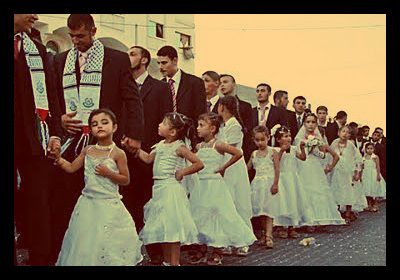
A pressing issue in Iraq without much resistance or counteraction is underage marriage. Out of the total number of marriages in 2013, 11% involved an underage girl, according to the Iraqi Ministry of Planning. Additionally, 25% of girls are married before the age of 18 and 6% are married before the age of 15. Also known as uneven marriages in Iraq, they are controversial because there are multiple motives behind them. While some girls are forced completely against their will, others enter an uneven marriage to lift themselves or their family out of poverty. For instance, there was a recent story of a 16-year-old girl married off to a man over the age of 60 at the request of her father, Abu Ali. His reasoning for this was to benefit his family, which lives in poverty. He had been supporting his five daughters on an income amounting to only $300 per month. Since the family had been suffering and struggling to make ends meet, Ali married off his daughter to help the situation. Ali said of the matter, “Poverty was an important reason that led me to agree to this marriage.” Besides the breach this has on women’s rights, it also contributes to negative health effects for young girls. Often these girls are expected to carry and raise children, but most are simply too young; pregnancy also poses high health threats. There is an increased possibility of miscarriage, internal bleeding and even maternal mortality. These adverse health risks are either ignored or unknown due to disregard for reproductive health for women. Damaging health effects are not the only consequence of underage marriage. Girls who have been married underage often drop out of school early. Girls lacking education have few options and opportunities and are forced to depend on marriage to sustain them. Since girls would be entering the workforce drastically less and would be unable to contribute to the economy, this also stifles human development. This epidemic exist in Iraq and many parts of the Arab region as well as sub-Saharan Africa. A study in June 2013 found that one in seven girls is married in the Arab region before she turns 18. Besides Iraq, underage marriage is most prevalent in Yemen, Somalia, Sudan and South Sudan, calculatedly the poorest countries in the area. In these countries, more than one third of girls are married before they turn 18, which is more than in Iraq. Not only is underage marriage detrimental to the lives involved, it also has consequences for societies on a larger scale. Even though some girls enter these marriages to alleviate poverty, in the long term it does more harm than good as underage marriage promulgates and reinforces a cycle of poverty. This is especially true since it causes girls to stop their schooling, leaving them unable to earn money of their own. Since this problem hinders society and human progress, it is a concern that should be reprioritized. – Danielle Warren Sources: Al-Monitor, Population Reference Bureau
Information and stories on health topics.
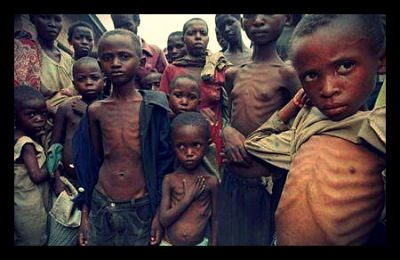
The Republic of Rwanda is a small sovereign state in the Eastern part of Central Africa. Rwanda ranked at 166 of 187 countries on the UNDP Human Development Index in 2011. Rwanda also has the highest population density in the region with 416 people per square kilometer.
Low income, limited natural resources, and food and water insecurity pose a problem for citizens in Rwanda every day. In the years following the Rwandan Genocide in 1994, international rebuilding efforts have been on the ground trying to make sustainable changes to alleviate some of the hunger and water issues.
Here are five facts that explain the state of hunger in Rwanda and how it may change in the coming years:
- The 1994 Rwandan Genocide marked the end of the ceasefire signed the year before that stopped the fighting of the Rwandan Civil War. The war began between two ethnic groups the Hutu and Tutsi. The Genocide began when the plane carrying the Hutu supported president Juvenal Habyarimana was shot down and he, along with several other members of the government, were killed. The genocide lasted 100 days and an estimated 800,000 to 1,000,000 people were killed. The fallout from the Rwandan Genocide is the cause for much of the instability in the region that lasts today.
- Secondary school attendance in Rwanda is one of the lowest in the world and the literacy rate is 55%.
- Approximately 65% of the population has access to safe, clean drinking water
- 45% of children under 5 years of age are malnourished.
- Over 67,000 refugees from neighboring countries currently reside in Rwanda.
Even though there is a lot of strain on the country today, organizations have been working with the government to address one of Rwanda’s major problems: food insecurity. Agriculture was the country’s main sector before the genocide, and since then, major efforts have been made to make it profitable one more.
Updating the agricultural practices is what the World Food Programme credits with directly reducing the number of food insecure people.
The country hopes that with the reliance on agricultural programs it will improve its GDP to US$900 by the year 2020, up US$380 from its current GDP. Rwanda was also the first country to sign the Comprehensive Africa Agriculture Development Programme (CAADP), meaning that addressing malnutrition and food insecurity is one of the government’s main priorities.
Even though Rwanda still has a long way to go, the government has been taking steps in the right direction that could provide a template for other countries in the region to follow.
– Colleen Eckvahl
Sources: World Food Programme, World Vision
Photo: Rising Continent
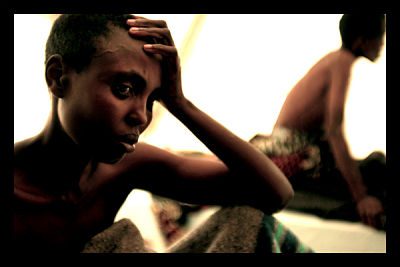
Kinshasa, DR Congo
The second largest country in Africa and is located in the middle of the continent. Since the 1990’s the country has been in a state of political unrest and civil war which is the cause of many of the other problems in the region, such as disease, food insecurity, human rights violations, and violence against women.
Here are four issues that contribute to nearly 6.3 million people remaining food insecure and over half of the children under the age of 5 classified as malnourished in the DR Congo:
- Political instability between the government and several militia and rebel groups. Peace talks have been ongoing since 2009 with little progress. Since 1998, 5.4 million people have been killed. Less than 10% were killed during the fighting, instead the majority have died from diseases and malnutrition.
- 2.7 million people are internally displaced within the DRC as a result of the civil war. 1.6 million are in the North and South Kivu region, where much of the heavy militia activity takes place. There are an additional 116,000 refugees from neighboring countries currently living in the DRC. The large number of displaced people and perpetual fighting in the country has led to a high rate of abuse and sexual assault of women and children. It is estimated that 400,000 women between 15 and 49 were raped between 2006 and 2007. This is the equivalent of 48 women being assaulted every hour.
- 3.71% of the population lives below the poverty line, meaning they live on less than two dollars per day.
- Rampant infectious diseases are common across the country such as Malaria, Dengue Fever, Typhoid Fever, and HIV/AIDS. The ministry of health said that Malaria was their number one disease concern and in 2011 alone there were 4,561,981 reported cases.
– Colleen Eckvahl
Sources: The International Campaign to Stop Rape and Gender Violence in Conflict , WFP, WHO
Photo: This is Africa
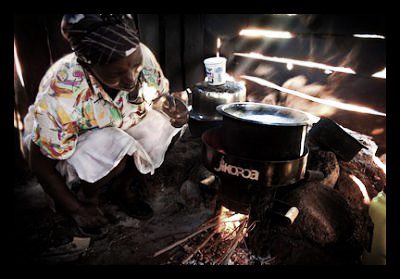
More than seven billion people live in this world. Yet, according to the World Health Organization, more than 3 billion risk experiencing serious respiratory infections and early death simply by cooking food and heating their homes using traditional wood stoves and solid fuels instead of clean biogas cookstoves.
The National Clean Cookstoves and Fuels Conference at Nairobi, Kenya in February was sponsored by the Global Alliance For Clean Cookstoves (GACC). The conference drew attention to a simple fact: “Cooking is essential and should not kill,” noted Radha Muthiah, the executive director of GACC.
In Kenya alone, illnesses linked to cookstove smoke claim 15, 700 lives a year. Yet 84 percent of the country continues to uses solid fuels for cooking.
Naturally, the most affected group are mothers – responsible for the bulk of the cooking – and children. Muthiah shared this tragic figure: 8,300 Kenyan children die annually due to respiratory infections attributed to this indoor air pollution.
The solution, though clear, poses a high cost.
Isaac Kalua, chairperson of the Kenya-based Green Africa Foundation, asserted, “We are losing people because of indoor [air] pollution and we therefore need urgent transition from traditional methods of cooking to modern technologies.” He continued by observing that the “affordability of the new technologies is a main challenge to providing clean fuels for all.” Such technologies include reliable, safe biogas cooking stoves, used in conjunction with biogas digesters.
Despite the cost, a number of donors in place who recognize the needless loss of life and are committed to helping Sub-Saharan Africa address this issue. During the February GACC conference, several organizations pledged their continuing financial support. Benefactors include the UN Foundation, which has invested $3 million this year. GACC aims to provide reliable cookstoves and clean fuels globally.
The U.S. government awarded $1 million to three Kenyan organizations. This recent donation continues a lengthy history of support: since 2010, the US has contributed $125 million to GACC.
Though financial support is critical, outreach to those at risk equally addresses the harms of indoor pollution. These education efforts extend to women, as well as farmers. As the popularity of diary farmer grows in Sub-Saharan Africa, sources for biogas are expanding, According to SciDiv.Net, biogas “is a system that converts organic waste from livestock manure into energy for cooking” and heating. This system burns cleanly, because the biogas fuel does not release toxic emissions.
Consequently, biogas offers the opportunity to circumvent the health risks associated with traditional wood burning stoves.
Tradition, however, is formidable opponent. Mary Njoki, a rural Kenyan mother of five, shared this observation: “Biogas is good because it cooks fast but I still use wood fuel when it is the cold season to warm the house and cook food, since during this period, the heat produced by biogas is not sufficient.” Organizations world wide are committed to changing not only Mary Njoki’s mind – but the habits of millions of families heating their homes and cooking food for their children.
As Radha Muthiah observes, “using clean, efficient, and safe cookstoves” reduces fuel consumption, exposure to toxins and deforestation. And, most importantly, save millions of lives.
– Ellery Spahr
Sources: SciDevNet, Sci Dev Net, Global Alliance for Clean Cookstoves
Photo: Burn Design Lab

Female Genital Mutilation (FGM) ruins countless lives every day. FGM is a humiliating torturous cutting of the female genitalia carried out by various groups of the community, including health practitioners, elderly people and female relatives. According to the World Health Organization (WHO,) four types of FGM procedures exist:
Clitoridectomy
The partial or complete removal of the clitoris.
Excision
Involves removal or partial removal of clitoris, as well as labia.
Infibulation
Narrowing of the vaginal opening.
Other
This includes other forms of FGM not classified above, such as, burning, piercing or scraping. Any one of these types of FGMs is carried out on a female at any time in her life.
Millions of cases of FGM are reported each year. According to the WHO, over 100 million women and girls have had their human rights violated.
FGM is considered a human rights violation because it inflicts unnecessary pain and harm to unwilling women and girls. Laws against FGM practices have been created in 18 African countries. If caught sentences from three months up to life in prison are given.
There are also 12 industrialized nations that have passed laws criminalizing FGM.
An 8-year-old girl from Djibouti died from the effects of FGM. She was held down by friends and neighbors while a “practitioner” subjected her to FGM. Her clitoris, labia minora and labia majora, all external genitalia, was cut away causing uncontrollable bleeding.
After the procedure was done the girl’s legs were tied shut to promote “healing” and she was refused water because the need to pass urine was thought to introduce bacteria to the wounds. The young helpless girl continued to bleed throughout the evening and sob uncontrollably due to pain.
Eventually the girl was taken to the hospital and given a blood transfusion. Sadly, it was too late to save her life.
FGM has been reported in 28 African countries and various Asian countries.
According to data from the WHO, seven countries: Djibouti, Egypt, Eritrea, Guinea, Mali, Somalia and Sudan have a FGM prevalence rate affecting 85 percent or more women. Other African countries have only slightly lower prevalence rates; a large portion of the African continent has not received FGM rates.
FGM is most likely performed in lower class poverty-stricken communities. This is due in part to the fact women and girls do not know FGM is against the law. Most believe that it is there duty as a woman to have FGM performed and if they refuse, they will be harshly criticized and shamed. These are the ones who are not held down and forced against their will.
Several campaigns to eradicate FGM from the world are underway. One government organization, the United Nations, has been tackling it as one of the world’s Millennium Development Goals. Also, Women against Female Genital Mutilation leads campaigns to increase awareness of FGM laws and harmful health and psychological effects of FGM on females.
The continuation of advocacy for women and girls suffering from Female Genital Mutilation needs to last until FGM prevalence is zero. People should continue to call their congressmen, write their legislature, and advocate for worlds helpless.
Hopefully, through the increased awareness, global campaigns, and laws FGM will become a thing of the past and no female will have to endure torturous inhumane pain ever again.
– Amy Robinson
Sources: World Health Organization, All Africa, WHO, UNICEF, Center for Reproductive Rights
Photo: International Business Times

The Hepatitis C virus affects an estimated 180 million men, women and children worldwide. Patients in low to moderate income nations benefit from treatment at the same rate as those in developed regions. Yet, the high cost of this treatment prevents many from recovering.
One of the largest biopharmaceutical companies, Gilead Sciences, developed an $84,000 cure in 2013 with one pill priced at a thousand dollars. The total cost for a three-month regimen far exceeds most patients’ price range.
Solvadi, the pill, offers a solution to the pressing danger of this disease in developing countries. Egypt (22%), Pakistan (4.2%) and China (3.2%) rank the highest in disease prevalence, bearing most of the burden today.
How, though, can patients in these nations afford an $84,000 bill?
Gilead answered this question with a promising discount in sixty developing countries. Negotiating with generic drugmakers in India, the company plans to offer the treatment at 2 percent of the cost in the United States.
Rohit Malpani, a policy director at Doctors Without Borders, hopes for a more reasonable price. The company could produce Solvadi at a far lower cost, he contends. Malpani and other advocates estimate Gilead could cut the cost to $68 to $136 for a twelve-week treatment regime.
The company must revaluate how much the drug costs compared to patients’ ability to pay, Malpani asserts.
“If we want to see Hepatitis C treatment scaled up globally, we are going to need much lower prices in all countries with a high burden of the disease,” he remarks in a recent Doctors Without Borders statement.
Gregg Alton of Gilead reports future partnerships with three to five different companies. Gilead, he notes, plans to allow flexibility of price from the Indian companies. Alton also contends the starting point of $2,000 is “substantially less” that current costs in India – for inferior drugs. He promoted Solvadi in The Hindu Business Line, highlighting the drug as “more effective, less toxic…and without side-effects.”
Ideally, Alton remarks, the company signs voluntary licensing deals “in the next couple months” and market availability in two years. Last November, the Initiative for Medicines, Access and Knowledge(I-MAK) filed a legal challenge against its patent application.
I-MAK claims Solvadi relies on “on science” with a “known compound.” Voluntary licensure protects Gilead from patent problems, adds Malpani. These licensing agreements prevent generic companies from overturning patents. Without these agreements, the Indian manufacturers could sell Solvadi at any cost and without paying royalties to the company.
The company also plans to limit the scale of these licensing agreements, allowing generic drugmakers to sell in 60 countries. In contrast, Gilead sells HIV drugs in more than 100.
The pricing and limited access to this drug threatens the health of more than 180 million patients. Brook Baker, an advisor to the Health Global Access Project, sees delinkage as the solution. With this system, governments fund pharmaceutical research and development as a public service.
Today, pharmaceutical companies absorb about 60 percent of the total cost. Treating these drugs as a public good offers the most in need. And though these companies need to profit, Hepatitis C patients around the world also need treatment.
– Ellery Spahr
Sources: NPR, WHO
Photo: Don’t Trade Our Lives Away

In most parts of the rural world, obtaining over-the-counter medication for a cold isn’t an option. Despite Tylenol’s world-wide market and the growing popularity of Vicks and Sudafed, sometimes the availability or the price of these products, or the unmistakably Western feel of them, makes them unappealing to parts of the globe.
There are stubborn old grandmothers in every country who insist they know best while passing on their home-style remedies for curing the common cold. Here’s a sampling of common cold remedies from across the globe:
Iran
A plate of cooked, mashed turnips to ease a cold. The vegetable is full of vitamin C and can ease a cough or ticklish throat.
Europe
Cow or sheep fat is wrapped in cloth, warmed, and placed on the chest to help with congestion. This is still sometimes used in rural areas to keep a deep cough from turning into pneumonia.
Russia and the Ukraine
Similar to eggnog, this hot drink is whisked egg yolk with a teaspoon of honey or sugar. Pour into a half-cup of warm milk prepared with a tablespoon of unsalted butter. Adding rum or cognac turns this into eggnog and promotes a good night’s sleep.
China
Rice porridge, or jook, is thought to be the easiest food to digest and cleanses a sick body of toxins. To prevent a cold some turn to mustard green soup: a pound of broad leaf mustard greens, cooked with a large sweet potato and simmered in water for a few hours. The resulting soup is hydrating and easy to stomach. Some people also burn Ai Ye, or wormwood to fend off a cold or to prevent further infection.
Hong Kong
A soup made up of dried lizards, yam and Chinese dates simmered in water
Italy
Tea with sage, bay leaf, lemon juice and honey. Another is horseradish tea: grate horseradish into boiling water before adding lemon juice and honey. This isn’t always the most enjoyable to drink, but the aroma is known for clearing out the sinuses.
India
Just a spoonful of ginger juice and honey. For sick kids parents will roast ajwaim, or carom seeds. Similar to thyme, this acts as a decongestant.
Turkey
Tea made with eight or more whole cloves, two or three cinnamon sticks, one full-circle star anise, a peeled whole ginger root that has been cracked in a few places. All of this is left to soak for about 45 minutes before being strained and served with honey.
Cuba
Oregano tea.
Vietnam
Broth-based Pho soup: includes chili to clear the sinuses and vitamin-packed veggies.
Japan
Tamagozake; a drink made with sake, one egg and honey. It strengthens the immune system and promotes a good night’s sleep. Another favorite is umeboshi or “pickled plum” which is eaten or steeped in tea with ginger and lemon.
South America and Spain
Lemon, honey and garlic in any combination. Garlic works as a decongestant, lemon thins mucus and honey boosts the immune system.
Morocco
An omelet made with garlic, oil and pepper.
Chad
Tea made by simmering hibiscus flower, fresh ginger, cinnamon, cloves and honey.
Netherlands
Black licorice-root candies and tea. Black licorice root contains glycyrrhizin, which has antiviral and anti-inflammatory effects and works to stop the growth of viruses.
Thailand
Tom Yum soup; traditionally made with shrimp and sometimes called hot-and-sour, this soup is made with coriander, lemongrass and lime leaves.
Korea
a combination of fermented cabbage or radish seasoned with garlic, salt, vinegar, chili peppers and other spices. This particular collection of spices and vitamins is thought to fight off disease.
Try a few and build them into your winter diet!
– Lydia Caswell
Sources: Health & Wellbeing, Health Line, Daniels Fund Ethics Initiative, Fresh Juice
Photo: Method Magazine

A new report from the European Union illuminates the staggering cost of untreated illness among Europe’s most poor. The report estimates that trillions of dollars a year are lost due to what it calls “health inequalities.”
As reported by The Guardian, the study shows that many avoidable costs are incurred as a result of sick individuals leaving the workforce due to illness or death. The loss of productivity alone may cause trillion dollar losses throughout the E.U.
Granted that these costs and conditions (along with other economic factors) vary widely from nation to nation in the E.U., the report signals a need for shared responsibility in dealing with public health.
From west to east, Europe has an obvious incline in disease and mortality. Many eastern European states report annual mortality rate that are nearly double that of the lowest western states. The fault line between the two halves of Europe appears to be primarily economic—a divide between rich and poor.
The report points to poverty as the central association to these varied health outcomes. The report claims to have “found many examples of associations between risk factors for health, including tobacco use and obesity, and socio-economic circumstances.”
A lack of education, employment, and social safety nets also help to account for a fairly substantial disparity between member states. The report, therefore, calls for broad, systemic changes for many nations. The solution has to be delivered on several fronts if the less fortunate states are to see positive change. Additionally, they are not likely to be able to accomplish these goals in the short term without significant aid from wealthier member states.
In the end, the report looks to put this issue in the public interest by appealing to economic consequences of allowing such inequality to exist. Further, it argues that these inequalities are mostly avoidable. In other words, something can be done on the part of member states to ensure the well being of the most poor.
– Chase Colton
Sources: The Guardian, EU
Photo: Shared Justice

In late December 2013, China’s Standing Committee of the National People’s Congress formally introduced measures to ease its notorious one-child policy.
The major tweak of the one-child policy now allows parents to conceive a second child if just one of the parents is an only child.
Previously, parents were allowed a second child only if each parent was an only child. Rural couples on the other hand, were allowed a second child only if the first born was female.
The new measures will be implemented in a phased process at the local level. Furthermore, provincial leaders now have the authority to introduce the changes in accordance with local demographic needs.
While modest, the change will hopefully reduce the number of human rights abuses perpetrated against Chinese women since the policy’s inception in 1979. In the New York Times, OP-ED contributor Ma Jian details some of the horrific experiences Chinese women endure when authorities become aware of a second conception.
She describes the staggering amount of personal invasion local officials engage in to enforce the one-child policy. Family planning officers vigorously chart data regarding menstrual cycles and pelvic exams of every female of child bearing age within every village.
Many of these women are subjected to forced abortions and sterilizations if they are found within violation of the policy.
Probably one of the most egregious injustices of the policy is its disproportionate enforcement. The policy frequently targets poor citizens while bypassing wealthy individuals.
In fact, all violators can avoid the consequences of having a second child if they pay a fine that falls within the range of three times to 10 times the annual household income. It goes without saying that poor citizens, unable to pay the steep fine, either flee their home to avoid the authorities or become victims of forced abortions.
Many see the easing of the policy as a response to the looming demographic crisis that China now faces after 30 years of steadily implementing the one-child policy. Some say the change is too little, too late.
Nicholas Eberstadt reports in the Wall Street Journal, that even with the policy change, the Chinese government only expects one million extra births per year, resulting in only a six percent increase in the fertility rate.
He also discusses the lasting effect the one-child policy will have long after its easing. For instance, individuals born under the previous policy will be entering the workforce in 2030 and deciding to get married in 2035.
Demographers predict that at the end of the decade there will be over 24 million men incapable of finding a woman to marry. One can expect this number to increase by 2035.
The inability for many to reproduce will leave China with an aging population that will increasingly reduce the number of individuals who are able to work as well as government resources. By 2050, over one quarter of the Chinese population will be over the age of 65.
– Zachary Lindberg
Sources: BBC, The Wall Street Journal, The New Yorker
Photo: Dailystormers

93 million children around the globe have a moderate or severe disability. Many of these children live in developing nations that do not have the financial or social tools to make necessary accommodations for special needs children. Even more disturbing is the discrimination against children with special needs, making children who need our support the most feel abandoned.
This is where Able Child Africa (ACA) steps in. ACA was founded in the wake of the Ugandan Civil War in 1984 with a vision of helping children with disabilities realize a future of equality and inclusion in society.
The organization seeks to break down the social barriers that demean special needs people. These barriers are broken down into three categories: physical and environmental barriers that prevent access to buildings, transportation and the like as well as institutional barriers such as governmental policy that fails to recognize the equality of disabled people and negative popular attitudes about disability.
ACA works locally with communities in order to help create a sustainable culture of change for special needs children. For example, ACA is partnered with the Ugandan Society for Disabled Children. Together, the two organizations oversee support groups for parents of special needs children and run training programs to teach elementary and secondary school teachers how to be more inclusive. ACA also runs two centers in Kenya and Tanzania, respectively.
Although 63 percent of children in African countries are now completing a primary education, only two percent of children with disabilities complete this stage. In 2006, the United Nations held the Convention on the Rights of Persons with Disabilities, which requires all member nations to be inclusive for disabled persons in all levels of education. With such a gap between traditional and special needs students, much work must be done. ACA is willing to take up the fight.
– Taylor Diamond
Sources: UNICEF, Able Child Africa
Photo: The Guardian
