 For decades, water hyacinth has choked the waterways of Lake Victoria, Africa’s largest lake and the lifeline for tens of millions of people across Uganda, Kenya and Tanzania. The floating weed forms dense green mats that block boats, starve the water of oxygen and provide breeding grounds for malaria-carrying mosquitoes. According to Outbox Uganda, a Lake Victoria Basin Commission report from the early 2000s estimated that water hyacinth covered around 30% of the lake’s surface. Outbox reported that by 2021, the hyacinth covered up to 90% of the lake’s surface, making its removal a massive undertaking estimated to cost about $15 million annually.
In Uganda, where 18% of the land surface is covered by water bodies, the hyacinth has also spread across Lake Kyoga, Lake Albert and stretches of the River Nile. Its presence reportedly cut fish stocks in Lake Victoria by up to 46%, a serious blow in a country where fishing communities are already among the poorest. As the weed decomposes, it also drives up methane emissions by as much as 20% to 22% in infested zones compared to hyacinth-free waters, adding a climate cost on top of an economic one.
For a group of young innovators in Kampala’s Bwaise, this crisis appeared less like a dead end and more like raw material.
The Erudites Movement
The Erudites Movement is a team of four young Ugandans, ages 15 to 24, who came together in 2023 through a climate change competition for youth run by the innovation hub Outbox alongside United Nations Children’s Fund (UNICEF) Uganda. The program paired them with mentors and provided seed funding for more than four months to turn their idea into something that actually worked, not just a concept on paper.
The team includes a university graduate in agriculture, a law student and a resident of Bwaise who had watched the neighborhood struggle with energy costs firsthand. Together, they devised a plan that solves two problems at once: they pay local fishermen a small fee for every kilogram of water hyacinth they remove from the lake, then feed the collected plant matter into a simple digester, a sealed tank where the hyacinth breaks down without oxygen and releases gas that can be burned for cooking, the same basic process used to produce biogas from cow manure or food waste.
The numbers work out. One kilogram of hyacinth can produce around 376 liters of gas, and just 10 liters of the crushed plant is enough to power up eight hours of cooking. What remains after the gas is extracted does not go to waste either: the leftover makes an effective organic fertilizer, and the team also tested it on livestock feed. So a single boatload of weeds from the lake can end up as cooking fuel, fertilizer for a farm, or feed for animals, turning a plant that used to just cost the community money into something that earns it.
Why This Matters
The stakes go beyond a clever recycling idea. Globally, it is estimated that somewhere between 700 million and 800 million people live in extreme poverty. About two-thirds of them live in sub-Saharan Africa. Uganda is a clear example of such imbalance. More than half of Ugandans live on less than $3 a day.
One of the biggest factors in this imbalance is energy; only 42% of Uganda’s population has access to the electricity grid. Even in the capital, Kampala, 77% of households still cook over charcoal or firewood, fuels that are costly, cause smoke-related health problems and are often linked to deforestation.
This is the gap the Erudites Movement is trying to close. The team estimates their biogas system could cut a household’s dependence on firewood and charcoal by as much as 80%. In an early test, working with a local partner and a Bwaise homeowner named Kimbugwe Hussein, the team built a digester that started producing usable gas after two weeks. Piped into Hussein’s kitchen, it cooked meals for his family of 12 for up to eight hours a day without backup fuel, and saved him roughly 7,000 Ugandan shillings (UGX) daily, money he used to spend on charcoal and firewood.
The project also creates paid work for fishermen already squeezed by declining catches, and clearing the weed helps restore fish stocks and reduce mosquito breeding grounds tied to malaria.
Erudites Movement’s approach will not, on its own, lift Uganda’s millions of poor households out of poverty. But it shows how youth-led innovation can turn an environmental liability into an economic and energy asset at the community level, one boatload of weeds at a time.
– Alana Breslin
Alana is based in London, UK and focuses on Global Health and Politics for The Borgen Project.
Photo: Unsplash
 First launched in Uganda in 2004,
  Kenya is investing in artificial intelligence (AI) and digital skills as
  In 1986, most of Vietnam’s population lived in the countryside and depended on subsistence farming with little access to markets, credit or modern health care. That year, the government introduced Doi Moi, a set of market-oriented reforms that decollectivized farmland and opened the economy to foreign trade. The changes set off one of the most
  Decades after conflict,
  Following the abrupt end to Keir Starmer’s leadership, Andy Burnham took office as the new leader of the Labour Party and the new prime minister of the United Kingdom (UK) on July 20, 2026. Yet following both UK and
 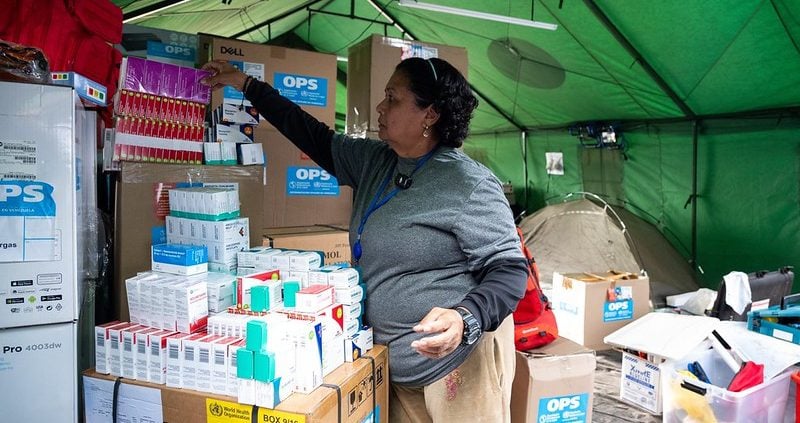 South America has a high risk of earthquakes with an average of 32,000 per year, according to
 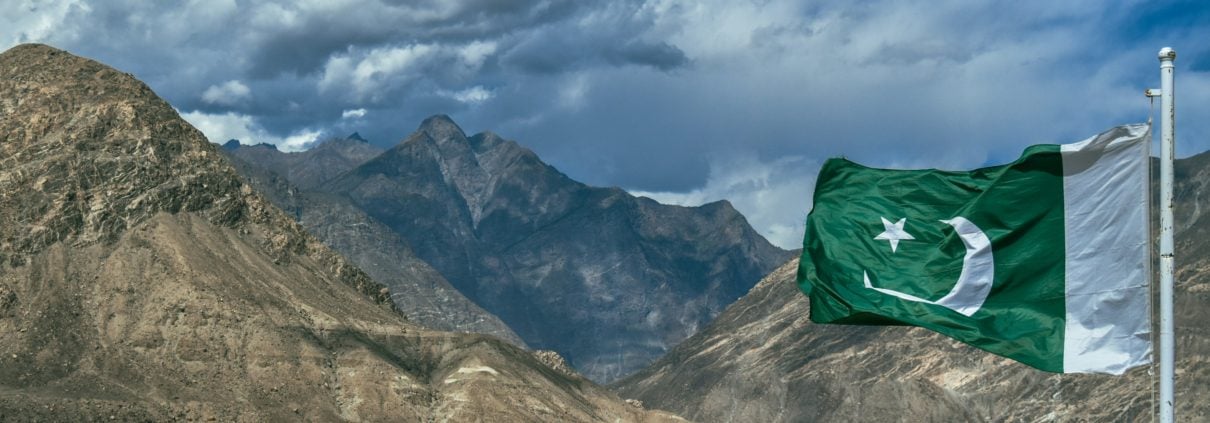 The loss of language in Pakistan is not a new issue. Although Urdu is the national language,
  Nigeria is one of the fastest-growing populations in Africa, with a growth rate of about 2.1%. Like other post-colonial nations, it has struggled to provide its youth population with employment. This has led to
 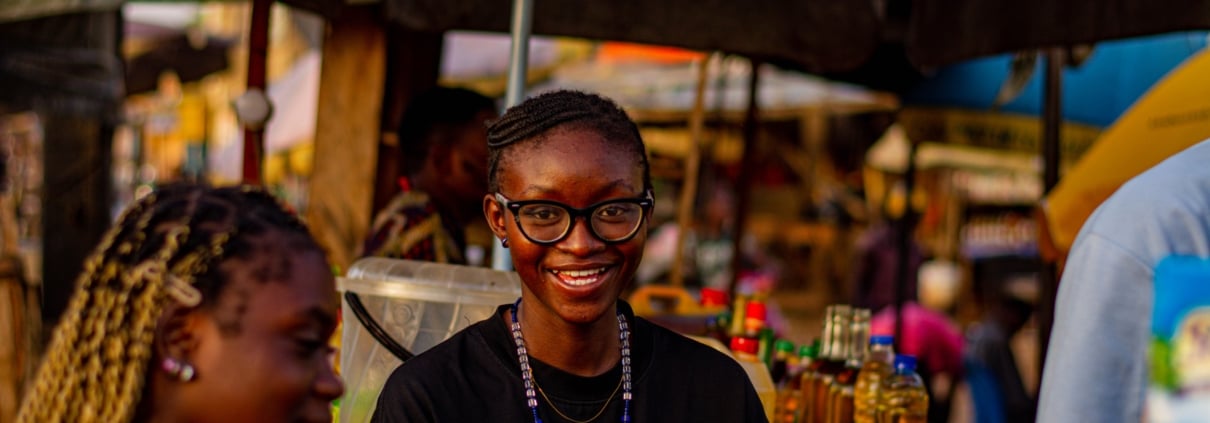 Although they may seem like an unlikely tool, reading glasses have the potential to significantly combat global poverty. This seemingly simple medical device can increase incomes across impoverished communities. According to