Leveling the Playing Field: Fighting Poverty in Burkina Faso
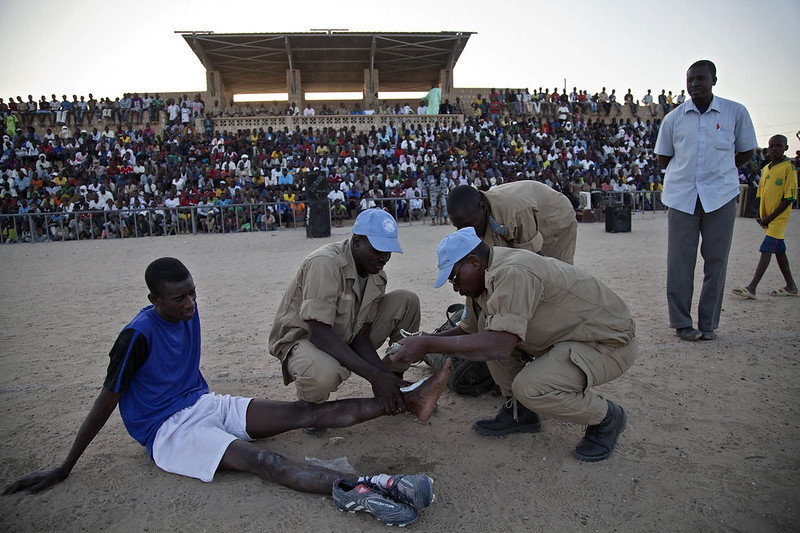 Any keen soccer fans across the world will likely have heard of players such as Edmond Tapsoba of Bayer Leverkusen, one of the most highly regarded defenders in Europe. Premier League supporters will be aware of Brentford player Dango Ouattara, who made waves with Bournemouth. Athletics fans will know triple jumper Huges Fabrice Zango, a historic figure in his home country. However, the country that produced these athletes is less well-known.
Burkina Faso is a country in the volatile Sahel region of Africa, grappling with extreme levels of multidimensional poverty. In 2023, the poverty rate was marginally under 26%, with 2.3 million people experiencing food insecurity. Sport often acts as both a unifying and a divisive arena, but sport in Burkina Faso is emerging as a vital route to escape poverty through increasingly varied employment paths. NGO activity in the country has used sport to foster entrepreneurial spirit and most importantly, bring security and joy to a generation looking for a better life.
Sport Overpowering Security Challenges
A key source of poverty challenges in Burkina Faso is regional instability, which insurgency groups spreading terror across the country further exacerbate. Terrorist groups control swathes of the Sahel region, disrupting the vital agriculture sector in Burkina Faso, in addition to inducing mass internal displacement of Burkinabe residents, which has contributed to extremely high poverty rates.
Sport has found a way to improve this situation. The Olympic Refuge Foundation created the RESPECT campaign, a Sport for Protection program which focuses its efforts on internally displaced Burkinabe residents and refugees, aiming to enhance the resilience, skillset and self-sufficiency of 11,520 young people whose lives have been disrupted.
The RESPECT campaign promotes core values of peace and security through its programs to cultivate a welfare-focused, psychologically healthy environment, ensuring that young people in the program can use sport to enact change and improve their psychological skillset alongside their physical skillset. Furthermore, it undergoes advocacy work promoting Sport for Protection approaches for adoption at the central government and municipal level, which allows for social integration and more facilities available for impoverished young people to realise their talents.
Sport Becoming a Source of Employment
Young people are increasingly entering the world of sporting entrepreneurship, helping them to become more financially independent. Whilst sporting enterprises typically encompass smaller businesses, the average age of these entrepreneurs in Burkina Faso is 37, illustrating the upward mobility and dynamism that the sporting industry offers young people in Burkina Faso.
Procuring funding from central government and other institutions is a major obstacle for these sporting enterprises, but with the support from the African Development Bank (AfDB), the PADEJ-MR is supporting young, aspirational individuals in rural areas with financial training and personalized coaching to instigate business plans in key growth drivers. The focus on young people from rural backgrounds and coordination with the Ministry of Sport and Employment indicate that sport in Burkina Faso will continue to represent a viable route away from poverty.
Sport as “Edutainment”
Sport-for-development initiatives are not just crucial for stimulating employment or fostering psychological wellbeing, but stimulating educational experiences. Othman Mezouar has led numerous sporting initiatives in Burkina Faso designed to improve youth engagement through combining fun sporting activity with learning key life skills and literacy.
Hence, the principle of “edutainment”, where the confluence of vital education and sporting entertainment facilitates young people’s academic and physical development, and these programmes led by Mezouar have helped to reduce dropout rates, strengthening the future employability of young people through maintaining their core education.
The Future
Burkina Faso is still facing extreme poverty struggles and regional factors are causing relentless instability and internal displacement. Sport in Burkina Faso has already proven its potential, though. Vital NGO activity provides a safeguard for displaced Burkinabe to participate in physical activity, promoting key characteristics such as self-sufficiency and resilience. Whilst more centralized support is needed, the growth of the sport sector demonstrates the feasible path to employment for young Burkinabe people, who look up to their heroes like Tapsoba, or Zango, but can also look to themselves for inspiration.
– Oscar McClintock
Oscar is based in Cambridge, UK and focuses on Good News for The Borgen Project.
Photo: Flickr
