Addressing Poverty in Uruguay
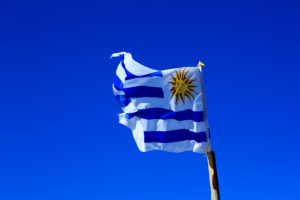 Situated between Argentina and Brazil, Uruguay holds a modest population of around 3.4 million – 0.041% of the total world population. Successfully, the nation ranks low in national poverty on a regional level. Boasting a relatively high Gross Domestic Project (GDP), Uruguayan poverty is at one of its lowest points. Recently, the nation scored a Gini index value of 40%, holding the largest middle class in Latin America. With an extreme drop in poverty in Uruguay in the mid-2000s, government assistance programs continue to keep rates stable.
Poverty in Uruguay
About 18.9% of its population are in poverty, per the Multidimensional Poverty Index (MPI). The MPI classifies multidimensional poverty as a deficit in four or more areas of housing, employment, education and government services. About 17.5% of households have at least one member without adequate education. 29.2% of households have at least one informally employed member, and 17.4% of residents have unreliable housing. The government supplies direct payments through a Conditional Cash Transfer (CCT) program, membership is reliant on school attendance and routine health checks. Payments increase with the number of children per household.
The government also provides additional benefits to retirees with childcare exceptions, along with disability and survivor benefits. Simultaneously, the government also provides benefits to widowed individuals or children with lost or disabled parents. The previous year’s median wage index determines annual cost of living. However, despite social programs’ impact, poverty is still largely disproportionate.
Groups Experiencing Higher Numbers of Poverty in Uruguay
The Multidimensional Poverty Index (MPI) uncovered higher rates of poverty among Afro-descendants and children aged 0-14. One of South America’s more homogeneous countries, less than 5% of Afro-descendants comprise its population, with 2% identifying as Indigenous, and a smaller percentage identifying as “other.” Afro-descendants make up a fourth of Latin America and are regionally 2.5% more likely to face poverty. In Uruguay alone, extreme poverty most likely affects Afro-descendants. Afro-descendants’ disposable income is 41% lower than white’s, and indigenous people’s is lower by 27%. Consequently, Afro-descendants and indigenous people receive more financial assistance, largely through programs including CCT. In 2018, the government allocated 6.1% towards Afro-descendants through CCT programs and 7.9% towards food transfer programs.
As for child poverty, the lack of child assistance programs likely leads to these disparities. In contrast, Uruguay holds a Human Capital Index (HCI) value of 0.06, relatively high in Latin America. The HCI measures the probability of a child’s success based on rates of employment, education and health.
Looking Ahead
Progressively, Uruguay’s social assistance programs have been successful in lessening national poverty. The MPI and other programs introduce factorial approaches to understanding poverty. As poverty remains disproportionate among certain populations, implementation of new programs, through demographic-specific programs and education may address income disparities between racial minority groups and create not just regional, but global records as well.
– Sarah Licon
Sarah is based in Whittier, CA, USA and focuses on Technology and Solutions for The Borgen Project.
Photo: Flickr
