Education Reform in Rwanda
 Learning poverty, as defined by the World Bank, is the inability of a child to read and comprehend an age-appropriate text by age 10. This has been a long-standing issue across Africa, with 89% of children experiencing learning poverty throughout Eastern and Southern Africa alone, an issue that was worsened due to the pandemic. However, education reform in Rwanda has helped improve the chances of students to thrive, from creating a more inclusive space to adding training to prepare students for real-world challenges.
Reform: A Little Means a Lot
One approach to education reform in Rwanda is a targeted strategy. Educational reform is a complex process that often attempts to address multiple issues simultaneously. As a result, progress tends to happen gradually and in small increments. However, with help from Educate!, a youth employment and skill-building organization founded by Eric Glustrom and Boris Bulayev, Rwandan schools have focused their efforts on one change in the curriculum: Entrepreneurship. A mandatory class for the upper-secondary school level, Educate! focused its efforts on practical learning rather than memorization and theory.
As of May 16, 2024, the reform has reached every secondary school in Rwanda, impacting 165,000 students annually. Teachers who incorporated the curriculum change and utilized student-centered techniques saw improvement in their students’ soft skills, which are closely linked to workplace success, such as patience and perseverance. In short, narrowing the scope of reform and focusing on one change at a time might sound like a short-term plan, but its benefits can be seen in the long term.
Expansion: Accessibility Is Key to Attendance
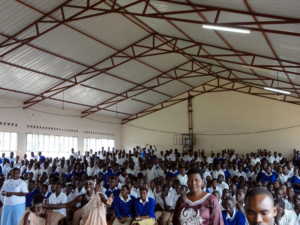
Educational reform is an excellent start, but another problem within Rwandan schools is the overcrowding. A typical primary classroom in Rwanda held an average of 73 students. Keeping that many students in one classroom, it becomes clear that not every student will receive the necessary attention they deserve to succeed.
However, thanks to a team-up with the World Bank, Rwanda has added more than 22,500 new classrooms across the country, decreasing the average from 73 students per class to 49. Another bonus of the expansion efforts is that an additional 68,000 students between the ages of 5 and 14 can now access school within a two-kilometer radius, which significantly aids their attendance and energy to learn.
Inclusivity: No Child Will Be Left Behind
Another important step in improving Rwanda’s education has been to sustain a more inclusive environment. This includes adding wheelchair ramps to the newly added schools and gender-segregated bathrooms, which gives students easier access to sanitation and a safe school environment.
In addition to physical changes within the school, Rwanda is also taking measures to introduce early identification of disabilities among students so that they can get the help they need. The Global Partnership for Education has helped Rwanda digitalize educational content and support technology‑based teaching, improving children’s reading and pronunciation skills.
Conclusion
Education reform in Rwanda has come a long way in the past couple of years. Efforts to improve education across Africa have had their fair share of successes and setbacks. However, with the help of global organizations, Rwanda is seeing incredible improvement in keeping up with an ever-evolving environment.
– Matthew Perduk
Matthew is based in Chantilly, VA, USA and focuses on Good News, Global Health for The Borgen Project.
Photo: Wikimedia Commons
