CARE Brazil Fights Poverty and Inequality in Brazil
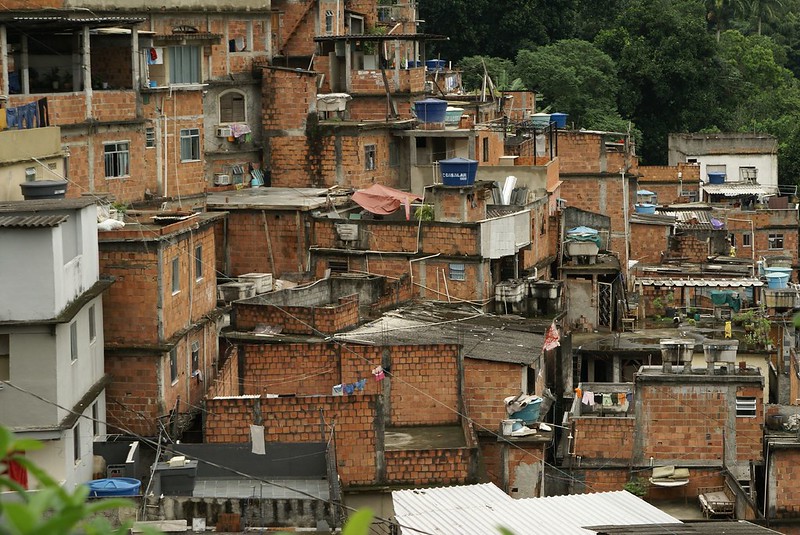 Brazil’s history is rife with historical events that define its identity. Such events include colonization, wars and issues of rapid urbanization. CARE Brazil aims to fight persistent poverty and inequality in Brazil.
Brazil’s History
The colonization of Brazil began as early as the 1500s. Before European contact, Brazil had around two million to six million indigenous inhabitants living there. Portugal’s efforts to spread its colonies to the Asian and African continents led Portugal to discover South America during its journey to a water route reaching the Indies and an archipelago in Indonesia. The indigenous inhabitants of Brazil faced harsh rule from the Portuguese, and they subjected them to European diseases, ultimately killing a majority of the native population.
Brazil’s economy originates in mining and agriculture, with its primary products of gold and sugar. From the 16th to 18th century in Brazil, the sugar industry contributed to most of the country’s wealth, while landholders with small amounts of land produced wealth through coffee and cotton. In the 18th century, coffee and cotton would become the country’s major exports.
As a product of the Napoleonic Wars, Brazil gained independence in 1822 after centuries of Portuguese rule. In an attempt to seek refuge from the war, the Portuguese king fled Napoleonic rule in Europe to arrive in Brazil. This marked the moment Brazil started on its journey to gain independence from Portuguese rule. King Pedro I was responsible for the subsequent independence of Brazil from European forces.
Poverty in Brazil
In recent years, Brazil has experienced extreme poverty, with more and more of the country’s poor experiencing food insecurity and inequality. In 2021 alone, almost 30% of Brazil’s population lived in poverty. Some factors contributing to Brazil’s poor living below the poverty line can be attributed to preexisting economic and social challenges due to the country’s systemic issues. Brazil has high levels of inequality, high public debt, low education rates, low total factor productivity and deforestation, all contributing to the country’s challenges and hurdles. Although these issues are significant and burden Brazil.The country is an important player in the global economy with its goods and policies.
Due to COVID-19, Brazil experienced an exacerbation of existing issues. The country faced a deep economic recession, further amplifying Brazil’s unemployment and economic issues. The repercussions of the pandemic are still visible today, with Brazil’s unemployment rate reaching 8.4% in January 2023. In addition, the country faces many ongoing challenges, with inflation and deforestation ranking among the top.
Therefore, while Brazil has seen many conflicts and challenges, organizations such as CARE are committed to providing the resources and strategies necessary to garner long-lasting, meaningful change.
CARE International
CARE is an international organization striving to fight global poverty and inequality. CARE focuses on women and young girls, aiming their fight against poverty and global, rampant inequality.
CARE tackles issues of economic justice, gender equality, inequality, crisis response, nutrition and health. By focusing on these issues, the organization strives to promote gender equality and eliminate poverty. According to CARE’s guiding philosophy, “At its root, poverty is caused by unequal power relations that result in inequitable distribution of resources and opportunities between women and men, between power-holders and marginalized communities and between countries. Poverty cannot be overcome without addressing these underlying power imbalances.”
To achieve CARE’s vision on a global scale, the organization spreads its impact through humanitarian and development aid initiatives in over 100 countries. CARE utilizes its advocacy skills and innovations with programs that hone in on eradicating global poverty, specifically by targeting gender equality, the guiding beacon of CARE International.
CARE Brazil
CARE’s help reached Brazil from 2001 through 2016. By partnering with Brazil’s government and local Brazilian organizations, CARE developed an approach to address structural challenges while prompting the country to respond to the needs of the impoverished. The organization develops programs implemented across multiple states within Brazil, working within various sectors to implement vocational training and offering help to those living in extreme poverty in Brazil by promoting local communities to form sustainable businesses and access to microfinancing.
According to CARE, due to the large amount of forests in Brazil, the millions of inhabitants who live below the poverty line are more prone to the adverse effects of deforestation. Therefore, it is significant that the organization collaborates with Brazil’s state governments to tackle the issue of reducing the country’s overall poverty rate. CARE has helped Brazilian communities develop sustainable and responsible forest management and reforestation systems. The organization has also aided in policy reform by promoting state governments to form a metric identifying the effects and qualities of programs dedicated to decreasing deforestation in Brazil.
Although CARE’s reach extended to Brazil in 2001, in 2021 alone, the organization helped around 2,200 participants, 98% female. The magnitude of CARE Brazil is evident, underscoring their genuine efforts to bring about gender equality in the country.
In 1953, Latin American countries, including Brazil, participated in war recovery efforts following World War II by sending CARE Packages to Europe. CARE packages, formed by the CARE International organization, help those living in poverty through emergencies and disasters. Since the 1940s, CARE has developed strategies to provide programs and solutions to needy people. The first CARE Package was delivered at the end of World War II and included meals and kits to be sent to people living in hunger in the aftermath of the war. Around 100 million Care Packages were sent to families across the globe. Today, CARE Packages include financial assistance and messages of hope to those working in health care, specifically addressing COVID-19.
Today, CARE International works to develop solutions to the issue of poverty in Brazil by working closely with national partners to bring their vision to fruition.
– Bianca Roh
Photo: Flickr
