• Link to X
  • Link to Facebook
  • Link to Instagram
  • Link to TikTok
  • Link to Youtube
  • About
    • About Us
      • President
      • Board of Directors
      • Board of Advisors
      • Financials
      • Our Methodology
      • Success Tracker
      • Contact
  • Act Now
    • 30 Ways to Help
      • Email Congress
      • Call Congress
      • Volunteer
      • Courses & Certificates
      • Be a Donor
    • Internships
      • In-Office Internships
      • Remote Internships
    • Legislation
      • Politics 101
  • The Blog
  • The Podcast
  • Magazine
  • Donate
  • Click to open the search input field Click to open the search input field Search
  • Menu Menu

Archive for category: Global Poverty

Key articles and information on global poverty.

Developing Countries, Education, Global Poverty

15 Poverty and Education Statistics


Accessing education is not easy in many poor areas of the world. Widening access to education is a key method in reducing global poverty. Here are 15 poverty and education statistics to better understand the relationship of how these two issues interplay.

  1. There are more than 124 million primary or secondary school-aged children who are not in school around the world.
  2. The reasons children do not attend school vary. Some children belong to families who cannot afford it, while others are too sick or too hungry to attend. All of these reasons trace back to poverty.
  3. The cost of providing 13 years of education for a child living in a developing country is around $1.18 a day.
  4. One of the first steps in overcoming poverty is receiving an education.
  5. With each year of schooling, an individual’s income potential increases by around 10 percent.
  6. With more education, one has more opportunities.
  7. Girls have a harder time accessing education than boys. Ten million boys and 15 million girls will never receive a primary education.
  8. Gender inequality in education is predominantly seen among the poor.
  9. If every girl had access to an education, the number of child marriages could decrease by 14 percent.
  10. If a mother has the ability to read, her children have a 50 percent greater chance of surviving past the age of five.
  11. Nearly 800 million people do not have the basic ability to read or write.
  12. Conflict, one of the many causes of poverty, is also a leading cause of disruption in education. About 35 percent of kids who are not in school are not receiving an education due to conflicts such as war.
  13. Poverty decreases as more people have access to education. Investing in education leads to further development.
  14. Rural areas yield more poverty and less access to education. A child from a rural area is twice as likely to not attend school as a child from an urban area.
  15. According to WE Charity, $26 billion more each year would give every person a basic education, which is “less than five percent of what the U.S. military spent in 2015.”

According to Children International, “education is one of the most powerful ways to reduce poverty and improve health, gender equality, peace and stability.” These 15 poverty and education statistics show that access to education is key to overcoming poverty.

– Shannon Elder

Photo: Flickr

April 17, 2017
https://borgenproject.org/wp-content/uploads/borgen-project-logo.svg 0 0 Borgen Project https://borgenproject.org/wp-content/uploads/borgen-project-logo.svg Borgen Project2017-04-17 01:30:112024-12-13 17:57:4515 Poverty and Education Statistics
Education, Global Poverty, Refugees

Refugee Access to Education in Azerbaijan


In the past decade, access to education has been on the rise in Azerbaijan. As of 2009, the literacy rate in Azerbaijan was 99.5 percent, an impressive number for the Caucasus region. Education in Azerbaijan is well on the way to meeting the Millennium Development Goal 2 of universal primary education in the next few years. However, there are clear, massive inequalities in primary education between refugees and non-refugees.

Azerbaijan has one of the largest displaced populations, as it is currently home to over one million refugees who are internally displaced people (IDP) hoping for asylum status. According to UNICEF, Azerbaijan has the highest IDP population per capita in the entire world; a majority of these people are Azeris, who have been displaced from their own homes due to the Nagorno-Karabakh war.

Refugee Children Require Additional Educational Resources

Azerbaijan is leading the Caucasus region in access to education for refugees. In 2003, Azerbaijan began allowing refugees to attend public school. However, since there is a large IDP population, inequities in refugee education are inevitably holding back universal education in Azerbaijan. Many refugee children do not have the same access to education as native children, affecting early, primary and secondary schooling.

A 2010 report indicates that about 20 percent of Chechen refugee children in Azerbaijan do not attend school, and of those who do attend, many cannot understand their instructors due to language barriers. This is common for many refugee populations in Azerbaijan. UNICEF notes that “most refugees have special linguistic needs since many do not speak the national language, straining teachers and school resources.”

It is common for displaced children to experience violence and hardship due to their refugee status, leading to many children requiring additional special psychosocial learning. Additionally, refugee children enter school later and tend to be less prepared for school, compared with the average Azerbaijani student.

Though Azerbaijan is working to ensure increased access to education for all children, many outside organizations have taken initiative to increase educational opportunities for refugees in Azerbaijan. For example, the U.N. High Commissioner for Refugees (UNHCR) found that oftentimes, refugee children do not go to school because their school materials are too expensive. To remedy this, the UNHCR created a textbook fund, giving more than 8,000 textbooks to about 2,000 refugee children.

In the future, there is a great deal of hope for the state of universal education in Azerbaijan.

– Morgan Leahy

Photo: Flickr

April 16, 2017
https://borgenproject.org/wp-content/uploads/borgen-project-logo.svg 0 0 Borgen Project https://borgenproject.org/wp-content/uploads/borgen-project-logo.svg Borgen Project2017-04-16 01:30:452024-12-13 17:57:50Refugee Access to Education in Azerbaijan
Children, Disease, Global Poverty

UNICEF Polio Eradication Campaign Reaches Five Million Children


Thanks to an unprecedented U.N. Children’s Fund operation, five million Yemeni children received vaccinations against polio in early 2017. This record polio eradication campaign consisted of 40,000 people on mobile health teams going door-to-door in Yemen to reach the nation’s vulnerable children. The brave vaccinators courted danger by hiking over mountains, through valleys and across battle lines to reach the children in need. The children also received Vitamin A supplements to bolster their immune systems.

Vigilance is Critical

Despite the encouraging numbers from the vaccination efforts, continued vigilance is vital to prevent new cases. UNICEF‘s Representative in Yemen, Meritxell Relaño, echoed the importance: “In the last two years, more children have died from preventable diseases than those killed in the violence. This is why vaccination campaigns are so crucial to save the lives of Yemen’s children and to secure their future.”

The campaign couldn’t have come at a better time. Relaño indicated that the children in Yemen are especially vulnerable because the nation’s conflict is keeping them from adequate nutrition and healthcare.

Reza Hossaini of UNICEF  also reiterated the need for vigilance: “There is no question that progress to end polio is real and tangible. But – and it’s a big ‘but’ – until all children everywhere are consistently and routinely immunized against polio, the threat is there.”

Eradication on the Horizon?

Significant progress has been made since 1988 when UNICEF joined the Global Polio Eradication Initiative. At that time, there were 350,000 documented cases of the debilitating disease worldwide. These organizations hope to completely eliminate polio by 2019.

Their efforts have been working. By 2014, there were only 359 documented cases worldwide. More than 60 years after the first polio vaccine was developed by Jonas Salk, our planet is finally nearing total eradication of this devastating disease.

– Gisele Dunn

Photo: Flickr

April 16, 2017
https://borgenproject.org/wp-content/uploads/borgen-project-logo.svg 0 0 Borgen Project https://borgenproject.org/wp-content/uploads/borgen-project-logo.svg Borgen Project2017-04-16 01:30:332024-12-13 17:57:47UNICEF Polio Eradication Campaign Reaches Five Million Children
Global Poverty, Refugees

10 Facts About Italy Refugees

10 facts about Italy refugees
Italy has become one of the top destinations for refugees, or asylum seekers, over the past few years. Many of its current refugees transport via boat, crossing the Mediterranean Sea on their way to find peace. Here are 10 facts about Italy refugees:

  1. In 2016, Italy broke its record of asylum seekers admitted from the Mediterranean, at close to 200,000 for the year.
  2. Eighty-five percent of these migrants were from African countries, including Nigeria, Eritrea, and Sudan.
  3. More than 176,000 refugees are in reception centers.
  4. October and November were record-breaking months for Italy, with more refugees making the sea voyage than in previous years. This was partially due to better sea conditions.
  5. Better sea conditions resulted in more people traveling on a single boat, which also resulted in more deaths. Almost 5,000 people died at sea in 2016, compared to fewer than 4,000 the previous year.
  6. The United Nations High Commissioner for Refugees (UNHCR) estimated that more than 85 percent of migrants arriving in Italy through the Mediterranean started their journey in Libya.
  7. In September 2016, European countries agreed to relocate 160,000 refugees from Italy and Greece, to help ease the heavy loads that these two countries carry — only 4,000 were displaced.
  8. Some Italy refugees perform volunteer community service — sweeping the streets, cleaning up parks and maintaining gardens.
  9. According to the U.N. refugee agency, 26,000 unaccompanied minors made the trek to Italy last year.
  10. The Italian government is constructing a plan to integrate asylum seekers into the workforce while they are waiting in the reception centers.

Attempts to get help from other European countries to lessen the load on Italy have fizzled out over the past few years. As a result, the Italian government strains to make providing aid to those who flee from turmoil possible. These 10 facts about Italy refugees illustrate the difficulties, and the opportunities, that this mass displacement presents for all countries.

– Dustin Jayroe

Photo: Flickr

April 16, 2017
https://borgenproject.org/wp-content/uploads/borgen-project-logo.svg 0 0 Borgen Project https://borgenproject.org/wp-content/uploads/borgen-project-logo.svg Borgen Project2017-04-16 01:30:222024-12-13 17:57:4610 Facts About Italy Refugees
Education, Global Poverty

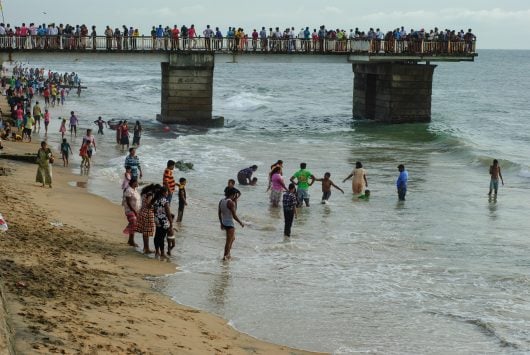
Education in Sri Lanka: Yowun Pura Gives Sri Lankan Youth Voice


Yowun Pura, or “The City of Youth,” is a youth program in Colombo, Sri Lanka that provides the nation’s student population the opportunity to contribute to national, social and economic development within their communities. It also provides them the chance to improve health and education in Sri Lanka by affording children the opportunity to stay, both mentally and physically active and asking for their feedback.

Sri Lankan Prime Minister Ranil Wickremesinghe formed the program himself while he was Minister of Education and Youth Affairs back in the 1980s. The Prime Minister speaks highly of the program, indicating that the youth are the most successful and contributive when it comes to quality of life and education in Sri Lanka.

The program, which is run through the Youth Camp and organized by the government, intends to provide local youth the skills necessary in order to actively and effectively contribute to their nation’s development.

Yowun Pura is a widespread effort to empower the nation’s youth by affording them the opportunity to strengthen social and economic development, as well as education in Sri Lanka. The program does so by working to develop relationships, dialogue and reconciliatory skills amongst Sri Lankan youth and between international youths.

Through group work and programs such as educational activities, sports, cultural events, entertainment and open dialogue, the program aims to open active discussion about national development with future generations and inspire the youngest generations to share their suggestions regarding the nation’s prosperity.

Though entirely voluntary, Yowun Pura is proud to shed the confines of race, religion and political parties in order to unite the nation’s youth. For this reason, the youth leadership program is considered an important advancement in the development of global education in Sri Lanka.

– Jaime Viens

Photo: Flickr

April 16, 2017
https://borgenproject.org/wp-content/uploads/borgen-project-logo.svg 0 0 Borgen Project https://borgenproject.org/wp-content/uploads/borgen-project-logo.svg Borgen Project2017-04-16 01:30:052024-05-27 23:59:53Education in Sri Lanka: Yowun Pura Gives Sri Lankan Youth Voice
Children, Global Poverty, Hunger

Five Facts About Hunger in Fiji


As of 2016, Fiji, a country in Oceania, consists of more than 300 islands and is home to more than 915,000 people. Hunger in Fiji is one of the nation’s leading problems, posing a threat to the large population. Here are five facts about hunger in Fiji.

Hunger in Fiji

  1. According to Half United, an organization committed to fighting hunger in many countries, more than 250,000 people live in poverty. This number equates to one in every four people struggling to put food on the table.
  2. More than 50 percent of the population has access to safe drinking water, and even fewer have access to adequate sanitation. Conditions have advanced, as more than 95 percent of the total population has reportedly experienced improved drinking water sources and more than 91 percent of the total population has seen improved sanitation facility access.
  3. The strongest tropical cyclone hit Fiji in February 2016, killing 43 people and causing a national emergency. The cyclone resulted in the washing away of crops and left thousands of residents homeless. With such detrimental effects, Cyclone Winston has contributed significantly to hunger in Fiji.
  4. According to a UNICEF report, under-five malnutrition exists as an “indicator of poverty and hunger.” The rate of undernourished children in Fiji has declined from 15 percent in 1980 to six percent in 2009. Reducing the prevalence of under-five malnutrition remains a priority of the government in order to eradicate poverty and hunger in Fiji.
  5. Young girls are nearly twice as likely to be stunted as boys as a consequence of long-term insufficient nutrient intake. Stunting is defined as low height for age and often results in delayed motor development, impaired cognitive function and poor school performance.

Poverty and hunger continue to affect the people of Fiji, but fortunately, organizations such as The World Food Programme (WFP) and Half United provide vulnerable families with the necessary assistance and resources to get back on their feet.

– Mikaela Frigillana

Photo: Flickr

April 15, 2017
https://borgenproject.org/wp-content/uploads/borgen-project-logo.svg 0 0 Borgen Project https://borgenproject.org/wp-content/uploads/borgen-project-logo.svg Borgen Project2017-04-15 01:30:252024-12-13 17:57:49Five Facts About Hunger in Fiji
Global Poverty, Hunger, United Nations

Incrementally Changing Hunger in Uruguay


In recent decades, Uruguay has taken strides to eliminate poverty and the prevalence of hunger. Only 3.3 percent of the country’s population was considered undernourished in 2016. Only 1.3 percent of children under the age of five experienced wasting conditions. The elimination of hunger in Uruguay can be attributed to both broad changes in infrastructure and the contributions of nonprofit organizations.

How Uruguay is Successfully Addressing Hunger

Uruguay succeeded in meeting the first U.N. Millennium Development Goal, known as the “Zero Hunger Challenge” in 2013. The country achieved this goal two years ahead of schedule.

The government’s success in its social policies against poverty has received international attention. The U.N.’s Food and Agricultural Organization (FAO) especially praised the implementation of monthly income subsidies. Households classified as “vulnerable” receive a monthly income subsidy of 700 Uruguayan pesos. “Highly vulnerable” families receive twice that amount.

As an outcome, moderate poverty decreased from 32.5 percent in 2006 to 9.7 percent in 2015. Additionally, extreme poverty decreased from 2.5 percent to 0.3 percent in the same period.

Alongside broad government initiatives to eliminate poverty in general, a number of small-scale nonprofit organizations have arisen in recent years. Many share the goal of eliminating residual hunger in Uruguay.

Niños con Alas, or Children with Wings, works specifically to improve the infrastructure of Uruguayan schools. The organization provides schools with staple pantry products like flour, sugar, rice, cornmeal, tomato pulp, oil, noodles, milk powder and minced meat on a weekly basis. Through its contributions, Niños con Alas supplies three meals a day for more than 1,000 children.

Argentine national Santiago Abdala created Uruguay’s Banco de Alimentos, in 2012. Originally operating from Santiago’s home, the food bank now delivers food to more than 45 charities and helps feed more than 7,000 individuals. Banco de Alimentos is supported by the Global Food Banking Network and partnerships with international companies like Unilever.

Overall, the Uruguayan government and charitable nonprofit organizations have provided the people with options in terms of hunger. The defeat of hunger in Uruguay sets a good example for countries all over the world looking to meet the Millennium Development Goals.

– Casie Wilson

Photo: Flickr

April 15, 2017
https://borgenproject.org/wp-content/uploads/borgen-project-logo.svg 0 0 Borgen Project https://borgenproject.org/wp-content/uploads/borgen-project-logo.svg Borgen Project2017-04-15 01:30:202024-12-13 17:57:46Incrementally Changing Hunger in Uruguay
Education, Global Poverty

Teacher Training Advances Education in Ghana


In recent years, education in Ghana has suffered due to untrained teachers, particularly in disadvantaged communities. In 2012 Ghana partnered with the Global Partnership for Education (GPE) to address the issue of equal access to education.

According to the World Bank, Ghana faces a disparity in the number of trained teachers between the disadvantaged districts of Northern Ghana and the relatively affluent southern districts. Part of Ghana’s partnership with GPE included a grant that funded the Untrained Teachers Diploma in Basic Education (UTDBE) program. Ghana’s government selected 8,000 teachers from impoverished communities to receive training during holidays. This allowed teachers to continue working while improving their skills during the summer and holiday breaks. The course began in 2012 and lasted four years.

The goal? To improve access to equal education in Ghana by closing the economic and educational gap between advantaged and disadvantaged communities.

The World Bank has evaluated UTDBE’s successes since the program’s conclusion in 2016. It has been noted that UTDBE-trained teachers showed skills and average scores comparable to teachers who had training before entering the classroom. The course is also more cost-effective than pre-service training. Having more trained teachers means that children in disadvantaged areas now have the same educational opportunities as those in more developed areas.

Last October, the World Bank partnered with GPE to fund a two-day training course for 120 teachers in Akwatia, Ghana that focused on health in schools. Sightsavers and Partnership for Child Development implemented the program. The goal of the project is to converge all school health programs on one platform. If the project succeeds, every child will have access to health services in school no matter their economic status.

The two-day training provides teachers basic skills for early identification of students with hearing, vision or intellectual disabilities. These skills will allow teachers to offer their students early referrals, which will give them the treatment they need to succeed in school. The project also aims to deworm all students in the Denkyenbuo District in Ghana and conduct eye screenings for both teachers and students.

– Rachel Cooper

Photo: Flickr

April 15, 2017
https://borgenproject.org/wp-content/uploads/borgen-project-logo.svg 0 0 Borgen Project https://borgenproject.org/wp-content/uploads/borgen-project-logo.svg Borgen Project2017-04-15 01:30:012024-12-13 17:56:14Teacher Training Advances Education in Ghana
Global Poverty, Health, Women

Addressing Women’s Health: The AIDS Epidemic


The global AIDS epidemic continues to threaten women’s health. There has been significant worldwide progress in combating this outbreak, as evidenced by a U.N. report showing a 33 percent global reduction in newly diagnosed HIV infections from 2001 to 2012. However, development has been disproportionate for women, especially in regions such as sub-Saharan Africa.

As the Joint U.N. Programme on HIV and AIDS reports, adolescent girls accounted for 64 percent of new HIV infections among youth globally in 2013. In addition, sub-Saharan Africa houses 80 percent of young women with HIV worldwide. Those aged 15 to 24 are nearly twice as likely to contract AIDS compared to their male counterparts.

Such statistics have a number of causes. Women are more likely to be diagnosed with HIV if they have experienced physical or sexual abuse, especially through relationships that involve extramarital sex or little-to-no contraceptive use. Social norms, especially in sub-Saharan Africa, also impose barriers, as men have more dominance over women in relationships.

Lack of education, specifically sex education, also plays a role in women’s disproportionate diagnosis of HIV. A report by the U.N. demonstrated that out of 32 countries, “Women who had some level of secondary education were five times more likely than non-literate women to have knowledge of HIV.”

The probable leading cause of the AIDS epidemic affecting women comes from a lack of health services. Those who have insufficient access to HIV and reproductive health care treatments and support are less likely to monitor their health and thereby reduce infection. This is the case in many African regions. Laws also introduce obstacles; for example, in 2014, nine countries reported regulations that inhibit girls from obtaining HIV-related services.

Executive Director of UNAIDS, Michel Sidibe, confirms: “This epidemic, unfortunately, remains an epidemic of women.” Fortunately, however, a number of organizations have made motions to counter the problem, beginning with UNAIDS itself. In 2015, it introduced a global initiative of reducing HIV infections to about half a million per year by 2020. This plan involves reducing new infections among women by a factor of 75 percent.

As the Human Rights Watch notes, such can be accomplished through legal reform, the implementation of health awareness programs, mandatory education measures and assistance from international NGOs. In order to combat the AIDS epidemic and its effect on women, serious action must continue worldwide.

– Genevieve T. DeLorenzo

Photo: Flickr

April 14, 2017
https://borgenproject.org/wp-content/uploads/borgen-project-logo.svg 0 0 Borgen Project https://borgenproject.org/wp-content/uploads/borgen-project-logo.svg Borgen Project2017-04-14 01:30:432024-12-13 17:57:47Addressing Women’s Health: The AIDS Epidemic
Developing Countries, Global Poverty

Instability and Poverty in the Balkans


Over the past 30 years, the Balkans have experienced levels of change and turmoil. The lack of stability in the region has resulted in high levels of poverty in the Balkans.

The Balkan Peninsula, or the Balkans, is a region in Eastern Europe with coastlines on the Mediterranean Sea, Adriatic Sea, Aegean Sea, and the Black Sea. The countries that make up the Balkans are Slovenia, Croatia, Bosnia and Herzegovina, Romania, Serbia, Montenegro, Bulgaria, Macedonia, Albania and Greece.

Not all of the countries in the peninsula are experiencing dramatic poverty problems. For instance, less than 10 percent of the population of Montenegro is in poverty. Overall, however, poverty in the Balkans expands to about one-fourth of the region’s population.

Albania has one of the lowest standards of living and the lowest per capita income in all of Europe. Twenty-five percent of its population lives on less than $2 per day.

In Bosnia and Herzegovina, more than 15 percent of the population live in poverty. Croatia just broke through a recession that lasted until 2015. During the recession, the number of children in poverty rose by 50 percent. About one-fifth of Croatia’s population is considered poor.

Greece is in the middle of a longstanding economic crisis, on par with the Great Depression. During this time, jobs have dissipated and wages have decreased. Today, almost a quarter of Greece’s population is considered to be in conditions of severe deprivation.

Other regions experience their own financial difficulties. Kosovo was the poorest region of the former Yugoslavia, and declared its independence from Serbia in 2008. Years of political instability have left 30 percent of Kosovans in poverty. In addition, one-third of the population of Macedonia lives at or below the poverty line. The country faces high unemployment rates. In Serbia, one-fourth of the population is poor, and some of its southern regions lack basic infrastructures and public services.

Despite all of the economic issues in the Balkans, there are certainly signs of optimism, specifically the crime rate. Usually, high levels of poverty coincide with an increase in crime. However, this is not the case in the Balkans, which are regarded as some of the safest countries in all of Europe. Most of the countries are simply lacking the resources necessary to provide for their people. Assistance on an international level is imperative to lift these states out of poverty.

– Dustin Jayroe

Photo: Flickr

April 14, 2017
https://borgenproject.org/wp-content/uploads/borgen-project-logo.svg 0 0 Borgen Project https://borgenproject.org/wp-content/uploads/borgen-project-logo.svg Borgen Project2017-04-14 01:30:422024-12-13 17:57:47Instability and Poverty in the Balkans
Page 1688 of 2164«‹16861687168816891690›»

Get Smarter

  • Global Poverty 101
  • Global Poverty… The Good News
  • Global Poverty & U.S. Jobs
  • Global Poverty and National Security
  • Innovative Solutions to Poverty
  • Global Poverty & Aid FAQ’s
Search Search

Take Action

  • Call Congress
  • Email Congress
  • Donate
  • 30 Ways to Help
  • Volunteer Ops
  • Internships
  • Courses & Certificates
  • The Podcast
Borgen Project

“The Borgen Project is an incredible nonprofit organization that is addressing poverty and hunger and working towards ending them.”

-The Huffington Post

Inside The Borgen Project

  • Contact
  • About
  • Financials
  • President
  • Board of Directors
  • Board of Advisors

International Links

  • UK Email Parliament
  • UK Donate
  • Canada Email Parliament

Get Smarter

  • Global Poverty 101
  • Global Poverty… The Good News
  • Global Poverty & U.S. Jobs
  • Global Poverty and National Security
  • Innovative Solutions to Poverty
  • Global Poverty & Aid FAQ’s

Ways to Help

  • Call Congress
  • Email Congress
  • Donate
  • 30 Ways to Help
  • Volunteer Ops
  • Internships
  • Courses & Certificates
  • The Podcast
Scroll to top Scroll to top Scroll to top