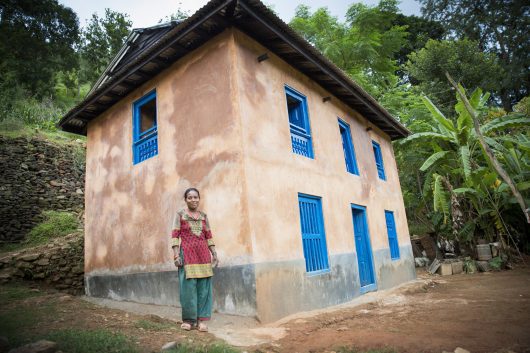
 Build Change, a nonprofit based in the United States, is helping people in developing nations build earthquake and typhoon resistant buildings.
The nonprofit was founded by earthquake engineer Elizabeth Hausler in 2004. The issue of resistant housing in developing nations had been on her mind ever since the 2001 earthquake in Gujarat, India. About 20,000 people were killed in this earthquake due to their unreinforced stone masonry housing collapsing.
This event made her realize the urgency of teaching safe construction methods to people living in developing nations that are at risk for natural disasters such as earthquakes. In an interview, Hausler said, “When earthquakes happen in the U.S. or Japan, very few people are killed. It costs a lot of money but there are very few deaths in earthquakes. But in developing countries thousands and thousands of people are still killed by earthquakes.”
In order to effectively introduce safer building alternatives to people in impoverished communities, Build Change takes a variety of approaches in the communities they hope to improve.
For example, it trains local builders, engineers, homeowners and government officials to build resistant houses and buildings. The organization makes sure the changes are simple and affordable for the community, yet effective. By introducing new construction methods that also involve new materials, Build Change creates more jobs in engineering, construction and materials production in the places they work.
Additionally, it works with governments to develop building code enforcement. It makes sure there are building inspectors within the society that ensure buildings are built according to the safety code.
The nonprofit also helps homeowners get access to the money they need to either strengthen their existing house or build it to be earthquake-resistant. They do this by by partnering with local governments to provide people access to microloans.
So far, Build Change has helped build 51,296 safer buildings, trained 27,857 people and created 12,303 jobs.
It currently works in Colombia, Guatemala, Haiti, Indonesia, Nepal and the Philippines, and has worked in Bhutan, China, India, Ecuador, Iran and Peru in the past.
Thanks to Build Change, thousands of people living in earthquake and typhoon-prone areas can now sleep peacefully at night, knowing they are protected if a natural disaster strikes.
– Anna Gargiulo
Photo: Flickr
 Pakistan is caught in the middle of serious crises: insecurity, poor education, poverty and the internally displaced persons (IDPs). Non-state armed groups have killed more than 50,000 Pakistanis. Attacks on civilians and security personnel continue unabated. A recent suicide blast killed 26 people, mostly policemen, in the eastern Pakistani city of Lahore on July 24, 2017. The presence of these challenges requires the U.S. to help people in Pakistan.

 According to the International Energy Agency, 1.2 billion people are without access to electricity globally. Over 95 percent are located in either sub-Saharan Africa or developing Asia, and 80 percent live in rural communities. Access to clean energy sources directly affects health, education and income, putting rural communities at a severe disadvantage.

 It’s easy to make assumptions about a “developing” country from the comfort and privilege of a “developed” one. It’s hard to truly understand what it might actually be like to live in a country without everything a developed country is used to. Treading the murky waters of stereotypes, assumptions and clichés, here are some common misconceptions and myths about developing countries: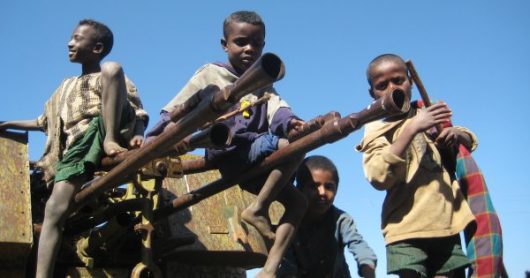

The people of Pakistan have, among other issues, suffered from a prolonged military rule and lack of democratization. The military’s historical focus on India as Pakistan’s arch-rival has diverted most of the country’s national expenditures toward defense, leaving behind education and economic development for decades. The military has ruled over the country for more than 33 years, which makes almost half of its lifespan.
Moreover, over the years, the military empowered religion as the guiding pillar of national unity. This has undermined secular ideals and the sociocultural diversity of Pakistani society. The same institutions also created religious proxies to counter the legitimate, but exaggerated, Indian threat to Pakistan. The history of using such proxies dates back to the conflict against the present day Bangladesh in 1971 and the Russian-Afghan War in the 1980s.
One way the U.S. can help people in Pakistan is to support democratization and development, because they are essential to improve the lives of people in the long run. While the U.S. has given economic aid for such development, however, historically it has put its weight behind generals in power by giving more military than economic aid to Pakistan.
The U.S. has, since 1982, provided $17 billion in military assistance compared to $13.5 billion in economic assistance mostly during military operations in Afghanistan that started in the late 1970s. Some analysts believe that such support to military rulers has derailed democracy and hindered development in Pakistan.
While Pakistan has, since 2008, entered into a new democratic phase of its history after the 1990s, the military still controls important policy domains such as national security and foreign policy. One reason could be the increased military assistance in the 2000s.
The Enhanced Partnership with Pakistan Act of 2009 aka the Kerry-Lugar-Berman Act was a welcome step and a major shift in U.S. foreign aid to help people in Pakistan. The Act authorized $7.5 billion in non-military aid over five years for “democratic governance, economic freedom, investments in people, particularly women and children, and development in regions affected by conflict and displacement.” Nevertheless, it is still small compared to the overall direct assistance to the military.
There is a need for more civilian assistance in the future. The U.S. needs to further increase educational aid because Pakistanis highly value education, but unfortunately, there are meager learning opportunities in the country, especially among poor communities in rural areas. The good news is that Pakistan is among the highest recipients of educational exchange programs like the Fulbright program, the Global Undergraduate Exchange Program, etc. Maintaining and possibly increasing such opportunities will further help the people of Pakistan and strengthen the long-term engagement between the two countries.