• Link to X
  • Link to Facebook
  • Link to Instagram
  • Link to TikTok
  • Link to Youtube
  • About
    • About Us
      • President
      • Board of Directors
      • Board of Advisors
      • Financials
      • Our Methodology
      • Success Tracker
      • Contact
  • Act Now
    • 30 Ways to Help
      • Email Congress
      • Call Congress
      • Volunteer
      • Courses & Certificates
      • Be a Donor
    • Internships
      • In-Office Internships
      • Remote Internships
    • Legislation
      • Politics 101
  • The Blog
  • The Podcast
  • Magazine
  • Donate
  • Click to open the search input field Click to open the search input field Search
  • Menu Menu

Archive for category: Foreign Policy

Information and news about foreign policy

Foreign Aid, Foreign Policy, Global Poverty

Types of Foreign Aid

Types of Foreign Aid

America’s foreign aid budget for 2016 is expected to be around $37.9 billion. The goals of American foreign aid involve a mixture of strategic and humanitarian efforts. Therefore, the types of foreign aid the government administers are aimed at addressing a variety of issues.

Various initiatives are represented by five different categories, as outlined by Congressional Research Service:

  1. Bilateral Aid is aid given by the U.S. government directly to another country. According to the Congressional Research Service, it is designed to “foster sustainable broad-based economic progress and social stability in developing countries.” In other words, bilateral aid focuses on long-term development that fosters human rights and political and economic freedoms.
  2. Economic Aid Supporting U.S. Military and Political Objectives’ primary purpose is to meet U.S. economic, political or security interests. Funds provided under this category can be used for development projects or as cash transfers to help a recipient country stabilize its economy and service foreign debt. By helping nations fund development projects and stabilize their economies, the U.S. government hopes to achieve greater success in addressing national security issues such as terrorism, weapons proliferation and drug trafficking.
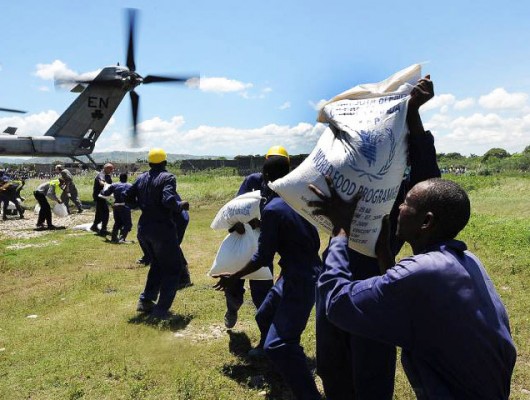
  3. Humanitarian Assistance is given in response to natural disasters and problems resulting from conflict zones in failing states. Unlike development assistance programs, which are often viewed as long-term efforts, humanitarian aid programs are generally devoted to addressing emergencies. For example, humanitarian aid includes providing protection and assistance to refugees and internally displaced persons and the delivery of emergency food aid.
  4. Multilateral Aid, although less common from the U.S., combines aid from multiple donor nations to finance multidimensional development projects. These initiatives are implemented by international organizations, like UNICEF or the World Bank.
  5. Military Assistance aims to help U.S. allies to acquire American military equipment and training. An example of one of these programs, administered by the Department of State, is Foreign Military Financing. This grant program enables governments to receive American military equipment. Two major recipients of this FMF grant are Israel and Egypt.

While the types of foreign aid are varied, the most important part of any U.S. foreign aid program, as Texas Representative Kay Granger appropriately noted, is that it be “carefully guided and targeted at a specific issue…it can and must be effective.”

– Taylor Resteghini

Sources: Borgen Project, Center for Global Development, Congressional Research Service, U.S. Foreign Assistance
Photo: Global News

March 11, 2016
https://borgenproject.org/wp-content/uploads/borgen-project-logo.svg 0 0 Borgen Project https://borgenproject.org/wp-content/uploads/borgen-project-logo.svg Borgen Project2016-03-11 01:30:102024-12-13 17:51:26Types of Foreign Aid
Foreign Aid, Foreign Policy, Global Poverty, Government

Electrify Africa Act Signed Into Law

Electrify Africa
President Obama has signed into law the Electrify Africa Act of 2015, which will bring electricity to millions in Africa.

About two-thirds of people in Africa do not have access to reliable power, according to BBC News. The Electrify Africa Act will establish a strategy to help sub-Saharan countries implement power solutions to promote economic growth and reduce poverty.

For people without electricity, simple tasks such as cooking or reading are complicated without a light source at night. Many people in Africa are also unable to use modern technologies, like cell phones or computers, or do basic tasks such as refrigerating food and medicine.

The lack of electricity causes some families in Africa to use fossil fuels or charcoal, which has a negative effect on the environment and health.

According to BBC News, House Committee on Foreign Affairs Chairman Ed Royce stated that this initiative will “improve the lives of millions in sub-Saharan Africa by helping to reduce reliance on charcoal and other toxic fuel sources that produce fumes that kill more than HIV/Aids and malaria combined.”

Electrify Africa
Power Africa was launched by President Obama in 2013. It took nearly two years for it to pass through the Senate and House of Representatives and become the Electrify Africa Act of 2015.

The U.S. initially invested $7 billion in the project but that number has since risen to nearly $43 billion. According to Voice of America, the high cost of energy in sub-Saharan Africa makes producing exports impossible, so it would be beneficial to the U.S. to help Africa become a major trading partner.

In addition to the U.S. government, African governments and private companies are involved in the development of the Power Africa initiative. The Electrify Africa Act provides a framework for companies to invest in African energy solutions.

The long-term goal is to double the amount of electricity available to people in sub-Saharan Africa, bringing electricity to 50 million people in the region by 2020.

– Kaitlyn Arford

Sources: BBC, Christian Science Monitor, Voice of America

March 7, 2016
https://borgenproject.org/wp-content/uploads/borgen-project-logo.svg 0 0 Borgen Project https://borgenproject.org/wp-content/uploads/borgen-project-logo.svg Borgen Project2016-03-07 01:30:422020-06-22 16:49:45Electrify Africa Act Signed Into Law
Foreign Policy, Global Poverty

Legislation to Watch

Legislation
Legislation is one major factor that keeps the United States strong. Without rules and regulations, we simply wouldn’t be the United States. That being said, the year 2015 has been chock full of legislation plans.

In order to be a well-informed citizen, it is important to keep an eye on the current legislation that is in review by the government. The following list will showcase just a few of the many important happenings within Congress.

1. Affordable Care Act

For the nation’s endlessly controversial health care law, 2015 initially looks a little bit like 2012, with lots of uncertainty hinging on a decision by the U.S. Supreme Court. States that want to get a head start against the possibility of disruption will have to act quickly.

2. Global Food Security Act

In the last 24 years, we have seen the number of undernourished people in the world go down by 209 million people. Out of that 209 million, 203 million came from “developing regions.” This act would enable our government to craft a comprehensive strategy to enable food security, utilizing the funds, personnel and brainpower of at least 11 different departments and agencies. These organizations would then collaborate with others around the world to advance innovative, cost-effective plans with strong accountability mechanisms.

3. Food for Peace Reform Act

The bill eliminates monetization of the international food market, which GAO has previously criticized as “inefficient” and unsustainable for the recipient’s market. Removing monetization would allow U.S. aid to reach an additional 800,000 people while freeing up to $30 million per year. Under the current process, 25 cents is lost on every taxpayer dollar spent.

4. International Affairs Budget

The International Affairs Budget makes up only a mere one percent of the U.S. federal budget, but impacts all aspects of life in America. These funds are imperative for helping the world’s poor, and as global citizens, we must back initiatives that can save millions of lives both domestically and abroad.

5. School Testing

When governors and state school officials released the Common Core curriculum standards four and a half years ago, the new program was touted as a fair and accurate way to measure student achievement across state lines and cultivate the analytical skills that many argue American children will need in order to compete on a global scale.

This legislation is in no order of importance, as they are all equal in importance to help the United States facilitate positive growth both domestically and internationally.

– Alysha Biemolt

Sources: Governing, Borgen Project
Photo: The Whitehouse

August 23, 2015
https://borgenproject.org/wp-content/uploads/borgen-project-logo.svg 0 0 Borgen Project https://borgenproject.org/wp-content/uploads/borgen-project-logo.svg Borgen Project2015-08-23 01:30:282024-05-27 09:27:29Legislation to Watch
Foreign Policy, Global Poverty, Human Rights

Global Magnitsky Human Rights Accountability Act

Global Magnitsky Human Rights Accountability Act
The Global Magnitsky Human Rights Act is a bill currently in the Foreign Relations Senate committee.

Sponsored by Senator Benjamin Cardin (D), the bill’s intent is to “impose sanctions with respect to foreign persons responsible for gross violations of internationally recognized human rights, and for other purposes.”

Having been introduced in January of 2014, and then reintroduced in January 2015, the bill has yet to reach the Senate floor. However, it has earned the sponsorship of Senators like Marco Rubio (R) and John McCain (R).

This bill would give the president the power to impose sanctions on any entity or government who abuses the rights of people. The definition of these abuses is in accordance with the “internationally recognized human rights.” These abuses include human trafficking and extrajudicial killings. The bill would not only serve to punish governments who are actively participating in the abuses but those who are providing financial assistance to the individual or entity wreaking havoc.

Earlier this month, the Human Rights Watch testified in front of the Senate Foreign Relations Committee, urging Congress to pass the bill.

In their testimony, they mentioned the fact that in many countries (especially those affected by Arab Spring), “conflict and repression” were unexpected consequences, affecting large quantities of people. During their testimony, they also spoke of how the U.S. and other Western democracies rarely speak harshly of the atrocities taking place.

Because of the lacking dialogue taking place in mainstream media, and in the interest of the people being affected by the negative choices made by people in high positions of power, the Human Rights Watch supported the passage of this bill so that it is “harder for authoritarian rulers, dictators and kleptocrats to recruit and maintain a coterie of supporters.”

– Erin Logan

Sources: Human Rights Watch, Congress
Photo: Sputnik

August 15, 2015
https://borgenproject.org/wp-content/uploads/borgen-project-logo.svg 0 0 Borgen Project https://borgenproject.org/wp-content/uploads/borgen-project-logo.svg Borgen Project2015-08-15 01:30:132024-12-13 17:52:07Global Magnitsky Human Rights Accountability Act
Foreign Policy, Global Poverty

U.S.-Cuba Relations: A New Future for Cuba

US and Cuban Relations: A New Future for Cuba
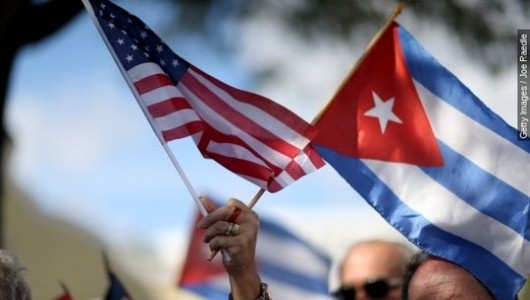
After 54 years of severed diplomatic ties, the United States and Cuba, once bitter Cold War enemies, demonstrated their newfound diplomacy by reopening each other’s embassies this past Monday.

It is the most concrete example of the diplomatic thaw since President Obama and Cuban President Raul Castro announced last December that U.S.-Cuba relations would be restored.

In an interview with MSNBC, President Obama said he believed that Proclamation 3447, the embargo signed by President Kennedy in 1962, has served neither people well and that it was time to go in a new direction.

Although Congress has to pass legislation to formally end the embargo — something that will be very challenging to do — Obama is using his executive power to ease travel and trade restrictions.

For the first time in half a century, the United States is able to transparently see the type of living conditions Cubans have been in for the past 50 years.

There is poverty in Cuba, but it’s not traditional poverty. When Fidel Castro came to power in 1959, the government became Socialist and then reformed to become the Communist Party of Cuba. During this time, all aspects of Cuban society became nationalized. For the past 50 years, Cubans have enjoyed access to a free healthcare system that has produced a very healthy populace.

Today, Cuba ranks 61st in the world for life expectancy. Its citizens live roughly to the same age as their American counterparts. This statistic is even more surprising considering that per capita GDP is almost ten times higher in the United States than in Cuba.

Economists have coined this phenomenon the ‘Cuban Health Paradox.’ Normally, countries with low per capita GDPs also have low life expectancies.

Cubans also have access to free education and the government has tried to make housing and nutrition a priority for its citizens.

Based on government numbers, Cuba ranks 48th in the world for poverty. The island nation is one of the least impoverished countries in the developing world

Although 15 percent of the population still lives in extreme poverty, most of the country is poor. Reports of living conditions are less than ideal. The Cuban peso, which hasn’t been convertible since the revolution, has suffered from inflation. In U.S. dollars, the average Cuban worker earns $17 to $30 a month.

Cuba also scores at the bottom of Freedom House’s annual report on civil and political freedoms. Freedom House describes Cuba as ‘not free.’

Since the Castro family has been in power, Cuba has been relatively isolated. This has led to the country’s lack of overall wealth. The fall of the Soviet Union worsened matters as the country lost the financial support it used to have from Moscow.

The country has persisted; however, this has usually caused Cuba to become more self-reliant, therefore poorer.

Recently, Cuba has tried to reform its economic system to open up investment to other governments and private companies to accelerate development.

The United States re-establishing diplomatic relations with Cuba presents a great opportunity for this to happen. The United States can expand trade markets to one of its closest neighbors, while the influx of capital will raise living standards in Cuba.

– Kevin Meyers

Sources: Procon, Geoba, MSNBC, New York Times, Poverties, Reuters, Rural Poverty Portal
Photo: USA Today

August 9, 2015
https://borgenproject.org/wp-content/uploads/borgen-project-logo.svg 0 0 Borgen Project https://borgenproject.org/wp-content/uploads/borgen-project-logo.svg Borgen Project2015-08-09 01:30:562024-12-13 17:52:07U.S.-Cuba Relations: A New Future for Cuba
Aid, Foreign Aid, Foreign Policy, Global Poverty

What Bernie Sanders Could Mean For Global Poverty

Bernie_Sanders
Bernie Sanders has been dubbed the “underdog Democrat” in this presidential election. As a committed ally to labor unions and the middle class, Sanders is determined to run a campaign financially unaffiliated with American billionaires.

When he announced his bid for the U.S. presidency, many doubted that he could gain enough momentum to really compete with Democrat likely, Hillary Clinton. However, after raising $15 million in 2 months and pulling 10,000 people into a campaign rally, many are seeing him as a potential threat to Clinton.

For his entire career, Sanders has dedicated himself to being the voice of the average person. He speaks for those who are not often heard due to their lack of capital. Often being described as a socialist, Sanders’ economic policy reflects his constituents’ desires, creating a world that truly gives everyone the chance to be a part of the “American Dream” regardless of race, gender, class or religious affiliation.

Because Sanders’ potential presence in the Oval Office is positive for the U.S. working class and those subject to abject poverty in America, it would also be great for global poverty abroad.

Sanders has, for a long time, rejected poverty, seeing it as something that could be eliminated by congressional help. Sanders is likely to translate his stance on American poverty to global poverty, then, under his administration, global poverty could forever change.

The Sanders administration is likely to expand its foreign aid budget, positively impacting global health and introducing proper legislation to eradicating global poverty.

To a farmer in Kenya, this could mean the ability to make a sufficient living. To women in the Philippines, this could mean greater access to family planning resources.

Bernie Sanders’ presence in the White House could not only greatly impact those living in the United States, but also those abroad. His aggressive approach to eradicating poverty would be a great asset to those subject to absolute poverty in developing countries.

– Erin Logan

Sources: Bernie Sanders, Forbes, Huffington Post 1, Huffington Post 2

Photo: Breitbart

August 8, 2015
https://borgenproject.org/wp-content/uploads/borgen-project-logo.svg 0 0 Borgen Project https://borgenproject.org/wp-content/uploads/borgen-project-logo.svg Borgen Project2015-08-08 01:30:362020-07-02 17:36:26What Bernie Sanders Could Mean For Global Poverty
Foreign Policy, Global Poverty

Immigration, Labor Markets and the Impoverished

immigration
Immigration policy and reform have been on the minds of many policymakers for years, not only in the United States, but also, particularly, in Western Europe. The issue is of increasing importance for a variety of reasons, both economic and social. The impact of immigration on populations and nations is significant, but hard to decipher. The impoverished around the world can see both benefits and disadvantages to the phenomenon of immigration across borders.

In the United States, millions of undocumented immigrants live the United States to find work and pursue a better life, often fleeing violence and instability. Europe has also experienced its fair share of immigration troubles, with 137,000 immigrants crossing the Mediterranean Sea in search of a better life in only 6 months last year. Hundreds of the same immigrants died attempting the journey. These massive quantities of immigrants crossing borders without documentation have posed problems for the countries receiving these people in a variety of ways. In addition, immigration through proper channels can often exacerbate problems posed by undocumented immigrants. First, many of these new residents will join the labor market, and second, the social and cultural differences can create tensions within the populace. So, what does immigration mean for the countries being left behind, and for their inhabitants?

One of the primary dilemmas when discussing immigration is the job market. What happens to the labor market when illegal or legal immigration occurs? The answer is: it’s complicated. The effects of immigration on a country’s labor market is highly dependent on the policies in place, the enforcement of such policies and the context.

Take, for example, a law in Alabama that would have given police more power to find undocumented immigrants and punish their hypothetical employers; immediately, much of the illegal labor fled the state. This was hailed as a victory by some people, but the law exposed fundamental flaws in the labor system. The jobs being done by immigrants were low-wage with questionable working conditions. They usually involved manual labor that Americans either simply did not want to do, or would not do due to the working conditions and pay—which were caused by a lack of proper regulation in these industries. Much of the agriculture and food industry remains this way, with the majority of the population turning a blind eye to the unfair practices taking place. In the case of Alabama, Americans barely attempted to take these jobs, despite unemployment in the region being very high. A study from the National Bureau of Economic Research showed that there was a 3.2% decrease in wages directly associated with large-scale immigration. A possible explanation is that immigrants are generally more likely to accept lower wages than native workers, which draws the price for labor downwards with the increased demand and lower price-setting.

In other cases, such as those involving legal immigration with visas, such as H-1B, immigrants end up in more direct competition with native workers for more highly-skilled jobs. The H-1B visas in the United States are very important, providing high levels of talent from across the globe—from both developed and developing nations. The problem is that, in many cases, companies prefer to hire H-1B visa holders because they are usually more willing to accept lower wages, similar to the problem with lower-skilled jobs.

Immigration can also be a cause of social unrest. It is not uncommon for immigrant populations to be framed as the root of a host of problems, ranging from economic ones, to social and moral ones. It has been done in the past, and is undergoing resurgence in Europe, as right-wing political movements shower blame and prejudice on the expanding Middle Eastern and North African populations in the continent. The cultural divide of language and customs can also instigate potential xenophobic behaviors against immigrant populations.

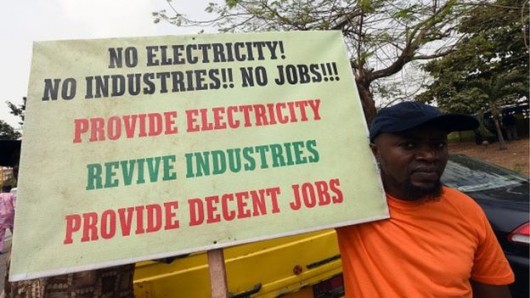
What does this all mean for the poor? Immigrants frequently work low-wage jobs, but these low wages in developed countries often go much further to families in developing nations. Remittances—money sent back to one’s native state—have been found to have a significant impact on the levels of poverty in developing nations. A study by the Center for Immigration Studies also found that in the 2000s, immigration to the United States did not cause increased poverty in the United States. These two studies taken together suggests that poverty can be alleviated with immigration, because immigration can be reduced abroad while not increasing poverty in the new home nation. In fact, there are even some who argue that borders should be open and immigration should not be restricted as a way to help significantly reduce poverty.

Immigration is a difficult issue with which to grapple on any level. It can invoke powerful emotions of fear, pain, anger or happiness from immigrants, or those who feel personally affected by its consequences. The economics of immigration are complicated, and the literature seems to be incomplete in its conclusions. However, it seems that immigration can help the poor by allowing some people abroad to lead better lives and support themselves, while also helping to support their families at home. Unfortunately, the poor can also fall victim to trafficking and bad working conditions. Globally, large-scale migrations of people can be expected to increase due to climate change, and it is important that more effort goes into understanding how to best handle influxes of immigrants.

– Martin Yim

Sources: New York Times 1, Bloomberg, New York Times 2, National Bureau of Economic Research, Social Science Research Council, UC Davis
Photo: Immigrant Document Solutions
July 25, 2015
https://borgenproject.org/wp-content/uploads/borgen-project-logo.svg 0 0 Borgen Project https://borgenproject.org/wp-content/uploads/borgen-project-logo.svg Borgen Project2015-07-25 07:14:082020-07-03 16:37:02Immigration, Labor Markets and the Impoverished
Foreign Aid, Foreign Policy

Why You Should Vote for a Candidate With Foreign Policy Experience

Rope isolated on white background
I expect that you, like most Americans, are beginning to ponder who you’re going to vote for in the upcoming presidential election. If this is the case, then you might also be causally conversing about or considering the factors most important to your decision. Let me draw your attention to one of the most significant aspects of the presidency, foreign policy.

For a President to be successful in foreign policy it is fairly likely that they will need to have foreign policy experience. When you hear the words foreign policy your mind might initially jump to the conflict in Ukraine and the threats from ISIS. The less considered aspect of foreign policy is foreign aid. If a president does not have a good deal of foreign policy experience, as we saw with President Barrack Obama, it is likely that this president may neglect foreign aid and focus only on military conflicts. This is a problem because foreign aid is integral to the United States’ economics and national security.

Foreign aid has been neglected in foreign policy and viewed as “charity” rather than as a strategy for a long time. During the Obama administration, this neglect grew. According to ForeignPolicy.com USAID, the United States’ aid organization, has had about a 16 percent drop in funding since 2009.

Before Obama was elected many concerns were raised, as described by an article in Time magazine, about Obama’s lack of experience in the foreign policy arena. The article stated that perhaps his international experience would prove to be enough.

It appears that this was not the case.

“Obama’s critics see a president adrift, lacking firm convictions or a strategy for dealing with the world,” says an article by Elias Groll on ForeignPolicy.com. Others such as Dr. Colluci on U.S. News and World Report even go as far as to describe Obama’s administration as a “foreign policy vacuum.” While perhaps this is a little extreme, it is fair to say that Obama did in fact have little experience in foreign policy and that is reflected in his actions abroad as a president.

Obama has focused too much on military conflicts and strategy and has allowed aid funding to decline significantly. Perhaps if he had had more experience he would have learned an important lesson before becoming president: that the global security that he has been working toward could be better sought through stabilizing countries economically and through building infrastructure.

Foreign aid can both spread democracy, as has been the United States’ goal since the Cold War, and fight terrorism. Perhaps Washington should return to foreign aid as a strategy, rather than continuing to use the military to maintain its sphere of influence.

The Marshall Plan could arguably be listed as one of the United States’ greatest foreign policy successes. This move gave the United States the influence it sought, stabilized countries after World War II, and spread democracy.

In addition, while poverty does not necessarily cause terrorism, reducing global poverty will reduce the human resources of terrorist organizations. Not only that, but reducing global poverty will also prevent at-risk populations from being recruited by these organizations in the future.

The next President should be someone who has had enough experience to realize the importance of foreign aid for these reasons. The president should have had enough military and aid experience to know the value of each, and enough foreign policy experience to know that the military is not the most vital part of our national security.

Even if this president does not know the importance of aid to United States’ foreign policy, I hope that at the very least they will realize that increasing U.S. foreign aid will provide a new job market for United States citizens.

– Clare Holtzman

Sources: The Borgen Project, Clingendael, Foreign Policy 1, Foreign Policy 2, Time, U.S. News & World Report

July 22, 2015
https://borgenproject.org/wp-content/uploads/borgen-project-logo.svg 0 0 Borgen Project https://borgenproject.org/wp-content/uploads/borgen-project-logo.svg Borgen Project2015-07-22 18:33:312024-05-27 09:25:54Why You Should Vote for a Candidate With Foreign Policy Experience
Foreign Policy, Politics and Political Attention

All You Need to Know About Soft Power

All You Need to Know About Soft PowerSoft power is a term that was coined in the late 1980s by Joseph S. Nye Jr., an American political scientist. As Foreign Affairs states, soft power refers to the ability of a country to influence and persuade others to do what it wants without the use of force or coercion. It’s the opposite of hard power, in which a country uses coercion and military strength in order to influence other countries. It relies on economic or cultural influences rather than military strength.
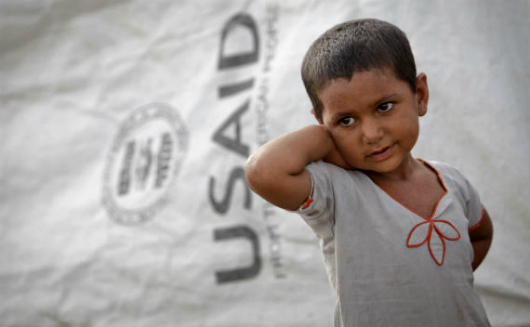
Soft power is an indirect way to exercise power and control. A country with a lot of it can convince other countries to adopt some of its morals, values and prominent institutions. Essentially, a country exerting a large amount of soft power can persuade other countries to want the same things it wants and therefore use their influence to advance its own political agenda. It is getting the outcome one wants through persuasion rather than coercion.

Origens of Soft Fower

Power is the ability to get others to do what you want, and soft power is an essential form of power. Nye states that it can come from three resources:

  1. A country’s culture (where it’s attractive to others)
  2. A country’s political values (where it lives up to them at home and abroad)
  3. A country’s foreign policies (where they are seen as legitimate and having moral authority)

Its Importance

Soft power is important because, according to Foreign Affairs, it can be used to gain supporters and partners. For example, United States companies, institutions, churches, foundations and other institutions of civil society all play a part in projecting it, and the cultures and values that the United States have are a form of soft power that allows the U.S. to gain allies. Even things that one may not view as important, like Hollywood movies and American pop culture, are forms of it that can help shape other countries attitudes’ and choices in the long-run.

BBC discusses how soft power can be exerted in one of their articles, in which they talk about a woman named Iryna Olova who grew up in Kiev in the Soviet Union. Olova talks about how fascinated she was with movies such as the Wizard of Oz as a child and states that movies made her feel that America was a happy and sunny place. She eventually left Ukraine and moved her family to America. Even though parts of American culture, like movies, may seem inconsequential to International Relations, according to Nye and the theory of soft power, they are anything but. Some political scientists even say that it helped the United States win the Cold War.

Limitations

According to Nye, the limitations of soft power are that it is not easily channeled toward a specific outcome and that it can have diffuse effects on the outside world.

Other Examples

In his book, “Soft Power: The Means to Success in World Politics,” Nye gives some examples of it, including the high number of foreign students enrolled at United States Universities and the prominent consumption of American media products worldwide.

– Ashrita Rau

Sources: Foreign Policy 1, Foreign Policy 2 BBC, Diplomacy Education Oxford Dictionary 1, Oxford Dictionary 2 Foreign Affairs
Photo: Flickr

July 3, 2015
https://borgenproject.org/wp-content/uploads/borgen-project-logo.svg 0 0 Borgen Project https://borgenproject.org/wp-content/uploads/borgen-project-logo.svg Borgen Project2015-07-03 07:30:092024-05-27 09:25:18All You Need to Know About Soft Power
Foreign Aid, Foreign Policy

Tools for Achieving Foreign Policy Goals

Foreign PolicyForeign policy is the manner in which a country behaves toward other members of the international community. It involves a state setting an agenda and using its resources to achieve established goals. Nations strive to achieve foreign policy goals with a combination of the instruments discussed below.

Effective Tools for Achieving Foreign Policy Goals

Diplomacy
Diplomacy is the act of working and negotiating with representatives of foreign nations to reach consensus and set the stage for future rules. This can involve working on the development of accords, treaties, alliances and conventions. Diplomats form relationships with officials from other countries to understand their perspectives, while simultaneously portraying and promoting the values and position of the United States. Although there are many images in the media depicting diplomatic meetings regarding large-scale foreign policy decisions, most diplomatic relations — especially those of particular importance — occur behind the scenes through private discussions and negotiations. In addition to discussing issues with foreign officials, diplomats meet with many other members of foreign societies, ranging from business officials to representatives of nongovernmental organizations. By cultivating connections throughout civil society, diplomats can gain a better understanding of a country’s culture in order to find common ground on which to base relations and actions.

Foreign Aid
States can use foreign aid to achieve foreign policy objectives abroad, build relationships with other nations and address issues of humanitarian concern. There are various forms of aid, including foreign military aid, humanitarian assistance, food aid and general development aid. Foreign military aid involves augmenting another nation’s supply of military equipment and technological capabilities. Military aid can help a state indirectly influence the balance of power in areas abroad, therefore increasing a country’s sphere of influence. Military aid can also serve to help another country defend itself based on commonly shared ideals and values. Alternatively, states can give economic aid to other countries in order to stimulate growth or help with specific project development. The United States currently spends less than one percent of its budget on foreign aid.

Sanctions
Countries can use sanctions in an attempt to change another country’s behavior. Sanctions can be used to express dislike for a current behavior, limit opportunities for such behavior to continue and deter other countries from taking similar courses of action. Different types of sanctions include arms embargoes, trade embargoes, asset freezes and travel restrictions. Historically, sanctions have been put in place in an attempt to take a stand against human rights violations.

Military Force
Using military force — or hard power — in foreign relations involves states using their military to influence the behavior of weaker nations or directly involve themselves in the c0untry. The United States currently has the most powerful military in the world.

Deterrence
States can deter other states from taking an action by convincing opponents that the costs will exceed the benefits. This can happen through diplomacy or the threat of military action.

When making decisions that affect the international community, as many decisions do, states either behave unilaterally, bilaterally or multilaterally. Unilateral action indicates that a state is acting alone, independent of common norms or rules of world order. Unilateral actions tend to be based on self-interest rather than on international standards of behavior. Meanwhile, bilateral action indicates that two states are acting together. Finally, multilateral actions indicate a multiplayer coordination of efforts based on commonly shared norms. A nation’s approach toward cooperation with other nations in dealing with its foreign policy agenda is very influential in the effectiveness of each of the tools.

The foreign policy tools actually used are largely dependent on a nation’s foreign policy agenda. Most contemporary issues are seen to be multifaceted in nature, and will thus need to be approached with a combination of these instruments. The established goals of a state’s foreign policy agenda will also affect the choice of tools. In reality, the actual usage of these tools is not only dependent on what goals are being pursued, but on what resources are available.

– Arin Kerstein

Sources: Global Issues, Government of the Netherlands, United States Diplomacy Center
Photo: Council on Foreign Relations

June 26, 2015
https://borgenproject.org/wp-content/uploads/borgen-project-logo.svg 0 0 Borgen Project https://borgenproject.org/wp-content/uploads/borgen-project-logo.svg Borgen Project2015-06-26 05:48:572024-05-27 09:25:10Tools for Achieving Foreign Policy Goals
Page 6 of 11«‹45678›»

Get Smarter

  • Global Poverty 101
  • Global Poverty… The Good News
  • Global Poverty & U.S. Jobs
  • Global Poverty and National Security
  • Innovative Solutions to Poverty
  • Global Poverty & Aid FAQ’s
Search Search

Take Action

  • Call Congress
  • Email Congress
  • Donate
  • 30 Ways to Help
  • Volunteer Ops
  • Internships
  • Courses & Certificates
  • The Podcast
Borgen Project

“The Borgen Project is an incredible nonprofit organization that is addressing poverty and hunger and working towards ending them.”

-The Huffington Post

Inside The Borgen Project

  • Contact
  • About
  • Financials
  • President
  • Board of Directors
  • Board of Advisors

International Links

  • UK Email Parliament
  • UK Donate
  • Canada Email Parliament

Get Smarter

  • Global Poverty 101
  • Global Poverty… The Good News
  • Global Poverty & U.S. Jobs
  • Global Poverty and National Security
  • Innovative Solutions to Poverty
  • Global Poverty & Aid FAQ’s

Ways to Help

  • Call Congress
  • Email Congress
  • Donate
  • 30 Ways to Help
  • Volunteer Ops
  • Internships
  • Courses & Certificates
  • The Podcast
Scroll to top Scroll to top Scroll to top