• Link to X
  • Link to Facebook
  • Link to Instagram
  • Link to TikTok
  • Link to Youtube
  • About
    • About Us
      • President
      • Board of Directors
      • Board of Advisors
      • Financials
      • Our Methodology
      • Success Tracker
      • Contact
  • Act Now
    • 30 Ways to Help
      • Email Congress
      • Call Congress
      • Volunteer
      • Courses & Certificates
      • Be a Donor
    • Internships
      • In-Office Internships
      • Remote Internships
    • Legislation
      • Politics 101
  • The Blog
  • The Podcast
  • Magazine
  • Donate
  • Click to open the search input field Click to open the search input field Search
  • Menu Menu

Archive for category: Foreign Policy

Information and news about foreign policy

Foreign Policy, Poverty Reduction

The Ruble in the Rubble

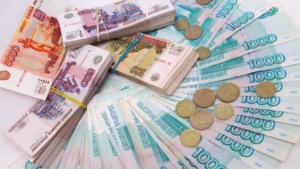
rubleEconomies of the world, listen up: the Russian economy is on the verge of a collapse with the fall of the ruble, which fell to a record low of 80 to the dollar on Tuesday, December 15, 2014. Over a month has gone by, and the Russian government and the Central Bank of Russia are still fighting to stop the free fall of the nation’s economy.

In a conference held on December 15, Russian President Vladimir Putin placed the blame for the ruble’s collapse on Western embargoes. During the three-hour speech on his country’s current economic situation, Putin focused on two primary topics: foreign policy and the economy.

President Putin offered a unique metaphor connecting Russia’s foreign policy and where the country stands on global politics. He said, “Sometimes I wonder, maybe the bear should just sit quietly, munch on berries and honey rather than chasing after piglets … but they will always try to chain [the bear] up.”

With Russia playing the bear in his metaphor, President Putin provided a closer look at his primary goal: to put a fallen Russia back on top. However, since Russia can no longer borrow money from Western banks after the invasion of Ukraine, the Russian government has been forced to dip into other savings, such as foreign aid and reserves.

According to Mr. Putin, Russia “will overcome the current situation. How much time will be needed for that? Under the most unfavorable circumstances I think it will take about two years.” Mr. Putin has high hopes for oil prices to rise and the territories in Ukraine and Siberia to become huge assets to Russia. Mr. Putin also aims to knock out political opposition within Russia and create a resilient, independent economy for Russia.

President Putin’s words during the press conference failed to gain much support in the crumbling market. While it did see a slight increase the day after his speech, the ruble has since continued to weaken against both the dollar and the euro.

The Russian Central Bank reportedly spent more than $80 billion in foreign reserves to slow the ruble’s downfall in December, and this rush to revive the ruble is continuing into 2015. Russian savings could potentially depreciate and push Russia further into an isolated economy. Mr. Putin hopes that the depreciation of the ruble will “make Russia’s economy more independent,” as it is weaned off of Western influence. With Russia being such an influential nation in Northern Asia, its continued isolation could have devastating effects on global poverty.

As Russia further separates itself from the Western economies, the world feels the weight of Russian policies.

– Alaina Grote

Sources: The Economist, The Guardian, Foreign Policy, CBS

Photo: WordPress

January 28, 2015
https://borgenproject.org/wp-content/uploads/borgen-project-logo.svg 0 0 Borgen Project https://borgenproject.org/wp-content/uploads/borgen-project-logo.svg Borgen Project2015-01-28 16:00:182020-07-23 17:20:01The Ruble in the Rubble
Foreign Policy, Global Poverty

Clinton Drifts from Obama’s Foreign Policy

In an interview last Sunday with The Atlantic, former Secretary of State Hillary Clinton greatly distanced herself from President Obama’s foreign policy views.

Discussing her opinions with Jeffrey Goldberg, Clinton criticized Obama’s catch phrase for foreign policy, which is said to be, “Don’t do stupid stuff.”

According to Clinton, this is not exactly an effective approach. “Great nations need organizing principles,” Clinton told Goldberg when he mentioned Obama’s doctrine. Clinton described such organizing principles as peace, prosperity and progress.

Apart from her general philosophy on foreign policy, Clinton elaborated on specifics, insisting that the United States should have intervened early in the Syrian war in order to avoid al-Qaeda-inspired groups from seizing control of the rebel side against the Assad regime. She noted that in failing to assist in building up a credible fighting force on the rebellion’s side, a large hole was left, increasingly filled by Jihadists.

The pointed evaluation from Clinton comes at an interesting time period, as she is rumored to be a potential candidate for the 2016 presidential election.

Despite Clinton’s critique, she continued to defend Obama as far as his intentions, explaining to Goldberg that Obama was, “trying to communicate to the American people that he’s not going to do something crazy” (as far as foreign policy).

Given Obama’s second term has been dominated by foreign policy issues including the rise of ISIS in Iraq, the Israeli Palestinian conflict and the rising aggression of Russia against Ukraine, Clinton’s criticism is hard-hitting.

Although she did not outright state as much, Clinton’s interview suggests that she is worried that the United States is removing itself from the world stage as a leader in foreign policy and conflict. More than this, she subtly hints that if she were in charge in the near future, she would approach foreign policy differently.

In her recently released book “Hard Choices,” Clinton details how she and Obama disagreed on how to handle the situation in Syria, especially when it came to the question of whether or not to arm the rebel factions.

Clinton continued to qualify her comments during the interview, stating: “I’ve sat in too many rooms with the president. He’s thoughtful, he’s incredibly smart, and able to analyze a lot of different factors that are all moving at the same time. I think he is cautious because he knows what he inherited.”

In this way, Clinton has propped herself strategically in-between the President and former President George W. Bush on the scale of advocating for military intervention.

According to CNN, those close to Clinton gave the Obama administration a warning that the interview was coming. In response to the interview, White House deputy national security adviser Ben Rhodes stated that Hillary was “fully-on-board” during her time as Secretary of State with respect to the administration’s foreign policy strategy.

– Caroline Logan 

Sources: CNN, Sun Herald, The Atlantic
Photo: US News

August 21, 2014
https://borgenproject.org/wp-content/uploads/borgen-project-logo.svg 0 0 Borgen Project https://borgenproject.org/wp-content/uploads/borgen-project-logo.svg Borgen Project2014-08-21 19:47:472024-06-04 01:17:38Clinton Drifts from Obama’s Foreign Policy
Foreign Policy, Politics and Political Attention

In New Bill, LGBT Rights Foreign Policy Priority

Senator Edward Markey (D – Mass.) has introduced a new bill, known as the International Human Rights Defense Act, to the Senate that would commit the U.S. to protecting the rights of members of the LGBT community all around the world.

Markey, who is chairman of the Foreign Relations Subcommittee on International Development and Foreign Assistance, has brought this bill to the floor due to the fact that there are many countries around the world that condemn homosexuality to some degree. This includes more than 80 countries that criminalize homosexuality and the support of LGBT rights, as well as seven countries that punish homosexuality with the death penalty. The vast majority of these countries are located in poorer parts of the world, such as Africa and South Asia.

One country where being gay can land someone in jail is Nigeria. The northern part of the country is governed by strict Sharia law and prohibits homosexuality and anyone who supports it.

Although the government does not invoke the death sentence for this offense, local Islamic law often calls for the public stoning of anyone found guilty of homosexuality. Those who are turned in to officials for suspected homosexuality are often turned in by informants who secretly gather information. This activity is the result of the mindset in Nigeria and other countries that homosexuals and supporters of LGBT rights are a pestilence that society must be cleansed of.

The bill that hopes to change this focuses mainly on the discrimination and violence that LGBT men and women face, and imposes new strategies to counteract these, including the following:

· Making prevention and response to violence and discrimination against the LGBT community a priority

· Promoting LGBT rights via private sector, governments, multilateral organizations and local advocacy groups

· Creating a new position within the Bureau of Democracy, Human Rights and Labor that would be known as the Special Envoy for the Human Rights of LGBT People. This envoy would be responsible for organizing all U.S. involvement with foreign LGBT affairs.

· The continuation of the LGBT rights sector of the annual State Department Report on Human Rights

The bill has already garnered 24 co-sponsors, including Markey’s fellow Massachusetts Senator Elizabeth Warren. In addition to congressional co-sponsors, the bill is also being endorsed by many LGBT rights groups, including MassEquality, which is the leading advocacy group in Massachusetts for LGBT rights.

Markey stated that “for the United States to hold true to our commitment to [defend] the human rights of all people around the world, we must stand with the LGBT community,” and if this bill were to pass, it would be a significant step toward equality around the world, as well as a more progressive American stance on LGBT rights.

— Taylor Lovett

Sources: LGBTQ Nation, MassEquality, Mass Live, NY Times
Photo: Frontiers LA

June 27, 2014
https://borgenproject.org/wp-content/uploads/borgen-project-logo.svg 0 0 Borgen Project https://borgenproject.org/wp-content/uploads/borgen-project-logo.svg Borgen Project2014-06-27 04:00:092024-05-26 23:50:23In New Bill, LGBT Rights Foreign Policy Priority
Aid Effectiveness & Reform, Development, Foreign Aid, Foreign Policy

10 Ways to Make Every Foreign Aid Dollar Count

Foreign Aid Dollar
Public opinion about U.S. foreign assistance has remained unchanged for many decades. It is still not unusual for people to choose foreign aid when it comes to deciding where to cut funding to reduce the national deficit.

For decades, pollsters continue to show us how most people think that foreign aid accounts for over 20 percent of the federal budget. In fact, foreign aid accounts for only 1 percent of the federal budget. What is more, of that 1 percent, only half is dedicated to helping the world’s poor.

Despite the limited amount of foreign aid, and the fact that it is always in danger of being cut further, there are several ways in which we can make our foreign aid dollars count. Here are 10 ways to make every foreign aid dollar count; some of which are already being put in practice.

1. Engage recipients of foreign aid as part of the solution.

Instead of treating people in foreign countries as “passive recipients” of money and food, it has been demonstrated that it is much more productive to include them in the process of formulating and implementing poverty reduction initiatives.

2. Transfer some of the responsibilities to local authorities.

Following up with the previous point, another way of engaging with aid recipients is to delegate some of the work to local authorities. Involving local authorities in the design and implementation of aid policies promises to create better results.

3. Use technological advances to improve data management.

Putting to work the many tools available is crucial for gathering data and monitoring the achievements of each aid program. For instance, the State Department launched a website called “dashboard” where all foreign aid programs can be monitored.

4. Create new partnerships and strengthen existing ones with private businesses.

Partnering with businesses and nonprofit organizations provides additional funding sources that helps leverage the small amount dedicated to foreign assistance by the federal government.

5. No private without public.

At the same time, it is imperative not to deviate too much from public funding sources. In the last decade there has been a growing notion that private organizations can gather enough funding for foreign aid. However, according to Paul Farmer, no intervention can be brought to a scale large enough to make a difference without some input from the state.

6. Do independent scientific research.

This is another tool to determine what really works and what does not. More importantly, it is a means to disaggregate politically motivated foreign programs from the ones that would create a real impact on poverty alleviation.

7. Centralize data for better monitoring of aid programs.

Creating an integral database for foreign aid helps identify redundant programs, eliminating waste. In addition, it is an effective way to determine goal-based foreign assistance and monitor the achievements accordingly.

8. Move away from one-size-fits all policies.

In countries with relatively stable governments, it makes sense to implement programs that rely on “country ownership” and more “participatory processes.” However, this might not be possible in countries with governance and corruption issues.

9. Tie aid to goals with measurable results.

This way both donors and recipients can be held more accountable for specific achievements. This will require moving away from generalized goals toward specifying the particular quality and scope for each program.

10. Reassess the way in which foreign aid is allocated based on risk factors.

This last point speaks directly to reassessing expectation. It is important to be realistic when it comes to foreign assistance. Under the best circumstances, there are still many factors that can hinder the progress made in poverty reduction programs. However, studying the risk involved in each case specifically can be a way to improve the chances of success.

There is no single answer to development and poverty alleviation. Foreign aid can be a lengthy and risky business. But using the tools at our disposal and learning from past experience is still a good way to achieve a growing number of successes.

– Sahar Abi Hassan

Sources: Politix, Foreign Affairs
Photo: The Economist

June 13, 2014
https://borgenproject.org/wp-content/uploads/borgen-project-logo.svg 0 0 Borgen Project https://borgenproject.org/wp-content/uploads/borgen-project-logo.svg Borgen Project2014-06-13 13:26:232024-06-05 01:57:3110 Ways to Make Every Foreign Aid Dollar Count
Foreign Policy, Government

Cuban Economic Growth

Cuban Economic Growth
For decades, Cuba kept itself off the radar and rarely allowed access to the United States. However, Raul Castro, brother to the infamous Fidel Castro and current leader of Cuba, has recently allowed small changes to make an impact on Cuba.

After years of economic isolation and little internal growth, Castro faces a difficult job in making up for lost time. Small programs like the Cuban Emprende make a world of difference as community leaders learn how to grow their small businesses into larger, more modern companies, leading the way for Cuban economic growth.

The distribution of wealth in Cuba is skewed, with the poor representing a large portion of the population. The average Cuban worker earns around $20 a month, and little has changed in the past 50 years. Cuba has now opened the doors to looking into private investments, a monumental step in the direction of globalization.

In the past, Cuba was mostly affiliated with Latin and South America. By allowing other countries, such as the U.S., into the Cuban system, the people of Cuba are looking at a brighter economic future.

However, members of U.S. Congress seem tentative about whether this Cuban economic growth and reform are benefiting the labor rights as well as human rights of the population. Raul Castro has yet to make clear how the people are being affected by this change in internal government, so outsiders are weary of possible retribution. It is unclear as to how the U.S. will react to these changes and opening up foreign investment. Since the revolution of Cuba in the 1960s, the U.S. has not been allied with Cuba.

Chamber President Thomas Donahue recently visited the island for the first time in 15 years. He reports positive change in the direction of free enterprise, fewer government jobs and increased private hiring. Cubans are seeing a better daily life as companies begin to modernize and improve the impoverished neighborhoods as jobs become more readily available.

Raul Castro has recently implemented programs teaching Cubans how to successfully operate small businesses and create meaningful business relationships. Programs such as this offer the lower class an opportunity to support themselves in the realm of business and become potential business partners as foreign investors start to peer into Cuba’s economy.

Cuba is still in the early stages of change as its people adjust to the government’s new approach, but current conditions are looking promising as people find their new niches in a budding economy.

– Elena Lopez

Sources: Reuters, NY Times, TIME
Photo: InterNations

June 3, 2014
https://borgenproject.org/wp-content/uploads/borgen-project-logo.svg 0 0 Borgen Project https://borgenproject.org/wp-content/uploads/borgen-project-logo.svg Borgen Project2014-06-03 08:00:022024-05-26 23:37:00Cuban Economic Growth
Foreign Aid, Foreign Policy, Global Poverty, USAID

10 Facts about Foreign Aid From the United States

The United States Agency for International Development (USAID) was created on November 3, 1961 by President John F. Kennedy. Prior to the creation of USAID, there were many foreign assistance organizations that already existed. However, with the birth of USAID came the collaboration of all other foreign assistance programs under one common goal. This was the first time in history that a single agency was given the responsibility to cover of foreign economic development.

Here are 10 facts you may not have known about foreign aid from the United States:

1. U.S. foreign aid was shaped to serve two purposes. First, to improve lives in developing worlds by implementing ways to improve global health, further education, advance food security and much more. As stated by USAID.gov, “USAID carries out U.S. foreign policy by promoting broad-scale human progress at the same time it expands stable, free societies, creates markets and trade partners for the United States, and fosters good will abroad.”

2. In 2012, Afghanistan remained the top recipient of U.S. economic and military assistance for the fifth year in a row. Prior to that, Iraq held the top spot from 2003-2007.

3. Foreign aid from the United States is made up of a combination of obligations as well as disbursements. An obligation is a binding agreement that could have immediate results or some in the future. A disbursement is the actual amount paid by federal agencies by cash or cash equivalent during the fiscal year to meet the obligations set.

4. Though a country can rank in the list of top ten recipients based on obligations, there is no guarantee that they will receive the full disbursement. That was the case for Haiti and Columbia in 2011 that ranked in the top ten recipients by obligation but did not receive that amount in disbursements.

5. Less than one percent of the federal budget is spent on foreign assistance.

6. Foreign aid falls under discretionary spending of a whopping $1.258 trillion dollars in 2013.

7. The five primary agencies providing economic assistance include: the U.S. Department of State, USAID, the Department of the Treasury, U.S. Department of Agriculture, and the Department of Health and Human Services. These five agencies account for 93 percent of total economic assistance.

8. Sub-Saharan Africa received the largest share of economic assistance at 25 percent with twenty countries receiving over $100 million in economic assistance.

9. Almost half of U.S. foreign assistance goes to six countries that are Washington’s allies in the campaigns against terror and drug trafficking.

10. U.S. foundations amount to about $1.5 billion a year in international giving.

— Janelle Mills

Sources: USAID, USAID, Greenbook, Foreign Assistance, Reuters
Photo: Seattle Times

April 23, 2014
https://borgenproject.org/wp-content/uploads/borgen-project-logo.svg 0 0 Borgen Project https://borgenproject.org/wp-content/uploads/borgen-project-logo.svg Borgen Project2014-04-23 13:32:072024-05-26 23:28:1310 Facts about Foreign Aid From the United States
Foreign Policy, Global Poverty, Government, Politics and Political Attention

UNSC Propose Reforms, Russia Exploits Veto Power

Following landmark political shifts in Ukraine during 2014, the scope of international politics has heavily focused its lens upon tension between Ukraine and Russia, and more recently in the eastern Ukrainian region of Crimea.

Popular uprisings in Ukraine have divided the population between western supporters of the European Union and eastern supporters of Russia. Although the majority of Ukraine’s population wants to be in alignment with the European Union, the region of Crimea contains a significant amount of Ukraine’s Russian-supporting population.

Russia has recently received international attention by its military occupation in the region of Crimea. In addition, the parliament of Crimea has even voted to secede from Ukraine. Critics of Russia, such as President Barack Obama of the United States, argue that Russia’s actions are in violation of Ukraine’s sovereignty and established international laws.

Deputy Secretary General of the UN, Jan Eliasson stressed that meaningful discourse and dialogue ought to be facilitated within the Security Council in order to reach a resolution to alleviate the problems in Ukraine.

The situation in Russia has consistently been a heavily debated topic in the United Nations Security Council (UNSC); however, extensive use of veto power by Russia has hindered the UN Security Council from reaching any substantial resolutions to alleviating the escalating tension between Ukraine and Russia.

The UNSC contains a body of five permanent member states including the United States, the United Kingdom, China, France and Russia. The ability for Russia to block actions that are clearly within the goals and intentions of the UN to “pursue diplomacy, and maintain international peace and security,” and “save succeeding generations from the scourge of war,” provides significant concern for the institutional framework of the UNSC.

Although the United Nations Security Council accounts for the most powerful UN body, Russia’s ability to exploit its status as a permanent member have produced consequences with their violation of international law.

Moreover, while the UNSC remains in suspension of reaching a resolution, the situation in Ukraine is continuing to rapidly escalate. Ukraine’s ambassador to the United Nations pleaded to the UNSC in an emergency session to do everything that is possible to end the violation of national sovereignty and invasion of Crimea by Russian military forces.

Failure to make steps to remedy the conflict between Russia and Ukraine is exemplary of some of the weaknesses inherent to the UNSC. However, it has not been the only case of Russia’s exploitation of its permanent status and veto power in the UNSC. Critics have also argued that failure to resolve the conflict in Syria has also been the result of blocked motions by Russia.

Considering the level of power and influence the UNSC has, problems arise when just one nation has the means to restrict action in addressing pressing international problems. Russia has been quintessential in portraying how special interests can hinder the intentions of international law—which is at the root of why international law may need to be reformed in accommodating 21st century problems.

– Jugal Patel

Sources: Reuters, Al Jazeera, UN News Centre, ABC News
Photo: Rianovosti

March 19, 2014
https://borgenproject.org/wp-content/uploads/borgen-project-logo.svg 0 0 Borgen Project https://borgenproject.org/wp-content/uploads/borgen-project-logo.svg Borgen Project2014-03-19 04:00:112024-06-05 01:57:17UNSC Propose Reforms, Russia Exploits Veto Power
Foreign Policy, Global Poverty, Government, War and Violence

Ben Affleck DRC Testimony

Ben Affleck
Ben Affleck, co-star of the upcoming film Superman vs. Batman, spent time in Washington, D.C. on February 26 discussing the situation in the Democratic Republic of the Congo (DRC). Using his celebrity and networking super powers,  Affleck has previously launched the Eastern Congo Initiative (ECI) in 2010 and has since helped raise awareness and generate public action against violence in the DRC.

While in D.C. Affleck testified in front of the Senate Foreign Relations Committee and Committee Chairman  Sen. Robert Menéndez (D-N.J.). He began his testimony by acknowledging the significant progress made in the last three months. He also thanked Congress, U.S. President Obama and the State Department for their roles in achieving the surrender of M23, the Congolese Revolutionary Army, which has been violently rebelling against the DRC government.

Affleck emphasized that though progress has been made, it is important to stay on track, and that deviating could risk losing the fruit of their hard diplomatic labor.  The ECI created five key points for Congress to ensure sustainable peace in the country:

  1. Urge U.S. Secretary of State John Kerry to ensure DRC special envoy Russell Feingold has the support needed to successfully achieve his mission
  2. Call on U.S. Embassador to the U.N. Samantha Power to support extending the intervention brigade past its March 31 expiration
  3. Foreign Relations committee hold an oversight hearing to consider a sunset to MONUSCO that compels the DRC to follow through and fully reform its security sector
  4. Have Obama directly engage with DRC President Joseph Kabila to encourage him to make good on his critical commitment to long-overdue security sector reforms by establishing a clearly defined road map
  5. Have the U.S. play a pivotal role and robustly participate in multilateral efforts to ensure that the Congolese holds free, fair and timely local and national elections that respect the Congolese constitution including strict observance of term limits
  6. Call upon USAID to scale up its economic development initiatives in Eastern Congo

Ultimately, the ECI believes the DRC can be revived through enhanced security on one side and injecting small amount of development aid throughout pockets of the community. This will allow the Congolese people to stand on their own and create a market economy, eventually joining the global market.

– Sunny Bhatt

Sources: YouTube, Eastern Congo Initiative
Photo: Ryot.org

March 6, 2014
https://borgenproject.org/wp-content/uploads/borgen-project-logo.svg 0 0 Borgen Project https://borgenproject.org/wp-content/uploads/borgen-project-logo.svg Borgen Project2014-03-06 04:00:132018-01-30 13:14:12Ben Affleck DRC Testimony
Foreign Policy, Global Poverty, Government

Death Penalty Holds Firm in Outlier Nations

death penalty
A decreasing number of nations around the world utilize capital punishment, but according to Amnesty International, countries that use the death penalty do so at an “alarming rate.” Between 2010 and 2011, known executions increased from 527 to 676, a 28% rise.

In 2012, the number increased again to 680. There are many executions in nations such as Iran, China and Syria that go unreported. Amnesty International has not published Chinese reported figures on executions since 2009 because the organization declares that the government’s official numbers are exceptionally inaccurate. The organization estimates that annual executions in China are likely to be in the thousands.

Iran faces similar criticism. Amnesty states that it has received “credible reports” of a high volume of clandestine and unconfirmed executions in the country. Adding in these reports would effectively double Iran’s death penalty numbers.

In 2011, only 20 out of 198 countries, or roughly 10%, performed executions, and in 2012 the number of countries that had abolished the death penalty was five times higher than those that had not.

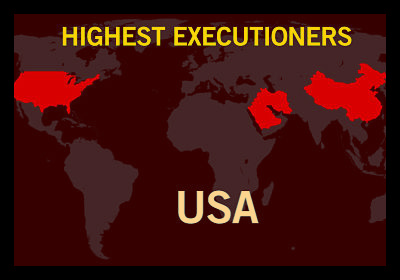
Iran, Saudi Arabia, Iraq and the United States have the highest total number of executions from 2007 to 2012. The Middle East has the highest number of executions of any region (557 executions in six nations.) With the notable exception of the U.S., most countries that still use the death penalty are in the developing world.

The U.S. is the only G7 country where capital punishment is legal.

Methods of executing prisoners vary globally but include lethal injection, beheading, hanging and shooting. In some nations such as Iran, North Korea, Saudi Arabia and Somalia, public executions still occur.

Crimes that are punishable by death also vary but can include drug offenses, rape, sorcery, adultery, “crimes against the state” and murder. Amnesty International also articulates concern over an increase in military courts sentencing people to death in Bahrain, Egypt, Lebanon, the U.S. and other nations.

Japan, India and Pakistan, contrary to global trends, all reinstated the death penalty after long periods of not executing prisoners. In these nations, changes generally occur because different political parties come into power, which leaves sentenced prisoners’ fate to the politics of the moment.

More than half of the world’s nations voted in December 2012 for a United Nations resolution, creating a worldwide moratorium on the death penalty. And the international pressure on countries like the U.S. has intensified.

Due to stated ethical obligations, the European Union banned the export of drugs such as sodium thiopental to the U.S. because they were being used for lethal injections.

Richard Dieter of the Death Penalty Information Center states that the E.U. embargo has stalled, but not ended, executions in the U.S. He asserts, “It has made the states seem somewhat desperate and not in control, putting the death penalty in a negative light, with an uncertain future.”

Amnesty International, Human Rights Watch (HRW) and many other human rights groups oppose the death penalty in all circumstances. HRW states that capital punishment violates people’s innate dignity, is “unique in its cruelty and finality and is “inevitably and universally plagued with arbitrariness, prejudice, and error.”

When asked if he thought the world was closer to abolishing the death penalty, Brian Evans, acting director of Amnesty International’s Death Penalty Abolition Campaign, seemed to remain hopeful, if hesitant.

“They’ll come around when they take a longer look at their death penalties,” Evans states, “but it’ll be a while.”

– Kaylie Cordingley

Sources: National Geographic, The Atlantic, The Huffington Post, The Huffington Post, Amnesty International, Amnesty International, The Guardian, Death Penalty Information Center
Photo: Amnesty International

February 28, 2014
https://borgenproject.org/wp-content/uploads/borgen-project-logo.svg 0 0 Borgen Project https://borgenproject.org/wp-content/uploads/borgen-project-logo.svg Borgen Project2014-02-28 09:44:512024-05-26 23:15:26Death Penalty Holds Firm in Outlier Nations
Foreign Policy

Wuhayshi Jailbreak and AQAP Resurgence

Wuhayshi
Long considered a vulnerably fractured nation, Yemen is home to one of the world’s deadliest al-Qaeda offshoots. Al-Qaeda in the Arabian Peninsula (AQAP) formed in January 2009 from an alliance between al-Qaeda branches in Saudi Arabia and Yemen. The organization, by carrying out attacks domestically while simultaneously acknowledging Western targets, instills fear over the world.

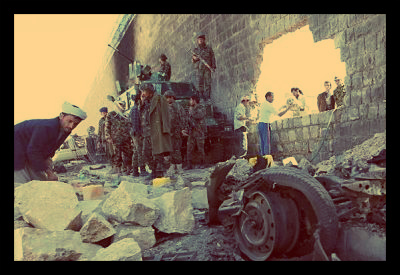
Recent developments have augmented this fear and made a necessity for action ever more apparent. Beginning with an exploding car bomb and followed by a grenade and gun assault, at least 14 inmates escaped from Yemen’s main security prison.

When in February 2006 23 convicted terrorists escaped from prison in Yemen’s capital of Sana’a, al-Qaeda experienced resurgence in the region. Nasser al-Wuhayshi, currently the leader of AQAP, played a vital role in the increased occurrence of attacks at the time.

Wuhayshi was among the escapees.

The connection between Wuhayshi and an al-Qaeda-heavy jailbreak is quite conspicuous. Including a vicious attack against the Yemeni Ministry of Defense a few months prior to the recent prison incident, in December 2013, AQAP has participated in and claimed responsibility for multitudinous attacks since its formation in 2009.

Extensive media and propaganda campaigns fuel the AQAP fire, keeping recruitment strong. The overarching goals of AQAP, of particular concern to the United States and other Western countries, is to rid Muslim countries of Western influence and to instead foster shari’a law under fundamentalist Islamic regimes. These intentions are dutifully carried out by a compartmentalized and decentralized hierarchy of power that enables AQAP to endure counterattacks and arrests without falling apart.

Despite this formation, it is important to note that Wuhayshi, over a period of four years, served alongside Osama bin-Laden in Afghanistan. Bin-Laden’s successor allegedly appointed Wuhayshi general manager of al-Qaeda fairly recently in July 2013. This position gives him extreme power and flexibility to do what he wishes with AQAP both regionally and internationally.

The main worry here is one of historical repetition. Wuhayshi, arguably one of the most powerful men in the world, especially in regard to terrorist and jihadist pursuits, earned his prestige as a result of escaping from jail. Now, once again, al-Qaeda affiliates have freed themselves from confinement. What this means for global security is yet to be seen.

– Jaclyn Stutz

Sources: Council on Foreign Relations, Al-Jazeera
Photo: Yahoo News

February 21, 2014
https://borgenproject.org/wp-content/uploads/borgen-project-logo.svg 0 0 Borgen Project https://borgenproject.org/wp-content/uploads/borgen-project-logo.svg Borgen Project2014-02-21 17:00:192024-05-26 23:14:10Wuhayshi Jailbreak and AQAP Resurgence
Page 7 of 11«‹56789›»

Get Smarter

  • Global Poverty 101
  • Global Poverty… The Good News
  • Global Poverty & U.S. Jobs
  • Global Poverty and National Security
  • Innovative Solutions to Poverty
  • Global Poverty & Aid FAQ’s
Search Search

Take Action

  • Call Congress
  • Email Congress
  • Donate
  • 30 Ways to Help
  • Volunteer Ops
  • Internships
  • Courses & Certificates
  • The Podcast
Borgen Project

“The Borgen Project is an incredible nonprofit organization that is addressing poverty and hunger and working towards ending them.”

-The Huffington Post

Inside The Borgen Project

  • Contact
  • About
  • Financials
  • President
  • Board of Directors
  • Board of Advisors

International Links

  • UK Email Parliament
  • UK Donate
  • Canada Email Parliament

Get Smarter

  • Global Poverty 101
  • Global Poverty… The Good News
  • Global Poverty & U.S. Jobs
  • Global Poverty and National Security
  • Innovative Solutions to Poverty
  • Global Poverty & Aid FAQ’s

Ways to Help

  • Call Congress
  • Email Congress
  • Donate
  • 30 Ways to Help
  • Volunteer Ops
  • Internships
  • Courses & Certificates
  • The Podcast
Scroll to top Scroll to top Scroll to top