• Link to X
  • Link to Facebook
  • Link to Instagram
  • Link to TikTok
  • Link to Youtube
  • About
    • About Us
      • President
      • Board of Directors
      • Board of Advisors
      • Financials
      • Our Methodology
      • Success Tracker
      • Contact
  • Act Now
    • 30 Ways to Help
      • Email Congress
      • Call Congress
      • Volunteer
      • Courses & Certificates
      • Be a Donor
    • Internships
      • In-Office Internships
      • Remote Internships
    • Legislation
      • Politics 101
  • The Blog
  • The Podcast
  • Magazine
  • Donate
  • Click to open the search input field Click to open the search input field Search
  • Menu Menu

Archive for category: Foreign Policy

Information and news about foreign policy

Foreign Aid, Foreign Policy

Republicans Support More Minimalist Foreign Policy

Republicans Support More Minimalist Foreign Policy
Aggressive.

The above word is used a great deal when describing Republicans’ take on foreign policy. The Republican take requires America to be aggressive, taking on a very large role in worldwide interactions in order to maintain its political advantages and in order for American foreign policies to remain crucial and imperative worldwide. However, an aggressive foreign policy approach means that America has been involved in a lot of wars and conflicts across the globe, leading to increased military and defense spending. Cutting back on defense spending could push back on the many cuts the government has recently made as a result of the sequester, helping to decrease the national debt and allowing for higher spending in other areas.

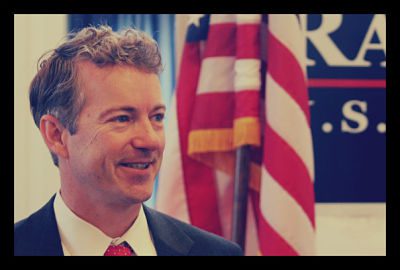
Now, a new generation of Republicans, led by Senator Rand Paul, seems to be hinting at a different Republican approach to foreign policy that could do just that – cut military and defense spending. This different approach, some argue, has some elements of increasing US isolationism. Yet, ultimately, according to Senator Paul, his approach that the United States should take a more minimalist foreign policy approach is more realistic than other options. A minimalist foreign policy approach would have more limitations on presidential power and American power abroad (two areas that Rand Paul sees as needing to be limited, which he reasoned was the justification behind his filibuster of President Obama’s drone policy last week).

Whether or not this new approach will continue to be seriously considered or grow support is unknown. According to the President of the Council on Foreign Relations Richard N. Haass, Rand Paul is proposing that a more minimalist foreign policy approach would be the solution to finding a new Republican brand as they approach 2016. It would be a means of ensuring that the US overreaching in another country, as was done in Iraq and many of the US’s other ongoing military involvements, does not occur again.

In terms of foreign aid, a more minimalist foreign policy may mean a more minimalist domestic policy as well. Turning focus inward and safeguarding national interests within the United States may provide less incentive to provide foreign aid, especially in situations that involve conflict or have turbulent political implications.

– Angela Hooks

Source: NY Times
Photo: Facebook
March 18, 2013
https://borgenproject.org/wp-content/uploads/borgen-project-logo.svg 0 0 Borgen Project https://borgenproject.org/wp-content/uploads/borgen-project-logo.svg Borgen Project2013-03-18 11:30:092024-12-13 17:49:14Republicans Support More Minimalist Foreign Policy
Foreign Policy

Joe Biden’s Role in Foreign Policy

biden
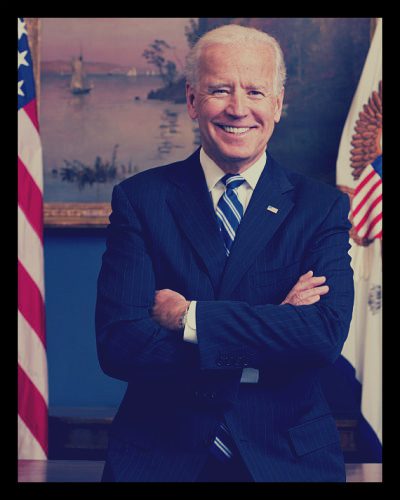
With old Senate mates and close confidants gaining power and moving up the ranks in government administration, Vice President Joe Biden’s talent of using personal relationships to gain influence within the Obama administration is helping him take on a larger role in foreign policy.

Recently, Biden was essential in ensuring that Syrian opposition leader, Moaz al-Khatib, met with a former Senate mate, Secretary of State John Kerry. He also helped in easing tensions over another former Senate mate, Chuck Hagel, becoming Defense Secretary. His role in both of these situations was simple. He made phone calls and his credibility and stature in the U.S. government did the rest.

Because of Biden’s connections and personal ties to top government officials – the above just being a couple of examples – Vali Nasr, a former State Department official, believes “it’s not so much that he [Biden] intends to expand his influence, but his stature will rise by default.” He has also built specific relationships with influential leaders around the world, such as slated President of China Xi Jinping.

Biden taking on a larger role in foreign policy would help the White House have more control on this issue area, which seems to be their intent. Biden bringing his whole team up, vis–à–vis Drake’s song “Started From The Bottom”, seems to be key to the White House having this control. Considering Biden’s ability to take on specific issues and build key relationships, an increased role in foreign policy for Biden seems to be on the horizon.

– Angela Hooks

Source: NY Times
Photo: Huffington Post

March 5, 2013
https://borgenproject.org/wp-content/uploads/borgen-project-logo.svg 0 0 Borgen Project https://borgenproject.org/wp-content/uploads/borgen-project-logo.svg Borgen Project2013-03-05 09:00:032020-04-24 02:14:07Joe Biden’s Role in Foreign Policy
Developing Countries, Development, Foreign Policy, Global Poverty, Human Rights, United Nations

Who is Benefiting From Land and Water Grabbing?

Who is Benefiting From Land and Water Grabbing?It is assumed that the already existing gap between developed and developing nations is large and apparent enough that wealthier nations would try and fill this gap and bring these opposite ends closer together. According to an ABC Environmental article, however, wealthy nations are instead competing over ‘land’ and ‘water grabbing’ to appease their growing populations and the “stressed” supply of basic necessities such as food and water. Investors in a foreign land, or better yet, the land-grabbers, are countries and investment firms from biofuel producers to large-scale farming operations (agricultural investors).

Since 2000, the major countries that have contributed to this land purchasing are the U.S., Malaysia, the U.K., China, and the U.A.E. Experts aren’t sure of these investors’ motives but it is clear that they are only focusing on buying land where there is clear access to water.

‘Land grabbing’ is defined by Paolo D’Odorico, a professor at the University of Virginia, as “a deal for about two km2 or more that converts an environmentally important area currently used by local people to commercial production.” According to an environmental study, 454 billion cubic meters sums up the ‘water-grabbing’ per year by corporations on a global scale, which is about 5 percent of the world’s annual water consumption. According to the public database Land Matrix “1,217 deals have taken place, which transferred over 830,000 square kilometers of land” since 2000, with 62 percent of such deals happening in Africa alone.

From 2005 to 2009, during a major food price crisis, land purchases, which fall under a very low level of regulation, skyrocketed. In 2011, the Food and Agricultural Organization of the U.N. released guidelines that advise investors to consider the people and communities whose land is being used. However, such guidelines are viewed as humanitarian concerns and have little enforcement, meaning that they aren’t strict enough to have corporations and investors abide by them or even care for them.

Governments who are interested in and have been leasing and selling land to foreign countries and investors are mainly those in Eastern Africa and Southeast Asia. They are interested in these sales because they want to modernize their farming and believe this is the way to do it. However, the reality is that the resulting development from such ‘land and water grabbing’ depends on the investors’ terms and conditions, as well as their sense of morality.

The main problem is that the majority of these sales are happening in poor countries in which there are high rates of hunger and where resources valuable to the local populations are being purchased by wealthier developed nations or even by private corporations. The main question of the matter is this: Who is benefiting from land and water grabbing? Are these sales helping the local people since it is their land? Or are these purchases only concerned about foreign benefits and the population concerns of developed nations?

– Leen Abdallah

Source: ABC
Photo: Water Governance

February 19, 2013
https://borgenproject.org/wp-content/uploads/borgen-project-logo.svg 0 0 Borgen Project https://borgenproject.org/wp-content/uploads/borgen-project-logo.svg Borgen Project2013-02-19 17:33:172024-06-07 04:44:44Who is Benefiting From Land and Water Grabbing?
Page 11 of 11«‹91011

Get Smarter

  • Global Poverty 101
  • Global Poverty… The Good News
  • Global Poverty & U.S. Jobs
  • Global Poverty and National Security
  • Innovative Solutions to Poverty
  • Global Poverty & Aid FAQ’s
Search Search

Take Action

  • Call Congress
  • Email Congress
  • Donate
  • 30 Ways to Help
  • Volunteer Ops
  • Internships
  • Courses & Certificates
  • The Podcast
Borgen Project

“The Borgen Project is an incredible nonprofit organization that is addressing poverty and hunger and working towards ending them.”

-The Huffington Post

Inside The Borgen Project

  • Contact
  • About
  • Financials
  • President
  • Board of Directors
  • Board of Advisors

International Links

  • UK Email Parliament
  • UK Donate
  • Canada Email Parliament

Get Smarter

  • Global Poverty 101
  • Global Poverty… The Good News
  • Global Poverty & U.S. Jobs
  • Global Poverty and National Security
  • Innovative Solutions to Poverty
  • Global Poverty & Aid FAQ’s

Ways to Help

  • Call Congress
  • Email Congress
  • Donate
  • 30 Ways to Help
  • Volunteer Ops
  • Internships
  • Courses & Certificates
  • The Podcast
Scroll to top Scroll to top Scroll to top