• Link to X
  • Link to Facebook
  • Link to Instagram
  • Link to TikTok
  • Link to Youtube
  • About
    • About Us
      • President
      • Board of Directors
      • Board of Advisors
      • Financials
      • Our Methodology
      • Success Tracker
      • Contact
  • Act Now
    • 30 Ways to Help
      • Email Congress
      • Call Congress
      • Volunteer
      • Courses & Certificates
      • Be a Donor
    • Internships
      • In-Office Internships
      • Remote Internships
    • Legislation
      • Politics 101
  • The Blog
  • The Podcast
  • Magazine
  • Donate
  • Click to open the search input field Click to open the search input field Search
  • Menu Menu

Archive for category: Foreign Policy

Information and news about foreign policy

Foreign Policy, Global Poverty, Government

The AGOA and MCA Modernization Act Passes in the House

AGOA and MCA Modernization ActOn Jan. 17, 2018, the House of Representatives passed H.R. 3445, the AGOA and MCA Modernization Act. The legislation adds on to the original African Growth and Opportunity Act, or AGOA, which was passed into law on May 18, 2000, by the 106th Congress.

As an extension of AGOA, the AGOA and MCA Modernization Act encourages plans to promote trade and cooperation while also providing aid to countries that are AGOA eligible. The region of focus of the legislation is sub-Saharan Africa, with the goal being to build private sector growth. Under the bill, the President will be directed to create a website with information about AGOA along with encouraging embassies in chosen countries to promote export opportunities to the United States.

In addition, the​ ​bill​ ​would​ ​give​ ​the​ ​Millennial Challenge Corporation (MCC)​ ​the​ ​authority​ ​to​ ​develop​ ​a​ ​second​ ​concurrent​ ​compact​ ​with countries,​ ​provided​ ​the​ ​compact​ ​focuses​ ​on​ ​regional​ ​economic​ ​development.​ The​ ​ability​ ​to​ ​enter​ ​into​ ​a​ ​second​ ​compact​ ​will​ ​be​ ​limited​ ​to​ ​countries​ ​that​ ​demonstrate​ ​progress toward​ ​meeting​ ​the​ ​objectives​ ​of​ ​the​ ​first​ ​compact​ ​and​ ​capacity​ ​to​ ​handle​ ​an​ ​additional​ ​compact.

The MCC was created in 2004 by the Bush administration, with the aim to reduce poverty through economic growth. The MCC has committed more than $10 billion in 58 projects in 25 countries. Around 70 percent of this investment has gone into infrastructure projects like highways and ports and an increasing percentage is being invested in energy.

On the House floor prior to the vote, House Foreign Affairs Committee Chairman Rep. Ed Royce (R-CA-39) said that the AGOA and MCA Modernization Act “seeks to facilitate trade and private sector-led growth in poor but relatively well-governed countries, particularly in Africa, so they can grow their own way out of poverty.”

“Through AGOA, goods produced in eligible African countries enter the U.S. on a duty-free basis. To be eligible, countries must be committed to the rule of law, eliminating barriers to U.S. trade and investment, combating corruption and supporting counterterrorism activities. So AGOA advances U.S. interests on many levels.”

Trade being a driver of economic development and increased civilian participation in politics is one of the main arguments for passing the AGOA and MCA Modernization Act. Economists and experts agree that the legislation does not just benefit sub-Saharan Africa, but also the United States, as it helps create jobs and benefits consumers and companies through free-market principles.

Rep. Karen Bass (D-CA-37) was enthusiastic about the passage of the AGOA and MCA Modernization Act by a unanimous vote. Bass is a ranking member of the House Africa Subcommittee. She is an avid supporter of the legislation and said the policy would foster economic development, as well as strengthen the United States as an international leader and boost the domestic job market and economy.

The bill was introduced to the House by Rep. Royce. At the time the bill was initially introduced, Rep. Royce along with fellow representatives Bass, Eliot Engel (D-NY) and Chris Smith (R-NJ), stated that steering developing countries toward trade and away from aid helps African countries and women. Africa’s consumer spending nearing $1 trillion was what prompted the four to push for the passing of the AGOA and MCA Modernization Act.

The AGOA and MCA Modernization Act still needs to be approved by the Senate. The bill has been introduced by Sens. Ben Cardin (D-MD), Johnny Isakson (R-GA) and Chris Coons (D-DE) as S.832. Sen. Coons stated that it is vital that Congress does all it can do to promote economic growth in developing countries and expand American business access to foreign markets. He is excited that the act will encourage trade with sub-Saharan Africa.

The recent passing of the AGOA and MCA Modernization Act in the House may give the legislation the momentum it needs to soon be accepted in the Senate. Visit The Borgen Project Action Center to contact your representative about this critical legislation.

– Blake Chambers

Photo: Wikimedia Commons
January 19, 2018
https://borgenproject.org/wp-content/uploads/borgen-project-logo.svg 0 0 Borgen Project https://borgenproject.org/wp-content/uploads/borgen-project-logo.svg Borgen Project2018-01-19 07:30:522019-12-26 17:08:30The AGOA and MCA Modernization Act Passes in the House
Foreign Aid, Foreign Policy, Global Poverty, Government

How All Former U.S. Presidents Fight Global Poverty

How All Former U.S. Presidents Fight Global PovertyAll five living former presidents met in Texas on October 22, 2017, the first gathering of all past U.S. leaders since 2013. Their mission was to raise funds for hurricane victims in Florida, Texas, the U.S. Virgin Islands and Puerto Rico. The event, titled “Deep from the Heart: One America Appeal,” accumulated $31 million towards helping those in need. The former U.S. presidents fight global poverty because they consider the issue too vital to ignore even in retirement.
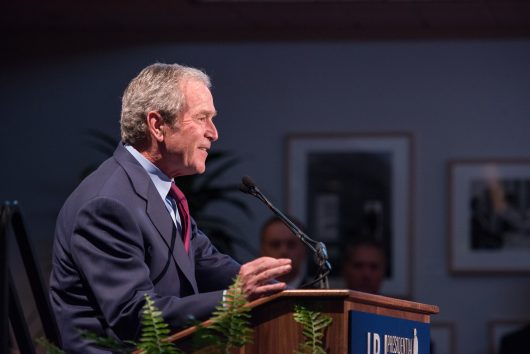
Here’s how former presidents Jimmy Carter, George H.W. Bush, Bill Clinton, George W. Bush and Barack Obama helped foreign nations since leaving office.

Jimmy Carter

Even at age 93, Jimmy Carter works alongside other volunteers outdoors to build houses with Habitat for Humanity. Both Carter and his wife Rosalynn have traveled around the world to raise awareness towards the benefits of affordable housing. Their work encompasses 14 countries and 4,000 built homes.

George Herbert Walker Bush

Both George H.W. Bush and Bill Clinton fought a vicious campaign against each other for the presidency in 1992. But all wounds were mended by 2005, when the two former presidents visited Asia to raise money in the wake of a deadly tsunami. The two men also raised more than $100 million to support the victims of Hurricane Katrina.

On the subject of losing the re-election to a member of an opposing party, H.W. Bush commented, “You just can’t go through life with a great deal of bitterness in your heart over something that happened 15 years ago.”

Bill Clinton

In addition to the funds raised after Hurricane Katrina, Clinton established the Clinton Global Initiative (CGI) in 2005. The CGI gathered Nobel laureates, leading CEOs, philanthropists and more than 200 former heads of state to create Commitments to Action for those in need.

Previous Commitments to Action include an amount of refugees taken in by a country, an installation of solar arrays for a country and advice from major corporations to a country. CGI has aided 180 nations since its genesis.

George W. Bush

October wasn’t the first time the world saw George W. Bush and former U.S. presidents fight global poverty together. Both Bush and Clinton raised funds to provide for Haiti in the wake of the 2010 earthquake.

Bush continued his philanthropy even after his two terms saw the achievement of the U.N.’s Millennium Development Goals years ahead of schedule.

Barack Obama

Not even a year after leaving office, Barack Obama advocated for the world to address climate change, poverty and disease. “People wildly overestimate what we spend on foreign aid,” he said, “…It’s a good investment to make countries work.” Obama joined philanthropists Bill and Melinda Gates, Leymah Gbowee and Canadian Prime Minister Justin Trudeau to urge nations in uniting to combat global poverty.

Seeing all former U.S. presidents fight global poverty reveals the tenacity within each leader. All five men, however, believe that saving the world is a global effort.

– Nick Edinger

Photo: Flickr

November 7, 2017
https://borgenproject.org/wp-content/uploads/borgen-project-logo.svg 0 0 Kim Thelwell https://borgenproject.org/wp-content/uploads/borgen-project-logo.svg Kim Thelwell2017-11-07 01:30:012019-12-27 15:15:05How All Former U.S. Presidents Fight Global Poverty
Activism, Foreign Policy, Refugees, Refugees and Displaced Persons

U.S. Must Reverse President Trump’s Refugee Ban

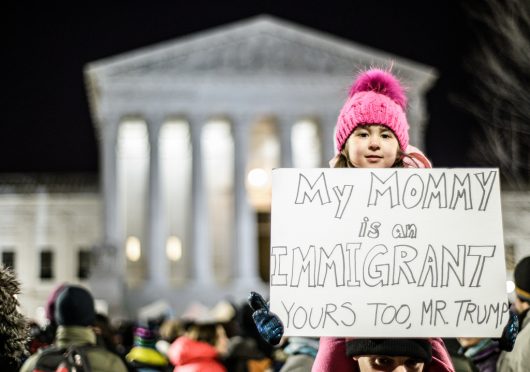
U.S. Must Reverse President Trump's Refugee BanIn the continuing fight for the rights of refugees, The Borgen Project is committed to working to reverse President Trump’s refugee ban. The executive order signed on Friday afternoon barred all refugees from entering the U.S. for 120 days, barred nationals from Iran, Iraq, Libya, Somalia, Sudan, Syria and Yemen for 90 days, and put a permanent ban on Syrian refugees.

President Trump’s refugee ban came as a surprise to diplomatic and airport staff in the U.S. and overseas, and many scrambled to respond with various interpretations. The executive order has caused protests and lawsuits and has drawn condemnation from dozens of diplomats and former President Barack Obama.

The current refugee crisis is unprecedented. The number of people displaced by conflict in 2016 was the highest since the end of the Second World War, at almost 60 million. Only joint solutions will credibly and effectively lessen the increasing suffering and social and political turmoil.

Therefore, labeling refugees fleeing conflict zones like Syria and other countries as terrorists has only made matters worse for these vulnerable individuals. A refugee is a person seeking shelter, a life of dignity, freedom and safety for themselves and their families. There is no excuse for treating other human beings who have come to the U.S. seeking these things with hostility, suspicion and intolerance.

About 30,000 Syrians have been evacuated from Aleppo, and 100,000 more are still fleeing violence in the area. Children continue to be massacred every day while the U.S., under this executive ban, is slamming its doors.

For all of the world’s refugees, do not look away. You can help change lives, not just for people in Syria, but for those in more than 90 countries who are fighting to overcome hunger, poverty and violence.

It is un-American to turn away those seeking safety and to discriminate against groups of people because of nationality and religion. Let us stand with refugees and not against them, in their hour of need. Remember that every refugee is someone’s mother, father, son, daughter, sister, brother or newborn baby.

You can call Congress and take action on this serious issue. Please stand with leaders from both parties to reverse President Trump’s refugee ban and welcome those in need of our help.


Photo: Geoff Livingston via photopin (license).

February 1, 2017
https://borgenproject.org/wp-content/uploads/borgen-project-logo.svg 0 0 Borgen Project https://borgenproject.org/wp-content/uploads/borgen-project-logo.svg Borgen Project2017-02-01 08:56:522020-05-28 09:00:05U.S. Must Reverse President Trump’s Refugee Ban
Foreign Aid, Foreign Policy, Foreign Relations, Global Poverty

Separation of the Philippines

Separation of the Philippines
Relations between the United States and the Philippines date back to a time when the U.S. had a special interest in Southeast Asia for military strategy. Despite a rocky start, the Philippines became one of the closest allies of the U.S. after fighting side by side in World War II against Japan.

To facilitate better relations in Southeast Asia, the Obama Administration developed the “Pivot to Asia.” Shifting American foreign policy from the Middle East, without fully withdrawing, getting more involved in an area with closer ties to China.

As a result, the U.S. provided $175 million for development assistance and $50 million in foreign military financing to the Philippines in 2015. The number for military funding is set to more than double in 2016, with around $120 million intended just for the Philippines.

Despite this long partnership and recently increased support, Filipino President Duterte hints at a separation of the Philippines from the U.S. for growing stronger bonds with China. Many in the U.S. Government are deeply troubled by this news as it could radically change the relationship between the two nations.

As recently as 2011, Clinton was in Manila to verbally affirm American support of the Philippines during a dispute with China over ownership of islands in the South China Sea. Senior Diplomat Daniel Russel is set to travel to Manila for clarification on this separation of the Philippines.

President Duterte is known for erratic behavior, leading many to question whether he can follow through on these claims. With such a large portion of the Filipino population still supporting continued relations with the U.S., a divide between the government’s affairs and the will of the Filipino people could be problematic.

The reality may be that this is the beginning of a Chinese plan to remove American military presence in the region by taking the Philippines out of a partnership with the U.S, in hopes that Vietnam and Malaysian would soon follow suit.

– Aaron Walsh

Photo: Flickr

November 15, 2016
https://borgenproject.org/wp-content/uploads/borgen-project-logo.svg 0 0 Borgen Project https://borgenproject.org/wp-content/uploads/borgen-project-logo.svg Borgen Project2016-11-15 01:30:042020-05-19 20:46:56Separation of the Philippines
Foreign Policy, Global Poverty, Politics

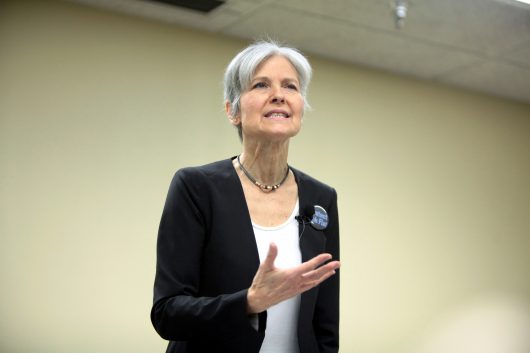
Jill Stein Equates NAFTA to Global Poverty

Presidential Candidate Jill Stein Equates NAFTA to Global Poverty
Green Party presidential candidate Jill Stein has not shied away from criticizing U.S. foreign policies, which directly spawn global poverty and migration. In her presidential platform, Stein underscores the dangers of trade deals like the North American Free Trade Agreement (NAFTA).

“People ask me ‘what are you going to do about immigration?’ I say we’re going to stop causing it…through wars and NAFTA, the war on drugs, coups and military interventions…We need to connect the dots,” on U.S. policy, free trade, global poverty, and migration, “People are not stupid. They can and will get it when you make the connections,” voiced Stein.

According to research by the Economic Policy Institute, NAFTA led to a loss of jobs in Mexico, particularly in their agricultural sector, consequently increasing the rate of poverty and illegal immigration to the U.S.

The governments of Canada, Mexico and the U.S. negotiated NAFTA in 1994. Arranged by President George H.W. Bush and implemented under Bill Clinton, the deal created a trilateral trade bloc in North America — barriers to trade investment were gradually eliminated, and as a result, tariffs became inapplicable.

Governments sought to integrate and liberalize trade between the North American countries. U.S. officials promised a growing trade surplus with Mexico, creating hundreds of thousands of American jobs. Yet, more than 20 years later, NAFTA has proved to have the opposite effect; studies show it led to a growing trade deficit owing to the growth of U.S. exports which vastly surpassed imports to Mexico.

Since barriers to trade investment were eliminated, U.S. investments in Mexico escalated; corporate executives could easily cut their expenses by moving their factories to Mexico and paying Mexican workers at a much lower wage, fueling a flood of outsourcing.

As a result, the U.S. experienced a heavy loss in jobs. The Economic Policy Institute estimates that, as of 2010, displaced production could have supported 682,900 U.S. jobs, 60.8 percent of those jobs being in manufacturing industries. This also takes into account the additional jobs created by exports to Mexico.

NAFTA also promised Mexico a growing middle class, yet as a struggling third world country, it experienced a harder economic downfall, particularly in its agriculture sector.

Research backs Jill Stein’s claims that, prior to NAFTA being implemented, tariffs were still very high, helping to protect domestic businesses. For Mexico, corn was a crucial commodity that was protected by tariffs.

NAFTA gradually lifted the tariffs in a 14-year transition to an open market. By 2008, the last tariffs on corn were lifted, thus the U.S. was able to flood Mexico with cheap subsidized corn. As a result, 1.3 million jobs in Mexico’s agricultural sector were lost.

The U.S. has sold tons of cheap corn to Mexico for over a decade now, yet corn originated in Mexico and it’s also the predominant food source that most people depend on, especially for making tortillas. Small farmers made a living from the production of corn, a crucial component of the Mexican economy. Now, many feel helpless without a source of income and the rates of extreme rural poverty in Mexico have therefore increased.

The World Bank, in a 2005 study, found that extreme rural poverty rate was around 37 percent in 1992-4, prior to NAFTA, which jumped to about 52%in 1996-8 after NAFTA took effect.

This could be explained partly due to the 1995 peso crisis, which was set off by the Mexican Government’s sudden devaluation of the peso against the U.S. dollar. Even so, one expert has argued the crises was caused in part because of NAFTA from the wave of speculative foreign investment in Mexico following the agreement.

By 2010, 53 million Mexicans were living in poverty according to the Monterrey Institute of Technology — half the country’s population. This growth of rural poverty from NAFTA, in turn, led to an increase of migration to the U.S. Indigenous people made up 7 percent of Mexican migrants in 1991-3; in 2006-8, they made up 29 percent.

As president, Jill Stein plans to repeal NAFTA and replace it with trade laws that could better benefit local workers and communities. She is calling for an emergency transition of the economy to 100 percent clean renewable energy by 2030. In doing so, she expects to create 20 million good-wage jobs, that are locally controlled and community oriented, giving Americans greater control of their own economic affairs.

“We are creating a community process, so it’s not just a cookie-cutter from Washington D.C., but rather it’s national support for local control, over creating the jobs, the small businesses, workers cooperatives, that are needed in order to make this clean energy green economy transition,” said Stein.

– Marcelo Guadiana

Photo: Flickr

October 24, 2016
https://borgenproject.org/wp-content/uploads/borgen-project-logo.svg 0 0 Borgen Project https://borgenproject.org/wp-content/uploads/borgen-project-logo.svg Borgen Project2016-10-24 01:30:342024-12-13 17:55:45Jill Stein Equates NAFTA to Global Poverty
Development, Foreign Policy, Poverty Reduction

Stability: Focus of White House Summit on Global Development

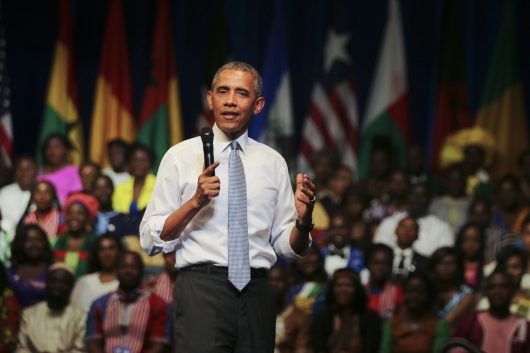
Obama
President Obama spoke about the importance of advancing global development at the White House Summit on Global Development this past July. He focused his speech on development as a “key pillar” of his foreign policy and reassured that it would remain so for the next president.

The Obama Administration has funded global projects such as reducing poverty and encouraging global economic growth and stability. These programs add to former President George W. Bush’s efforts to focus on fighting global disease through the President’s Emergency Plan for AIDS Relief (PEPFAR).

According to the official White House website, Obama’s U.S. Global Development Policy that he issued in 2010 was the first time that “global development was elevated, on par with diplomacy and defense as a core pillar” of U. S. policy. Following Bush, Obama and his administration have continued to focus on solving global issues throughout his time in office.

The Washington Post cites the Obama Administration’s Feed the Future program as one of its successes. The agriculture-based program supported 9 million farmers and increased their sales by more than $800 million. The Global Food Security Act will systematize the program so that its impact extends long past the Obama Administration.

Susan Rice, the National Security Advisor, wrote in a Huffington Post article about why it is so important that Obama is dedicated to development. “Development is not a charity – it is a prudent investment in the security and prosperity of us all,” she wrote. Development is an investment that helps to stabilize global conditions and to create opportunities.

Rice wrote that Obama’s White House Summit on Global Development will help to support global economic growth, to improve food security and nutrition, to improve global health, and to invest in leadership. The programs already supporting these causes, like the United Nations’ Sustainable Development Goals and Feed the Future, will all help to eradicate poverty and secure a prosperous future through the continued support of global leaders and organizations.

Obama’s White House Summit on Global Development will hopefully mobilize already existing aid and development programs of all kinds. With goals to advance development in a variety of ways, the Summit will hopefully help to expedite poverty reduction efforts and stabilize global conditions.

– Addie Pazzynski

Photo: Flickr

September 21, 2016
https://borgenproject.org/wp-content/uploads/borgen-project-logo.svg 0 0 Borgen Project https://borgenproject.org/wp-content/uploads/borgen-project-logo.svg Borgen Project2016-09-21 01:30:302020-06-10 17:11:50Stability: Focus of White House Summit on Global Development
Foreign Aid, Foreign Policy, Global Poverty

South Korean Foreign Aid: Former Recipient Now a Major Donor

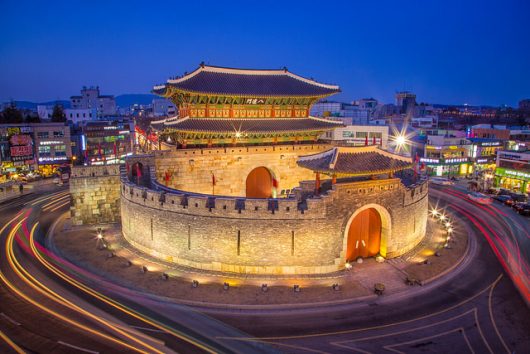
South Korean foreign aid
South Korea, a country which used to rely heavily on foreign aid, is now giving its own. The increasing prominence of South Korean foreign aid is proof that the impact of U.S. foreign aid extends well beyond the period during which it gives.

On July 5, 2016, South Korea’s Ministry of Foreign Affairs greenlighted $21 million in projects aimed at helping refugees in Africa and improving health care across the continent. The money will come from a 1,000 won ($0.87) solidarity tax on airline tickets for outbound international flights.

The air ticket levy is not the only source of funding for South Korean foreign aid. According to the Australian Institute of International Affairs, the country has donated a total of $1.8 billion in official development assistance (ODA) as of 2016, equivalent to 0.14 percent of its gross national income.

South Korea kicked off its donations with a $25 million contribution in 1987, the same year it became a democracy. In 2010, only 23 years after it became a donor, the country became a member of the Development Assistance Committee (DAC) of the Organization for Economic Co-operation and Development (OECD). It remains the only country on the DAC that had been a recipient of development assistance.

It is hard to imagine that South Korea, which is now the world’s 11th largest economy and leads the globe in innovation, was at one time among the world’s poorest countries.

In 1960, the country’s per capita income stood at $70. Adjusted for purchasing power parity, South Korea’s GDP per capita in 1960 was still a dismal $1,420. In fact, according to a case study by the Embassy of the United States in Seoul, it was only ahead of one-third of the countries in sub-Saharan Africa.

South Korea started receiving U.S. foreign assistance in 1952, which was meant to assist the war-torn country on the path to recovery. It was entirely dependent on the United States for food supplies in the following ten years, and USAID missions continued through the 1970s.

The recent increase in South Korean foreign aid is proof of the lasting impact of U.S. development assistance. An initial injection of foreign aid in a country will multiply itself down the line as that country develops and becomes self-sufficient.

When John F. Kennedy became president in 1961, he specifically called for “aid to end aid” and to “help people help themselves” concerning South Korea. More than fifty years later, South Korea not only no longer requires assistance from the U.S. but is now making its mark as a donor of foreign aid.

– Philip Katz

Photo: Flickr

September 6, 2016
https://borgenproject.org/wp-content/uploads/borgen-project-logo.svg 0 0 Borgen Project https://borgenproject.org/wp-content/uploads/borgen-project-logo.svg Borgen Project2016-09-06 01:30:012020-06-09 09:56:08South Korean Foreign Aid: Former Recipient Now a Major Donor
Foreign Policy, Global Poverty, Government

How Statelessness Affects Global Poverty

Statelessness

Statelessness is as much of an economic burden as it is a social and political one. According to a recent Foreign Policy article, statelessness results in “chronic economic instability” because it is often accompanied by joblessness and poverty.

According to the U.S. Department of State, a stateless person is someone who does not “enjoy” the rights of  “citizenship – the legal bond between a government and an individual – in any country.” In other words, these individuals do not have the same rights and opportunities as people who are recognized as citizens by the nations in which they live.

Although the U.N. High Commissioner for Refugees counted 3.5 million stateless people in 2011, they estimated that the number could be as high as 12 million people. Foreign Policy reports that as many as 15 million people might be stateless today.

The Department of State notes that the causes of statelessness are diverse. They include failure to register newborns properly, birth to stateless parents, discrimination against minorities and traditional attitudes towards registration, to name a few.

Not only are stateless people denied government-issued identification, preventing them from acquiring formal labor jobs, but they are also subjects of social discrimination. These realities exclude them from even more employment opportunities, leads to fewer chances of regular employment and leaves stateless persons even more destitute.

Foreign Policy also reports that very little research exists about the effects of statelessness on economies. Some existing studies suggest that stateless persons have a negative economic impact on smaller nations in which they may make up a more significant percentage of the population. In this case, granting citizenship to stateless persons might actually improve these nations’ gross domestic product output.

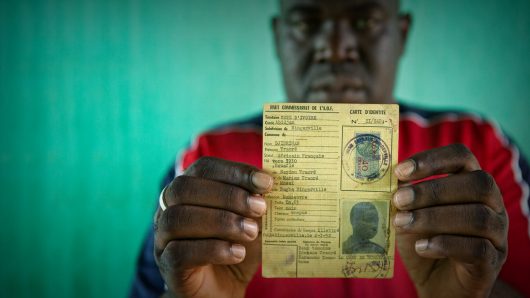
Although stateless individuals can obtain cards which signify their status, only a few thousand people have been able to take advantage of this opportunity. One of the Sustainable Development Goals of the United Nations aims to provide everyone with legal identity by 2030, which will give people access to formal job markets and increase economic opportunities for individuals and nations.

The U.S. State Department suggests that universal birth registration and increasing access to naturalization and citizenship will help solve statelessness. As Foreign Policy points out, nations must want to increase inclusiveness with stateless persons and cease the use of political reasoning for ostracizing them before changes can occur.

Policies and prejudices might take many years to change, but the economic, social and humanitarian advantages of granting citizenship to stateless people are worth the fight.

– Addie Pazzynski

Photo: UNHCR

July 24, 2016
https://borgenproject.org/wp-content/uploads/borgen-project-logo.svg 0 0 Borgen Project https://borgenproject.org/wp-content/uploads/borgen-project-logo.svg Borgen Project2016-07-24 01:30:372024-12-13 17:54:51How Statelessness Affects Global Poverty
Foreign Aid, Foreign Policy

3 Quotes from Donald Trump About Foreign Aid

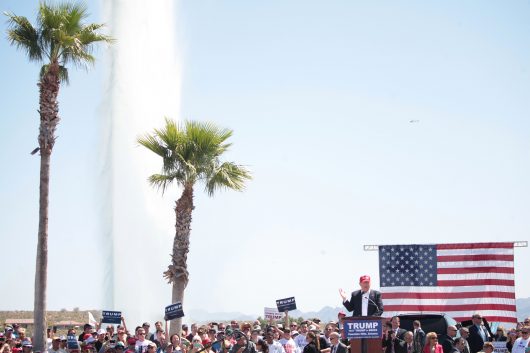
TrumpU.S. foreign policy is not just a hot topic issue that presidential candidates debate on TV. The president’s foreign policy can affect a broad spectrum of issues, including global poverty and instability.

With the Democratic and Republican National Conventions coming up in July, now is a crucial time for voters concerned with U.S. foreign aid to review the candidates’ platforms.

Republican presidential candidate Donald Trump has voiced a spread of controversial beliefs about many issues during his presidential campaign. According to Impact 2016, a non-partisan initiative of the USGLC, Trump’s foreign policy platform is currently small.

He is a self-proclaimed master of the “art of the deal” who claims to hold the ability to negotiate from international business experience. Some of his major foreign policy points have been his concern with creating a stronger military and deterring Mexicans and Syrian refugees from immigrating to the U.S.

In regard to foreign aid, Impact 2016 reports that Trump has emphasized domestic development over global development during his candidacy and in past statements. Considering this fact, here are three thought-provoking quotes from Donald Trump about what he thinks of the U.S. giving foreign aid to developing nations.

  1. “With Afghanistan, I want to build our country. You know in Afghanistan, they build a road. At the end of this beautiful road, they build a school. They blow up the school; they blow up the road; we then start all over again. And in New Orleans and in Alabama we can’t build schools. I want to rebuild the United States.”In a 2011 television interview with Bill O’Reilly, Trump expressed more interest in investing in domestic infrastructure than giving global aid. Any willingness he had to invest in struggling nations was qualified with some kind of reciprocity from the recipients of the aid. Although the discussion of Afghanistan concerned U.S. occupation, the statement reflects Trump’s general belief that domestic development is a more fruitful investment for the U.S. than long-term investment.
  2. In his speech announcing his presidential campaign, Trump declared that the U.S. should “stop sending foreign aid to countries that hate us.”Trump asserted again in his June 2016 speech that he wanted to invest in domestic infrastructure, such as building roads and bridges in the U.S., rather than give aid to countries that “hate us.” He was not in favor of investing in these developing countries and did not see aid as a positive investment for the U.S. His statement implies an attempt to decrease the amount of money allotted in the budget for foreign aid if he is elected president.
  3. When a young man asked Trump if he would help to double the number of people receiving HIV/AID treatment through the U. S. President’s Emergency Plan for AIDS Relief (PEPFAR) by 2020, Trump responded, “Yes, I believe so strongly in that, and we’re going to lead the way.”Trump’s comment might surprise those who are familiar with his criticisms of U.S. global involvement. His response to an audience member at the No Labels Conference in October of 2015 shows that he is indeed open to supporting certain humanitarian projects. Briefly citing Alzheimer’s as another disease he would like to fight, Trump acknowledged the progress that PEPFAR has made and pledged to support its mission.

Trump’s vision seems to be overwhelming against increasing U.S. foreign aid. Even so, perhaps some of his comments, such as the one about PEPFAR, show that he is willing to promote certain government humanitarian organizations in select cases.

Hopefully, Trump’s comments about foreign aid listed here and elsewhere are informative and helpful to voters as they decide which candidate will best address global poverty and the stability of the world.

For more quotes from Donald Trump on foreign aid, please see this article from The Borgen Project.

– Addie Pazzynski

Photo: Flickr

July 4, 2016
https://borgenproject.org/wp-content/uploads/borgen-project-logo.svg 0 0 Borgen Project https://borgenproject.org/wp-content/uploads/borgen-project-logo.svg Borgen Project2016-07-04 01:30:072024-12-13 17:54:453 Quotes from Donald Trump About Foreign Aid
Foreign Aid, Foreign Policy, Global Poverty, Politics

Where Donald Trump Stands on Global Poverty

Donald Trump PovertyDonald Trump surprised America when he announced his candidacy in June 2015. Trump has been garnering public attention despite not having any “elective, appointive, or military public experience,” according to the Atlantic. The publication also states that every prior president has had experience in one or more of these areas.

In this presidential race, Trump has been focused on illegal immigration in the U.S., particularly Mexican and Muslim immigration. He continuously affirms his belief that illegal immigrants are a national security concern. He also continues to voice his disapproval of immigrants from Syria migrating to the U.S.

Other hallmarks of his candidacy have been his unapologetic rhetoric. Trump’s controversial appeals have become his greatest asset in acquiring votes. In addition to immigration, he has been particularly vocal about the Islamic State group and the threat he believes the terrorist organization poses.

In contrast to fellow presidential candidate Bernie Sanders’ humble beginnings and opposition to wealth inequality, Forbes identified Trump as one of the richest American billionaires. So given his wealth and his stance on immigration, where does Donald Trump stand when it comes to foreign aid?

“It is necessary that we invest in our infrastructure, stop sending foreign aid to countries that hate us and use that money to rebuild our tunnels, roads, bridges and schools—and nobody can do that better than me.”

– Donald Trump’s Presidential Announcement 2016

“Pakistan’s a real problem because they have nuclear weapons… I would say we don’t give them any money unless they get rid of their nuclear weapons.”

– Donald Trump speaking on Fox News, May 9, 2011

“Money should be spent in our country. We should rebuild our country and also by the way reduce our $16 trillion in debt.”

– Donald Trump speaking about Afghanistan, March 13, 2012

In addition to his opinions on foreign aid, Trump’s discourse on decreasing the poverty rate in the U.S., which currently stands at approximately 14 percent of the population, consists of diminishing public assistance and handing responsibility for the poor over to volunteer organizations.

The results of this presidential election will reveal whether Americans prefer a leader with proven experience or charismatic promises. Foreign aid plays an essential role in the lives of millions around the globe. The continued provision of this foreign aid from the U.S. depends on which leader Americans choose to elect.

– Mayra Vega

Sources: India Times, Talk Poverty, NPR, The Atlantic
Photo: NY Daily News

March 19, 2016
https://borgenproject.org/wp-content/uploads/borgen-project-logo.svg 0 0 Borgen Project https://borgenproject.org/wp-content/uploads/borgen-project-logo.svg Borgen Project2016-03-19 01:30:542024-06-04 04:33:54Where Donald Trump Stands on Global Poverty
Page 5 of 11«‹34567›»

Get Smarter

  • Global Poverty 101
  • Global Poverty… The Good News
  • Global Poverty & U.S. Jobs
  • Global Poverty and National Security
  • Innovative Solutions to Poverty
  • Global Poverty & Aid FAQ’s
Search Search

Take Action

  • Call Congress
  • Email Congress
  • Donate
  • 30 Ways to Help
  • Volunteer Ops
  • Internships
  • Courses & Certificates
  • The Podcast
Borgen Project

“The Borgen Project is an incredible nonprofit organization that is addressing poverty and hunger and working towards ending them.”

-The Huffington Post

Inside The Borgen Project

  • Contact
  • About
  • Financials
  • President
  • Board of Directors
  • Board of Advisors

International Links

  • UK Email Parliament
  • UK Donate
  • Canada Email Parliament

Get Smarter

  • Global Poverty 101
  • Global Poverty… The Good News
  • Global Poverty & U.S. Jobs
  • Global Poverty and National Security
  • Innovative Solutions to Poverty
  • Global Poverty & Aid FAQ’s

Ways to Help

  • Call Congress
  • Email Congress
  • Donate
  • 30 Ways to Help
  • Volunteer Ops
  • Internships
  • Courses & Certificates
  • The Podcast
Scroll to top Scroll to top Scroll to top